





Lemon Cherry Gelato Strain: A Home Grower’s Guide
You’re probably in the same spot a lot of home growers hit after a run or two. You want something more exciting than a plain easy-mode cultivar, but you don’t want a plant that turns the whole grow into a rescue mission. You want strong bag appeal, a flavor that feels worth the effort, and a harvest that makes you glad you skipped the dispensary line.
Ready to grow it yourself? Shop Lemon Cherry Gelato seeds at Botanist Seeds.
That’s where lemon cherry gelato seeds make a lot of sense.
This cultivar has built a reputation because it checks a rare combo of boxes. It has the dessert-fruit profile people get excited about, it can put out serious weight in the right setup, and it gives you enough structure to work with if you like training plants instead of just letting them do whatever they want. It’s not the pick I’d hand to someone who wants a totally hands-off first grow, but it is a very solid project for a grower who wants to level up without getting buried in complexity.
The fun part is that Lemon Cherry Gelato works as more than a strain review. It works as a plan. If you choose the right seed type, keep your environment steady, and don’t overcomplicate the feed, this cultivar can reward patience in a very obvious way. Dense flowers, loud aroma, strong resin, and the kind of jar appeal that makes you want to show friends your curing stash.
Why growers keep coming back to it: it feels like a hobby grow with a premium payoff.
A lot of newer growers make the same mistake with hyped cultivars. They chase the name, then ignore the practical stuff that decides the result. With Lemon Cherry Gelato, the better move is to treat it like a project with a few clear checkpoints:
- Pick the right format: feminized if you want control and training time, autoflower if you want speed and simplicity.
- Expect some variation: seed-grown plants can express a little differently, and that’s part of the appeal.
- Protect the finish: this cultivar’s aroma is a big part of why people choose it, so sloppy drying and curing can waste the best part.
Introduction Your Next Favorite Home Grow Project
A good home grow usually starts with a simple question. What do you want out of the next run?
If the answer is something like, “I want a cultivar that smells great, looks great, and feels worth the electricity bill,” then Lemon Cherry Gelato is an easy one to put on the shortlist. It has the kind of reputation that gets attention fast, but the better reason to grow it is practical. It offers a clear path for hobby growers who want a rewarding harvest without turning every week into troubleshooting.
Why this cultivar works as a home grow project
Some cultivars are fun to smoke but annoying to grow. Others are easy to grow but kind of boring once they’re in the jar. Lemon Cherry Gelato sits in a more interesting middle ground. It gives you enough upside to feel like you’re growing something special, while still being manageable if you stay organized.
That matters at home. Home cultivators aren’t running a giant sealed room with every gadget on the market. They’re working with a tent, a spare closet, or a backyard spot that gets good sun. In that kind of setup, a cultivar has to earn its place.
Lemon cherry gelato seeds do that best when you approach them with realistic goals:
- You want flavor first: this cultivar is known for a fruity, citrus-heavy profile with dessert notes.
- You care about visual payoff: dense, frosty flowers and colorful expression are part of the appeal.
- You don’t mind doing a little plant work: training, pruning, and patient curing can make a noticeable difference.
What success looks like
A successful run with this cultivar doesn’t mean chasing the biggest possible number on a breeder page. It means growing a healthy plant with a clean structure, harvesting at the right time, and putting jars away that still smell alive weeks later.
That’s the difference between a hype grow and a satisfying one. The hype gets you to buy seeds. The process gets you quality.
Grow this one like you mean to keep the best flower for yourself, not like you’re trying to win an argument online.
If you’ve already had a basic home grow succeed, Lemon Cherry Gelato is a strong next step. If this is your first run, you can still do well with it, but it helps to keep the setup simple and avoid chasing every advanced trick you’ve seen in forums.
The Genetics Behind the Hype
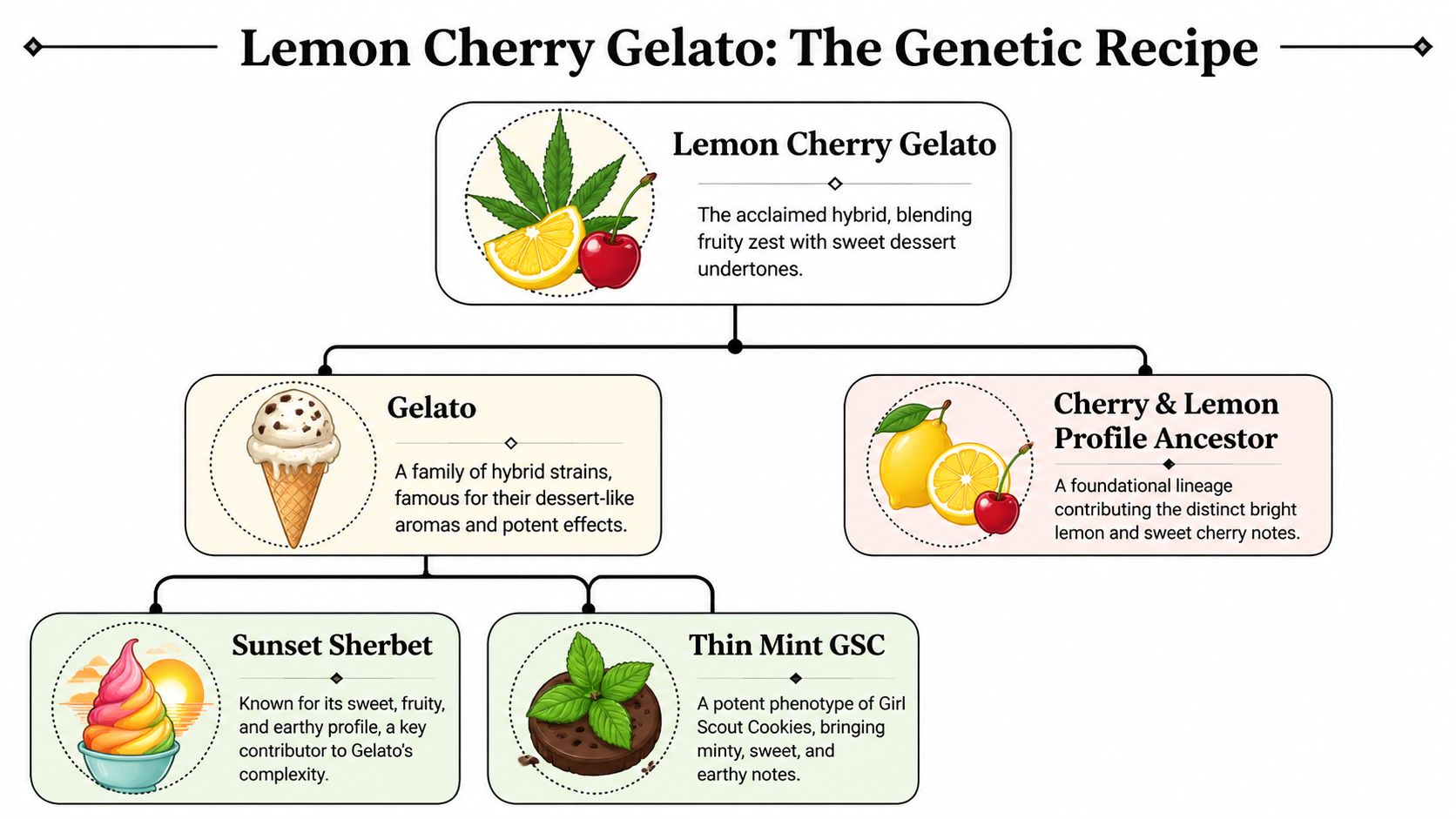
Lemon Cherry Gelato earns its reputation because the family line points to traits home growers care about. The cultivar is commonly tied to Sunset Sherbet crossed with Girl Scout Cookies, which helps explain why growers expect rich aroma, dense flowers, and a plant that usually stays workable in a home setup.
How the parent line tends to show up
Girl Scout Cookies usually passes along the heavier side of the plant. That often means tighter flower formation, strong resin production, and the kind of dessert-forward base note growers chase in the jar.
Sunset Sherbet often adds the brighter side. Fruit, citrus, and a softer creamy edge are part of why Lemon Cherry Gelato feels more layered than a simple sweet cultivar.
You can also see that balance in the plant itself. It is often described as a hybrid with an indica tilt, which gives newer growers a useful clue about structure and behavior. If you want a quick refresher on what those labels really mean in practice, this guide to indica vs sativa vs hybrid does a good job of breaking it down.
What that means for your grow plan
Genetics matter because they set your starting expectations. They do not guarantee a perfect copy from seed to seed, but they do tell you what kind of project you are signing up for.
With Lemon Cherry Gelato, the practical read usually looks like this:
- Expect quality over speed: this is usually grown for flavor, resin, and bag appeal, not because it finishes in a rush.
- Expect a plant that benefits from shaping: the structure often responds well to basic training and canopy cleanup.
- Expect some phenotype spread: one plant may push louder fruit, another may finish with stronger color or denser buds.
That last point matters more than many seed buyers realize. If you are growing from feminized or autoflower seed, you are choosing a simpler path to harvest, not a row of identical plants. Good breeders narrow the range. They do not erase it.
The real trade-off in the lineage
The strong parentage is part of the appeal, but it also creates high expectations that can trip people up. Newer growers sometimes read the name, see the parent strains, and assume every plant will come out loud, colorful, and heavy. Some do. Some land closer to average and still smoke great.
That is normal.
For a home grower, the smarter goal is to match the cultivar to the setup and grow style. If you are running feminized seeds, you get more control over veg time and training, which fits this cultivar well. If you are choosing autoflower seeds, the same flavor-driven appeal can still be there, but you need to be cleaner with early care because the plant has less time to recover from mistakes.
That is the useful part of the genetics story. It is not trivia for a strain page. It helps you choose the right seed type, set realistic expectations, and judge your result by aroma, health, and finish quality instead of hype.
What to Expect Aroma Flavor and Vibe
Some cultivars smell nice in a generic way. Lemon Cherry Gelato usually doesn’t land that way. It tends to come across as specific. Sweet, fruity, citrusy, creamy, and a little deeper underneath.
The dominant terpene profile commonly points to caryophyllene, limonene, and linalool, and those names matter less than what they smell like in the jar. If you’ve never paid much attention to terpene labels before, this is a good cultivar to start with because the profile is easy to notice once you know what you’re looking for. A broader primer on that is worth reading in this guide to cannabis terpenes.
How the aroma usually comes across
Limonene is the bright part. That’s where the lemon side tends to show up, more like fresh peel and sweet citrus than sharp cleaner-style lemon.
Linalool softens the profile. It adds a floral, creamy edge that helps explain why this cultivar often smells more like a dessert than a straight fruit candy.
Caryophyllene gives it some grounding. That’s often the subtle spicy layer that keeps the aroma from becoming one-note sweet.
If you open a jar and get fruit first, cream second, and a little spice underneath, you’re probably right where this cultivar should be.
Flavor notes worth watching for
A lot of growers buy lemon cherry gelato seeds for the name, then get surprised by how rounded the flavor can be. It’s not just lemon on top of cherry. The better expressions usually feel blended, more like citrus folded into sweet red fruit with a creamy finish.
A helpful perspective is:
- On the nose: lemon zest, sweet fruit, soft dessert notes
- In the flavor: cherry candy, citrus cream, a little spice
- In the room during flowering: noticeably loud, especially late in bloom
That last point matters if you grow indoors. This isn’t the cultivar I’d choose if odor control is an afterthought.
The overall vibe
The experience people chase with Lemon Cherry Gelato is usually a mix of clear-headed lift and a heavier relaxed finish. That fits the reputation of a balanced hybrid with a dessert profile, and it’s one reason this cultivar has become a personal-stash favorite for a lot of home growers.
This is also why curing matters so much. If you rush the finish, the bright fruit top notes flatten out fast and the whole thing starts feeling less special. The cultivar can still look good, but it won’t have the same personality.
Your Best Bet Choosing Feminized or Autoflower Seeds
You clear a corner of the tent, pick your light, and order seeds. The next choice matters just as much. Seed type decides how much control you get, how forgiving the run will be, and how closely this grow needs to fit your schedule.
For Lemon Cherry Gelato, I’d treat this like a project-planning decision, not a strain-hype decision. If you want a practical breakdown first, this guide to autoflower vs feminized seeds gives a solid overview.
A simple side by side look
| Seed type | Best for | Main upside | Main trade-off |
|---|---|---|---|
| Feminized | Growers who want more control over plant size and shape | More time to train and fill a canopy | Longer timeline and more day-to-day management |
| Autoflower | Growers who want a simpler, faster home grow | No light-cycle change and a more straightforward schedule | Less time to correct stress or training mistakes |
When feminized is the better call
Feminized Lemon Cherry Gelato makes the most sense if you want to shape the plant around your space instead of letting the calendar make that decision for you. In a tent, that usually means better control over height, a flatter canopy, and a more even finish under the light.
That extra veg time is the key advantage.
You can top it, train it, spread branches out, and give lower sites a fair shot. If you enjoy dialing plants in and you’re willing to spend a few more weeks getting the structure right, feminized seeds usually give you more upside with this cultivar.
A good fit for feminized seeds:
- Indoor growers with limited floor space: more control over width and height
- Growers who like training: LST, topping, and screen work are all on the table
- Anyone chasing a more dialed-in canopy: especially under one light in a small tent
The trade-off is simple. You need patience, and you need to stay on top of veg. If you let a feminized plant outgrow the space, the extra control you paid for starts working against you.
When autoflower makes more sense
Autoflower Lemon Cherry Gelato is the cleaner choice for growers who want a shorter, lower-maintenance project. You plant it, keep conditions steady, and avoid the stop-start feel that can happen when newer growers overtrain photoperiod plants.
This version fits real life well. Busy week, missed a training window, no dedicated veg area. Autoflowers still keep moving.
That doesn’t mean they’re beginner-proof. It means the workflow is simpler. There’s no light flip to manage, but there’s also less recovery time if you stunt the plant early with overwatering, hard pruning, or rough transplanting.
Autoflower usually makes more sense if:
- You want one straightforward run from seed to harvest
- Your grow space is small or shared
- You’d rather keep plant training light and simple
- You want a quicker turnaround without managing a photoperiod schedule
The honest recommendation
Pick feminized seeds if you want to shape the plant, train it, and get the most from an indoor setup.
Pick autoflower seeds if you want the easiest path to a solid home harvest.
Both can work well with Lemon Cherry Gelato. The better choice is the one that matches how you grow, not the version that sounds better on paper.
A Practical Grow Guide From Seed to Jar
Lemon Cherry Gelato does best in a grow where the routine stays steady. If you check the tent every morning, keep yourself from chasing every small leaf change, and make a few smart decisions at the right time, this cultivar can turn into a very satisfying home project.
That matters more than any fancy technique.
Starting clean from seed
Start with the germination method you already trust. A paper towel, starter plug, or a light seedling mix can all work well if moisture stays even and the seed never sits waterlogged.
The first week is where newer growers often create problems they spend the next month trying to fix. Heavy watering, early nutrients, strong light, and constant handling all slow a plant that just needs a calm start. Lemon Cherry Gelato usually responds best when the seedling stage stays simple.
A good early checklist looks like this:
- Keep the root zone lightly moist: not soaked
- Use gentle airflow: enough to keep air fresh without pushing the seedling around
- Hold back on nutrients: let the plant ask for more before you give it more
Building structure in veg
Veg is where this cultivar starts to show whether your plan fits your space. Lemon Cherry Gelato usually has enough vigor to benefit from training, but it can fill a tent faster than expected if you let it drift.
With feminized seeds, this is the time to shape the plant for the room you have, not the room you wish you had. Low stress training and a SCROG setup both make sense here because they spread the canopy, improve light coverage, and keep the top growth from taking over. The trade-off is time. Every extra week in veg can help yield, but it also raises the chance that the plant outgrows your setup.
Autoflowers need a lighter touch. Guide the structure early, keep stress low, and avoid hard pruning unless the plant is clearly strong enough to handle it.
Practical rule: train early, keep it gentle, and let the plant recover before doing more.
Defoliation is another spot where growers overdo it. Clear leaves that trap moisture or block key flower sites, but don’t strip a healthy plant just to make it look tidy.
Flowering without overcomplicating it
Once flowering starts, the job changes from shaping the plant to protecting the finish. Dense, resin-heavy buds are a big part of the appeal here, and they also raise the cost of sloppy airflow or excess humidity.
Before harvest, it helps to see the full process in motion:
The most common mistake in bloom is pushing too hard on feed strength. Many home growers read heavy flower development as a reason to increase nutrients fast, then end up with burnt tips, clawing, and stalled progress. A cleaner approach works better. Keep the canopy even, keep air moving through the middle of the plant, and feed with some restraint.
Focus on four things:
- Canopy control: keep tops at a similar height under the light
- Air movement: don’t let the center of the plant get stale
- Measured feeding: support flower growth without forcing it
- Patience at the end: frosty buds are not the same thing as finished buds
What yield means here
Lemon Cherry Gelato has solid production potential, but yield numbers only help if you treat them as a range, not a guarantee. A seed bank lists indoor yields of 450 to 600g/m², outdoor yields of more than 750g per plant, and a curing target of 58 to 62% humidity on its Lemon Cherry Gelato grow page.
Use that as a benchmark.
A better way to judge your run is to look at the parts you can control:
- Did the plant stay healthy through flower?
- Did light reach most of the canopy?
- Did airflow stay clean around dense bud sites?
- Did you avoid major stress late in bloom?
If those boxes are checked, the harvest is usually headed in the right direction.
Harvest and curing decide the final quality
This cultivar can lose a lot of its charm after chop if the dry and cure get sloppy. The citrus-sweet profile people chase from Lemon Cherry Gelato shows up best when the post-harvest work is handled with the same care as the grow.
Slow drying helps preserve aroma. Jarring too early invites moisture problems. Letting the flower get too dry before curing flattens the profile and makes the smoke feel thinner than it should.
A few habits make a real difference:
- Dry in stable conditions: avoid hot, overly dry air
- Jar at the right moment: not damp, not crispy
- Use a jar hygrometer if possible: it removes the guesswork
There’s growing interest in more precise post-harvest handling for Lemon Cherry Gelato, especially around terpene preservation, and that includes a strong focus on the 58-62% curing window described in this seed bank’s curing guide.
Get the cure right, and this cultivar pays you back every time you open the jar.
Frequently Asked Questions About This Cultivar
A lot of the questions around Lemon Cherry Gelato aren’t really about hype. They’re about fit. Is it a good match for your tent, your time, and your patience level?
Is Lemon Cherry Gelato a good first grow
It can be, but I’d call it a better second grow than a first. Not because it’s impossible for beginners, but because it rewards growers who already understand the basics of watering, airflow, and patience.
If you’re brand new, keep the setup simple. Don’t chase every training trick at once. Pick one approach and do it cleanly.
Does this cultivar smell a lot during flowering
Yes, it usually gets loud in flower. The fruity citrus dessert profile is part of the appeal, and it doesn’t stay subtle once the buds start stacking.
For indoor growers, odor control should be part of the setup from the start, not something you think about halfway through bloom.
You can get away with a lot of small mistakes in a home grow. Ignoring smell control usually isn’t one of them.
Should I choose feminized or autoflower for a small tent
It depends on how you like to grow.
If you want to shape the canopy and make better use of limited floor space, feminized is often the better fit. If you want a quicker, simpler project and don’t want to manage a photoperiod schedule, autoflower is usually the easier choice.
How much variation should I expect from seed
Some variation is normal. That’s true with most seed-grown cultivars, and it’s part of what makes a run interesting. One plant may lean louder on fruit, another may show stronger color, another may build a slightly different structure.
That doesn’t mean the seeds are bad. It means you’re growing a cultivar, not buying a clone.
Is this a heavy-yielding cultivar or more of a quality play
It can be both, but quality should stay your main target. Lemon Cherry Gelato has real yield potential in a good environment, but the growers who end up happiest with it are usually the ones who focus on structure, finish, and cure instead of chasing raw weight.
What usually goes wrong with this strain
The common issues are mostly grower-created:
- Too much feed
- Too much water
- Too much defoliation
- Rushed drying and curing
That’s encouraging, because it means the fix is straightforward. Keep the environment steady, don’t force the plant, and let the final stage get the time it needs.
Is it worth growing for a personal stash
Yes, especially if flavor and jar appeal matter to you. This cultivar makes a lot of sense for home growers who want something that feels premium without needing a commercial facility to pull it off.
If your ideal harvest is flower you’re proud to keep for yourself, lemon cherry gelato seeds are an easy cultivar to understand and a satisfying one to finish.
If you’re comparing cultivars for your next run, Botanist Seeds makes that process a lot easier. Use the comparison tools, look at feminized and autoflower options side by side, and pick the cultivar that fits your space and routine. That’s the fastest path to a harvest you’ll be happy you grew yourself.