What Are Autoflower Seeds? A Guide to a Faster Harvest
You’re probably here because buying flower got old fast. The taxes sting, the menu changes every week, and there’s always that moment where you stand in line thinking, “I could’ve stayed home for this.”
Then you start looking into growing your own and run straight into a wall of jargon. Photoperiods, light flips, training methods, nutrient charts, humidity targets. It can feel like you need a spreadsheet and a botany degree just to get one plant to the finish line.
That’s where autoflowers make sense. If your life already has work, errands, people texting you, and maybe a tiny grow tent squeezed into a spare corner, you want something simpler. You want a plant that moves fast, stays manageable, and doesn’t ask for constant fiddling.
Autoflowers are built for that kind of grower. They’re one of the easiest ways to get from seed to harvest without making your whole schedule revolve around the plant.
Tired of the Dispensary Runaround
It usually starts on a Tuesday evening. You get off work, check your jar, and realize you’re low again. Then it’s the same routine. Drive over, wait in line, stare at a menu that changed since last week, and pay more than you wanted for something you did not grow and did not choose at harvest.
That cycle is what pushes a lot of people to look at home growing in the first place.
The problem is, beginner advice often makes the hobby sound heavier than it needs to be. You read a few guides and suddenly it feels like growing cannabis only works if you have a spare room, a strict schedule, and time to babysit every little change. For someone with a job, a family, or a crowded calendar, that is enough to make the whole idea stall out before the first seed ever hits soil.
Autoflowers appeal to a different kind of grower. The person who wants a plant that fits into real life, not the other way around.
For a busy hobbyist, the big draw is simple. Autoflowers keep the process more forgiving on the scheduling side, stay manageable in smaller spaces, and get to harvest faster than many traditional options. That combination makes them easier to work into a normal routine, especially if your grow lives in a tent in the corner instead of a dedicated room.
Why busy growers gravitate to autos
- Less calendar watching: You spend less time planning your week around the plant.
- Smaller footprint: They’re easier to fit into closets, tents, and other modest setups.
- Quicker payoff: The gap between planting a seed and trimming your own flower feels shorter and more motivating.
- A simpler first run: There are still mistakes to make, but fewer moving parts means fewer chances to get overwhelmed early.
It helps to look at it like cooking on a weeknight versus hosting a holiday dinner. Both can be good. One asks a lot less of you.
That’s why autoflowers click with so many first-time home growers. They offer a realistic path for people who want the satisfaction of growing their own without turning a hobby into another job. You still need decent light, steady watering, and a little attention. But the workload feels more like tending a project you enjoy, not managing a second shift.
The Secret Ingredient Ruderalis Genetics
If you’ve been asking what are autoflower seeds, the short answer is this: they’re cannabis seeds bred to produce plants that flower automatically based on age, not changes in light schedule.
That trait comes from Cannabis ruderalis.
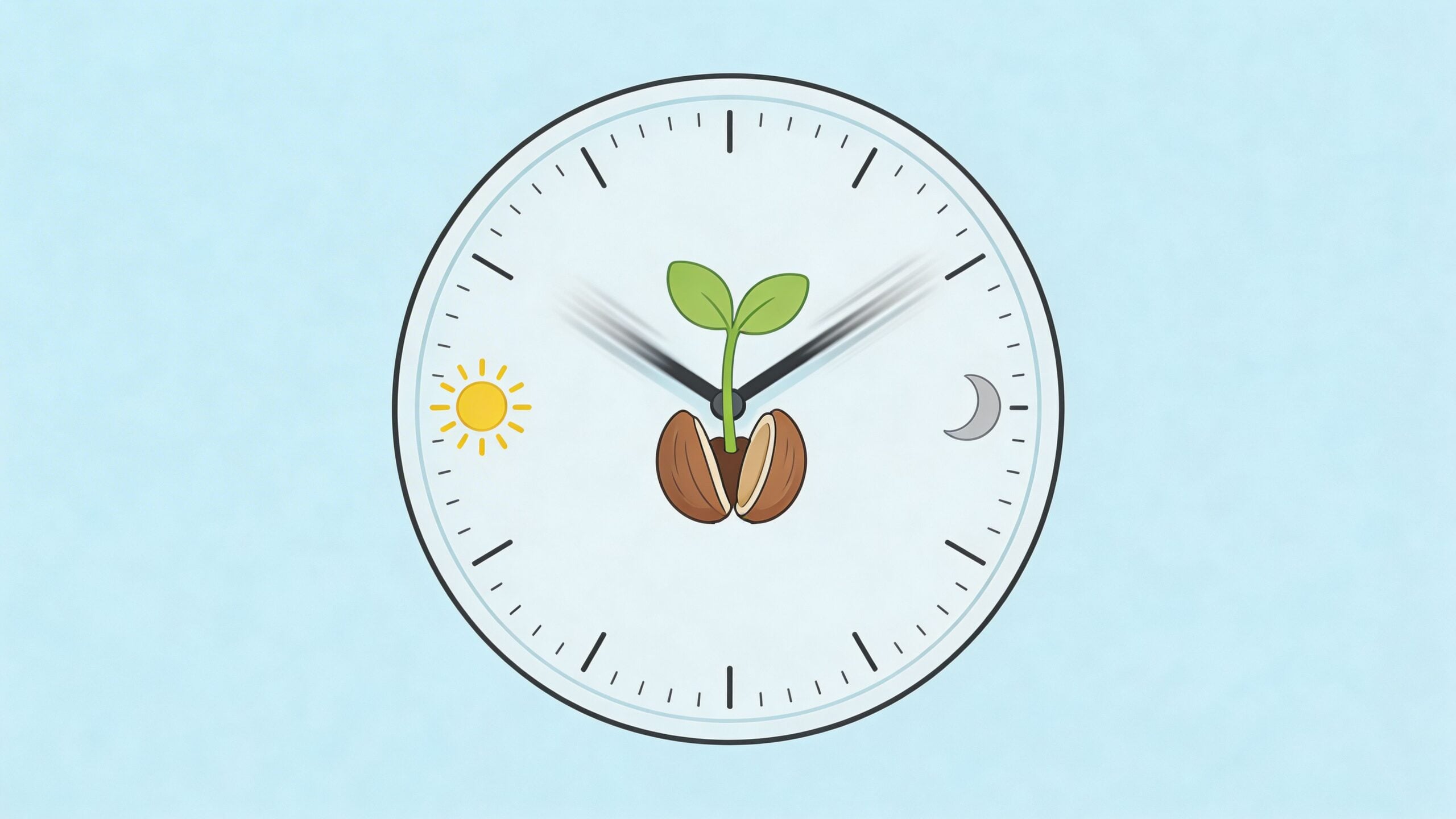
A plant with its own alarm clock
Ruderalis evolved in rough, short season climates like Siberia. In those places, a plant can’t wait around for perfect seasonal signals. It has to move. That’s why autoflowers inherited the ability to start blooming 3 to 4 weeks after germination based on age rather than light, as explained by Amsterdam Marijuana Seeds in its overview of autoflower seeds.
It functions like an internal alarm clock.
A photoperiod plant waits for you to change the lights before it shifts into flower. An autoflower checks its own calendar and says, “Cool, time to go.”
That one difference changes the whole growing experience.
Why that matters in real life
For a home grower, ruderalis genetics remove one of the biggest sticking points. You don’t need to time a flowering trigger. You don’t need blackout discipline the same way. You don’t need to babysit the plant’s light response like it’s a fragile science project.
Instead, the plant follows a built in timeline.
That makes autoflowers appealing if you:
- Work long hours: Less micromanaging means fewer chances to mess up the transition.
- Grow in a small space: Compact plants fit better in limited setups.
- Want simplicity: The process feels more forgiving on the planning side.
Feminized and autoflower are not the same thing
This part confuses a lot of people, so let’s keep it clean.
Autoflower describes how the plant starts flowering.
Feminized describes the type of plant the seed is bred to produce.
A seed can absolutely be both. In practice, that’s what many home growers want, an autoflowering plant that also gives them a direct path to a productive harvest without extra complications.
Practical rule: When you shop, treat “autoflower” as the timing trait and “feminized” as the convenience trait.
The genetics sound technical, but the payoff is simple. Ruderalis gave modern breeders the piece they needed to create faster, easier cultivars for people who want solid results without building their whole life around grow room management.
Autoflowers vs Photoperiod Cultivars
Once you understand the basic idea, the next question is obvious. How different are autoflowers from photoperiod cultivars when you grow them?
The short answer is, very different in day to day practice.
Modern autoflowers can finish their full lifecycle in 8 to 12 weeks, while photoperiod plants usually take 3 to 5 months, according to a seed bank’s guide to feminized vs autoflower yields. That same speed lets outdoor growers in many climates pull 2 to 3 harvests in a single season.
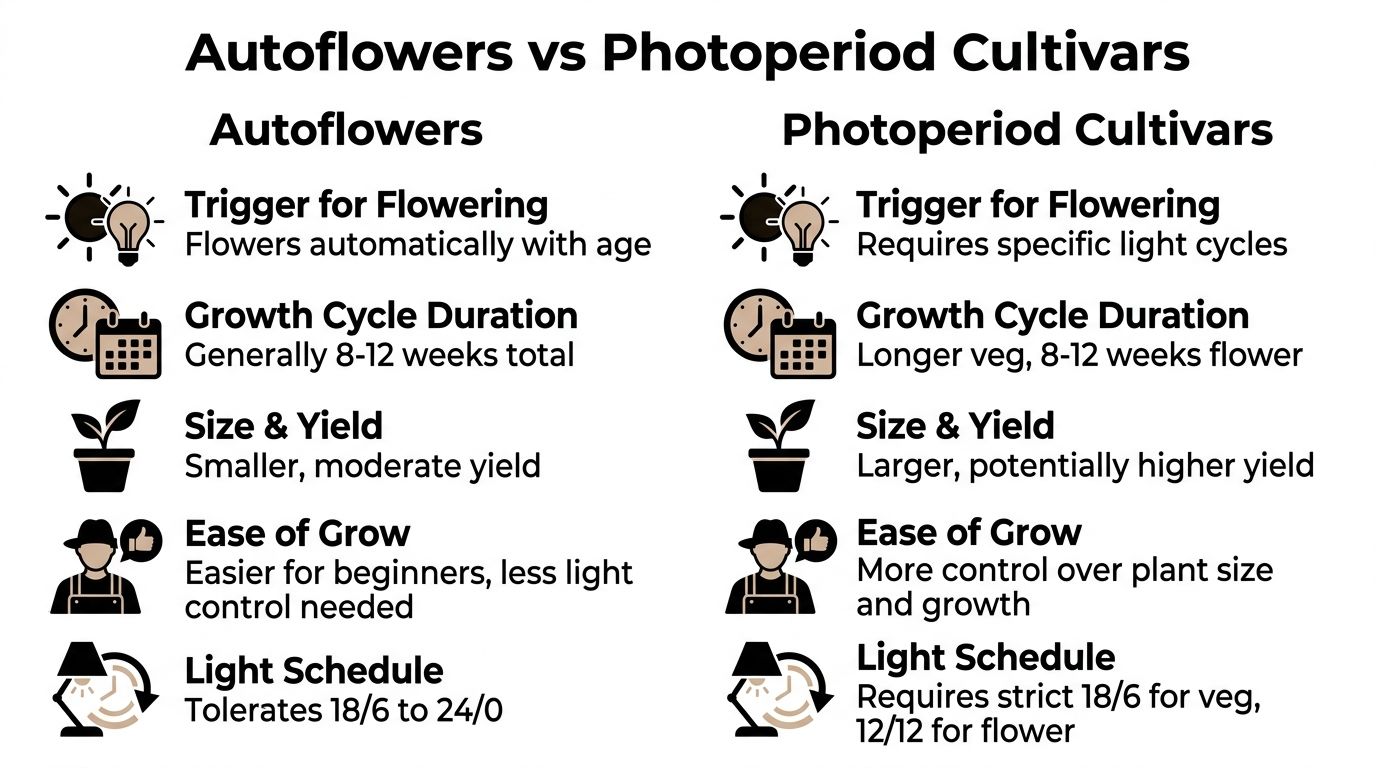
The practical difference
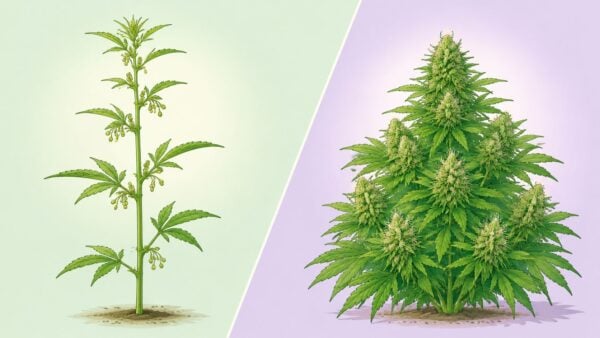
Autoflowers are for growers who value speed, simplicity, and smaller plant size.
Photoperiod cultivars are for growers who want more control over plant size, timing, and training.
Neither is automatically better. It depends on what kind of grow fits your life.
If you’re still sorting out the terminology, this guide on autoflower vs feminized seeds helps clear up where those labels overlap and where they don’t.
Autoflower vs. Photoperiod at a glance
| Feature | Autoflower Cultivars | Photoperiod Cultivars |
|---|---|---|
| Trigger for flowering | Flowers automatically with age | Needs specific light cycle changes |
| Total grow time | Usually faster | Usually longer |
| Plant size | Typically smaller and easier to tuck into tight spaces | Often larger, especially with extended veg |
| Light management | Simpler, no flower flip required | More involved, especially indoors |
| Training flexibility | Limited by fast timeline | More forgiving for long training plans |
| Best for | Busy beginners, compact spaces, quick harvests | Growers chasing bigger plants and more control |
What that feels like as a grower
With an autoflower, the plant keeps moving whether you’re ready or not. That’s convenient, but it also means your setup should be ready from day one.
With a photoperiod plant, you can hold it in vegetative growth longer, shape it more aggressively, and decide when to send it into flower. That’s powerful, but it asks more from you.
If your biggest constraint is time, autoflowers usually make more sense than photoperiods.
For the average hobbyist with limited space and a packed week, the appeal is pretty obvious. Autoflowers cut down the waiting, the scheduling, and the moving parts. Photoperiods reward patience and control, but they rarely qualify as low maintenance.
Practical Pros and Cons for Home Growers
If your week is already packed, autoflowers make sense for a simple reason. They cut down the number of decisions you have to make.
That is the appeal for a home grower with a job, errands, and maybe one free evening to check on plants. You can get from seed to harvest faster, skip the light-cycle flip indoors, and keep the plant size easier to manage in a tent, closet, or balcony corner. If you are still brushing up on the basics, a quick guide on how long cannabis seeds take to germinate helps you start without losing time early.
Where autos help most
Autos fit busy routines well because they ask for less calendar management. You do not have to babysit vegetative growth for weeks while deciding when to flower. The plant follows its own clock.
They also work well in small spaces. A lot of hobby growers are not trying to fill a whole room. They want a few healthy plants they can keep discreet, water on schedule, and harvest without turning the hobby into a second job.
Ruderalis genetics help here too. That hardier background is part of why many new growers find autos less intimidating than they expected.
Where autos can test your patience
The trade-off is speed.
An autoflower keeps moving whether your setup is dialed in or not. If you overwater early, stunt the roots, or stress the plant with heavy training, you may not get much time to recover before flowering begins. A seed bank explains that autos have a short vegetative window and are usually a poor fit for high-stress training like topping in many beginner setups, as outlined in its guide to autoflowering cannabis seeds.
Yield is the other point that trips people up. Autos can produce well, but they are usually playing a different game than large photoperiod plants. A photoperiod gives you more time to shape the plant, fix mistakes, and push for size. An auto gives you speed, convenience, and a quicker finish line.
A simple gut-check
Autoflowers are a strong fit if:
- You want a harvest without a long project: Fast turnaround matters more than squeezing out every possible ounce.
- You have a tight grow space: Smaller plants are easier to tuck away and manage.
- You want fewer moving parts: Less light scheduling and fewer timing decisions make the first run calmer.
Photoperiods usually make more sense if:
- You like to train and shape plants: More veg time gives you room to recover from mistakes.
- You want maximum size per plant: Bigger plants usually come from longer, more controlled growth.
- You enjoy having full control over timing: You decide when flowering starts.
Autos work like a short-season garden. You plant with a plan, keep the basics steady, and let the plant do its thing.
For a time-crunched hobbyist, that is often a fair deal. You give up some flexibility, but you gain a grow that fits into normal life instead of taking it over.
An Autoflower Plant's Life in Fast Forward
Autoflowers move quickly, so it helps to know what each stage looks like before you start. A little planning upfront saves a lot of rookie mistakes later.
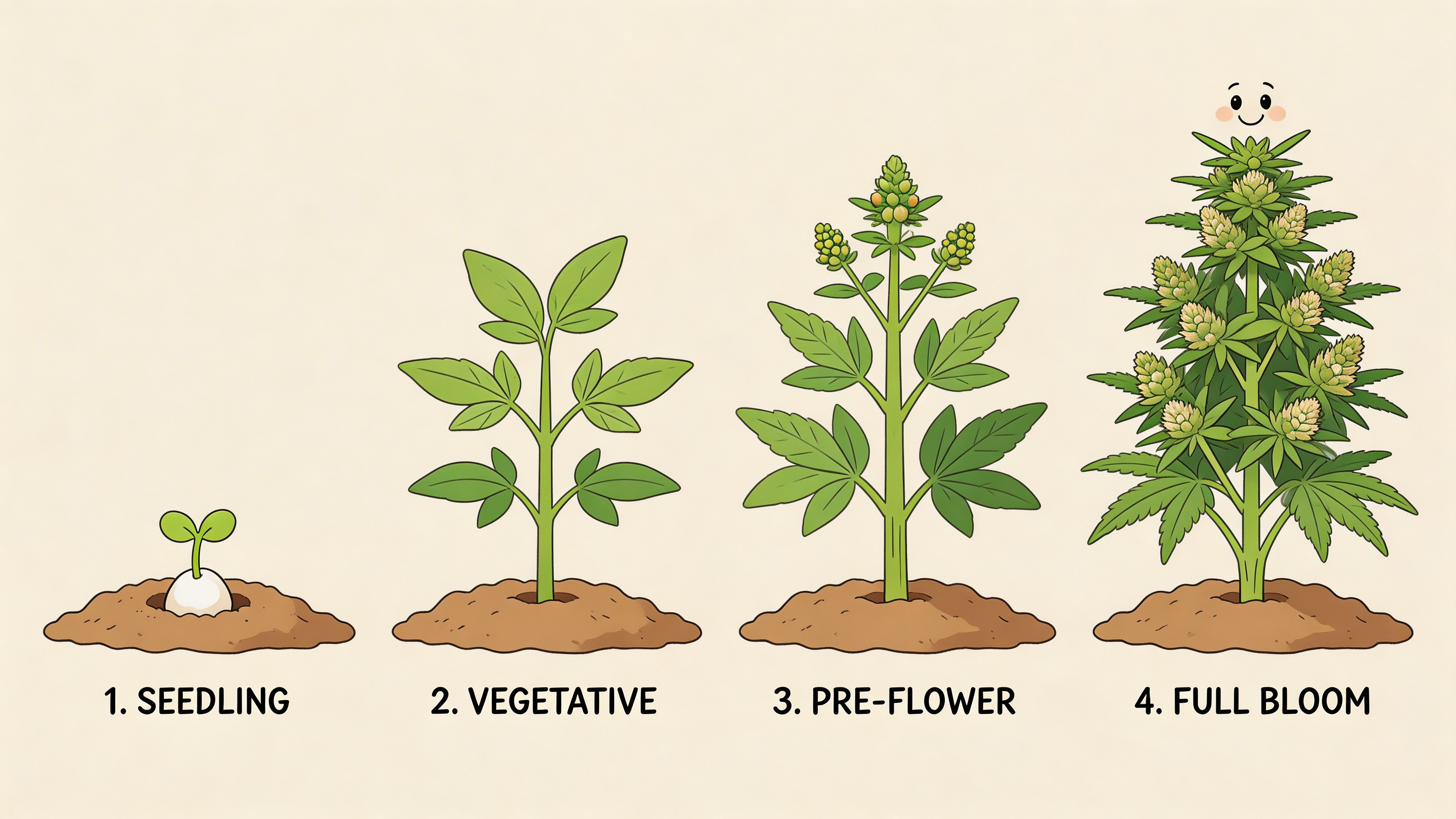
Start clean and keep it simple
The biggest beginner mistake is treating an autoflower like a plant that can afford delays.
It can’t.
Because autos have such a compressed lifecycle, many growers start them in their final pot to avoid transplant stress. If you want a fuller breakdown of early sprouting basics, this guide on how long it takes to germinate weed seeds is a useful starting point.
A simple indoor routine usually looks like this:
- Seedling stage: Keep conditions stable and don’t overwater.
- Early growth: Focus on root development and healthy leaf growth.
- Flower initiation: The plant begins bloom on its own, so be ready before that shift happens.
- Finish and harvest: Watch the plant closely because autos won’t sit around waiting for your schedule.
Feed lightly, not bravely
Autoflowers are often tougher in rough conditions, but they’re not heavy feeders.
Vivosun notes that because of their ruderalis genetics and compressed lifecycle, autoflowers are more resilient to cold, even down to 10°C, but they also respond better to half strength nutrients to avoid burn, as covered in Vivosun’s autoflower growing guide.
That’s a great example of how autos can be both hardy and sensitive at the same time.
- Hardy in environment: They can handle cooler conditions better than many growers expect.
- Sensitive in feeding: Too much nutrient too early can stall them fast.
- Short on recovery time: A mistake that a photoperiod plant might outgrow can follow an auto to harvest.
What the timeline feels like
A healthy autoflower doesn’t spend much time loafing around.
You’ll see a short seedling phase, then a burst of vegetative growth, and then flowering starts before many beginners feel fully ready. That’s why it helps to keep the plan simple. Stable light, stable watering, modest feeding, minimal stress.
This walkthrough gives a useful visual of how fast the process moves from one stage to the next:
A beginner friendly routine
If you want the low drama version of an autoflower run, stick to the basics:
- Plant directly in the final container: Avoid slowing the plant with unnecessary transplant shock.
- Choose a steady light schedule: Many growers keep autos on a simple indoor cycle without changing it for flower.
- Use restraint with nutrients: Start lighter than you think.
- Skip rough training: Gentle handling beats heroic correction.
- Stay consistent: Autos reward calm, boring care.
Small corrections early are better than major fixes later.
That’s the main rhythm of autos. They don’t ask for constant intervention. They ask for a decent environment and a grower who doesn’t overcomplicate things.
How to Choose Your First Autoflower Cultivar
Your first autoflower cultivar should make your life easier, not turn your spare hour after work into a troubleshooting session.
That means choosing for fit first. Potency, flashy photos, and hype can wait.
Match the cultivar to the life you actually live
Start with your real setup and your real schedule.
If you grow in a small tent, closet, or tucked-away patio corner, compact plants are easier to manage. If your week is packed and you want a quicker reward, pick a cultivar known for finishing on the faster side. If smell could become a problem with roommates or neighbors, pay close attention to aroma notes before you buy.
This is the part new growers often skip. They shop for the cultivar that sounds exciting, then realize halfway through that it wants more room, more attention, or more odor control than they can comfortably give. A good first run should feel manageable. You want a plant that fits into your routine like a slow cooker dinner, not one that demands the attention of a new puppy.
A simple way to narrow the field
Use four filters:
- Space: How tall and wide can the plant get before it becomes a headache?
- Speed: Do you want the fastest harvest possible, or are you fine waiting a little longer for a fuller plant?
- Smell: Are you happy with loud gas and funk, or would you rather keep things fruitier or lower key?
- Effort: Do you want an easy, forgiving grow, or are you willing to babysit a fussier cultivar?
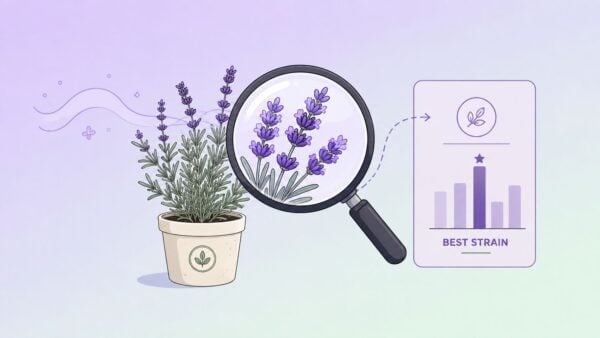
If you want a practical shortlist, this guide to best cannabis strains for beginners can help you compare options that are known for a smoother first run.
What usually works best for a first timer
Most new growers do best with a cultivar that stays medium or small, finishes in a reasonable window, and has a reputation for steady growth. That combo gives you a better shot at learning the basics without feeling rushed or buried in plant management.
You can always chase rare terpenes, huge yields, or heavy-hitting numbers on your second or third run.
For the first one, pick the cultivar that fits your space, your schedule, and your patience level. That is usually the smart choice for a busy hobby grower, and it is the one most likely to get you to harvest with a smile instead of a lesson learned the hard way.
Common Questions from New Growers
Can I grow autoflowers outdoors
Yes, and they’re a strong fit for outdoor growers who want a fast season.
Because they flower by age instead of waiting on changing daylight, autos are useful in places with shorter warm windows. They’re also a practical choice if you want a smaller, more discreet outdoor plant.
Do autoflowers smell less than other plants
Not automatically.
Smell comes down more to the cultivar’s terpene profile than the fact that it’s an autoflower. One auto can stay fairly low key, another can stink up the whole tent. Read cultivar descriptions carefully if aroma control matters in your setup.
Can I clone an autoflower
You can try, but it’s usually not worth it for most home growers.
An autoflower clone is the same biological age as the mother plant. That means the cutting doesn’t reset into a long vegetative phase the way many growers expect. It’s already on the same internal timeline, so it tends to flower quickly before it has time to build much size.
Are autoflowers good for beginners
For a lot of people, yes.
They remove some complexity around light management and finish faster than photoperiod plants. The catch is that their short lifecycle leaves less room to recover from rough handling, so beginners usually do best when they keep the grow simple.
What’s the best first timer mindset
Don’t try to outsmart the plant.
Choose a stable environment, avoid overfeeding, and let the cultivar do what it was bred to do. New growers usually get into trouble when they add too many bottles, too many training experiments, or too many changes all at once.
If you’re ready to stop guessing and start growing, Botanist Seeds makes it easier to compare autoflower cultivars by growth style, aroma, and beginner friendliness. Use the filters, find a cultivar that fits your space and schedule, and give yourself the kind of home grow you can enjoy managing.