




Male vs Female Cannabis Plant: Guide to Perfect Harvest
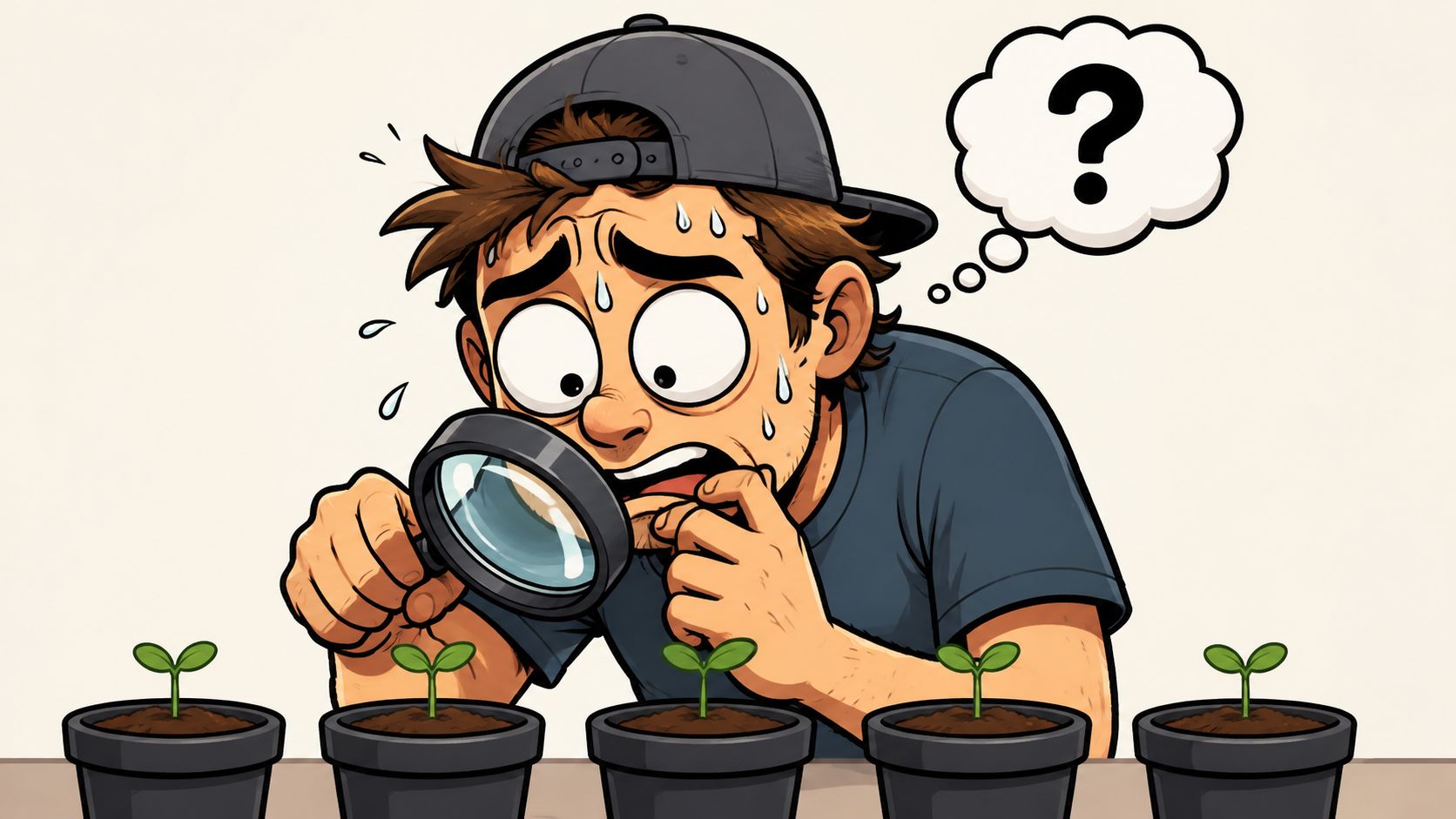
You've probably seen this scene before, or lived it yourself. A tray of healthy young plants is finally moving along, and instead of enjoying the process, you're crouched over them with a loupe, squinting at every node and wondering if one surprise plant is about to throw off the whole run.
That stress used to feel like part of learning to grow. For a lot of home growers, the whole male vs female cannabis plant question became a mini obsession. People would compare photos, second guess every little growth tip, and spend days worrying about whether they were looking at a pistil or a pollen sac.
The good news is that this is mostly an outdated problem.
Modern home growing is a lot simpler when you start with the right genetics. It still helps to understand the biology, especially if you want to know why female plants matter so much for flower production. But for the average hobby grower who wants a smooth run, full jars, and less hassle, the smarter move isn't becoming a plant detective. It's choosing seeds that make the old guessing game unnecessary.
That Moment Every New Grower Dreads
A new grower usually starts with excitement. You pick a light, mix your medium, set your timer, and watch those first seedlings pop. Then the nerves creep in. Every morning turns into an inspection routine. You lean in close, looking for signs you might not even fully understand yet.
That anxiety makes sense. Nobody wants to put weeks of time, electricity, nutrients, and care into a grow, then realize the garden isn't set up for the kind of harvest they wanted. It's one of the most common early frustrations because the grower is doing everything right, but still feels like the result depends on a reveal they can't control.
Why this worry hangs around
A lot of older cannabis growing advice treats stress as normal. It almost frames the process like a rite of passage. You're supposed to inspect every branch, compare plant shapes, and hope you catch the right signs in time.
That mindset sticks around even though home growing has moved on.
Practical rule: If your goal is a personal flower harvest, your best move is to remove uncertainty before the seed ever sprouts.
The importance of learning the male vs female cannabis plant difference isn't so you can spend your grow room time hunting for problems. It's so you can understand why female-only growing became the standard for hobbyists who care about efficiency.
A better way to think about it
Instead of asking, “How do I deal with this problem later,” ask, “How do I avoid creating it in the first place?”
That shift changes everything:
- Less daily stress: You stop overanalyzing every early growth sign.
- Better use of space: Every container, every corner of your tent, and every hour under the light goes toward flower production.
- Cleaner planning: It's much easier to choose feeding, training, and canopy plans when the whole crop is aligned around the same goal.
Once you see the biology clearly, the logic becomes obvious. Female plants are what most home growers are after. So the modern move is simple. Start with genetics designed to give you that outcome.
Female vs Male Plants Under the Hood
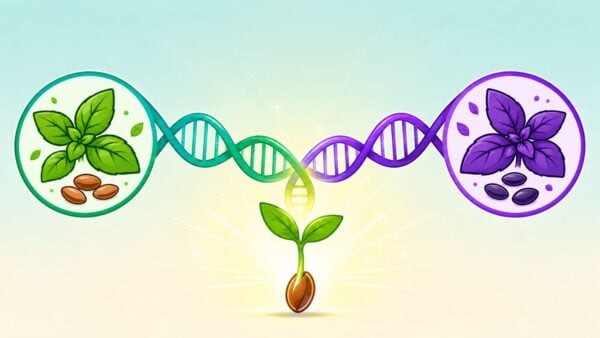
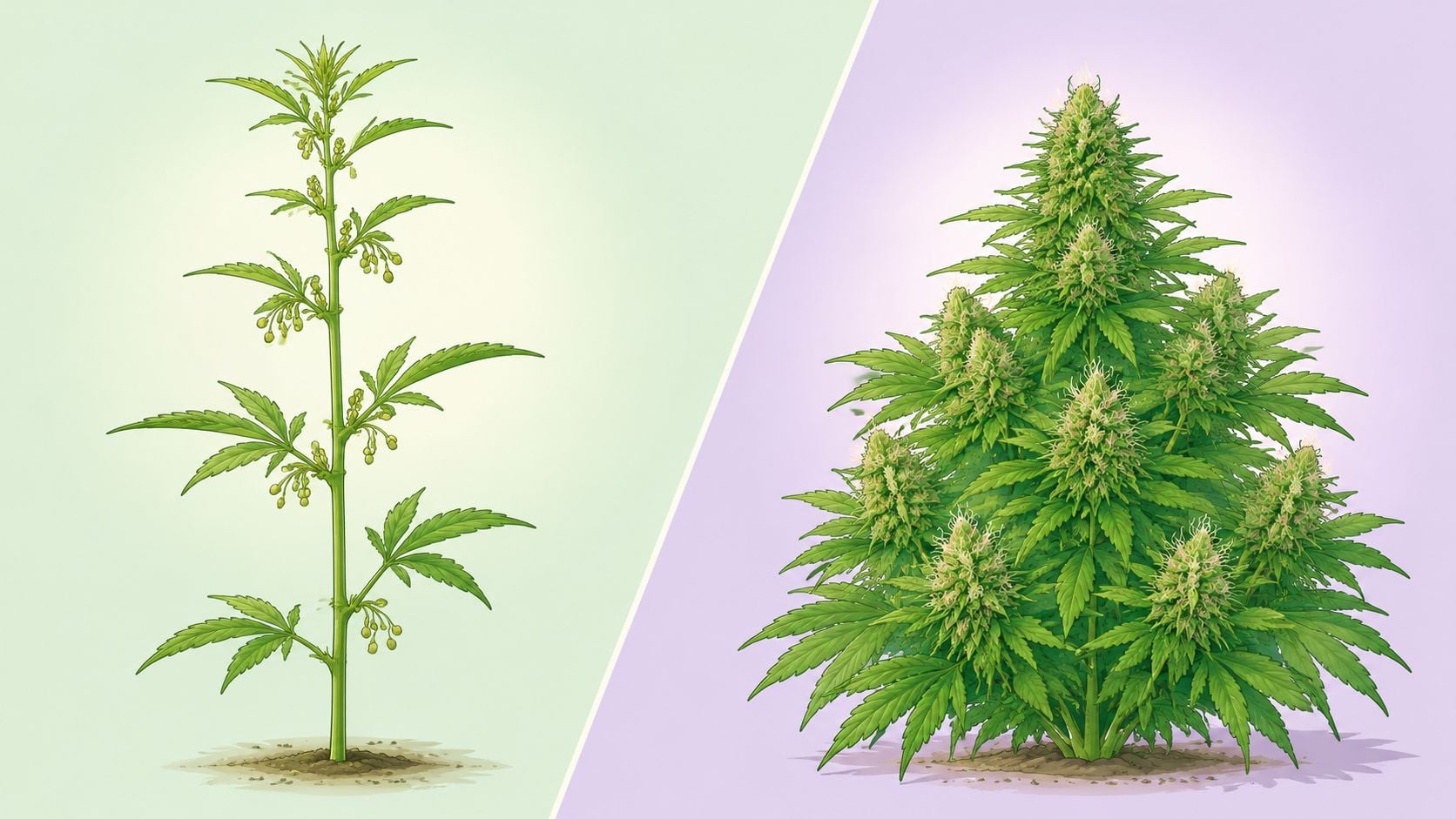
If you strip away all the lore, the male vs female cannabis plant question is really about plant function. One type is built for pollen. The other is built for flower.
Female cannabis plants are the ones growers want when the goal is resinous buds. They're the exclusive source of cannabinoid-rich flowers, and female plants contain XX chromosomes while male plants produce pollen sacs rather than resinous flowers, as explained in this overview of female cannabis genetics and feminized seeds.
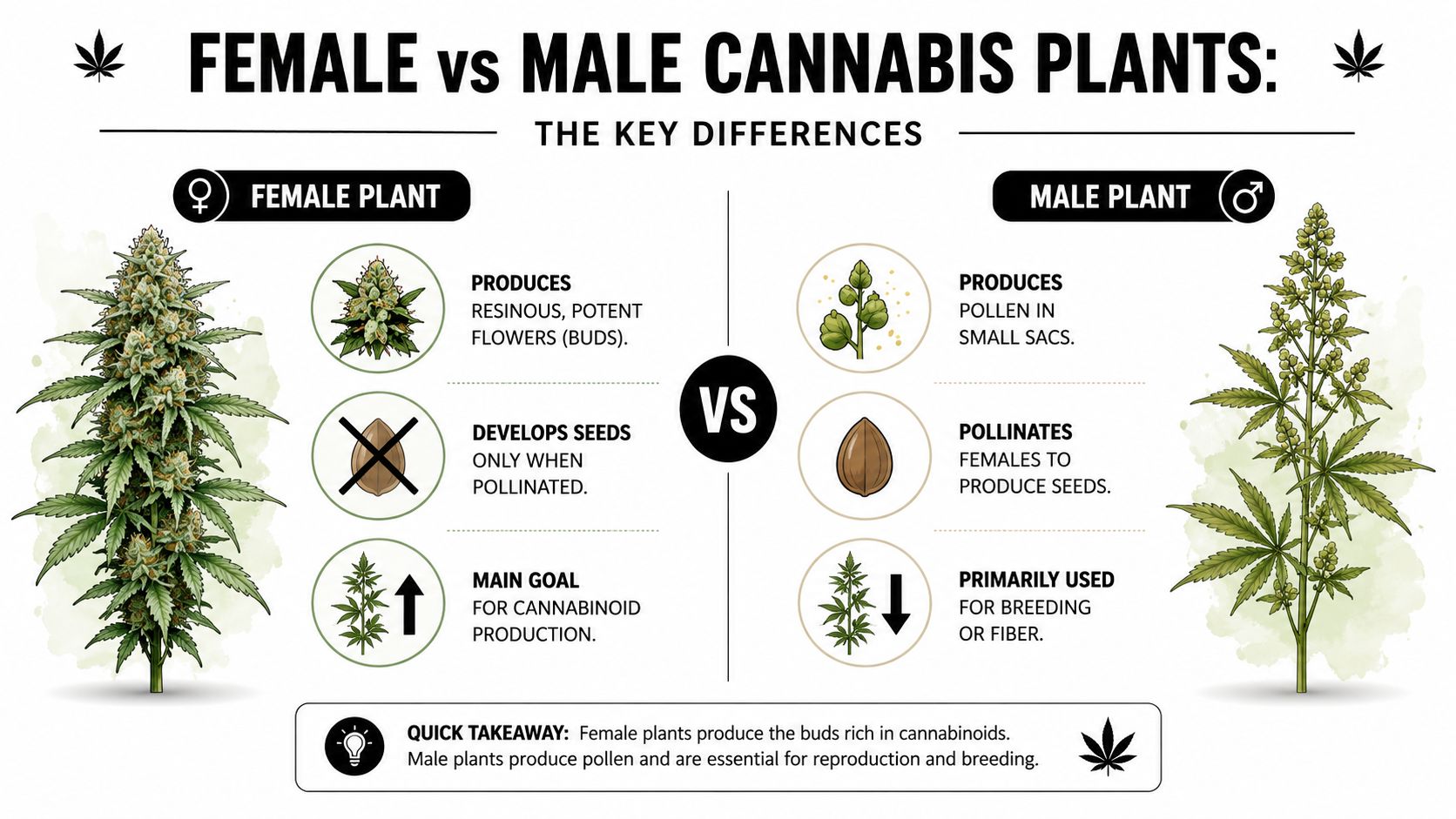
Male vs female plant characteristics
| Attribute | Female Plant | Male Plant |
|---|---|---|
| Primary role | Produces resinous flowers | Produces pollen |
| Flower structure | Bud-forming sites with dense resin production | Small pollen sacs |
| Typical growth style | Compact, bushy morphology | Gangly structure with more inter-nodal spacing |
| Branching | More lateral branching | Less lateral branching |
| Best fit for home flower growing | Yes | No, unless used for separate breeding or specialty purposes |
That side by side view clears up most confusion. Growers aren't choosing between two equal options. They're choosing between a plant that matches the harvest goal and one that doesn't.
Why female plants outperform for flower
The clearest data point is production. Female cannabis plants produce 16.88 times more CBD than male flowers and yield 65 to 75 percent more usable material because of their more complex lateral branching structure, according to this comparative Cannabis sativa analysis.
That same research also found female plants produce 2.5 times more trichomes than males. For a grower, that matters because trichomes are where the sticky, aromatic resin develops.
When growers say a cultivar is frosty, loud, or stacked, they're talking about traits that female flowering plants are built to express.
This is also why phenotype hunting matters so much. Even within a strong seed line, growers still compare growth style, aroma, resin development, and structure while looking for standout expressions. If you want to understand how growers evaluate those expressions, this guide to cannabis phenotypes is a useful next read.
The confusion about plant structure
A lot of beginners try to judge sex from overall shape alone. That's where people get tripped up.
Structure does tell part of the story. Females generally look more compact and fuller through the canopy. Males tend to look taller and looser. But the big takeaway isn't that you need to memorize every visual cue. It's that the whole plant architecture reflects purpose.
- Female plants put energy into flower sites, branching, and resin production.
- Male plants put energy into pollen development.
- Home growers chasing quality flower benefit most when every plant in the space is working toward the same result.
There is some overlooked value in males outside a flower garden. Healthy males can be grown separately for fiber, hemp concentrates, and selective cannabinoid extraction, and they contribute half of the genetic makeup in breeding work, as noted in this discussion of male cannabis plant utility. That's useful context, but it's a niche use case for most home setups.
Keeping Your Grow a Pollen Free Zone
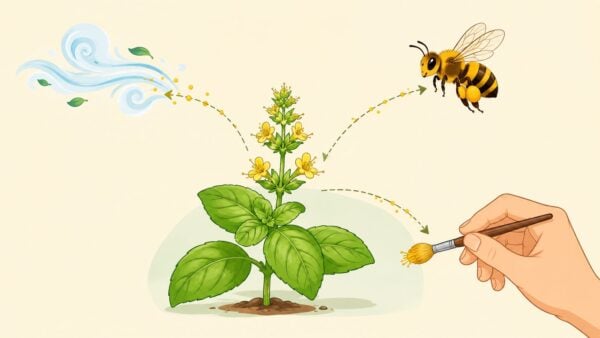
The reason growers care so much about sex in the first place comes down to one word: pollination.
If your goal is dense, seedless flower, you want sinsemilla, which means seedless cannabis. That's the sweet spot for most home growers because the plant keeps putting its energy into resinous flower development rather than switching over to seed production.
What pollination changes
A healthy female plant can look fantastic one week and then head in a very different direction once pollinated. The issue isn't cosmetic. It changes what the plant is doing with its energy.
A single male can create a real mess. Leafwell's explanation of accidental pollination notes that accidental pollination by a single male plant can ruin a harvest by forcing the female to produce seeds, which diverts energy away from resin production and significantly reduces the yield and quality of consumable buds.
That's why older growing advice made male plant management sound so urgent. The warning itself was valid. The outdated part is acting like every modern hobby grower still needs to solve that problem manually.
Why flower growers prefer predictable starts
Think about everything you invest in one run:
- Time: Daily watering checks, training, pruning, and environment adjustments.
- Space: Tent room, pots, airflow, and canopy planning.
- Money: Lights, medium, nutrients, and power.
- Expectation: You're growing your own so you can skip dispensary lines, avoid extra taxes, and enjoy the satisfaction of doing it yourself.
A flower grow works best when every plant in the room is pointed at the same finish line.
That's also why some growers love working from known female cuts. If you're weighing that route, this explainer on cannabis clones lays out how clones fit into a predictable garden plan.
What a pollen free grow really gives you
It isn't just about avoiding seeds in the final flower. It also makes the whole run easier to manage.
You can train more confidently, fill your canopy more evenly, and spend your attention on useful things like watering rhythm, aroma development, and plant shape. You're not watching over your shoulder for a problem that can derail quality late in the game.
For the home grower, that peace of mind matters almost as much as the harvest itself.
How Feminized Seeds Improve Your Odds
Here, the old male vs female cannabis plant debate stops being a headache and turns into a simple seed choice.
Feminized seeds are designed to produce female plants, which means the entire grow starts with a much clearer outcome in mind. For a home grower who wants flower, that's a huge upgrade in convenience.
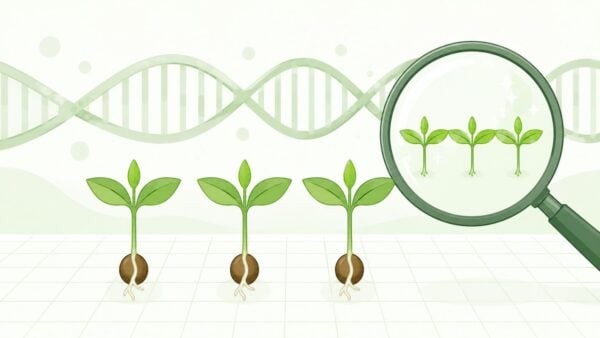
A quick visual makes the idea easier to lock in:
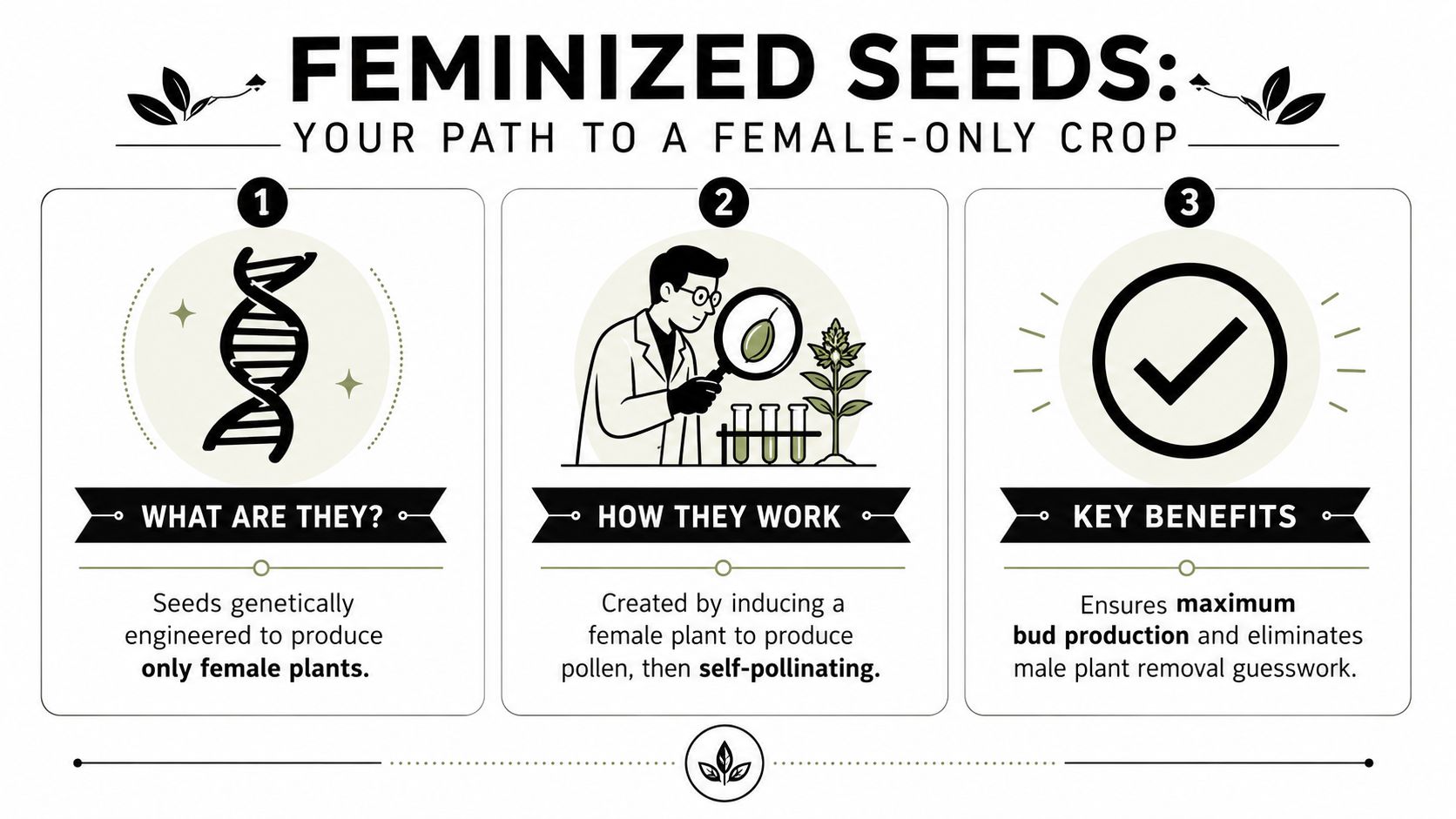
What feminized seeds change
Feminized cannabis seeds are bred from female-only parent plants (no genetic engineering involved) and produce female plants up to 99.9% of the time, which is what our 99.9% Feminized Guarantee is built on, which means each plant is aimed at becoming a bud-producing female rather than leaving you stuck with the old coin-flip outcome.
That's the practical breakthrough. You're no longer planning around uncertainty. You're building a grow around expected flower production from the start.
Here's the biggest quality-of-life improvement:
- No wasted tent space: Every plant has the same job.
- No wasted feed schedule: Your inputs support flower-focused growth across the garden.
- No guessing routine: You're not checking every node with nerves.
- No old-school lottery feeling: Your result is far more predictable.
Why this fits the home grower mindset
Most home growers aren't trying to run a breeding project. They want a clean, satisfying harvest from a cultivar they picked for flavor, aroma, structure, or overall vibe.
That's exactly where feminized seeds shine.
They help you use your setup more efficiently, whether you've got a compact tent in a spare room or a more dialed-in indoor space with training tools, environmental controls, and multiple cultivars in rotation. The seed choice supports the lifestyle goal too. You get more control over your own supply, fewer dispensary runs, and a lot more confidence that your effort is turning into jars, not frustration.
For a simple breakdown of how they're made and why growers use them, this article on what a feminized seed is fills in the background.
A short video can help if you prefer the quick version before reading deeper:
Bottom line: Feminized seeds don't make growing effortless, but they do remove one of the most annoying sources of uncertainty.
That's why worrying about male plants feels outdated for the average hobby grower. Better starting material solved a big part of the problem.
Choosing Your Perfect Female Cultivar
You buy feminized seeds to avoid a guessing game. The fun part is choosing the kind of female plant that fits your room, your routine, and the way you want to grow.
That choice usually comes down to two lanes: autoflower or photoperiod feminized.
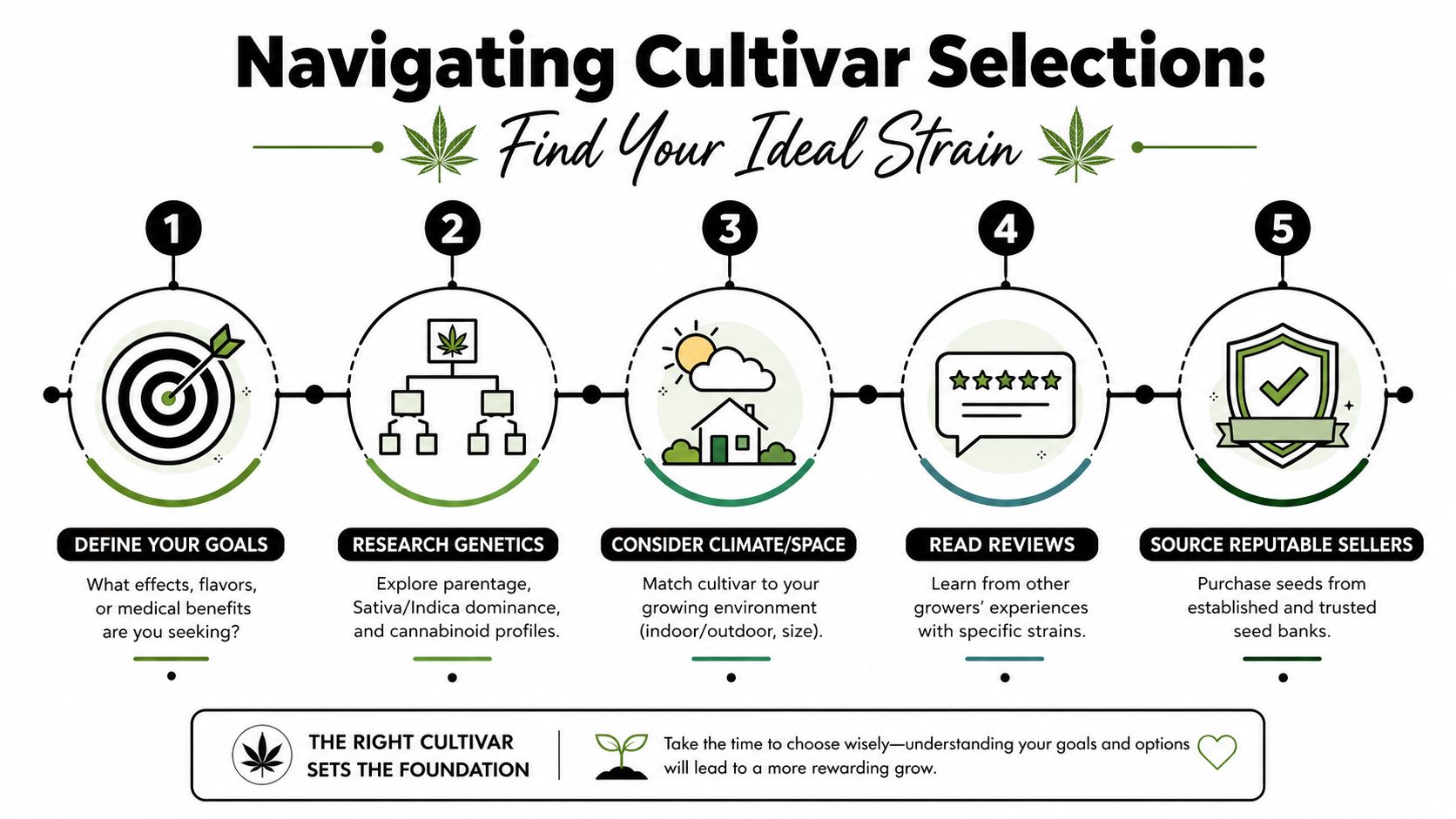
Autoflower if you want the simpler schedule
Autoflowers begin flowering on their own as they mature, so you do not need to change the indoor light cycle to trigger bloom. That built-in timing is a big reason newer growers like them. They remove one more decision from the process.
Autoflowers often suit growers who want:
- A straightforward routine: No planning around a manual flip to flowering
- A smaller plant: Helpful in compact tents and more discreet spaces
- A faster overall run: The plant keeps its own pace
- Less calendar management: Useful if your grow has to fit around work, family, or travel
A simple way to picture it is this. Autoflowers work like a plant with its own timer already set. You still need to water, feed, and watch the environment, but the transition to flowering is not another switch you have to manage.
Photoperiod if you want more control over shape and timing
Photoperiod feminized seeds stay in vegetative growth until they receive the light pattern that signals flowering indoors. For many home growers, that means switching to a 12 hours on, 12 hours off schedule when the plant is the size they want.
That extra control appeals to growers who enjoy a more hands-on style. If you like topping, training, widening the canopy, or filling out a tent before bloom, photoperiod cultivars usually give you more room to do that.
You may prefer photoperiods if you want to:
- Veg longer before flowering
- Train for a broader canopy
- Fill your space more intentionally
- Repeat a cultivar you already know you enjoy for aroma, structure, or effect
Photoperiods are a bit like cooking when you choose when dinner goes in the oven. Autoflowers are more like a slow cooker that starts on its own schedule. Both can turn out great. The better option depends on how involved you want to be.
A practical way to choose
Start with your constraints, not marketing hype.
Choose autoflower feminized seeds if you want a grow that feels simpler to schedule and easier to fit into everyday life.
Choose photoperiod feminized seeds if you want more say over plant size, training time, and the moment flowering begins.
If you are stuck between the two, ask yourself a few plain questions:
- How much headroom do you really have?
- Do you want to control the light change yourself?
- Do you enjoy training plants, or would you rather keep the routine simple?
- Are you trying to finish a run quickly, or shape the plant more carefully?
- What matters more to you right now, convenience or control?
That is the fundamental shift in thinking. You are no longer spending energy trying to spot and remove males before they cause problems. You are choosing the right female cultivar from the start, which is a much better use of your time and space.
Your Growing Questions Answered
A few questions usually pop up once growers move past the basic male vs female cannabis plant discussion.
Can a female plant develop male traits
Yes, growers do see female plants develop male traits in stressful conditions. The commonly cited triggers include heat, light interruption, and deficiencies, and this issue is often discussed in relation to hermaphroditism in guides like this one on cannabis preflowers and stress risk. What's missing is strong empirical data on how seeds from those plants compare with stable female seeds for vigor, yield, or consistency.
That means the safest takeaway is practical, not theoretical. Stable genetics and a steady environment matter.
Are there visual clues in plant structure
Yes. Nova Seed Bank's overview of plant morphology notes that male plants tend to show a gangly structure with greater inter-nodal spacing, while females are more compact and bushy. It also notes male pre-flowers typically emerge at 3 to 4 weeks, while female pistils appear at 4 to 6 weeks.
Those cues are useful for understanding the biology. They're much less useful as a lifestyle strategy than starting with dependable feminized genetics.
Is a random seed from a bag worth growing
Usually, that's not the best route if you want reliability. A random seed can carry unknown traits, unpredictable structure, and unclear stability. You might still get something interesting, but you're choosing uncertainty at the exact point where most home growers benefit from predictability.
If your real goal is a smooth harvest, better planning starts with better seed selection.
If you're ready to skip the old stress and grow with more confidence, Botanist Seeds makes it easy to compare feminized and autoflower cultivars for your setup. Use the comparison tools, check the genetics, and pick a cultivar that fits your space, your schedule, and the kind of harvest you want.