




Linalool Strains Explained: How to Pick, Grow, and Identify

You can smell it before you can name it. The tent is in the final stretch, the fan is moving a little too much air, and under the sharper pine and fuel notes there's a soft floral layer that feels like crushed lavender. That's usually the moment a home grower realizes they've got a linalool-rich cultivar on their hands, even if the label on the jar only says something familiar like GDP or Purple Kush.
That's also where the skill starts. Linalool strains are better treated like a phenotype hunt than a menu item, because the name alone won't tell you what's in the flower. Lab data does, and if you're growing for your own stash, that's the part worth trusting.
The Aroma That Gives Linalool Strains Away
A linalool-heavy tent has a specific kind of payoff. The room doesn't just smell “good,” it smells layered, with a floral note sitting under whatever else the cultivar is throwing out. On some runs, that reads as lavender. On others, it feels more like soft soap, fresh petals, or a perfume counter that hasn't gone overboard.
What the nose usually catches first
The giveaway is rarely a pure floral blast. More often, linalool shows up as the thing smoothing out sharper edges, so a cultivar that already leans pine, fuel, berry, or earth suddenly feels more rounded. That's why people can miss it at first, especially if they're only looking for the loudest smell in the jar.
For a home grower, that matters for two reasons. First, it helps you sort through your own flower without guessing. Second, it gives you a better target when you're hunting the next run, because you can compare aroma in the tent with what ends up in the cured jar.
Practical rule: if the flower smells floral in a way that still feels grounded, not candy-sweet or citrus-bright, linalool is worth checking on the COA.
The trick is not to trust the nose alone. Some cultivars smell floral early and then settle somewhere else after cure, while others only show their best expression once the dry is clean and the jar is stable. That's why the rest of this guide keeps coming back to the same point, smell is a clue, not proof.
What Linalool Actually Is and Why It Matters
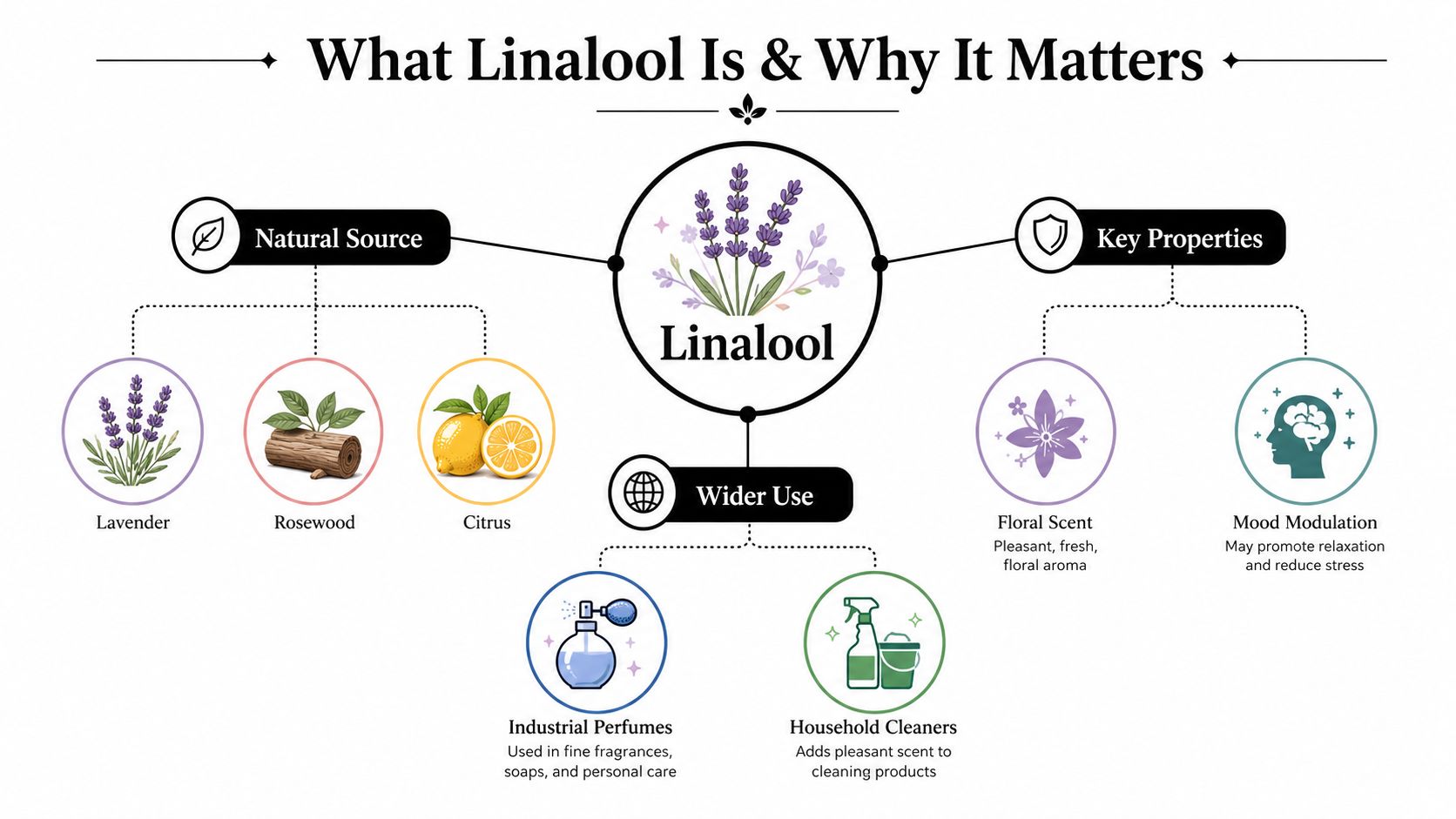
Linalool is a naturally occurring floral terpene found in plants like lavender and rosewood, and that wider plant world explains why it comes across so clearly when a cannabis cultivar leans into it. It's not some obscure cannabis-only oddity. It's a familiar aroma molecule that shows up in everyday fragrance and flavor work, which is why people recognize it so fast once they've smelled it in flower.
The scale outside cannabis is huge. PubChem cites a 1999 estimate putting daily per-capita intake at 72 µg/kg/day for Europeans and 21 µg/kg/day for U.S. Americans. A 2021 review on PubChem also reported the global production market for linalool at USD 9,980 million in 2019, with a projection of USD 12,300 million by 2024 (PubChem linalool overview). That broader footprint matters because it helps explain why linalool reads as instantly familiar even when it comes from a cannabis cultivar instead of a perfume bottle.
What it means in cannabis
In cannabis, linalool is usually a minor terpene, typically sitting around 0.01 to 0.5% of dry weight, though it can rise above 1% in some genetically distinct lines such as certain Lavender-associated cultivars (ACS Laboratory). It shows up more often in higher-THC chemotypes than in CBD-dominant ones, which is useful context when you're comparing cultivar families, but it still isn't a guarantee.
That's the cleanest way to think about it. Linalool is common enough in the plant world to feel familiar, but in cannabis it's concentrated enough in certain lines to become a useful marker for aroma-driven selection. If you want the deeper terpene picture, the broader cannabis-terpene overview on Botanist Seeds' cannabis terpenes page is a useful companion read.
Why Strain Names Alone Are Not Enough
A label can point you in the right direction, but it can't finish the job. Cannabis naming is messy, and the same cultivar name can land differently from grower to grower, batch to batch, and cure to cure. That's why a jar labeled Granddaddy Purple might smell lush and floral one time, then come across much flatter the next.
The useful rule of thumb
Treat the strain name like a lead, not a verdict. Independent cannabis education sources repeatedly connect Lavender Kush, LA Confidential, Granddaddy Purple, Do-Si-Dos, Kosher Kush, Amnesia Haze, and Zkittlez with linalool-rich chemistry, but that still just tells you where to start looking, not what a given batch will test like (Beach Boys Cannabis terpene guide).
The reason is simple. Cultivars get crossed, renamed, and redistributed under familiar labels, and cultivation conditions change the final profile. Even a good name can't tell you what the lab saw on a specific run. A certificate of analysis can.
Bottom line: if you want a real linalool candidate, start with the cultivar name, then confirm with terpene data from the actual batch you're buying or growing.
That's also why strain shopping feels so different once you stop trusting menus blindly. A name can hint at aroma family. A COA shows you whether the flower earned the label.
How to Read a Lab Report for Linalool
A jar can smell floral in the room and still miss the mark on paper. A lab report, or COA, helps you separate a real linalool candidate from a label that just sounds right. Read it like a grower checking trichomes on a plant before harvest, using the evidence in front of you instead of guessing from the jar name alone. Botanist Seeds on trichomes and harvest timing
Start with the individual terpene row
Go straight to linalool on the terpene panel. That single row tells you more than the big, easy-to-spot total terpene number, because a flower can post a healthy total and still lean hard on myrcene, caryophyllene, or another dominant terpene instead of linalool.
Check the lab's LOQ, the limit of quantification, before you read too much into a tiny number. A trace result near the reporting threshold does not give you much to work with. It is like seeing a few leaves at the edge of a canopy and trying to judge the whole plant from that alone. Also confirm what the lab tested, since flower, trim, and other sample types do not always represent the same finished batch in the same way.
Reading the numbers without overthinking them
| Linalool % of dry weight | What it usually means |
|---|---|
| Below the low end of the minor-terpene range | Probably not a linalool-forward cut |
| Around the typical minor-terpene range | Present, but likely one part of a broader aroma mix |
| Above the usual range, but under the high outlier level | Strong candidate for a linalool-leaning cultivar |
| Above the high outlier level | Worth paying close attention to the phenotype and the COA |
Use the table as a guide, not a verdict. A cultivar with a modest linalool reading can still smell floral if the rest of the profile supports that note, while a high number on paper can still fall flat if the dry and cure were rough. A COA gives you the chemistry, and your grow notes tell you whether the plant expressed that chemistry cleanly.
Growing Conditions That Protect Linalool
Linalool is volatile, so rough handling can strip away the thing you were trying to preserve in the first place. That's why the post-harvest side of the grow matters so much. A cultivar can look promising in late flower and still lose a lot of its floral edge if the dry is too warm, the jar work is sloppy, or the trim is too aggressive.
Keep the dry and cure gentle
The simplest habit is also the one people skip most often, keep the dry calm and controlled. A cooler dry range around 60 to 70°F, or 15 to 21°C, helps protect the aromatic layer instead of blasting it off too fast. Humidity should come down slowly, because a harsh dry can flatten the profile before the flowers ever make it to cure.
Cure in sealed jars, and resist the urge to keep opening them all day just to check the smell. That's where a lot of the best aroma gets lost. Gentle trimming also matters, because beating up the finished flower before it's stable is an easy way to lose the soft top notes that made the cultivar special.
Match the grow style to the goal
A healthy plant is more likely to express its full terpene range, so avoid stacking on unnecessary stress. Many home growers chasing aroma like organic inputs and living soil because those approaches fit a slower, more hands-on style, but the real win is consistency, not ideology. Give the plant stable conditions, clean water, and enough light to finish well, and you're giving the terpene profile a better shot at showing up cleanly in the jar.
For a closer look at flower maturity and the visual side of finishing, the trichome guide on Botanist Seeds' trichomes page pairs well with this part of the grow. The more you line up harvest timing with a careful dry and cure, the more likely that floral note survives the trip from tent to stash.
Running a Linalool Phenotype Hunt at Home
A phenotype hunt sounds complicated until you turn it into a routine. Start with a known linalool-associated line, label everything clearly, and compare plants on smell, structure, and finish instead of chasing one lucky jar. That makes the whole process feel more like a weekend hobby project than a lab exercise.
A simple hunt structure
- Pick a starting line. Choose a cultivar that's already associated with linalool-rich chemistry, so you're not hunting blind.
- Label every plant. Use a simple numbering system, like A1, A2, A3, and keep those labels through dry and cure.
- Take aroma notes early and late. Smell each plant at a few points in flower and write down whether the floral note gets cleaner, louder, or buried.
- Send a trim sample for terpene testing. A small sample at finish tells you whether the nose matched the chemistry.
- Keep the winner, cull the rest. Save the cut that hits the aroma target and the lab profile you wanted.
A hunt journal helps more than people expect. Write down how the plant stretched, how it stacked, how the flower felt in hand, and what the room smelled like at the end. That makes the next run faster because you're comparing real notes instead of relying on memory.
If you want a clean framework for comparing plants and keeping each cut organized, the phenotype reference on Botanist Seeds' phenotype page is a useful companion. The point isn't to make the run fancy. It's to make it repeatable.
Curated Linalool-Rich Cultivars Worth Considering
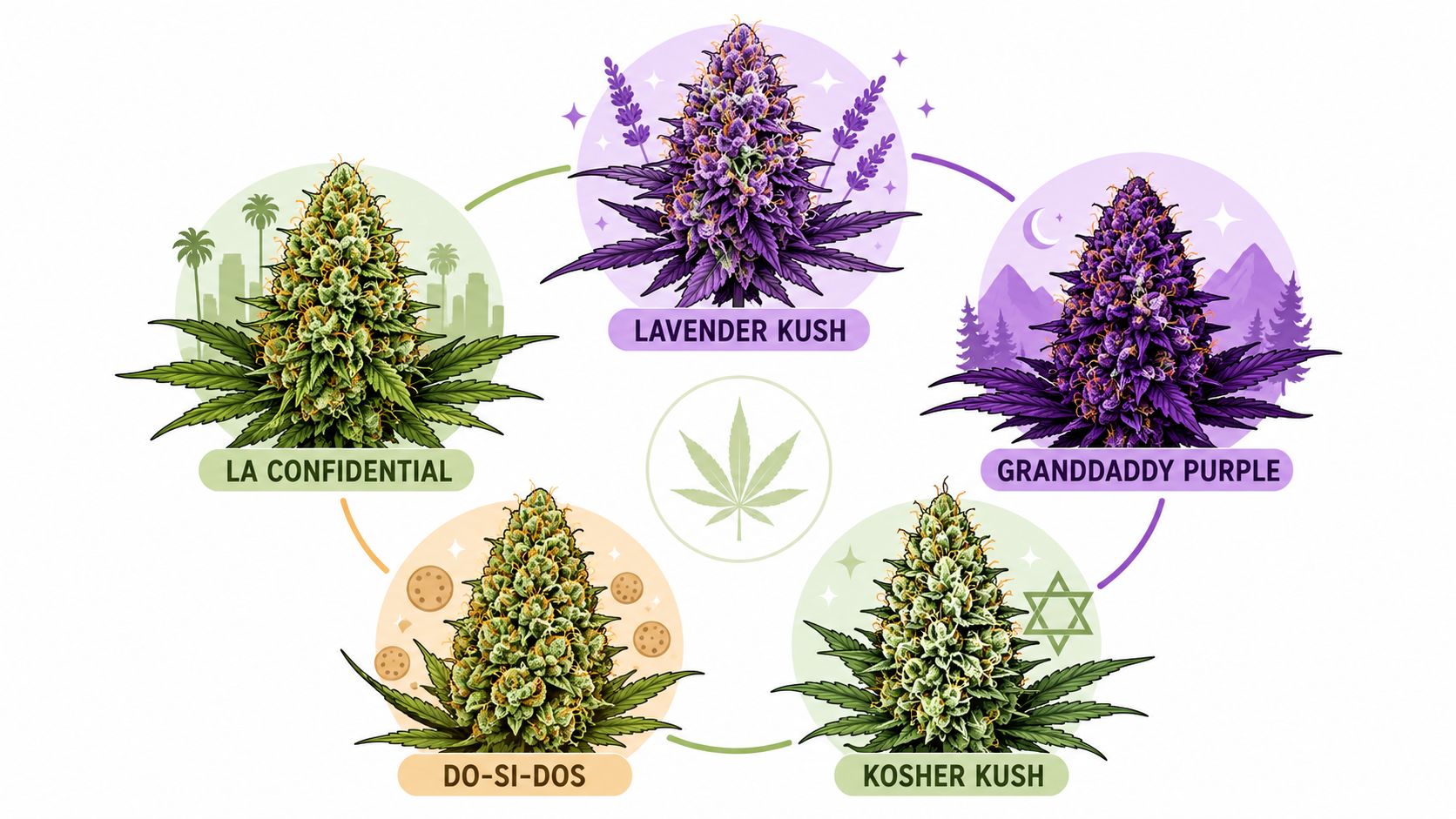
A short list works better than a crowded menu when you are trying to pin down aroma targets. These cultivars come up often in linalool conversations, and they give you a practical spread of floral, earthy, sweet, and pine-leaning profiles to compare against your own setup. The An educational infographic showcasing five different cannabis strains including Lavender Kush, LA Confidential, and Do-Si-Dos. can help you keep those names straight while you read lab notes and sniff through the tent.
Quick profiles
- Lavender Kush. The name points you in the right direction, and the aroma usually lands in floral and herbal territory. It works well for growers who want a clear lavender-style target and do not mind a cultivar that makes its presence known early in the tent.
- LA Confidential. This one often starts in the pine and earth lane, then opens into floral notes as it warms. It fits a small tent because the aroma shift gives you a clean line to track during flower.
- Granddaddy Purple. Many growers associate it with grape, berry, and floral layers. It is a useful comparison point if you want to see how linalool can sit underneath a sweeter top note.
- Do-Si-Dos. Earthy, sweet, and floral is the usual direction here. If you prefer cultivars that stay balanced instead of pushing one note too hard, this belongs on the shortlist.
- Kosher Kush. Expect an earthy, pine-forward profile with floral warmth underneath. It shows how linalool can sit inside a heavier-smelling cultivar without taking over the whole jar.
- Amnesia Haze. This one is a reminder that linalool does not only show up in heavy, sleepy-smelling lines. It can sit inside a brighter profile too, which makes it useful for comparing aroma families.
- Zkittlez. Fruity and layered, with enough floral detail that it is worth testing against the rest of the panel instead of judging it by the candy-like first impression.
Seed format fit
For home growers, feminized photoperiod seeds give more room to read phenotype differences over time, while autoflower seeds keep the run simpler and faster in a smaller setup. The right format depends on how much space you have and how much note-taking you want to do, but either way, the COA still needs to be the final filter.
One product line from Botanist Seeds, Johnny Apple Seed, lists linalool as one of its top terpenes, and Dosi Pop is listed as having higher linalool content. Those kinds of listing notes are useful starting points, but I would still cross-check the batch COA before I commit space to any run.
Putting It All Together and Picking Your Seeds
The cleanest way to handle linalool strains is simple, start with a cultivar name, verify the terpene profile on a COA, then grow and cure carefully enough to keep the floral layer intact. That saves you from chasing labels that don't hold up and keeps the focus on what you want in the jar. It also gives you the usual home-grow wins, fewer dispensary lines, less tax sting, and the satisfaction of pulling a verified cut from seed to cure.
Use the search filter, compare terpene data, check the seed format, and match the cultivar to your tent instead of forcing your tent to fit the cultivar. That's the whole game with linalool, it rewards the grower who pays attention.
If you're narrowing down cultivars for a floral, linalool-leaning run, Botanist Seeds puts the comparison work in one place so you can sort by terpene data, seed format, and grow space without guessing. Visit Botanist Seeds and use the catalog to line up a run that fits your setup and your aroma target.