Genetic Stability Testing: Your Guide to Consistent Seeds in 2026

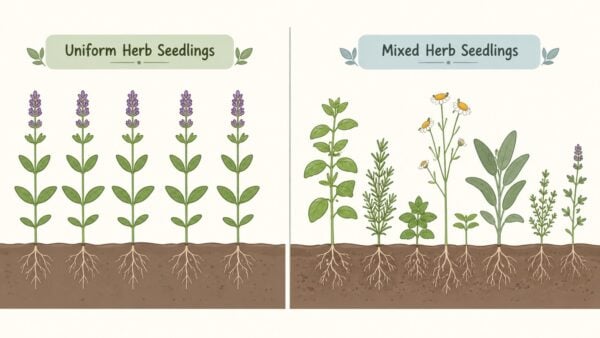
Genetic stability testing is how you know your seeds will grow into plants with the same aroma, structure, and flowering time, grow after grow. Think of it as a verified recipe: you use the same ingredients and the same steps, so you get the same awesome result every single time.
Understanding the Basics
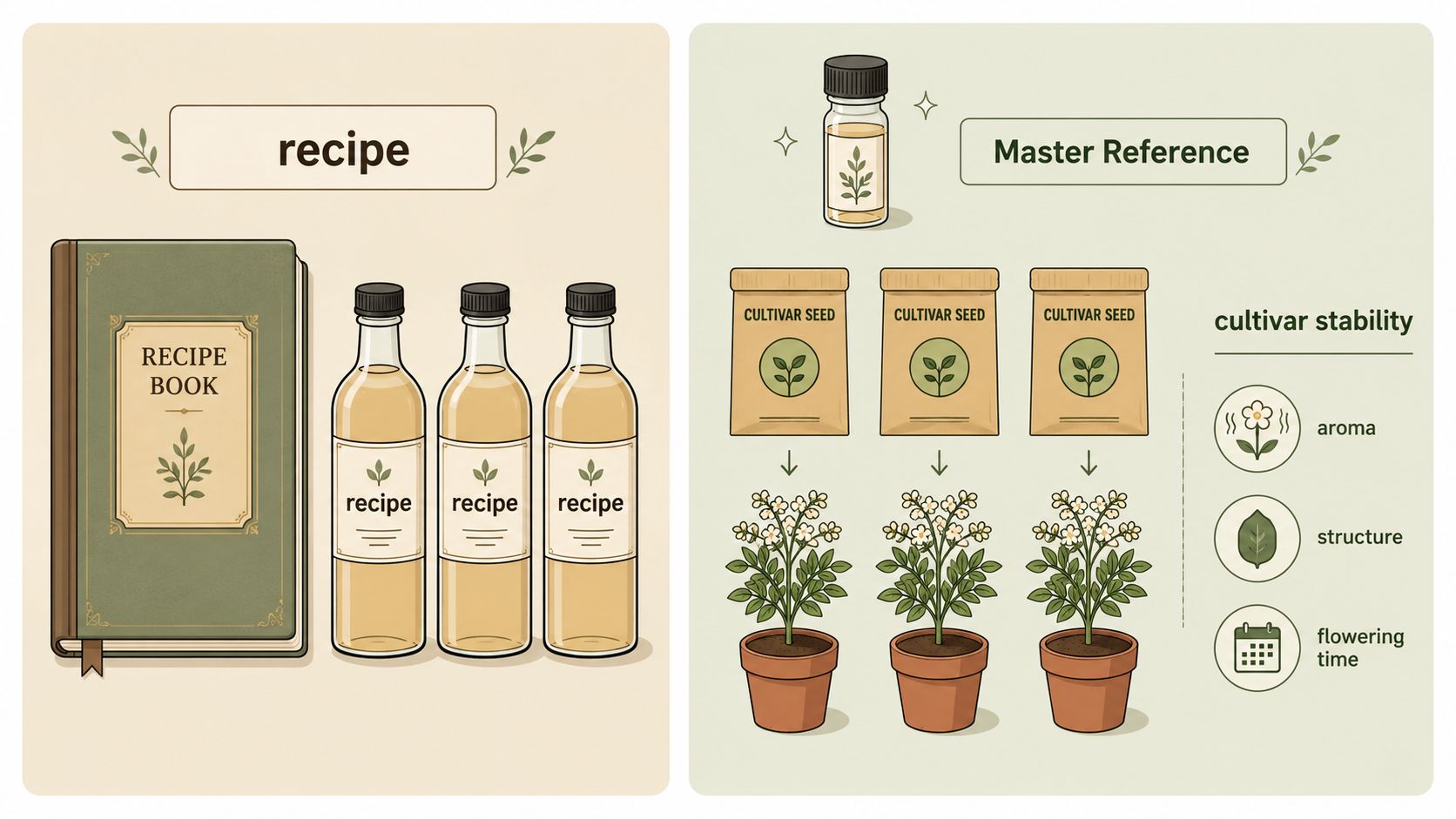
Genetic stability testing is just a series of checks that good breeders run to make sure a cultivar stays true to its original profile. For home growers, this is huge. It means you get predictable aromas, consistent plant structures, and reliable flowering times. That translates to less guesswork and better results in your tent.
- A working line is the breeder's current stock where they make selections and fine-tune traits.
- A Master Cell Bank style reference is a frozen genetic snapshot, the gold standard they compare everything against.
- The finished seed pack is what you buy, produced only after the breeder confirms it matches that reference.
This process is all about documentation, not marketing. Real stability is proven with test results from checkpoints, not just a claim on a label.
Quick Reference Table
| Core Concept | Why It Matters For Growers | Where It Shows Up |
|---|---|---|
| Consistent phenotype | Predictable harvests and sensory profile | Cultivar descriptions, grow reports |
| Multi-generation checks | Reduces surprises from genetic drift | Breeder technical sheets |
| Reference vs production | Confirms your seed batch matches the original | Lab summaries and certificates |
| Testing methods | Different tests catch different issues | Lab reports and methods list |
A Simple Analogy
Think of genetic stability like brewing your favorite craft beer at home. If you keep perfect notes and use a trusted starter culture, every batch tastes the same. If you just wing it with a random culture, you might get a weird batch. Testing gives you that starter culture confidence.
Key takeaway: A documented stability program with checkpoints is worth more than a catchy cultivar name.
Practical expectations are key. When you read a breeder's claims, look for mentions of both a reference archive and checks on the final product. Ask if they compare early generation stock to the seeds they're actually bagging up.
You can also use simple tools to validate their claims. Keep a phenotype logbook and jot down notes on aroma, stretch, node spacing, and flowering time across a few plants from the same pack. This real-world data is super valuable when you compare it to a breeder's report.
Read also: Learn more about phenotype evaluation in our guide on phenotype testing and grow logs
Next, we'll get into the specific methods breeders use, how sampling works, and how to read a stability report without your eyes glazing over.
How Testing Evolved From Blots To Sequencing
Early genetic tests were a lot like hand counting inventory: slow, tedious, and easy to mess up. Old-school techniques required a ton of DNA and hours of lab work, so breeders couldn't run checks very often. This meant plenty of surprises could slip through.
Judging a cultivar just by its looks is like picking a book by its cover. A plant might smell right or look uniform, but you can't see the subtle genetic shifts that build up over time. That's why modern DNA sequencing changed the game. It lets breeders read the actual script instead of just guessing from the cover art.
Key insight: Older tests caught big changes; modern sequencing reads the whole story.
Sanger sequencing was a big step up. It gave breeders a reliable way to confirm specific genetic markers, one at a time. It worked great for targeted checks, like verifying a handful of key traits. But it was still slow and expensive for scanning many traits or entire genomes.
Then next-generation sequencing (NGS) came along, and it was like swapping a hand-held clicker for a barcode scanner. NGS reads millions of DNA fragments at once, giving a base-by-base view of the whole genome. Now, labs can catch tiny single-letter changes and big structural rearrangements in the same run. This lets breeders track genetic drift before it becomes a problem for you.
Practical differences at a glance:
- Southern blot and RFLP: Slow methods that spot large DNA changes; needed a lot of sample material and weren't very efficient.
- Sanger sequencing: High-accuracy checks for specific markers; great for confirming known traits.
- Next-generation sequencing: Super efficient; detects both tiny mutations and big structural shifts across many plants.
Early Phenotype Checks Still Matter
Checking the phenotype, the plant's observable traits, is still a valuable first step. Aroma, stretch, and flowering time are what you'll notice first in your grow. That's why many breeders pair visual checks with lab verification, combining practical observations with hard data. This combo cuts down on guesswork and saves time during selection.
The Modern Toolkit
Today, a solid stability program blends phenotype logs, targeted marker checks, and NGS when needed. For home growers, this means you can ask breeders about how deep their testing goes. Later, we'll break down how to read their reports so you can evaluate a supplier's claims before buying their feminized or autoflower seeds.
The Methods Breeders and Labs Actually Use
When you start checking out a seed supplier, phenotype checks are usually the first thing you see. Things like aroma, plant structure, flowering time, and resin production are what matter to growers. Think of these traits like a book's cover: they give you a quick feel for the cultivar, but they don't guarantee the story inside is the same every time. Phenotype is a great starting point, but it's not the final word on stability.
Imagine a breeder tracking flowering time across a dozen plants. That's a practical win for you. But a single-generation check can miss rare mutations that sneak in over multiple cycles. That's why experienced breeders pair their visual logs with lab tests. Combining both takes a lot of the guesswork out of buying feminized and autoflower cultivars.
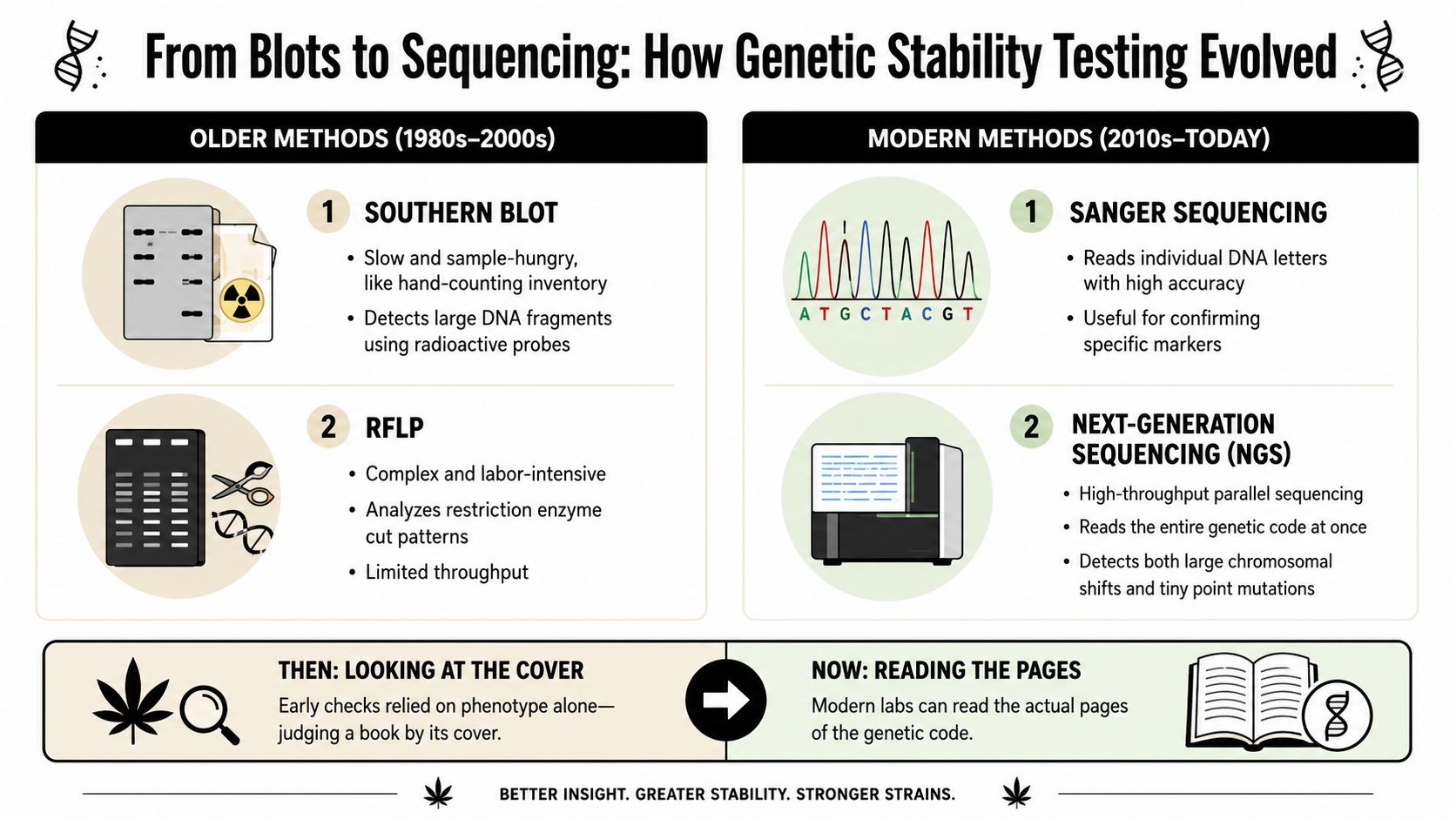
This infographic shows the difference between older lab methods and modern sequencing, highlighting why reading the DNA is better than just judging the cover. The main takeaway? Modern tools catch everything from huge structural shifts to tiny, single-letter changes.
Molecular Markers And What They Reveal
Single nucleotide polymorphisms, or SNPs, are like single-letter spelling differences in a recipe. A SNP might slightly change a trait, or it might do nothing at all. Spotting lots of SNPs across different plants helps confirm the overall consistency of a cultivar.
Simple sequence repeats, or SSRs, are more like repeated words in a sentence, like "buds, buds, buds." SSRs are super useful for identity checks. The number of repeats tends to stay consistent within a stable line, which reveals patterns breeders can track across generations.
- SNP genotyping: Great for tracking lots of small changes across the genome.
- SSR profiling: Effective for fingerprinting cultivars and spotting obvious mismatches.
Cytogenetics And Structural Tests
Some tests look past tiny DNA changes and focus on big chromosomal moves. Fluorescence in situ hybridization (FISH) lights up specific chromosome regions, helping breeders catch large rearrangements. Array comparative genomic hybridization (aCGH) compares differences in gene copies across chromosomes, flagging gains or losses that can alter growth patterns.
These methods answer a totally different question than SNPs. They tell you if whole chunks of the genome have shifted, which can cause visible changes in a plant's vigor or structure.
Big structural tests spot large-scale shifts; sequence-based tests find single-letter differences.
High-Throughput Approaches
SNP arrays can scan thousands of known DNA positions quickly, giving a broad view of variation across many plants. Next-generation sequencing (NGS) reads millions of short DNA fragments at once, making it possible to detect both tiny mutations and structural variants in the same dataset.
- Sanger sequencing: Still useful for confirming a specific marker with high accuracy.
- NGS: The workhorse for deep comparisons when breeders want to track drift across many plants or generations.
How Labs Combine Methods
Good labs combine phenotype logs, targeted markers, and broader sequencing when needed. A breeder might start with SSR or SNP panels for routine batches, then run NGS on samples that show unexpected variation.
Here is a checklist breeders and buyers often use:
- Run phenotype evaluation across multiple plants.
- Use SSR or SNP panels to fingerprint the batch.
- Apply FISH or aCGH if structure shifts are suspected.
- Use Sanger to confirm key markers, and NGS for full-resolution checks.
As a practical tip, ask a seed supplier which tests they run and whether their reports compare a reference archive to their production seeds. The same tools used in other high-tech fields are now accessible for feminized and autoflower cultivars. Ultimately, combining methods gives the clearest picture of genetic stability.
Sampling and Statistics Behind Reliable Results
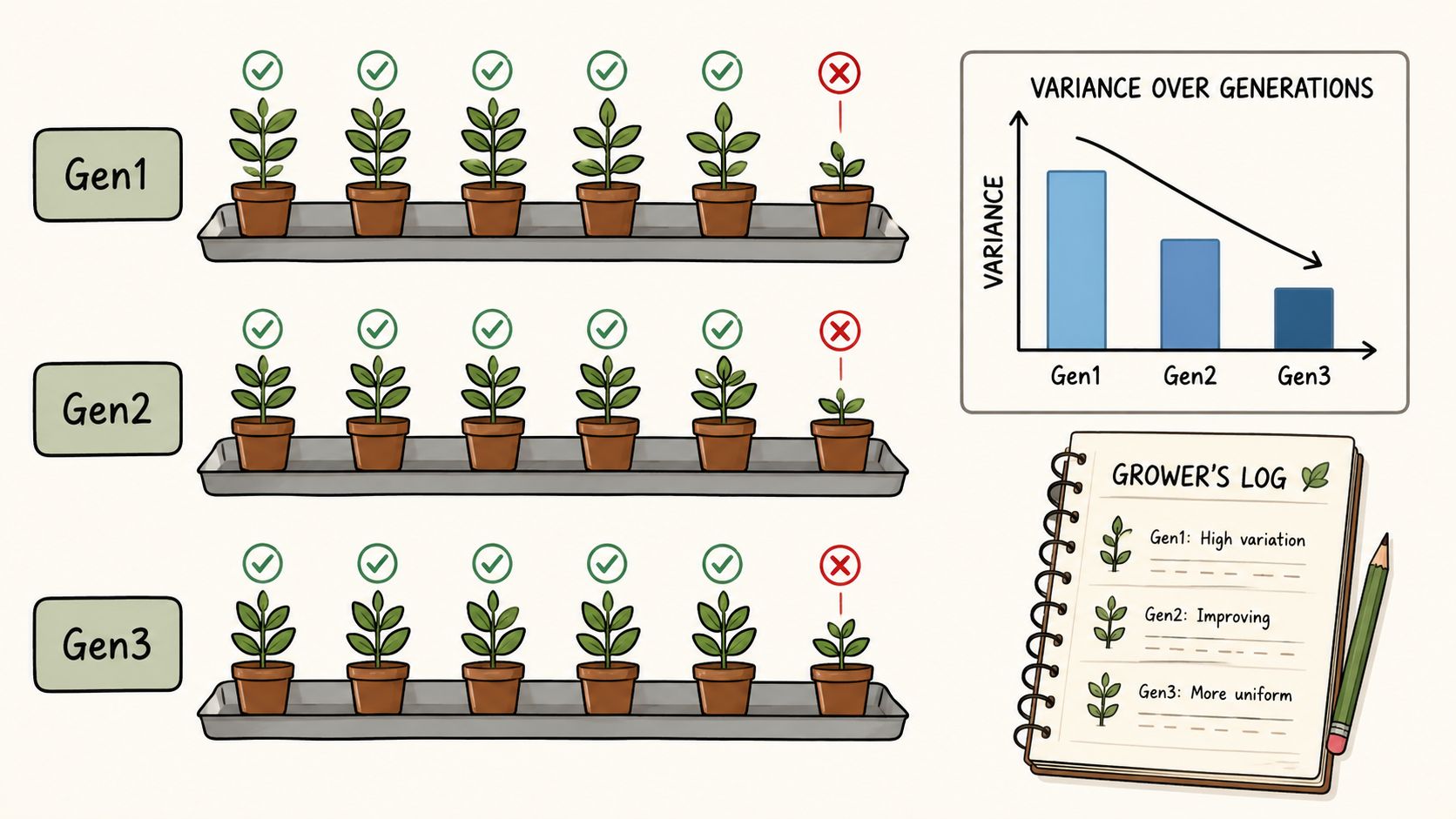
Genetic stability testing isn't about judging a single plant; it's a numbers game. Think of it like taste-testing cookies. One cookie from a tray might be perfect, but sampling from several trays tells you if the recipe is actually consistent. That's exactly why breeders test multiple plants across generations. It helps them spot outliers instead of mistaking a random fluke for standard behavior.
Consider a breeder checking just one plant that flowers early. That could easily be a one-off. However, testing 12 to 30 plants paints a much clearer picture of the variance in traits like flowering time, node spacing, and resin production. This gives you a far better read on consistency and whether a cultivar will behave predictably in your own grow.
How to Pick Samples That Actually Represent the Batch
- Choose plants from different mothers or production runs, not just siblings from one plant, to avoid sampling bias.
- Include both early-generation and late-generation material. This is like comparing their master reference to the final product, giving you the full picture.
- Randomize your selection whenever possible so you don't unconsciously pick only the best-looking plants.
Key insight: A mix of early and late-generation samples reduces the chance you're measuring a temporary quirk.
Statistical Basics in Plain English
- Variance is simply how spread out the results are. Low variance means the plants all act pretty much the same.
- Consistency is the repeatability you want, and more checkpoints mean less uncertainty.
- Confidence increases with sample size and with repeated sampling across generations.
Practical Sampling Checklist
- Decide which trait or marker to track, like flowering week or a specific SSR fingerprint.
- Sample across at least two generations to detect drift.
- Test a minimum of a dozen plants for phenotypes, and use larger panels for lab checks when possible.
- Compare production samples to the archived reference to confirm they match.
A grower’s logbook is more useful than you might think. Jot down short notes on aroma, stretch, and flowering length across several plants from the same pack. Over a few grows, your log becomes your own informal data that can flag drift. This real-world data pairs perfectly with lab reports when you're vetting a seed supplier.
When breeders add checkpoints, your confidence in their seeds should rise. More checkpoints mean fewer surprises in your tent. If a breeder shows repeated checks across plants and generations, you can pop those seeds knowing the odds are high for a predictable grow and a consistent vibe.
Reading a Stability Report Without the Jargon
Think of a stability report as a lab's recap of how a breeder verified a cultivar's consistency. Start by finding the basics: sample IDs, tests performed, number of markers checked, and the expected vs. observed results. These sections tell you what was tested and how strict the standards were.
Look for clear sample identifiers that connect a lab result back to a specific seed lot or reference archive. If the report mentions a Master Cell Bank or reference, that means the lab compared the production seeds against a defined standard. This is what you want to see to confirm a seed pack matches the breeder's original vision.
- Sample identifiers show which plants or batches were tested.
- Assay list reveals what questions the test answers, like identity or genetic drift.
- Marker counts give you the scope, whether it's a few markers or thousands.
Key takeaway: ask which tests were used so you know if they're just identity checks or deep genome scans.
Check the tests section for method names that match the depth you expect. Phenotype notes are common and practical, but they don't replace lab checks. SSR or SNP panels usually appear next, with NGS used for broader comparisons.
Pay attention to the reported results and how they compare to what was expected. A table listing expected vs. observed results makes it easy to scan for mismatches. If the report flags any issues, see if they are just one-off outliers or a recurring thing across the whole batch.
- Expected vs. observed table helps you see if variation is rare or systematic.
- Pass or fail criteria explain what the lab considers acceptable.
- Notes on confidence or coverage explain how much you can trust the results.
What to Scan For Fast
- Is the lab independent or part of the breeder's company? This should be clearly stated.
- Does the report compare reference and production samples across at least two different points in time?
- How many markers were checked, and are they the right ones for the question being asked (identity vs. drift)?
- Are there any statistical summaries, like a percent match or variance measurement?
Key takeaway: look for two time points because repeat checks across generations catch slow drift.
Practical quality checks include a clear chain of custody for samples and sample IDs that match seed lot numbers. If you only see phenotype notes with no lab data, treat those claims as preliminary.
Use the Botanist Seeds comparison tool to cross-reference a breeder's reported stability with real grower reports. That helps you check lab claims against real-world results before you buy feminized or autoflower seeds.
Read also our breakdown of cannabinoid testing in the article on TAC vs THC for more context on lab reports. Learn more about test report reading in our guide on TAC vs THC.
Questions Worth Asking Any Seed Supplier
Approach the conversation like you're talking to a friend over a beer: plain and direct. Ask how they confirm a cultivar stays consistent from one run to the next, because that consistency dictates the aroma, structure, and flowering schedule you'll get in your tent.
At what generation checkpoints do you test?
Do you test production seeds against an archived reference, or just the current working line?
This matters because checking at two different time points catches slow genetic drift, rather than just giving a pass to a lucky batch.
Which tests do you run, and why?
Do you rely on phenotype logs, lab panels like SSR or SNP, or deeper scans like NGS?
Knowing the mix tells you if they're running quick identity checks or full-resolution scans.
Can you share a summary report?
Ask for sample IDs, the tests performed, markers checked, and the pass criteria.
A clear table comparing expected versus observed results makes it easy to spot a single oddball plant versus a batch-wide issue.
How many plants and generations were sampled?
Request sample sizes, specifically whether they included at least a dozen plants and samples from multiple mothers or production runs.
Larger, randomized samples increase your confidence that the seed pack will behave just like the reference.
What happens if a line drifts during production?
Do they pull the batch, re-label it, or notify customers?
How they handle issues shows if stability is a serious technical process or just a marketing buzzword.
Is the lab independent?
Independent labs and clear sample tracking boost trust in the results, letting you cross-check their claims against actual grower reports.
Practical Tips to Bring to the Conversation
- Ask for the number of markers checked, because more markers mean higher resolution.
- Ask if phenotype logs are paired with lab data, since both reflect what you'll see in your tent.
- Tell them you value repeatable aroma and structure, predictable flowering weeks, and a steady vibe over marketing gimmicks.
Quick Questions Cheat Sheet
- Do you test at more than one generation?
- Which specific tests did you run on this seed lot?
- Can I see a summary report with sample IDs and pass criteria?
- How many plants were sampled, and from how many production runs?
- What's your plan if genetic drift appears?
Stable genetics mean you get the same aroma, structure, and vibe season after season, and that's worth asking about before you buy.
Read also our market comparison and buyer guide on premium seed sourcing at Botanist Seeds Premium Seed Market
Common Questions About Genetic Stability Testing
How Does Testing Differ Between Feminized and Autoflower Cultivars?
Feminized seeds mostly get checked for trait consistency: things like aroma, plant structure, and whether they flower on schedule. Autoflowers need all of that plus one extra check: making sure the autoflowering trait actually holds steady. When that life cycle marker slips, it shows up fast and makes the grow unpredictable.
Breeders working with autoflower cultivars usually include flowering-time data and specific genetic markers in their tests. It's a tighter screening process, but for good reason.
Can Home Growers Run Their Own Stability Checks?
Absolutely, and you don't need a lab for the basics. Track the aroma, stretch, node spacing, and flowering week across a dozen plants, and you'll spot any obvious drift without spending a dime. Sure, you can't run a lab test at home, but your logbook becomes real evidence when you compare it against a breeder's documentation.
Think of it as building your own reference file. Photos, notes, and plant counts all add up.
How Often Should a Good Breeder Retest a Production Line?
At a minimum, once per major production run and every 3–5 generations. Routine checks after increasing seed stock catch slow drift before it gets out of hand. A full comparison to the archived reference genome or marker profile is what separates a careful operation from one that's just hoping for the best.
The math is simple: the more generations between tests, the more variation can sneak in unnoticed.
What If a Seed Pack Grows Differently Than Expected?
First, document everything. Take photos, make phenotype notes, count samples, then contact the supplier with your evidence. A solid breeder will provide a summary report and explain what they'll do to fix it, not dodge the question.
Stability shows up in repeatable aroma and structure, so track what you can and ask for lab comparisons.