




Bisabolol Terpene Effects: Aroma, Comfort & Cultivar Picks

You crack a jar after a long day, expecting the usual loud gas or sweet fruit, and get something softer instead, a floral note that feels closer to chamomile tea than dessert. That's the kind of moment that makes bisabolol terpene effects worth paying attention to, because this terpene doesn't shout. It gives a cultivar a gentler face, a cleaner finish, and a scent that can make the whole jar feel more settled.
For home growers, that matters more than it first sounds. Aroma is part of the whole experience, from how a cultivar smells in the jar to how it reads when you open the lid after curing. Bisabolol is one of those compounds that can separate a forgettable batch from one you keep reaching for, not because it's loud, but because it rounds things out in a way your nose remembers.
A Familiar Floral Note Worth Paying Attention To
A grower opens a jar and gets hit with something that reminds them of chamomile tea, honey, and fresh flowers. That smell usually doesn't come from one single note, but bisabolol is one of the most recognizable pieces of that softer profile. It's the kind of aroma that makes you pause for a second and think, “Okay, this cultivar's got a different kind of character.”
That's why bisabolol keeps showing up in cannabis conversations even when people aren't trying to talk about chemistry. It's a named aroma compound, not a marketing label, and it helps shape how a cultivar presents itself in the jar. The same molecule has a long history in chamomile and other plant-based products, which is a big reason the scent feels familiar even before someone tells you what they're smelling.
Practical rule: if a cultivar smells floral, honeyed, and a little soft around the edges, bisabolol might be part of that profile.
The useful part for growers is that aroma isn't just decoration. It's part of how people remember a cultivar, how they sort jars on the shelf, and how they decide what to run again. A stronger fuel note can dominate a jar, while bisabolol tends to sit in the background and smooth the overall impression.
That's also why it's worth learning early. Once you can pick that chamomile-leaning note out of a cured jar, you start shopping and growing differently. You stop chasing labels and start listening to the plant's actual scent, which is where a lot of the best decisions happen.
What Bisabolol Actually Is in Plain Language
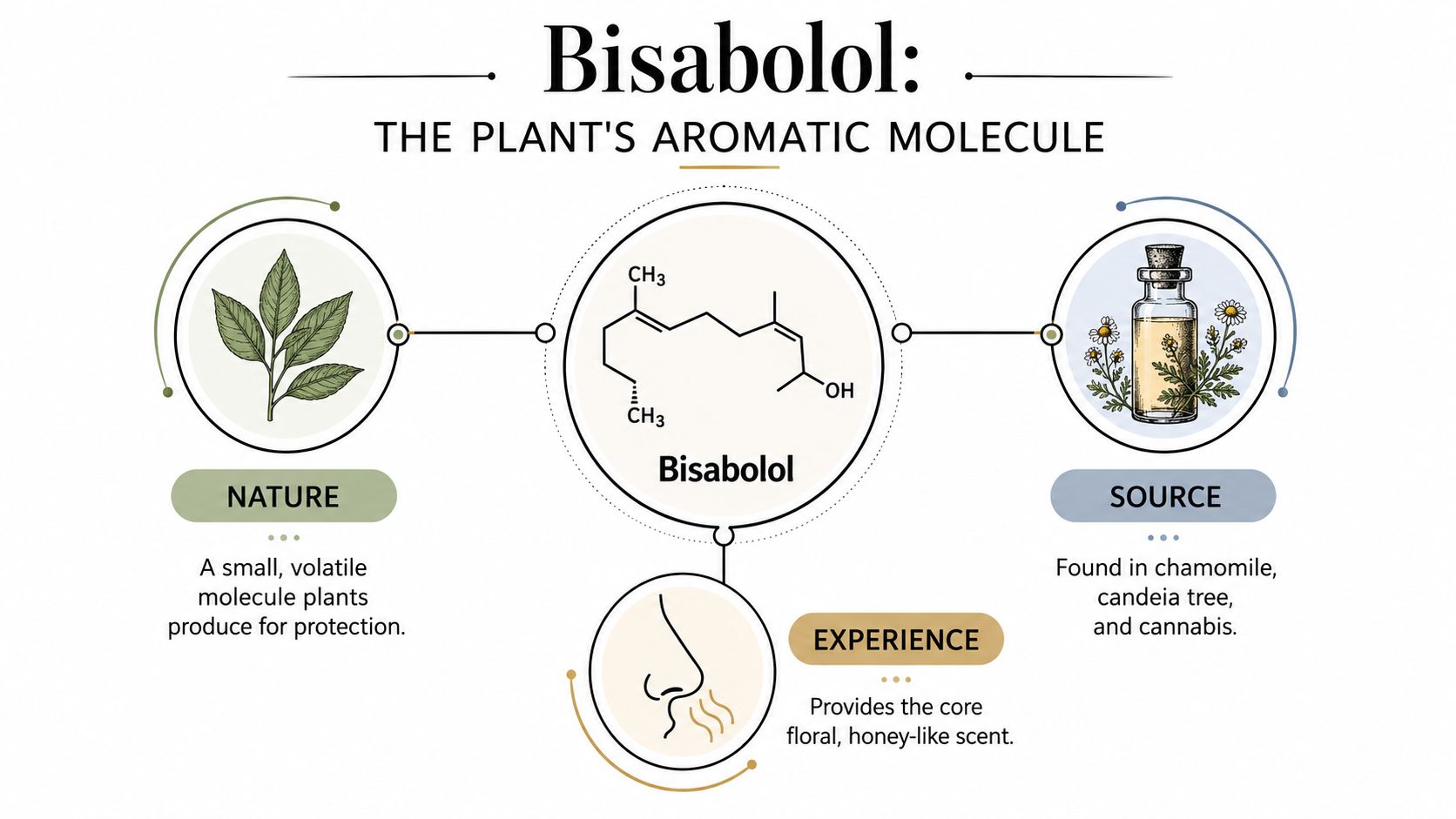
Bisabolol is a small aromatic molecule that plants produce in their resinous trichomes, the same tiny structures that help create a cultivar's broader terpene profile. It functions as one instrument in a band. It doesn't need to be the loudest to change the song, but if it's absent, the whole mix can feel flatter.
Where it sits in the aroma spectrum
If you line up terpenes by vibe, bisabolol lives on the softer end. Limonene tends to read bright and citrusy, caryophyllene can come off spicy and warm, and bisabolol leans floral, honey-like, and rounded. That makes it easy to picture on an aroma wheel, because it doesn't fight for attention the way a sharp, fuel-heavy profile does.
It also shows up outside cannabis, especially in chamomile and the candeia tree, which helps explain why people recognize the note so quickly in a jar. The molecule turns up in skincare, home products, and botanical extracts too, so it's not some obscure cannabis-only oddity. It's a familiar plant molecule that cannabis growers happen to care about because it changes the way a cultivar smells and feels in the hand.
A simple way to think about it
A good mental model is a perfume blend. Bisabolol is the soft floral note that sits under the brighter top notes and the heavier base notes. It doesn't replace cannabinoids or other terpenes, it helps frame them.
For a quick reference on the broader terpene profile, the Botanist Seeds cannabis terpenes guide is a useful companion piece. Once you understand where bisabolol sits, you can read a cultivar's aroma like a layered recipe instead of a single smell.
Practical rule: bisabolol is usually easiest to notice when a cultivar smells floral first and loud second.
The Aroma and Sensory Vibe of Bisabolol

A bisabolol-forward jar usually doesn't smell aggressive. It tends to land as floral, honeyed, and chamomile-like, with a soft edge that feels more relaxed than punchy. If a fuel-heavy cultivar smells like a garage door opening, bisabolol smells more like a clean kitchen with dried herbs on the counter.
That difference matters because aroma sets expectation. People often describe softer profiles as easygoing or calm, not because the smell magically does everything on its own, but because the nose reads it that way. The terpene's profile is supported by preclinical work showing it interacts with ion channels tied to itch and pain signaling, yet the most reliable takeaway for a home grower is still sensory, not medical, because the jar is where most people meet it first. The PMC review on α-bisabolol lays out that preclinical picture clearly.
How it contrasts with loud cultivars
A loud diesel or skunk-leaning cultivar announces itself fast. Bisabolol doesn't do that. It's more of a soft-focus terpene, the kind that smooths the edges of a jar without turning the whole thing into a floral bouquet.
That's why it often shows up in cultivars people call “smooth” or “easy.” Those words are subjective, but they fit the sensory experience well. You're not getting blasted by sharp citrus, pepper, or gas. You're getting a gentler aroma that hangs around without taking over.
The practical part shows up in storage and consumption too. Bisabolol is part of the volatile aroma layer, so rough handling, heat, or poor sealing can flatten it out quickly. If the smell gets muted, that soft floral note is often one of the first things to disappear.
Here's the simple home-grower takeaway.
- Floral first: think chamomile, honey, light petals.
- Not loud: it usually sits below the top-line gas or citrus notes.
- Clean finish: the jar often feels rounded instead of harsh.
- Easy to lose: heat and air can dull it fast.
How Bisabolol Sits Alongside Cannabinoids
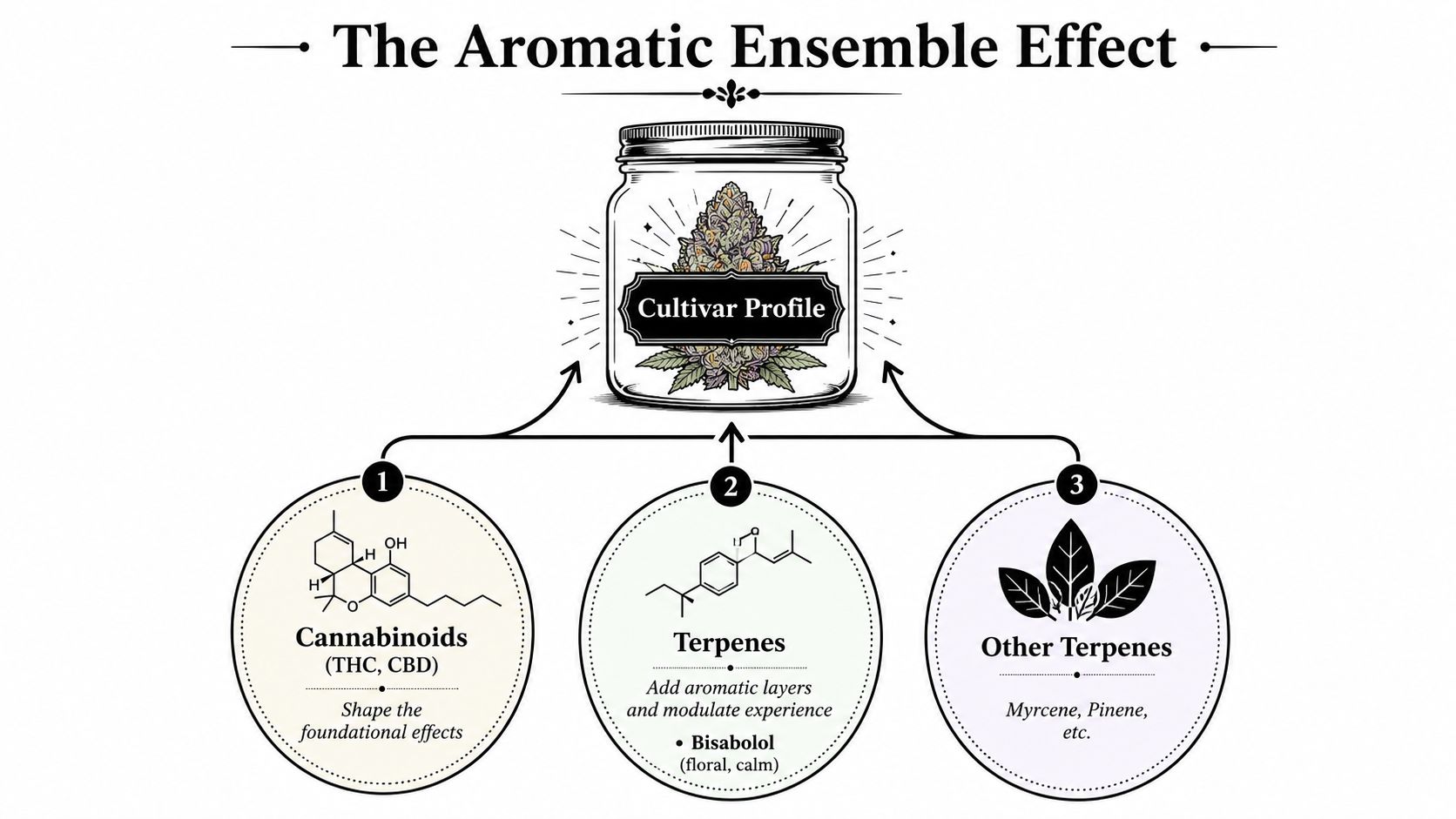
Bisabolol doesn't act like the main character in a cultivar profile. It works more like the finishing herb in a meal, the thing that makes the whole dish feel complete without becoming the thing you talk about first. Cannabinoids set the base character, other terpenes add structure, and bisabolol helps soften the blend.
The jar is a team effort
A cured flower jar is never just one molecule doing all the work. THC, CBD, and minor cannabinoids give the cultivar its foundation, while terpenes supply the aromatic layers. Bisabolol is part of that terpene stack, and its floral profile can make the same cannabinoid mix feel softer and more polished on the nose.
That's the useful mental shift for growers. Stop asking which single compound “does everything,” because that's not how flower reads in real life. Start asking how the mix behaves together. A jar with bisabolol in the background often feels less sharp, even when the cannabinoid profile stays the same.
Why this matters in real selection
When you're comparing cultivars, you're not just picking potency or yield. You're picking a full aromatic expression that includes the way the flower smells after cure, how it opens in the grinder, and how the bouquet hangs in the room. Bisabolol can make a cultivar feel more cohesive, especially when the rest of the profile leans bold.
The phenotype guide is useful here because the same cultivar can express a slightly different aroma from one run to the next. If you're hunting for a softer floral note, you want to watch for that character across more than one plant, not just trust a label.
Practical rule: cannabinoids set the base, terpenes color the edges, and bisabolol often works like the smoothing layer in between.
That's why people who like balanced jars tend to keep an eye out for it. It doesn't overpower the profile. It helps the profile make sense.
Cultivars That Commonly Show Bisabolol Character
Some cultivars are known for a cleaner floral note, while others lean so hard into gas or fruit that bisabolol gets buried under louder aromatics. The useful move is to start with cultivars that already have a reputation for softer, chamomile-adjacent character, then compare how they grow in your space. That keeps you from chasing a terpene in theory and ignoring the plant in front of you.
A quick comparison
| Cultivar | Aroma Profile | Growth Pattern | Best For |
|---|---|---|---|
| ACDC | Soft, herbal, floral, restrained | Often grown for steady, manageable structure | Growers who want a quieter jar and a calmer aroma |
| Harle-Tsu | Earthy with gentle floral notes | Usually a practical, even-growing cultivar | Balanced home setups and patients who prefer subtle scent |
| OG Kush selections | Can show floral notes under the fuel | Often vigorous, with a stronger personality in the room | Growers who want familiar structure with a chance at softer terpene layers |
| Floral-leaning modern hybrids | Honeyed, petal-like, sometimes creamy | Varies by cut and environment | Hobbyists hunting for a standout aroma in a small tent |
ACDC and Harle-Tsu are often the first names people reach for when they're looking for a gentler terpene conversation. They're not the loudest cultivars in the room, and that's part of the appeal. If you want a jar that reads clean instead of punchy, they make sense as starting points.
OG Kush selections are different. They can carry floral notes, but they often bring more weight and body overall. That makes them interesting if you want a familiar cultivar shape with a shot at softer aroma layers underneath.
Modern floral hybrids are where a lot of the fun lives. They can shift from sweet to creamy to honeyed depending on the cut, and that's where a grower starts paying attention to phenotype selection instead of just cultivar names. If you like tracking subtle differences between jars, those runs can be the most rewarding.
The main thing is to match the plant to your setup. Small tents, bigger rooms, and quick autoflower runs all change how a cultivar expresses itself, so the best pick is the one that fits your space and your nose.
Spotting and Preserving Bisabolol in Real Life
The easiest way to spot bisabolol is by smell, but a lab sheet can help confirm whether a cultivar has that floral layer in the first place. Look for terpene listings that mention bisabolol by name, then compare that with the actual jar aroma. If the paper says floral and the flower smells flat, something in curing, storage, or handling probably stripped the character down.
What to check before you buy or trim
A simple habit makes this easier.
- Read the terpene panel: look for bisabolol listed explicitly, not just “terpenes.”
- Check the full aroma picture: one terpene never tells the whole story.
- Compare flower to extract: some concentrates preserve aroma better than others, but the nose still decides.
- Watch the cure: rough drying can mute the softer notes first.
The reason this matters is simple. Bisabolol is part of the volatile aromatic layer, so it's easy to lose if flower sits hot, open, or exposed to too much air. Cool, dark, sealed storage helps preserve the scent better than a loose jar on a warm shelf. That's not glamorous, but it works.
For a deeper look at where aroma forms on the plant, the trichomes overview is a helpful reference. That's where these scent compounds live, and that's also where they start fading if you treat cured flower carelessly.
Practical rule: if you want the floral note to survive, protect the jar like you'd protect a good bag of coffee.
Consumption temperature matters too. Heat can flatten delicate aroma compounds, so gentler handling usually gives you a cleaner read on the terpene profile. If you've ever noticed a jar smelling bright before heating and dull after, that's the kind of difference you're protecting against.
Clearing Up Common Misconceptions About Bisabolol
A lot of bisabolol talk online gets weird fast. People treat it like a sleepy switch, a magic relaxer, or a terpene that should somehow carry the whole experience by itself. That's too simple, and it doesn't match how cannabis works in a jar.
Bisabolol is better understood as an aroma and character terpene. It can make a cultivar smell softer and feel more cohesive, but it isn't the only thing deciding the overall vibe. The full cannabinoid and terpene profile still matters, and the same cultivar can land differently depending on cure, storage, and how you're reading it.
What it is and what it isn't
It's easy to overstate what a terpene does when the internet starts stacking buzzwords. Bisabolol is not a standalone sedative, and it doesn't act like a one-note shortcut to a specific outcome. Even the preclinical research that links it to ion-channel activity is about mechanism, not some universal, human-level effect you can count on in every jar.
That's why more bisabolol doesn't automatically mean a better experience. A cultivar can smell floral and still feel muted if the rest of the profile is off. Another jar can have only a subtle bisabolol note and still come across beautifully balanced because the cannabinoid and terpene mix works.
Practical rule: don't buy the terpene label alone. Buy the whole profile.
The best growers use bisabolol as a clue, not a promise. If you like that floral, honeyed lane, it's worth tracking. Just don't expect it to carry the entire experience by itself.
Picking Your Next Cultivar With the Botanist Seeds Tool
If you're shopping for your next run, start with the smell you want in the jar. Filter for cultivars that lean floral, honeyed, or gently herbal, then compare how they fit your space, your tent size, and the kind of harvest you like to keep around. That's a lot more useful than chasing a random terpene label and hoping it lines up later.
The comparison tool can help you narrow things down fast, especially if you're sticking to feminized or autoflower options. That's the sweet spot for home growers who want a cleaner path to harvest without wasting time on guesswork. It also keeps the focus on practical wins, like skipping dispensary lines, avoiding extra taxes, and growing something you picked yourself.
Before you click buy, run this quick check.
- Aroma goal: do you want floral, honeyed, herbal, or a louder mix with bisabolol in the background?
- Grow style: does your setup favor a compact autoflower or a more patient feminized run?
- Space reality: will the cultivar fit your tent, room, or outdoor plan without forcing awkward training?
- Selection confidence: does the cultivar match the sensory profile you've already enjoyed in the jar?
That's the whole game, really. Pick with your nose, compare the full profile, and choose the plant that fits your setup instead of fighting it.
Ready to pick your next cultivar by scent? Browse the Botanist Seeds catalog and use the comparison tool to sort options by terpene profile, structure and grow style.