Backcross Breeding for Cannabis: A Home Grower Guide
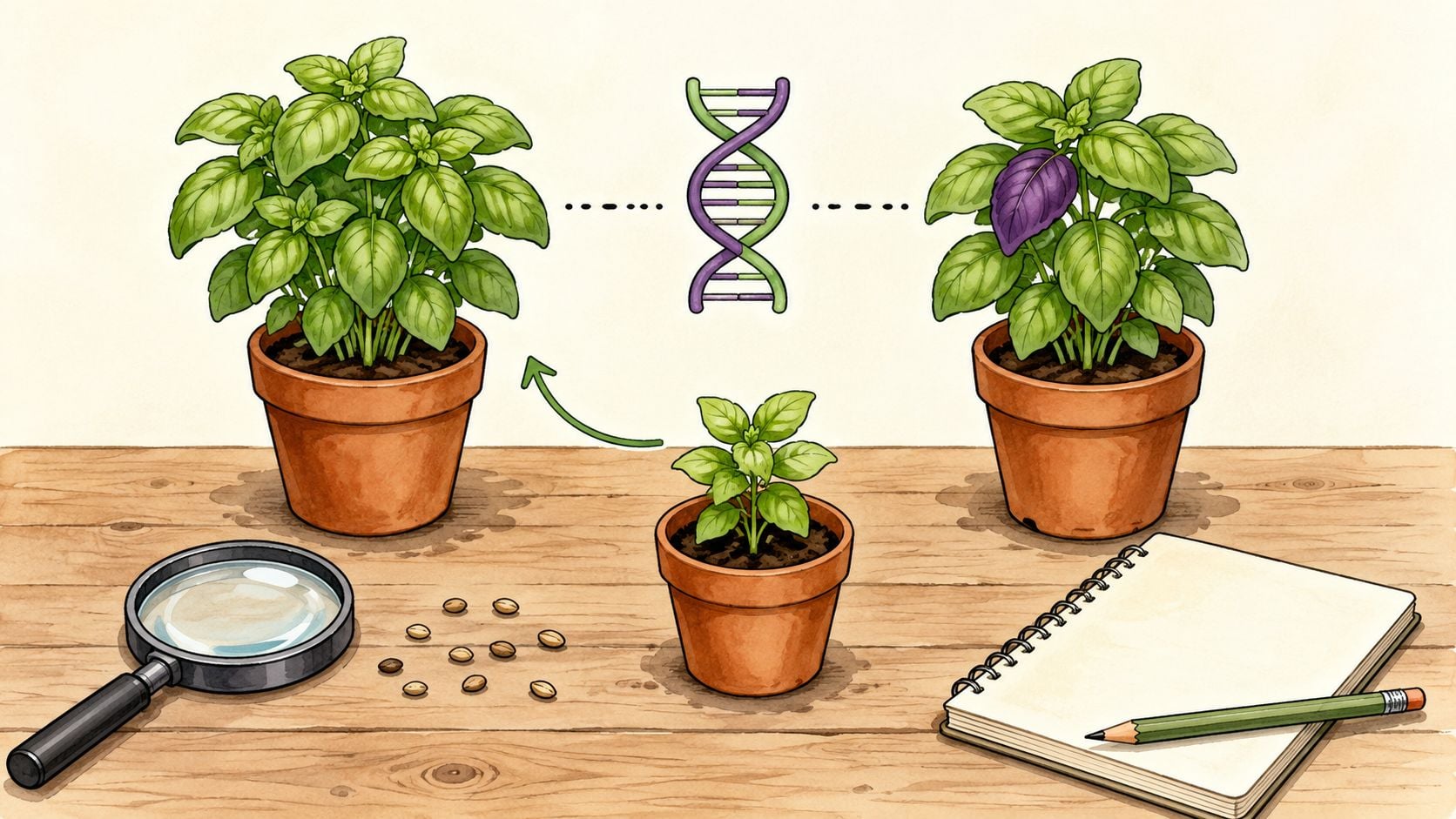
You've got a cultivar that's close, but not quite there. Maybe the aroma is a little flat, maybe the finish runs long, or maybe the plant gets awkward in a small tent and keeps asking for more headroom than you've got. That's exactly the kind of problem backcross breeding is built to fix, because it lets you keep the cultivar you already like and swap in one trait without tearing the whole line apart.
At the home-grow level, that matters. You're not trying to reinvent the whole plant every time. You're trying to keep the flavor, structure, and timing you already trust, while tightening up the one thing that bugs you in the room.
What Backcross Breeding Actually Does for Your Cultivar
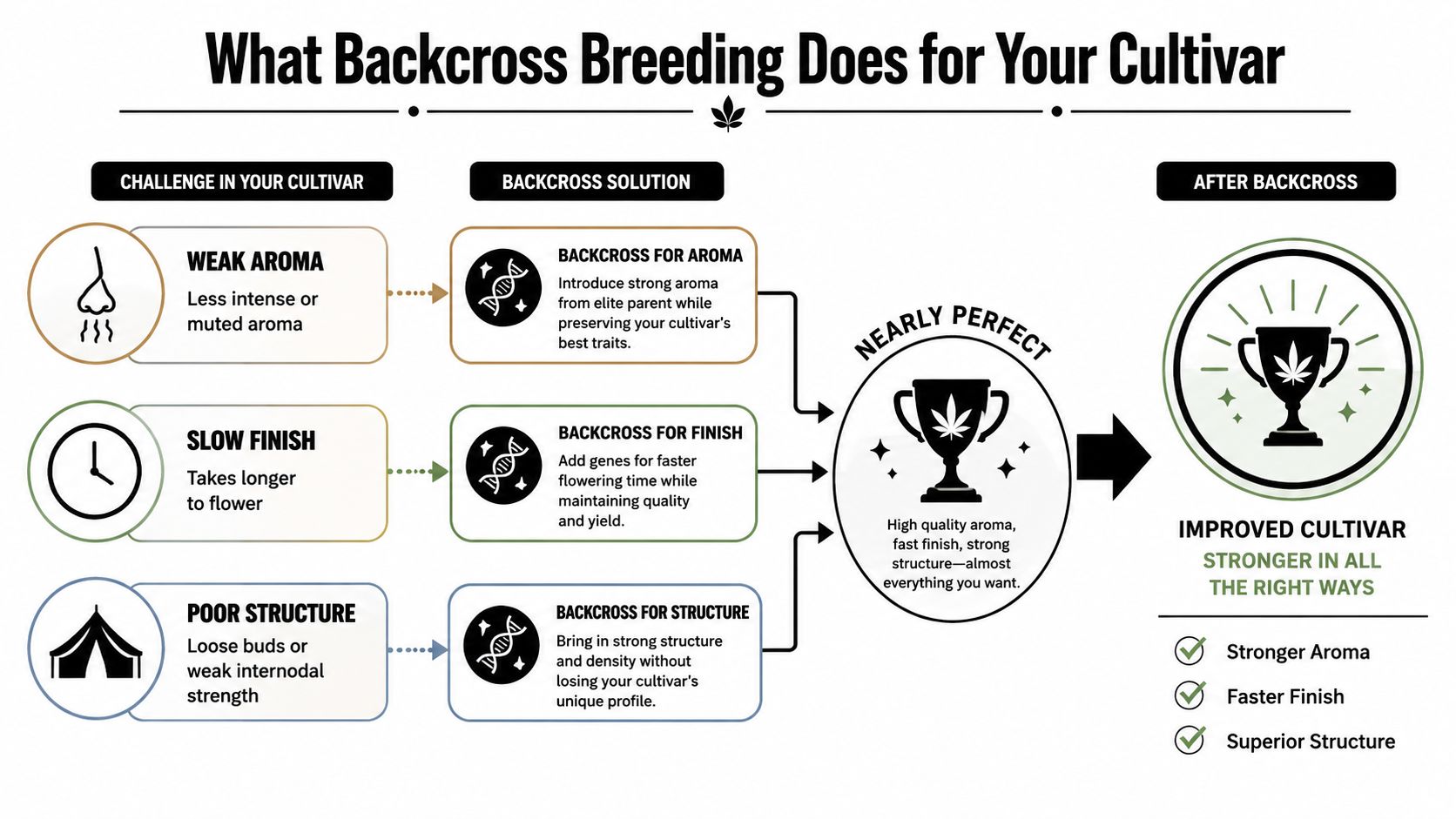
A lot of growers first hear about backcross breeding after they've already found a near-perfect cultivar. The flowers are right, the vibe is right, and the plant does most things the way you want. Then one issue keeps showing up, like a muted nose, a finish that drags, or a shape that fights your space.
That's where backcrossing makes sense. It's not a broad remix of genetics, it's a targeted repair job. You take a donor parent, the plant that carries the trait you want to add, and a recurrent parent, the cultivar you want to preserve, then keep crossing the offspring back into the recurrent parent line. The point is to keep the familiar background while slipping in the missing piece.
Why growers reach for it
Backcrossing is the right call when you already love most of the plant and only want to correct one trait. Teaching material from the University of Nebraska–Lincoln describes the basic rule clearly, each backcross generation cuts the donor parent's genome by about 50%, which is why the method is so useful for moving a single trait into an elite line while keeping the rest of the background intact (UNL lesson on backcross breeding).
That's very different from hunting through an F2 or making a fresh polyhybrid cross. Those paths can uncover new combinations, which is great when you want variation. Backcrossing is for when you want less variation, but more consistency around one chosen trait.
Practical rule: If you'd be disappointed to lose the plant's current character, backcrossing is usually the cleaner move.
The trade-off nobody should ignore
The catch is simple. Every time you backcross, you're concentrating one donor allele into a tighter genetic background. That helps stability, but it can also narrow resilience if you push too far or choose poorly. Modern marker-assisted programs try to manage that risk by shrinking the donor segment around the target locus, because linked DNA can carry unwanted baggage, but the trade-off is still there in plain sight (ScienceDirect topic on backcross breeding).
That's why backcrossing feels so good when it works. It fixes one thing without forcing you to start from scratch. It also rewards patience, records, and a clear target before you make the first cross.
The Genetics Behind Each Backcross Generation
The math is what keeps a backcross project honest. If you do not understand what each generation is doing, it is easy to spend months chasing a line that has already gone too narrow, or stop too soon and keep more donor material than you meant to.
The usual pattern starts with an F1 that sits at roughly 50/50 donor and recurrent parent. After one backcross, BC1 averages 75% recurrent-parent alleles. BC2 averages 87.5%. By BC4, lines are typically more than 96% identical to the recurrent parent, and BC5 is described as almost 99% recurrent-parent genome. Those figures line up with standard backcross teaching from the UNL lesson and the ScienceDirect topic on backcrossing.
What that means in a real room
Say you love a terpene-rich cultivar, but you want to bring in stronger pest resistance from a donor line. In BC1, donor influence is still obvious. The plant may show the new resistance, but it often keeps donor behavior in structure or aroma, and that can be useful if you are trying to confirm the trait before you invest more rounds.
By BC2 and BC3, the recurrent parent starts coming back into focus. That is the point where selection matters most. You are looking for plants that still express the donor trait, but feel closer to the original cultivar in node spacing, flowering habit, and overall growth rhythm. By BC4, you are very close to the familiar parent, which is why teaching sources often treat four to five backcrosses as enough for many introgression goals.
| Generation | Approx. Recurrent Parent Genome | Practical Implication |
|---|---|---|
| F1 | 50% | Strong mix of both parents, useful for first evaluation |
| BC1 | 75% | Donor trait may show, but the line is still visibly mixed |
| BC2 | 87.5% | Recurrent parent starts dominating the plant's look and feel |
| BC4 | More than 96% | Usually close enough for many introgression goals |
| BC5 | Almost 99% | Very tight recovery, best when you need a near-clone of the parent background |
The numbers are only part of the picture. A breeder still has to judge the plant in front of them, and that means reading the phenotype, not just the pedigree. A useful overview of phenotype is available at Botanist Seeds, and that same idea applies here, because the backcross line can look close on paper while still drifting in growth habit, vigor, or flower timing.
If the target trait is controlled by a dominant gene, the path is simpler. A PubMed-indexed review notes that four rounds of backcrossing can finish within seven seasons. If the trait is recessive, expect more selfing and nine or more seasons (PubMed review).
For a home breeder, the decision often lands at BC3 or BC4, not BC5. That is usually where you get enough recovery to keep the cultivar recognizable without waiting forever for perfection. Push harder only if the trait is worth the extra time and the narrower genetic base you are left with.
Planning Your Backcross Project Before You Start
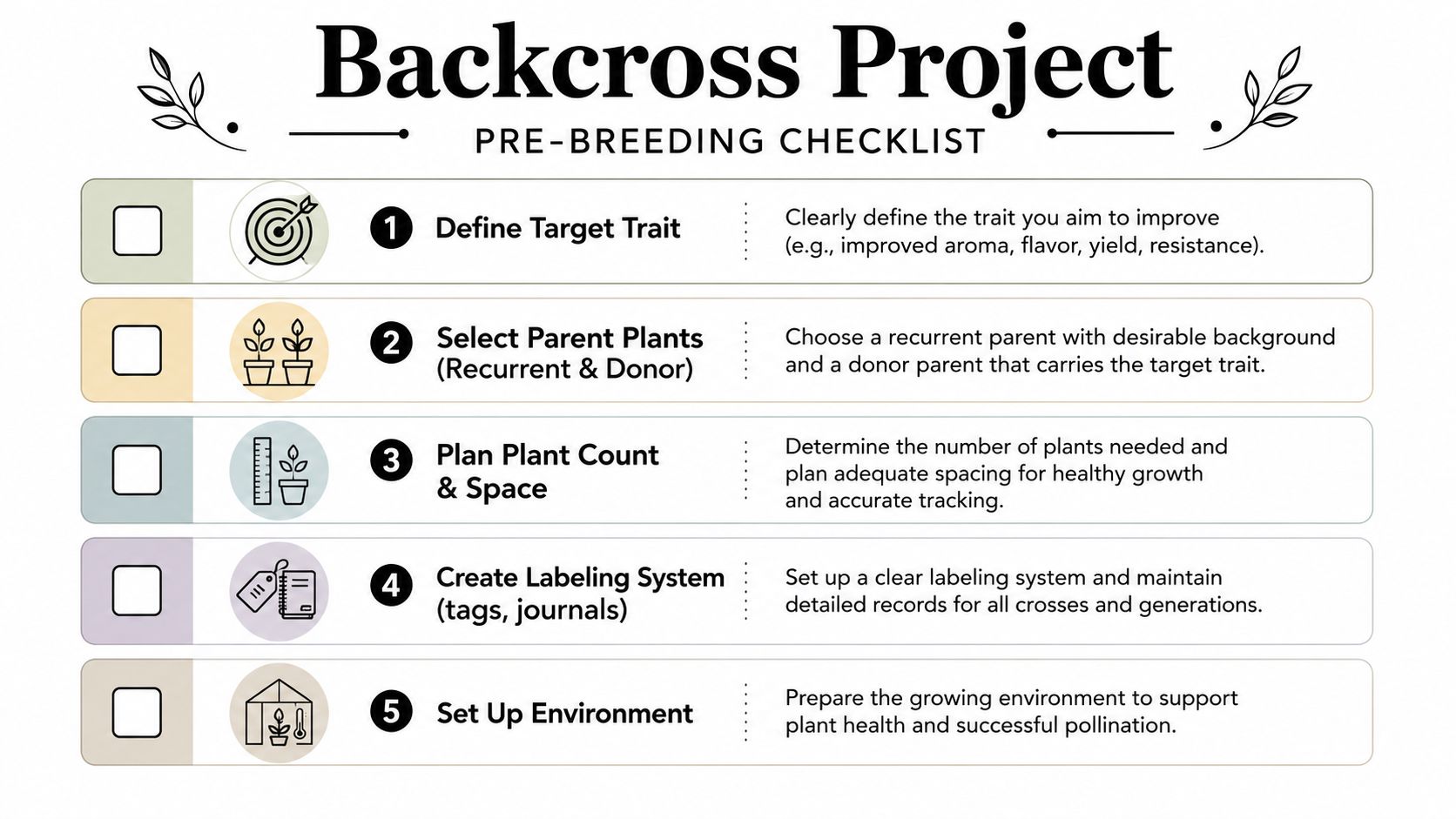
Most backcross projects fail before the first seed is planted. Not because the genetics are too hard, but because the breeder starts with a vague goal and a messy workspace. If you can't name the trait, track the generation, and keep pollination clean, the whole thing turns into guesswork fast.
Start with the parents. Pick a recurrent parent you already know performs well in your setup, and a donor parent that clearly carries the trait you want. Don't choose by hype. Choose by what you've seen under your lights, in your medium, and under your heat, humidity, and airflow conditions.
A clean setup saves you later
A small isolation space matters more than fancy gear. You want a place where pollination won't drift, where tags stay attached, and where harvested seed doesn't get mixed with another cross. Even in a home grow, the difference between a useful line and a mystery jar is usually labeling discipline.
Because feminized seeds are the focus for many home growers, the workflow stays simpler when your breeding stock is already built around reliable female expression. That means less time sorting through unwanted plant types and more time focusing on the trait you're selecting. For growers comparing breeding approaches, the difference between photoperiod and autoflowering timelines is worth understanding before you commit space and time. See the broader comparison in photoperiod vs autoflower growing.
Record keeping is the real insurance
Use a spreadsheet, not a memory test. At minimum, track:
- Parentage: Which recurrent parent and donor went into the cross.
- Generation number: F1, BC1, BC2, and so on.
- Selection notes: Aroma, structure, finish, and any standout trait.
- Pollination date: So you know what's ready and what isn't.
- Seed lot label: Keep each seed batch separate from day one.
Write the tag before you make the cross, not after you think you'll remember it.
Autoflower projects can move on a tighter schedule because each generation can fit into a shorter cycle, but that speed only helps if the notes are clean and the space is organized. The same goes for photoperiod cultivars, which need more calendar discipline. If you're planning the project now, the goal is simple, make it easy to tell one generation from the next six months later.
Running the Backcross Generation by Generation
The actual workflow is less dramatic than people expect. You're not performing breeding magic. You're choosing one plant, making one controlled cross, and then being ruthless about selection in the next round.
Start with the best female from the previous generation, the one that most closely matches the recurrent parent while still showing the donor trait you want. If you're using stored pollen, keep it dry and protected from contamination until it's needed. A small, targeted pollination on one branch is usually enough for a home project, because you don't need a mountain of seed to evaluate the next generation.
The process is straightforward:
- Select the BC0 or previous-generation female that best matches the recurrent parent.
- Apply pollen from the donor line or stored pollen sample to the chosen branch.
- Harvest the seed once it's mature.
- Dry and store the seed in a clean, labeled container.
- Germinate the next BC population and grow enough plants to compare them.
- Select the best female for the next backcross round.
The YouTube walkthrough below is useful if you want a visual on the rhythm of the process.
What to select for each round
In early generations, don't over-focus on one flashy trait and ignore the rest of the plant. The best candidate is usually the one that keeps the recurrent parent's structure, aroma, and timing, while clearly carrying the donor trait you came for. If you're chasing a recessive trait, you may need an extra selfing step before the trait shows, which is why recessive projects always feel slower than the initial plan.
For a home grower, the selection window is the whole project. You want enough seed to compare plants, but not so many that the grow space gets crowded and confusing. A practical pop size is often 20 to 40 seeds for a home project, because that gives you room to find a keeper without turning the tent into a jungle.
Cross-contamination is the quiet enemy. A shared tent, an open fan, and careless trimming can undo a season of work. Keep pollen contained, label branches clearly, and never mix seed lots in the same storage container.
Realistic Timelines and Sample Breeding Schedules
A backcross can look tidy on paper and still eat up a grower's calendar. In practice, the pace depends on how much room you have, whether the plants finish on a schedule you can work around, and how much of the selection is done by sight versus by markers.
A review indexed in PubMed explains the usual rhythm well, dominant traits can be handled with four rounds of backcrossing within seven seasons, while recessive traits usually take more selfing and nine or more seasons. That is a useful planning anchor because it keeps you honest about how long the work really takes, especially when you are trying to fit it around a tent, a small room, or a seasonal grow cycle.
Two home-grow schedules that make sense
An autoflower project can move faster because each generation finishes sooner. That gives you more selection cycles in a year, but it also forces tighter labeling, stricter pollen control, and faster decisions about which plants stay in the program. A small tent full of autos can turn into a mess fast if you do not track every cross carefully.
A photoperiod feminized cultivar gives you more breathing room. You can hold plants longer, watch structure and aroma more closely, and decide whether a line is worth another round before you commit space to the next cross. That slower pace is often the better choice when you care about line stability more than speed.
The practical split usually looks like this:
- Autoflower plan: Faster turnover, tighter record keeping, quicker feedback on structure and aroma.
- Photoperiod plan: Slower turnover, more observation time, better for line stability work.
- Dominant-trait plan: Usually simpler to confirm earlier in the project.
- Recessive-trait plan: Needs more patience, because the trait may hide until later selfing.
Marker-assisted backcrossing changes the timing in a real way. It lets you track the target gene and the surrounding background at the same time, which cuts down on guessing. In teaching materials, marker-assisted work is also described as a way to recover about 97% of the recurrent parent genome in just three BC generations.
What that shortcut really means
For a hobbyist who can send tissue to a lab, marker work saves a lot of blind sorting. You can screen seedlings for the target and the background together, which is very different from judging everything by nose, leaf shape, and branch pattern. That helps when you already know the plant you want to keep close to and you are trying not to drag along extra donor traits.
If you are doing it all by eye, the work still gets done, but the room has to carry more plants and the schedule stretches out. That is the trade-off. Faster decisions usually mean more organization, more labels, and less room for mistakes. If you want a clean way to hold onto a plant while you decide whether to breed it, cannabis clones and what they do well is a useful comparison point.
The fastest line is not always the best line, but the most organized line usually finishes first.
When Backcrossing Is the Wrong Tool and What to Do Instead
Backcrossing gets oversold because it sounds tidy. In reality, it's best when you already know the trait you want and you want it in a familiar background. If the goal is broader than that, another method may fit better.
Backcrossing struggles when the trait is controlled by many small genes instead of one clean target. It also gets messy when the donor parent brings linked unwanted DNA that won't disappear fast enough, especially if you're already talking about repeated generations. And if you keep concentrating one donor allele into a narrow background, you can reduce resilience or variation over time, which is the part most casual guides skip.
For a wider breeding search, a fresh F2 phenotype hunt makes more sense. You're looking for new combinations, not preserving one elite background. If preserving diversity matters more than fixing one trait, open pollination is the better fit because it keeps the gene pool broader instead of squeezing it tighter.
For growers who like a simple shortcut, clone-based selection can also help preserve a plant you already love while you decide what breeding direction makes sense. If you want that comparison, the practical starting point is cannabis clones and what they do well.
A simple decision rule
Use backcrossing when:
- You already love the recurrent parent and only want to add one trait.
- The trait is clear and heritable, not a vague cluster of qualities.
- You're okay with trade-offs in diversity for the sake of stability.
Use another method when:
- You want novelty, not preservation.
- The trait is complex, with too many genes to chase cleanly.
- You want to maintain broad variation for future selection.
The best breeders don't force every project into the same box. They pick the method that matches the job.
Common Pitfalls, Records, and Your Next Step
The three mistakes that wreck most home backcross projects are boring, but lethal. Losing labels, selecting too few plants, and stopping too early at BC2 are the classic ones. A line can look promising and still be unstable if you rush it out before the background is tight enough.
Keep the records simple. Parent names, generation, pollination date, and one short note on aroma or structure are usually enough to keep a project alive. Check your local rules before you start, stay inside any plant-count limits, and store seed like it matters, because it does.
If you already know the trait you want, the smartest next move is to start with a cultivar that's already close. That cuts the project down to something manageable instead of turning it into a long rescue mission. For practical selection help, use the Botanist Seeds comparison tool, pick a starting cultivar with the right structure and finish, and build from there.