




Coco Chanel Strain Grower Profile, Terpenes, and Cultivation
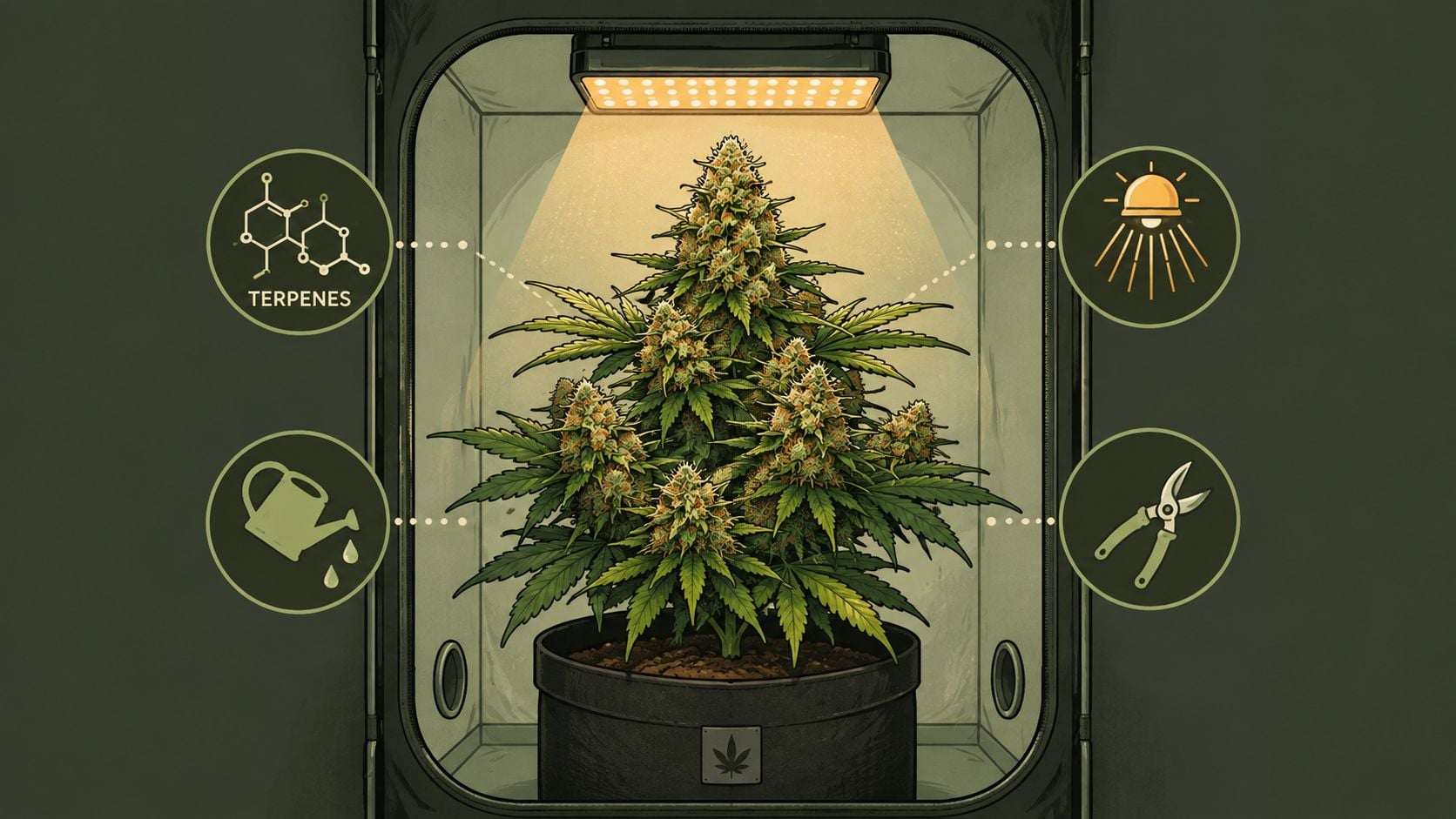
You open the tent, check the canopy, and realize the next run needs to earn its keep. The jars are getting low, the last cultivar finished clean but a little too familiar, and now you want something with modern gas, bright fruit, and enough resin to make the trim bin worth your time. Coco Chanel fits that lane for a lot of home growers, not because it's flashy on a menu, but because it gives you a real project in the room, a feminized indica-dominant hybrid with a 70/30 indica-to-sativa split and a flower time that lands in the practical 67 to 70 day range indoors (Sativa University).
Why Growers Are Talking About the Coco Chanel Strain
A bagseed curiosity is one thing. A cultivar that keeps a room busy in a useful way is another. The coco chanel strain gets attention because it reads like a boutique flower line, yet it behaves like a working tent plant, a modern high-THC, low-CBD cultivar that asks for clean conditions if you want the finished jar to reflect the flower you saw in week six.
What makes it interesting in a home grow
Growers keep circling back to Coco Chanel because it fits a practical flower window. Its reported indoor finish sits at 67 to 70 days, which sits comfortably inside the common 8 to 10 week cycle many small- and mid-scale growers already organize around (Sativa University). That matters when the flower tent, drying space, and next round all need to line up without stalling the room.
The profile is what gives it a place in the conversation, though. Coco Chanel shows up with sweet fruit, grape, watermelon, and diesel notes, so the plant has a clear sensory identity instead of blending into the usual generic sweet hybrid lane (Weedmaps). In practice, that means you are chasing a jar with a recognizable nose, not just a decent bag appeal score.
For home growers, that combo is easier to justify than a flashy label with vague returns. A cultivar that flowers in a reasonable window, throws a loud aroma, and stays on a feminized line gives you a cleaner run to plan, especially if your tent space is limited and every plant needs to earn its footprint.
Practical rule: if a cultivar carries strong aroma potential and a realistic flower window, it deserves a close look in a small tent. A clear feminized seed line makes that run simpler to organize.
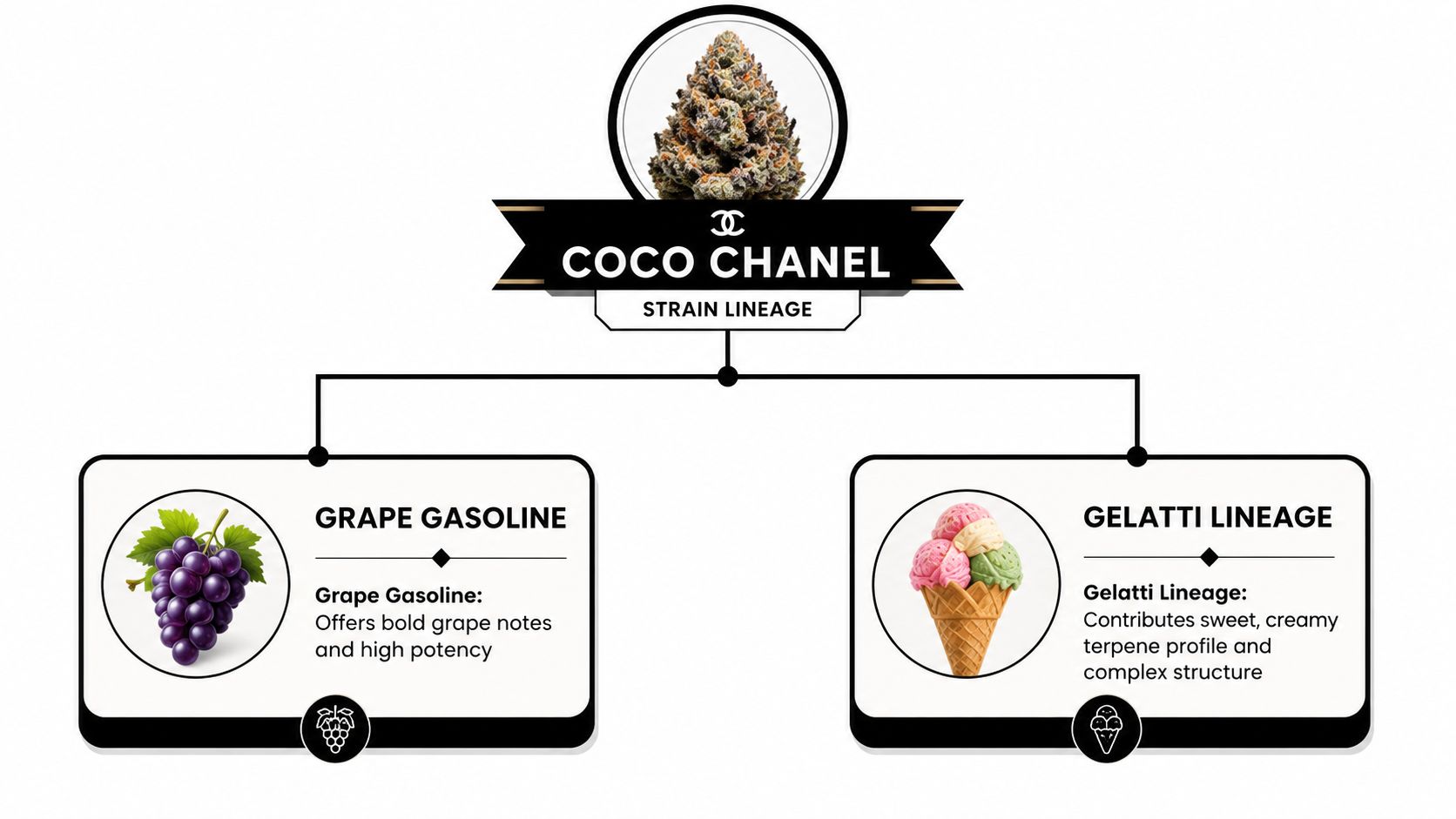
Coco Chanel Strain Lineage and Core Genetics
Coco Chanel's genetics are a big part of why growers keep paying attention to it. The line is sold as feminized, which already tells you the run is meant to be straightforward, and SeedFinder identifies Coco Chanel (FEMS) as Cocomero Gelatti x Grape Gasoline. That gives you a clear starting point for reading the plant before you ever pop a seed, because the cross points to a modern fruit-gas profile rather than an old-school, broad hybrid mix (SeedFinder).
Why that parentage matters in the tent
The parentage is practical, not just decorative. Grape Gasoline brings the kind of loud fruit-fuel direction that growers usually notice early in flower, while the Gelatti side tends to add sweetness, structure, and a more polished finish. Put those traits together and the plant can come out resinous, aromatic, and visually clean, which is exactly the sort of result people are usually hunting for in a modern jar appeal run.
That matters more than it sounds like it does on a strain page. If a plant has a readable family tree, you can make better decisions about how to run it, whether you are selecting from seed, choosing a keeper, or deciding how hard to push it under training. Coco Chanel's lineage suggests a cultivar that is built around layered aroma and a finished flower that should hold its shape instead of collapsing into something flat or generic. For a grower trying to plan a hunt instead of just buying a pack, that kind of signal is useful.
The feminized part also changes the math in a small tent. A feminized cultivar keeps the crop easier to organize because every plant is aimed at production, not culling extra males or rearranging the room mid-run. In practice, that means fewer wasted corners, less guesswork, and a cleaner path from early veg into flower. Botanist Seeds has a useful breakdown of cannabis terpenes if you want a clearer read on how those inherited traits can show up in the finished flower.
Coco Chanel also fits the current breeding pattern that favors layered fruit and gas over one-note sweetness. That is visible in the cross itself and usually shows up in the finished bud when the grow is dialed in. The point is not breeder mythology, it is that the genetic pairing gives you a believable route to a flower that can smell fruity up front, carry fuel underneath, and still look like a premium cut.
What to remember about the genetics
- Feminized line: makes tent planning simpler and keeps the plant count focused on harvest.
- Grape Gasoline influence: usually points toward louder fruit and gas character.
- Gelatti family influence: often adds sweetness, structure, and a more refined finish.
Coco Chanel is a feminized, indica-leaning modern hybrid built from Cocomero Gelatti and Grape Gasoline-type genetics, and that is why it reads like a curated fruit-gas cross instead of a plain dessert strain.
Aroma, Flavor, and Terpene Profile
Open a jar of Coco Chanel after a proper cure, and the first read is usually fruit before fuel. The commonly reported profile is sweet fruit, grape, watermelon, and diesel, and that mix gives the cultivar a clear identity once the buds finish drying and the aroma settles in. SeedFinder describes it in the same broad lane, sweet, fruity with a subtle diesel edge, which is useful when you are comparing phenotypes and deciding which plant deserves a clone.
Turning lab numbers into something you can actually smell
The chemistry sits on a high-THC, low-CBD frame. Joint Commerce notes CBD at 0.05%, and also says CBD is typically below 1%. That matters in practice because the strain is not relying on CBD to round out the profile. It pushes hard on potency and aroma density instead.
Terpene reporting gives a better preview of what the room should smell like than THC alone. Reported total terpene content is commonly in the 1.5% to 3.0% range, with limonene around 0.40% to 0.80%, beta-caryophyllene around 0.30% to 0.70%, and linalool around 0.10% to 0.30%. That usually shows up as bright fruit on the front end, peppery gas underneath, and a softer floral note in the background. For growers comparing terpene expression across runs, the cannabis terpene guide from Botanist Seeds is a practical reference point for reading those traits without guessing.
| Coco Chanel Terpene Snapshot | Reported Range | Aroma Implication |
|---|---|---|
| Limonene | 0.40% to 0.80% | Bright citrus lift, sharper fruit top notes |
| Beta-caryophyllene | 0.30% to 0.70% | Peppery gas, warmer spice, deeper finish |
| Linalool | 0.10% to 0.30% | Softer floral tone, smoother nose in the jar |
The cure changes the profile more than casual growers expect. When the dry is even, the fruit notes come through cleaner and the diesel edge stays sharp instead of turning muddy. Rush the dry and Coco Chanel loses some of that layered effect, which leaves you with a flatter sweet-gas smell that does not hold up as well in the jar.
Keep the jar aroma in mind, not just the harvest-day smell. Coco Chanel should still smell distinct after cure, not just loud while fresh.
Indoor vs Outdoor Cultivation Setup
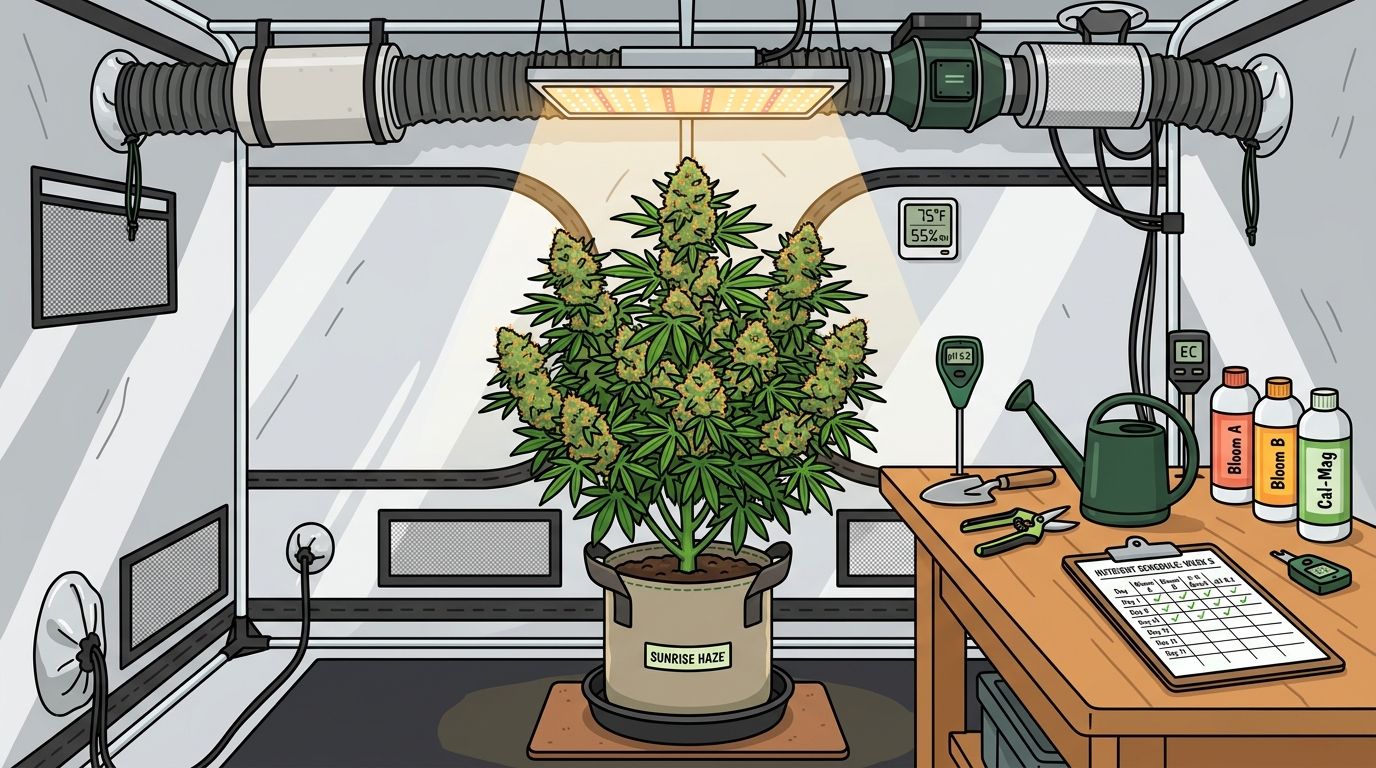
Coco Chanel fits indoor rooms better than open-air sites for most home growers. The reported 67 to 70 day flower window gives you a predictable finish, and one cultivation guide says well-grown indoor flower can yield up to 500 g/m². That figure is a ceiling, not a promise, but it does show the cultivar can reward a controlled tent when the canopy stays even and the environment stays steady.
The plant's indica lean and dense flower structure make indoor control easier to manage. You can dial in airflow, humidity, and feeding response instead of waiting on the weather to cooperate. In a single tent, that usually means cleaner tops, more even ripening, and fewer late-flower surprises. For growers planning tent size, airflow, and bench space, the grow room guide from Botanist Seeds is a practical planning reference.
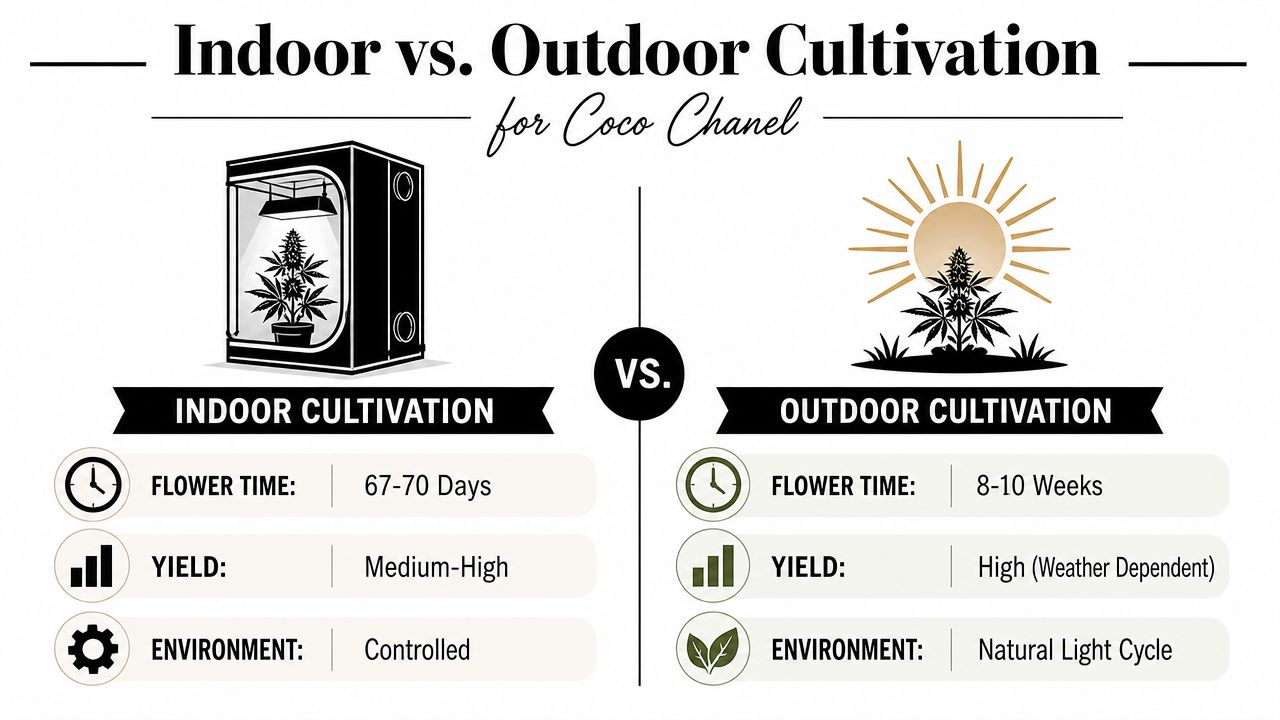
Indoor expectations
Indoor growers usually have the easiest time keeping the finish tight because the room stays consistent. Coco Chanel responds well when the plant sits in a stable environment and light is pushed across an even canopy. The finish window also makes it easier to plan the dry and cure without stacking harvests too close together.
A clean exhaust path matters here. Dense modern flowers do not forgive stale air, and Coco Chanel is the kind of cultivar that will show weak circulation in the final stretch by packing on moisture where you do not want it.
Practical rule: if your room cannot move air well in late flower, do not assume a dense modern cultivar will forgive that. Coco Chanel wants a clean finish.
Outdoor expectations
Outdoors, the cultivar can still make sense, but the weather gets a vote. Dense buds and a late flower finish mean humidity becomes the main headache when the season turns sticky. If you grow it outside, focus less on chasing a giant plant and more on keeping the canopy open enough that moisture does not linger in the flowers.
Outdoor runs also make phenotype differences harder to judge. Sun angle, heat, and airflow can blur the plant's actual structure, so a keeper that looks tidy in a tent may need more space and more pruning outside. That trade-off matters if you are selecting seed stock with the idea of comparing more than one expression.
Setup comparison
- Indoor: more control, more predictable finish, easier to manage density.
- Outdoor: less control, more weather risk, more dependence on airflow and timing.
- Small tent: better when you want repeatability and a cleaner phenotype comparison.
- Multi-light room: useful if you are running enough plants to compare structure and resin response side by side.
A grower hunting keepers gets more useful information indoors because the environment is easier to hold constant. Outdoors can still produce strong flowers, but it asks for a site with dry airflow, enough headroom, and a season that does not turn wet right when the buds start packing weight.
Feeding, Training, and Common Grow Issues
Coco Chanel behaves like a modern indoor cultivar that prefers a grower who pays attention, not one who sprays a bottle and hopes for the best. The main mistake is pushing feed too hard because the plant looks hungry at first glance, then discovering mid-flower that the canopy is locking out from overwork. Read the leaves, watch the pace of growth, and don't confuse heavy aroma potential with an excuse to overdrive the root zone.
Feeding without making a mess of the run
A good Coco Chanel run usually rewards steady, even nutrition more than dramatic swings. If the leaves get too dark or clawed, ease off before the plant tells you the hard way. If the canopy starts fading too early, respond carefully instead of making a big correction that throws the whole room off balance.
Training matters because this cultivar can stack dense flowers when the canopy is even. Topping and low-stress training are the safest choices for most home growers, and a light ScrOG works well if you've got the patience to keep the screen organized. Aggressive defoliation usually works against you, especially if you're already dealing with a tight indoor environment.
The feeding approach should match your room, not your ego. If your setup is small, stability beats experimentation. If you're running a larger room, the cultivar gives you more room to compare responses, but only if your environmental control is already solid.
Practical rule: in weeks 5 through 8, watch for humidity creep, leaf fade, and any sign the buds are packing too tightly for the airflow you've got.
Common issues growers should watch
Late-flower humidity is the big one. Dense modern buds can hold moisture in a way that punishes sloppy airflow, so the last stretch needs active fan placement and honest canopy spacing. Stretch early in flip can also surprise growers who assume the plant will stay compact, so don't wait too long to set your training plan.
The cultivar's appeal can turn into a headache if the room is lazy. Coco Chanel can absolutely deliver attractive, resinous flower, but it won't do the work for you. Keep the canopy even, keep air moving, and don't let the room get sloppy when the buds start to stack.
For a broader nutrient framework, the Botanist Seeds nutrition guide can help you compare feeding styles before you commit to a run.
Phenotype Variation and How to Hunt Keepers
A lot of strain write-ups pretend a pack is a clone line with a label on it. That's not how real home grows work. With Coco Chanel, you should expect some sibling plants to lean more fruit-forward, some to lean more gas-heavy, and some to stretch or stack differently even if they came from the same feminized line.
What to look for in a proper hunt
The best way to approach a Coco Chanel pack is to treat it like a selection project, not a lottery ticket. Label every plant, track its stretch after flip, and note which one gives you the clearest terpene expression during flower. The keeper usually reveals itself by balancing structure, aroma, and finish time, not by being the loudest plant in the room on day one.
A simple pheno hunt workflow makes this much easier:
- Start multiple seeds. Variation only shows up if you run more than one plant.
- Track structure early. Note which plants stay manageable and which ones want to run taller.
- Observe aroma in flower. Look for the fruit-gas expression that stays consistent as buds mature.
- Watch finish behavior. Some plants will be ready earlier, some later, and that matters for scheduling.
- Keep the one that finishes cleanest. The keeper should give you the best mix of smell, structure, and usable flower.
Why feminized still doesn't mean identical
Even with a feminized cultivar, you can still see enough variation to justify selection. That's normal. One batch may lean more watermelon and grape, while another goes harder into diesel and spice. The job is to find the one that fits your tent, your taste, and your trim tolerance.
Choose the plant that gives you repeatable results, not just the one that smells the loudest in week seven.
Buying from a consistent source
Seed freshness and breeder reputation matter because a modern cultivar like this can drift in expression if the source is inconsistent. If you're building a keeper hunt, you want the same starting point every time so you're comparing plants, not noise. Botanist Seeds' strain tools make that comparison easier when you're mapping a cultivar to your space and your preferred finish style.
Harvest, Curing, and Buying the Right Seeds
Plan the chop around the plant, not the calendar. Coco Chanel usually finishes in a fairly tight indoor window, so trichome checks are the safer guide than counting days on habit alone. A few extra days can shift the jar toward a heavier finish, while cutting too early can flatten the fruit-gas edge that makes the strain worth keeping.
Drying and curing that fit a hobbyist schedule
Dry the flowers slowly enough that the aroma stays intact. If the room dries too fast, the nose often drops off before the jar has a chance to settle. A steady cure keeps the sweet fruit, diesel, and spice notes more defined, and it does more for the final smoke than expensive gear or constant jar opening.
For the grower, the practical part starts before the seed even germinates. Look for feminized Coco Chanel seeds from a source that describes the cultivar clearly, keeps its genetic story consistent, and sells stock you can trust from one run to the next. The goal is repeatability, not marketing copy. If you are comparing options for your space, use the same filter you would use for any modern premium cultivar, finish time, aroma target, and how much training the plant will tolerate in your room.
Seed source quality matters here because this is a cultivar people often run as a selection project, not a one-and-done purchase. A clean starting point gives you a better read on phenotype differences, so you can tell whether a plant is staying compact, stretching harder than expected, or finishing with the fruit-gas profile you want to keep. Botanist Seeds is worth checking if you want a straightforward catalog and strain comparison tools before you commit to a run.
Why people keep this kind of cultivar at home
Home growing stays attractive because it gives you control over the whole process. You skip dispensary lines, keep your own supply set to your taste, and build a jar that reflects how you like to grow rather than what happened to be on the shelf that week. That is a practical benefit, plain and simple.
If you want to compare Coco Chanel with other feminized and autoflower cultivars before you buy, use the same yardstick every time. Judge the room it needs, the structure it tends to show, and whether the finish style matches the way you like to smoke. Pick the cultivar that fits your setup, run it with a clean plan, and let the plant tell you whether it deserves a second round.