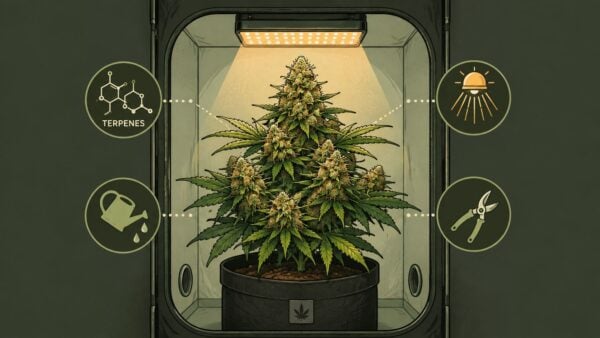
Uplifting Cannabis Strains: A Grower’s Guide to Bright Terpene Profiles

Most advice on the uplifting cannabis strains gets one thing wrong right away. It treats cultivar names like they're magic answers.
This article is general information about cannabis and home growing. It is not medical advice, and cannabis isn't a treatment for any medical condition. If you have a health concern, talk to a qualified healthcare professional.
They're not. A name can point you in a useful direction, but it doesn't tell you how that flower will feel in your routine, in your setup, or at your preferred intake level. Two jars labeled with the same cultivar can land very differently if their cannabinoid and terpene profiles aren't close.
That's why the smarter move is to stop chasing a “best strain” and start reading the plant for the vibe you want. If you grow at home, that matters even more. You're not just picking a trendy label. You're choosing genetics, structure, aroma, flowering behavior, and the kind of experience you want on hand when the jar is finally cured.
Its Not About a Strain Its About a Vibe
The usual listicle answer is simple: pick a sativa, go high THC, and call it a day. That's tidy advice, but it leaves out the part that matters most. Your personal best uplifting cultivar is usually a profile match, not a famous name.
One person wants a bright, social, get-moving vibe. Another wants something softer that doesn't flatten the evening. A third wants a cultivar that smells like citrus, grows clean in a small tent, and fits into a weekend routine without knocking them sideways. Those are different goals, and they need different plants.
Why names only tell part of the story
Cultivar names are useful shorthand. They help growers and buyers organize a huge market. But the name alone doesn't explain whether the flower leans punchy, mellow, clear-headed, hazy, loud, or subtle.
A useful way to think about it is this:
- The name is the headline
- The lab profile is the fine print
- The terpene mix is the personality
- The dose is the volume knob
That last point matters more than a lot of people realize. Data discussed later in this guide shows the same broad category of product can feel uplifting at a small amount and rough at a bigger one. So if you only shop by hype words like “strong” or “top shelf,” you're skipping the part that shapes the experience.
Practical rule: Pick for the feeling you want, then verify the profile that tends to produce it.
What growers should pay attention to
If you're growing for yourself, the question shifts from “What's the best strain?” to “What kind of jar do I want to open on a Tuesday morning or a quiet Friday night?”
That changes how you shop for seeds and how you compare cultivars. Look for:
- Cannabinoid balance: High THC, balanced THC and CBD, or CBD-forward
- Terpene direction: Citrus, floral, piney, earthy, sweet
- Growth style: Compact and easygoing, or taller and more stretch-prone
- Use timing: Better suited to daytime focus or evening slowdown
This approach puts you in control. You're not waiting for a dispensary menu to decide for you, and you're not relying on somebody else's favorite cultivar to behave the same way in your space.
The uplifting cannabis strains aren't really a universal top ten. They're the cultivars whose profile, aroma, and intensity line up with the mood and rhythm you're after.
Understanding Your Cultivars Chemical Profile
A cultivar name can point you in a direction. The lab profile tells you whether it is likely to fit your routine.
Reading that profile matters more than memorizing somebody else's top ten list. If you want a jar that supports a certain mood or time of day, the useful clues are the cannabinoids, terpene balance, and overall intensity. Brand names can help. Chemistry is what lets you compare one option to another with less guesswork.
Cannabinoids set the baseline
Start with THC and CBD. They give you the rough shape of the experience before aroma and minor compounds start adding nuance.
THC often brings the more noticeable euphoric, heady, or heavy effects, depending on dose and the rest of the profile. CBD tends to soften the edges for some people and is often preferred in cultivars that feel steadier or less intense. Neither one is automatically better. They set different starting points, and that matters if you are trying to avoid a cultivar that feels too racy, too flat, or too sedating for the moment.
A few quick reads on the label can save you trouble:
- High THC, low or no CBD: Often chosen for a stronger, more pronounced cerebral effect
- Balanced THC and CBD: Often a better fit for people who want a calmer, more even ride
- CBD-dominant: Usually selected for a gentler profile and lower overall intensity
For readers paying attention to mood and sleep together, the practical takeaway is simple. Very high THC does not suit everyone, especially if late-day use already throws off rest. Balanced options often give you more room to adjust.
Terpenes shape the tone
Many recommendations for cannabis strains become inaccurate. Two cultivars can post similar THC numbers and still feel very different because the terpene profile changes the character of the experience.
Limonene often shows up in citrus-forward flower that people describe as brighter or more upbeat. Linalool is commonly associated with floral notes and a calmer feel. Myrcene, pinene, and caryophyllene can also shift how a cultivar lands. None of these terpenes guarantees a specific result, but they are useful signals, especially when you compare them with your own past experiences.
If you want a clearer way to compare jars, breeder notes, or dispensary menus, learn the basics of cannabis terpenes and how they shape aroma and experience.
A moderate-THC cultivar with the right terpene mix can be a better pick than a louder flower that looks impressive on paper but feels off in practice.
Flavonoids matter less on labels, but they still matter
Flavonoids get less attention because most product pages do not list them clearly. They still contribute to aroma, flavor, and the overall character of the flower.
You do not need to chase flavonoid data to make a smart choice. Just know they are part of why two cultivars with similar headline numbers can still smell, taste, and feel distinct.
A practical way to read a profile
Use a simple sequence every time you compare options:
- Check THC and CBD first: This tells you the likely intensity range
- Look at the top terpenes next: Citrus, floral, pine, spice, earth, and gas notes usually point to a different tone
- Read the aroma notes carefully: They often confirm what the terpene list suggests
- Match the profile to the moment: Morning focus, social time, and evening wind-down usually call for different chemistry
- Keep notes after you try something: The pattern in your own response is more useful than internet hype
That habit separates random shopping from informed selection. It also helps growers choose seeds and cuts with a purpose, instead of hoping a catchy name translates into the right vibe.
Sativa Indica and Hybrid Whats the Real Difference
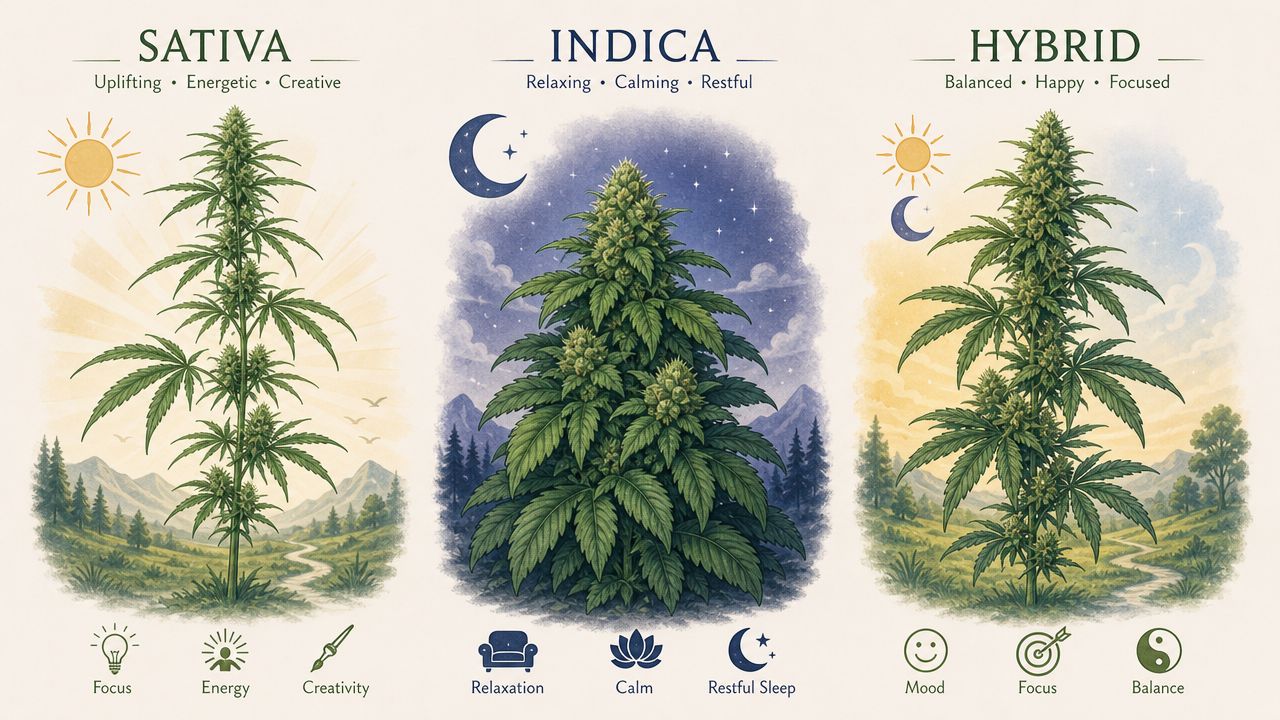
The old shorthand still has some value. Sativa-dominant cultivars are generally linked with a more energizing, cerebral feel, while indica-dominant cultivars are more often associated with a relaxed, slower pace. According to Weedmaps' overview of mood-oriented strain effects, sativa-dominant strains are associated with energizing, cerebral euphoria ideal for daytime mood-boosting, while indica-dominant strains provide relaxing effects better suited for evening use.
That's useful. It's just not the whole story.
The simple version still works as a starting point
If you want a practical filter, the classic categories can still help:
- Sativa-dominant: Better suited to daytime, errands, creative work, social energy
- Indica-dominant: Better suited to evenings, slower routines, couch time, wind-down
- Hybrid: Sits somewhere in the middle, sometimes leaning one way, sometimes pretty balanced
For a quick side by side, this guide on indica vs sativa vs hybrid is a useful reference when you're narrowing choices.
Why the labels can be fuzzy
Modern cannabis has been crossed and recrossed so heavily that the label isn't always a clean predictor. Two hybrids can share a category and still feel nothing alike. One might be lemony and alert. Another might be sweet, dense, and better left for later in the evening.
That's why experienced growers use type labels as a starting point, then verify with profile details:
| Type | What people usually expect | What you should verify |
|---|---|---|
| Sativa-dominant | Brighter, more active vibe | Terpenes, THC level, timing |
| Indica-dominant | Calmer, looser vibe | CBD presence, aroma, density |
| Hybrid | Middle-ground flexibility | Which side it actually leans toward |
Don't let the label make the final decision. Let it narrow the field.
How this helps in a home grow
This matters in the grow room too, not just in the jar. Sativa-leaning cultivars often fit growers chasing an upbeat daytime stash, but they can also bring more stretch and a taller frame. Indica-leaning cultivars often suit tighter spaces and growers who like chunkier structure and a more compact canopy.
So the difference isn't just “up versus down.” It's also:
- How the plant behaves in your room
- How the cured flower fits your day
- Whether the aroma and intensity match your taste
That's a better way to think about the uplifting cannabis strains than repeating the same old rule that every sativa is uplifting and every indica is sleepy. Those labels help, but your profile read matters more.
Example Cultivars for Different Moods and Moments
Lists of the uplifting cannabis strains usually throw out familiar names and move on. That doesn't teach you much. It's more useful to compare a few profile types and see why each one fits a different moment.
A good benchmark comes from a Canadian study that identified Luminarium, a THC-dominant sativa with 25 to 28% THC and 0% CBD, as highly effective for improving mood, according to the published study summary on PMC. That doesn't mean everyone should chase Luminarium. It does show what a strongly uplifting, THC-forward profile can look like on paper.
Cultivar Profile Comparison for Vibe
| Cultivar Profile | Type | Key Terpenes | Potential Vibe |
|---|---|---|---|
| Limonene-forward daytime picker | Sativa-dominant | Limonene, pinene | Bright, social, mentally active |
| THC-forward euphoric benchmark like Luminarium | Sativa-dominant | Terpene mix varies | Big lift, pronounced head high |
| Balanced hybrid with floral notes | Hybrid | Linalool, limonene | Even, calm, less pushy |
| CBD-leaning evening cultivar | Indica-dominant or balanced | Linalool, myrcene | Gentle, quiet, low-key |
Profile one for a bright start
A sativa-dominant cultivar with noticeable limonene is often where people begin if they want a jar that feels more upbeat than heavy. Citrus aroma is the first clue. If the description also mentions clear-headed or daytime-friendly effects, that's a strong sign you're in the right lane.
This kind of cultivar fits people who want cannabis to feel like turning on the lights, not pulling the blinds. In a home grow, these plants often appeal to hobbyists who like lively aromas in the drying room and don't mind giving the canopy a bit more attention if the genetics stretch.
What works well here:
- Citrus-forward aroma
- A clean, active vibe
- Daytime use after a modest start
What often doesn't:
- Chasing the highest potency available
- Using the same flower late at night
- Ignoring terpene clues because the cultivar name sounds famous
Profile two for a stronger euphoric push
Luminarium is useful as a benchmark because it shows an extreme end of the uplifting category. 25 to 28% THC and 0% CBD is not subtle. For some people, that profile represents the kind of pronounced euphoric experience they want from a daytime or social cultivar.
For others, it's too much. That's the trade-off.
A grower reading that profile should ask better questions than “Is this the best?” Try these instead:
- Do I enjoy THC-forward flower with no CBD buffer?
- Do I want a strong effect, or a manageable one?
- Will this fit my schedule, or just overwhelm it?
Some cultivars are good because they're loud. Others are good because they let you stay functional. Those are not the same thing.
Profile three for an even middle ground
A balanced hybrid with limonene and linalool often suits people who don't want a sharp takeoff or a heavy finish. These cultivars can feel more rounded. They're often easier to keep in rotation because they don't dominate the whole evening or derail a productive afternoon.
Growers also tend to like these for practical reasons. Many balanced hybrids have manageable structure, familiar aromas, and broad appeal once cured. If you're stocking one jar for mixed situations, this is often the safer lane.
The vibe here is less “rocket ship” and more “steady companion.”
Profile four for a softer evening jar
An indica-dominant or CBD-leaning cultivar with floral or herbal notes makes sense when the goal is a quieter, more grounded feel. Linalool-rich descriptions particularly stand out. The aroma is often part of the appeal. Less bright, more soft-edged.
This kind of flower won't satisfy someone chasing a punchy, euphoric rush. It can still be the better fit if your idea of a good session is simple: lower the volume, relax the room, and keep the experience controlled.
That's the big takeaway. The uplifting cannabis strains aren't one-size-fits-all stars. They're profile categories you can match to your own moments.
Finding Your Sweet Spot Without the Guesswork
Choosing the right cultivar matters. How much you use matters just as much. A lot of bad experiences come from people assuming the “best” flower should be pushed until it proves itself.
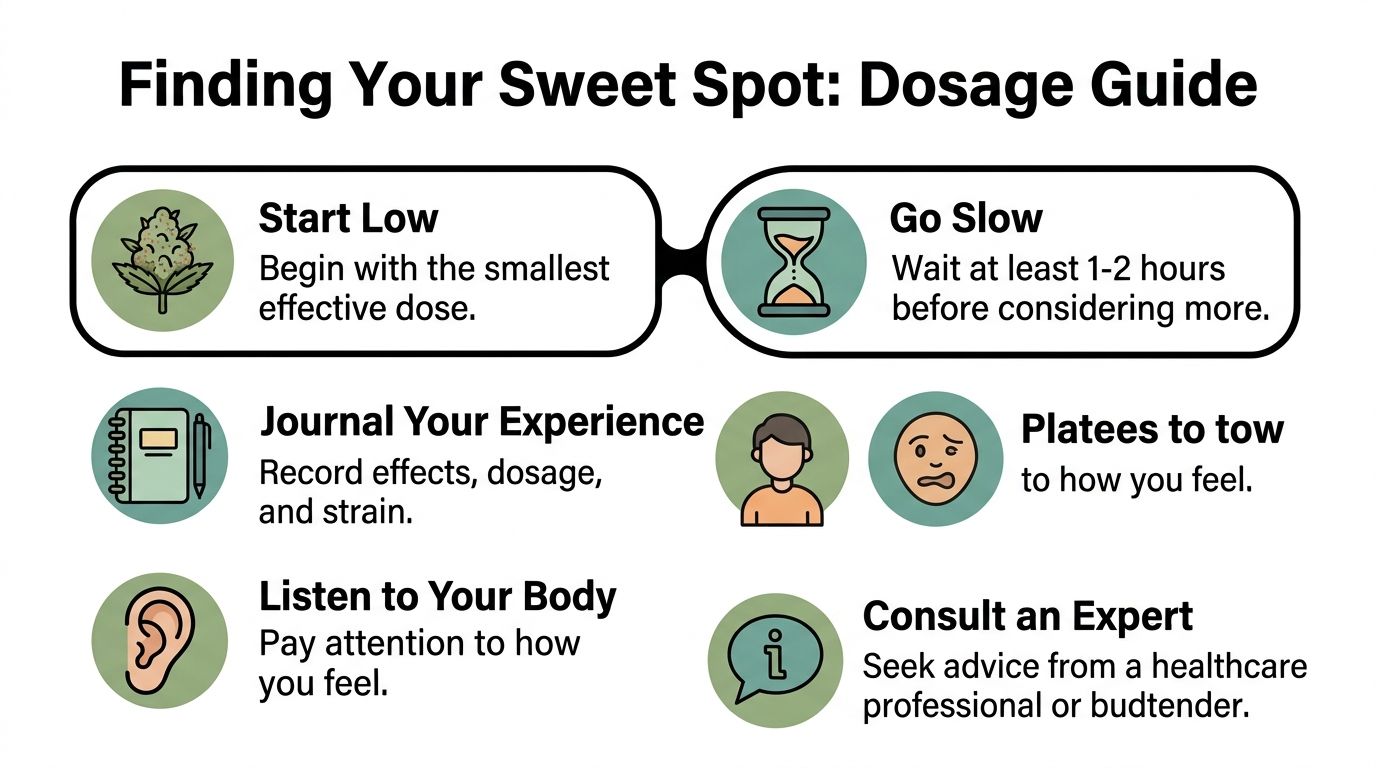
That's backwards. The smart move is to find the smallest amount that gives you the vibe you want.
Why more isn't automatically better
The cleanest data point on this comes from reporting summarized by Leafwell: 72% of users experienced mood elevation at 2.5 to 5mg of THC, while 68% reported increased anxiety or paranoia when THC exceeded 15mg, as noted in Leafwell's discussion of the dose-response gap.
That's the gap a lot of “top strain” content ignores. Same plant category, very different outcome, based on amount.
So if a cultivar gets recommended for an uplifting vibe, that does not mean taking more of it will improve the experience. Often, the opposite happens.
A practical way to test a new cultivar
You don't need a complicated system. You need consistency.
- Start small: Give a new cultivar room to introduce itself.
- Wait before adding more: Don't stack intake because you're impatient.
- Keep notes: Write down cultivar name, format, approximate amount, time of day, and the vibe you got.
- Test on a low-stakes day: New flower and important obligations don't mix well.
A sweet spot is easier to find when you stop treating every session like a tolerance contest.
What to watch for
A good match usually feels recognizable pretty fast. The aroma fits your taste, the onset feels manageable, and the session lands where you hoped it would.
A poor match often shows up in equally obvious ways:
| Sign | What it usually means |
|---|---|
| Too racy, too fast | Potency or amount may be too high |
| Flat or muddy | Wrong terpene direction for your taste |
| Fine at first, rough later | You probably overshot your amount |
| Good only at one specific time | Keep it for that window and stop forcing it elsewhere |
Experienced growers separate themselves from casual hype-chasers. They learn their own range. They know which jar is for daytime, which one is for evenings, and which one only works in very small amounts.
That's not guesswork. That's pattern recognition.
Take Control of Your Vibe by Growing at Home
Home growing changes the whole equation. You stop chasing strain names on a menu and start building a small stash around effects you enjoy, the aromas you reach for, and the plant structure your space can handle.
That control matters more than people admit. Dispensary flower can be great, but menus change, batches vary, and the same cultivar name does not always deliver the same profile from one grower to the next. At home, you choose with more intent. You can start from feminized seeds if you want a simpler path to flower, or autoflower seeds if you want a quicker run with fewer scheduling demands. More importantly, you can select for terpene direction, cannabinoid range, plant size, and flowering time instead of buying whatever sounds uplifting that week.
Growing also teaches pattern recognition in a way shopping never will. After one or two runs, many growers start noticing that a citrus-forward plant with a clear, focused effect earns daytime shelf space, while a sweeter or heavier cultivar gets saved for slower evenings. That is useful feedback. It gives you a repeatable way to choose future seeds based on profile and performance, not hype.
If you are planning your first run, this step-by-step guide to growing cannabis at home helps you match your setup to the kinds of cultivars you want in rotation.
Why home growing makes selection easier
The biggest advantage is consistency. You can run the same cultivar again, keep notes on how it felt, and decide whether it deserves another spot in the tent. You also control harvest timing, drying, and cure, which all shape the final experience more than new growers expect. A rushed dry can flatten aroma. A patient cure usually gives the flower a cleaner, more expressive profile.
That makes home growing a better tool for finding your own sweet spot. Instead of guessing from a label, you get firsthand experience with how a cultivar behaves from seed to jar.
Build a small personal lineup
Keep the lineup tight. Three good jars beat ten random ones.
A practical home setup might include:
- One daytime cultivar: Clear-headed, bright aroma, manageable intensity
- One flexible hybrid: Balanced enough for afternoons, weekends, or light social use
- One evening cultivar: Calmer effect, richer flavor, easier to keep reserved for low-key hours
A quick visual guide can help if you're still narrowing your setup and style:
Good growers do not win by collecting the most names. They win by learning which profiles earn a place in the jar, then growing those profiles well and keeping them around. That is how a vague search for the uplifting cannabis strains turns into something more useful: a personal system built around vibe, chemistry, and fit.
If you're ready to turn that knowledge into a home grow, explore Botanist Seeds and use the comparison tools to sort cultivars by profile, growing style, and the kind of experience you want from feminized and autoflower seeds.