Pink Rozay Strain Profile and Growing Guide
You've got a fresh pack of Pink Rozay seeds on the desk, a tent with limited headroom, and a label promising dessert aroma and serious potency. The obvious question isn't whether the cultivar sounds good. It's whether it will fit your light, container, training habits, and patience for a careful dry.
Pink Rozay has a reputation for sweet, fruit-forward flowers, dense structure, and high THC, but published numbers only tell part of the story. Phenotype variation, plant health, harvest timing, and cure quality can change the jar experience more than a single label value suggests. The practical approach is to treat the cultivar name as a starting point, then make decisions from the plant in front of you.
Meet Pink Rozay Before You Pop the Seeds
A first-time grower usually meets Pink Rozay in a product listing, not in the tent. The description says indica-dominant hybrid, dessert profile, dense flowers, and strong potency. That sounds straightforward until the seeds arrive and you need to decide whether this plant belongs beside a stretchy cultivar, under a short ceiling, or in an outdoor spot where late-flower humidity could become a problem.
Pink Rozay is generally linked to Lemonchello 10 and London Pound Cake #75, often shortened to LPC75. Strain references describe it as an indica-dominant hybrid with a sweet-leaning aroma and a modern dessert phenotype profile, a combination documented by Strainpedia's Pink Rozay profile. Its flowering period is commonly placed at 9 to 10 weeks by SeedFinder, while another guide gives an 8 to 10 week range after vegetative growth, as shown in SeedFinder's cultivar listing.
Who this cultivar suits
Pink Rozay makes sense for a grower who wants:
- A compact-to-moderate indoor structure: The indica-leaning background generally points toward tighter spacing and heavier flower clusters than a legacy sativa.
- A flavor-led harvest: Caryophyllene, limonene, and linalool are repeatedly associated with its aroma, creating a mix of spice, citrus, and floral notes.
- A planned canopy: Dense flowers need airflow, even light distribution, and enough room around each branch.
- A feminized seed run: For a home grower focused on harvestable plants, feminized seeds keep the project centered on cultivation rather than traditional breeding complications.
The biggest question for your setup is simple: can you control the final weeks? If the answer is yes, Pink Rozay can reward careful canopy work and a patient dry. If your tent runs hot, your room stays humid, or you usually rush the chop, the same dense structure that creates strong bag appeal can work against you.
This guide treats the cultivar from seed to jar. You'll get the lineage context, a practical training plan, a way to interpret THC labels without chasing hype, and a flowering checklist built around the plant's actual signals.
The Genetics Behind Pink Rozay
Pink Rozay's commonly reported family tree is Lemonchello 10 crossed with London Pound Cake #75. That pairing places it in the modern Cookies-era breeding wave associated with California, where breeders pushed dessert aromas, colorful flower presentation, resin, and strong cannabinoid profiles into mainstream legal markets. The lineage is documented by Weed World Magazine's Pink Rozay review.
Think of the parents as two influences rather than a guaranteed recipe. Lemonchello 10 helps explain why some plants express brighter citrus and candy notes. London Pound Cake #75 helps explain the bakery direction, sturdier branching, and heavier flower character often associated with this cultivar. Seeds still produce variation, so one plant may lean toward lemon and sharp fruit while another brings more cream, spice, or floral depth.
Reading the indica-dominant structure
“Indica-dominant” is useful shorthand, but it isn't a promise that every plant will stay short. In the tent, look for a few practical tendencies:
- Moderate internode spacing: Shorter spacing can create a full canopy quickly. That's useful for light capture, but crowded interior growth can trap moisture.
- Broad leaves and a sturdy frame: These traits can support several trained tops, though thick foliage may need selective removal.
- Chunkier flower sites: Dense clusters can build weight and resin, but they also demand airflow through the middle of the plant.
- A manageable stretch: Don't assume the plant won't rise after the light schedule changes. Leave room above the canopy and train before the branches harden.
A good first move is to watch how the plant grows before committing to aggressive shaping. Let the early nodes establish, then decide whether the plant needs a wider spread or a cleaner interior.
Practical rule: Treat the first Pink Rozay plant as a structural test. Train for an even canopy, then save your strongest opinions for the next run.
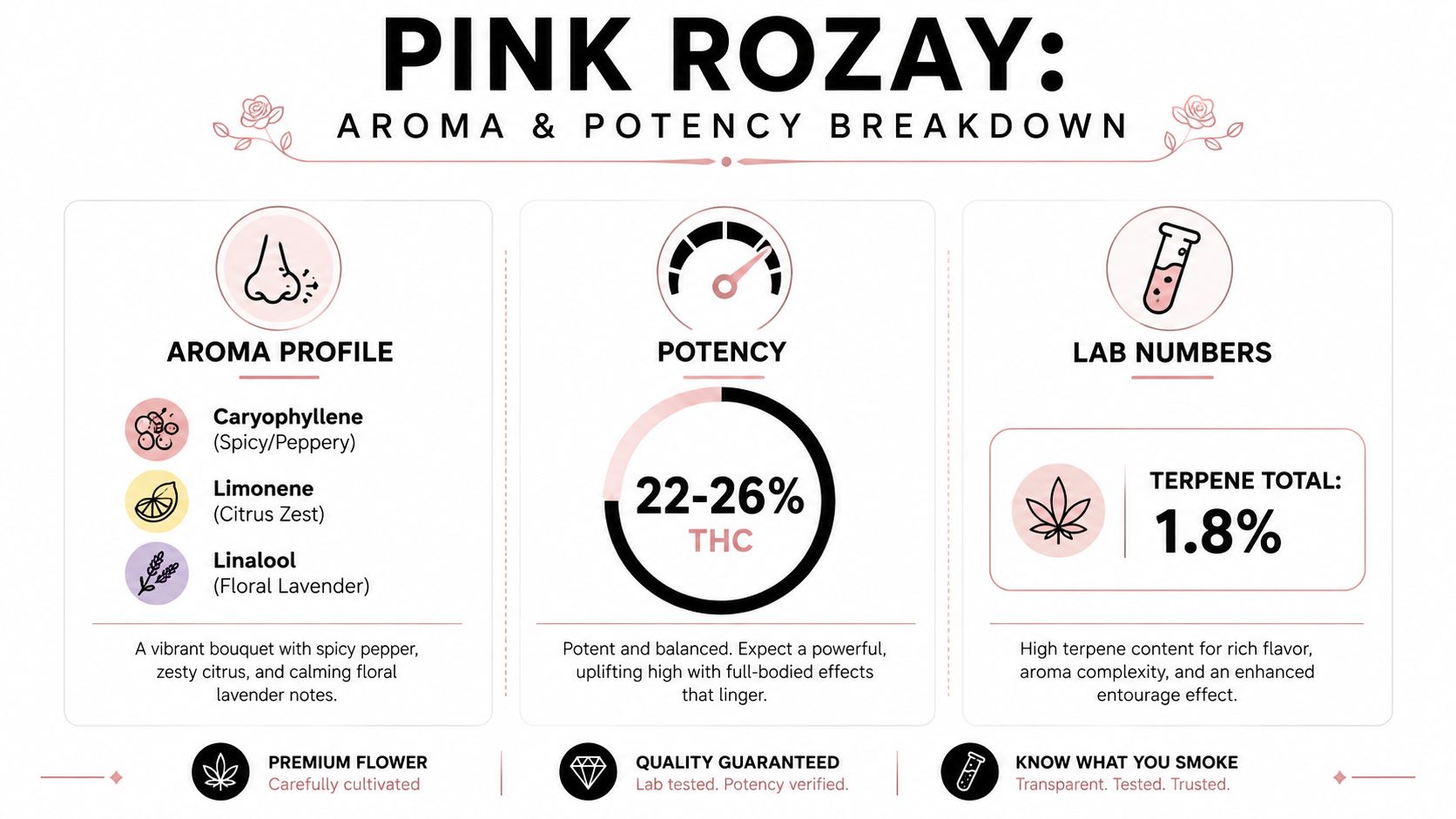
The infographic below summarizes the commonly reported aroma and potency profile. Its visual THC and terpene figures shouldn't override batch-specific lab information, especially because published reports vary.
Aroma, Potency, and Interpreting the Numbers
A jar can smell stronger than its label reads, while a high-THC result can produce a flatter experience. Published Pink Rozay listings place THC from the mid-to-high teens into the mid-20s, including reported ranges of 16% to 24%, an average lab reading of 17.8%, and occasional batches reported as high as 28%, according to Strainpedia's collected profile. Leafly's Pink Rozay listing also describes legal-market flower in the low-to-high 20% range, with some batches reaching about 28%.
That range is a useful reality check for home growers. Different phenotypes, harvest timing, drying, and cure quality can shift the result and the experience. THC measures potency, while tolerance, terpene preservation, moisture balance, and harvest maturity shape how the flower performs in the jar and during use. A lower-testing flower with intact aroma can be more satisfying than a higher-testing batch that was dried too quickly.
The three-part nose
Pink Rozay is commonly described as caryophyllene-limonene-linalool forward, with myrcene and humulene appearing as supporting contributors in some reports. At the tent and trim bin, the profile usually breaks down like this:
- Caryophyllene: Warm pepper and spice beneath the sweeter notes.
- Limonene: Citrus brightness that gives the top note more lift.
- Linalool: A soft floral layer that rounds the citrus and spice.
- Myrcene and humulene: Secondary tones that can push the profile toward earthier or heavier notes.
A strong jar should express itself before grinding. Look for layered scent, intact resin, and flowers that are dry enough to burn cleanly without turning brittle. High THC cannot restore volatile compounds lost through rough handling, excessive heat, or an over-dry cure.
For a practical primer on how aroma compounds shape cultivar profiles, read this guide to cannabis terpenes. Compare cannabinoid results with the terpene profile, then inspect the flower's condition rather than choosing from the largest number.
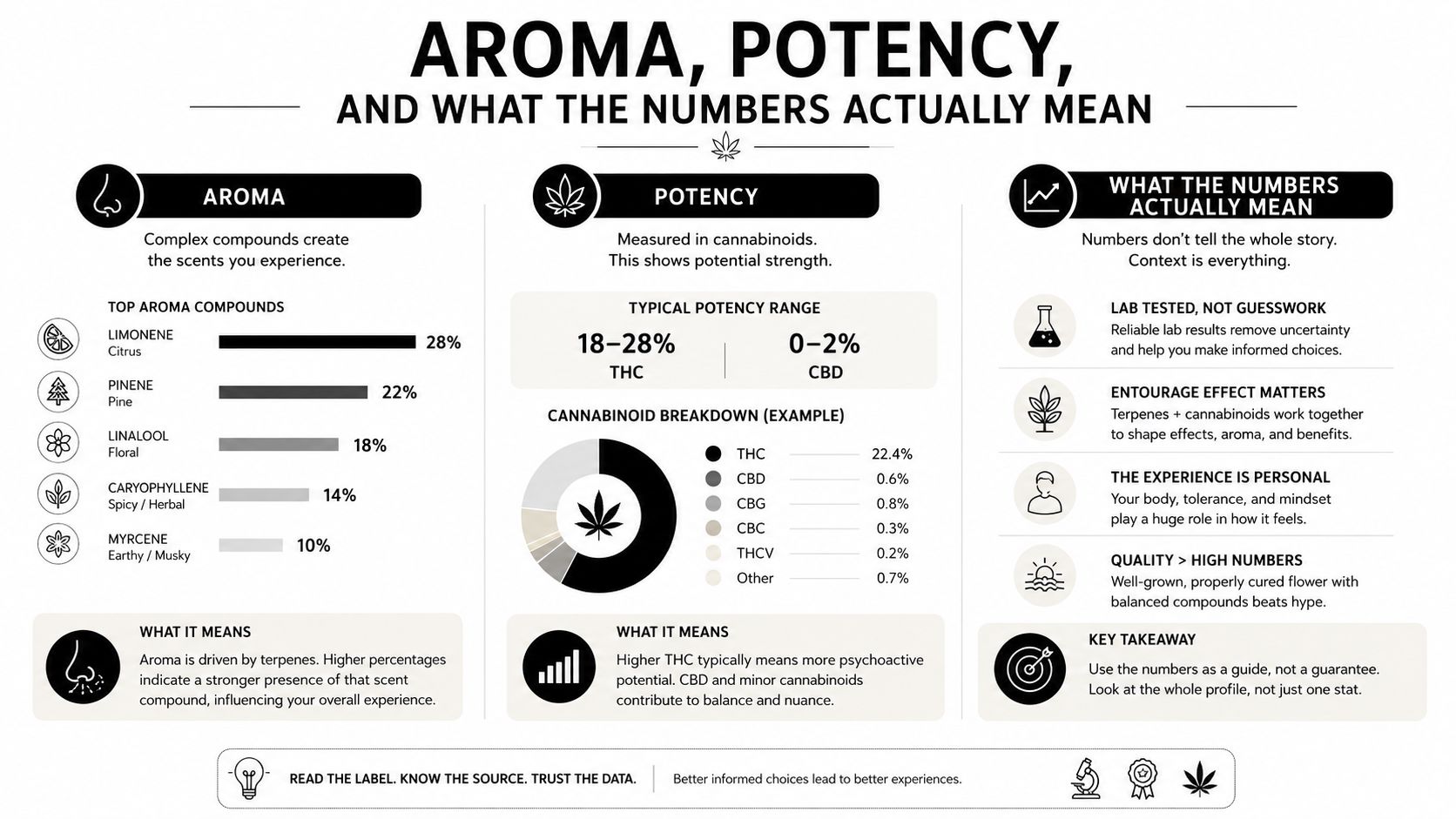
The practical takeaway is simple: Pink Rozay is commonly positioned as a high-THC cultivar, but it is not defined by one test result. For a home run, select healthy plants with a strong scent, protect the resin during harvest, and give the flowers a controlled cure. Those decisions matter more than chasing a published peak.
Setting Up the Run and Choosing Your Training Style
A Pink Rozay run benefits from a setup that manages density rather than chasing maximum plant size. The plant doesn't need to become a towering centerpiece. It needs a level canopy, clean airflow, and enough root volume to support heavy flowering without constant corrections.
Start with a container and medium you already understand. Soil gives beginners a forgiving rhythm and a wider pH range. Coco or another inert medium gives faster feedback, but it also punishes missed irrigation and weak nutrient management. Whatever you choose, keep the root zone evenly supplied rather than alternating between saturation and severe dryness.
A practical veg plan
Use the early vegetative stage to build branches that can carry flowers at the same height:
- First, establish the main stem. Wait until the plant has several healthy nodes and is growing steadily before cutting or bending.
- Then choose one primary shaping method. Topping creates multiple leaders, while low-stress training spreads existing branches with less recovery time.
- Open the center. Remove weak interior shoots that won't reach useful light. Keep healthy side branches with room to develop.
- Level the canopy before flower. A simple SCROG works well when you can tuck branches through the net as they rise.
Topping suits a grower who wants a broad, multi-top plant. Low-stress training suits someone who prefers gradual movement and minimal interruption. A SCROG is the best option when the light footprint is fixed and you want each productive branch held in the same zone.
Light and feeding decisions
Use the manufacturer's recommended hanging height as your starting point, then adjust from plant response. New growth that cups, bleaches, or shows persistent stress is telling you the light and environment are too aggressive. A healthy plant should gain color and structure without pushing damaged tips.
Feed moderately at first. Pink Rozay doesn't need a heavy nutrient schedule just because its flowers may become dense. Increase input only when growth and leaf color show demand, and treat burned tips as feedback rather than a badge of a “strong” run.
The best canopy is the one you can inspect. If you can't see the inner branches or move air through the plant, the plant is too crowded for your room.
Keep fans moving air above and below the canopy, but don't point a powerful stream directly at one branch all day. Strong circulation should create gentle movement across the whole plant. That setup helps the flowers dry evenly later because you've already prevented stagnant pockets during growth.
Flowering Time, Trichome Timing, and the Chop Decision
Pink Rozay's reported flowering window sits around 8 to 10 weeks, with SeedFinder listing 9 to 10 weeks for flowering in its cultivar information. Use that range as a planning window, not a guaranteed harvest date. The plant's trichomes, flower swelling, aroma, and overall finish should make the final call.
Pink Rozay Flowering Week by Week
| Week | Plant Behavior | Smell Cue | Grower Action |
|---|---|---|---|
| Early flower | Stretch continues and branches claim their space | Aroma begins to sharpen | Finish major training and keep airflow open |
| Mid flower | Flower sites stack and resin becomes easier to see | Citrus, spice, or floral notes become clearer | Inspect dense areas and remove damaged leaves |
| Late flower | Calyxes swell and the plant slows its vertical push | The finished profile becomes more obvious | Check trichomes with a loupe and reduce handling |
| Final window | The plant shows its mature structure | Aroma is strongest when flowers are gently moved | Choose the chop date from trichomes and flower condition |
A loupe or handheld microscope is more useful than judging pistil color alone. Clear trichomes indicate that the plant is still developing. Cloudy trichomes show maturity is approaching. Amber trichomes indicate oxidation and a later harvest direction, but you shouldn't chase amber blindly if the aroma is already fading or the plant is showing stress.
Use this trichome guide to compare what you see on the actual flower, not just sugar leaves. Sugar leaves often mature earlier and can mislead you, so inspect several inner and outer flowers across the plant.
The final checks
Look at the calyxes, not only the pistils. Swelling, firm flower structure, and a mature aroma usually tell you more than a single visual color cue. A little leaf fade can be normal late in the run, but widespread damage, heat stress, or nutrient problems can distort the picture.
Don't rely on a dramatic dark period or an aggressive flush to rescue a rushed harvest. A clean finish starts with stable irrigation and a healthy root zone. In soil, ease off heavy feeding as the plant approaches its chosen harvest window. In inert media, keep the root zone consistent and avoid sudden extremes that leave flowers dehydrated.
Harvest when the trichome sample, aroma, and flower development agree. Pink Rozay's dessert character deserves a slow, controlled dry because fast handling can flatten the citrus and floral notes you grew it for.
Indoor Versus Outdoor Runs and Realistic Yields
Indoor growing gives Pink Rozay its best chance to express a consistent structure because you control light, airflow, irrigation, and late-flower humidity. Outdoor growing can work when the season offers strong sun, warm days, dry weather, and enough time for dense flowers to finish without persistent rain.
The main difference isn't just yield. It's control. Indoors, you can spread branches under the light and respond quickly when the canopy becomes crowded. Outdoors, the plant can build more mass, but wind, insects, rain, and nighttime humidity make the final weeks less predictable.
What changes the final harvest
There isn't a trustworthy universal yield figure for Pink Rozay. Final dry weight depends on the cultivar expression, root volume, plant count, light footprint, training, season, and how much usable flower survives trimming and drying. A single advertised yield number is less useful than planning around your actual space and equipment.
| Setup | Main advantage | Main risk |
|---|---|---|
| Indoor tent | Repeatable light and climate control | Crowded flowers can create hidden humidity pockets |
| Outdoor container | Mobility and easier seasonal repositioning | Roots and plant size are limited by the container |
| Outdoor ground planting | More root room and natural light | Weather and pest pressure are harder to control |
For an outdoor run, choose a location with morning sun and open air movement. Inspect flowers after rain and remove damaged material quickly. Dense Pink Rozay flowers deserve extra attention late in the season because trapped moisture can spread before you notice it from the outside.
If autumn turns wet, move container plants under cover if local rules and conditions allow. Don't seal a damp plant in a stagnant shed. A roof helps, but airflow still matters. When the forecast stays poor, an earlier harvest of healthy flowers is often preferable to waiting for a theoretical peak while mold pressure climbs.
Indoor growers should measure the canopy, not just count plants. One well-trained plant under an evenly used light can outperform several crowded plants in the same footprint. Outdoor growers should plan the harvest around weather and flower condition, not an idealized calendar.
The video below offers a visual comparison of indoor and outdoor approaches:
Picking a Pack of Pink Rozay Seeds Without Regret
The seed purchase sets the ceiling for the run, but the strain name alone doesn't tell you enough. Look for a breeder or vendor that explains the cultivar's lineage, flowering expectations, seed type, storage, and replacement policy in clear language.
For a Pink Rozay feminized pack, use this checklist:
- Confirm the cultivar description: The listing should identify Pink Rozay as an indica-dominant hybrid and connect it to Lemonchello 10 and London Pound Cake #75 where that information is available.
- Check the seed format: Feminized seeds suit home growers who want to focus the room on productive plants without traditional breeding complications.
- Review germination support: A clear replacement or germination policy tells you how the seller handles problems after delivery.
- Read shipping terms: Check packaging, tracking, delivery regions, and what happens if a parcel is delayed.
- Match the flowering window to your room: The reported 8 to 10 week range makes timing important for growers with limited electricity, seasonal constraints, or strict harvest plans.
- Plan for selection: If you want a keeper, label each plant and record aroma, structure, finishing speed, and flower quality instead of choosing from appearance alone.
Phenotype hunting becomes useful when you treat it as observation rather than a race to find the loudest plant. Keep notes from the first true leaves through the cure, and compare the finished jars after they've had time to settle. This phenotype guide can help you build a more consistent selection process.
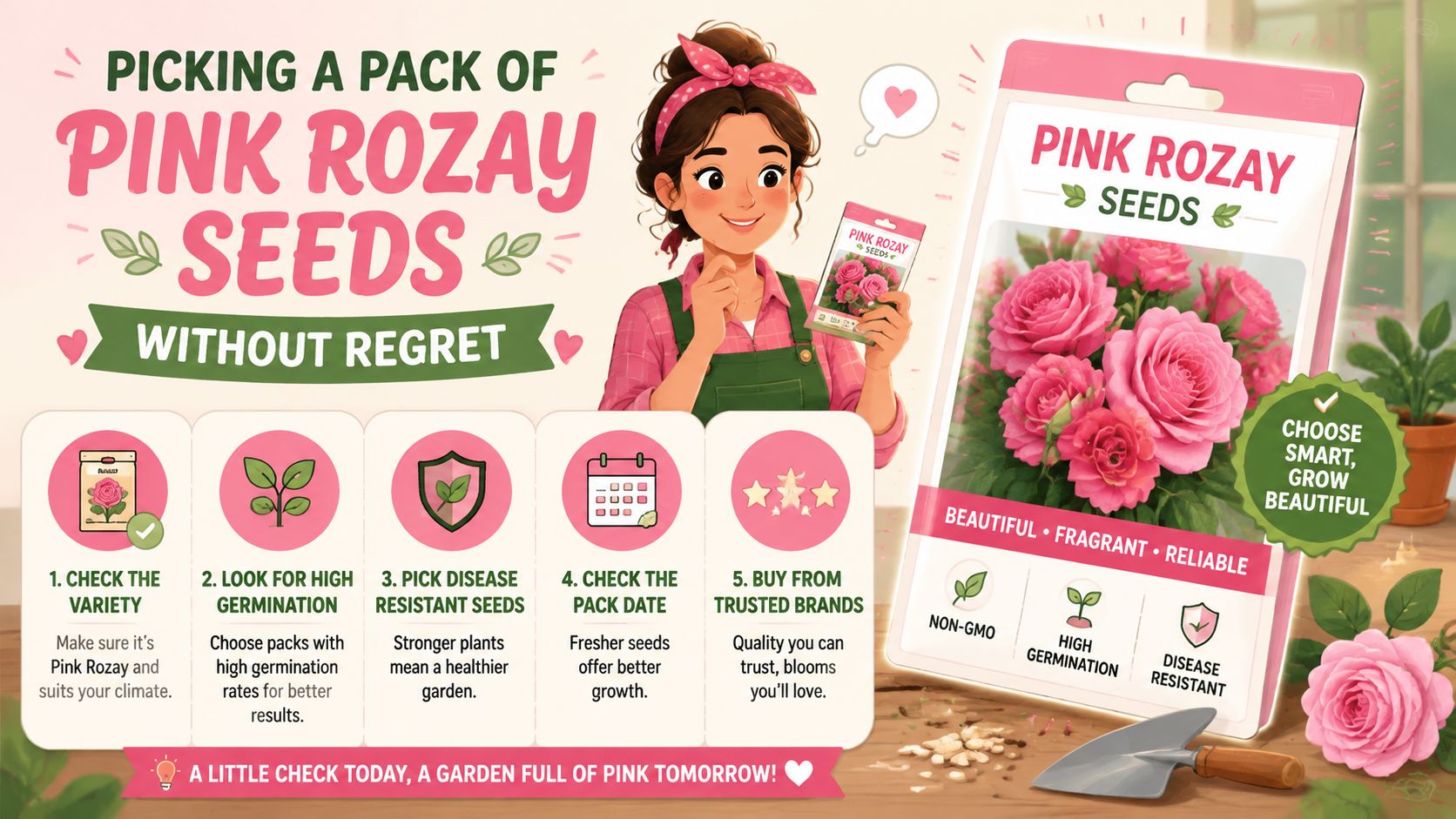
Avoid buying based on the highest THC figure you can find. Published Pink Rozay results span a broad range, so the breeder's transparency and the health of the seed stock matter more than a flashy promise. You're stacking the odds in your favor when the listing gives you enough information to plan the actual grow.
Pulling It All Together Before You Start
Before germination, make five decisions:
- Structure: Will you top, train gently, or use a SCROG?
- Space: Can the tent handle a full, dense canopy with room for airflow?
- Medium: Are you more comfortable with forgiving soil or faster-feedback coco?
- Timing: Can you give the plant its reported 8 to 10 week flowering window?
- Quality control: Do you have a loupe, a dry space, and patience for the cure?
Pink Rozay is a strong choice when aroma matters as much as potency. Treat the THC range as context, not a guarantee, and judge each pheno by growth, scent, resin, flower density, and finished cure. Before checkout, use the Botanist Seeds comparison tool to match a feminized cultivar to your room, schedule, and growing style.
Botanist Seeds offers a curated catalog of cannabis genetics with clear cultivar information and a comparison-focused shopping experience. Visit Botanist Seeds to compare feminized options, check how Pink Rozay fits your setup, and choose your next pack with a practical plan already in place.