




Headband Cookies Strain: A Grower’s Guide to Cultivation

You're probably staring at a seed catalog or a comparison tool right now, trying to figure out which cultivar is worth the space in your tent or backyard. Headband Cookies stands out fast because it's not just another flashy cookie cross, it's a high-potency THC-dominant hybrid with published lab-style references placing it at >25% THC and >30% total cannabinoids in breeder-oriented data, with one measured batch at 23.69% THC and terpene readings that back up the hype with actual numbers (Seedfinder reference, Hytiva lab-style listing). For a home grower, that matters because strong, well-documented genetics can save you from wasting months on a weak performer that looks good on paper and disappoints in the jar.
The appeal is practical. You're not chasing a dispensary sticker, you're chasing a jar you grew yourself, on your schedule, with your preferences in mind. That means no line at the counter, no markup surprises, and no guessing whether the flower on the shelf matches the cultivar you wanted in the first place.

Why Headband Cookies Deserves a Spot in Your Garden
A seed catalog can look crowded until one cultivar gives you a reason to stop scrolling. Headband Cookies does that by putting commercial-grade performance ahead of novelty, with a reputation for strong, fast-finishing flower that fits a grower's real-world priorities (Seedfinder reference).
The kind of cultivar that makes sense for a small-batch grow
If you grow at home, each plant has to justify the space it takes. Headband Cookies brings high THC, decent cannabinoid density, and a finish window that works for a practical home schedule, with a breeder-style indoor range of 60 to 70 days and an outdoor harvest around mid-October (Seedfinder reference). That kind of timing is useful when you want potent flower without committing to a plant that drags on for too long.
Its appeal also shows up in phenotype hunting. This cultivar has enough variation to reward a careful grower, while still sitting in a modern breeding framework that favors output and consistency over guesswork. For hobbyists who like comparing structure, scent, and finish time from one plant to the next, that makes the run more interesting.
Practical rule: if a cultivar cannot finish in a workable window and still hold quality, it is hard to justify another round.
Why the home grow payoff feels real
The value goes beyond the jar. Growing your own means you are not just buying flower, you are building a supply you understand from the root zone up. That feels different from picking whatever is on the shelf that day, especially when the cultivar has a reputation for strong bag appeal and potency that also matters for extraction.
Headband Cookies also suits growers who want a premium jar without turning the grow into a science project. It has the kind of profile that can impress a friend, but the bigger payoff is how clearly it reflects the quality of your setup. If your environment is dialed in, this is the sort of cultivar that shows it, and a solid DNA seed selection guide can help you think through how that choice fits into the rest of your tent.
The Genetic Blueprint Behind Headband Cookies
Headband Cookies sits in the modern designer hybrid lane, and the way it was built shows why. Ethos Genetics ties the cultivar to a layered lineage that includes (ChemD x i95), Mandarin Cookies, (Headband x i95), and California Black Roze. You can see the same family map in the Weedmaps strain profile, and it is the kind of stack that aims to combine several strong traits in one line.
Why the parentage matters to a grower
Each parent brings a different kind of value. Chem-leaning ancestry often shows up as sharp fuel and resin-heavy expression, which helps explain the cultivar's potent reputation. Cookies lineage usually points toward tighter flower structure and dessert-leaning complexity, while Headband brings that dense, loud, high-THC backbone. The California Black Roze side helps explain why this line sits comfortably in the exotic-hybrid category instead of feeling like a plain cookie remix.
What matters to a grower is the traits that show up in the tent. Structure, potency, and aromatic expression all affect whether a plant is a pleasure to run or a headache to manage. Good breeding has to support the whole room, not just sound good on a label.
What this says about phenotype hunting
The documented BX1 version is a useful clue here, because it shows the line is being worked for consistency and commercial polish. The breeder page also points to 56 to 70 days of flowering and 30%+ TAC, which gives a sense of the target expression. If you want to compare seed stock and breeding approaches side by side, a DNA seed selection guide can help frame that decision without turning the process into guesswork.
When a cultivar gets backcrossed, the goal is usually to tighten expression rather than make it more random.
If you are popping seeds from a line like this, phenotype selection matters more than the name on the pack. Two plants can share the same label and still differ in stretch, bud density, and how loud they smell in late flower. That is why this kind of cultivar is useful for growers who like to compare plants side by side and keep the cut that fits their room.
Grower mindset: the label gives you a starting point, not the final answer. The final answer comes from how the plant behaves in your environment.
Aromatic Profile and Terpene Breakdown
Open the jar and the first thing you notice is that Headband Cookies does not smell generic. The terpene profile leans citrus first, then slides into pepper, spice, and a denser herbal base. A Hytiva lab-style listing points to 6.79 mg/g limonene, 4.62 mg/g beta-caryophyllene, and 2.1 mg/g beta-myrcene, which gives a clearer read than the usual “sweet and gassy” shorthand.
What those terpenes do to the jar smell
Limonene sets the top note. It comes across as citrus peel, bright fruit, and that sharp clean hit you get right when the lid comes off the jar. Beta-caryophyllene brings pepper, dry spice, and a heavier edge that keeps the aroma from drifting into candy territory. Beta-myrcene rounds things out, adding body so the profile feels fuller and less thin.
That mix matters in real grow rooms. A plant can smell loud in flower, then flatten out in the cure if the terpene balance was never there to begin with. Headband Cookies has enough weight in the base to keep the aroma grounded, while the limonene keeps it lively on the front end.
How to keep the aroma loud from harvest to jar
Phenotypes will still vary, and that is part of the work. Some plants push the citrus side harder, others stay earthier or more spice-forward, and a careful grower spots those differences before the chop window closes. If the top notes are peaking, waiting too long can dull them and pull the profile into something flatter.
A few habits help preserve the good stuff, and they matter more than fancy additives:
- Harvest with intent: Let the plant finish, but do not leave it hanging past its best aromatic window.
- Dry gently: Too much heat or airflow strips away the brighter notes fast.
- Cure with patience: A proper cure keeps the aroma clearer and less grassy.
- Store cool and dark: Light and warmth are hard on volatile compounds.
For growers who pay attention to phenotype hunting, this terpene profile gives you something useful to sort on. You are not just hunting for a plant that smells strong, you are looking for the one that keeps the citrus snap, spice, and depth in the right balance for your space. If you want a broader primer on terpene behavior in cannabis, the cannabis terpenes guide is a useful companion read for making sense of what you are smelling in the tent.
Cultivation Performance and Growing Tips
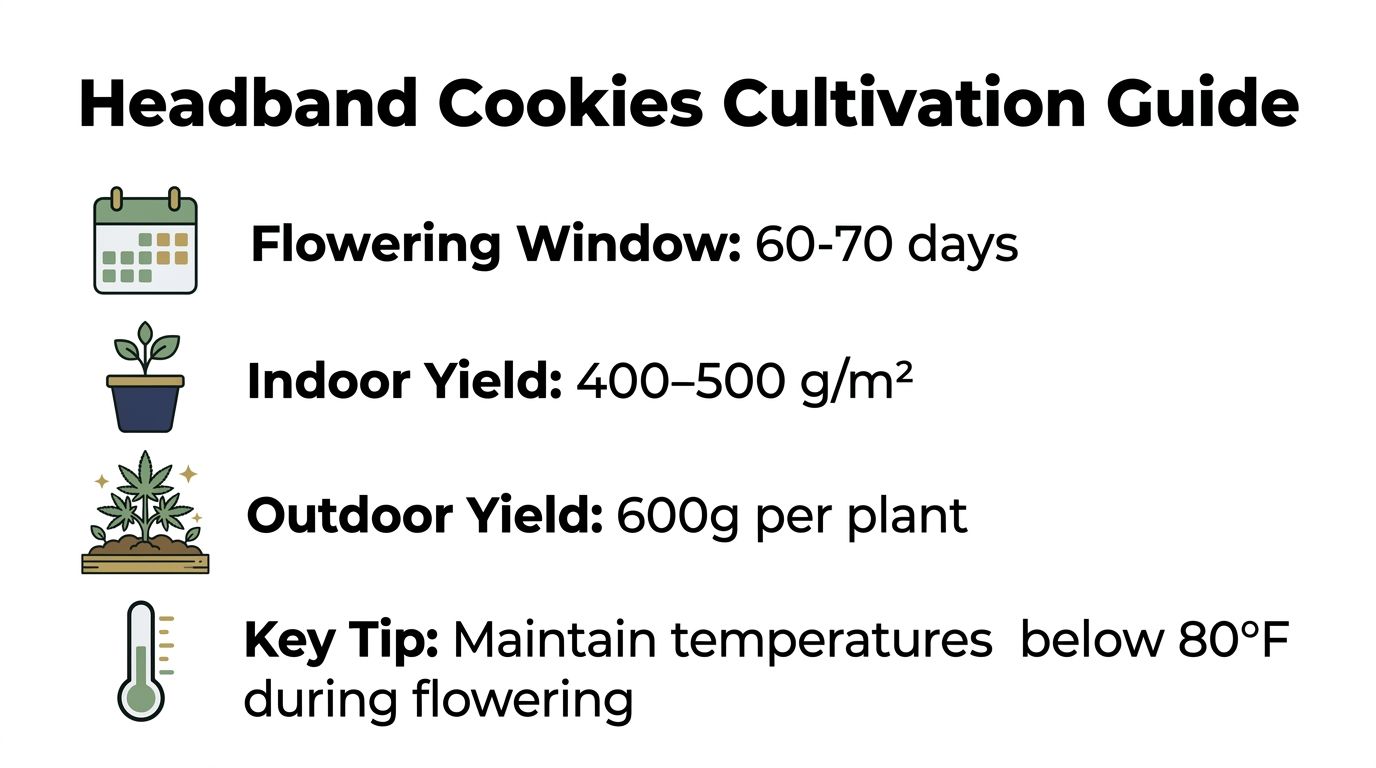
If you're running a small tent and need the room to stay on schedule, Headband Cookies rewards discipline more than bravado. The indoor flowering window is described as 60 to 70 days, and the reported output sits around 500 g/m² indoors and 600 g per plant outdoors, which makes the plant attractive for growers who want solid production without dragging the crop too long (Seedfinder reference). That combination matters in a home setup, where every extra week can crowd the next run.
What the room needs from you
The main challenge is stability. Once this cultivar is in flower, sloppy heat control, weak airflow, or a humid canopy can turn into avoidable problems fast. Keep the environment even, keep the leaves moving gently, and do not let moisture settle deep in the plant.
Its relatively quick finish is useful for anyone managing a rotation or trying to avoid late-season weather trouble outdoors. A shorter bloom can make the difference between bringing a clean crop across the line and watching the last stretch get messy when conditions slip.
A practical way to handle it is to treat the plant like a straight-line project. Give it consistency, and it tends to repay that with less drama in the back half of flower.
Practical rule: if your room runs hot and sticky, this is a rough fit for your first serious trial.
Feeding, training, and timing that hold up
A measured feed schedule usually works better than pushing hard. This cultivar does not need a heavy-handed approach, and overfeeding tends to create more correction work than yield gain. Build nutrients up gradually, then read the leaves and the pace of growth instead of chasing every small change in color.
Training helps keep the plant honest. A flatter canopy makes better use of indoor light, and it also reduces the kind of shading that encourages weak lower growth. Low-stress training, topping, and a simple screen all make sense here if you want a more even finish without turning the tent into a knot of branches.
When I run a plant like this, I keep the approach simple:
- Let young plants settle first. Give roots and structure a chance to establish before you start bending everything around.
- Keep the canopy level. Bring stronger tops down early so the lower sites do not get buried.
- Maintain airflow through the plant. If air stalls inside the canopy, pests and moisture issues tend to follow.
- Watch the finish closely. Harvest timing affects both the final effect and the jar quality, so do not rush the last stretch.
Conditions that make the run smoother
A controlled indoor space usually gives the cleanest result, and a dry outdoor spot can also work if the weather stays on your side. Scheduling matters. If you know your room tends to run warm late in flower, plan ahead instead of trying to fix it after the plant is already stacked with weight.
Curing should be part of the growing plan, not an afterthought. A rushed dry leaves you with flatter jar appeal and less character, while a patient cure keeps the flower closer to what the plant produced. For growers comparing styles, that same disciplined approach matters with other cookie-leaning cultivars too, including Wedding Cake seeds, where canopy control and finish timing can decide how clean the final jar comes out.
The embedded guide below is still the easiest quick reference if you want the basic cultivation notes in one place.
How Headband Cookies Stacks Up Against Other Cookie Cultivars
Cookie-family cultivars can blur together fast if you only read the names on a seed list. Headband Cookies stands apart because it pushes harder into potency and designer-hybrid complexity than many mainstream cookie options, while still keeping a finish window that home growers can work with and production potential that justifies the space it takes up.
A useful comparison for home growers
The practical question is simple. If you want a dessert-leaning plant with a clearer modern-craft identity, Headband Cookies is a strong fit. If you want something that reads more predictably in structure or feels more familiar in the tent, other Cookie-family cultivars may be easier to manage. Flowering time and yield matter more than label hype once you are allocating a room, especially if you are choosing between lines that look similar on paper.
| Cultivar | Flowering Time | Yield Potential | Grow Difficulty |
|---|---|---|---|
| Headband Cookies | 60 to 70 days indoors | About 500 g/m² indoors and 600 g per plant outdoors | Better for growers who already know how to manage canopy and finish timing |
| Headband Cookies BX1 | 56 to 70 days | Similar range, with selection focused more on consistency than on a dramatic yield jump | Similar to the main line, with a stronger emphasis on uniformity |
| Wedding Cake | Commonly finishes in the mid to late flower window indoors, depending on cut and conditions | Generally treated as a productive Cookie-style cultivar in home gardens | Often a steadier choice for growers who want a familiar cookie structure |
The point is not that one line wins every room. Headband Cookies gives you a more technical grow to work through, which is useful if you enjoy phenotype hunting and less helpful if you want the most plug-and-play option possible. If you are comparing it with other dessert-forward choices, a page built around Wedding Cake seeds is a useful reference point for seeing how another cookie-style cultivar is positioned.
What makes it a different kind of choice
Headband Cookies has a more commercial-breeding feel than the average cookie cultivar. That matters because the line reads as a plant being refined for consistency, test results, and market-ready output, not just novelty. For a home grower, that means the plant feels serious, and serious is useful when you want a garden that teaches you something.
If your setup is already dialed and you like tracking differences between plants, this cultivar gives you a real reason to pay attention. If you are still learning how to control stretch, airflow, and harvest timing, it can still work, but you need to be more deliberate than you would with a softer, easier-going option.
Making the Right Choice for Your Next Grow
Headband Cookies makes sense if you want a high-potency cultivar with modern breeding behind it, a real aroma profile, and enough performance to justify taking notes through the whole run. It finishes in a practical window for a home garden, keeps enough character at harvest to feel rewarding, and offers enough variation between plants to make phenotype selection worth your time.
That's the trade-off. You are not only chasing potency, you are choosing a plant that shows you how your room handles airflow, how your dry changes the final smell, and how much small cultivation decisions shape the jar. If you like a run that teaches you something while it grows, Headband Cookies belongs on the shortlist.
Botanist Seeds keeps the search side simple by organizing seed options in a way that helps you compare cultivars without getting lost in hype. If you're ready to line up Headband Cookies against other candidates and narrow down what fits your space, check out Botanist Seeds and use the comparison tool to match your next run to your setup.