Indica vs Sativa vs Hybrid: A Grower’s Guide
When you first start growing your own cannabis, the terms indica, sativa, and hybrid are impossible to miss. At a basic level, indicas are traditionally known for a relaxing vibe, while sativas are associated with an energetic lift. Hybrids, as you’d guess, are a genetic mix of the two, creating a huge range of possibilities.
Choosing the right one really comes down to what you’re looking for in both the growing experience and the final result.
A Straightforward Guide to Cannabis Cultivars
So, what's the real story behind the indica, sativa, and hybrid labels? Think of them as a useful starting point, like choosing between a stout, an IPA, or a lager. It gives you a general idea of what to expect, but the specific recipe is what truly defines the final product.
With cannabis, it’s the cultivar's unique chemical signature of cannabinoids and terpenes that shapes its character.
The classic distinctions are easy to understand:
- Indica: Originating from cooler, mountainous regions, these plants are famously short, dense, and resilient. They are often linked to a deep, full-body relaxation, making them a go-to for unwinding at the end of the day.
- Sativa: Native to warmer, equatorial climates, sativas grow tall and slender with thin leaves. Their vibe is typically described as cerebral, uplifting, and creative, perfect for daytime focus and activity.
- Hybrid: These are the result of crossbreeding indica and sativa parents. Hybrids dominate the modern market and can be indica-dominant, sativa-dominant, or a balanced 50/50 blend, offering the best of both worlds.
For anyone thinking about home growing, the ultimate reward is total control. You get to bypass dispensary lines, avoid hefty taxes, and feel the pride of growing a personal supply perfectly matched to your own preferences.
Old School Labels in a Modern World
While the indica, sativa, and hybrid categories are a great shorthand for a plant's growth habits and general vibe, they don't tell the whole story. The experience you feel is actually driven by a cultivar’s entire chemical profile, especially its terpenes.
Terpenes are the aromatic oils that give a plant its distinctive scent, from the sharp citrus of a lemon to the earthy fragrance of a pine forest. This is why you’ll sometimes find an indica that feels surprisingly energizing or a sativa that feels unusually calm. It all comes back to the unique genetics of that specific cultivar.
As you gain experience, you'll start to recognize which terpene profiles you enjoy most. From there, you can use our comparison tool to find feminized and autoflower seeds that hit all the right notes for you.
Indica vs Sativa vs Hybrid At a Glance
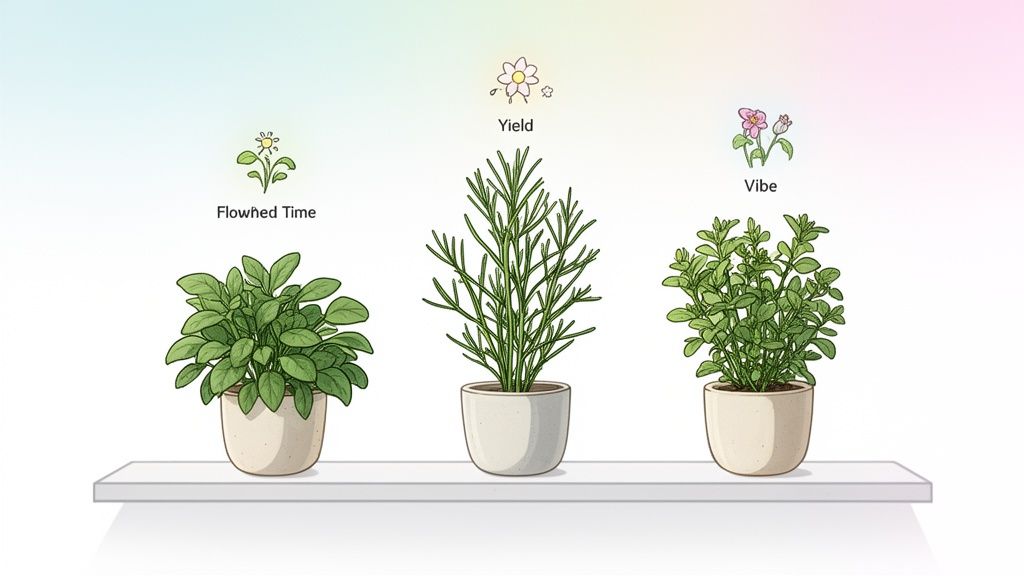
To help you get started, here's a quick look at the classic traits associated with each type. Think of this table as a high-level guide, but always remember to read the detailed description of any cultivar you're considering for the complete story.
| Characteristic | Indica | Sativa | Hybrid |
|---|---|---|---|
| Typical Vibe | Relaxing, calming, full-body | Uplifting, energetic, cerebral | A blend of both, can be indica or sativa-dominant |
| Plant Shape | Short, bushy, and dense | Tall, lanky, and more open | Varies greatly depending on its genetic lineage |
| Leaf Style | Broad, dark green leaves | Narrow, light green leaves | A mix of broad and narrow leaf traits |
| Flowering Time | Generally faster (around 8-9 weeks) | Generally longer (10+ weeks) | Varies; often bred for specific flowering times |
Ultimately, these classifications are a fantastic starting point on your journey. They help narrow down the vast world of cannabis into manageable categories, guiding you toward a plant that not only fits your space and timeline but also delivers the experience you want.
Growing Indica Dominant Cultivars
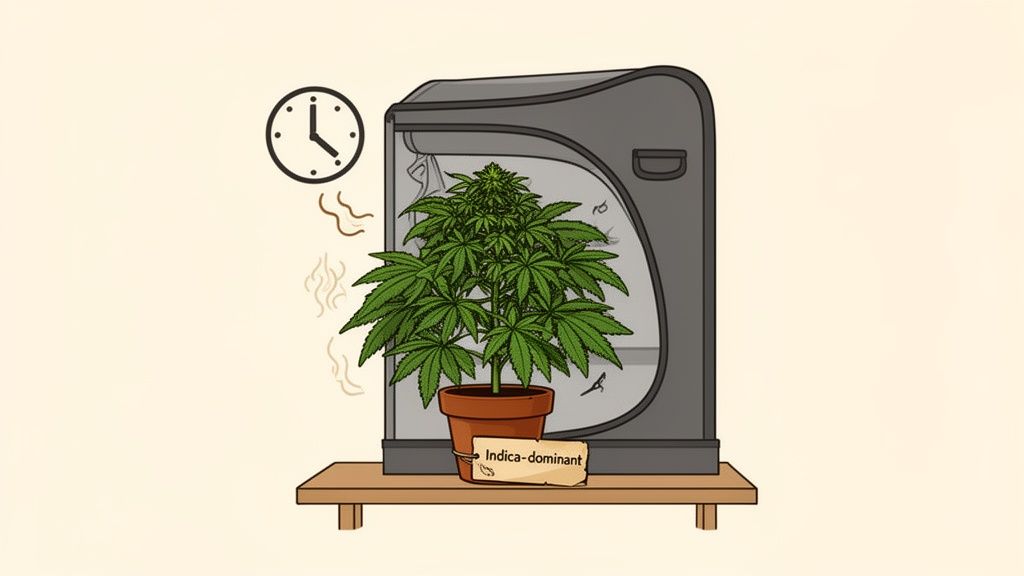
If you're setting up your first grow, or you just want a reliable and rewarding harvest, indica-dominant cultivars are a fantastic way to go. While they’re famous for their relaxing vibe, their real value for a home grower comes down to their physical structure and growth cycle.
Indicas are the little powerhouses of the cannabis world. Their naturally short and bushy stature is a huge plus for anyone working with limited space, like a small grow tent or a discreet closet setup. This compact build means you can pack more plants into a tight area without worrying about them stretching into your lights.
The Big Win: Faster Flowering Times
For any grower who values their time, the single biggest advantage of growing indicas is their faster flowering time. Compared to their lanky sativa cousins, most indica cultivars are ready for harvest after just 8 to 9 weeks of flowering.
This quick turnaround brings a few major perks:
- Quicker Harvests: You get to enjoy the results of your work that much sooner.
- More Cycles Per Year: A shorter grow cycle means you can potentially squeeze an entire extra harvest into your year.
- Reduced Risk: Less time spent in the flowering stage means less time for pests, mold, or other problems to appear.
For home growers, a quick and reliable harvest is everything. It means saving money on dispensary trips, avoiding taxes, and achieving the personal pride that comes from cultivating your own supply more efficiently.
This speedy timeline is a true game-changer, especially if you’re using autoflowers. An indica-dominant autoflower can race from seed to harvest in as little as 10 to 12 weeks, making it one of the most efficient ways to keep your jars full.
Plant Structure and Appearance
Beyond their short height, indica-dominant plants have other classic tells. Their leaves are famously broad with a deep, dark green hue, a feature that helps them soak up every bit of available light. This efficiency is a big part of what fuels their rapid growth and dense flower development.
Once they start flowering, indicas produce those tight, heavy buds that are often caked in a thick layer of frosty resin. This density doesn't just look impressive; it’s what creates the potent, rich aromas these plants are known for. You can explore a huge variety of these traits in our collection of indica-dominant seeds.
Classic Aromas and Vibe
Growing an indica is a rich sensory experience from start to finish. Their terpene profiles often lean into those classic cannabis aromas that feel both familiar and deeply satisfying. You'll find cultivars that offer:
- Earthy and Musky Notes: Think of that rich, damp forest floor smell right after a rain.
- Sweet and Fruity Scents: Many cultivars deliver delicious hints of berry, grape, or even sweet desserts.
- Spicy Undertones: Some plants bring a peppery or hash-like kick that adds a wonderful layer of complexity.
While the "indica vs sativa vs hybrid" discussion often gets caught up in the final vibe, choosing to grow an indica is just a smart, practical decision. It’s about picking a plant that fits your space, respects your time, and rewards you with dense, aromatic buds.
Growing Sativa-Dominant Cultivars
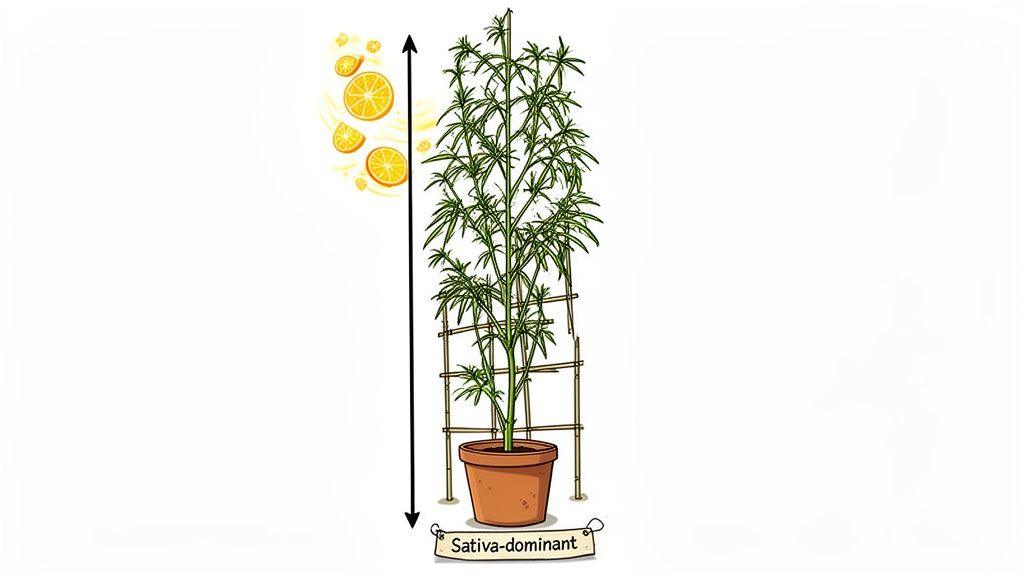
If you think of indicas as the stout, fast-finishing sprinters of the garden, then sativas are the graceful, long-distance marathon runners. Growing these cultivars is a lesson in patience that rewards you with an uplifting, cerebral experience and, often, a massive harvest. Sativas are a fantastic choice for anyone with a bit of extra vertical space and a willingness to wait for something truly special.
These plants trace their lineage to the warm, sun-drenched regions near the equator. You can see this genetic history written all over their structure: they grow tall and lanky with thin, finger-like leaves in a lighter shade of green. This airy architecture isn't just for looks, it allows for excellent airflow, a built-in defense against the mold and humidity common in their native climates.
Taming the Stretch and Navigating the Wait
When growing sativas indoors, their vertical growth is the biggest factor you’ll need to manage. These plants have a powerful instinct to stretch, and without intervention, they can easily outgrow a standard tent. This is where your skills as a cultivator really get to shine.
Plant training techniques are non-negotiable for an indoor sativa grow. These simple methods help you redirect that upward energy, encouraging the plant to grow wide instead of tall.
- Low-Stress Training (LST): This involves carefully bending the main stem and side branches, tying them down to create a flatter canopy. It breaks the plant’s apical dominance, so instead of one main cola, you get a whole field of them.
- Screen of Green (ScrOG): By installing a horizontal screen over your plants, you can weave the branches through the mesh as they grow. This creates an incredibly even canopy where every single bud site gets a direct blast of light.
Mastering these techniques is the key to unlocking a sativa's full yield potential indoors. We cover these methods in more detail in our guide on the growth or veg phase.
The other piece of the puzzle is patience. Sativas are known for their longer flowering cycle, often taking 10 weeks or more to reach full maturity. While this can feel like a long time, the reward is typically a much larger yield of exceptionally high-quality buds.
Bright Aromas and an Energetic Vibe
Growing a sativa is a true sensory experience. Their terpene profiles are miles away from the deep, earthy funk of an indica. Get ready for your grow space to be filled with bright, sharp, and invigorating aromas.
You can expect to encounter scents like:
- Sharp Citrus: Think zesty lemon, fresh-squeezed orange, and tangy grapefruit.
- Spicy and Hazy: Many classic sativas feature peppery, spicy, or quintessential "haze" notes that are complex and stimulating.
- Sweet and Tropical: Some cultivars surprise you with notes of juicy pineapple, ripe mango, or other exotic fruits.
For the hobbyist grower, sativas are the ultimate reward for patience. They provide an energetic, creative vibe perfect for daytime activities, and their massive yields mean your hard work pays off with a supply that lasts.
Sativa cultivars are a huge part of the recreational and creative cannabis world. For our Botanist Seeds customers, this means you’re growing cultivars that are in high demand and deliver an unparalleled experience.
Understanding Modern Hybrid Cultivars
Let's get one thing straight: nearly every cultivar you can buy today is a hybrid. That classic, clear-cut line between a pure indica and a pure sativa has become wonderfully blurred over the years, and for home growers, that’s a very good thing.
Breeders have spent generations carefully cross-pollinating indica and sativa plants. Their goal has always been practical: to cherry-pick the best traits from each parent and combine them into something new and improved. This meticulous work gives us a massive spectrum of plants with unique growth habits, aromas, and vibes that go far beyond the old indica vs sativa labels.
The Power of Dominance: Sativa, Indica, or Balanced
When you start browsing for seeds, you’ll notice hybrids are often tagged as "indica-dominant," "sativa-dominant," or "balanced." Think of these labels as a quick preview of the plant’s personality. It’s your first hint at which side of the family tree, indica or sativa, has a stronger genetic influence.
Indica-Dominant Hybrids: These plants usually inherit the compact, bushy frame and quicker flowering cycle from their indica heritage. The magic happens when they also express the bright, cerebral vibe of their sativa parent. They're a perfect solution for growers with limited space who still want an energetic, uplifting experience.
Sativa-Dominant Hybrids: On the flip side, you have cultivars that shoot up tall and lanky like a classic sativa but finish flowering much faster, thanks to a dash of indica genetics. This means you can get those famously massive sativa yields without the marathon-length wait, often paired with a more relaxing vibe than you'd expect.
Balanced Hybrids: Sometimes called “true” hybrids, these cultivars aim for a 50/50 genetic split between indica and sativa. The result is often the best of both worlds: a gentle, full-body calm that doesn't cloud your mind, leaving you feeling focused and creative. Their moderate growth patterns make them incredibly versatile for all kinds of grow rooms.
The real beauty of modern hybrids is the sheer flexibility they give you. You no longer have to choose between a plant that physically fits in your tent and one that delivers the vibe you’re looking for. A good hybrid can give you both.
This incredible genetic variety means you can find a cultivar that feels like it was designed specifically for your garden and your personal tastes. The old days of being stuck with a single set of trade-offs are long gone.
How to Read a Cultivar Description
If you want to become a truly confident grower, you need to learn to look past the simple "indica vs sativa vs hybrid" model. When you click on a cultivar's product page, you're looking at its genetic blueprint. Learning to decipher this info is the single best way to make sure you pick a winner every time.
First, always check the lineage or genetics. This tells you exactly which parent plants were crossed to create the strain. For instance, if you see a cultivar is a cross of "Blueberry" (a legendary indica) and "Haze" (a quintessential sativa), you can immediately predict it will have a complex profile, likely sweet, fruity aromas from the Blueberry with an uplifting, creative vibe from the Haze.
Next, zoom in on the aromatic profile. The description will list the most prominent terpenes, the natural compounds that create the plant's signature scent and play a huge role in its vibe. Keep an eye out for these common players:
- Myrcene: The source of those earthy, musky, and sometimes fruity notes. It’s often linked with deep relaxation.
- Limonene: Responsible for that zesty, citrusy aroma of lemon and orange. This terpene is usually associated with an elevated mood.
- Pinene: Gives off that sharp, refreshing scent of a pine forest and is often found in cultivars praised for promoting focus.
Finally, review the practical growing information. This is where you'll find the estimated flowering time, potential height, and expected yield. You'll see the hybrid advantage in black and white, like a strain that produces sativa-sized harvests but is ready in just 9 weeks. By putting all these pieces together, you build a complete picture of the plant before you ever pop a seed.
How to Choose the Right Seeds for Your Grow
Alright, we've broken down the classic indica vs sativa vs hybrid debate. Now comes the fun part: picking the right seeds for your own garden. This isn't about finding the single "best" strain out there, but the one that’s the perfect match for you and your setup.
Think of it as matchmaking. You’re pairing a plant's unique personality, its growth habits and vibe, with your space, your skill level, and the kind of experience you want. Get these three things right, and you're on your way to a successful harvest.
Assess Your Grow Space
First, be brutally honest about your growing environment. The physical limitations of your space are non-negotiable and will immediately narrow down your choices. Forcing a plant into the wrong environment is a recipe for frustration.
- Small Spaces (Grow Tents, Closets): If you're working with limited vertical height, indica-dominant cultivars are your best friend. Their short, bushy structure is a natural fit for tight quarters, keeping them from getting too close to the lights. For an even simpler run, an indica-dominant autoflower gives you that compact size plus a lightning-fast harvest.
- Large Spaces (Grow Rooms, Outdoors): Got room to spare? This is where you can let those towering sativa-dominant cultivars really shine. Their lanky, open structure thrives with ample space, and they'll reward you with some seriously impressive yields. If you have the headroom, a sativa-dominant hybrid can give you that huge size with a slightly shorter flowering period.
A classic rookie mistake is choosing a strain based on its description alone, without thinking about its physical needs. A monster sativa will be a constant headache in a small tent, while a compact indica won't make the most of a big, open room.
Consider Your Experience and Time
Next, think about your own experience and how much time you can realistically dedicate to your plants. Some cultivars are just more forgiving than others, which is a huge plus for beginners or anyone with a busy schedule.
If you’re just starting out or want a low-maintenance grow, an autoflower hybrid is a fantastic choice. These plants flower based on age, not a specific light schedule, which takes a lot of guesswork out of the equation. Most are ready to chop in just 10-12 weeks from seed, offering a quick and incredibly satisfying turnaround. For a deeper look, check out our guide on the differences between autoflower and feminized seeds.
On the other hand, seasoned growers who enjoy hands-on cultivation often lean into photoperiod sativas. The challenge of taming their vigorous stretch with training techniques like LST or ScrOG can be incredibly rewarding, leading to massive harvests. It's all about finding a plant whose needs align with your skills.
This decision tree gives you a modern framework for choosing a cultivar, focusing on its dominant traits to guide you to the perfect fit.
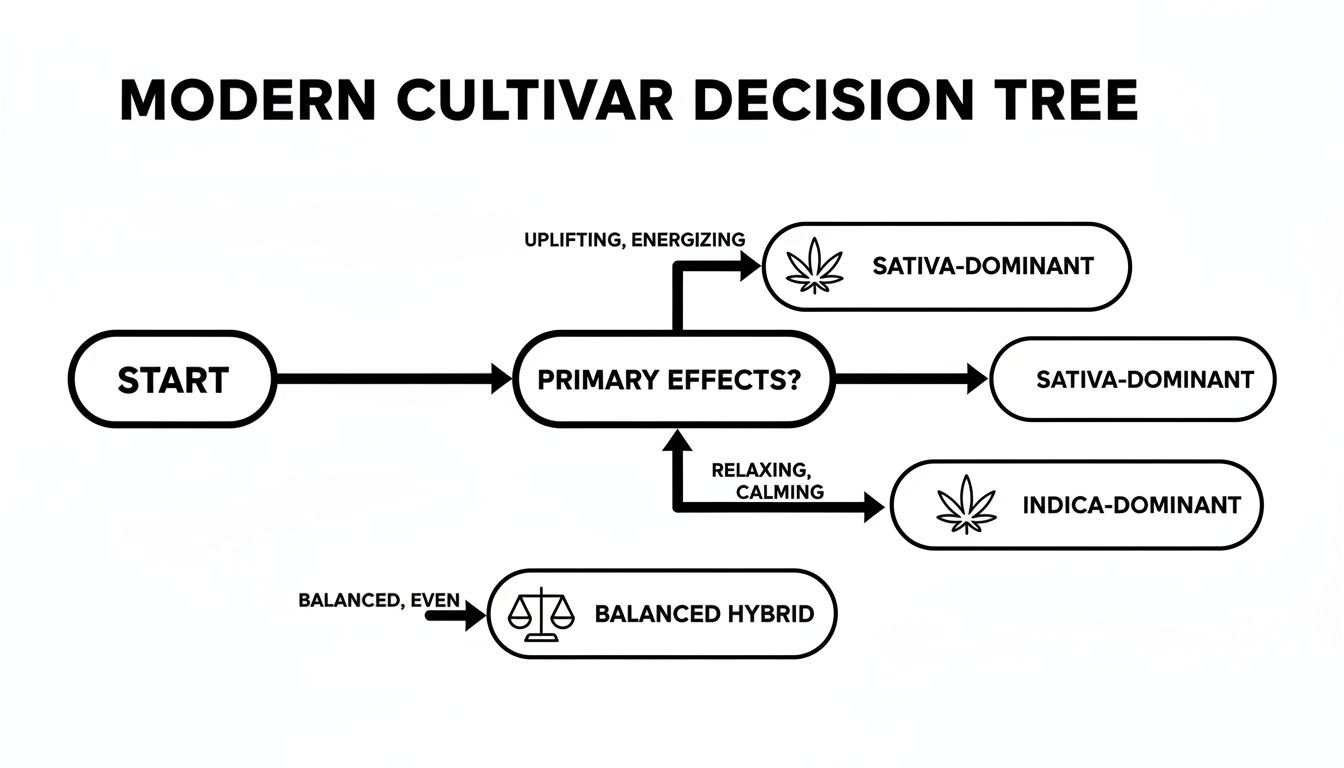
As you can see, the final decision is a balance between the plant's growth style and the specific aromas and vibe you're looking for.
Define Your Desired Vibe
Finally, what kind of experience are you aiming for? One of the best parts of growing your own is that you get to skip the dispensary lines and curate a personal stash that’s tailor-made for your lifestyle.
Want something to help you melt into the couch after a long day? An indica-dominant hybrid featuring earthy, musky terpenes like myrcene is the classic go-to for deep relaxation.
Or maybe you're looking for a jolt of creativity for a weekend project or a more social, giggly vibe to share with friends. In that case, a sativa-dominant hybrid packed with bright, citrusy terpenes like limonene will likely deliver that energetic, uplifting feeling.
If you can't decide, a well-balanced hybrid offers the best of both worlds. These are the versatile all-rounders of the cannabis world, often providing a clear-headed yet physically calming effect that’s perfect for almost any situation.
By thinking through these three elements, space, experience, and vibe, you’ll move beyond the simple indica vs sativa labels. You’ll start thinking like a true cultivator, using the tools and information at Botanist Seeds to pick a feminized seed that won’t just grow, but will absolutely thrive in your garden.
Common Questions About Growing Cannabis Cultivars
If you're just getting into growing, the whole indica, sativa, and hybrid landscape can feel overwhelming. That's perfectly normal. Let's tackle some of the most common questions that come up, just like we're chatting over coffee, to get you pointed in the right direction.
Our goal is to give you the confidence to start your own grow, backed by the solid genetics of our feminized and autoflower seeds.
Is an Indica Cultivar Always Relaxing?
Let's clear this one up right away, because it's probably the biggest myth in cannabis. While it's true that many indica-dominant cultivars are known for that classic, body-heavy calm, it's not a hard and fast rule. The actual experience comes down to the plant's complete chemical profile, especially its terpenes.
You can absolutely find an indica that feels surprisingly cerebral and uplifting. It all comes down to that specific cultivar's genetic cocktail. For instance, a plant with a high amount of the terpene limonene might feel quite energetic, even if it grows short and bushy like a textbook indica.
The bottom line: use indica, sativa, or hybrid labels as a starting point for predicting how a plant will grow, not how it will feel. The terpene profile and genetic lineage tell the real story of its vibe.
This is exactly why we provide such detailed descriptions for every cultivar. We want you to know what you’re getting into, from aroma to expected experience, so you can grow something you'll truly enjoy.
Can I Grow a Tall Sativa in a Small Tent?
Absolutely, but you need a good game plan. Taming a lanky, stretch-prone sativa in a space with limited headroom is a classic indoor growing puzzle, but it’s one you can definitely solve with a few hands-on techniques.
The trick is to manage its vertical ambition by encouraging it to grow wide instead of tall. You have a couple of fantastic options:
- Low-Stress Training (LST): This is a simple and gentle method where you carefully bend and tie down the main stem and branches. This breaks the plant’s natural tendency to shoot up a single main stalk, creating a much wider, flatter canopy with more budding sites.
- Screen of Green (ScrOG): This technique involves setting up a screen or net above your plants. As they grow, you weave the branches through the screen, creating an incredibly even canopy where every bud gets drenched in direct, powerful light for bigger yields.
Think of these training methods as your best friends when growing sativas indoors. They turn a potential challenge into a huge opportunity to maximize your harvest, even in a compact tent.
What Does Autoflower Hybrid Mean?
When you see a strain labeled "autoflower hybrid," it means it’s a modern marvel containing genetics from a third, lesser-known cannabis type: Cannabis ruderalis. This is an incredibly tough little plant native to the frigid, harsh climates of Siberia and Central Asia.
The crucial trait breeders borrowed from ruderalis is its ability to flower based on age, not the light cycle. Standard (photoperiod) plants require you to switch the lights to a 12/12 schedule to trigger flowering. An autoflower, on the other hand, starts budding all on its own after just a few weeks of growth.
For a home grower, this is a game-changer. It completely removes the need to manage light timers and often leads to a much faster seed-to-harvest timeline. Combining this trait with feminized genetics is the most direct route to a successful harvest.
Why Should I Choose Feminized Seeds?
For any hobbyist grower today, feminized seeds are non-negotiable. To put it simply, they are bred to produce female plants up to 99.9% of the time. Since female plants are the ones that grow the dense, cannabinoid-rich buds we're all after, this is a massive advantage.
By starting with feminized seeds, you remove almost all of the risk and wasted effort of dealing with male plants. Nearly every seed you germinate should become a productive female, ensuring your time, money, and energy pay off. For anyone growing their own supply, it's the only way to go.
Ready to stop wondering and start growing? At Botanist Seeds, we've simplified the entire process. Use our comparison tool to find the perfect feminized or autoflower seeds for your setup and get started on a rewarding home grow today. Explore the full catalog at https://botanistseeds.com.