




The Making of Hash: A Home Grower’s Guide
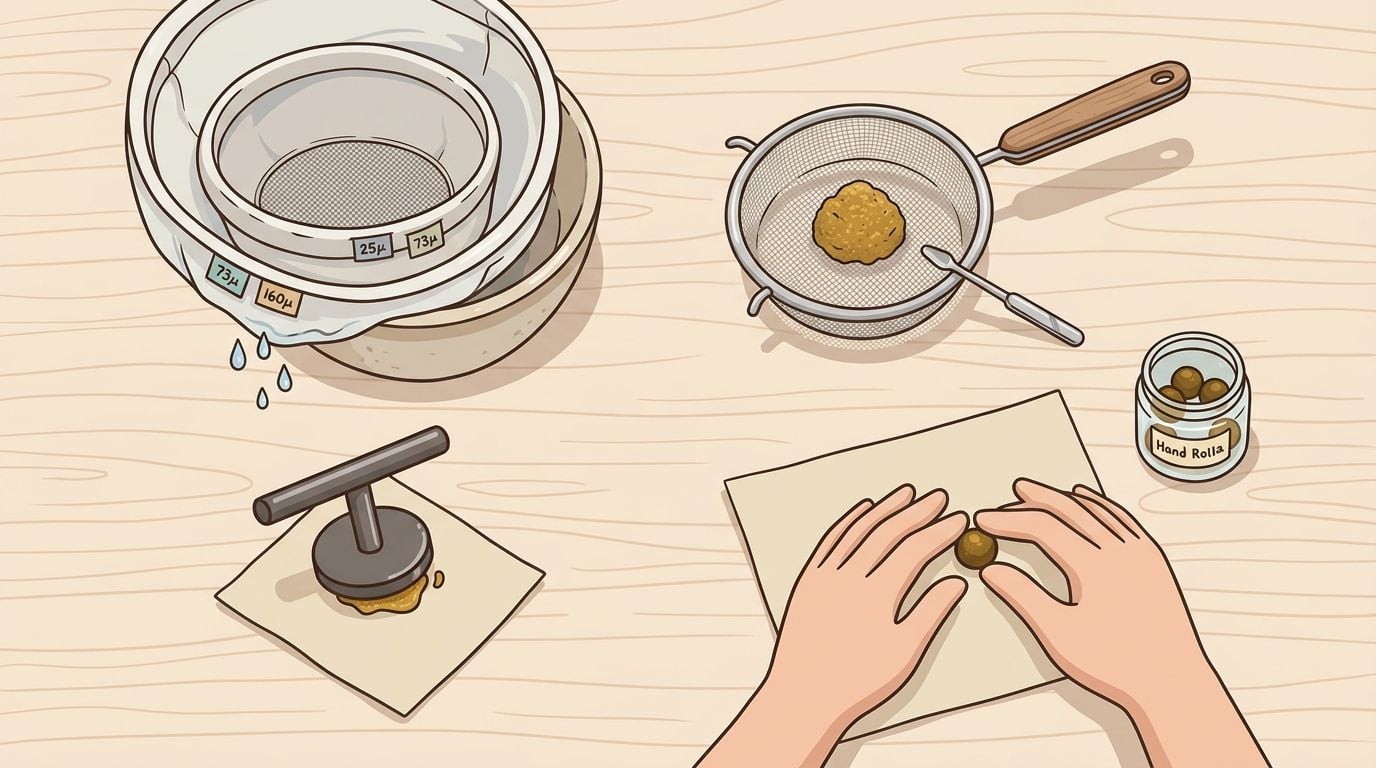
A fresh harvest leaves a clear choice on the table. The jars are curing, the scissors are sticky, and the trim bin is either a nuisance or the start of a decent hash run. Good home growers learn to read that pile for what it is, trim, larf, or leftover premium flower, because the starting material should shape the method.
Making of hash has been part of cannabis culture for centuries, and that long history fits the work itself. Hashish is one of the oldest cannabis concentrates, with written mentions in the Middle East going back to around the 10th to 12th centuries and the name itself coming from Arabic, which points to its roots in classical cannabis culture as noted in the Seattle Times history of hashish. The process still holds up because it rewards clean material, patience, and a steady hand, which is true whether you are washing trim or pressing better flower into something more refined.
The question is not whether hash is worth making, it is which material you have in front of you and how much resin sits on it. Trichomes are the part worth paying attention to, and that is the best place to start. Loose trim and smalls can justify a different approach than dry, dense flower, and the right choice saves time while giving you a better return from the crop you already grew.
From Harvest Pride to Homemade Hash
A fresh harvest changes the mood in the grow room. The jars are curing, the scissors are sticky, and the leftover trim is finally in a pile big enough to feel useful instead of annoying. That is where hash starts to make sense. It is not a side project for the sake of it, it is a practical way to give the most resinous parts of your crop a second life.
Why hash still feels like a win
Hash has always been about concentration, not waste. You are taking the sticky parts that made your cultivars stand out in the first place and separating them from the leafy material that gets in the way. That is why hash has lasted so long as a craft. It is practical, efficient, and tied directly to the character of the plant.
It also fits the home grower mindset better than people often expect. You already did the hard part, you planned the run, kept the plants dialed in, and finished with something worth celebrating. Hash gives you another way to enjoy the result without depending on dispensary lines, markup, or whatever happens to be left on the shelf.
Practical rule: if the flower looked good going into the jar, the trim and smalls probably have enough resin to justify a hash run.
The old-world side of hash is part of the appeal too. It is a traditional resin craft that spread through the Middle East and beyond, long before modern extraction tools showed up. That history gives the process more weight, because you are not just making a concentrate, you are using a method that growers and processors have trusted for a long time in the historical record of hashish.
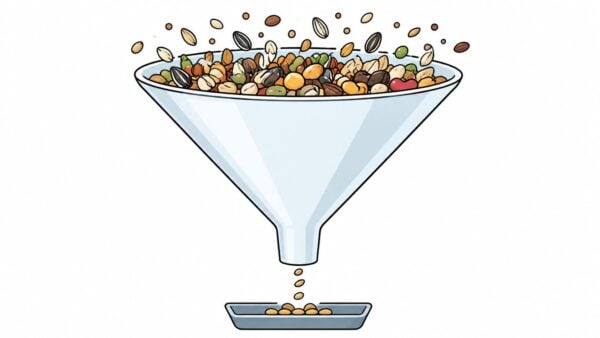
For most home growers, the useful part begins the moment the harvest gets sorted. Premium flower, airy lower buds, and sticky trim each have their own strengths, and the right choice can turn an ordinary pile into something worth keeping. The trick is knowing which material deserves the gentlest treatment and which can handle a rougher approach.
Trichomes are the part worth paying attention to, and a good look at trichomes on weed makes the decision easier. Resin-heavy material usually rewards careful collection, while looser leftovers are better suited to methods that can handle volume without wasting time. That simple judgment saves effort and gives you a better return from the crop you already grew.
Choosing Your Path and Gathering Your Gear
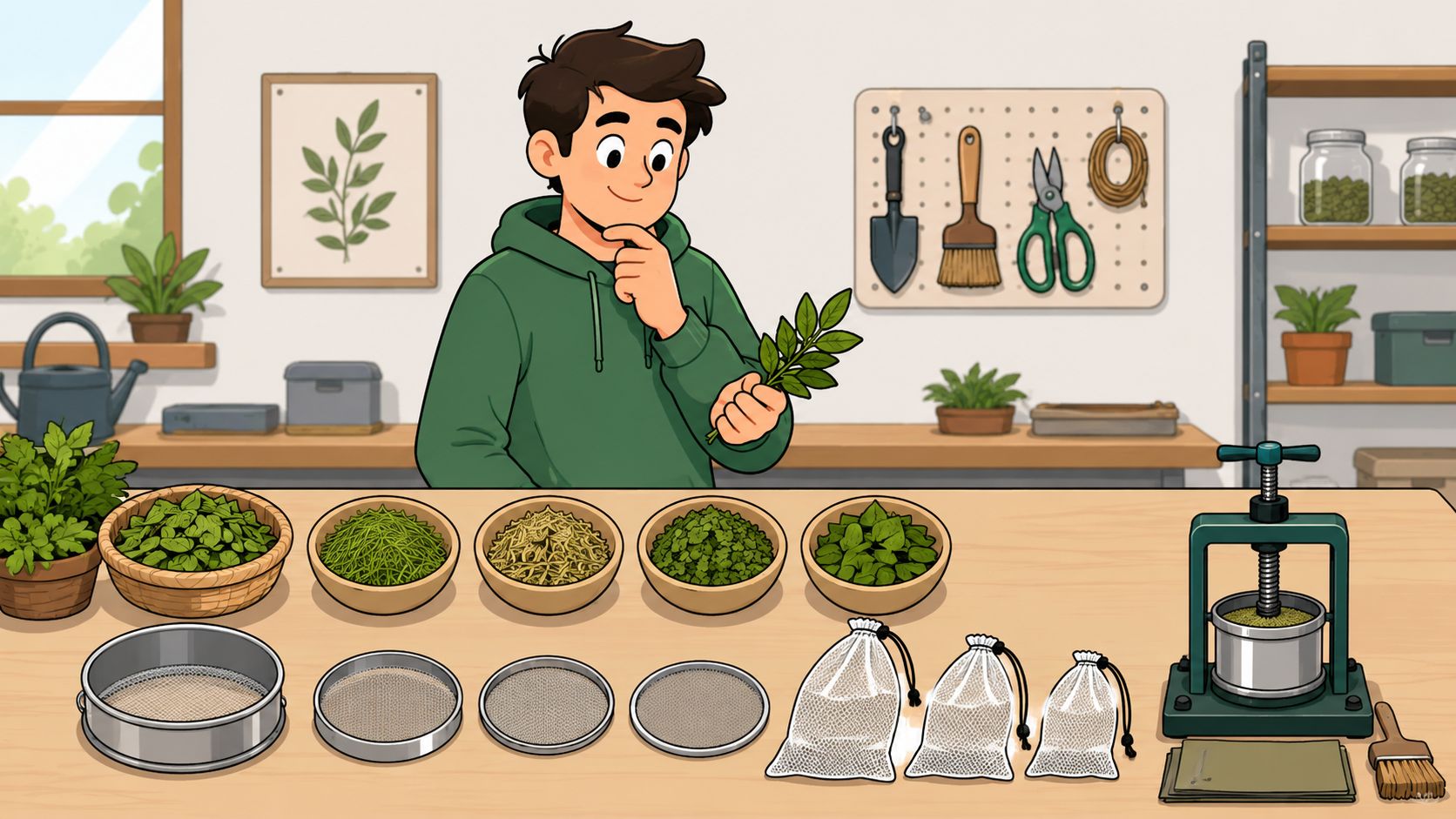
The best hash run starts before the first screen or bucket shows up on the table. You need to know what you're working with, because trim, larf, and premium dried flower do not behave the same way. A careful grower treats that as the main decision, not an afterthought.
Start with the feedstock, not the fantasy
If you've got premium dried flower, ice-water extraction can be a smart move because the material already carries a lot of clean resin. If you're staring at a mountain of trim or airy lower buds, dry sift often makes more sense because it's faster, lighter on labor, and easier to run in small spaces as discussed in a practical solventless comparison. The method should fit the material, not the other way around.
That's also why quality genetics matter before the harvest even gets here. Resin-heavy cultivars give you more to work with, and a good seed selection can make the difference between “barely worth sifting” and “worth saving every sticky bit.” The point isn't just bigger yields, it's better starting material that holds together during separation.
Gather the tools that actually matter
You don't need a giant setup to make good hash at home, but you do need the right basics. Keep the focus on cleanliness, separation, and easy handling.
- For dry sift: use a fine screen or sieve, parchment paper, a clean collection card, and a cool, dry workspace.
- For bubble hash: grab bucket or vessel space, stacked micron bags, ice, cold water, and something to collect the separated resin on.
- For either method: use gloves, clean trays, and separate containers for each grade if you plan to sort by quality.
The gear matters because each tool protects the resin heads from getting crushed, smeared, or mixed with too much plant matter. A fine mesh screen isn't just a filter, it's your quality gate. Likewise, stacked bags don't just catch material, they let you split different grades instead of dumping everything into one rough batch.
Good input beats fancy gear. A simple setup with clean, resinous cultivars will outperform a big kit fed with dry, tired material every time.
The Two Classic Methods Dry Sift and Bubble Hash
Dry sift and bubble hash both chase the same goal, separating trichomes from the plant, but they get there in different ways. Dry sift is the cleaner, faster route for dry material. Bubble hash leans on cold water and careful agitation, which makes it the better fit when you want a more controlled separation from flower with strong resin coverage.
Dry sift works best when you keep it gentle
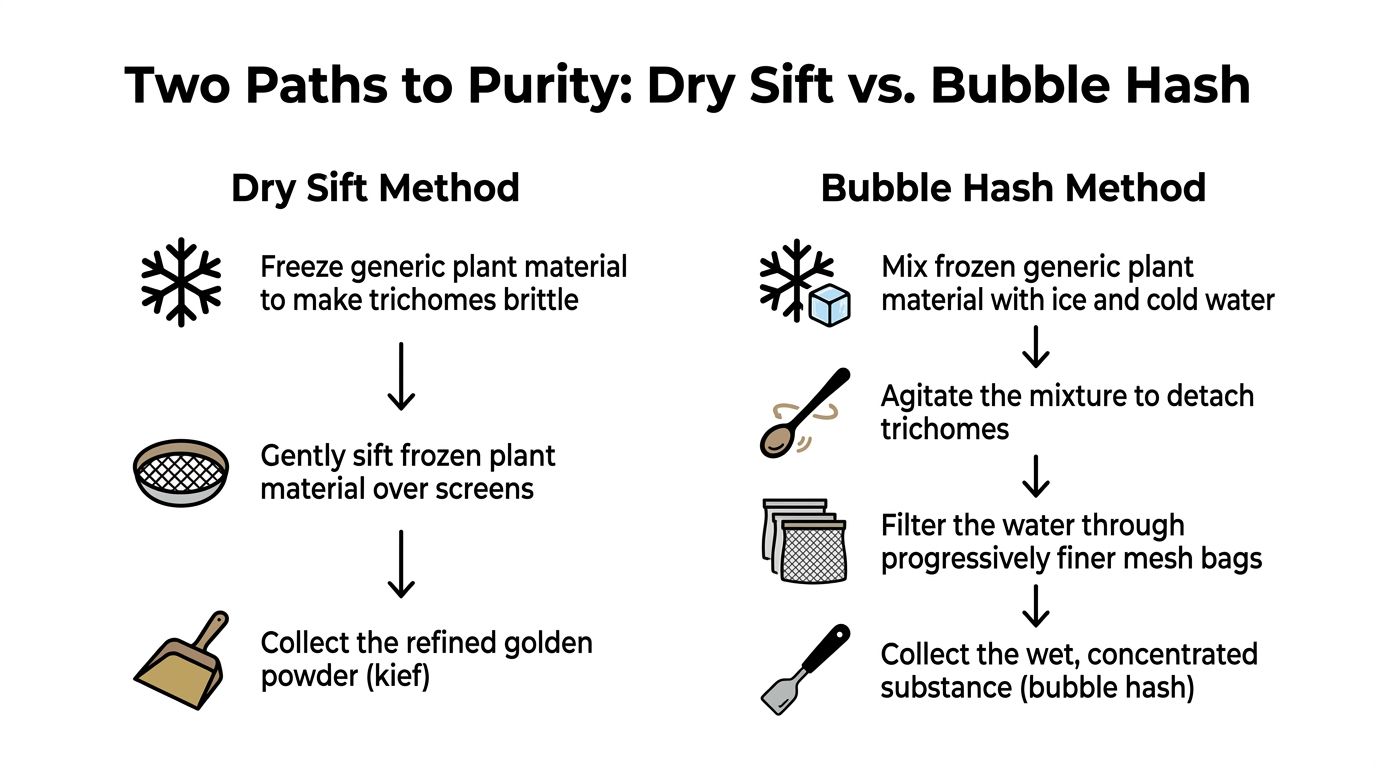
Dry sift is the method that feels closest to sorting gold dust. You freeze the material first so the trichomes get brittle, then you work it across a mesh screen so the resin heads fall away while the plant matter stays behind with a common 90-micron or 115-micron screen approach. The best results come from patience, not force.
A practical way to handle it looks like this:
- Freeze the flower or trim first: cold material breaks cleanly, which helps the trichomes separate instead of smearing.
- Use small batches: keep the screen from loading up, because overloading pushes green dust into the final pile.
- Sift in circular motions: let the mesh do the work, and stop before the material starts looking torn up.
- Collect the lightest, cleanest fraction first: that first collection is usually the nicest because it carries less plant debris.
- Repeat with finer passes if needed: moving through multiple screens gives you a better separation than one rough run.
The beauty of dry sift is speed. You can get from raw material to usable kief without waiting on water removal, and that makes it especially handy when you're working with trim from a big harvest. The downside is that it's easier to contaminate the batch if you rush or lean too hard on the screen.
Bubble hash rewards control
Bubble hash is a little more hands-on, but the logic is simple. Ice-cold water makes the trichome heads brittle, and gentle movement knocks them loose so they can be filtered out through bags using only ice, water, and filter bags in the basic setup. The material never needs to be beaten up, just separated cleanly.
The working rhythm matters here:
- Chill the material and water well: cold keeps the resin heads fragile.
- Stir gently, not aggressively: the goal is separation, not shredding.
- Keep the agitation short: 5 to 15 minutes is enough for the separation stage, and pushing harder increases contamination and lowers quality as described in a bubble hash process guide.
- Filter through stacked bags: that step splits the resin into grades instead of forcing it all into one pile.
- Collect by fraction: cleaner, finer output usually ends up in the tighter mesh range.
The big mistake is thinking more stirring equals better yield. It usually doesn't. Once you start breaking trichome heads mechanically, the material can look bigger on the scale but worse in the jar. That's why bubble hash works best when you treat the water like a separation tool, not a blender.
Pressing for Rosin and Hand Rolling Charas
Once you've got clean kief or bubble hash, you can leave it as is or give it a little more shape. Pressing turns loose resin into a denser, more stable form, while charas is the older, more tactile route that asks you to work the plant by hand. Both have a place, but they suit different moods and different kinds of growers.
Rosin starts with clean pressure
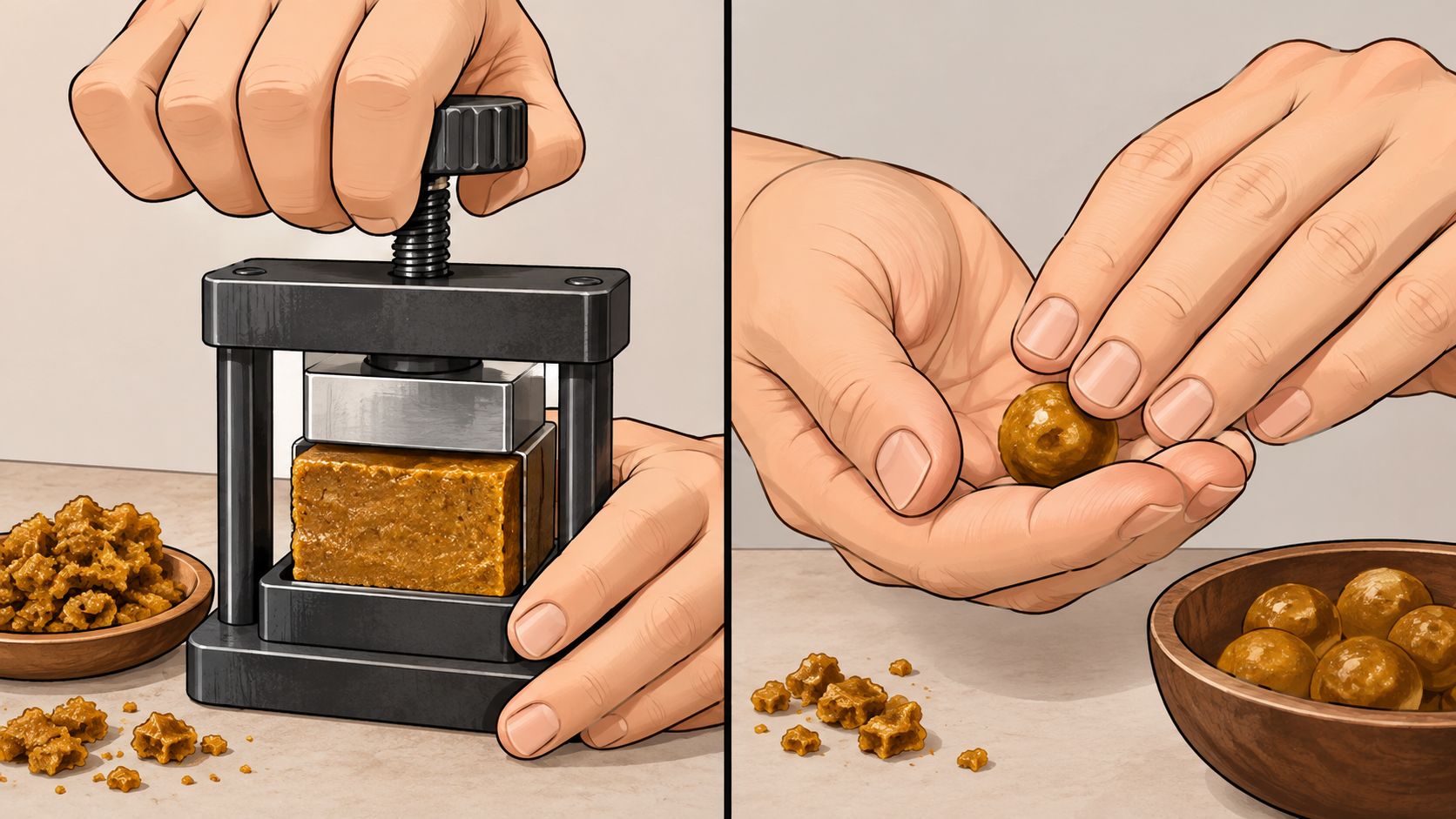
Pressing hash is all about heat and pressure doing a slow, careful job. A hand press can work for small amounts if you keep at it for 10 to 20 minutes, while a mechanical press may be warmed to around 160°F to 180°F so the resin glands meld into a more solid form as outlined in a traditional hash-making collection. The point is not to cook the material, just to encourage it to knit together.
That makes rosin a nice bridge between loose resin and something more compact. You're not introducing solvents, and you're not forcing the texture with brute strength. If the hash is clean going in, the final feel tends to be smoother and more stable.
A simple approach works best:
- Start with clean kief or well-dried bubble hash: contamination gets locked in once pressure hits.
- Apply even heat: uneven warming can leave you with a patchy, crumbly result.
- Use light pressure first: let the resin respond before squeezing harder.
- Check the texture as it changes: you want cohesion, not scorching.
If you're comparing it to dry sift, many growers choose to stop and press at this point. It's a good fit when you want to turn loose resin into something easier to store and handle without adding complexity.
Charas is slower, older, and more hands-on
Charas has a different feel entirely. Instead of collecting dried trichomes, you gently rub living plant material so the resin gathers on your hands and can be rolled into a small mass. It's the most tactile version of the craft, and it's one of the reasons people still talk about hash with a bit of reverence.
The charas tradition has its own place in hash history, and it stands apart because it's as much about touch as it is about separation. You're not racing for speed. You're letting the resin build slowly while keeping the plant intact enough to keep releasing more.
That makes charas feel artisanal in a way the other methods don't. It's best for growers who want a hands-on ritual and don't mind taking the long route for a small, carefully gathered result.
Finishing Your Hash Drying Curing and Storing
The material isn't finished when it leaves the screen or bag. That's the part people rush, and it's where a lot of decent hash gets downgraded. Drying and storage are what decide whether your batch stays fragrant and stable or turns soft, dull, and risky.
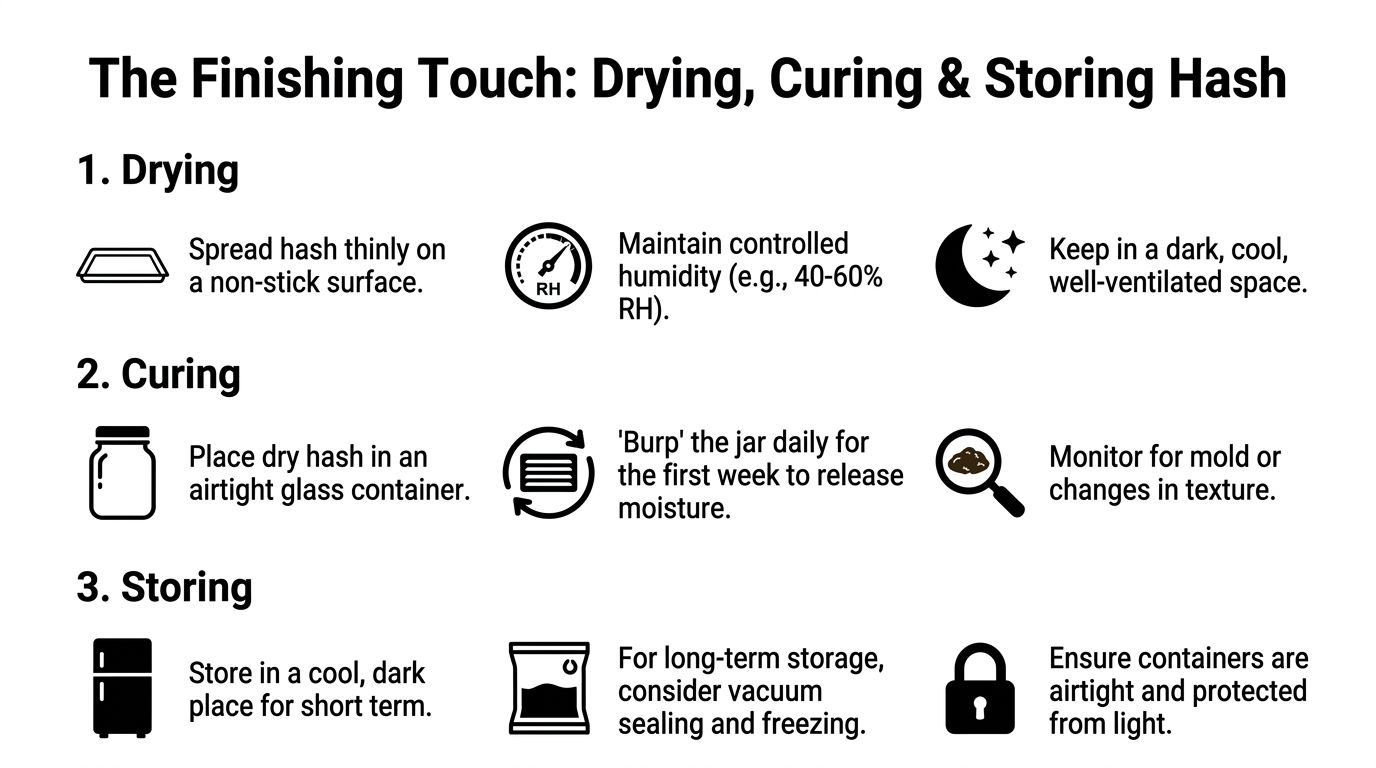
Dry it like you want to keep it
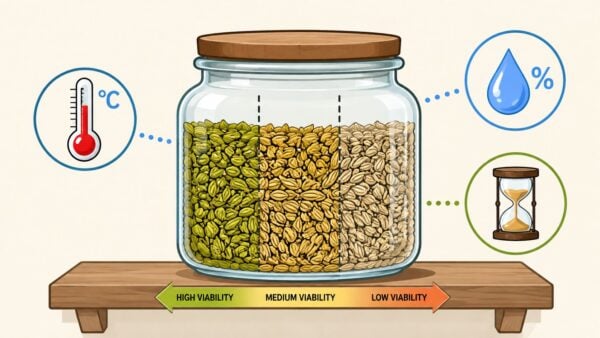
Wet bubble hash has to be dried thoroughly, otherwise mold becomes a real problem and the aroma can fade fast as noted in a drying and storage discussion. That's not the glamorous part of hash-making, but it's the part that protects the work you already put in.
The best habit is to dry it slowly in a dark, cool, well-ventilated place. Keep the layer thin, keep the surface clean, and don't trap moisture by packing it up too early. If you're working with a larger batch, the process deserves the same kind of care you'd give to drying flower.
Curing is where texture settles in
Once the hash is dry, an airtight glass jar is the simplest way to let it settle. You're not trying to force a dramatic transformation, you're just letting the material stabilize. If any trace moisture is still hanging around, a sealed container makes it obvious fast, so you can catch trouble before it spreads.
That's also why people keep a close eye on texture changes. Softening, odd clumping, or a musty note usually means the batch needed more drying time. Good hash feels orderly, not wet or gummy.
Store it like it matters
Short-term storage is easy. Keep it cool, dark, and sealed tight. For longer storage, freezing in a protected container can help if you're careful about moisture and light exposure. The important part is consistency, because repeated warming and cooling are what wear hash down first.
If you've got a dehumidifier setup for your flower room, the same general respect for moisture control applies here too, and this drying guide fits that mindset well. Hash holds up best when you treat it like a finished craft product, not a leftover.
Simple test: if the hash still feels damp or sticky in a bad way, it's not ready for storage yet.
Tips for Quality Yields and Staying Legal
The cleanest hash usually comes from cold rooms, dry starting material, and a patient hand. That's the common thread across every method here. Trim from a resinous cultivar can absolutely earn a place on the tray, but only if you keep contamination low and stop before the plant matter starts dominating the batch.
A few habits make the biggest difference:
- Work cold and clean: cold helps trichomes separate, and a clean setup keeps the resin from picking up extra debris.
- Sort your material before you start: premium flower, trim, and larf deserve different expectations.
- Respect the quality gate: if the sift looks green, or the bubble hash feels sloppy, don't pretend it's premium.
- Dry fully before storage: moisture is the fastest way to ruin good work.
- Keep your tools simple and easy to clean: less clutter means fewer places for contamination to hide.
The legal part is straightforward, and it isn't optional. Cannabis processing rules vary by location, so know the laws where you live before you make anything. A smart home grower doesn't just chase better resin, they stay responsible while doing it.
The ultimate payoff is pride. When you turn your own harvest into hash, you're not just making a concentrate, you're getting more value from the crop you already grew, and that feels better than waiting in line for someone else to package it for you.
If you want your next run to produce better trim, stickier flower, and more hash-worthy resin, take a look at the cultivars and selection tools at Botanist Seeds. It's a practical way to line up your next grow with the kind of material that makes good hash. Choose your next cultivar with the end result in mind, and your trim bin will start looking a lot more useful.