What Is Charas? a Grower’s Explainer
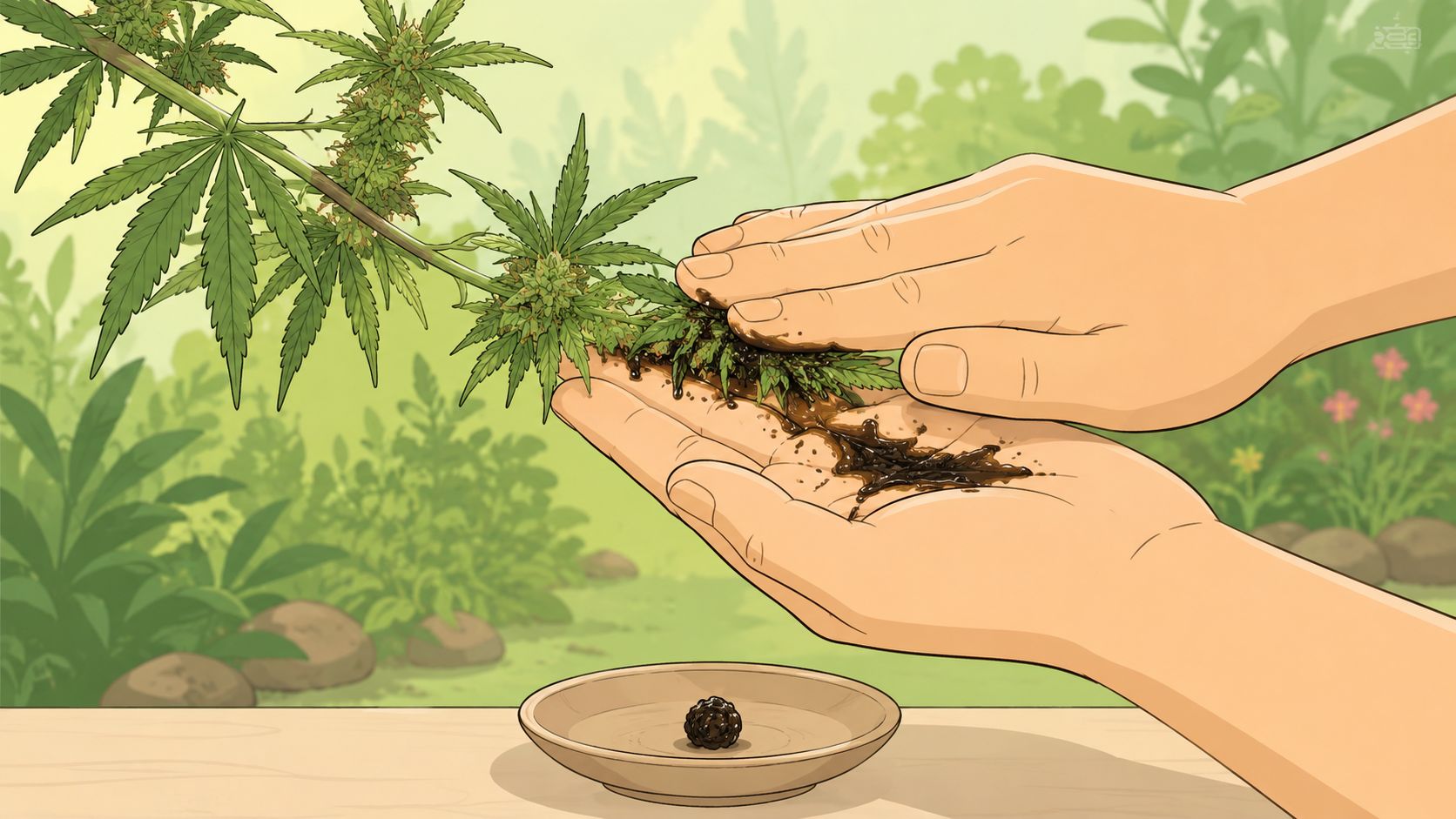
You're trimming a frosty branch, your fingers are getting tacky, and somebody in a grow chat drops the word charas like everyone should already know what it means. You vaguely know it's old school. You also get the sense it's not just another name for hash. That's usually where the confusion starts.
For a home grower, charas is interesting because it points your attention to the part of the plant many hobbyists obsess over anyway: resin. Sticky flowers, greasy trim scissors, trichome-coated sugar leaves, that sharp moment when a cultivar looks almost dusted in crystals. Even if you never plan to make traditional charas, understanding it changes how you think about plant selection, harvest timing, and what “resin-rich” really means.
So You've Heard About Charas
Maybe the term popped up while you were comparing solventless concentrates. Maybe an older grower mentioned it like it was part history lesson, part campfire story. You went looking and found half-clear answers, mixed terminology, and a lot of people treating charas and hash like they're the same thing.
They're related, but they're not identical.
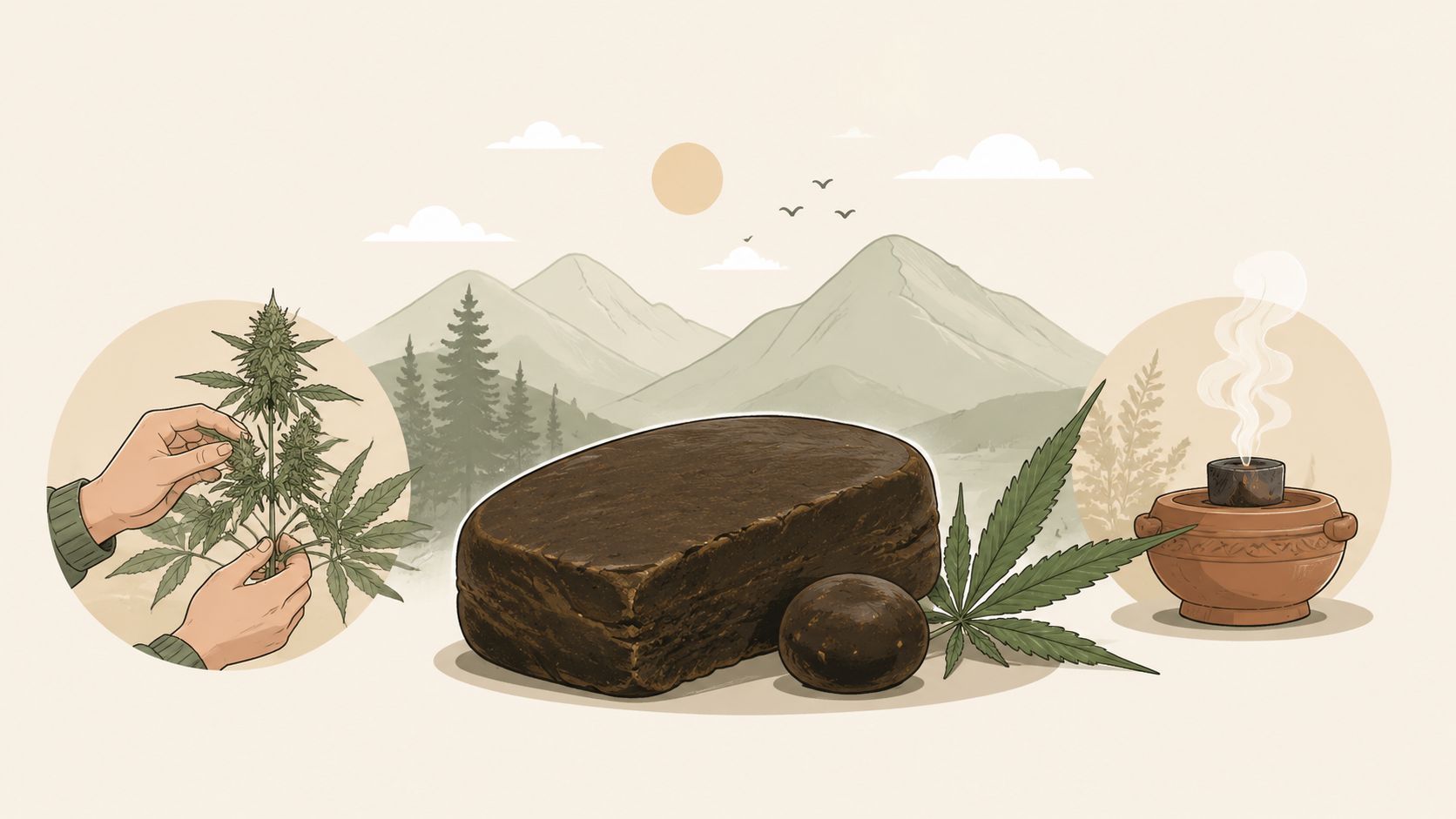
The easiest way to think about charas is this: it's a traditional hand-rubbed cannabis resin associated with South Asia, and it comes from living flowering plants, not from dried flower. That one detail clears up most of the confusion. If you already understand kief, dry sift, or bubble hash, charas belongs in the same broader family of resin-focused cannabis products, but it comes from a very different process and a very different cultural setting.
A lot of home growers get drawn to old cannabis traditions for the same reason they get interested in landrace cultivars and their history. There's something satisfying about tracing modern grower habits back to older methods and seeing what still matters today.
Practical rule: If a cannabis process teaches you to notice resin more carefully, it's useful to a grower, even if you never copy the process itself.
That's the value here. Charas gives you a sharper eye for what resin production looks like, why certain cultivars feel extra sticky, and why some flowers seem built for concentrate projects while others are better kept as flower.
The Story of Hand-Rolled Cannabis Resin
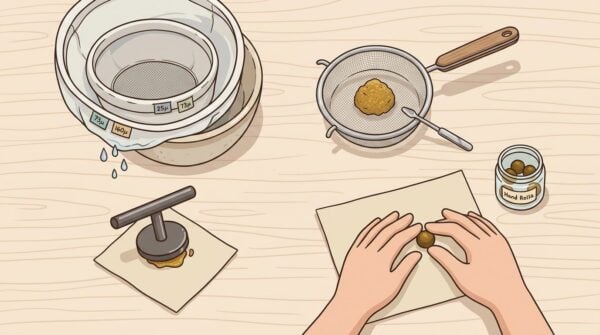
Charas is crude cannabis resin collected by hand from living plants. People traditionally gather it by gently rubbing flowering plants between their palms, letting sticky resin build up on the skin, then scraping and shaping that material.
That sounds simple, but the simplicity is the point. No screens. No ice water. No pressing setup. Just hands, plants, patience, and a very close relationship with the crop.
Why living plants matter
This is the main distinction readers tend to miss. A lot of modern resin products start with dried and cured flower or with detached trichomes that have already been separated from the plant. Charas skips that path completely.
Because the source material is still alive, charas has long carried a special reputation as something closer to the plant in its active flowering state. Historically, that helped set it apart from other forms of hashish and loose resin.
The cultural roots run deep in parts of India, Pakistan, and Nepal, where hand-rubbed resin became tied to regional practice, local craftsmanship, and long-standing cannabis traditions. It wasn't some niche curiosity. It moved through a real market and held a recognized place in older cannabis culture.
A historical snapshot
One useful historical anchor comes from the UN's narcotics bulletin from 1953. It describes charas in India as crude cannabis resin and calls it “the most potent form of the natural drug.” The same bulletin reports that total Indian consumption was 73,767 kg in 1926 in British India and the Indian States, which gives you a sense of how established charas was in that period, as recorded in the UN narcotics bulletin archive.
That old record matters because it keeps the conversation grounded. Charas isn't internet myth. It has a documented place in cannabis history.
Old cannabis culture often looks romantic from a distance. Up close, it was also practical. Resin was valuable, portable, and worth preserving.
What home growers can take from that
You don't need to hand-rub live plants to learn something from charas. The takeaway is simpler than that. Resin is the whole story. The more you understand how resin shows up, how it feels, and how some cultivars produce more of it than others, the better your grow decisions get.
A few grower-level lessons stand out:
- Sticky isn't random: Some plants naturally load up on trichomes more heavily than others.
- Timing matters: Resin changes as flowers mature, so harvest timing affects the end result.
- Handling matters too: Rough handling can damage trichomes and dull the qualities you worked hard to grow.
- Cultivar choice comes first: If the plant doesn't have strong resin potential, technique can only do so much.
That's why charas still gets attention. It reminds growers that before there were fancy extraction methods, there was already one central question: how much good resin did the plant produce?
How Charas Differs From Hash and Kief
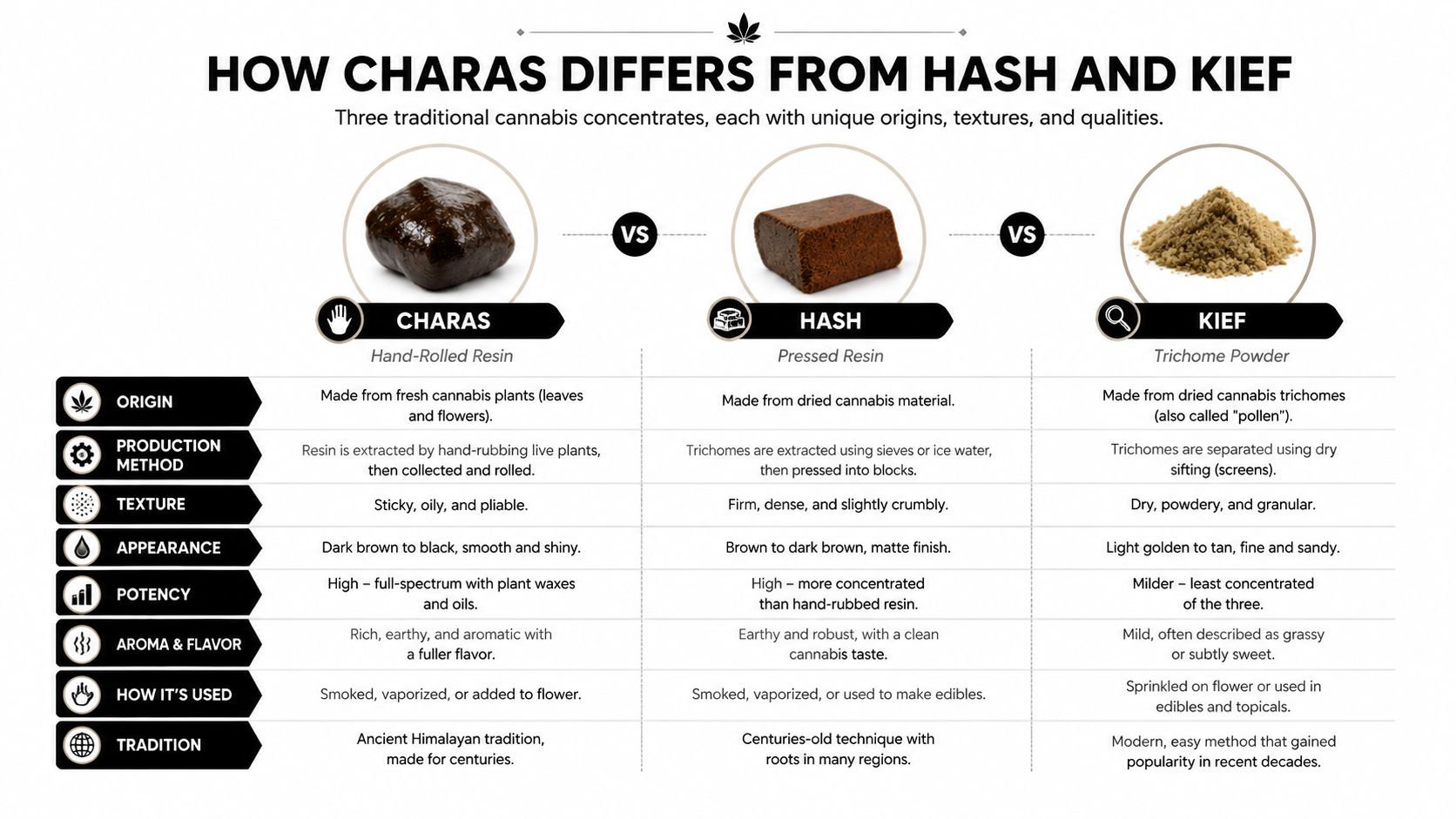
A lot of people use charas, hash, and kief like they're interchangeable. They're not. They all relate to the resin side of cannabis, but the starting material and the collection method are different enough that it's worth separating them clearly.
The quick mental model
Think of kief as loose trichome material that falls away from dried flower.
Think of dry sift hash as kief that has been more intentionally collected and refined through screens.
Think of bubble hash as resin separated from dried or frozen material with ice water and filtration.
Think of charas as hand-collected resin from living flowering plants.
That's the cleanest way to keep them straight.
Concentrate Comparison Charas vs Hash
| Characteristic | Charas | Dry Sift Hash | Bubble Hash |
|---|---|---|---|
| Starting material | Living flowering cannabis plants | Dried and cured flower or trim | Dried or frozen cannabis material |
| Collection method | Hand-rubbing resin from live plants | Sifting detached trichomes through screens | Ice water agitation and filtration |
| Texture | Dark, pliable, often soft and sticky | Powdery to pressed, depending on refinement | Sandy, greasy, or pliable depending on grade |
| Traditional or modern use | Strongly tied to old South Asian practice | Common solventless method for hobbyists | Popular modern solventless method |
| What a grower notices first | Live-plant stickiness and palm-collected resin | Trichome separation after drying | Resin quality and cleanliness after wash |
Where confusion usually happens
The biggest mix-up happens because people use hash as a broad umbrella term. In casual conversation, charas often gets lumped into hash because both are concentrated resin products. That isn't totally wrong in a loose sense, but it blurs the detail that makes charas distinct.
For a grower, the detail matters because the production method changes what you pay attention to. With kief and dry sift, you're thinking about preserving trichomes through drying, trimming, and screening. With bubble hash, you're thinking about wash quality and handling. With charas, the focus is the live plant itself and the resin it gives off during flowering.
If you want cleaner thinking in the grow room, separate products by starting material first. The rest gets easier.
That simple filter also helps you decide what's realistic for a home setup. Most hobbyists will have much better luck exploring kief, dry sift, or rosin-friendly flower than trying to recreate a traditional charas practice that belongs to a very different legal and cultural context.
Great Resin Starts with Great Genetics
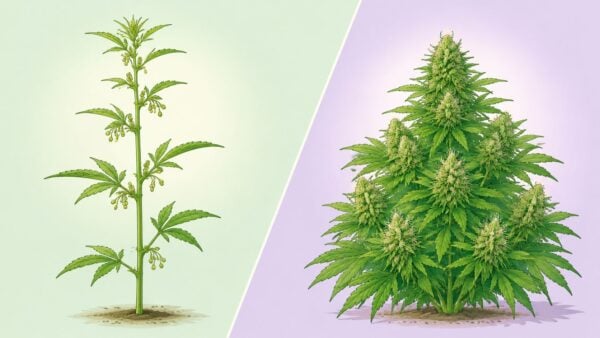
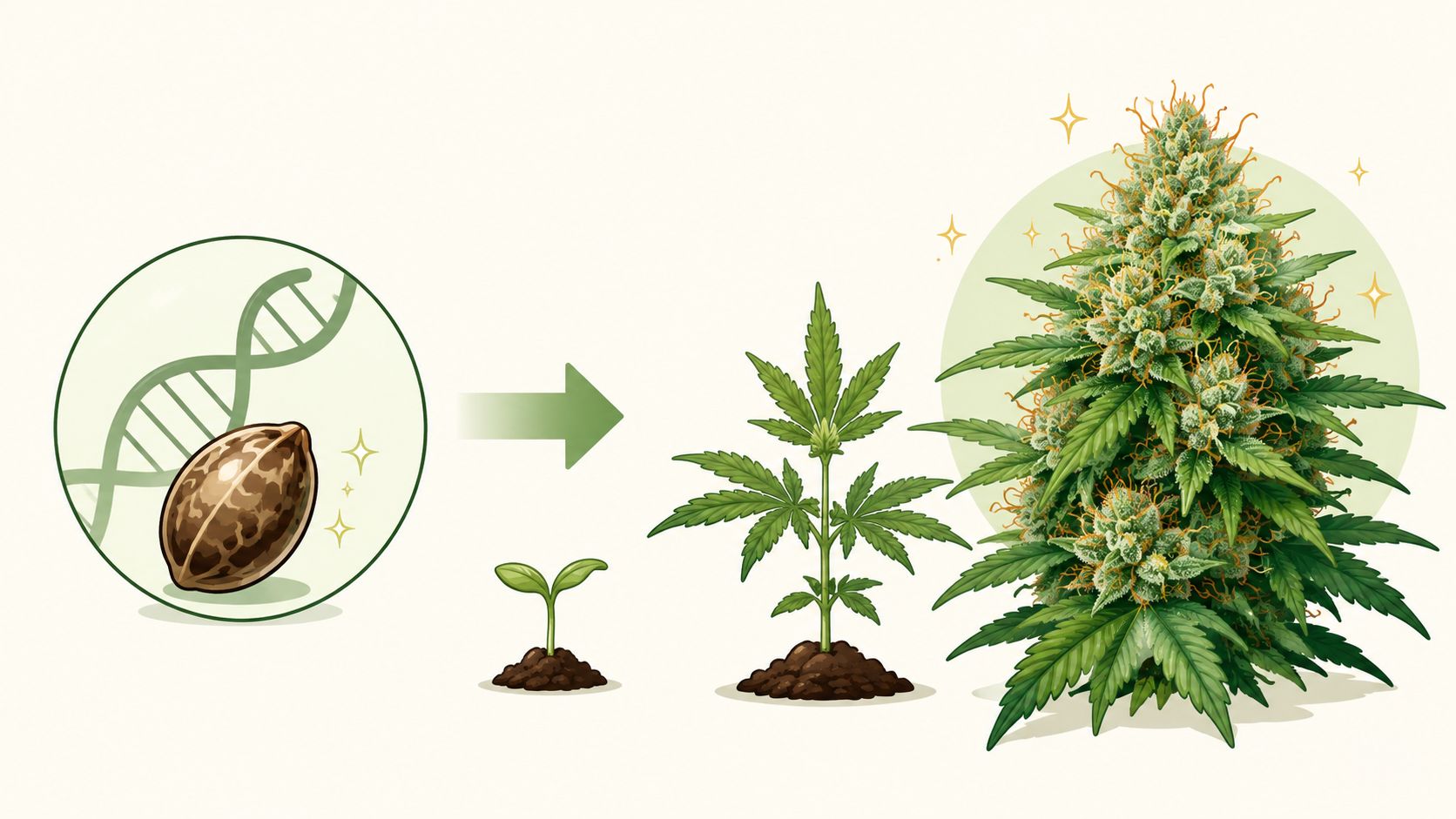
Charas has always started with one simple truth. Sticky resin is not something you talk a plant into making at the end. The plant has to be built for it from the start.
That matters to a modern home grower more than it might seem. Even if you never plan to hand-rub living flowers, the same trait that made traditional charas plants worth touching is the trait that makes a cultivar exciting to grow now. You want flowers that finish with a heavy coat of trichomes, hold their aroma during handling, and leave your fingers or scissors telling the story.
What resin-forward genetics actually look like
Resin-heavy cultivars usually reveal themselves in a few practical ways long before harvest day. The clues are easy to spot once you know what to watch for.
- Early stickiness: Some plants start feeling tacky in mid to late flower and keep building that greasy feel as they mature.
- Trichomes beyond the buds: Strong resin producers often frost up the bracts first, then spread visible coverage onto nearby sugar leaves.
- Aroma that hangs on: Resin-rich flower tends to keep a strong scent through trimming and curing instead of fading fast after handling.
- Messy scissors: Gummed-up snips are not a scientific test, but they are one of the oldest grow-room clues around.
Those signs matter for more than bag appeal. They point to cultivars that can be satisfying for flower, kief collection, dry sift, or rosin pressing. In other words, the old charas standard still helps with modern hobby decisions.
Pick genetics that fit your room and your goals
A resin-rich cultivar still has to suit your setup. A compact auto in a small tent and a long-flowering photo in a bigger room can both produce beautiful trichomes, but they ask for different kinds of patience and planning.
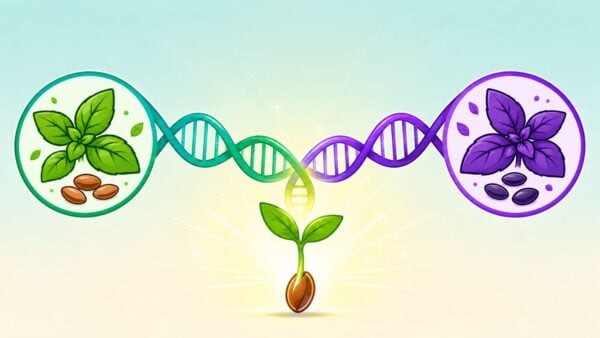
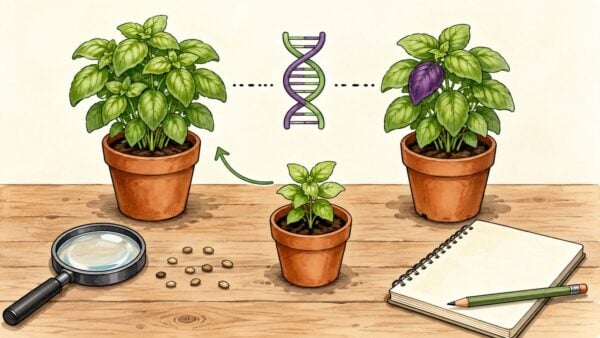
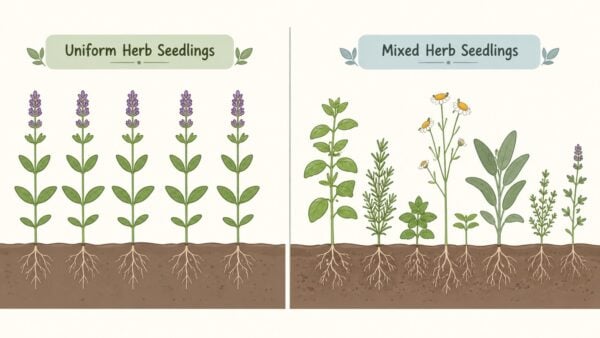
This is also where newer growers get tripped up by variation. Two plants from the same seed line can lean in slightly different directions for frost, smell, structure, or finish time. If you want to get better at spotting that variation, this guide to phenotype differences in cannabis gives a clear explanation of what to watch for. It is especially useful if your goal is to keep selecting for resin, aroma, and flower shape over repeated runs.
A practical shopping filter helps:
- Match the plant to your space: Shorter, easier-to-manage cultivars make more sense in tents with limited headroom.
- Match the plant to your patience: Some growers want a faster turnaround, while others are happy to wait longer for standout resin.
- Match the plant to your end use: If you care about pressing, sifting, or just harvesting very sticky flower, resin behavior deserves a top spot on your list.
Cultivars worth a resin-focused grower's attention
Among growers, a few broad cultivar types keep showing up in resin-first conversations. Gassy hybrids, many modern dessert-leaning lines, and certain old-school indica-leaning families often earn that reputation because they stack visible frost and hold onto thick aroma well.
For a home grower browsing Botanist Seeds, that means looking closely at cultivars described with traits like heavy trichome coverage, sticky flower, loud terpene output, and dense resinous buds. Feminized seeds can make sense if you want a more straightforward hunt for keeper plants. Autoflowers can be a good fit if your hobby is built around small spaces and quicker cycles. The right choice depends less on hype and more on how you grow.
Resin-first growing begins at seed selection, not at harvest.
The cultural lesson from charas is surprisingly practical. For generations, growers and collectors valued plants that gave up resin generously while still alive. A home grower can use that same standard today. Start with cultivars that naturally want to get frosty, and every later step in the process gets easier.
How to Maximize Trichome Production
Once you've chosen a resin-forward cultivar, the job gets more practical. Trichome production responds to environment, handling, and timing. There isn't a magic button. There is a stack of small decisions that either help the plant finish frosty or get in the way.
Light and environment
A healthy flowering plant needs strong, consistent light. Good full-spectrum LED fixtures make it easier to maintain intensity without turning your tent into an oven, and that matters because heat can flatten aroma and make late flower harder to manage well.
Your climate matters just as much. Stable temperature and humidity help the plant stay focused on finishing instead of reacting to stress swings. If you already use a VPD chart for cannabis grows, you know how useful it is for keeping the room in a productive range during flower.
The habits that actually help
Some of the most effective resin-focused habits are boring. That's why they work.
- Protect the canopy: Keep airflow steady so flowers stay comfortable and clean through late bloom.
- Avoid rough handling: Every unnecessary squeeze, shake, or bump knocks trichomes around.
- Feed consistently: Wild swings in watering or nutrition can stall momentum when the plant should be finishing strong.
- Watch the plant, not your calendar: Resin maturity doesn't care what date you circled at seed drop.
Patience at the end
Many growers leave quality on the table by rushing the last stretch. Late flower is when a plant often shows its most obvious resin payoff. The aroma gets louder, the surface gets tackier, and the buds start looking like they finally “arrived.”
A slight environmental tightening late in bloom can help preserve quality, but the bigger win is patience. Let the plant finish with intent, then handle the harvest gently.
The grower who protects trichomes during the final stretch usually gets more reward than the grower chasing gimmicks all cycle long.
Modern Alternatives for the Home Grower
Most home growers who like the idea of charas aren't really trying to recreate an old regional craft exactly. They're chasing the same spirit. Pure resin, hands-on process, and a stronger connection to the plant they grew themselves.
That's where modern alternatives make much more sense.
Kief is the easy starting point
If your flower is properly dried and you want the simplest resin project possible, start with kief. A grinder with a catcher collects some automatically, and a small sift screen lets you be more intentional.
Kief is approachable because it asks very little from the grower. You're not buying much gear, you're not dealing with complicated cleanup, and you can learn fast which cultivars shed useful amounts of trichomes.
Rosin scratches the same itch
Rosin is another appealing route for hobbyists because it keeps the process hands-on and solventless. You apply heat and pressure, and the plant tells you pretty quickly whether it had the resin quality to justify the effort.
What makes rosin fun for home growers is the feedback loop. You grow the plant, dry it well, press a little, and immediately see how your cultivar choice and flower quality translate into resin output and texture. That's satisfying in the same way old-school cannabis crafts are satisfying. You're not just consuming a product. You're working with material you raised.
Why this still connects back to charas
Charas matters today less as a weekend project and more as a reminder of what growers have always valued. Sticky flower. Strong aroma. resin you can feel on your fingers. That appreciation still fits modern legal home growing perfectly.
If you grow your own, skip dispensary lines, avoid the extra retail markup, and pull quality flower from your own tent, these resin-focused side projects feel even better. They turn a successful harvest into something more personal.
Frequently Asked Questions About Charas
A few questions come up almost every time charas enters the conversation.
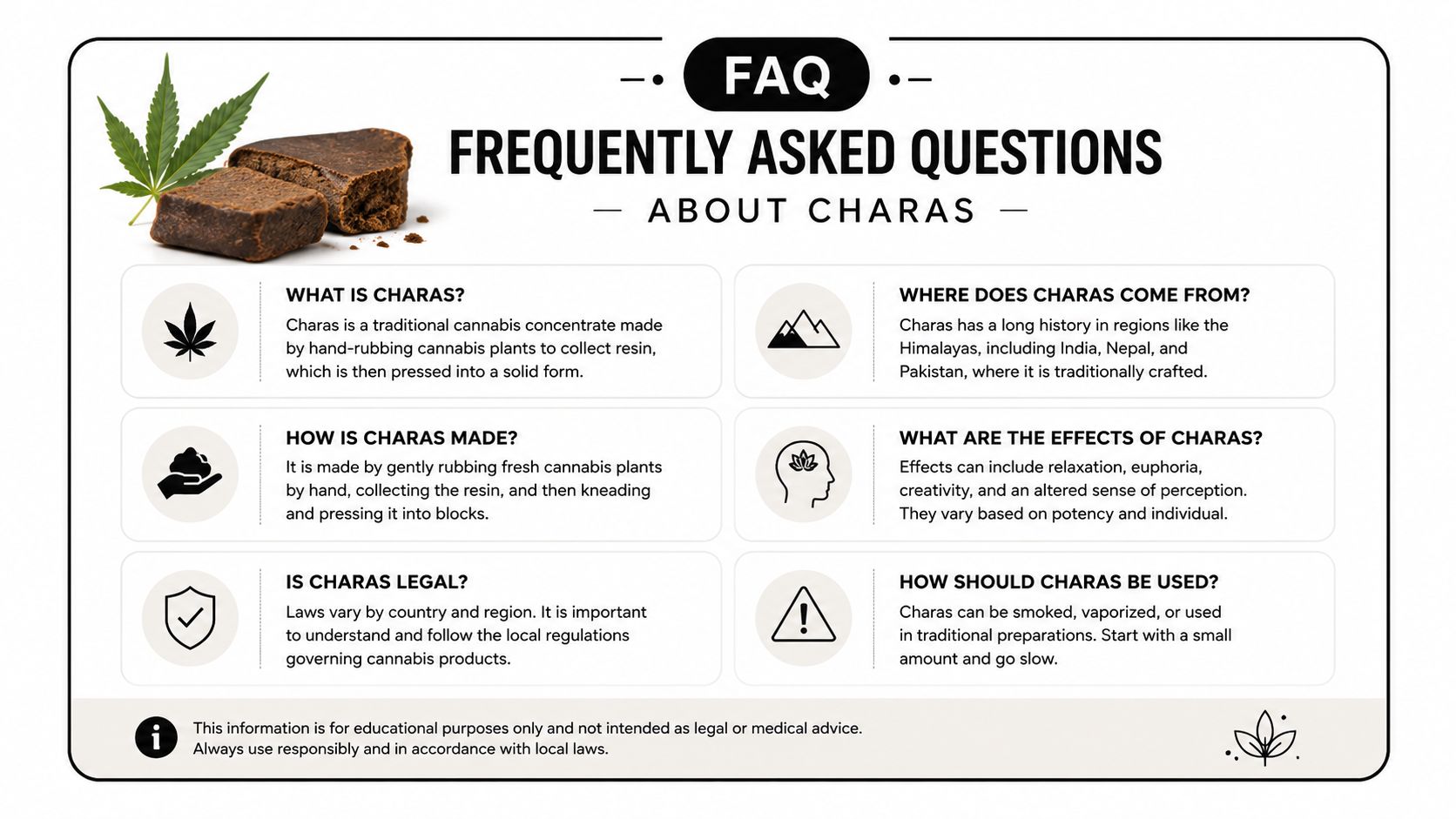
Is charas just another word for hash
Not exactly. People often use hash as an umbrella term for concentrated cannabis resin. Charas fits under that broad idea, but it specifically refers to hand-rubbed resin from living flowering plants.
Can a home grower make traditional charas
That depends on local laws, plus practical and quality considerations. For most hobbyists, it makes more sense to appreciate charas as a historical resin tradition and focus on legal, modern alternatives like kief collection or rosin pressing from dried flower.
Why do growers care about charas if they aren't making it
Because it teaches a useful lesson: resin quality starts with the plant. Once you understand why hand-rubbed resin became respected, you start paying more attention to trichomes, cultivar choice, flower maturity, and careful handling.
Is CHARA the same thing as charas
No. This one catches people because the words look similar. The CHARA Array has nothing to do with cannabis. It is a six-telescope optical interferometer with 1-meter mirrors and baselines up to 330 meters, and it can achieve angular resolution as fine as 200 micro-arcseconds, making it one of the highest-resolution ground-based instruments in the world, as described by the Mount Wilson Observatory CHARA Array overview.
What's the most useful takeaway for a hobby grower
Treat charas as a lens, not a recipe. It points you toward better questions.
- Which cultivars get especially sticky in late flower
- Which plants hold aroma well during harvest
- Which harvests leave enough resin behind to make kief or rosin worthwhile
- Which grow habits protect trichomes instead of knocking them off
Those are the questions that improve your garden.
If you're choosing your next resin-focused run, Botanist Seeds can help you compare feminized and autoflower cultivars by growth style, plant traits, and hobby goals, so you can pick something that fits your space and the kind of frosty flower you want to grow.