Feminized Seeds vs Regular: A Grower’s Guide
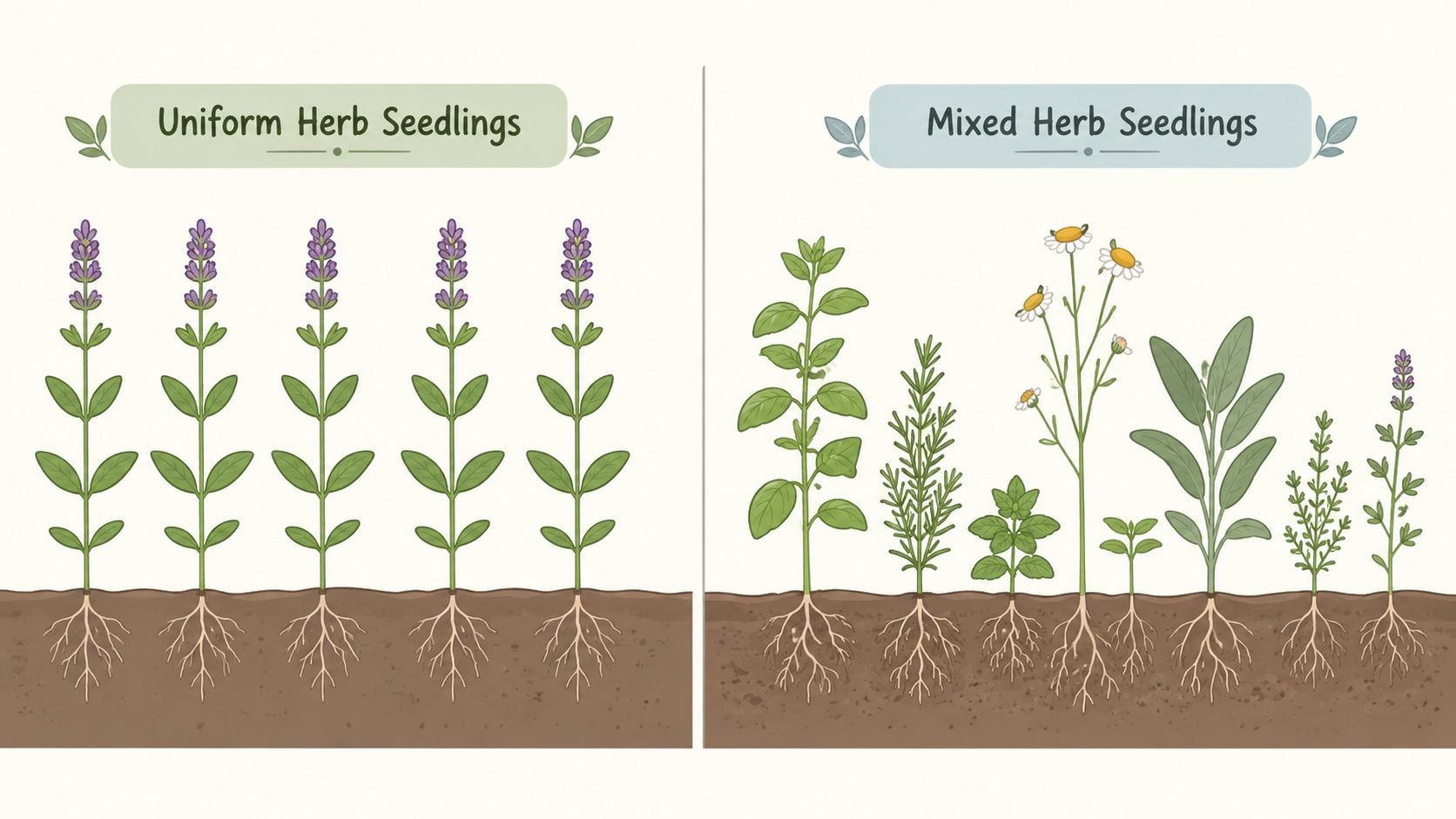
You're probably doing what most home growers do at the start. You've got a few tabs open, a cart half-filled, and then the first real fork in the road shows up: feminized seeds vs regular.
That choice matters more than people make it sound.
Pick the right seed type and the whole run feels cleaner. Your tent stays on plan, your canopy fills the way you expected, and harvest day looks a lot more like the one you pictured. Pick the wrong one for your goal and you can end up spending weeks feeding, watering, training, and babying plants that don't move you any closer to a jar full of flower.
For breeders, regular seeds still have a real purpose. That part is worth respecting. But for the average hobby grower with a tent in a spare room, a corner of the garage, or a few pots outside, the answer is usually a lot simpler than the internet makes it seem.
If your goal is a dependable flower harvest, feminized seeds are usually the smart play. They cut out risk, save space, and make the whole process easier to manage.
The First Big Choice in Your Home Grow
A lot of first-time growers hit the same moment. You finally decide to grow your own, you start browsing cultivars, and right under the strain name you see the label: feminized or regular.
At that point, it's often assumed they're choosing between two versions of the same thing. They're not. They're choosing between two very different grow experiences.
One path is built for efficiency. The other makes more sense if you're breeding, preserving lines, or hunting through a wider gene pool. That's the fundamental split. It's not about one being old school and the other being trendy. It's about matching the seed type to the job.
Here's the quick view most home growers need early:
| Grower priority | Feminized seeds | Regular seeds |
|---|---|---|
| Flower harvest at home | Best fit | Usually adds extra risk and work |
| Breeding new cultivars | Limited use | Best fit |
| Small tent efficiency | Strong advantage | Less efficient |
| Predictable canopy | More consistent | More variable |
| Pheno hunting depth | More limited | Better choice |
A hobby grow usually has tight limits. You've got a set number of pots, a fixed light footprint, and only so much patience for complications. In that setup, every square foot matters. Every week matters too.
Practical rule: If you're growing to fill jars, not to make seeds, don't choose the option that creates more uncertainty on purpose.
That doesn't mean regular seeds are bad. They're just often the wrong tool for the average home setup. A breeder wants options from both sides of the genetic equation. A home grower usually wants healthy plants, a full canopy, and a smooth run from germination to trim day.
That's why this choice deserves a direct answer, not a fence-sitting one. Regular seeds have their lane. Most home growers don't need that lane.
Genetics 101 What Makes a Seed Feminized or Regular
The simplest way to understand this is to think about what the seed is genetically set up to produce.
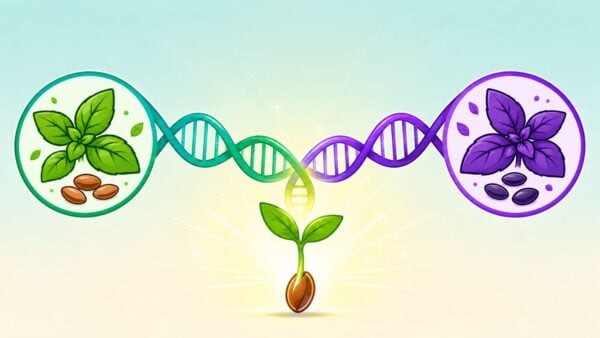
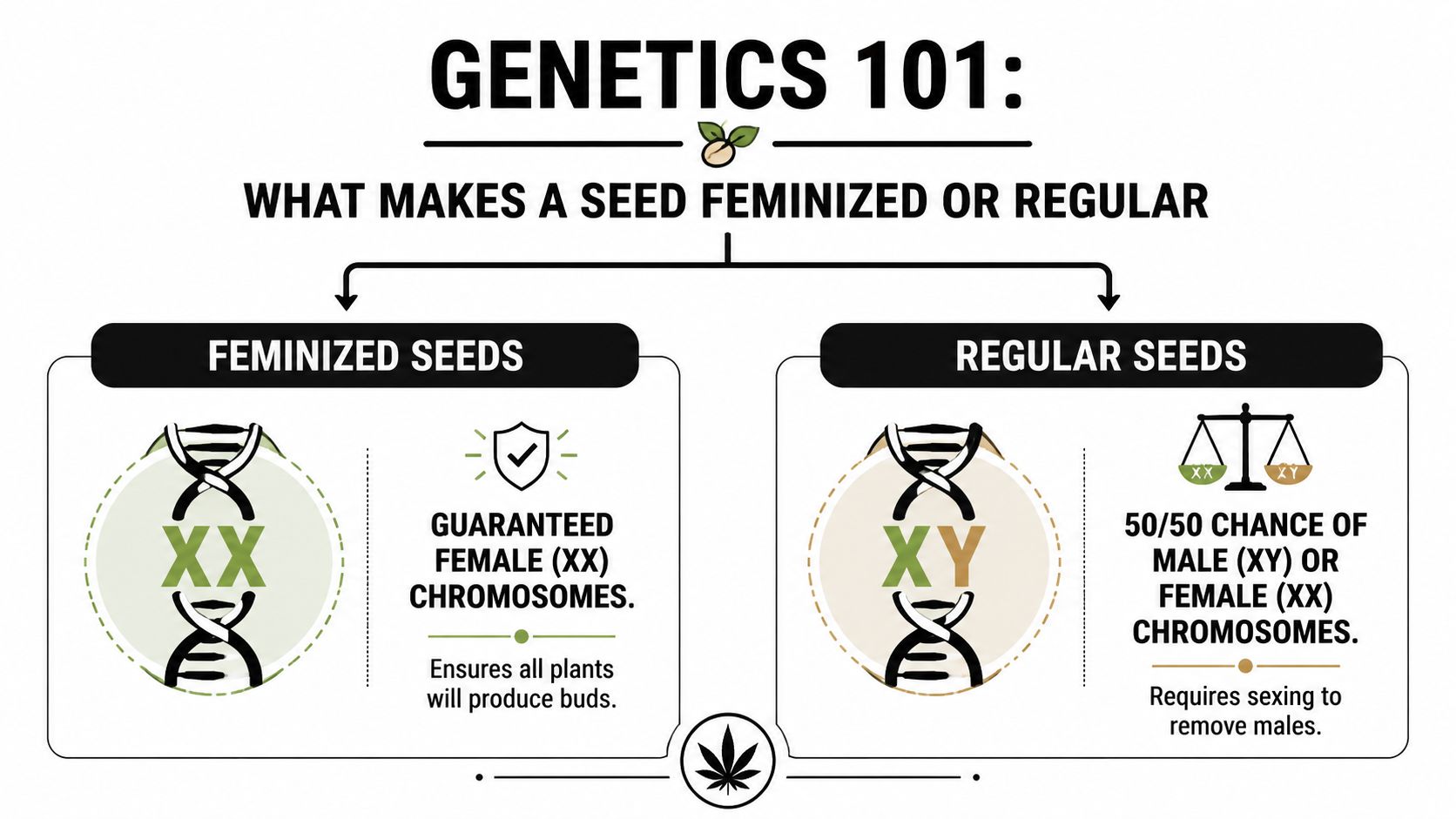
Feminized seeds are bred to carry only XX chromosomes, while regular seeds carry the natural mix that leads to a 50/50 split between male and female plants, according to this breakdown of feminized versus regular seed genetics. That's the core reason these two seed types behave so differently in the grow room.
How feminized seeds are made
This part sounds more technical than it really is.
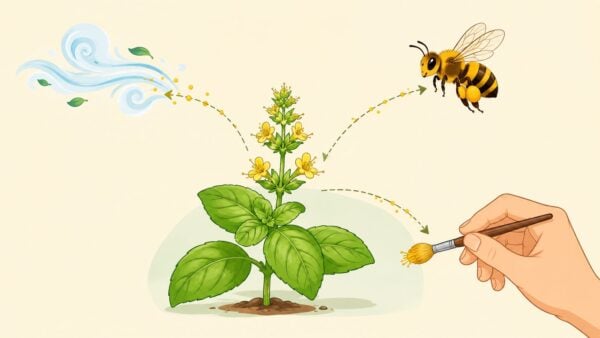
Breeders take a female plant and induce it to produce pollen. Because that pollen comes from a female plant, it carries XX genetics. When that pollen fertilizes another female plant, the resulting seeds are genetically set up to produce female plants.
A recent technical paper describes one feminization method using Silver Thiosulfate at 3 mM, applied during the vegetative stage by foliar spray until runoff, followed by a shortened photoperiod to induce flowering and seed production, as outlined in this Frontiers in Plant Science paper on feminization protocols.
If you want the plain-English version, this guide on what a feminized seed is gives the big picture without overcomplicating it.
What regular seeds bring to the table
Regular seeds are the natural format. They preserve the full male and female expression you need for breeding work, line preservation, and deeper pheno hunting.
That matters if you're selecting parents, testing male traits, or building something new from scratch. It matters a lot less if your whole plan is to grow a few plants at home and end up with flower.
Regular seeds are a breeding tool first. Feminized seeds are a production tool first.
Why this difference matters in practice
Once you understand the chromosome part, the rest clicks fast.
- Feminized seeds give the home grower a much more direct path to a flower run.
- Regular seeds keep the door open for breeding decisions and broader selection work.
- The trade-off is simple: more breeding flexibility with regulars, more efficiency with feminized.
That's why people get such different opinions online. They're often talking about different goals without saying so clearly. A breeder and a hobby grower can look at the same seed pack and judge it by completely different standards.
A Side by Side Comparison for Your Grow Room
Theory is useful. The grow room is where the decision gets real.
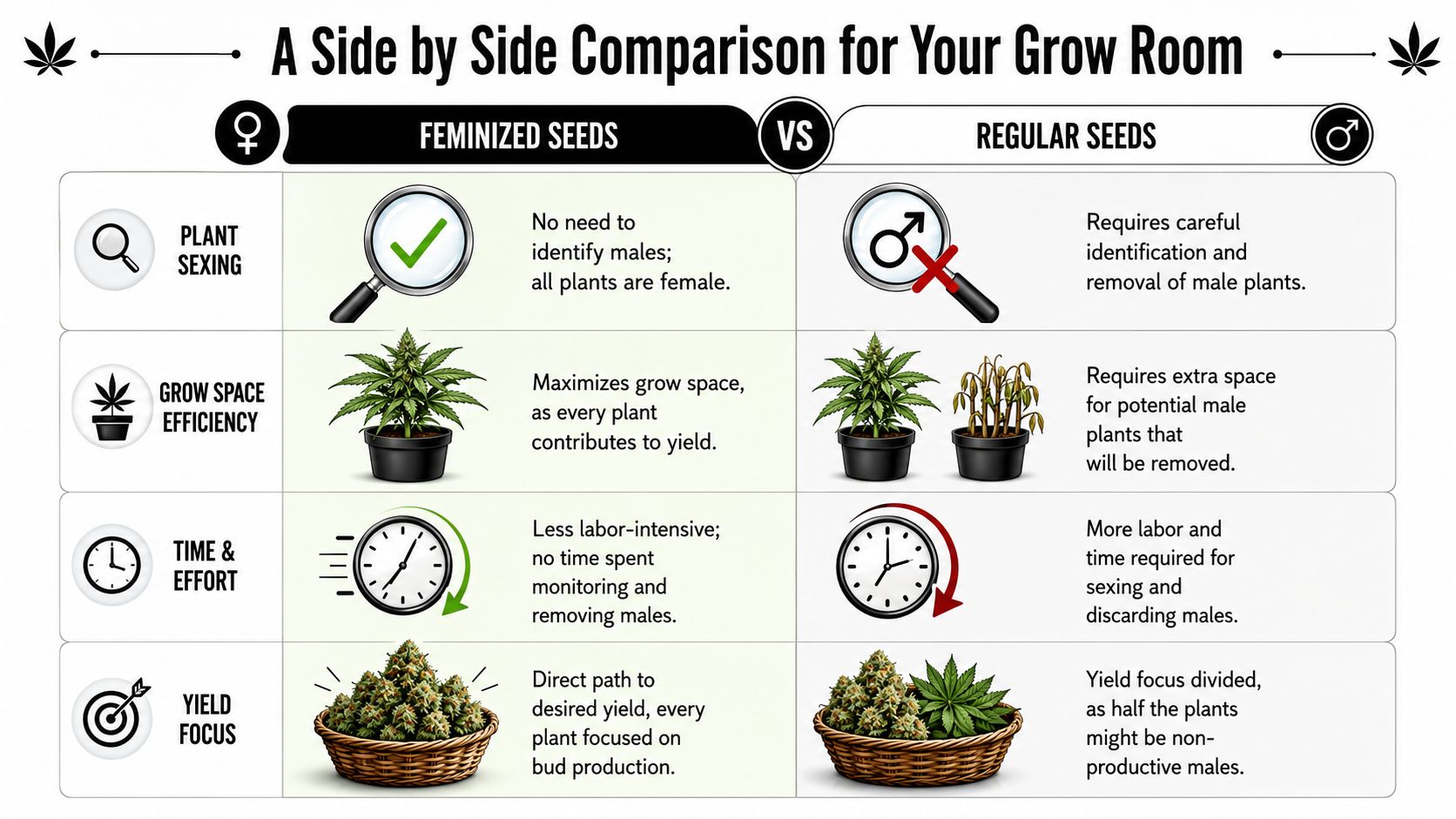
If you run feminized seeds, your layout usually starts clean and stays clean. You can plan your pot count, training, feed schedule, and canopy with a lot more confidence. If you run regular seeds, part of your room, your medium, your nutrients, and your time go toward uncertainty.
For home growers focused on flower, the practical difference is huge. Feminized seeds are bred to produce female plants with a 99.9% certainty, while regular seeds keep the natural 50/50 male-to-female ratio, according to a seed bank’s guide to regular vs feminized vs autoflowering seeds.
Here's the fast comparison.
| Category | Feminized seeds | Regular seeds |
|---|---|---|
| Female outcome | 99.9% certainty of female plants | 50/50 split |
| Use of tent space | Nearly every plant contributes to flower production | Part of the space may go to non-flower-producing plants |
| Labor | Less hands-on sorting work | More monitoring and plant management |
| Canopy planning | Easier to plan evenly | Harder to predict final productive count |
| Best use case | Home flower production | Breeding and wider pheno hunting |
What this feels like during a run
With feminized seeds, you can germinate the number of plants you want to finish. That makes a small tent a lot easier to manage. Your trellis goes in with a plan. Your topping schedule has a point. Your irrigation isn't wasted on plants that don't fit your final goal.
With regular seeds, a flower-focused home grow gets more awkward. You're managing a population instead of a final roster. That may be fine for a breeder, but it's not efficient if your goal is harvesting smokable flower.
If you're also comparing seed formats more broadly, this autoflower vs feminized seeds guide helps clarify where photoperiod feminized seeds sit compared with autos.
A quick visual helps if you want to see the trade-offs in motion:
Space is the hidden cost
Most hobby growers underestimate how expensive wasted space is.
You're not just paying for seeds. You're paying for light footprint, soil or coco, nutrients, airflow, training time, and your own attention. In that context, the value of feminized seeds becomes obvious. The same a seed bank reference notes that for home growers prioritizing bud production, the 99.9% success rate translates into better space efficiency and better cost-per-female economics than regular seeds.
That's why feminized seeds often feel easier even before harvest. They reduce the number of moving parts. And fewer moving parts usually means fewer mistakes.
What works best in small home setups
For a hobby grower running a tent, closet, or patio setup, these are the traits that usually matter most:
- Predictable plant count: You can plan your container number and canopy with confidence.
- Cleaner training: SCROG, topping, and branch work make more sense when every plant is part of the final flower run.
- Less wasted effort: The water, feed, and time you invest keep pointing toward harvest.
That's the practical heart of feminized seeds vs regular. One supports an efficient flower room. The other asks you to accept more uncertainty because it serves a different purpose.
Analyzing the Cost Yield and Return on Investment
A lot of growers stop at the seed price. That's a mistake.
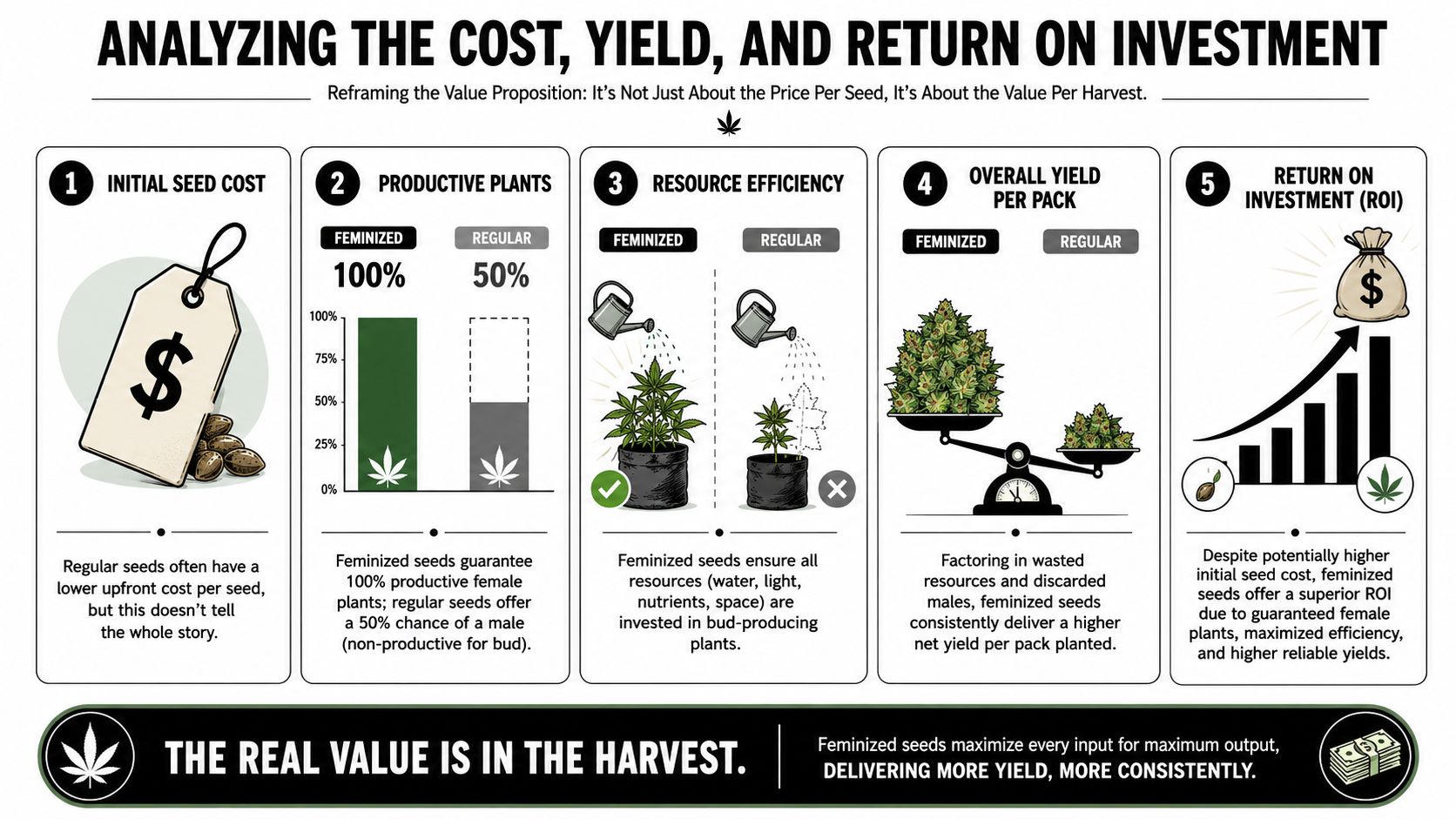
Yes, regular seeds are typically 30–50% less expensive per unit than feminized seeds, according to this comparison of feminized and regular cannabis seeds. On the surface, that can make regulars look like the budget choice.
But that's only true if you judge the purchase by cost per seed. Most home growers should judge it by cost per productive plant and by how efficiently the grow space gets used.
The cheap seed can become the expensive grow
If you run regular seeds in a flower-focused home setup, you're still putting resources into every seed you pop. That means medium, feed, water, environmental control, and your own labor all start adding up before the plants prove their value to your harvest plan.
With feminized seeds, that spend is easier to justify because the run is aimed much more directly at flower production from the start.
Bottom line: Seed price is the small number. Total grow efficiency is the big number.
How I'd judge value as a home grower
A home grower usually gets the best return by asking a few plain questions:
- How much of my canopy ends up producing flower
- How much of my time goes toward productive plants
- How much rework and uncertainty can my setup tolerate
If your grow is built around jars of cured flower, feminized seeds usually win that math even when the pack costs more upfront.
For growers chasing production, cultivar choice matters too. A list of highest-yielding cannabis strains can help once you've already decided your seed format.
Yield isn't just what the scale says
The useful way to think about yield is not only final dried flower. It's also how smoothly you got there.
A run with fewer disruptions is easier to feed correctly, easier to train evenly, and easier to finish strong. In a home setup, those practical gains matter more than shaving a little off the initial seed bill.
That's why regular seeds can still be the wrong “cheap” choice for a hobby grower. They may cost less to buy, but they often ask more from the grow.
Choosing the Right Seed for Different Grower Goals
This choice gets easy once you stop asking which seed type is “better” and start asking what you're trying to do.
If you're creating cultivars, preserving lines, or hunting through a broad range of traits, regular seeds still earn their place. If you're trying to grow your own stash without turning the run into a genetics project, feminized seeds make more sense.
When regular seeds are the right call
Regular seeds exist for a reason.
They offer the broader variation that breeders and serious pheno hunters want. As noted by Dark Coast Seed on regular seeds vs feminized seeds for pheno hunting, regular seeds combine genetics from a true male and female, which creates wider phenotypic variation. That wider spread is useful when someone wants to evaluate a deeper pool of expressions and select parents for future work.
If that's your mission, regular seeds aren't a hassle. They're the point.
When feminized seeds make more sense
Most home growers are not preserving a line or building a breeding project. They want a few healthy plants, a smooth grow, and a good harvest.
That grower usually benefits most from feminized seeds because they simplify the process where it matters:
- Small-space growers: Better for tents, closets, and compact outdoor corners.
- Busy hobbyists: Better when you want fewer moving parts and less management overhead.
- Flower-focused growers: Better when the goal is usable harvest, not selection work.
If your main goal is opening a jar of your own cured flower in a few months, feminized seeds fit the job better.
A simple way to choose
Use regular seeds if you care most about breeding potential and a wider range of phenotypes.
Use feminized seeds if you care most about efficient home production.
That's the honest split. Regular seeds still matter. They're just built for a narrower group of growers than the internet sometimes suggests.
The Botanist Seeds Pick Why Feminized Wins for Home Growers
For home growers, the best seed isn't the one with the most romantic backstory. It's the one that gives you the best shot at a clean, productive, low-drama harvest.
That's why feminized seeds usually win.
They are consistent with how home growers cultivate at home. Limited space, limited time, limited patience for preventable setbacks. When you've got one tent, one light, and a few months invested in the run, predictability matters a lot.
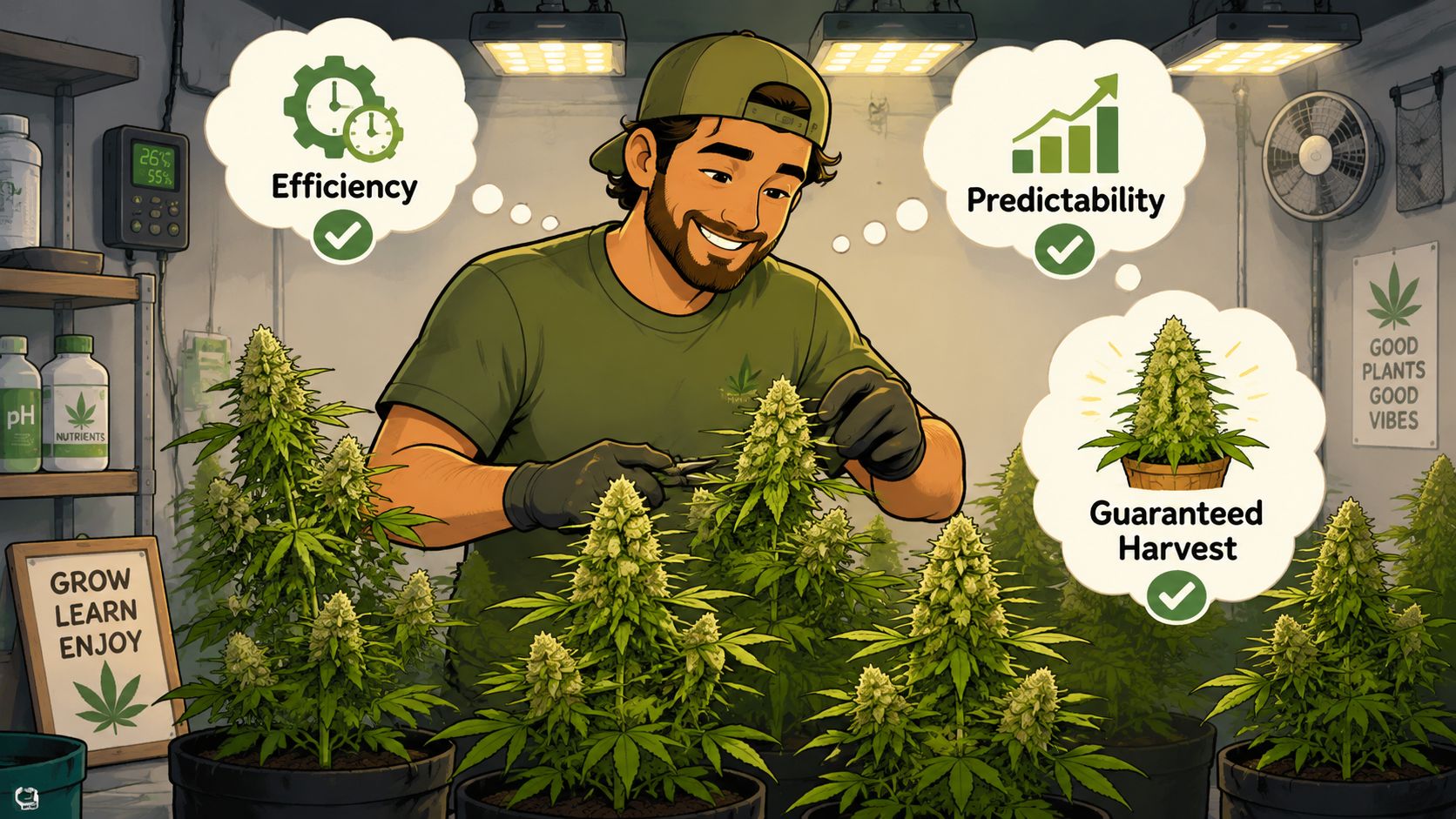
Uniform plants make better use of your space
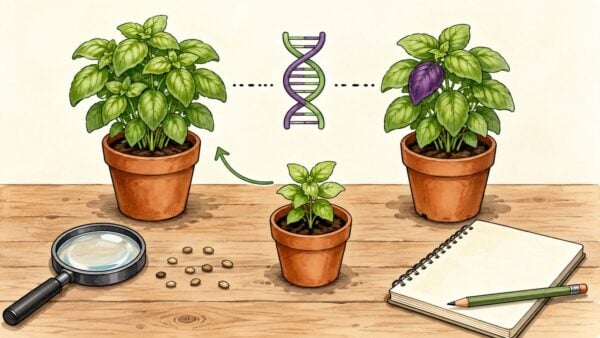
One of the underrated strengths of modern feminized seed stock is consistency. According to this guide to feminized cannabis seeds, modern feminized genetics undergo genetic stabilization that creates high homogeneity, consistent growth patterns, predictable internode spacing, and uniform nutrient behavior. That's a big deal in real grow rooms.
A more even group of plants makes canopy management easier. It also makes techniques like SCROG and multi-plant layouts cleaner because you're working with cultivars that respond in a more uniform way.
What that means for a hobby grow
Consistency sounds boring until you've had a messy run. Then it sounds beautiful.
In practical terms, feminized seeds help with things like:
- Even canopy development: Easier to train under a net or keep level under LEDs.
- Feed consistency: Plants with similar nutrient behavior are simpler to manage together.
- Better use of footprint: More of the room stays dedicated to flower production.
That's why feminized seeds have become the default choice for home growers. They remove friction. They give you a straighter path from seed to harvest.
The only logical choice for most home growers
There's still a place for regulars. Breeders need them. Dedicated pheno hunters use them for good reasons.
But if you're a hobby grower who wants a reliable flower harvest, feminized seeds are usually the only logical choice. They fit the modern home grow better. They reward planning. They waste less of your time.
And for the average grower, that's what a good seed choice should do.
Frequently Asked Questions
Are feminized seeds always the better option?
For most home growers, yes.
If your goal is flower production and a simpler run, feminized seeds are usually the better fit. If your goal is breeding or deep pheno hunting, regular seeds still make sense. The best choice depends on the job, but for hobby flower production, feminized seeds usually line up better with reality.
Are regular seeds stronger or more natural?
“More natural” is a fair description in the sense that regular seeds preserve the standard male and female expression. That doesn't automatically make them the better choice for a home grow.
A regular seed can be useful because it offers breeding flexibility and broader variation. That's different from saying it's automatically better in the tent. For many growers, it isn't.
Do feminized seeds have hermaphrodite risk?
Yes, that topic deserves a straight answer.
According to this discussion on stress and feminized seed hermaphroditic risk, while many guides say feminized seeds are 99% female, the process of reversing a female to produce pollen can copy stress-response traits, which can make feminized plants more susceptible to hermaphroditing under heat, light, or drought stress compared with regular seeds.
That doesn't mean feminized seeds are a bad bet. It means environment matters.
Keep your room stable. Good genetics help, but sloppy light control, rough heat swings, and drought stress can still create problems.
Should a beginner avoid feminized seeds because of that risk?
No. A beginner should just understand the trade-off.
Good feminized genetics are still one of the best options for home growing. The practical lesson isn't “avoid feminized seeds.” It's “don't treat them carelessly.” Stable conditions, good light discipline, and consistent watering go a long way.
What about bag seeds?
Bag seeds are a gamble.
You usually don't know how stable the genetics are, what traits are hiding in there, or what kind of stress response the plant may carry. Sometimes they produce a nice surprise. Sometimes they create a frustrating grow. If you want reliability, buying known genetics is the better move.
If I want speed, should I skip both and choose autoflowers?
Sometimes, yes.
If your priority is a faster, simpler cycle and you don't want to manage a photoperiod schedule, autoflower cultivars can be a great fit. But if you want more control over plant size and training while still keeping a flower-focused run, feminized photoperiod seeds remain the sweet spot for a lot of home growers.
If you're deciding what to run next, Botanist Seeds makes it easy to compare dependable genetics and find the right cultivar for your setup. If you want a smoother path to a full flower harvest, start with feminized options that match your space, experience level, and grow style.