Weed Plant Pots The Ultimate Guide for Home Growers
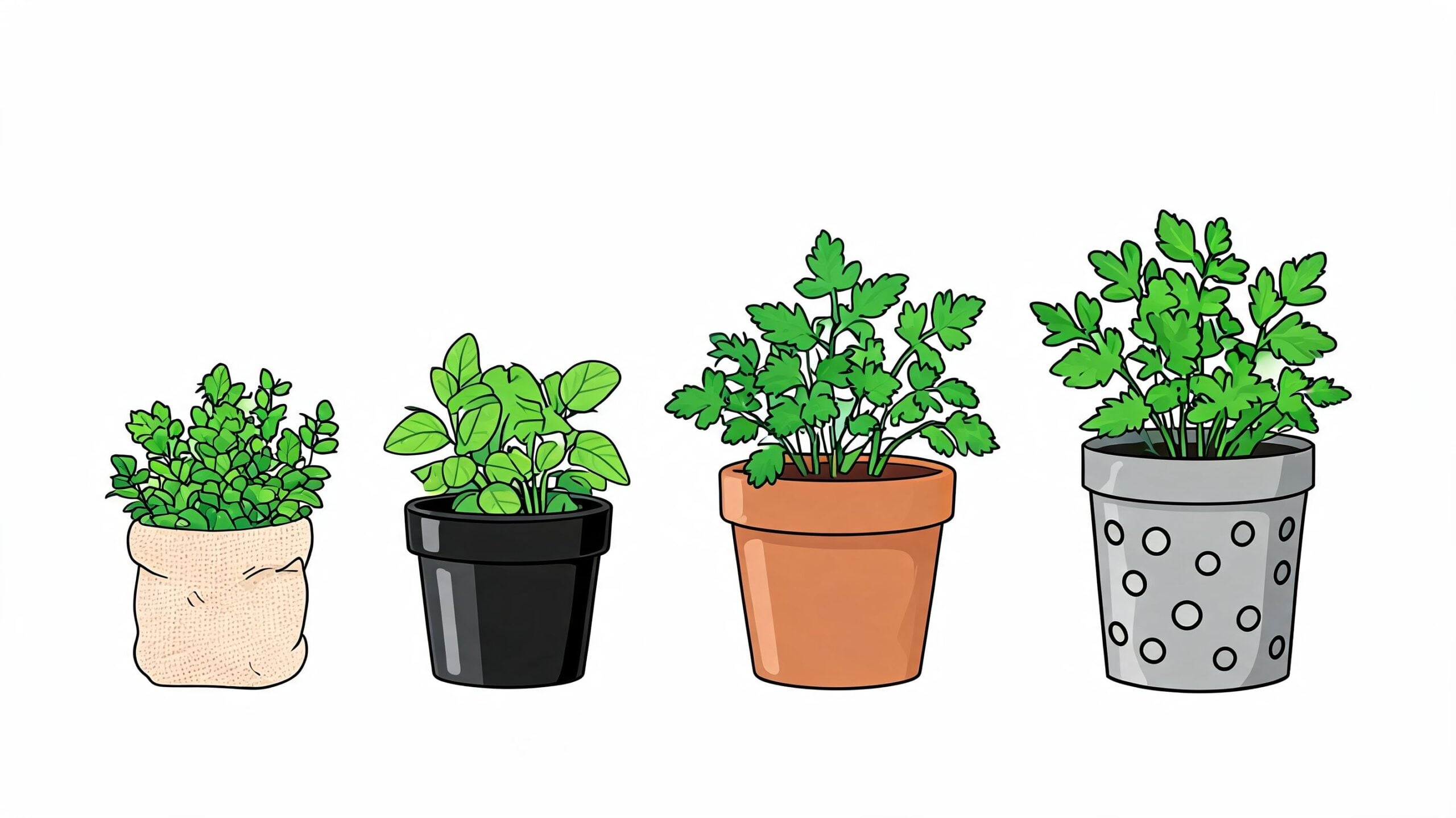
You’ve got your tent, your light, your medium, and a pack of seeds you’re excited about. Then you open a grow shop page and get hit with fabric pots, nursery pots, air pots, clay, gallons, liters, square pots, round pots, tall pots, squat pots. It’s a lot for what looks like a simple container.
That container decides more than most new growers expect. It affects how often you water, how your roots spread, how easy it is to avoid overwatering, and how much space you waste or save in the grow area. With weed plant pots, the wrong choice usually doesn’t ruin a grow overnight. It just makes everything harder than it needs to be.
A good pot should match your cultivar, your space, and your habits. If you miss waterings, one style makes more sense. If you tend to overdo it, another style gives you a wider margin for error. If you’re growing autoflowers, your approach should be different from photoperiod cultivars. Bigger isn’t always better, and cheaper isn’t always cheaper once it costs you time and consistency.
Your Grow Starts at the Roots Not Just the Seeds
A lot of growers treat the pot like the least important part of the setup. It’s just there to hold the medium. That mindset usually changes after the first run, when one plant drinks perfectly and another stays soggy for days in the same room.
Roots need air as much as they need water. The pot controls how fast the medium dries, how much oxygen reaches the root zone, and whether roots branch out or keep circling the container. That’s why a pot isn’t just a bucket. It’s part of the plant’s environment.
The choice gets even more important when you’re dialing in your medium. A coco run behaves differently from a soil run, and the container can either help or fight your routine. If you’re comparing media at the same time, this guide on growing with coco coir growing medium is worth a read because pot behavior makes more sense once you know how the medium holds air and water.
Four common pot types and what they change
- Plastic pots: Hold moisture longer, cost less, and work well if your room dries out fast. The trade-off is lower aeration and a greater chance of roots circling.
- Fabric pots: Breathe well and help roots branch instead of circling. They dry faster, so they reward attentive watering and punish neglect.
- Clay pots: Offer some breathability and feel stable, especially for taller plants. They can dry unevenly and crack if you’re rough with them.
- Air pots: Push aeration hard and are built around root pruning. They work well, but they dry quickly and usually cost more.
Practical rule: If your biggest problem is watering too often, choose a pot that forgives that habit. If your biggest problem is forgetting to water, choose one that buys you time.
That’s the primary frame for the whole article. Don’t ask which pot is “best.” Ask which pot makes your grow easier to manage.
Choosing Your Pot Material Fabric Plastic Clay or Air
Material changes the daily rhythm of a grow more than many people realize. It affects root behavior, moisture retention, cleanup, cost, and how often you’re standing there with a watering can. The best choice depends less on hype and more on how you grow.
Fabric pots
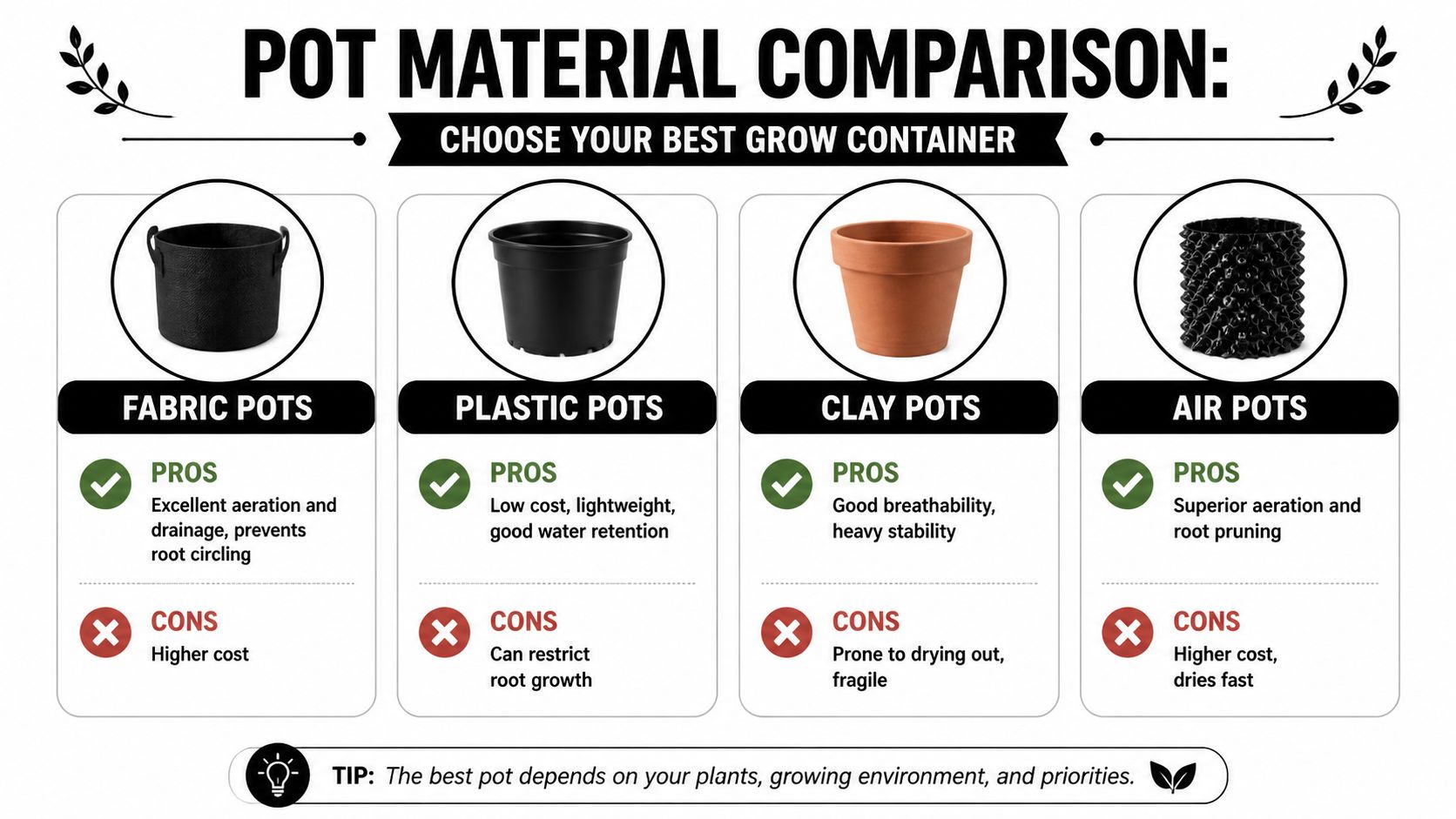
Fabric pots became popular for a reason. The sides allow air to reach the root zone, and that leads to air-pruning. Instead of roots hitting a smooth wall and circling, the root tips stop at the edge and the plant responds by building a denser fibrous root system.
According to a seed bank’s guide to cannabis container types, fabric and air pots can produce 15 to 30% denser root mass and higher bud production compared to non-porous plastic, because side perforations expose roots to air and trigger branching. In practice, that usually means a more vigorous root zone and less risk of a rootbound spiral.
The downside is simple. Fabric dries faster. That can be great if you’ve got a heavy hand with watering, but it can also mean more frequent watering than some growers want.
Plastic pots
Plastic nursery pots are still everywhere because they’re cheap, stackable, light, and easy to clean. They also hold moisture longer than breathable containers, which can be useful if your room is warm or your schedule is busy.
The weakness is root behavior and drainage margin. Smooth walls make it easier for roots to circle, and the medium can stay wet too long if the pot is oversized or the drainage isn’t solid. Plastic isn’t bad. It just asks you to be more precise.
For many beginners, plastic works best when the size is sensible and the watering habit is disciplined. It works worst when someone puts a small plant in a large container and waters the whole pot like it’s already full of roots.
Clay pots
Clay and terracotta have a simple appeal. They’re stable, they breathe more than plastic, and they can help pull excess moisture away from the root zone. That can be useful if you’re in a humid room or if you prefer a slower, more tactile grow style.
But clay has trade-offs that matter in real life. It’s heavier, more fragile, and less convenient to move around. It also tends to dry out faster than plastic, especially in warm conditions, so growers who want low-maintenance containers often get annoyed with it.
Air pots
Air pots are built to maximize aeration. Their perforated structure exposes much more of the root zone to air, which pushes root pruning even harder than standard containers. They’re one of the most effective options for growers who want active root development and quick dry-back.
That performance comes with two obvious costs. They usually cost more, and they can dry out fast enough to become a hassle if you aren’t ready for the watering pace.
A pot that improves roots but wrecks your watering routine isn’t an upgrade.
Weed Plant Pot Material Comparison
| Material | Pros | Cons | Best For |
|---|---|---|---|
| Fabric | Strong aeration, encourages root pruning, helps prevent circling | Dries faster, can need more frequent watering | Growers prone to overwatering, indoor hobbyists, vigorous cultivars |
| Plastic | Affordable, lightweight, holds moisture longer, easy to find | More risk of circling roots, less forgiving if drainage is poor | Budget setups, dry rooms, growers who want fewer waterings |
| Clay | Breathable, stable, can help with excess moisture | Heavy, fragile, dries out faster than plastic | Patio grows, growers who value stability and a classic feel |
| Air | Excellent aeration, strong root pruning effect | Higher cost, dries very fast | Experienced growers, high-attention watering routines |
Matching the pot to your habits
If you want the short version, use this filter:
- Choose fabric if you tend to overwater and want more oxygen at the roots.
- Choose plastic if you need better moisture retention and a lower upfront cost.
- Choose clay if stability matters and you don’t mind weight.
- Choose air pots if you like dialing things in closely and you won’t ignore a thirsty plant.
A lot of weed plant pots can grow healthy plants. The right one is the one that fits your room and your routine without fighting you every week.
Sizing Your Pots for Maximum Plant Growth
Pot size trips up more growers than pot material. Too small, and the roots run out of room early. Too large, and the medium stays wet longer than the plant can handle. The sweet spot is where the root zone can expand without turning the container into a swamp.
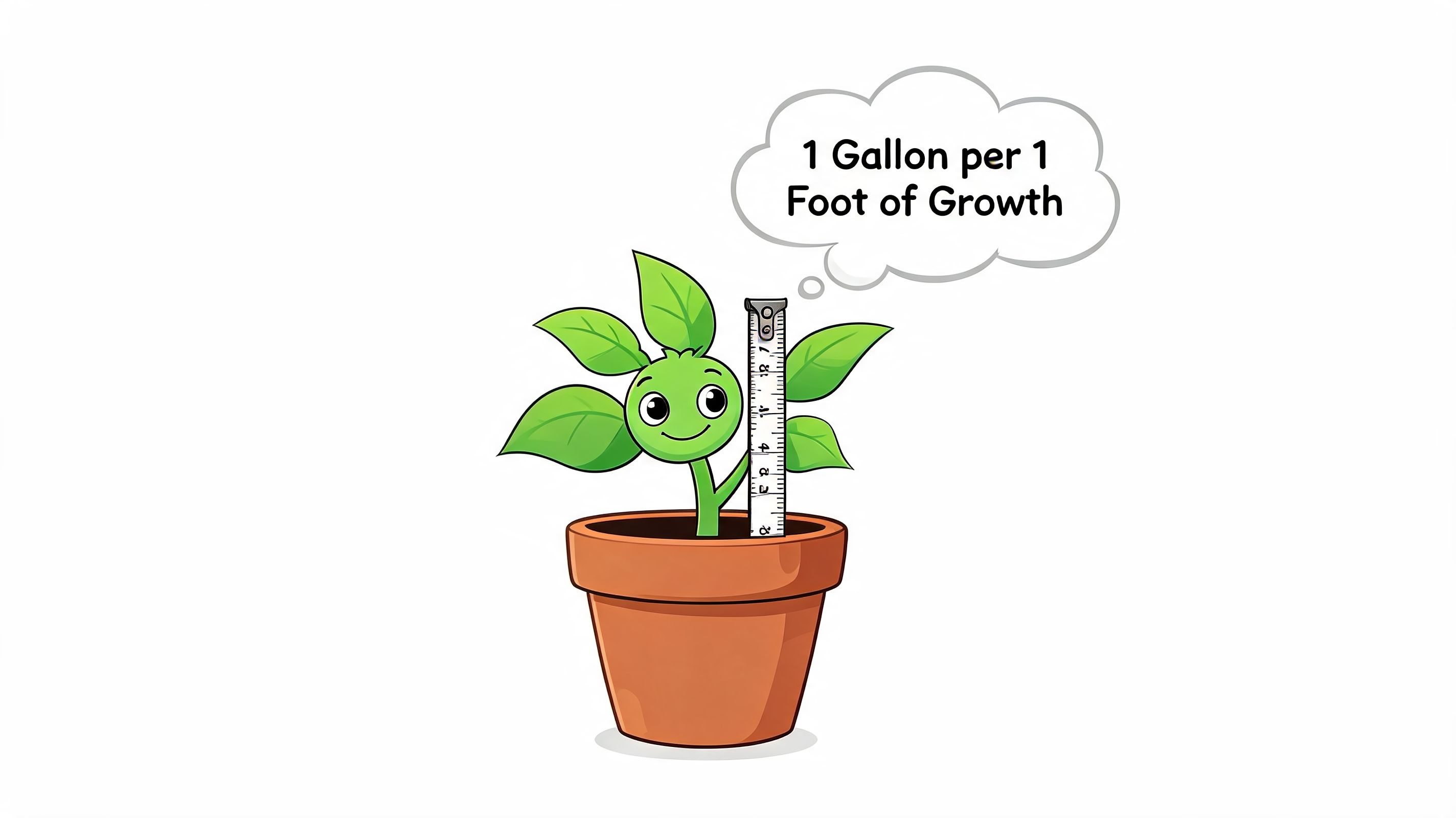
A solid rule of thumb from Murgiplast’s marijuana pot size guide is 1 gallon of pot volume per foot of expected vertical plant growth, plus 1 additional gallon for flowering. That gives beginners a simple way to avoid both extremes.
The same guide notes that 7 to 10 liter pots are widely considered optimal for indoor grows, especially square pots that make better use of tent space. That’s why experienced indoor growers so often land in that range. It gives enough root room without wasting the footprint.
Think in stages, not one container forever
Young plants don’t need a huge root zone on day one. Small pots make it easier to manage moisture during germination and early growth. As roots fill the container, the plant can move into a larger pot with less risk of sitting in wet unused medium.
The same source notes these practical ranges:
- Small pots, 0.25 to 1 liter: Good for germination and cuttings
- Medium pots, 3 to 7 liters: Good for early vegetative growth
- Indoor finish pots, 7 to 10 liters: A common sweet spot for vegetative and flowering phases indoors
For indoor home growers, square containers deserve more attention than they get. They pack neatly, waste less corner space, and make canopy planning easier in small tents.
Autos and photoperiods need different handling
Autoflower cultivars usually respond best when you avoid unnecessary transplant stress. Many growers prefer to start them in the final container so the plant can establish itself and keep moving. That’s especially useful if you’re trying to keep the grow simple.
Photoperiod cultivars give you more room to pot up gradually. You can start small, build a healthy root ball, and move up as the plant demands more space. That method gives you more control if you like shaping the plant and extending veg.
This quick video gives a helpful visual on pot sizing and transplant thinking:
Indoor and outdoor choices aren’t the same
Indoor growers usually care most about yield per square foot, airflow, and manageable watering. That’s why moderate pot sizes often beat giant containers in tents. You’re balancing root room against floor space.
Outdoor growers have a different equation. Heat, wind, and sun can dry containers fast, and larger final pots can give more buffer. But even outdoors, going oversized without adjusting your watering style can create a soggy center around a small root mass.
If the plant is small and the pot is huge, you’re not giving it freedom. You’re giving yourself a moisture problem.
Smart Potting Strategies for Your Grow Style
The best pot on paper can still be the wrong pot in your room. A smart setup starts with how and where you grow, not just what sounds premium in a product description.
Indoor tent growers
Indoor tents reward efficiency. Floor space is limited, airflow matters, and moving plants around for training or cleanup needs to stay easy. In that setting, square pots usually make more sense than round ones because they waste less space.
If you run a tight, controlled environment and you check plants daily, breathable pots can be a strong fit. If your schedule is inconsistent, a more moisture-retentive container may save you from coming home to a dry root zone. The practical point is to choose a container that matches your attendance level.
Outdoor patios and balconies
Outdoor growing adds heat, wind, direct sun, and surfaces that radiate warmth. That changes how a pot behaves. A container that feels fine indoors can dry much faster on a patio.
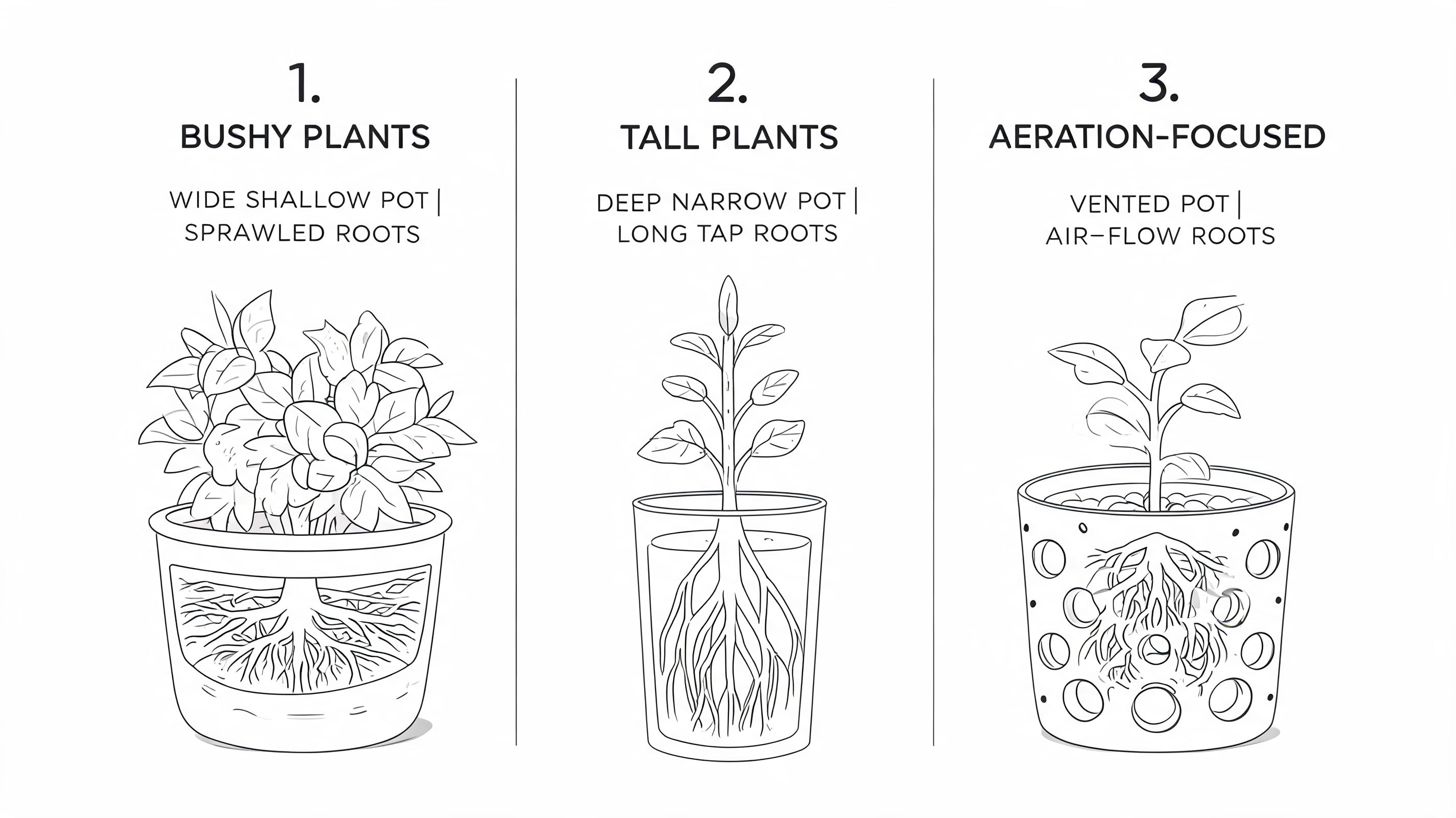
For movable outdoor plants, weight matters. Clay can stabilize a taller plant, but it gets old fast when you need to rotate or shelter containers. Fabric works well outdoors too, but only if you’re ready for the faster dry-back that comes with sun and airflow.
One overlooked detail is the base under the pot. Keep containers on a surface that allows drainage and prevents them from sitting in runoff. Standing water at the bottom turns a good pot into a bad system.
Potting up without stressing the plant
Transplanting isn’t hard, but sloppy transplanting can stall growth. The goal is to move a rooted plant into more space without breaking apart the root mass or soaking the new container into mud.
Use this sequence:
- Water lightly first: Slightly moist medium holds together better than bone-dry or drenched medium.
- Prepare the new pot: Fill it most of the way, leaving a cavity the size of the old root ball.
- Handle the base, not the stem: Support the container and root mass. Don’t yank the plant upward.
- Set it at the same depth: Burying too deep can slow recovery.
- Water to settle, not flood: You want contact between old and new medium, not a swamp.
Autoflower cultivars are where restraint matters most. If you’re growing autos, it often makes sense to skip the extra transplant entirely and start in the final pot. Less interruption usually means a smoother run.
Drainage is part of the strategy
A pot isn’t finished when you buy it. It’s finished when the whole setup drains well and matches your watering style.
Keep these basics in place:
- Check runoff paths: Water should leave the container cleanly, not pool underneath.
- Use saucers carefully: Catch runoff, then empty standing water so roots aren’t trapped above it.
- Leave room to lift pots: You’ll learn a lot by feeling how heavy or light the container is.
- Match pot count to your routine: More containers mean more individual moisture zones to manage.
The best strategy is the one you can repeat consistently without turning every watering into guesswork.
Watering Drainage and Maintaining Healthy Roots
Most pot problems are really moisture problems. The container gets blamed, but the issue is usually a mismatch between pot size, material, and watering habit. That’s why reading the plant and the pot together matters so much.
According to a 2025 moisture management report cited here, 40% of home grow failures stem from moisture mismanagement, and oversized or poorly draining pots are a major reason. That lines up with what most home growers learn the hard way. Too much care often means too much water.
How to read the difference between too wet and too dry
Overwatered and underwatered plants can both droop, which is why beginners get stuck. The fix starts with checking the container instead of reacting to the leaves alone.
Look for these patterns:
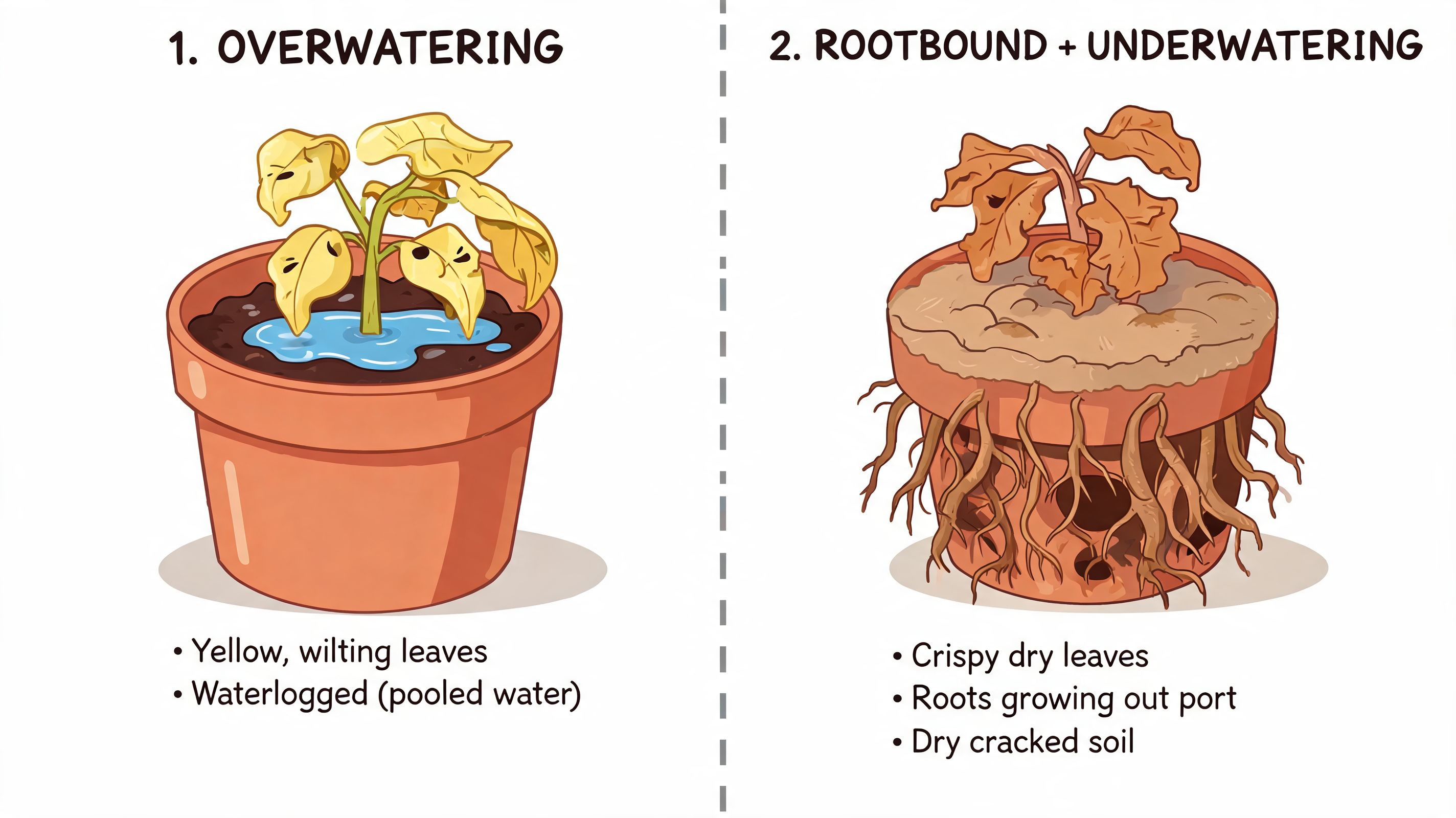
- Overwatered signs: Pot feels heavy for too long, leaves droop but often look swollen or firm, medium stays cool and wet below the surface
- Underwatered signs: Pot feels very light, leaves look limp rather than heavy, medium pulls away from the pot edge or feels dry deeper down
- Healthy rhythm: Pot gets lighter over time, leaves perk after watering, medium cycles from moist to airy instead of staying soaked
If you want a deeper walkthrough on building a better routine, this guide on watering your cannabis plant pairs well with your pot choices.
Good drainage is not optional
Drainage holes matter, but they’re only part of it. A container also needs a medium that doesn’t compact into a dense block and a setup that lets runoff escape freely.
Wet roots don’t fail because they touched water. They fail because they ran out of oxygen.
That’s why fabric and air-pruning designs help many beginners. They dry faster and pull more oxygen into the root zone, which gives you a wider margin when your watering hand gets a little too generous.
Build a tactile routine
Forget rigid calendar watering when possible. Pots don’t dry on schedule. Plants grow, rooms change, and one cultivar may drink faster than another beside it.
Use a simple check every time:
- Lift the pot: Weight tells the truth fast.
- Touch below the top layer: The surface dries first and can fool you.
- Watch the full plant: Droop, leaf feel, and pot weight together are more reliable than one signal alone.
Once you learn that rhythm, your weed plant pots stop feeling like random variables and start acting like useful tools.
Troubleshooting Common Pot Related Problems
Most growers run into the same three headaches. The plant stays droopy even though you watered it. Growth stalls in what seems like a healthy environment. Or the plant keeps needing attention in a way that never feels balanced. Pot choice often sits right in the middle of those problems.
The classic beginner who loves the plant too much
This grower buys a large plastic pot, wants to avoid transplanting, and waters thoroughly every time out of good intentions. The plant ends up sitting in a wet root zone that dries slowly, especially while it’s still small.
The fix is usually straightforward:
- Move to a more sensible pot size next run
- Let the container dry more between waterings
- Improve drainage and airflow around the root zone
- Consider a breathable pot if overwatering is a recurring habit
This is why “start big and save time” often backfires for new growers. It sounds efficient, but it narrows your margin for error.
The busy grower who misses waterings
This person buys fabric or air pots because everyone says they’re better, then discovers that a thirsty plant in a breathable container won’t wait for the weekend. The roots may be healthy, but the watering schedule doesn’t fit real life.
Plastic often makes more sense for this grower. So does choosing a pot setup that holds moisture longer and reduces the number of rescue waterings. Better root aeration is only useful if you can support the pace that comes with it.
The plant that has stalled and won’t push on
A rootbound plant often looks like it hit an invisible wall. Water runs through too fast or the root mass seems to fill the pot more than the medium does. Growth slows, and the plant starts acting like it has less vigor than it should.
The answer is usually to pot up cleanly into a more suitable container and then let the plant reestablish. If you pull a root ball and see dense circling around the edges, the container did its job for a while and then became the bottleneck.
A stalled plant isn’t always hungry. Sometimes it’s just out of room.
The practical argument here is simple. Growers should stop chasing one “best” pot style and start choosing setups based on their own weak points. If you overwater, use a pot that helps correct that. If you miss waterings, stop buying containers that demand constant attention.
Recommended Pot Setups for Your First Grow
Most advice on weed plant pots stays vague. Use a bigger pot. Use fabric. Start small and transplant. That’s fine as a starting point, but it doesn’t answer the question most home growers have, which is what setup fits my space and this cultivar.
That matters because undersizing a container can cost results. A Cannabis Business Times discussion of proper potting highlights a real gap in hard data for specific genetics, and notes reports from 2025 grower forums of 15 to 25% yield drops when high-yield cultivars are kept in undersized pots. You don’t need to obsess over exact numbers to get the lesson. Root restriction costs growth.
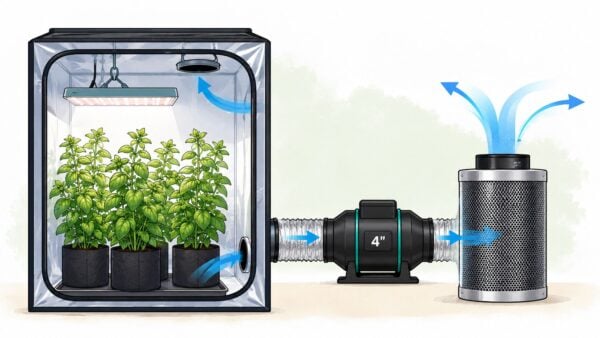
If you’re still building your first setup, a complete grow tent kit guide helps put pots in context with lighting, airflow, and layout.
First timer with an autoflower in a small tent
A simple setup usually wins here. Autoflower cultivars don’t give you much time to recover from delays, so reducing stress matters.
Recommended starting point: a final pot that gives the plant enough room from the start, with a material that matches your watering habits.
That usually means:
- Fabric if you tend to overwater
- Plastic if you know you’ll miss occasional waterings
- A moderate final size, not an oversized monster container
The goal is steady growth with minimal interruption. For a first run, simplicity beats cleverness.
Indoor hobbyist trying to maximize a 4×4
This grower cares about footprint, canopy management, and getting strong output without wasting floor space. Here, square pots are often the smarter call because they pack more efficiently than round ones.
A practical setup is:
- Square containers for cleaner spacing
- Indoor finish pots in the commonly recommended range
- Pot count based on how much hands-on time you have
If you like training and don’t mind transplanting, photoperiod cultivars give you room to build roots progressively. If you want the room to feel easier to manage, don’t crowd it with oversized containers that leave no working space.
Casual outdoor patio grower
This grower wants healthy plants, not a daily science project. Heat and wind matter more here than they do indoors, and portability can become a real issue fast.
A balanced choice often looks like this:
- Plastic if you need longer moisture retention
- Fabric if your climate and schedule can support faster drying
- A stable container if the cultivar gets tall or top-heavy
Patio growers should also think about surface temperature and runoff. A pot that bakes in direct sun or sits in standing water creates problems that have nothing to do with genetics.
A simple decision framework
If you’re stuck, use these three questions:
- How often can you realistically water?
- Are you growing an autoflower or a photoperiod cultivar?
- Are you trying to maximize plant count, plant size, or ease of care?
Your answers narrow the field fast.
- Ease of care: Plastic often makes life simpler
- Overwatering protection: Fabric or air-pruning styles help
- Tight indoor efficiency: Square pots make better use of space
- Autos: Fewer transplants
- Photos: More flexibility to pot up
A first grow doesn’t need the fanciest answer. It needs a pot setup that gives you repeatable control.
Frequently Asked Questions About Weed Plant Pots
Can you reuse weed plant pots
Yes, as long as they’re clean and structurally sound. Salt buildup, old root debris, and lingering organic matter can all create problems in the next run. Plastic is the easiest to scrub and reuse. Fabric can be reused too, but it takes more effort to clean thoroughly and dry properly.
Are square pots better than round pots
For many indoor setups, yes. Square pots use floor space more efficiently, especially in tents where every corner matters. Round pots still work fine, but they usually leave more dead space between containers.
Is bigger always better
No. Bigger can help if the plant is large enough to use the root zone and you can manage the slower dry-back. Bigger becomes a problem when a small plant sits in wet medium for too long. That’s one of the most common beginner mistakes.
Do pot colors matter outdoors
They can. Dark containers tend to absorb more heat in direct sun, which can make root zone management harder on hot patios. If your outdoor area gets blasted with sun, pay attention to root temperature and container placement, not just pot size.
Should autoflowers always go in the final pot
Not always, but many growers prefer that approach because it reduces the chance of transplant stress during a short life cycle. If you’re new, keeping autos in their final container is often the simpler path.
Does soil or coco change the best pot choice
Absolutely. Media that dry and aerate differently will change how the pot behaves. A breathable container paired with a fast-draining medium can need much closer watering attention than a moisture-retentive setup. Pot choice should always be considered with the medium, not in isolation.
Are expensive air pots worth it
They can be, but only if you’ll use their strengths. If you want aggressive aeration and you stay on top of watering, they can be a strong choice. If you want an easier routine, a simpler container may serve you better.
If you’re choosing between cultivars for a specific tent, pot size, or grow style, Botanist Seeds makes that process a lot easier. Use their comparison tools to match feminized and autoflower options to your space, your routine, and the kind of harvest you want to grow at home.