What Is TAC in Weed? Total Active Cannabinoids Explained
You're probably here because you looked at a jar, a lab report, or a seed listing and saw a pile of letters staring back at you. THC made sense. Maybe CBD did too. Then TAC showed up and the whole thing started to feel like homework.
That confusion is normal. Cannabis labels often throw a lot at you at once, and it is common to be taught to focus on one number only. If you grow at home, though, that shortcut can steer you wrong. The better move is learning what TAC means, how it's calculated, and how it helps you choose cultivars for the kind of harvest you want.
The Numbers on the Label
Say you're comparing two cultivars. One listing pushes THC hard. Another shows a fuller lab breakdown with THC, CBD, CBG, and TAC. Most people lock onto the biggest THC number and stop there.
That works if all you care about is the headline figure. It doesn't work nearly as well if you care about the full character of the flower, how layered the experience feels, or what kind of plant you want to keep chasing in future runs.
Why the label feels confusing
A cannabis label usually mixes a few different ideas together:
- THC: the cannabinoid commonly associated with intensity and psychoactive effect
- CBD and other cannabinoids: supporting compounds that shape the overall profile
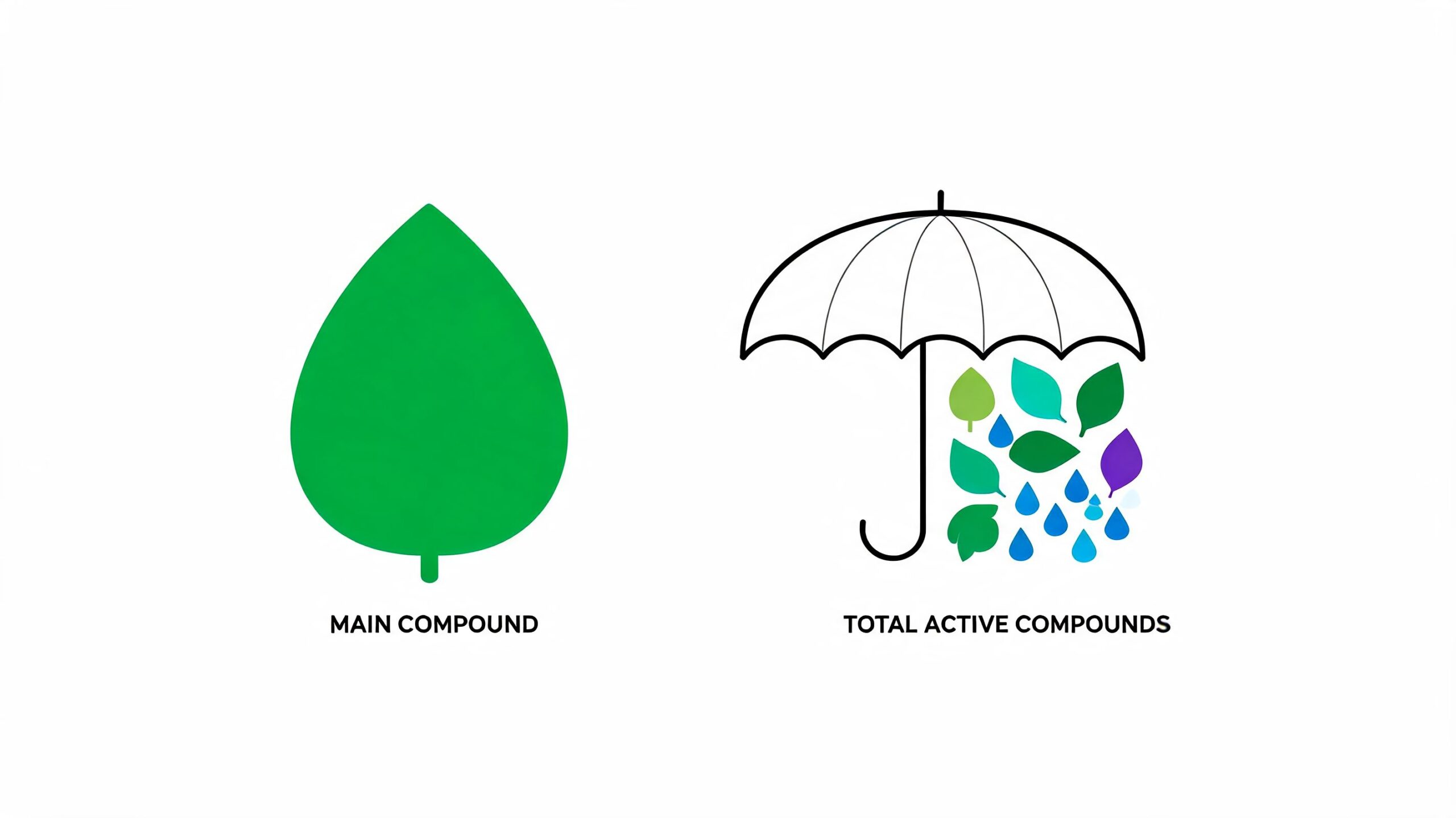
- TAC: the total active cannabinoid picture, not just one piece of it
That last one matters because home growers aren't just buying a finished product. You're making decisions much earlier, at the seed stage. If you understand TAC, you're better equipped to connect lab results, cultivar descriptions, and your own preferences.
The jump from casual consumer to informed grower usually starts when you stop asking, “What has the highest THC?” and start asking, “What kind of profile am I actually trying to grow?”
The practical reason to care
For a home grower, what is TAC in weed isn't just a label question. It's a planning question.
It helps with things like:
- Seed selection: You can compare cultivars with a broader lens than THC alone.
- Phenotype hunting: You can look for plants that bring more than one standout trait to the table.
- Harvest expectations: You get a better sense of why one jar feels richer or more rounded than another.
- Personal preference: You can choose cultivars for a certain vibe, not just a flashy number.
Once TAC clicks, a lot of label confusion disappears. You stop seeing random acronyms and start seeing a map of what the plant is bringing to the finish line.
Beyond THC Your Introduction to TAC
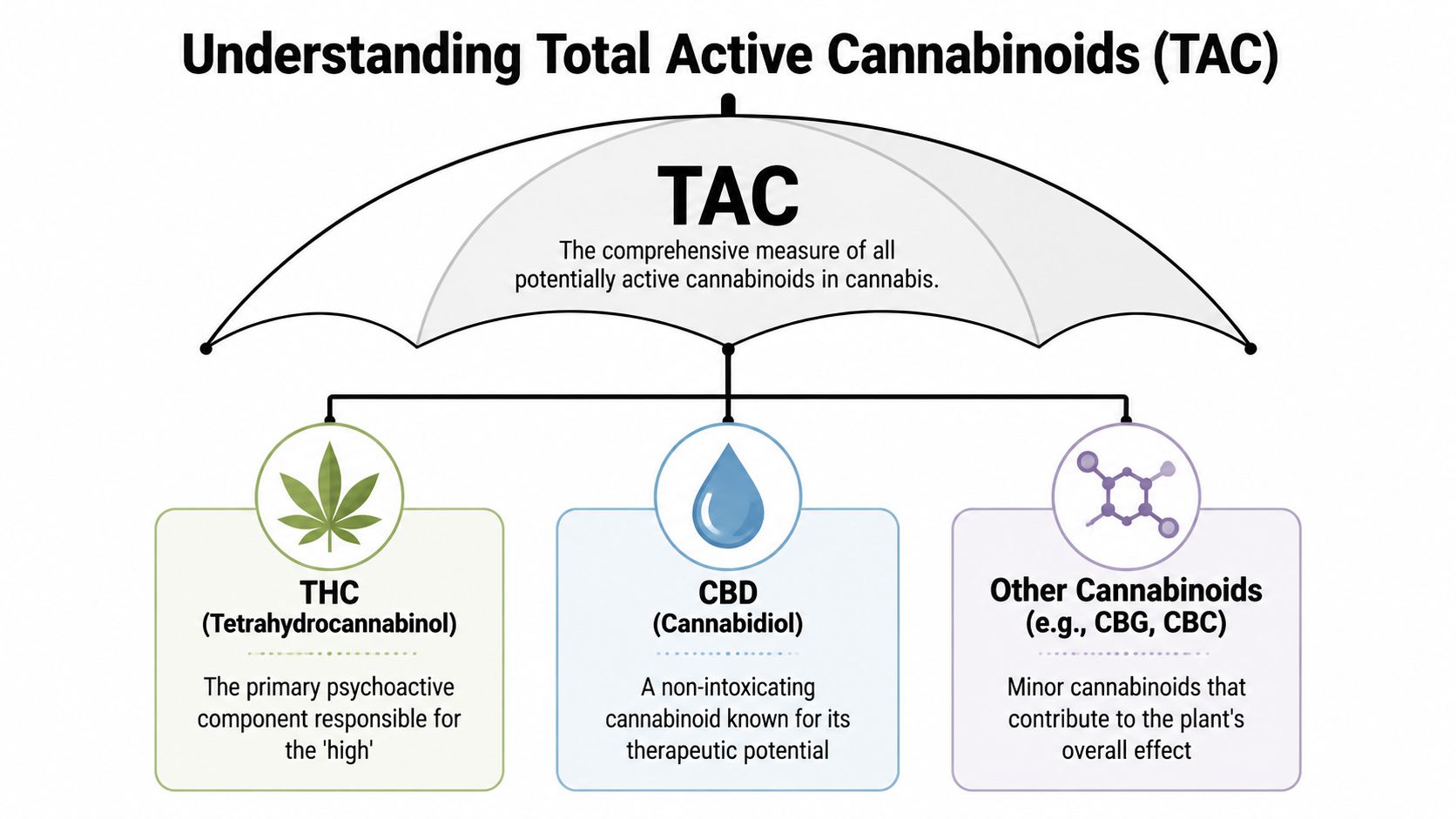
TAC stands for Total Active Cannabinoids. In plain language, it's the combined measure of the cannabinoids in a cannabis product that contribute to its active profile.
A simple way to think about it is this: THC is the lead singer, but TAC is the whole band. The singer gets most of the attention, sure, but the actual sound comes from everybody playing together. If you only judge the band by the singer, you miss what makes one performance feel full and another feel flat.
What TAC includes
TAC isn't code for THC. It's broader than that.
According to Tanasi's explanation of THC vs TAC, TAC represents a complete measurement that includes over 100 identified cannabinoids found within cannabis, among more than 400 total compounds in the plant. That cannabinoid group includes familiar names like THC, CBD, CBG, CBC, and CBN.
That matters because those compounds help define the overall character of a cultivar. One flower can be very THC-forward. Another can feel more layered because other cannabinoids are present in meaningful amounts too.
Why growers should think in TAC, not just THC
If you grow your own, TAC gives you a more useful big-picture view. It tells you that a cultivar's value isn't only tied to one famous cannabinoid.
That's especially helpful when you're choosing between feminized or autoflower options and trying to match a cultivar to your setup, routine, and taste. Some growers want a punchy, narrow profile. Others want a more rounded flower with more going on in the jar.
Simple takeaway: THC tells you about one star player. TAC tells you more about the whole roster.
That doesn't mean THC stops mattering. It means you stop treating it like the only thing that matters.
The Science Behind the Number
TAC sounds like marketing jargon until you look at how labs calculate it. It's tied to a very specific bit of cannabis chemistry.
The key detail is that the plant doesn't mostly make THC in its raw form. It mostly makes THCA, which is the acidic precursor. When heat gets involved, THCA changes into THC through decarboxylation.
The formula labs use
The standard formula is:
TAC = THC + (THCA × 0.877) + CBD + other cannabinoids
That formula, including the 0.877 conversion factor, is outlined in Happy Leaf Portland's TAC vs THC guide.
So what does 0.877 mean in normal language?
It accounts for the molecular weight change that happens when THCA converts into active THC. In short, you don't get a one-to-one swap by weight. The number adjusts for that difference so the final potency estimate is more realistic.
Why THCA and TAC both matter
Many consumers find this distinction confusing. Upon reviewing a raw flower test, individuals often assume THCA and THC are interchangeable. They are not.
A lab can measure both because the plant material contains cannabinoids in different forms. TAC helps translate that into a more usable picture of what the cultivar brings once it's consumed.
Here's the easy version:
- THCA: what the plant largely holds before heat
- THC: the active form people usually focus on
- TAC: the wider total that includes converted THC potential plus other cannabinoids
Practical rule: TAC isn't just a bigger THC number. It's a calculation built to reflect the full active cannabinoid profile more accurately.
Why this matters in the grow room
For growers, this changes how you think about results. If you only chase a cultivar because the THC line looks high, you can miss the broader profile that makes the final flower feel distinctive.
TAC is useful because it connects the chemistry on paper to the plant in your tent or garden. It reminds you that potency and character are shaped before the jar stage, through genetics, environment, and timing.
That's why experienced growers often treat THC as one reference point, not the whole verdict.
How to Read a Certificate of Analysis
A Certificate of Analysis, or COA, is where the label gets real. It's the lab breakdown that shows what's in the batch.
If you've never looked closely at one, it can seem busier than it really is. Most of the time, you only need to find a few lines first.
The three numbers to find first
Start by locating these:
| What to look for | What it tells you |
|---|---|
| TAC | The broader active cannabinoid total |
| Total THC | The THC-related potency figure |
| Individual cannabinoids | The smaller contributors like CBD, CBG, CBC, or CBN |
A useful example comes from the earlier source material: a lab report can show TAC at 23.74% while Total THC is 19.94%. That means nearly 4% of the active compounds come from other cannabinoids, which can shape the overall effect qualitatively, as noted in the earlier section.
That gap is the part many shoppers skip. For growers, it's often the interesting part.
How to think about the gap between TAC and THC
If TAC sits noticeably above Total THC, that usually tells you the cultivar isn't a one-note flower. Other cannabinoids are showing up in enough quantity to matter.
That doesn't mean you should ignore aroma, structure, or finish quality. It means the cannabinoid profile may have more texture than the THC number alone suggests. If you also want to understand how aroma compounds fit into that picture, this guide to cannabis terpenes helps connect the dots.
A quick visual walkthrough can help if COAs still feel unfamiliar:
TAC vs THC At a Glance
| Metric | THC (Total THC) | TAC (Total Active Cannabinoids) |
|---|---|---|
| What it measures | THC only, including converted THCA potential | The combined active cannabinoid total |
| Main use | Estimating psychoactive strength | Estimating the broader cannabinoid profile |
| Best for | Growers chasing intensity | Growers comparing depth and complexity |
| Limitation | Narrow view | Doesn't tell the whole story by itself |
A simple way to read a COA without overthinking it
Use this order:
- Check TAC first, because it gives you the broad overview.
- Check Total THC next, so you know how much of that profile is THC-driven.
- Scan the minor cannabinoids, because they explain why two similar THC numbers can still lead to different experiences.
Don't read a COA like a scoreboard. Read it like a profile.
That mindset shift helps a lot. You stop chasing the loudest number and start reading the flower more like a grower.
Why TAC Matters for Your Home Grow
For a dispensary shopper, TAC helps explain the jar in front of them. For a home grower, it does something more useful. It helps you choose cultivars with intention.
That's the core value here. You're not just asking what tested high after harvest. You're asking what kind of plant is worth your space, your electricity, your time, and your trimming hand cramps.
TAC helps you grow for a vibe
Most growers eventually notice that two flowers can land differently even when the THC number looks similar. TAC gives you one reason why.
The idea often tied to this is the entourage effect, where cannabinoids work together and shape the overall experience as a group. According to Central Ave Care's explanation of THC and TAC, cannabinoids like CBD, CBG, and CBC can modulate and enhance the overall experience, and even 2-3% CBD alongside THC can influence the intensity and character of the effects.
For a grower, that means the fuller profile can matter as much as the headline potency. If your goal is a cultivar with a smoother, rounder, or more nuanced vibe, TAC gives you a better clue than THC alone.
How this changes seed selection
When you're choosing feminized or autoflower seeds, TAC can help you ask better questions:
- Is this cultivar known for a broader profile, or is it mainly THC-forward?
- Do past lab results suggest more than one cannabinoid is showing up meaningfully?
- Does that profile match the kind of flower I enjoy?
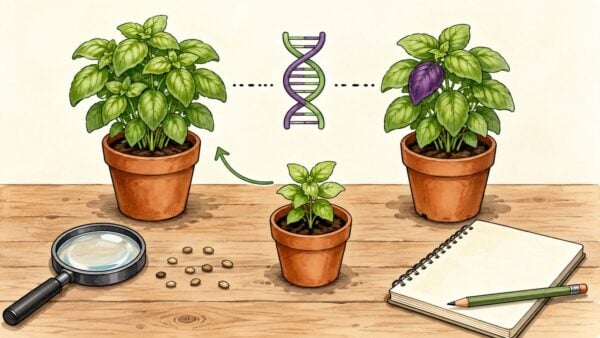
This is also where phenotype hunting gets more interesting. Two plants from the same cultivar line can lean in different directions. One pheno may express a fuller cannabinoid profile, while another may come across narrower and sharper. TAC won't predict every outcome from seed, but it gives you a smarter way to evaluate post-harvest results and decide which plants are worth keeping notes on.
A grower who tracks TAC starts seeing patterns. Not just which plant hit hard, but which one had the best overall balance.
TAC is useful, but timing still matters
None of this replaces good cultivation. Genetics set the range, but your process still shapes the result. Light, environment, dry and cure, and harvest timing all influence what ends up in the jar.
That's why it helps to pair cannabinoid thinking with harvest discipline. If you need a refresher on finishing at the right moment, this guide on when to harvest cannabis is worth keeping handy.
For home growers, TAC is practical because it moves your decision-making past hype. You stop picking cultivars only because they sound loud on paper. You start choosing them for the kind of experience, aroma, and personality you want to grow again.
Using TAC to Find Your Perfect Cultivar
The short version is simple. TAC gives you a smarter read than THC alone.
THC still matters, of course. But if you only shop or grow by THC, you're judging a cultivar by one line on the sheet. TAC helps you look at the broader profile, which is usually a better fit for growers who care about nuance, repeatability, and the overall vibe of the harvest.
What to do with this information
The next time you compare cultivars, don't just ask which one has the biggest THC claim. Ask:
- Does the cultivar show a fuller cannabinoid profile?
- Does that profile line up with the kind of jar I like reaching for?
- If I run several seeds, which phenotype gives me the balance I want to keep chasing?
That's a more useful way to evaluate feminized and autoflower options, especially if you want to grow with a clear goal instead of winging it.
If you're still sorting out the basics of cultivar categories and how different plants are commonly described, this overview of types of weed can help put TAC into a wider context.
The best growers don't just grow what looks strong on paper. They grow what fits their space, their taste, and the kind of finished flower they actually want to keep around.
Once you understand what is tac in weed, labels become a lot less noisy, and your seed choices get sharper.
If you're ready to put that knowledge to work, Botanist Seeds makes it easier to compare feminized and autoflower cultivars with a clear, grower-friendly shopping experience. Use what you now know about TAC, profile, and plant character to narrow down seeds that fit your setup and the kind of harvest you want to enjoy.