A Home Grower’s Guide to the Different Types of Weed
So, you're ready to start growing your own cannabis. It's an awesome journey, but if you're just starting, the huge variety of seeds can feel a little overwhelming. You've probably heard the classic terms—Indica, Sativa, and Hybrids—but what's available today is so much richer.
Your Guide to Modern Cannabis Cultivars
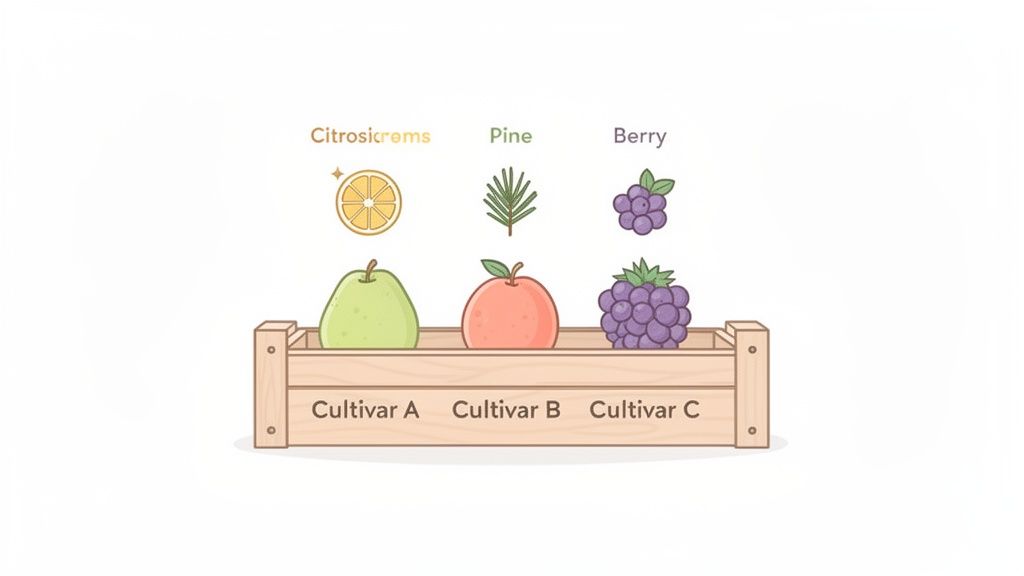
Let's cut through the noise. The best way to think about different types of weed is to compare them to something familiar, like apples. You have your crisp Granny Smiths and your sweet Honeycrisps; they look different, taste different, and you use them for different things. In the cannabis world, we call these distinct varieties cultivars.
Getting a handle on these cultivars is the first real step toward a successful and rewarding home grow. It's the difference between planting a mystery seed and confidently choosing the perfect plant for your goals and lifestyle.
This guide is built to move you past confusing jargon. We’re going to focus on the practical side of things, helping you select feminized seeds that promise fantastic results.
Why Understanding Cultivars Matters
Picking the right cultivar isn't just about a cool name: it’s about matching a plant’s unique personality to your specific needs. When you know what you're looking for, you can choose a plant that fits your grow space, your timeline, and the exact vibe you're after.
For the hobbyist grower, this knowledge is empowering. It puts you in control, allowing you to grow exactly what you want, whenever you want. That’s a game-changer if you’re tired of dispensary lines and high taxes.
The real pride of growing at home comes from the connection you build with your plants. Knowing you nurtured a specific cultivar from a tiny seed into a beautiful, resinous harvest is a kind of satisfaction you just can't buy.
And this isn't just a niche interest; the demand for specific cultivars is fueling a massive global industry. The cannabis and hemp market is projected to skyrocket from USD 36.8 billion in 2026 to USD 215.1 billion by 2033. This incredible growth highlights how much people care about finding the right fit, as you can see in the booming global cannabis market trends on MarketResearch.com.
What This Guide Will Cover
Our goal here is simple: to give you the confidence to navigate the world of cannabis seeds like a seasoned pro. We'll walk through the key categories you need to understand to make sense of all the options out there.
- Indica, Sativa, and Hybrids: We'll unpack what these classic terms really mean for a home grower today and where they fall short.
- Autoflower vs. Photoperiod: You'll learn the crucial differences in how these plants grow and which type is the best match for your setup and schedule.
- Aromas and Vibe: We'll touch on how to decode a cultivar's profile to get a good idea of its scent, flavor, and general vibe.
By the end of this guide, you’ll be ready to use the Botanist Seeds comparison tool with ease. You'll have the know-how to find the perfect feminized or autoflower cultivar and start your journey toward an amazing personal harvest.
Understanding Indica, Sativa, and Hybrids
Anyone who's dipped a toe into the world of cannabis has heard the big three: Indica, Sativa, and Hybrid. It’s the first thing most people learn. You can think of it as the most basic sorting system, like separating wines into red and white: it’s a decent place to start, but there's a whole lot more to the story.
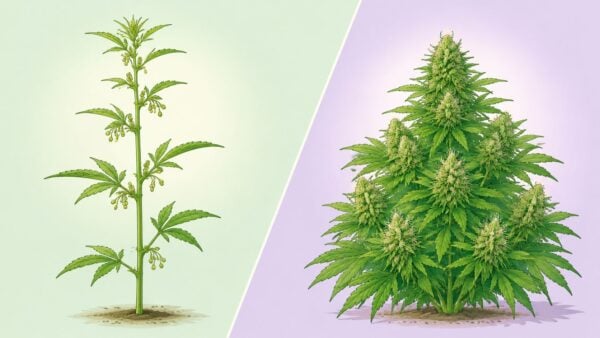
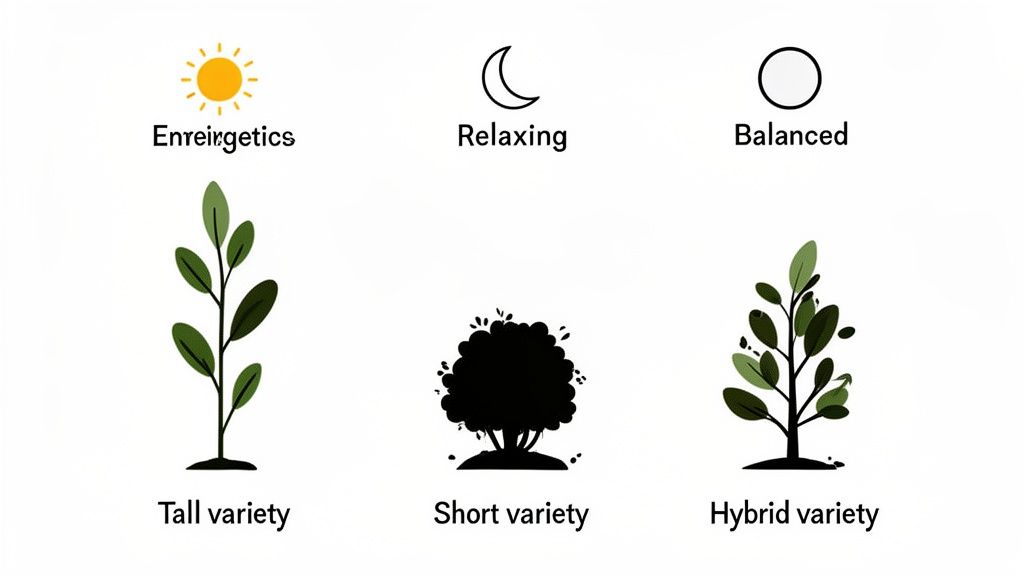
These terms didn't originally describe the effects at all. They were purely botanical, used by botanists to classify plants based on how they looked and where they came from. Sativas were the tall, lanky plants with skinny leaves found growing in the long, hot seasons near the equator. In contrast, Indicas were short, dense, and bushy with wide leaves, built to survive the cooler, shorter growing seasons of high-altitude mountain ranges. Hybrids are just what they sound like: a mix of the two.
From Plant Shape to Vibe
Somehow, over the years, these physical descriptions got tied to the actual experience of using them. This became a handy bit of shorthand for budtenders and consumers alike. The common wisdom you’ll hear is that Sativas deliver an energetic, cerebral "head high," while Indicas produce a deeply relaxing, full-body "stone." Hybrids, of course, are said to land somewhere in the middle.
But here’s the thing: while that’s a simple way to look at it, it's a huge oversimplification. Decades of enthusiastic cross-breeding mean that nearly every cultivar you can get your hands on today is technically a hybrid. A plant's label as "Indica" or "Sativa" is now more of a hint at its likely vibe than a hard-and-fast botanical rule.
The Indica and Sativa labels are helpful signposts, but a cultivar's true character comes from its unique chemical profile. Its specific blend of cannabinoids and aromatic terpenes is what really shapes the experience.
This is fantastic news for you as a home grower. It means you’re not stuck with just two basic options. Instead, you have access to an incredible spectrum of plants that have been carefully bred for specific growth habits and sensory experiences. You're in control, able to choose a plant that gives you exactly what you’re looking for.
Classic Traits for the Home Grower
Even though the lines have blurred, understanding a cultivar's Sativa or Indica lineage is still incredibly useful when you're planning a grow. These genetic tendencies give you a solid idea of how a plant will behave in your garden or tent.
- Indica-dominant cultivars tend to stay short and squat. This makes them a perfect match for growers working with limited vertical space, like in a closet or a small grow tent. They also usually have a quicker flowering time, which is a huge bonus if you're eager for a fast harvest.
- Sativa-dominant cultivars are stretchers. These plants love to reach for the sky and can get seriously tall, so they’re better suited for outdoor grows or indoor setups with high ceilings. They often take longer to flower, but the wait can be rewarded with truly impressive yields.
Modern hybrids are often bred to give you the best of both worlds: for instance, combining a flavor-packed Sativa with a fast-flowering Indica. The result might be a plant that stays at a manageable height but still delivers that signature uplifting vibe. You can see some great examples in our guide to the best Indica strains.
As a grower, paying attention to these physical traits is far more practical than just focusing on the old labels. It helps you choose a plant that will thrive in your specific environment, preventing nasty surprises like a plant that completely outgrows your space. This way, you’re making a smart choice based on real-world characteristics, setting yourself up for a successful and satisfying harvest.
Decoding Cannabinoids and Terpenes
If Sativa and Indica are the plant's frame, cannabinoids and terpenes are the fine details that give it character. These natural compounds are what truly dictate a cultivar's unique scent, flavor, and the feeling it imparts. Getting to know them is the real secret to picking a plant you'll absolutely love.
Think of it like a bartender crafting a signature cocktail. The cannabinoids, mainly THC and CBD, are your base spirits: the gin or whiskey that provides the core effect. The terpenes are your mixers, bitters, and garnishes. They’re the ingredients that shape the drink’s final aroma, taste, and overall mood.
The Major Cannabinoids: THC and CBD
Let's start with the two headliners you'll see on every product description: THC (tetrahydrocannabinol) and CBD (cannabidiol). As the most common cannabinoids, they have the biggest and most obvious impact on a cultivar’s effects.
THC-dominant cultivars deliver the classic cannabis experience most people are familiar with. THC is the compound behind the potent, psychoactive effects, and cultivars bred for high THC are all about that powerful, traditional high.
CBD-dominant cultivars offer something entirely different. Since CBD is non-intoxicating, these plants provide a much milder, more body-focused experience. They’ve become incredibly popular with people who want to enjoy the plant's rich flavors without the intensity of a high-THC journey.
For years, the cultivation game was all about pushing THC levels higher and higher. But that's changing fast as more people seek out different experiences. The global CBD market alone is projected to hit $22-25 billion by 2026, which tells you everything you need to know about this shift in demand. You can read more about projections for the global CBD market to see just how big this trend is. For home growers, this is fantastic news: it means a wider, more diverse selection of feminized seeds than ever before.
Terpenes: The Aroma and Vibe Creators
This is where the magic really happens. Ever cracked open a bud and been hit with the scent of a pine forest, a basket of fresh lemons, or spicy black pepper? You can thank terpenes for that. These are the aromatic oils that give each plant its signature smell and taste.
But they do so much more than just smell nice. Terpenes work together with cannabinoids to shape and steer the overall vibe. This synergy is famously known as the "entourage effect": the idea that all these compounds working together create a richer, more complete experience than any single one could alone.
Think of cannabinoids as the engine of a car and terpenes as the steering wheel. THC provides the horsepower, but the specific terpenes in a cultivar help guide where that energy goes, making the experience feel more relaxing, focused, uplifting, or creative.
This is exactly why two cultivars with identical THC percentages can feel worlds apart. A cultivar rich in myrcene, which has an earthy, herbal scent, will often feel much more calming. In contrast, one loaded with citrusy limonene is more likely to feel bright and energizing.
Common Terpenes and Their Aromas
When you browse the Botanist Seeds catalog, you'll find these details laid out clearly. We list the dominant cannabinoids and describe the terpene profile to give you a full picture of what to expect. This is your cheat sheet for finding the perfect match.
To get you started, here's a quick look at some of the most common terpenes you'll encounter.
| Terpene | Common Aromas | Example Cultivar |
|---|---|---|
| Myrcene | Earthy, musky, herbal, clove-like | Blue Dream |
| Limonene | Bright citrus, lemon, orange | Super Lemon Haze |
| Caryophyllene | Peppery, spicy, woody | GSC |
| Pinene | Fresh pine, rosemary, basil | OG Kush |
| Linalool | Floral, lavender, sweet | Granddaddy Purple |
By paying attention to a cultivar's terpene profile, you're not just choosing a plant: you're curating an experience. You can select something that smells incredible to you and delivers the exact vibe you’re after. This is the ultimate power of growing your own: complete control over your harvest, from seed to sensory experience.
A Modern Approach: Understanding Chemotypes
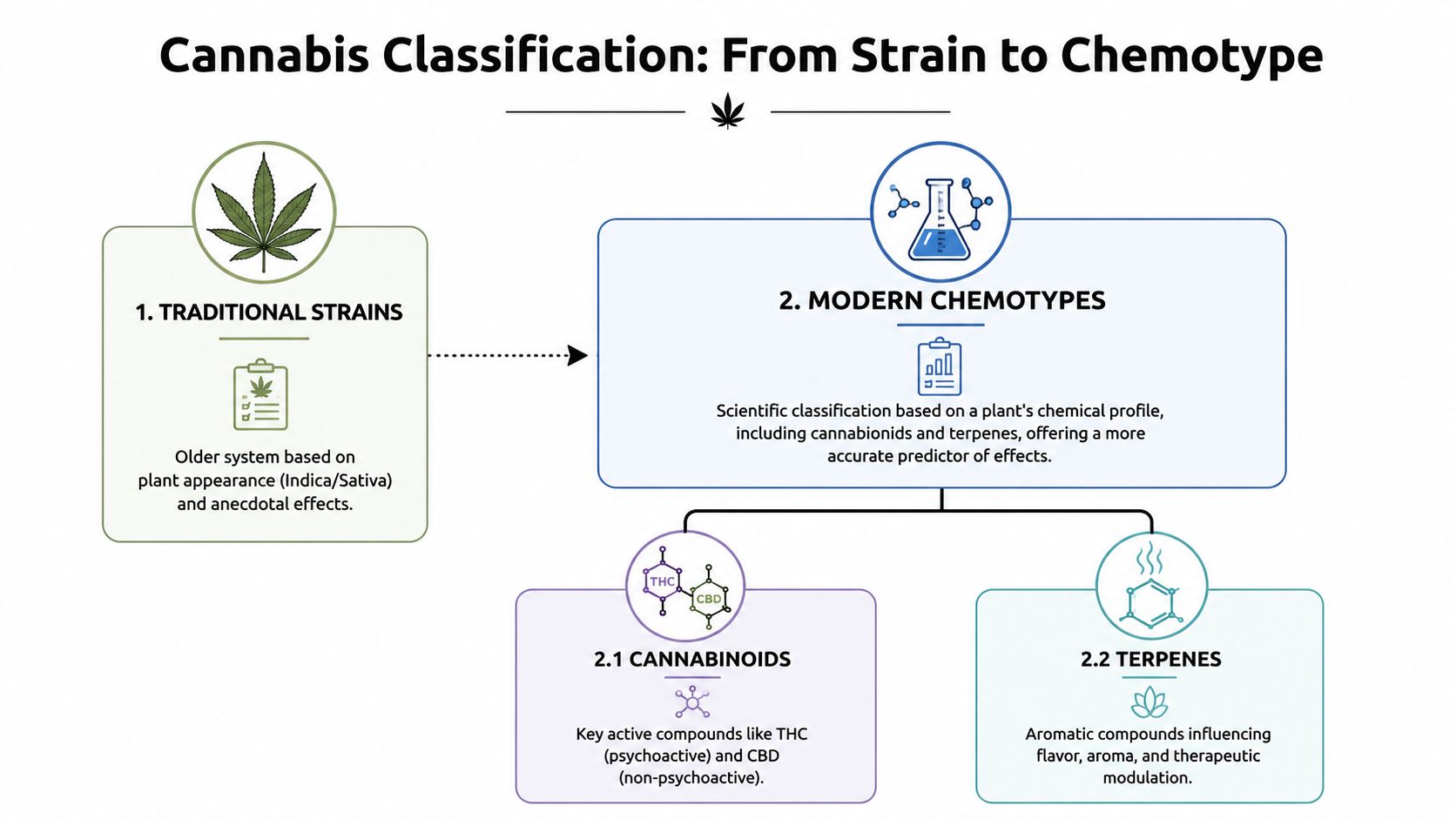
If the old labels are fuzzy, what should you use instead? Chemotypes, also called chemovars.
That sounds more technical than it is. It just means you classify a cultivar by its chemical profile, especially its THC to CBD ratio, instead of by leaf shape or old folklore about where the plant came from.
Why the chemotype model matters
Scientists have moved away from treating indica, sativa, and hybrid as reliable effect predictors. A 2022 study summary on cannabis classification states that the traditional classification is botanically inaccurate for predicting effects and found “no identifiable characteristics consistent with indica, sativa, or hybrid classifications” in determining user experience.
That's the big shift. If you want a better read on what a cultivar is likely to feel like, start with the cannabinoid ratio.
The three main chemotypes
The modern model is simple enough to use without needing a lab coat.
- Type I: High THC, low CBD. This is the category typically imagined when a stronger, more obvious vibe is desired.
- Type II: Balanced THC and CBD, often in a ratio like 1:1. These cultivars tend to land in a more moderate zone.
- Type III: High CBD, low THC. These are usually chosen for a clearer-headed experience with less intensity.
You can think of chemotypes as a better first filter than strain labels. If a cultivar is Type I, you already know you're in stronger territory than a Type II or Type III option. That helps whether you're shopping seeds, planning your jar rotation, or trying to avoid growing something that doesn't fit your preferences.
What this means in a seed catalog
When you scan a catalog, use this order:
- Start with chemotype
- Check growth pattern
- Look at terpene notes
- Then consider cultivar name and lineage
That order saves time. It also keeps you from buying a seed because the name sounds cool.
Grower shortcut: Chemotype tells you the likely intensity. Plant structure tells you whether it fits your tent.
There's another practical reason this model works better for hobby growers. It helps you compare very different cultivars on common ground. Two plants can both be called hybrids and still deliver very different experiences. But if one is Type I and the other is Type II, you've got a much clearer starting point.
If you only remember one thing from this section, remember this: the THC to CBD ratio is a more useful guide than the old indica versus sativa label when you're choosing cultivars for real-world growing and use.
Autoflower vs. Photoperiod: Which Seed Type is Right For You?
When you’re staring at a wall of seed options, one of the first and most important decisions you’ll face is whether to go with an autoflower or a photoperiod. This single choice dictates much of your growing journey, from your lighting schedule to how fast you'll see a harvest. Here at Botanist Seeds, all our seeds are feminized, so no matter which path you take, you're set up for a garden full of beautiful, budding plants.
So, what's the big difference? It all boils down to what triggers the plant to start making flowers.
Photoperiod plants are the classic style of cannabis. They rely on changes in the light cycle, just like they would in nature as the seasons change. As the grower, you play the role of Mother Nature. You keep your lights on for 18 hours a day during the vegetative growth phase and then, when you're ready, you switch them to a 12/12 schedule (12 hours on, 12 hours off) to kickstart the flowering stage.
Autoflowers, on the other hand, are the brilliant oddballs of the cannabis world. They operate on their own internal clock and will start to flower automatically after just a few weeks of life, regardless of how much light they get. This unique trait makes them incredibly fast and refreshingly simple to grow.
The Case for Photoperiod Seeds
Think of growing a photoperiod cultivar like driving a manual car. You have complete control over the machine, and that control is deeply rewarding. Since you decide exactly when to initiate flowering, you can let your plant stay in its vegetative state for as long as you need. This is a massive plus if your goal is to grow absolute monsters with the largest possible yields.
That extended veg time also opens the door to advanced training techniques. You can top, bend, and shape your plant to create a perfectly even canopy, ensuring every bud site gets drenched in light. For growers who have a dedicated space and truly want to master the craft, photoperiods offer an unmatched level of hands-on engagement.
The main advantage of photoperiod plants is control. You dictate the plant's size and structure before flipping it to flower, which is perfect for maximizing yield in a dedicated grow space.
Curious to see what’s possible? Feel free to browse our hand-picked collection of premium photoperiod cultivars and find your next project.
The Simplicity of Autoflower Seeds
If photoperiods are the classic manual-shift car, autoflowers are the sleek, modern automatic. They are the definition of "set it and forget it" growing. Because they flower based on age, not light, they remove a huge layer of complexity from the process. This makes them a fantastic choice for first-time growers or anyone juggling a busy schedule.
The biggest appeal of autoflowers is, without a doubt, their speed. Many autoflower cultivars can race from seed to harvest in as little as 8 to 10 weeks. That incredible turnaround means you can potentially squeeze multiple harvests into a single outdoor season, something that's much tougher with photoperiods. They also naturally stay smaller and more compact, which is perfect for:
- Stealthy Grows: Ideal for balconies, small tents, or even a discreet "space bucket" setup.
- Beginner Growers: A simple light schedule (usually 18-20 hours from start to finish) removes a major hurdle.
- Perpetual Harvests: Their quick life cycle lets you constantly pop new seeds for a never-ending supply.
Autoflower vs. Photoperiod At a Glance
To help you decide, here’s a quick side-by-side comparison of the two seed types.
| Feature | Autoflower Seeds | Photoperiod Seeds |
|---|---|---|
| Flowering Trigger | Age (Automatic) | Light Cycle Change (Manual) |
| Speed to Harvest | Very Fast (8-10 weeks) | Slower (Depends on veg time) |
| Overall Size | Small and compact | Can become very large |
| Yield Potential | Moderate | Potentially massive |
| Difficulty | Beginner-friendly | Intermediate; more control |
| Training Potential | Limited (due to speed) | Excellent; can handle stress |
| Light Schedule | Simple (e.g., 18/6 start to finish) | Requires change to 12/12 |
Ultimately, there's no "better" choice: only the right choice for your specific goals, space, and experience level.
No matter which you pick, the final profile of your plant: its potency, aroma, and vibe: is determined by its genetics. This visual guide can help you connect a plant's physical traits to its potential experience.
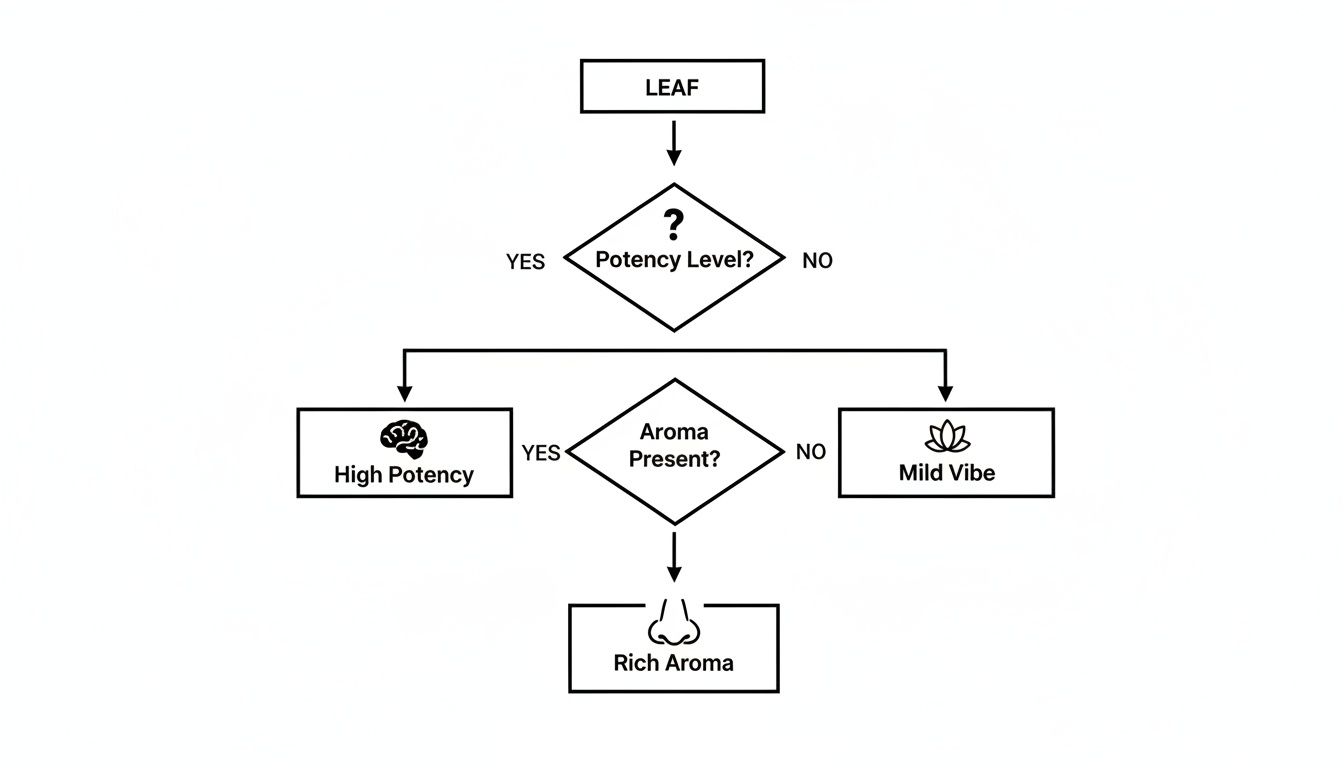
Think of this flowchart as a way to visualize your destination. Whether you get there in a fast-and-easy autoflower or a high-performance photoperiod is all part of the fun of the journey.
Finding the Right Cultivar for Your Setup
So, how do you put all this information to work? The real trick to choosing the right cultivar isn't about finding some mythical "best" strain. It's about finding the one that fits seamlessly into your specific growing conditions and your lifestyle.
Think of it like a puzzle. You now have all the pieces: you know how different cannabis types grow, the fundamental choice between autoflower and photoperiod, and how cannabinoids and terpenes shape the final experience. The next step is simply fitting those pieces together to create a picture of your perfect grow.
Scenario One: The Balcony Grower
Let's imagine you're in an apartment with a decent balcony, and you're ready to try your hand at growing for the first time. Your top priorities are probably speed and discretion. You don't have room for a six-foot monster plant, and you'd rather your hobby not become the talk of the building.
- Seed Type: Autoflower is the clear winner here. Their naturally compact size is ideal for container growing on a balcony. Better yet, their rapid seed-to-harvest cycle means the entire project is done before it can attract unwanted attention.
- Cultivar Vibe: You’ll want to be mindful of the aroma. When you browse our cultivar descriptions, look for notes that are less overpowering. Something with a subtle fruity or floral scent is going to be a much safer bet than a classic, pungent skunk variety.
This approach lets you enjoy the satisfaction of your own harvest without the stress. It’s all about a small-scale, manageable operation that delivers big rewards.
Scenario Two: The Dedicated Hobbyist
Now, picture a different setup: you’ve cleared out a space in your basement for a dedicated grow tent. You have the equipment, the privacy, and the desire to really get into the craft. Your goal isn't just to grow something; it's to maximize your yield and produce buds that are better than anything you can buy.
This is where the practical benefits of home growing really shine. You're not just saving money on dispensary prices and taxes; you're taking full control of quality and cultivating a deeply satisfying skill.
For this kind of grow, your choices will be a world apart from the balcony grower's.
- Seed Type: Photoperiod seeds are your best bet. The control they offer is invaluable. You decide exactly how long the plant stays in its vegetative stage, allowing you to train it, fill out a trellis, and build a massive canopy that captures every possible photon from your light. The result? A much, much larger final yield.
- Cultivar Vibe: With a good carbon filter running, the sky's the limit. You can finally grow that intensely gassy, ultra-potent cultivar you love without worrying about the smell. Your choice can be based purely on the vibe you want, from a zesty, uplifting daytime smoke to a deep, earthy cultivar for winding down.
When you match the genetics to your environment, you set yourself up for success from day one. If you’re just starting your indoor journey and want some forgiving options, check out our guide on the easiest cultivars to grow indoors for some fantastic recommendations.
Ultimately, your own goals will point you to the right seeds. Are you after a quick and simple harvest, or a long-term project to perfect? Do you prefer a bright citrus aroma or a classic pine scent? Answering those questions is the surest way to find the perfect cultivar for you.
Frequently Asked Questions About Cannabis Types
Getting into the world of growing can feel like there's a mountain of information to learn. But don't worry: the fundamentals are actually pretty simple. Let's walk through some of the most common questions we hear, so you can start your first grow with confidence.
Is Sativa or Indica Better for a First-Time Grower?
New growers often get hung up on the classic Sativa vs. Indica debate, but here’s a little secret: for your first grow, it's not the most important question to ask. The reality is that almost everything on the market today is a hybrid, carefully bred for specific traits.
A much better question is, "Which plant is the most forgiving?" For that, the answer is almost always an autoflower cultivar. They are an absolute blessing for beginners.
- A Simple Timeline: Autoflowers operate on their own clock. They race from seed to harvest in just a few months, and you don't have to do a thing to trigger their flowering stage.
- Easy Lighting: Forget about complex light schedule changes. You can keep them on a simple, consistent light cycle from start to finish.
- Compact Size: They tend to stay small and manageable, which is perfect for a small grow tent or a discreet corner of a room.
When you're looking through the Botanist Seeds catalog, keep an eye out for cultivars described as "beginner-friendly" or "resilient." These plants have been bred to be tough. They can bounce back from common rookie mistakes, giving you a much-needed buffer as you find your green thumb.
What Does Feminized Seed Mean?
Think of feminized seeds as your secret weapon for a successful home grow. Here's why: only female cannabis plants produce the dense, cannabinoid-rich buds everyone is after.
Feminized seeds are specially bred so that up to 99.9% of the seeds grow into female plants. This takes almost all of the guesswork out of your grow.
For a home grower, this is huge. It means every plant you pour your time and energy into is going to be a producer. You get to skip the stressful part and focus on nurturing your plants all the way to a beautiful, resinous harvest. To make things as simple and rewarding as possible, every seed Botanist Seeds sells, photoperiod or autoflower, is feminized, so up to 99.9% of your plants should be bud-producers, backed by our 99.9% Feminized Guarantee.
How Much Does Aroma Matter When Choosing a Cultivar?
Aroma is a huge deal, for two very different reasons. The first is pure enjoyment. That amazing smell: whether it’s bright citrus, sweet berry, or funky earth: comes from the plant's terpenes, which also shape the final vibe. Picking a cultivar with a scent profile you genuinely love makes the whole experience, from tending the plant to enjoying the harvest, that much better.
The second reason is practicality, especially if you need to be discreet. Let's be frank: some cannabis plants can be incredibly loud during their flowering stage. That amazing pungent smell can easily fill a room or an entire apartment. If you’ve got a private space and a solid carbon filter, it's no problem. But if you’re trying to keep a low profile, it’s something you have to plan for.
If discretion is a top priority, you'll want to lean toward a lower-odor cultivar. We always include notes on a plant’s aroma intensity in our product descriptions to help you find a perfect match for your space and your lifestyle.
Why Should I Grow My Own Cannabis?
Growing your own is about so much more than just having a stash. It opens up a world of benefits you simply can't get from buying at a dispensary.
- Massive Cost Savings: The initial setup has a cost, but once you're up and running, growing your own cannabis is dramatically cheaper than buying it, especially when you factor in dispensary taxes.
- Total Quality Control: You are the master of your plant's destiny. You decide which nutrients to use (or not use), you control the environment, and you manage the crucial drying and curing process. The result is a clean, top-shelf product you can feel good about.
- Unbeatable Convenience: No more trips to the store, no more waiting in line, and no more disappointment when your favorite cultivar is sold out. Your personal supply is always right there at home.
Beyond all the practical perks, though, is the incredible satisfaction of it all. There is truly nothing like consuming a flower that you nurtured from a tiny seed. It transforms cannabis from a simple product you buy into a rewarding and engaging hobby.
Ready to start your own rewarding journey? The Botanist Seeds comparison tool makes it easy to find the perfect cultivar for your setup. Explore our premium feminized and autoflower seeds today!