Greenhouse Grow Weed: A Hobbyist’s Guide
If you’re reading this, there’s a good chance your indoor tent feels cramped, your power bill feels rude, or you’ve had enough of trying to force a plant that wants sunlight to live its whole life under fixtures and ducting. The other version of this problem is the fully outdoor grow, where the sun is free but the weather, bugs, and nosey eyes get a vote too.
That’s where a greenhouse starts to make a lot of sense.
For hobby growers, greenhouse grow weed sits in the sweet spot between control and simplicity. You still get the power of the sun, but you also get walls, a roof, airflow management, rain protection, privacy, and a much better shot at keeping your crop clean and consistent. If you want top-shelf flower without turning your backyard into a commercial HVAC project, this is the move.
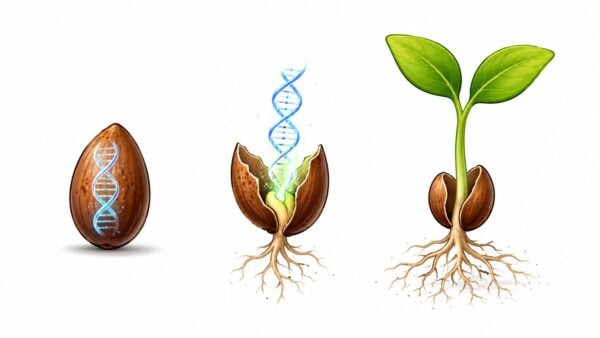
The trick is not just building a greenhouse and tossing plants in it. Success comes from matching the right feminized or autoflower cultivars to the light, heat, humidity, and seasonal swings your greenhouse provides. Most growers skip that part. Good growers don’t.
Why a Greenhouse is Your Smartest Upgrade
A lot of home growers hit the same wall. The tent worked great for a while. Then the plants got bigger, the training got tighter, the dehumidifier started running nonstop, and every upgrade led to another upgrade. At some point, you realize you’re spending a lot of effort recreating what the sun already does well.
That shift isn’t just a hobbyist thing. Commercial cultivators have been moving the same direction. Greenhouse-only operations rose from 4% in 2016 to 12% in 2020, while indoor-only grows fell from 80% to 60%, according to Cannabis Business Times on cultivation trends. That tells you something simple: once growers understand the trade-offs, many of them stop chasing a warehouse model.
What a greenhouse does better
A greenhouse gives you a few major advantages that matter fast at home scale:
- More usable space: Plants can spread naturally, and you’re not trying to fold every branch into a tiny footprint.
- Better sunlight quality: The sun still beats most artificial setups for broad-spectrum intensity and plant structure.
- Weather buffering: Wind, heavy rain, and cold nights don’t hit your plants the same way.
- Less daily friction: You’re not managing every photon and every degree from scratch.
What it does not solve by itself
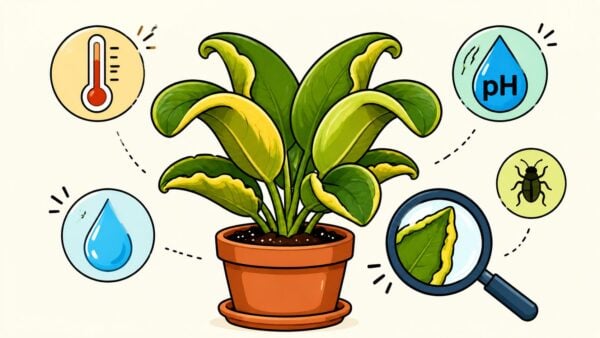
A greenhouse is not magic. It can still get too hot. Humidity can stack up fast. Bad genetics still disappoint. Weak airflow still invites powdery mildew. If you ignore plant spacing, the greenhouse will punish you politely at first, then all at once near finish.
Practical rule: A greenhouse is a control tool, not a shortcut. It rewards growers who keep things simple and pay attention.
For a hobbyist, that’s the best part. You can build a setup that feels manageable, not industrial. You get room to grow your own stash, skip dispensary lines, avoid retail taxes, and enjoy that quiet flex of smoking flower you raised yourself. That’s hard to beat.
Planning Your Greenhouse Grow Space
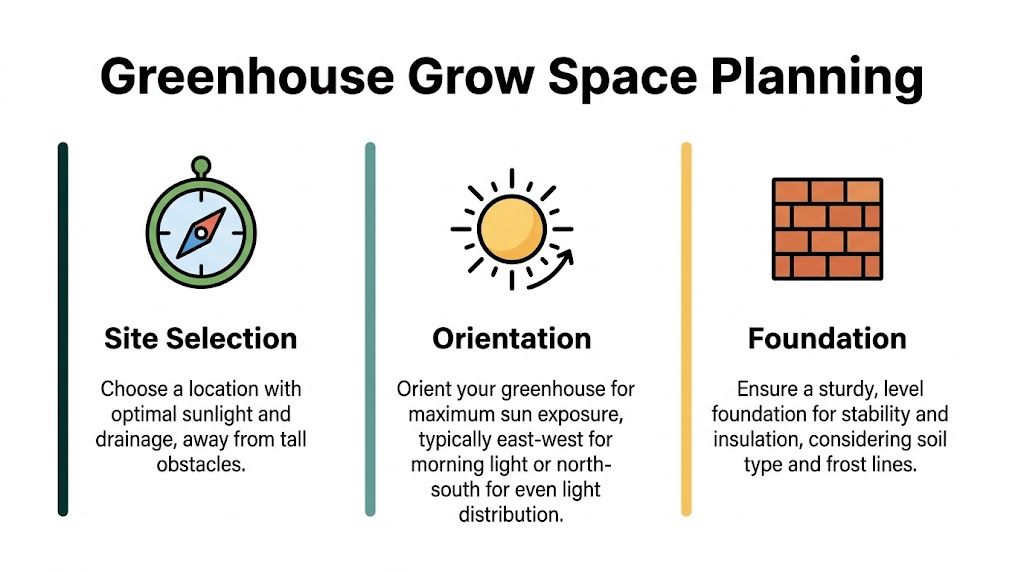
The first decision isn’t what greenhouse to buy. It’s where the thing will sit, how easy it will be to work in, and whether the spot helps you or fights you every day. A bad location turns even a nice structure into a hassle.
Start with the ground, not the catalog
A strong hobby greenhouse site checks a few boring boxes. Boring matters here.
- Sunlight first: Watch where the sun hits in the morning, midday, and late afternoon.
- Drainage matters: If water pools after rain, your greenhouse floor will stay damp and annoying.
- Access counts: You want easy water access, simple power access if needed, and a path you can walk with pots, soil, and tools.
- Privacy helps: Not because you’re paranoid, but because discretion reduces drama.
If you have to choose, pick the spot with better sun and airflow over the spot that’s most convenient to look at from the kitchen window.
Pick a structure that matches your habits
Most home growers end up choosing between a simple hoop style setup, a polycarbonate greenhouse, or a glass structure. Each one can work. The right choice depends less on bragging rights and more on how often you’re willing to maintain it.
Here’s the practical version:
| Structure type | Best fit | Trade-off |
|---|---|---|
| Hoop house film | Budget-minded growers who want seasonal flexibility | Less durable, more affected by wear |
| Polycarbonate panels | Hobbyists who want a solid middle ground | Costs more than film, but usually easier to live with long term |
| Glass greenhouse | Growers who care most about aesthetics and longevity | Heavier, pricier, and less forgiving to install |
There’s a real information gap here for home growers. Most greenhouse content talks about the benefits but doesn’t give hobbyists much usable ROI guidance, even though experts note that proper design can keep production costs low, as discussed by AgriPlastics Community on cannabis cultivation under cover. So the honest answer is this: build the nicest greenhouse you can maintain comfortably, not the fanciest one you can barely afford.
A greenhouse that goes up cleanly and gets used every day beats a dream build that stalls halfway through.
A few design choices that pay off
You don’t need a spaceship. You do need some common sense.
Consider these non-glamorous upgrades:
- Roof venting: Heat has to leave somehow.
- Screened intake points: Airflow matters, but so does keeping pests from getting a free invitation.
- A level foundation: Doors work better, benches sit flat, and water behaves more predictably.
- Enough headroom: Cannabis stretches. You want vertical room before flower reminds you.
Legal and safety basics
Check your local rules before you build. Not after the frame is up.
Then handle the boring safety stuff properly:
- Use outdoor-rated electrical gear if you’re running fans, lights, or timers.
- Keep water and power separated with intention, not hope.
- Lock the space if your area requires secure cultivation.
- Respect neighbors with odor management, visual screening, and clean upkeep.
A tidy greenhouse gets fewer questions. A sloppy one gets remembered.
Matching Genetics to Your Greenhouse
Many greenhouse growers leave quality on the table. They obsess over fans, covers, and fertilizers, then run whatever seeds happened to be in the drawer. That’s backwards.
Your greenhouse has its own personality. It might run humid in the morning, hot after lunch, and cooler at night. Light intensity changes with season, cloud cover, panel material, and your yard. Some cultivars love that. Some absolutely do not.
Not every cultivar likes greenhouse life
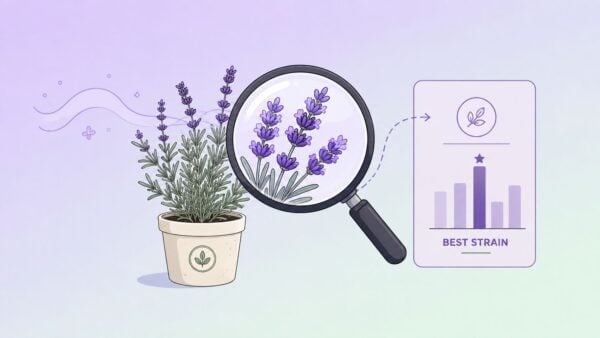
Many grow guides give broad environmental targets, but they don’t say much about how different cultivars respond to greenhouse conditions. That gap is real. Greenhouse Grower notes that some varieties thrive on higher light levels while others don’t, yet growers still get very little guidance on choosing genetics specifically for greenhouse conditions.
That matters because a greenhouse is semi-controlled, not fully controlled. You’re not running a sealed room where every variable gets pinned down all day. Your genetics need to cooperate with that reality.
Traits worth chasing
For hobby-scale greenhouse success, I’d prioritize traits over hype.
Look for cultivars with:
- Good mold resistance: Greenhouses can trap humidity, especially in thick late flower.
- Solid branch strength: Sun-grown plants can stack big and lean hard.
- Reasonable flowering time: Shorter-finishing cultivars reduce risk when weather turns sloppy.
- Open plant structure: Air moves better through plants that don’t form a dense hedge.
- Stress tolerance: Small swings in temperature or humidity shouldn’t wreck the run.
If your greenhouse runs hot, avoid cultivars known for getting finicky under intense light and heat. If your area gets damp late in the season, don’t fill the house with chunky, tight-flowered plants that hate moisture.
Feminized or autoflower
Both can work beautifully in a greenhouse. They just solve different problems.
Feminized photoperiod cultivars fit growers who want bigger plants, more training time, and stronger control over shape before flowering. They’re great when you have enough season and enough vertical room.
Autoflower cultivars fit growers who want speed, simplicity, and a lighter management load. They’re especially useful if your local weather gets ugly at the back end of the season, or if you want staggered harvests without running blackout systems.
For growers comparing plant types and overall growth tendencies, this guide on indica vs sativa vs hybrid is useful as a starting point. Just don’t stop at labels. In a greenhouse, structure and resilience often matter more than category.
The best greenhouse cultivar isn’t always the loudest one on paper. It’s the one that still looks happy after a weird week of weather.
Match the plant to your actual setup
A short greenhouse with limited airflow calls for different genetics than a tall, well-vented structure with aggressive circulation. Be honest about your space.
If your setup is modest, aim for cultivars that are:
- easy to shape,
- forgiving under variable humidity,
- not too leafy,
- and not too slow to finish.
That choice alone saves more headaches than most gadgets.
Managing Greenhouse Light Air and Temperature
By noon, a hobby greenhouse can swing from perfect to punishing. The plants looked happy over coffee. Two hours later the leaf edges are praying too hard, the air feels swampy, and the corners of the house have gone still. That daily swing is the main challenge in greenhouse growing.
Use the sun first, then correct what your greenhouse lacks
A greenhouse works best when sunlight carries the crop and your equipment smooths out the weak spots. The power savings are real. The Northwest Power and Conservation Council cannabis energy report found greenhouse facilities use far less electricity per square foot than indoor-only grows, especially for lighting.
That matters for hobby growers because it changes how you should build the room. A dim northern site, a cloudy coastal climate, and a bright high-desert yard do not need the same genetics or the same lighting plan. Fast autos can finish beautifully in a greenhouse that gets strong summer light but has rough fall weather. Longer-running feminized photoperiod plants usually need steadier day length and more consistent late-season conditions.
Supplemental light helps in four common situations:
- starting seedlings without stretch,
- carrying plants through long cloudy runs,
- extending day length for photoperiod veg,
- and adding consistency during spring or fall transitions.
Indoor habits can still help, but the goal is different here. You are not trying to replace the sun. You are filling holes in your local light pattern. If you want a quick comparison of fixture types and output, this guide to lighting for growing cannabis indoors gives useful background before you scale those ideas down for a greenhouse.
Air movement fixes more problems than growers expect
Heat is only half the issue. Stale, wet air is what usually starts the slide toward weak transpiration, soft growth, and mold pressure.
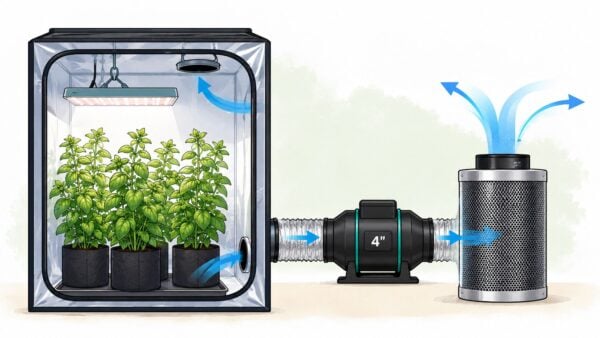
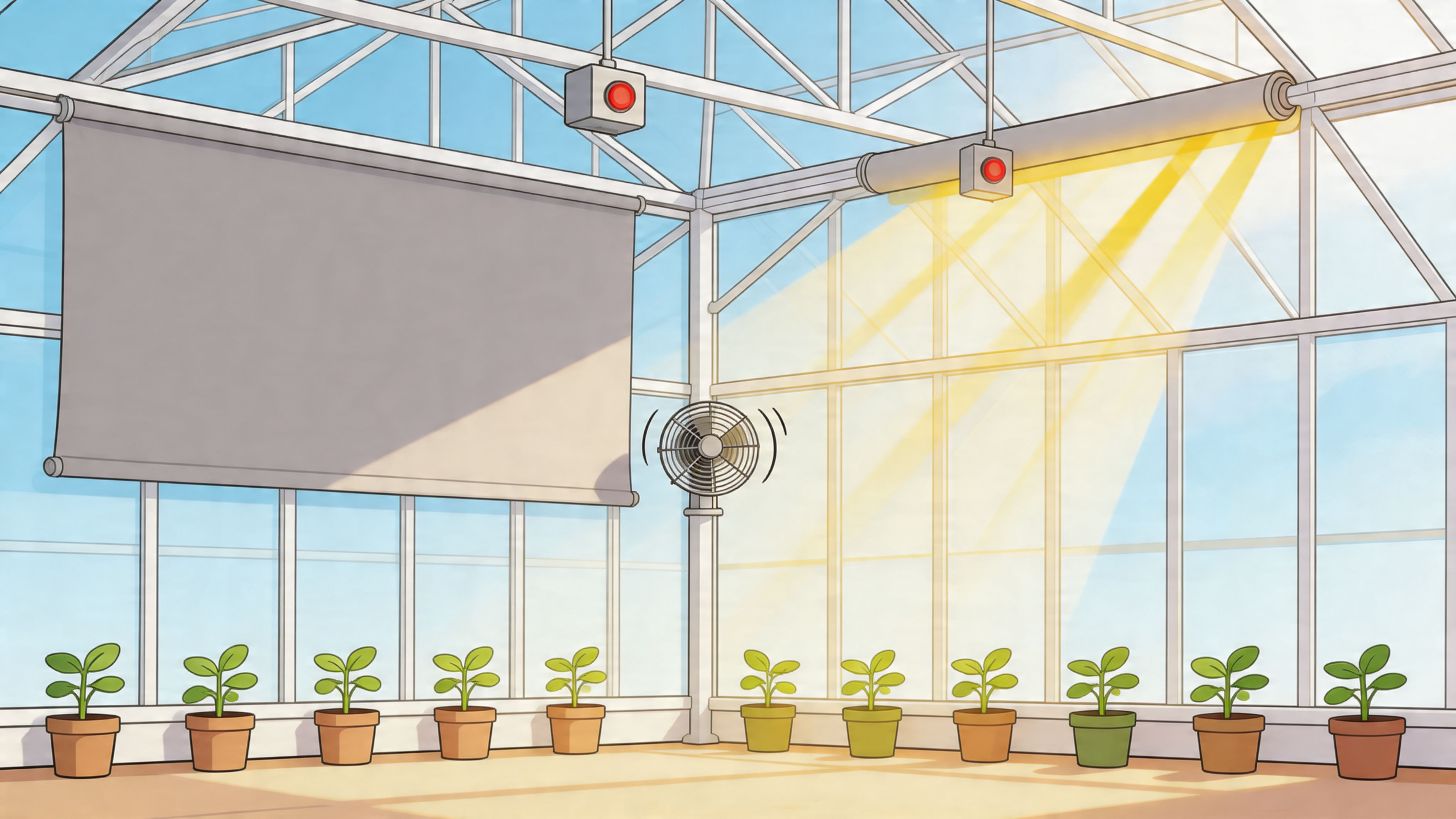
Set the house up so air travels. Exhaust fans belong high, where the hottest air collects. Fresh intake should come in low. Circulation fans should keep the canopy gently moving, not getting blasted from one side. Shade cloth earns its keep during harsh summer stretches, especially if your greenhouse skin holds heat.
A simple check works every day. Walk into the greenhouse and stand still for ten seconds. If it feels muggy, flat, or hotter above shoulder height, the plants are sitting in worse conditions than you are.
Track temperature and humidity together
Temperature by itself can fool you. So can humidity. Plants respond to the combination.
That is why growers use vapor pressure deficit, or VPD, as a working target. The practical version is straightforward. Air that is too wet slows transpiration and leaves the canopy heavy. Air that is too dry pushes plants to drink hard and can stress them fast during hot afternoons.
For flowering cannabis, the University of Vermont Extension notes that a VPD range around 0.8 to 1.2 kPa is a solid target for production, with greenhouse temperatures managed to avoid excessive heat stress in the canopy, as outlined in its guidance on cannabis cultivation and environmental management. Use that range as a reference point, not a religion. A small hobby house will drift. The goal is to keep those swings modest and predictable.
Genetics prove more critical than many guides suggest. A dense, broad-leafed feminized cultivar with tight internodes often needs drier air and stronger circulation in flower than a lighter, more open auto. Matching the cultivar to the way your greenhouse holds heat and moisture saves more crop quality than chasing perfect numbers on a meter.
Light control changes the crop schedule
Photoperiod plants give you two clean options. Let the natural season trigger flower, or use blackout covers to force an earlier cycle.
Natural flowering is simpler and usually suits hobby growers who want less daily labor. Light deprivation gives more control and can help you finish before ugly fall weather, but it only works if the schedule stays consistent. Missed cover times or light leaks can confuse the plants and cost you uniformity.
Autos sidestep that whole issue. In a greenhouse with uneven shoulder-season light or a short outdoor window, they are often the easier path to clean, early harvests.
Keep the routine repeatable
A fancy control package is nice. A repeatable daily check is better.
| Time of day | What to check | Why it matters |
|---|---|---|
| Morning | Condensation, overnight humidity, damp corners | Moisture lingering from the night is often the first warning sign |
| Midday | Heat buildup, venting, fan movement, leaf posture | Problems usually show up here before they show anywhere else |
| Evening | Air exchange, standing humidity, cooling pace | A wet greenhouse going into the night invites disease pressure |
The best greenhouse climate strategy is one you can maintain through the whole run. Consistent ventilation, sensible shading, and genetics that fit your light and weather will beat an overbuilt system you only half manage.
Training Your Plants for Bigger Harvests
You walk into the greenhouse in late flower and one plant has turned into a seven-foot spear. The top looks great. The lower half is larf, the middle is sticky and hard to reach, and airflow through the center is lousy. That plant had plenty of vigor. It just was not trained to fit the space.
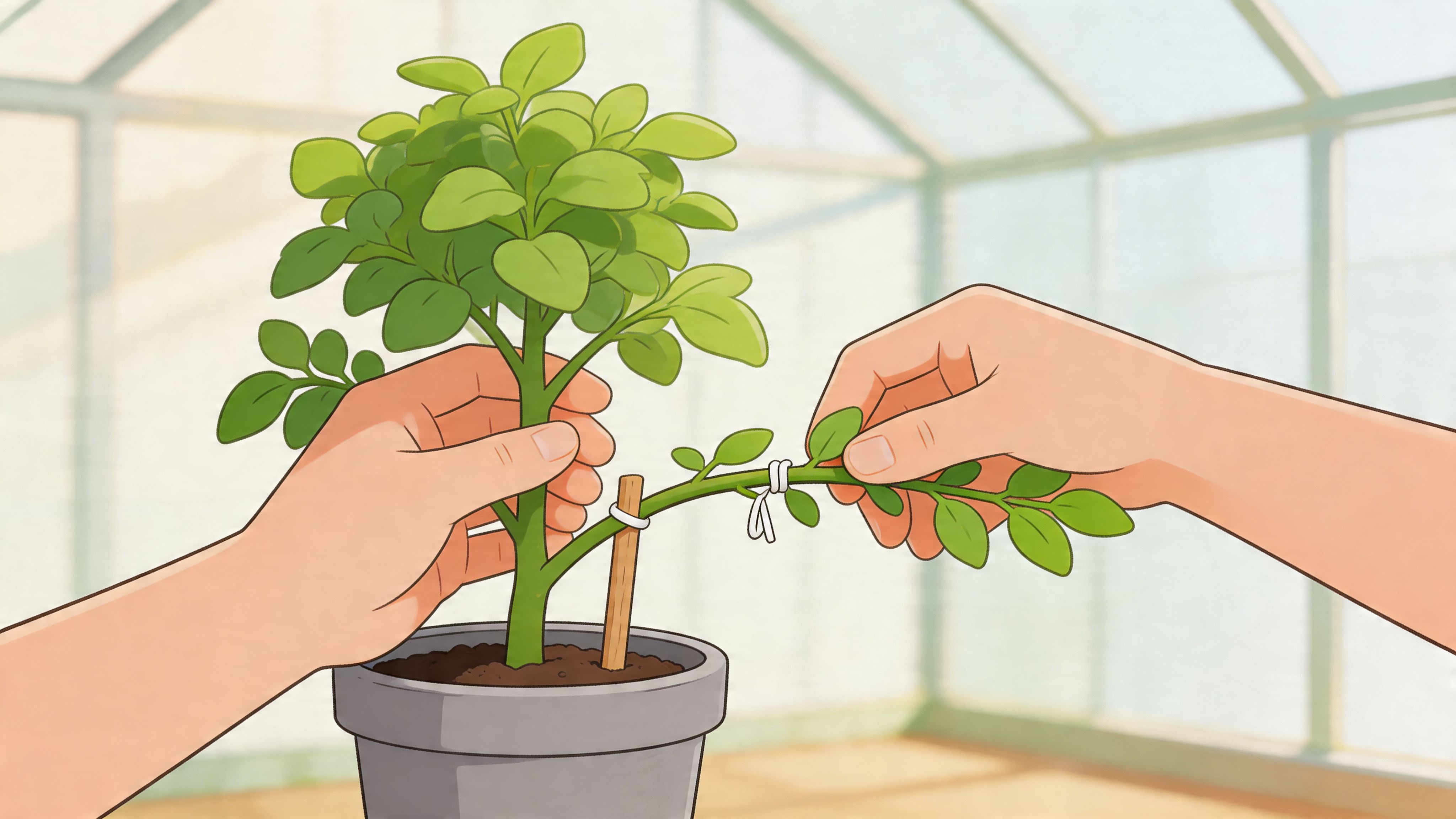
Greenhouse training is about matching plant shape to the way your structure receives sun. Light shifts across the house all day, and that changes what a productive canopy looks like. For hobby growers chasing top-shelf flower, genetics and training need to agree. A stretchy photoperiod that wants to run tall needs a different plan than a compact auto that finishes fast before weather turns.
Build a canopy your greenhouse can light
A broad, even canopy usually outperforms a tall central cola with a shaded interior. More tops sit in usable light. The lower plant stays cleaner. Support is easier once flowers start stacking weight.
The basic tools are simple:
- Topping: Breaks apical dominance and creates more main sites.
- Low-stress training: Pulls branches outward so light reaches more of the plant.
- Trellising or scrogging: Holds the canopy flat and stops heavy branches from folding late in flower.
- Selective defoliation: Clears crowded interior leaves so air can move through the plant.
Use the method that fits the cultivar, not the one that looks coolest on social media.
Autos need a lighter hand because their clock keeps running. Start early, bend gently, and avoid any recovery-heavy work once they are pushing hard. If you want a clean walkthrough, this guide on low stress training for autoflower plants covers the timing well.
Photoperiod plants give you more room to shape structure, so they are often the better choice if your greenhouse has good height, stable season length, and enough room to veg into a screen. Autos make more sense in smaller houses, mixed-light conditions, or short outdoor windows where a fast finish matters more than maximum plant size.
Spacing controls yield quality and workload
Training falls apart if the greenhouse is packed too tight. You are not just managing plant count. You are managing how much healthy canopy your light, airflow, and daily labor can support.
I would rather run fewer plants with room to spread than fight a crowded house full of weak lowers and damp interior growth. Hobby growers often overpack early because empty floor space feels wasteful. Then the branches meet, the middle turns messy, and every job takes twice as long.
Here’s the practical read:
| Density choice | What happens |
|---|---|
| Too sparse | Light hits the floor, canopy takes longer to fill, and total output suffers |
| Balanced | Strong lateral growth, better airflow, cleaner lowers, easier pruning and watering |
| Too dense | Branches compete for light, humidity hangs in the center, and disease pressure climbs fast |
The right spacing depends on genetics as much as greenhouse size. A squat indica-leaning feminized plant can be vegged and spread differently from a lanky sativa-leaning one. Compact autos can work at tighter spacing, but only if each plant still gets direct light across the top and enough air around the sides. That match between cultivar and structure is what separates a productive hobby greenhouse from a crowded one that only looks full.
Count productive tops and clean airflow, not just how many pots you can squeeze inside.
A practical training demo helps if you're visual. Watch this before your next round of topping and tie-downs.
Keep the plants that fit the house
A greenhouse is one of the best places to see which genetics really earn their footprint. Some plants handle shifting sun, warm afternoons, and cool nights without much fuss. Others look promising early, then stretch too hard, trap moisture, or build a shape that fights your training plan the whole run.
Watch for branch spacing, response to topping or tie-downs, resistance to moisture problems, and how evenly the plant finishes across the canopy. The keeper is often the plant that trains cleanly, stays healthy in your local conditions, and delivers dense, easy-to-trim flower from top to bottom.
Everyday Care and Pest Prevention
Greenhouse growing rewards consistency more than heroics. You don’t need a complicated daily ritual. You need a short list of habits that keep plants steady and prevent small issues from turning into messes.
Water to the weather
One of the biggest mistakes in a greenhouse is watering by calendar instead of conditions. A bright, dry day can push uptake hard. A cool, cloudy stretch can leave pots wet longer than you expect.
A few habits keep this under control:
- Lift pots before watering: Weight tells you more than guesswork.
- Check root zone moisture, not just surface dryness: The top can look dry while the pot is still holding plenty.
- Water early when possible: Plants use it better, and the greenhouse has time to dry out before night.
- Adjust with the forecast: If a cool spell is coming, back off a bit.
If you’re hand watering, stay observant. If you’re using drip irrigation, stay even more observant. Automation saves time, but it can also automate mistakes.
Feed the plant in front of you
A greenhouse doesn’t always drive plants the same way an indoor room does, so rigid feeding charts can mislead people. Sun intensity changes. Temperature changes. Root activity changes.
That means the smarter move is to read the plant:
- pale new growth,
- heavy clawing,
- lazy leaves,
- burnt tips,
- weak lateral growth,
- or sudden dark green excess.
Those signals matter more than loyalty to a bottle schedule. Keep notes, change one thing at a time, and let the plants tell you whether you got it right.
Healthy greenhouse plants rarely need dramatic correction. They need small, timely adjustments.
IPM is mostly housekeeping with good timing
Integrated Pest Management sounds fancy, but for a hobby grower it mostly means making your greenhouse a harder place for pests and disease to settle in.
The best habits are basic:
- Keep dead leaves off the floor
- Clean up spills and runoff
- Don’t let weeds grow around the greenhouse
- Inspect the undersides of leaves regularly
- Quarantine anything new before it joins the room
- Maintain airflow through and under the canopy
Spider mites, fungus gnats, aphids, and powdery mildew all love a greenhouse that stays damp, crowded, and dirty. They struggle more in a space that gets regular inspection and consistent air movement.
A weekly rhythm that works
A simple routine keeps problems visible.
Early week
- Walk every plant slowly.
- Check leaf backs, branch junctions, and lower growth.
- Remove dead or damaged material.
Midweek
- Confirm fans, vents, and irrigation are behaving.
- Re-tie branches that are drifting into crowded zones.
- Thin a few leaves if the center is closing up.
Weekend
- Clean surfaces and tools.
- Reset the floor area.
- Review notes on drinking rate, growth speed, and any odd plant behavior.
Prevention beats rescue
Most greenhouse disasters don’t arrive out of nowhere. They build gradually through skipped checks, stale air, wet floors, and overgrown plants. Once pests or mildew really establish themselves, every response becomes more annoying, more expensive, and less effective.
For hobby growers, the edge is attention. You’re not managing acres. You’re managing a contained space. Use that to your advantage and stay a half step ahead.
Harvesting and Curing Your Greenhouse Crop
A greenhouse can grow excellent flower, but the finish still decides the quality. Plenty of growers do the hard part well, then rush harvest, overdry the buds, or try to dry inside the greenhouse where conditions swing too much. That’s how nice flower turns average.
Cut based on maturity, not impatience
Harvest timing starts with trichomes and overall plant finish. Look closely at the resin heads, not just the pistils. Pistils can mislead you. Trichomes tell the better story.
You’re looking for a plant that appears finished as a whole:
- swollen calyxes,
- a slower water demand,
- fading fan leaves,
- and trichomes that show the ripeness you want.
Use a jeweler’s loupe or handheld microscope and check more than one part of the plant. Tops can ripen earlier than lowers.
If you harvest because you’re tired of waiting, you usually leave quality behind.
Don’t dry in the greenhouse unless conditions are unusually stable
This is the part many greenhouse growers learn the hard way. The greenhouse that helped you grow the crop often isn’t the right place to dry it. Daytime heat, morning humidity, and temperature swings can flatten aroma and make the dry uneven.
A better setup is a separate dark space with controlled airflow and steady conditions. Keep air moving gently, not blasting directly at hanging branches or drying racks. Slow and even wins.
Trimming and hanging
Some growers wet trim. Some dry trim. Both can work. The better choice depends on your climate and how dense your flowers are.
A practical harvest flow looks like this:
- Cut manageable branches, not the whole plant in one chaotic heap.
- Remove large fan leaves right away.
- Sort by size and density so the dry stays more even.
- Hang with space between branches so moisture can leave cleanly.
- Keep the room dark and avoid handling buds more than necessary.
If your greenhouse flowers are especially chunky, leave yourself extra room between hanging branches. Dense flower traps moisture longer.
Curing is where the flower gets its polish
Once the outside of the buds feels dry and the smaller stems begin to snap rather than fold, move into jars. Glass works well because it’s easy to monitor and easy to burp.
The first stage of curing is about moisture equalizing from the center of the buds outward. That means you need to check jars regularly. If buds feel too wet after jarring, pull them back out for more drying time rather than hoping the problem solves itself.
A clean cure routine:
- Fill jars loosely, not packed tight.
- Store them in a cool, dark place.
- Open them regularly early on to release built-up moisture.
- Watch aroma closely. Fresh plant smell should gradually shift toward the cultivar’s real profile.
What greenhouse flower does especially well
When greenhouse weed is grown and finished properly, it often has a really nice balance. You get sun-driven structure and expression, but with more protection and control than a fully outdoor run. Aromas can come through beautifully, and well-managed plants often keep a natural look and resin character people love.
That’s the payoff. You built the space, picked smart cultivars, shaped the canopy, kept the air moving, stayed ahead of problems, and brought it home without rushing the last step. That’s the kind of grow that makes you want to start planning the next round before the jars are even full.
If you’re ready to pick cultivars that fit your greenhouse instead of guessing, take a look at Botanist Seeds. Their catalog makes it easier to compare feminized and autoflower options, narrow down growth traits, and find genetics that match the way you really grow at home.