Platinum OG Strain: Your Guide to This Heavy Hitter
You've probably been there. You finish a decent home run with a forgiving cultivar, the jars look good, and then you start thinking about what to grow next. Not something trendy for a month. Something classic. Something with real bag appeal, strong resin, and that old-school OG reputation that still gets growers interested.
Ready to grow it yourself? Shop Platinum OG seeds at Botanist Seeds.
That's where Platinum OG seeds usually enter the conversation.
For a home grower, this cultivar makes sense for a pretty simple reason. It has a reputation for frosty flower, strong potency, and a growth style that rewards careful growers. If you like the idea of skipping dispensary lines, keeping more money in your pocket, and pulling a top-shelf evening flower out of your own curing jars, Platinum OG is an easy one to shortlist.
It's not a throw-anything-at-it cultivar. It likes a steady environment and it pays you back when you give it one. That trade-off is part of the appeal. You're not growing this one because it's weird or flashy. You're growing it because you want a known heavy hitter with classic OG character and the kind of resin coverage that makes trimming feel worth it.
Practical rule: Platinum OG is a better pick for growers who want quality first, not just the biggest pile of flower possible.
So You're Thinking About Growing Platinum OG
If you're researching Platinum OG seeds, chances are you already know what you want from your next run. You're not looking for a random mystery pack. You want a cultivar with a clear identity, a strong evening vibe, and flowers that look like they belong in the top shelf of your own stash drawer.
Platinum OG has that kind of reputation for a reason. It sits in the broader OG family that took off after OG Kush emerged in the 1990s, a period often treated as a major turning point in modern U.S. cannabis breeding, according to this history of OG strains and Platinum OG's rise. The same source notes Platinum OG became a staple in California dispensaries by the mid-2000s, won multiple Cannabis Cups in the early 2010s, and sold especially well on the West Coast, as well as in Colorado and Arizona.
That history matters because it tells you this isn't some random label slapped onto a seed listing. Platinum OG earned a place in grow rooms and dispensaries over time. Growers kept coming back to it because it hit the right mix of strong flower, dense resin, and familiar OG character.
Why home growers keep circling back to it
Some cultivars are fun experiments. Platinum OG is more of a purpose grow. People pick it when they want:
- Classic OG character: Earthy, pine-heavy, Kush-forward flower that feels familiar in the best way.
- Strong visual payoff: Dense buds with that frosted look growers love showing off after trim day.
- A satisfying homegrown upgrade: Fresh flower from your own jars usually beats standing in line and hoping the dispensary stock is still lively.
There's also a real pride factor here. Growing your own Platinum OG means you control the dry, the cure, and the handling. With a resin-heavy cultivar, that matters a lot. Rough trimming and sloppy drying can flatten what makes it special.
Who this cultivar fits best
Platinum OG usually fits growers who are comfortable paying attention. Not obsessing. Just paying attention.
It's a better match if you:
- Can keep your room steady: Big swings in heat and moisture don't help dense Kush flowers.
- Want an evening cultivar: This isn't usually the jar people reach for when they want a bright daytime vibe.
- Care about resin and finish quality: Platinum OG tends to attract growers who notice frost, aroma, and flower density before they talk about raw weight.
If that sounds like you, Platinum OG seeds are worth a serious look.
The Platinum OG Cultivar Profile
Platinum OG has the look and structure growers usually expect from old-school Kush stock. The commonly cited family line points back to Master Kush and OG Kush, with a third parent often listed less clearly. That tracks with how the plant tends to show up in the grow room. Shorter, sturdier, resin-heavy, and built more for dense flower than for huge stretch or exotic color.
For a home grower, that matters more than the label. You are usually working with a cultivar that rewards steady conditions, decent airflow, and a careful finish. If your setup runs hot, humid, or inconsistent, Platinum OG can still produce good flower, but it is less forgiving than looser, airier cultivars.

What the flower is like
The profile stays firmly in the Kush lane. Growers and reviewers usually describe Platinum OG with earthy, pine, fuel, and coffee-like notes, with myrcene often mentioned in this comparison of autoflower and feminized seeds and in broader strain writeups such as this Platinum OG terpene and flavor overview.
In plain terms, this is not a loud candy cultivar. It usually smells darker, heavier, and more old-school. The kind of flower that leaves a strong scent on your gloves after a trim session.
Why growers like the look so much
Platinum OG earned its name from bag appeal. Good expressions often finish with a frosted, pale look from heavy trichome coverage, and that visual payoff is a big reason home growers keep it in rotation.
There is a trade-off, though. Resin-rich flower looks great, but it also shows every rough handling mistake.
- Gentle harvest pays off: Squeezing and overhandling can flatten trichomes fast.
- Dense buds need a patient dry: Good airflow and a steady room help protect both aroma and finish.
- Plant selection should go beyond height: The keeper is usually the plant with stronger resin and smell, not the one that just stretched the most.
The best Platinum OG plants usually stand out on the rack before cure is finished.
The overall profile for home growers
Platinum OG fits growers who want a classic Kush result without getting pulled into inflated claims or strain mythology. The practical appeal is simple. Dense, frosty flower, familiar OG character, and a cultivar that makes sense in either feminized or autoflower form depending on how much control you want over the run.
It also helps to set expectations correctly. Platinum OG is usually chosen for quality, finish, and that heavy Kush character. Growers chasing the fastest recovery from mistakes or the biggest possible plant in a small tent often do better by choosing the right seed type first, then deciding whether this cultivar matches their setup.
Choosing Your Platinum OG Seeds Feminized or Autoflower
The confusing part about Platinum OG seeds isn't the name. It's that the same name can sit on very different seed listings. One pack might be built around a photoperiod feminized version. Another might be an autoflower. Both say Platinum OG, but they won't behave the same in your tent.
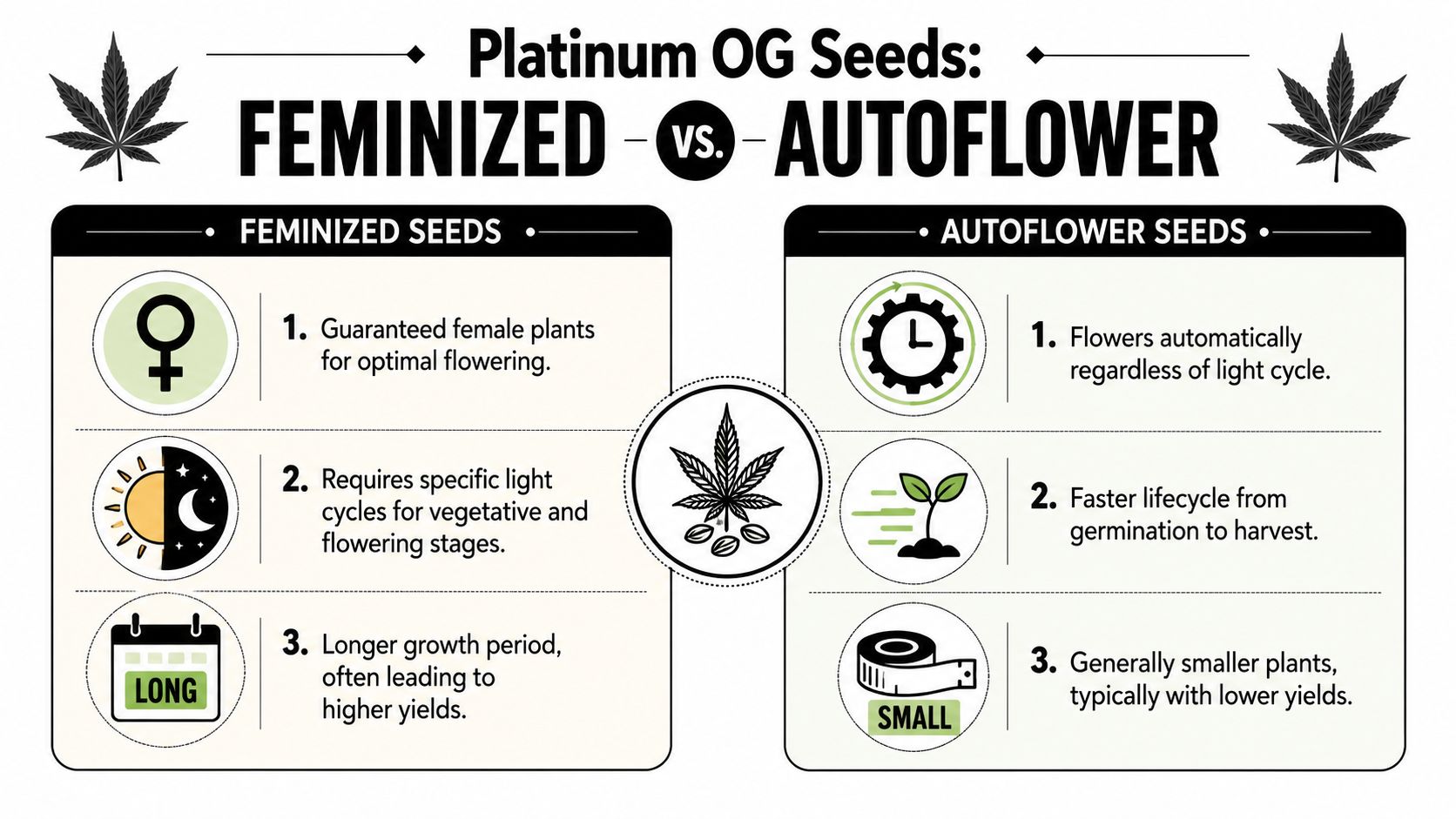
That difference matters. As noted in this guide to Platinum OG autoflower seed positioning, the choice between feminized and autoflower Platinum OG seeds materially changes plant size, timing, and yield expectations, and growers often aren't given enough clarity on how different those seed types can be across vendors.
The simple split
If you want a quick frame for it, use this:
| Seed type | Best for | Main trade-off |
|---|---|---|
| Feminized | Growers who want more control over plant size and training | Takes more time and planning |
| Autoflower | Growers who want speed and a simpler cycle | Usually less control over final size and recovery from mistakes |
If you want a broader breakdown of how the two categories differ, this guide on autoflower vs. feminized seeds is useful background.
When feminized Platinum OG makes more sense
Feminized Platinum OG seeds are usually the better call if you like steering the plant instead of just riding along with it. You control how long it stays in veg. You can shape the canopy, manage size, and give the plant more time to fill the space if your setup allows for it.
That usually suits growers who:
- Have a dedicated indoor space: A tent or room where light schedule changes are easy to manage.
- Like training plants: Topping, low-stress training, and canopy shaping are easier when the plant isn't racing through a fixed life cycle.
- Prefer flexibility: If a plant needs another week to fill out before flower, you can give it that.
For a cultivar like Platinum OG, that extra control can be a real advantage. Dense OG-style plants often reward growers who keep the canopy even and don't let the center of the plant turn into a crowded mess.
When autoflower Platinum OG is the better move
Autoflower Platinum OG seeds fit a different kind of grower. If your main goal is a no-fuss run in a smaller space, autos can be a great fit. They flower on their own, which removes one of the biggest timing decisions from the process.
Autoflowers are often a better match when:
- Space is tight: Smaller tents, closet grows, and discreet setups benefit from compact plants.
- You want a faster turnaround: Great for growers who value convenience and don't want to babysit a long veg period.
- You'd rather keep things simple: Less schedule management, less tinkering.
The trade-off is that autos don't give you much time to correct slow starts. If you stunt an autoflower early, it usually doesn't wait around for you to fix it. With Platinum OG, which already isn't the highest-error-margin cultivar, that matters.
If your environment is dialed in and you like control, feminized usually makes more sense. If your priority is simplicity and speed, autoflower is often the cleaner fit.
The real buying question
Don't ask, “Which one is better?”
Ask:
- How much room do I have?
- Do I enjoy training and managing timing, or do I want an easier run?
- Am I chasing maximum control, or a straightforward harvest?
That's how you choose the right Platinum OG seeds for your setup, not somebody else's.
A Home Growers Guide to Cultivating Platinum OG
Platinum OG can reward a careful grower, but it doesn't love sloppy conditions. This cultivar is consistently described as an indica-dominant hybrid with a relatively fast about 8 to 10 week flowering window, and it performs best when the room stays stable, according to this Platinum OG grow guide from Strainpedia.
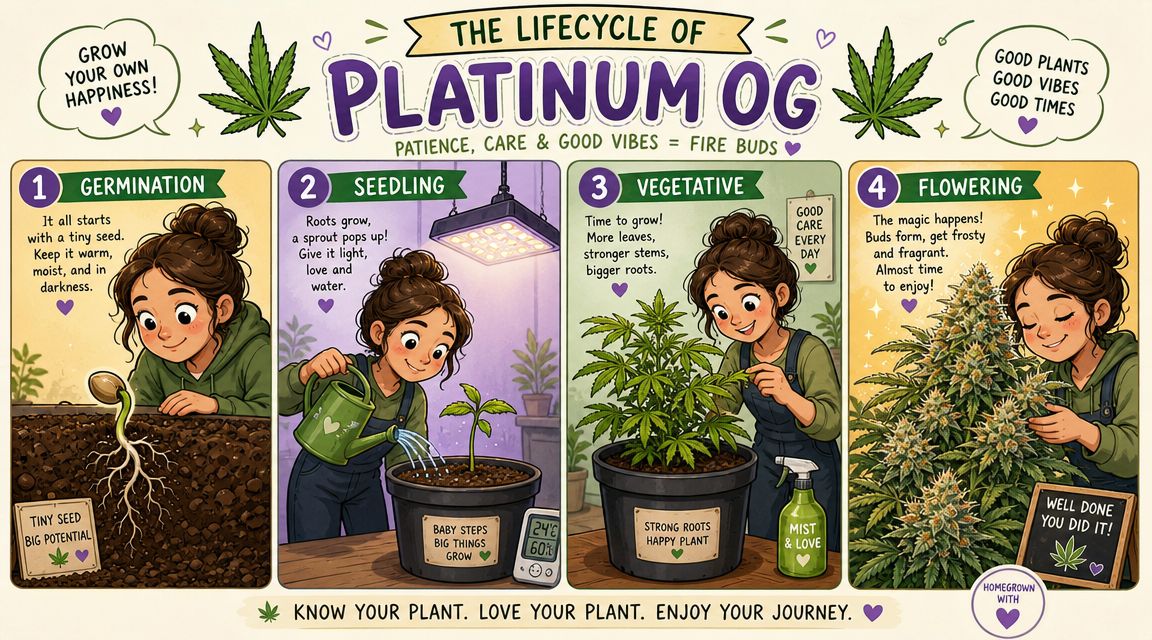
The same guide recommends 65 to 79°F (18 to 26°C) and notes that growers should aim for humidity around 60% in veg and 50% or less in flower. Those aren't just nice targets on paper. They matter because dense Kush flowers can hold moisture in all the wrong places if the room gets lazy late in bloom.
Start clean and keep the root zone happy
Platinum OG does best when the early growth phase stays boring. That's a good thing. You want healthy roots, even watering, and steady development, not a bunch of heroic fixes two weeks later.
A simple home-grow approach works well:
- Use a light, airy medium: You want roots to spread easily and dry back at a reasonable pace.
- Choose your final container carefully: Autoflowers usually do better when they aren't transplanted multiple times. Feminized plants give you more flexibility.
- Don't overwater early: A heavy hand in the seedling stage slows growth fast.
For indoor growers working on a feminized run, good lighting matters as much as nutrient choice. If you're sorting out fixture height, intensity, and general setup, this breakdown of lighting for growing cannabis indoors helps keep the basics straight.
Veg growth should stay tidy
Platinum OG isn't the cultivar to let turn into an overcrowded bush. The goal in veg is a plant with good airflow through the middle and enough spacing that future dense flowers won't sit in a damp, shaded tangle.
That means:
- Remove weak interior growth: If a branch won't reach useful light, it usually won't become premium flower.
- Open the canopy: A little structure work goes a long way with Kush-heavy cultivars.
- Avoid stress stacking: Don't pile overwatering, hard pruning, and environmental swings into the same week.
Grower habit that works: Make one change at a time, then watch the plant. Platinum OG responds better to steady management than constant correction.
Flower is where the room has to earn it
Once Platinum OG starts flowering, moisture control becomes the big job. At this point, growers either preserve quality or lose it. Dense buds, thick resin, and stagnant air are a bad combo.
Keep the second half of bloom simple and strict:
- Lower humidity on purpose: Don't wait until flowers are packed tight to start caring about moisture.
- Keep temperatures stable: Big day to night swings can make the room harder to manage.
- Prioritize airflow around the canopy: Fans shouldn't blast the plant, but the room should never feel still.
- Feed with restraint: Platinum OG usually responds better to measured feeding than aggressive pushing.
Here's a visual walkthrough that pairs well with those basics:
What works and what usually doesn't
A lot of home growers get in trouble with Platinum OG for predictable reasons.
What works
- Steady temp and humidity
- Moderate feeding
- Canopy cleanup before flower gets crowded
- Patience in late bloom
What usually doesn't
- Overfeeding because the plant “looks hungry”
- Ignoring humidity because the room felt fine in veg
- Letting lower growth become a tangled mess
- Handling resin-heavy flowers roughly at harvest
Platinum OG isn't difficult in a dramatic way. It just asks you to stay on top of the basics. If you do, it can be a very satisfying cultivar to grow at home.
What to Expect from Your Harvest
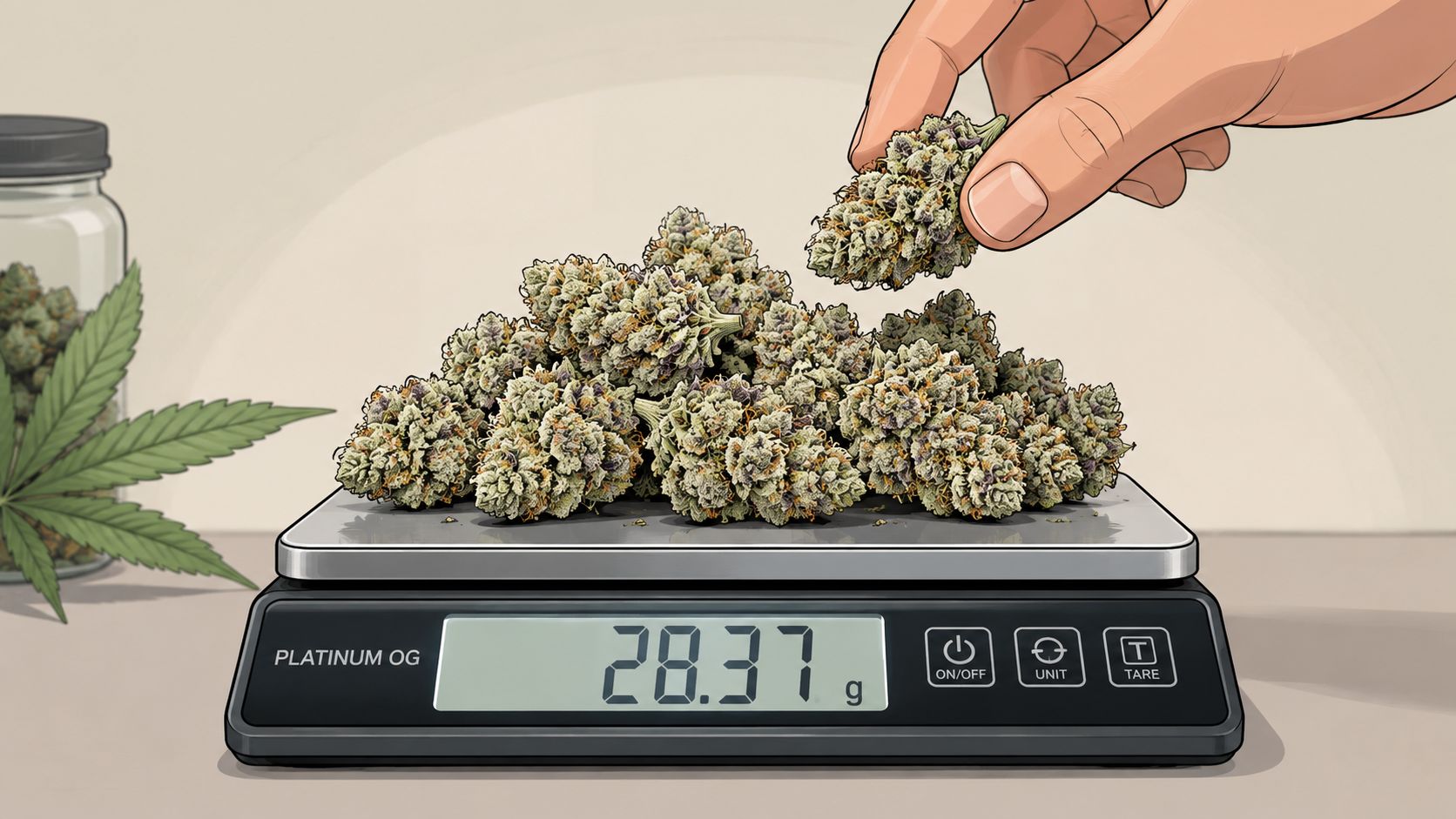
You crack a jar a few weeks after cure and the first thing you notice is the finish. Platinum OG tends to reward careful growers with dense, resin-heavy flower that feels premium in the hand. That matters more here than chasing the biggest possible pile of dried buds.
This cultivar usually makes more sense for the home grower who values frost, structure, and classic OG character over raw volume. That is one reason seed choice matters. Feminized plants often give you more room to shape the canopy and push quality under a dialed-in light schedule. Autoflowers usually trade some of that control for a faster, simpler run.
What that means in real grower terms
Platinum OG can produce a satisfying harvest at home, but it rarely hides sloppy work. If the dry room is too warm, if the trim is rough, or if you cut too early, the final result loses some of the weight this cultivar carries in the jar.
A good run usually looks like this:
- Tight, dense buds with solid bag appeal
- Heavy resin that gets sticky fast during trim
- Stronger aroma after cure than right at chop
- Better overall quality when harvest timing is patient and deliberate
The trade-off is straightforward. You are usually giving up some yield potential compared with bigger, looser-producing cultivars. In return, you get flower that can feel more special once it is dried and cured properly.
If you want help judging the finish window, keep this guide on when to harvest cannabis for the best timing nearby during the last stretch.
The payoff beyond the scale
A significant benefit of Platinum OG is how the harvest feels once it is done right. The buds tend to cure into that earthy, pine-forward OG profile home growers are usually after, and careful handling preserves a lot of what makes the cultivar worth growing in the first place.
That is also why this guide sticks to feminized and autoflower seeds instead of getting lost in hype. For a practical home grower, the harvest question is simple. Do you want more control and a longer runway, or do you want a quicker, more forgiving path to a respectable stash? Platinum OG can work either way if your expectations match the seed type.
Growing your own always adds something extra. With Platinum OG, you see it in the jar.
Finding the Right Platinum OG Seeds for You
The right Platinum OG seeds depend less on hype and more on your actual setup. That's the part people skip. A great cultivar still has to fit your space, your schedule, and the amount of hands-on work you want to do.
If you want more control, a longer runway, and the chance to shape the plant around your environment, feminized Platinum OG seeds usually make the most sense. They suit growers who enjoy training, don't mind managing light schedules, and want more influence over how the plant finishes.
If you want a quicker, simpler run with fewer moving parts, autoflower Platinum OG seeds are often the better fit. They're especially useful in compact grows or for people who want a more straightforward cycle without as much planning.
Use these questions before you buy
Ask yourself:
- How much vertical and horizontal room do I really have?
- Do I want control, or convenience?
- Can I keep my environment stable through flower?
- Am I growing for overall volume, or for frosty, resin-rich flower with classic OG character?
Those answers matter more than any flashy product description.
Keep your expectations matched to the seed type
A lot of disappointment starts with mismatched expectations. Growers buy an autoflower expecting the flexibility of a feminized photoperiod plant, or they buy feminized seeds when they really wanted a quicker, simpler project. Platinum OG already has enough variation between seed listings that it's worth slowing down and reading what's being offered.
That's the move with this cultivar. Pick the version that matches how you grow, not the version that sounds coolest on the label.
If you're ready to compare options, Botanist Seeds makes it easy to sort Platinum OG seed choices by your setup and goals. Use the site's comparison tools to look at feminized and autoflower options side by side, so you can choose the cultivar format that fits your space, your schedule, and the kind of harvest you want.