



How Tall Do Pot Plants Grow? a Home Grower’s Guide
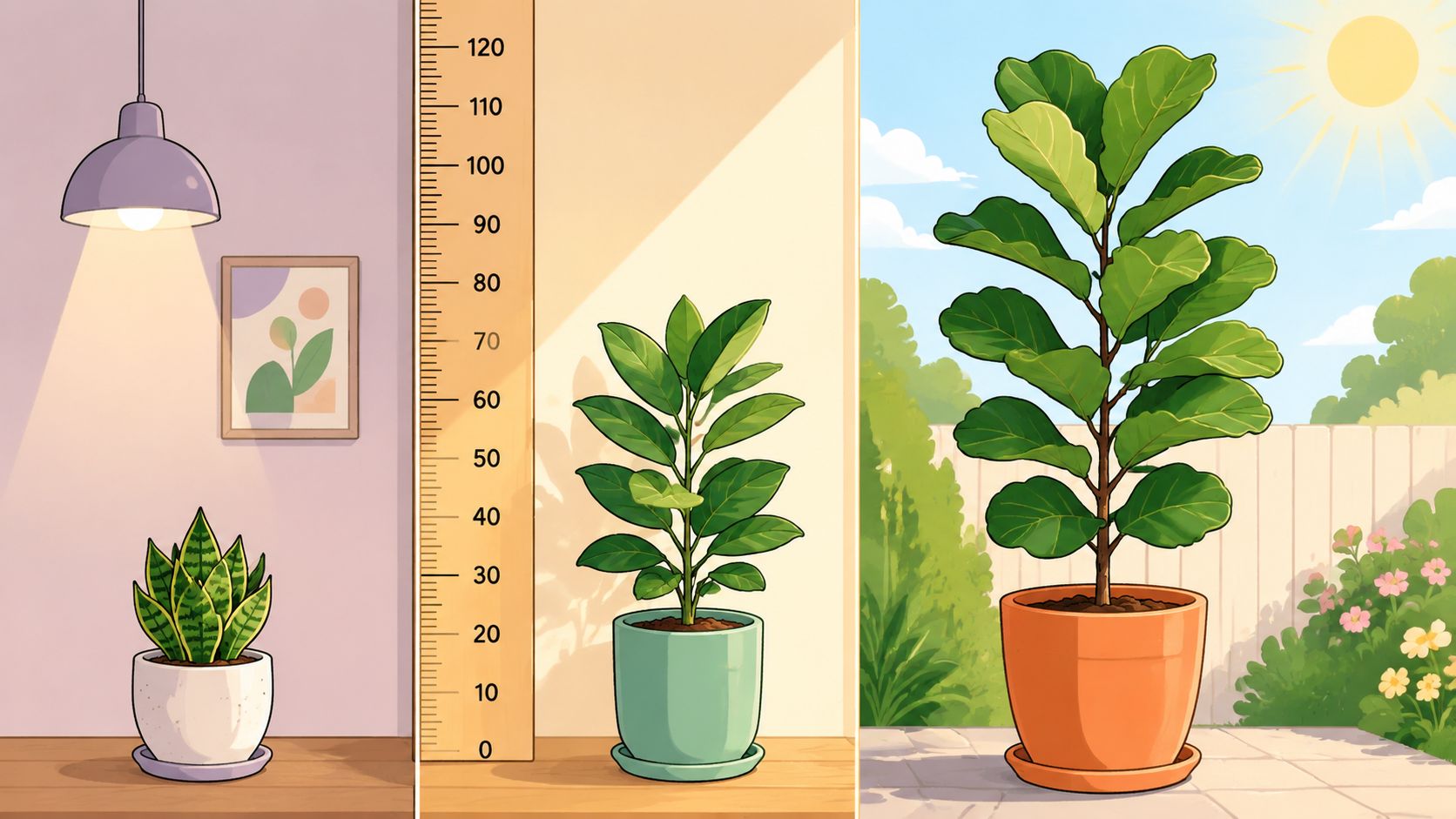
You've probably done this already. You measured the inside of your tent, looked at the light hanging from the bars, guessed how much room the pot will eat up, and then stopped on the same question every home grower asks.
Will this plant fit?
That's the important aspect of how tall do pot plants grow. Not some trivia answer, but a practical one. You're not trying to win a bar bet. You're trying to avoid a plant smashing into the light, stretching into a mess, or turning your nice clean setup into a cramped jungle.
The good news is height isn't random. A cannabis plant's final size comes from a few things you can usually predict and control. Pick the right cultivar, match it to the space, and manage the canopy early, and you can keep the whole run a lot calmer.
So You Want to Grow But Will It Fit
A lot of growers start with the wrong question. They ask how tall a pot plant can get, when the smarter question is how tall your plant should get in your setup.
If you're growing in a tent, the ceiling height on the box isn't your usable plant height. You've got the container on the floor, the light hanging overhead, and some buffer space you need to keep between the canopy and the fixture. That means a plant that sounds “medium sized” on paper can still become a problem fast.
Practical rule: A plant that fits your room on day one can still outgrow it if you don't account for how it grows after veg.
That's why height worries hit both new and experienced growers. New growers usually underestimate how fast a healthy plant can move upward. More experienced growers know the bigger problem is timing. Wait too long to train, flip too late, or choose the wrong cultivar for the room, and you spend the rest of the run reacting instead of steering.
What usually goes wrong
- The tent looked tall enough: On paper, sure. In reality, the pot and light hardware steal more room than is often assumed.
- The cultivar sounded manageable: Some cultivars stay compact, others lean hard into vertical growth once conditions suit them.
- The plant was small in veg: That can be misleading. A plant that behaves nicely early can still become a handful later.
A clean grow is usually a planned grow. Height is part of that plan from the start, right alongside lighting, airflow, and container choice.
What actually matters
When growers ask how tall do pot plants grow, the useful answer is this:
- Genetics set the range
- Your space sets the limit
- Training decides how well the plant lives inside that limit
Get those three lined up, and height stops feeling like a surprise.
Plant Height Starts with Genetics
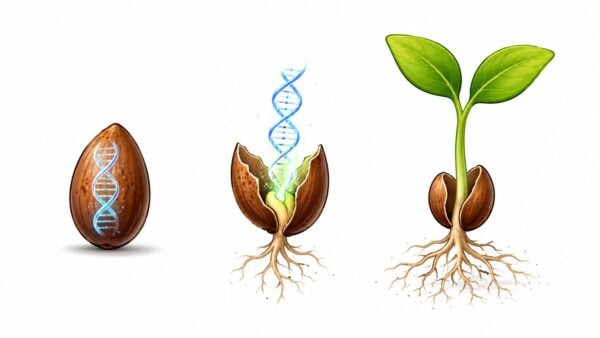
Some cultivars are naturally compact. Others want to climb. That difference matters more than any trick you use later.
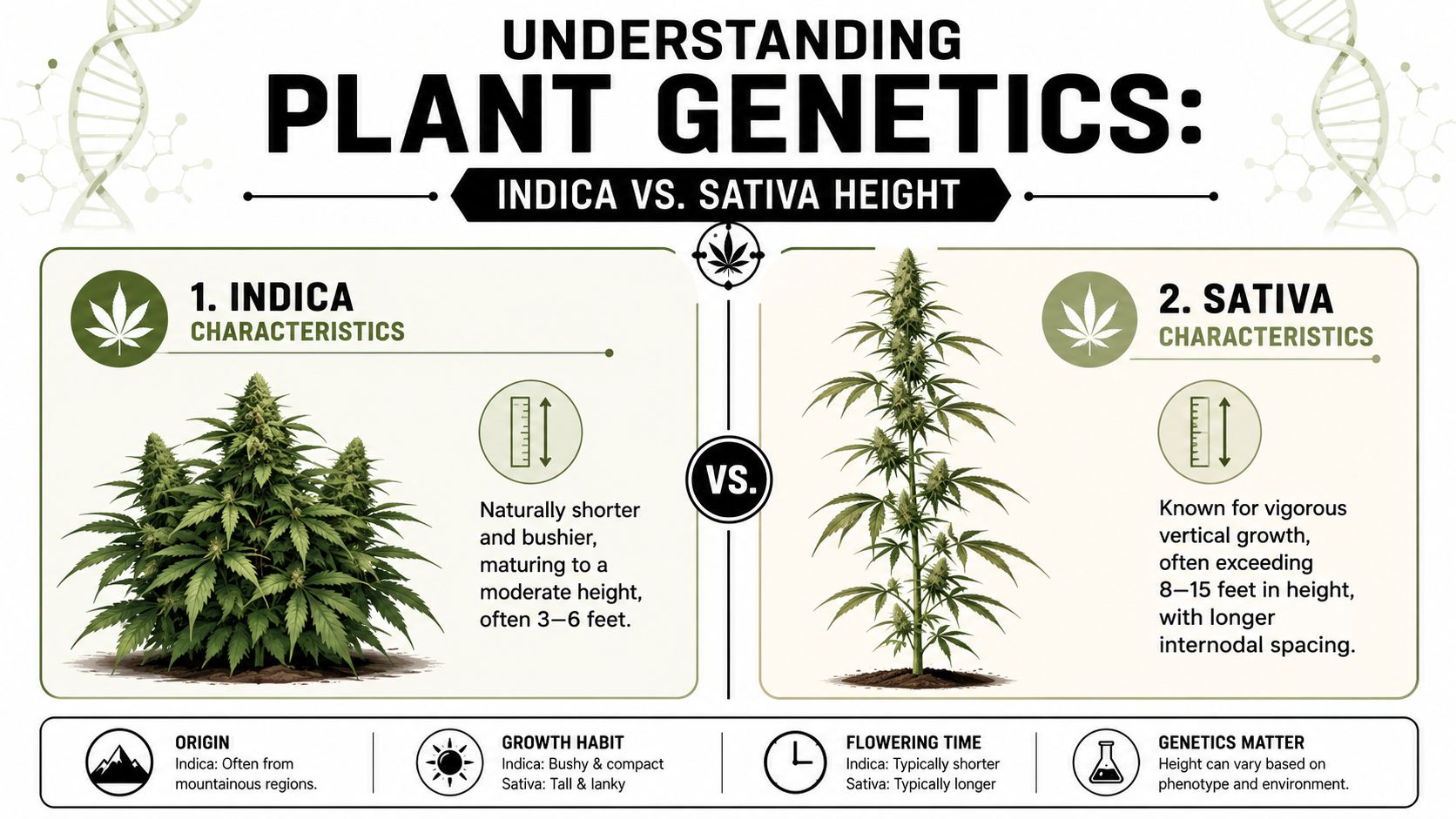
A good starting point comes from broad cultivation references collected by a seed bank’s guide to cannabis height ranges. They note autoflowers at about 40 to 160 cm, indoor photoperiod plants up to about 160 cm, and outdoor photoperiod plants up to about 300 cm. They also describe sativa-leaning plants as commonly reaching 3 to 5 metres outdoors, while indica-leaning plants are often around 1.5 to 2 metres, and hybrids typically land between 1 to 2 metres.
Indica, sativa, hybrid, and autoflower in plain English
Here's the simple version most home growers need.
| Type | Typical growth habit | Best fit |
|---|---|---|
| Indica-leaning cultivars | Shorter, bushier, wider leaf structure | Tents, closets, shorter indoor spaces |
| Sativa-leaning cultivars | Taller, airier, more vertical growth | Outdoor grows or indoor runs with aggressive training |
| Hybrid cultivars | Middle ground, depends on the cross | Flexible if you read the cultivar notes carefully |
| Autoflower cultivars | Usually compact and fast moving | Small spaces, simpler schedules, quick home runs |
That's why labels matter, but only to a point. “Hybrid” doesn't tell you much by itself. You still want to check whether a hybrid grows squat and branchy or wants to stack height.
What to look for before you buy
If you're comparing cultivars, don't just read aroma notes and flowering promises. Read structure.
- Broad and stocky: Usually easier to manage in shorter spaces
- Tall and narrow: Can work indoors, but needs more planning
- Compact autoflower: Great when you want less vertical stress
- Vigorous photoperiod: Better for growers who want more control over veg time
If you want a clear breakdown of how these categories behave, this guide on indica vs sativa vs hybrid is worth reading before you choose a cultivar.
Genetics don't lock in an exact height, but they absolutely tell you whether you're starting with a houseplant or a ladder problem.
Why Your Grow Space Dictates Plant Size
The same cultivar can behave very differently depending on where you grow it. Outdoors, a plant gets open sky, natural sun, and usually far more root room. Indoors, it gets walls, a ceiling, and your decisions.
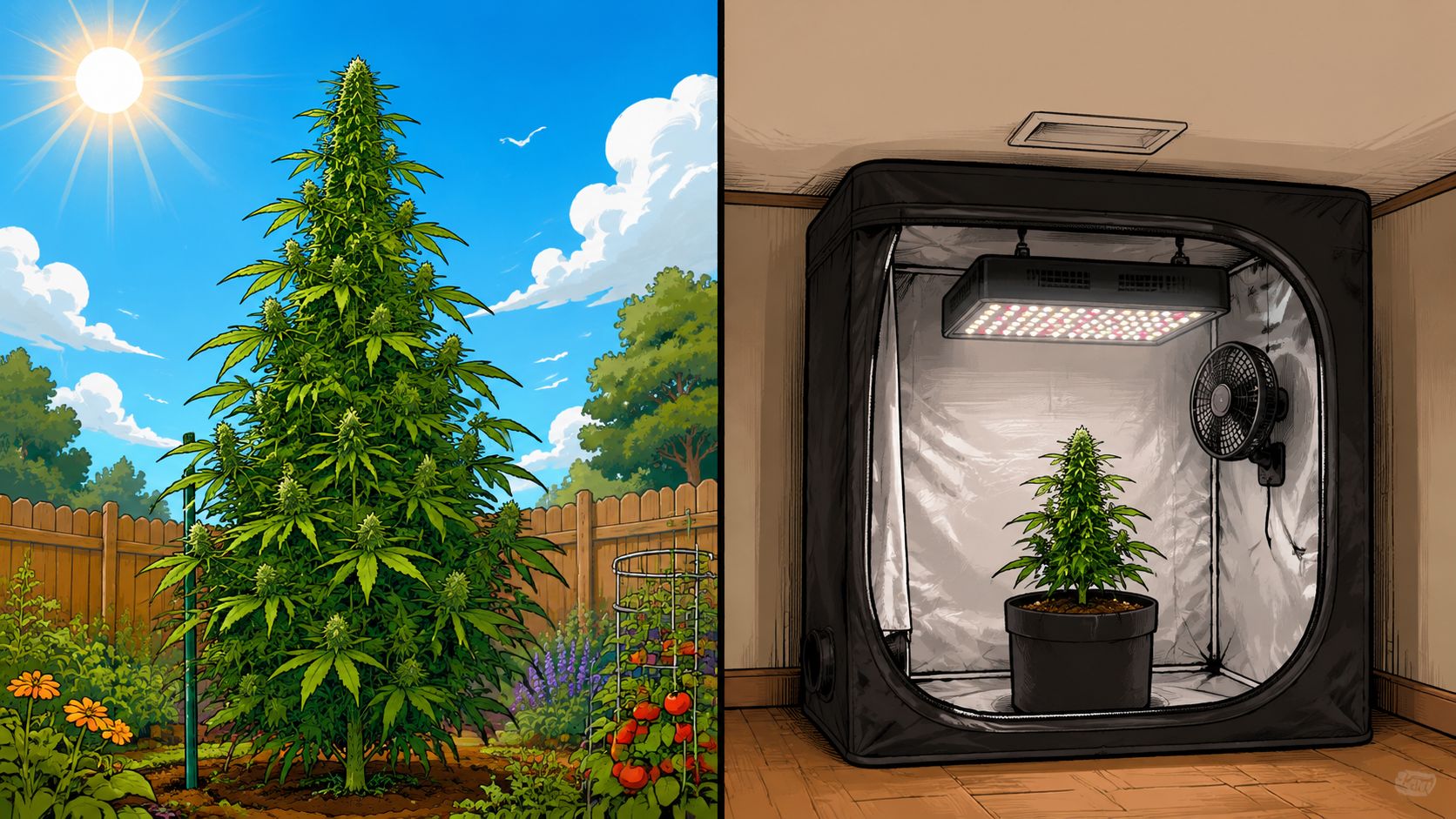
According to Gorilla Grow Tent's height guide, indoor photoperiod plants often finish around 2 to 6 feet, while outdoor plants commonly reach 4 to 20+ feet. The same guidance ties those bigger outdoor sizes to a longer vegetative period, unrestricted root volume, and full sun exposure.
Outdoor plants get to express themselves
If you put a vigorous cultivar outside in a big container or open ground, don't expect it to stay polite. Outdoor plants can keep building because the root zone isn't boxed in the same way, and the sun gives a growth pattern artificial light rarely matches.
That's great if you want big seasonal plants. It's not great if you thought “backyard grow” automatically meant low maintenance.
Indoor plants live inside hard limits
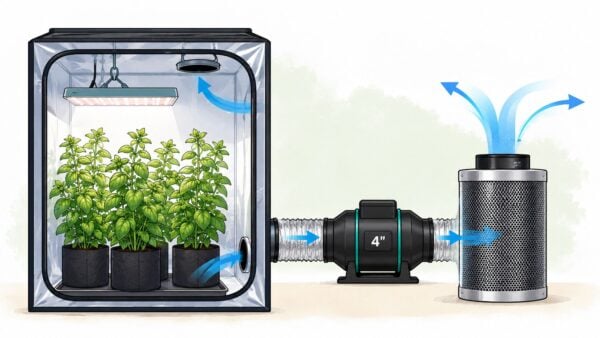
Indoor growing gives you more control, but less forgiveness. Your plant has to share the room with:
- The pot
- The light fixture
- The hanging hardware
- The safe gap between light and canopy
- Fans, filters, and whatever else steals room
That's why indoor growers can't think in total tent height alone. You need usable plant height, not advertised tent height.
For growers planning a setup from scratch, it helps to look at real layout options for grow rooms for weed, because room shape matters almost as much as room size.
A backyard rewards vigor. A tent rewards discipline.
The Flowering Stretch Explained
This is the part that catches people. The plant looks manageable in veg, you feel confident, and then flower starts and the canopy shoots upward.
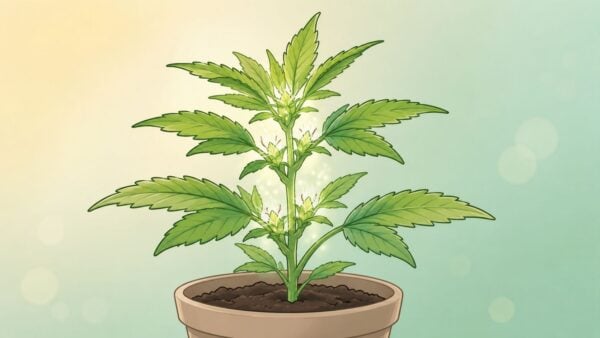
That jump is the flowering stretch. It's the plant's last strong push of vertical growth as it transitions into bloom. You don't need to panic about it, but you do need to expect it.
Why it matters indoors
Indoors, the stretch is where nice planning turns into emergency pruning if you waited too long. Once tops crowd the light, every fix gets uglier. You end up bending stems harder than you wanted, dealing with uneven canopy height, or letting upper growth hog the best light.
Photoperiod cultivars usually make this phase more obvious because you control when flowering starts. If you flip late, a plant that already fills the tent can become a problem fast.
How growers stay ahead of it
A simple way to think about stretch is this: if the plant already feels close to your vertical limit, it probably is.
Use these habits:
- Flip with headroom left: Don't wait until the plant already looks tall.
- Train before flower: It's easier to shape growth early than fix it late.
- Watch the canopy daily: Stretch sneaks up because it happens while everything else still looks healthy.
- Choose autos when space is tight: Autoflower cultivars are often easier to fit into smaller home setups because they usually stay more compact.
I've seen plenty of home grows go sideways here. Not because the cultivars were bad, but because the grower treated pre-flower height like final height. Those are not the same thing.
How to Control Your Plants Height
A lot of growers still act like height is just something that happens to them. It isn't. You can push a plant upward, slow it down, spread it out, or cap it before it becomes a pain.
Commercial cultivation advice makes the point pretty clearly. DrPaddo's cultivation guide notes that shorter, well-managed plants can improve production efficiency, with recommended finished heights of about 24 to 36 inches indoors and 48 to 60 inches outdoors. That lines up with what many home growers learn the hard way. Bigger isn't always better. Better shaped is better.
A quick visual helps if you're new to canopy work.
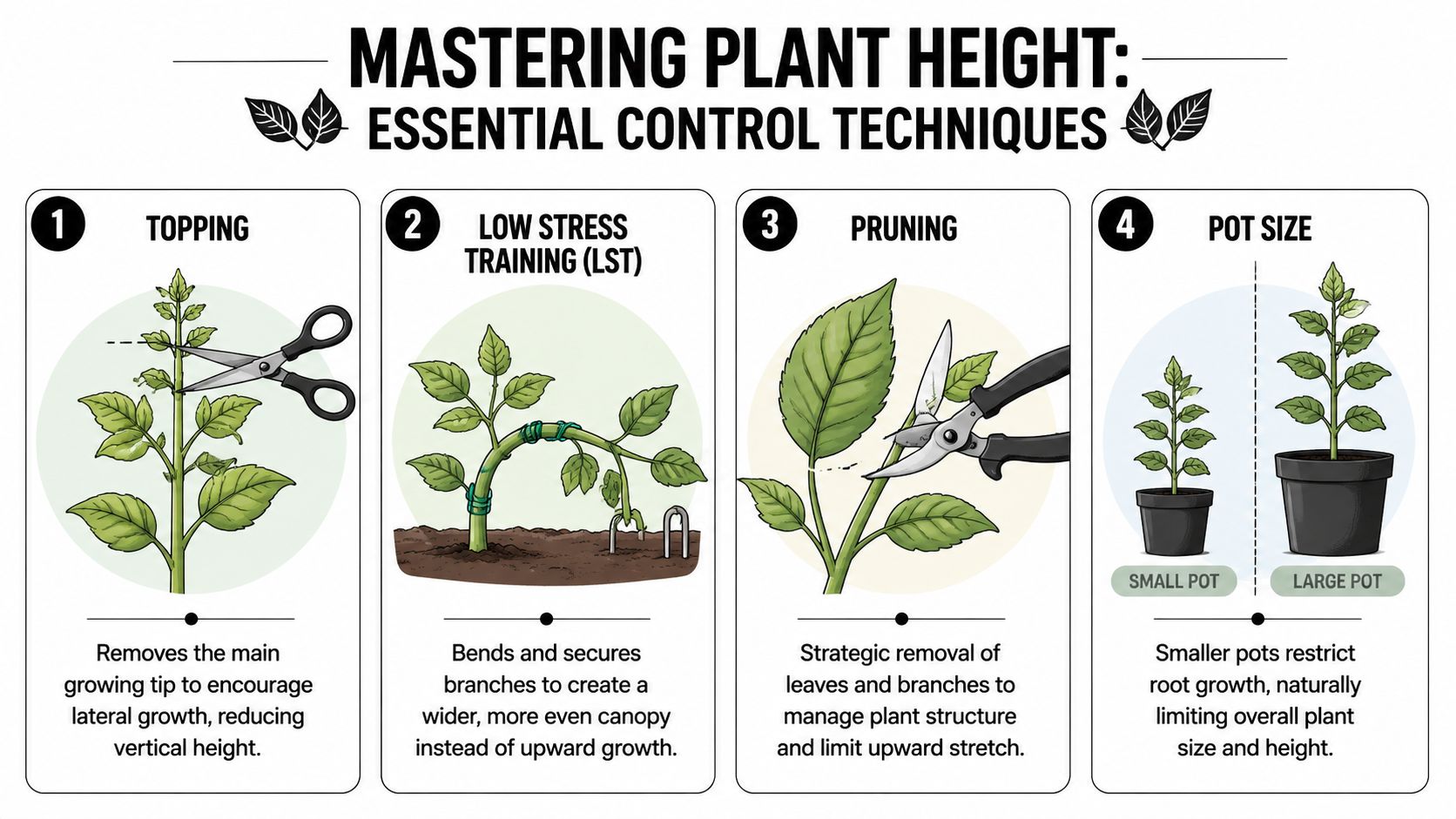
The simplest control tools
You don't need a complicated system. Most home growers do well with a few basic methods used consistently.
- Container choice: Pot size influences how large and vigorous a plant can get. If you give roots more room, expect more top growth. Smaller containers can act like a natural governor.
- Topping: Removing the main growing tip shifts the plant away from one dominant spear and toward multiple tops. That usually helps you build width instead of height.
- Low stress training: Gently bending and tying branches outward keeps the canopy lower and flatter. This is one of the best tools for tight tents.
- Pruning: Strategic cleanup shapes the plant and helps direct energy where you want it. If you want practical examples, this guide on pruning cannabis plants is a useful reference.
- SCROG: A screen gives every branch a place to spread rather than stack upward. It takes some attention, but it works well when vertical space is limited.
What works and what usually doesn't
A lot of trouble comes from half-measures.
| Works well | Usually causes trouble |
|---|---|
| Training early | Waiting until stems get stiff |
| Building an even canopy | Letting one top dominate |
| Matching cultivar to tent height | Hoping a tall cultivar stays short |
| Using autos for compact runs | Treating every cultivar like it behaves the same |
Here's a useful walkthrough if you want to see some of these methods in action.
The best-looking indoor plants usually aren't the tallest ones. They're the ones the grower kept even, open, and easy to light.
Planning Your Grow for the Perfect Height
The cleanest grows usually start before the seed ever hits water. You pick a cultivar that matches the room, not one that forces the room to adapt later.
Cannabis Business Times on optimized production targets notes that growers often aim for 24 to 36 inches indoors and 48 to 60 inches outdoors. The same source says autoflowering plants typically stay between 24 and 36 inches, though 48-inch autos are not unusual. That's a useful mindset for home growers because it turns height into a target instead of a gamble.
A simple pre-grow checklist
Before buying seeds, run through this:
- Know your real vertical space: Count the pot, light, and safe clearance, not just the tent dimensions.
- Choose the right genetic profile: Compact cultivars make life easier in low ceilings.
- Decide how much training you'll do: Be honest. A heavily managed canopy only works if you keep up with it.
- Leave room for flower behavior: Don't plan around the plant staying exactly how it looks in veg.
- Aim for a finish, not a maximum: A plant that fills the space well is better than one that overruns it.
The easiest way to think about it
If you want a practical formula, use this:
Cultivar tendency + grow space limit + your training style = likely final height
That's really the answer to how tall do pot plants grow. They grow as tall as their genetics allow, as tall as the environment encourages, and as tall as the grower permits.
Get those three lined up, and the plant fits the room instead of fighting it.
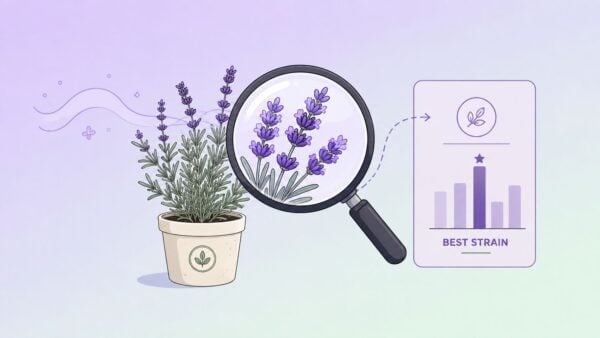
If you want to match a cultivar to your setup before you buy, Botanist Seeds makes that part easier. Use the comparison tool to sort feminized and autoflower options by growth style, so you can pick something that fits your tent, your room, and the kind of grow you want to run.