




How Do You Raise pH in Water for Better Harvests?
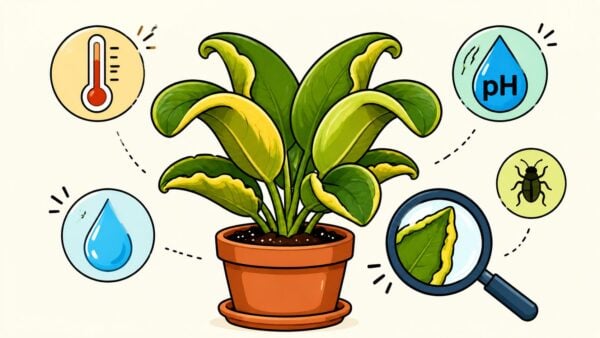
You mix your nutrients, check the leaves the next day, and something looks off. Tips are weird. New growth is pale. The plant looks hungry even though you’re feeding it. A lot of growers blame the nutrients first. Fair enough. But plenty of the time, the actual problem is the water.
That’s why “how do you raise ph in water” matters so much for cannabis. Not because water chemistry is exciting, but because pH decides whether your plant can use what you paid for. If the number is off, the roots stop taking up certain elements properly, and the whole grow starts feeling like guesswork.
Good pH management isn’t about being a lab nerd. It’s about keeping your cultivar on track so it can stack healthy growth, hold strong color, and finish with the aroma and flavor you picked it for in the first place.
Why Your Water's pH Is a Big Deal
A grow can look dialed in and still go sideways fast when pH slips. Lights are fine. Environment is solid. Feed schedule looks clean. Then leaves start spotting or yellowing, and the plant acts like it’s starving.
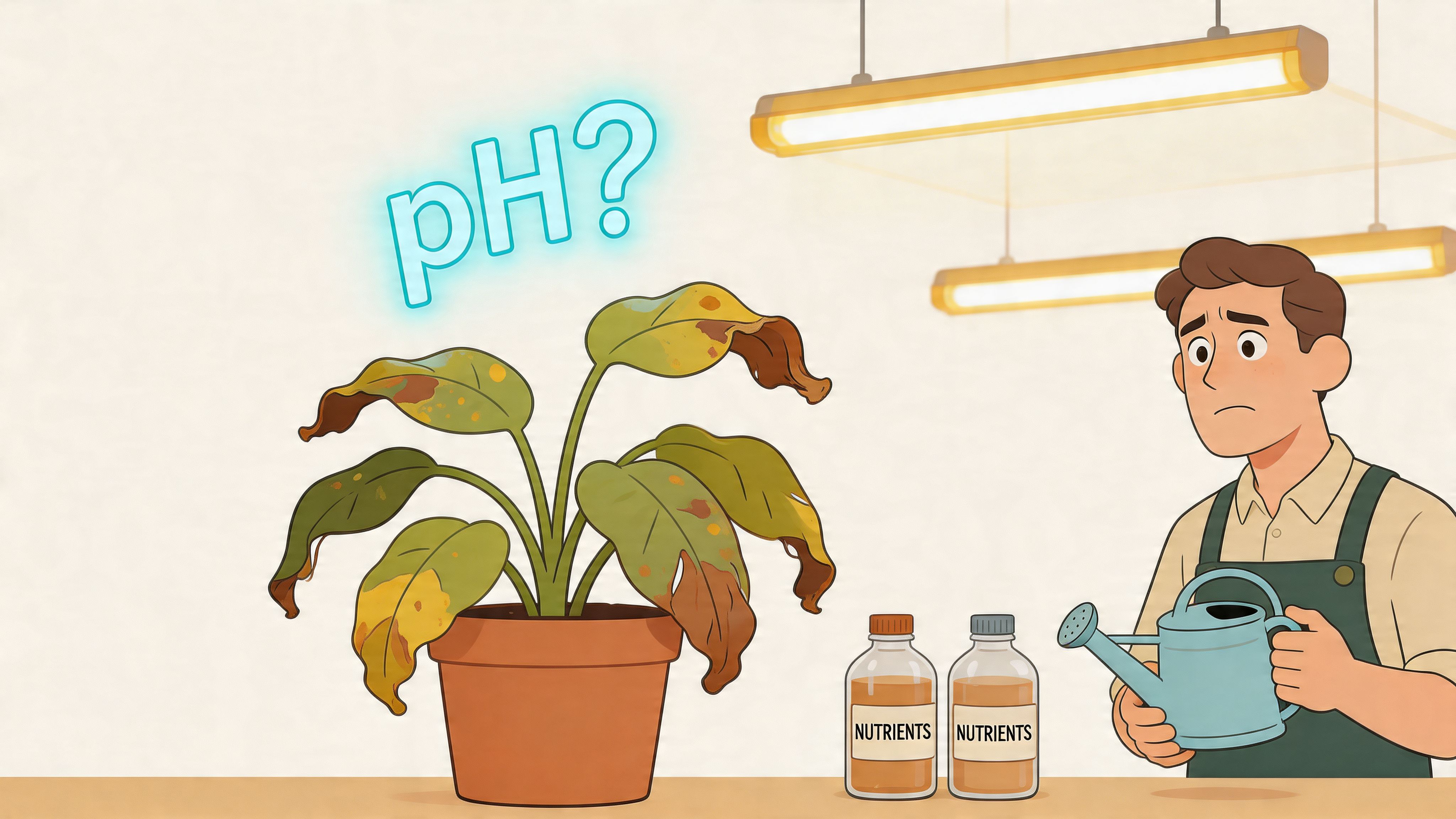
Most home growers run into this at least once. The mistake is assuming more nutrients will fix it. If pH is too low or too high, the roots can’t access key elements properly, so adding more feed can just make the mess bigger.
According to the UMass Amherst greenhouse floriculture water quality guidance, maintaining water pH between 5.0 and 7.0 is critical for optimal nutrient uptake, and drifting outside that range can lock out nutrients, stunt development, and reduce yields by up to 30 to 50 percent in sensitive cultivars.
pH is the gatekeeper
The simplest way to think about pH is this. It’s the gatekeeper for your feed.
You can pour in top-shelf nutrients all week, but if the water is out of range, some of that nutrition is effectively behind a locked door. That’s when growers see symptoms that look like deficiency, even though the reservoir or soil has plenty in it.
For cannabis, that matters all the way to harvest:
- Root uptake affects vigor: Healthy uptake supports steady structure, leaf color, and growth rhythm.
- Stable feeding affects expression: A cultivar can’t show its best aroma or resin potential if it spends the run stressed and underfed.
- Bad pH creates fake deficiency signals: You end up chasing calcium, magnesium, iron, or phosphorus issues that started with water.
Practical rule: If the plant looks underfed and your nutrient schedule already makes sense, check pH before changing anything else.
Why cannabis growers should care more than generic garden guides do
Cannabis isn’t a houseplant you can half-ignore and still expect premium flowers. If you’re growing for loud terps, dense structure, and a finish that matches the cultivar description, pH has to stay in range.
That’s especially true in hydro and coco, where the root zone reacts fast. Soil has more forgiveness because it buffers swings better, but even there, bad water catches up.
A good grower doesn’t just feed the plant. A good grower makes those nutrients available. That’s the whole game.
Getting Your Numbers Right Measuring Water pH
If you’re still using cheap paper strips, you’re making life harder than it needs to be. They’re fine for a rough guess. They’re not fine when a small pH miss can throw feeding off for days.
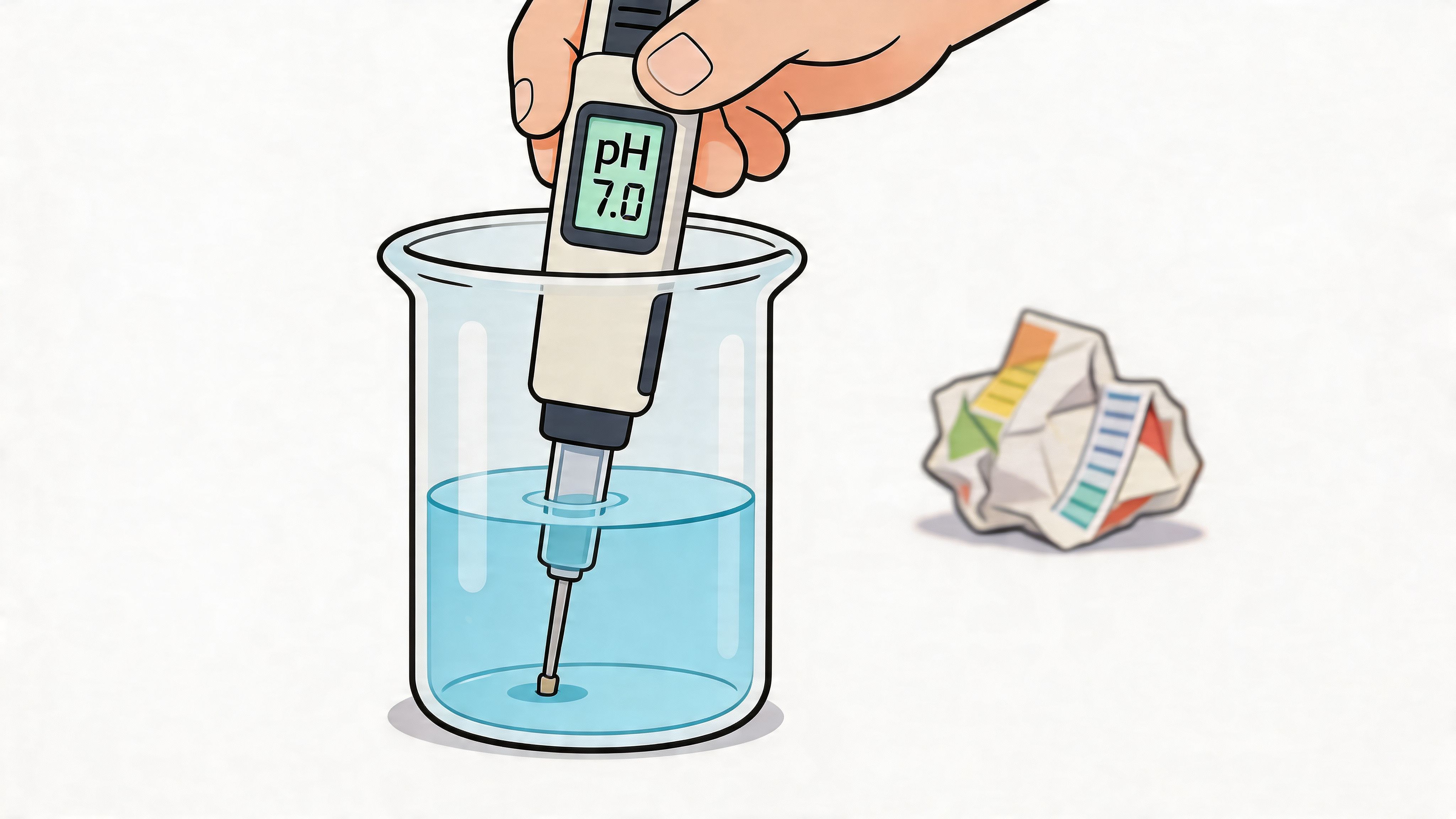
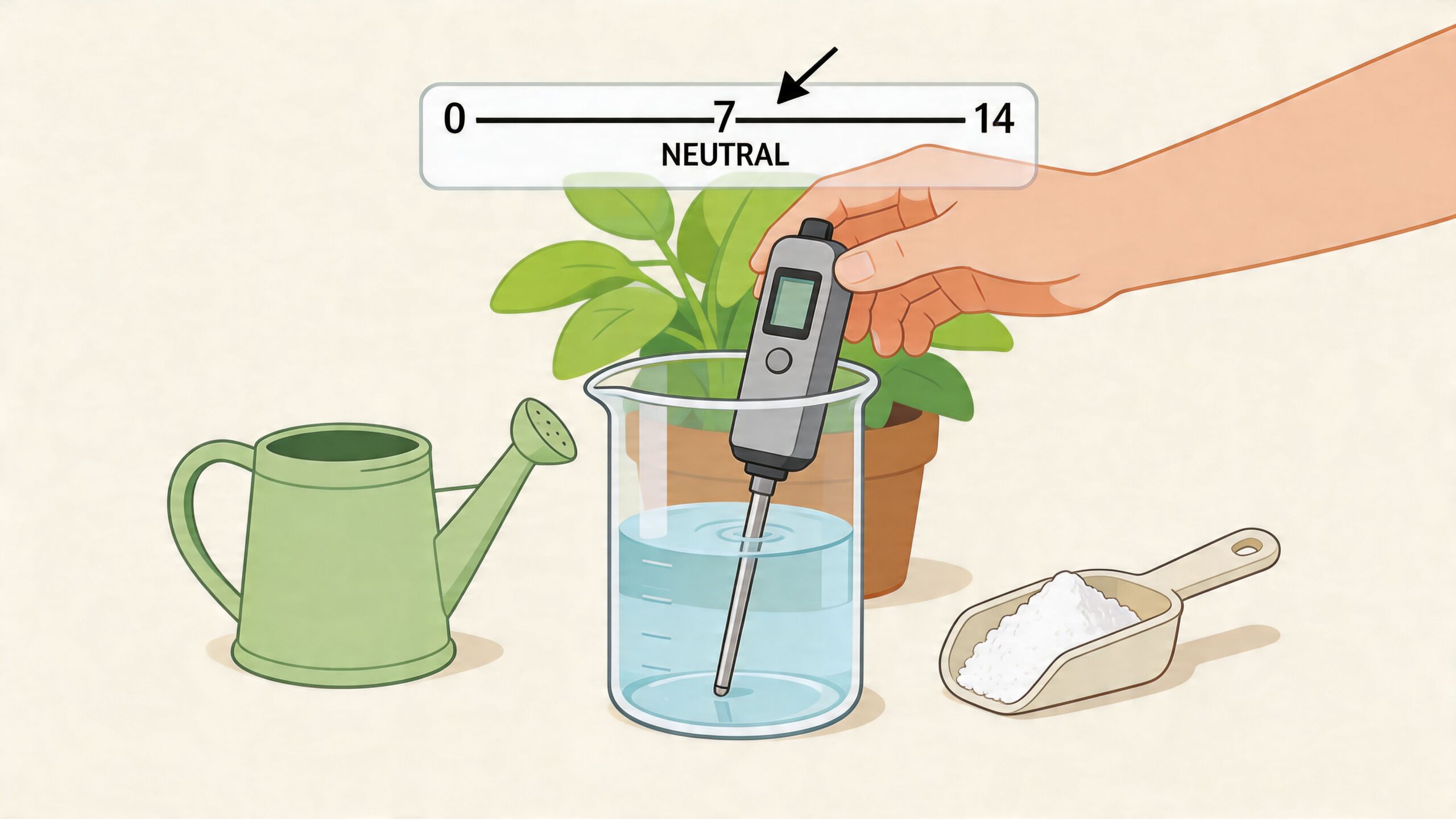
The better move is a digital pH pen. According to Black Dog LED’s guide to adjusting pH in water and nutrient mix, you want a calibrated digital pH pen with accuracy of at least ±0.01, and you should let the solution stabilize before reading. The same guide notes that common analog test strips can overestimate by 0.2 to 0.5 units, which is more than enough to push a cannabis feed in the wrong direction.
If you want a broader breakdown of target ranges and context, this guide on pH for cannabis is worth bookmarking.
Test after nutrients, not before
This trips up a lot of people. They test plain water, adjust it, then add nutrients and assume they’re still good.
That’s not how it works in practice. Nutrients can shift the number a lot, so the reading that matters is the one you take after everything is mixed.
Use this order:
- Start with your water: RO, filtered, or tap, whatever your setup uses.
- Add nutrients one at a time: Mix thoroughly between bottles.
- Let the solution settle: Give it a little time so the reading stops drifting.
- Then test pH: That’s your real number.
Calibrate the pen like you mean it
A pH pen is only useful if it’s calibrated. New growers skip this because it sounds fussy. It isn’t. It takes a few minutes and saves a lot of trouble.
Basic routine:
- Use fresh buffer solution: Don’t guess with old packets sitting open in the grow room.
- Rinse the probe: Clean water only, gently.
- Calibrate according to the meter instructions: Most decent pens walk you through it.
- Store the probe properly: A dry, crusty probe gives trash readings.
A fancy nutrient line won’t help if the meter lies to you.
What good measurement looks like
You don’t need a science degree. You need consistency.
A solid habit looks like this:
- Check every fresh mix
- Recheck after adjustment
- Keep the pen clean
- Trust numbers, not leaf panic
Once measurement gets reliable, fixing low pH becomes simple. Before that, you’re basically steering blind.
Choosing Your Method to Raise Water pH
There’s no single best answer for every setup. The right method depends on whether you’re in soil, coco, or hydro, how fast you need the adjustment, and how much residue you’re willing to tolerate.
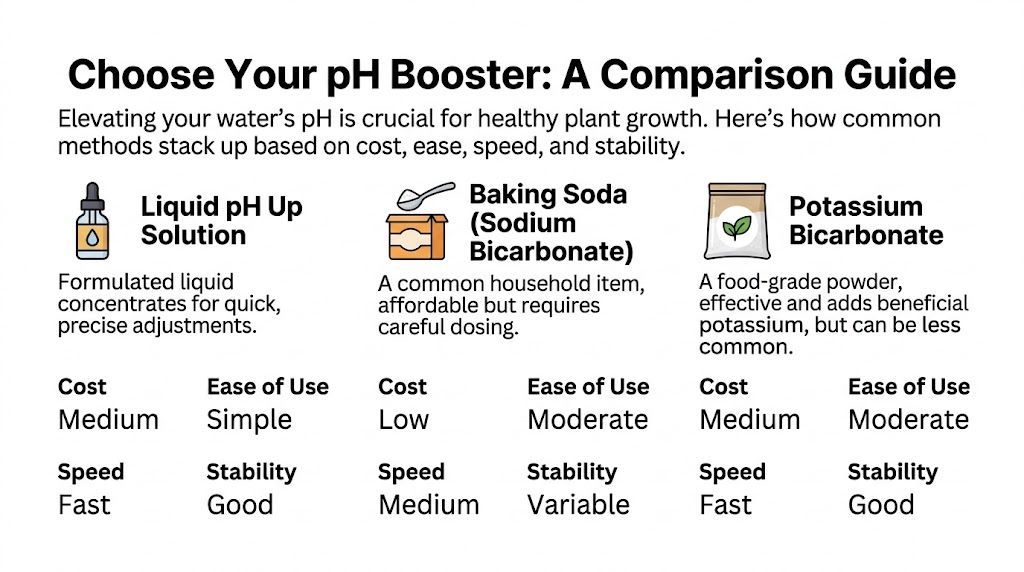
Generic plant guides usually stop at “add baking soda” and call it a day. That’s not great advice for cannabis, especially in recirculating systems where residue and nutrient balance matter more.
The reliable standard
For most growers, commercial pH Up is the cleanest and easiest choice. These products are made for this exact job and are much easier to control than random kitchen fixes.
They’re especially useful in hydro and coco where you need precision, not vibes. If you’re mixing often and want repeatable results, this is usually where you land.
Why it works well:
- It’s predictable: Small additions make small changes.
- It’s easy to repeat: Once you know your water and feed line, the process gets very consistent.
- It fits hydro better: Less guesswork than household workarounds.
The trade-off is simple. It costs more than pantry ingredients.
Baking soda works, but it’s a situational tool
Baking soda can raise pH, and if you’re in a pinch, it can help. But it brings sodium along for the ride, which is where things get messy for cannabis.
In soil, an occasional small correction is one thing. In hydro, repeated use can create a solution you don’t really want sitting around your roots. That’s why a lot of generic garden advice falls apart when applied to cannabis.
If you’re running a recirculating reservoir, treat baking soda like an emergency backup, not your main system.
Potassium bicarbonate is the underrated option
If you want an option that feels closer to an organic, lower-residue approach, potassium bicarbonate is worth a serious look.
According to Atlas Scientific’s guide to adjusting water pH for plants, potassium bicarbonate can raise pH by 0.3 to 0.8 units within 24 hours, leaves 20 percent less sodium residue than baking soda, and contributed to a 15 percent yield improvement in pH-stable reservoirs.
That’s a big reason growers like it. It solves the immediate problem without leaning on sodium the way baking soda does.
A quick comparison
| Method | Best For | Pros | Cons |
|---|---|---|---|
| Liquid pH Up solution | Hydro, coco, growers who want precision | Fast, repeatable, easy to dial in | Costs more than household options |
| Baking soda | Small one-off corrections, mostly soil | Cheap, easy to find | Adds sodium, less ideal for hydro |
| Potassium bicarbonate | Growers who want a lower-residue option | Cleaner profile than baking soda, useful for sensitive setups | Not as common in every local shop |
What I’d pick by setup
If someone asked me over a beer, I’d keep it simple:
- Hydro or DWC: Use commercial pH Up first. Potassium bicarbonate is the interesting alternative if you want to avoid the usual sodium-heavy shortcut.
- Coco: Precision matters here too, so commercial pH Up still makes the most sense.
- Soil: You’ve got more room for error. You can be a little less strict, but sloppy water will still show up in the plant eventually.
The real trade-off isn’t just cost. It’s cleanup, stability, and whether the method creates another problem while solving this one.
The Right Way to Adjust Your Nutrient Solution
The biggest mistake growers make isn’t choosing the wrong pH product. It’s using the right product the wrong way.
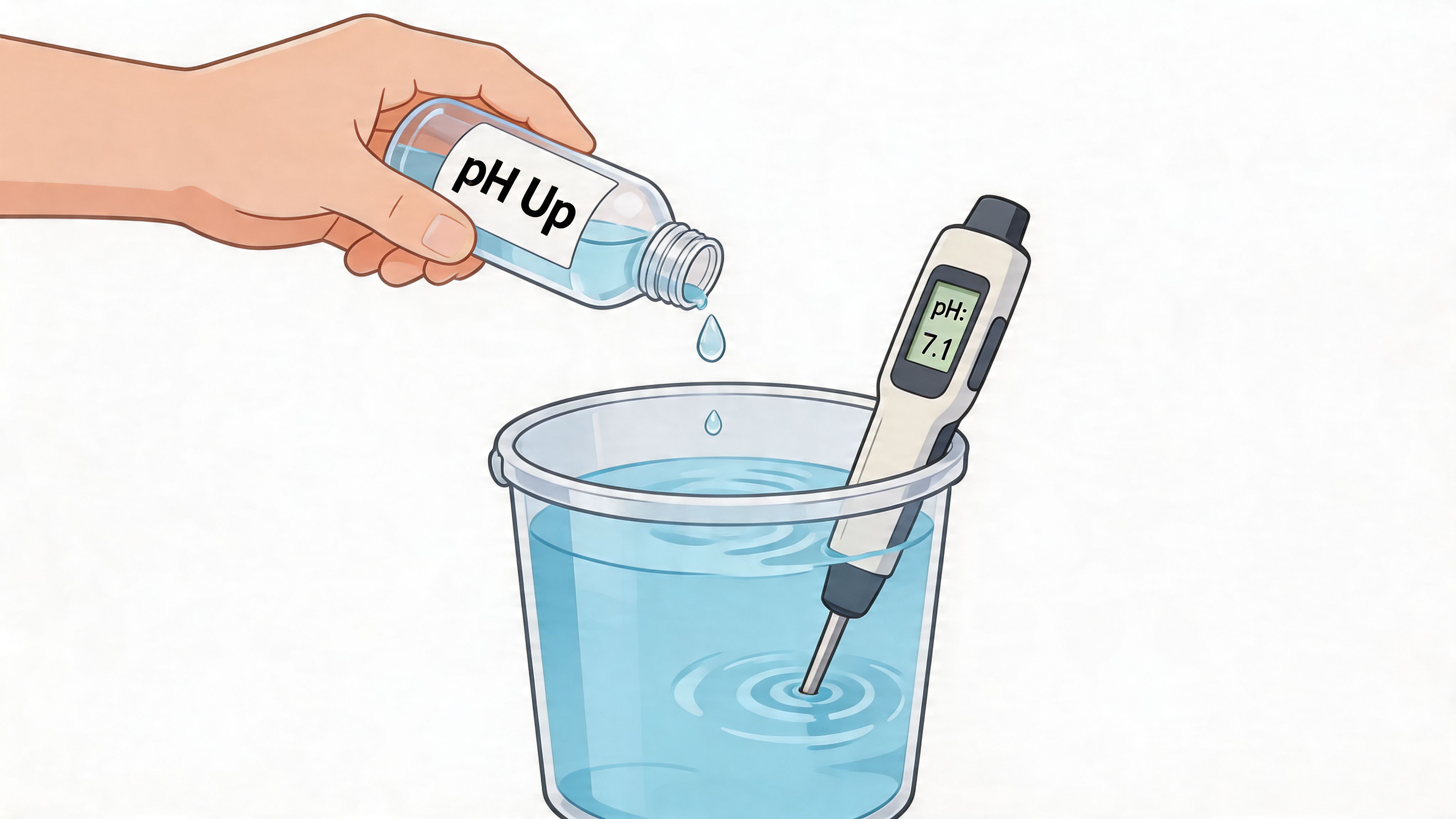
If you want stable results, the process has to stay calm and repeatable. No splashing in a mystery amount, no panic-correcting, no bouncing from too low to too high.
Mix first, adjust second
Start with your base water. If you use RO or filtered water, let it come to room temperature. If you’re using a reservoir, get the water moving first.
Then add nutrients one by one, mixing well between each addition. Don’t rush this part. Nutrients can interact with each other, and they also change pH, sometimes a lot.
Once everything is in, let the solution circulate briefly and then test.
That order matters because the number you care about is the final feed solution, not the raw starting water.
Raise pH in small moves
Patience proves valuable. According to the same Black Dog LED guidance cited earlier, for a commercial pH Up product you should add only 0.1 to 0.5 mL per gallon in small increments, then retest after 5 minutes of circulation. The guide also notes that pH is logarithmic, so it takes ten times less chemical to move from 6.0 to 7.0 than from 5.0 to 6.0. That’s exactly why growers overshoot when they get impatient.
A simple working routine looks like this:
- Add a very small amount: Less than you think you need.
- Mix thoroughly: Don’t test a dead spot in the bucket.
- Wait a few minutes: Let the solution settle.
- Retest before adding more: Discipline saves the run.
Small corrections beat dramatic corrections every time.
Your target depends on the medium
Different media forgive different things.
For hydro and coco, most growers aim for the mildly acidic zone because nutrient uptake moves fast and pH swings show up quickly in the plant.
For soil, the medium buffers more naturally, so there’s a little more room to breathe. That doesn’t mean anything goes. It just means soil won’t punish every tiny wobble the way a reservoir will.
If your water source is naturally unstable, your best move is consistency. Mix the same way every time, test the same way every time, and change only one variable at once.
Here’s a helpful visual if you want to see the process in motion:
What works in real life
The growers who get clean results usually follow boring routines. They don’t freestyle dosing. They don’t “eyeball” pH Up. They don’t keep adjusting every ten seconds.
What actually works:
- Use the same bucket or reservoir volume
- Measure after full nutrient mixing
- Add pH Up gradually
- Retest after circulation
- Write down what the mix needed
That last one matters more than people think. Once you know your usual water, nutrients, and cultivar preferences, you stop reinventing the wheel every feed day.
Common pH Mistakes and How to Avoid Them
A lot of pH frustration comes from one bad habit. Growers see a weird reading and start chasing it all day.
That usually makes things worse.
Stop chasing every swing
Water moves. Reservoirs breathe. Organic inputs change things. Even plain aeration can shift your reading a bit. Not every movement means disaster.
One of the most useful low-drama tools is aeration. According to Arm & Hammer’s guide on raising or lowering pool pH, using an air stone or small waterfall feature can raise pH by 0.2 to 0.5 points by helping dissolved CO2 off-gas, and it does that without spiking alkalinity the way some additives can.
That matters in cannabis because high alkalinity can create its own nutrient problems.
The usual mistakes
Here’s where growers get into trouble:
- Adjusting before nutrients: Then the feed line shifts the number and you end up correcting twice.
- Overshooting the target: Too much pH Up, too fast, then a panicked correction in the other direction.
- Trusting bad tools: Cheap strips and uncalibrated meters cause a lot of fake problems.
- Ignoring the water source: RO water often behaves differently from harder tap water because it has less buffering.
If your leaves are already showing stress signals, don’t assume every mark is a nutrient deficiency. Sometimes the plant is just reacting to pH instability. If you’re sorting through symptoms, this breakdown of yellow leaves on cannabis plants can help you separate water issues from feeding issues.
Don’t fix a pH swing with three different products in one afternoon. Pick one move, let the water settle, then read it again.
What to do instead
The steadier approach is boring, and that’s why it works.
- Use aeration first when the situation fits: It’s clean and doesn’t dump extra residue into the mix.
- Make one correction at a time: Then wait.
- Watch the trend, not one reading: A pattern matters more than a single blip.
- Accept that RO water can be twitchy: Low-buffer water often needs a gentler hand.
A stable reservoir grows calmer plants. Calm plants usually smell better, stack better, and finish with fewer ugly surprises.
Mastering Your Water for a Better Grow
Once you get this skill down, pH stops feeling like a chore and starts feeling like an advantage. You’re not guessing anymore. You’re giving the plant access to what it needs, when it needs it.
That changes the whole grow. Healthier uptake means steadier growth, less random leaf drama, and a better shot at seeing the full character of the cultivar you chose. Better aroma. Better flavor. Better structure. Less wasted time trying to rescue preventable problems.
The good news is that raising pH in water isn’t complicated once your routine is locked in:
Keep the basics tight
- Measure with a real digital pen
- Add nutrients before adjusting pH
- Use small corrections
- Choose the method that fits your setup
- Let stability do the heavy lifting
If you’re growing in soil, you’ve got a bit more cushion. If you’re in hydro or coco, details matter more. Either way, the payoff is the same. You stop fighting your water and start getting cleaner, more predictable results.
And when your watering habits improve, everything downstream gets easier. If you want to tighten up the rest of your routine too, this guide on watering your cannabis plant is a smart next read.
The growers who pull the most satisfying harvests usually aren’t doing flashy stuff. They just handle the fundamentals well, over and over. Water pH is one of those fundamentals.
If you’re ready to put that skill to work on a new run, check out Botanist Seeds. Their catalog and comparison tool make it easier to match the right feminized or autoflower cultivar to your setup, whether you want something beginner-friendly, something fast, or something built for a more dialed-in home grow.