8 Quality Improvement Techniques for Cannabis Cultivation
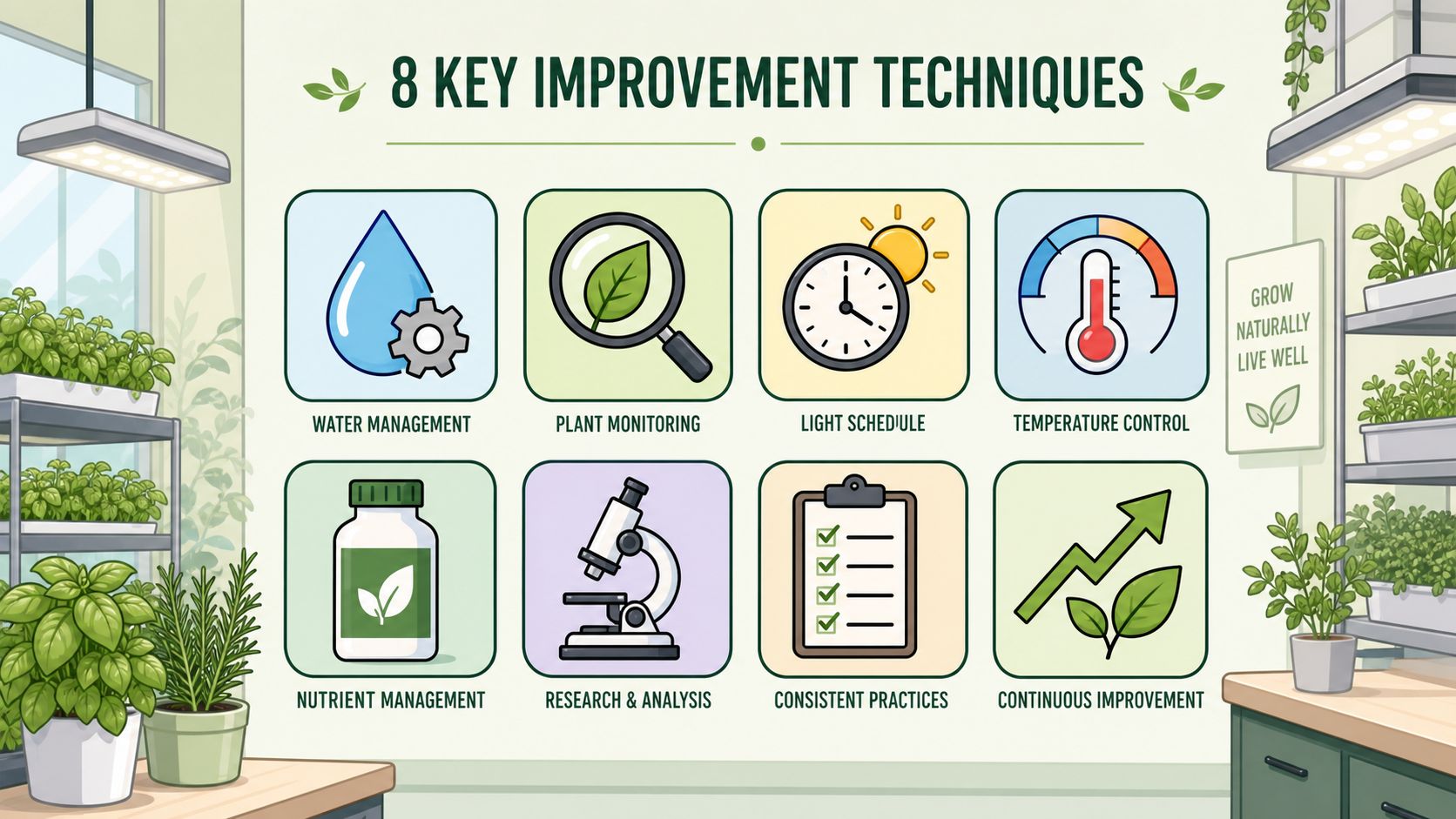
Boost your grow with proven techniques. You want faster, cleaner runs, fewer annoying surprises, and better results from seed to harvest. That could mean stronger starts from feminized seeds, smoother veg on an autoflower run, tighter environmental control in flower, or a more consistent dry and cure that preserves the aroma you worked for.
Quality improvement techniques give you a simple way to stop guessing and start refining. Instead of changing five things at once and hoping one works, you pick a method, track a few useful signals, and improve one stage at a time. That saves time, cuts waste, and makes your grow feel a lot less chaotic.
This matters whether you're a home grower trying to avoid dispensary lines, a caregiver running repeatable plant cycles, or a craft cultivator trying to keep every batch true to the cultivar's look, structure, and terpene expression. The same core idea applies in every setup. Build a process, measure it, fix weak spots, repeat.
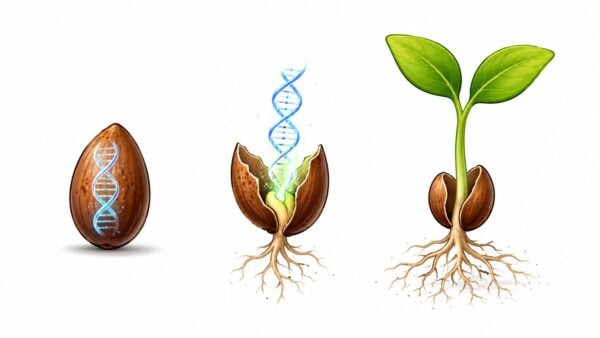
If you're starting with feminized seeds, you're already simplifying the path to harvest. High quality feminized seeds can produce female plants between 95% and 99% of the time, and under optimal conditions the success rate can reach 99%, which is one reason so many growers use them for more predictable runs, according to this overview of feminized seed success rates.
1. Six Sigma
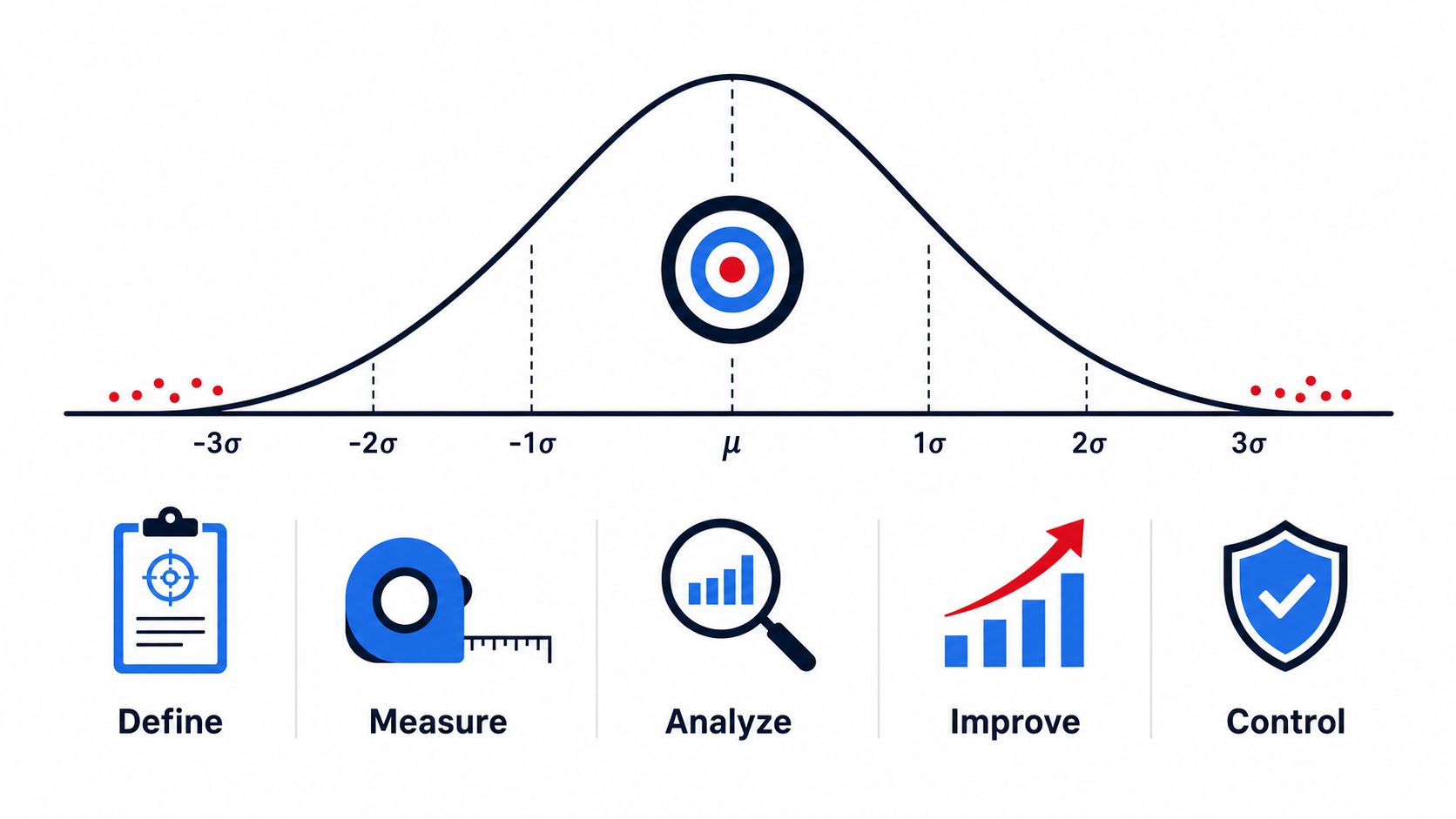
Six Sigma works when your grow has repeat problems that feel random but aren't. Maybe one tray lags in germination, one tent keeps drifting out of range, or one part of your harvest process keeps dulling aroma. Six Sigma forces you to define the problem, measure it, analyze the cause, improve the process, and control it after the fix.
The classic target is strict. Six Sigma aims for no more than 3.4 defects per million opportunities, using DMAIC for existing processes and DMADV for new ones, as outlined in this history summary of Six Sigma methods. You don't need a factory mindset to use that logic in a grow room. You just need a repeatable routine and a willingness to track what keeps breaking.
How to use it in a cannabis grow
Start where mistakes cost you time or quality.
- Define one problem: Pick something concrete, like uneven sprouting, stretching seedlings, or inconsistent dry room conditions.
- Measure a small set of signals: Track things like days to sprout, watering timing, canopy temperature, or moisture loss during drying.
- Analyze the pattern: Look for one likely source of variation, such as media saturation, light distance, airflow, or handling.
- Improve one variable: Change one part of the process, then run the same cultivar again.
- Control the fix: Write the new standard down so you don't slide back into old habits.
Practical rule: If you can't explain the defect in one sentence, you're not ready to fix it.
A home grower might use Six Sigma on germination by standardizing soak time, media moisture, dome use, and light timing. A craft team might use it on post-harvest handling to protect the cultivar's aroma profile and trim quality. In both cases, the win comes from reducing variation, not from making the grow more complicated.
2. Lean Manufacturing
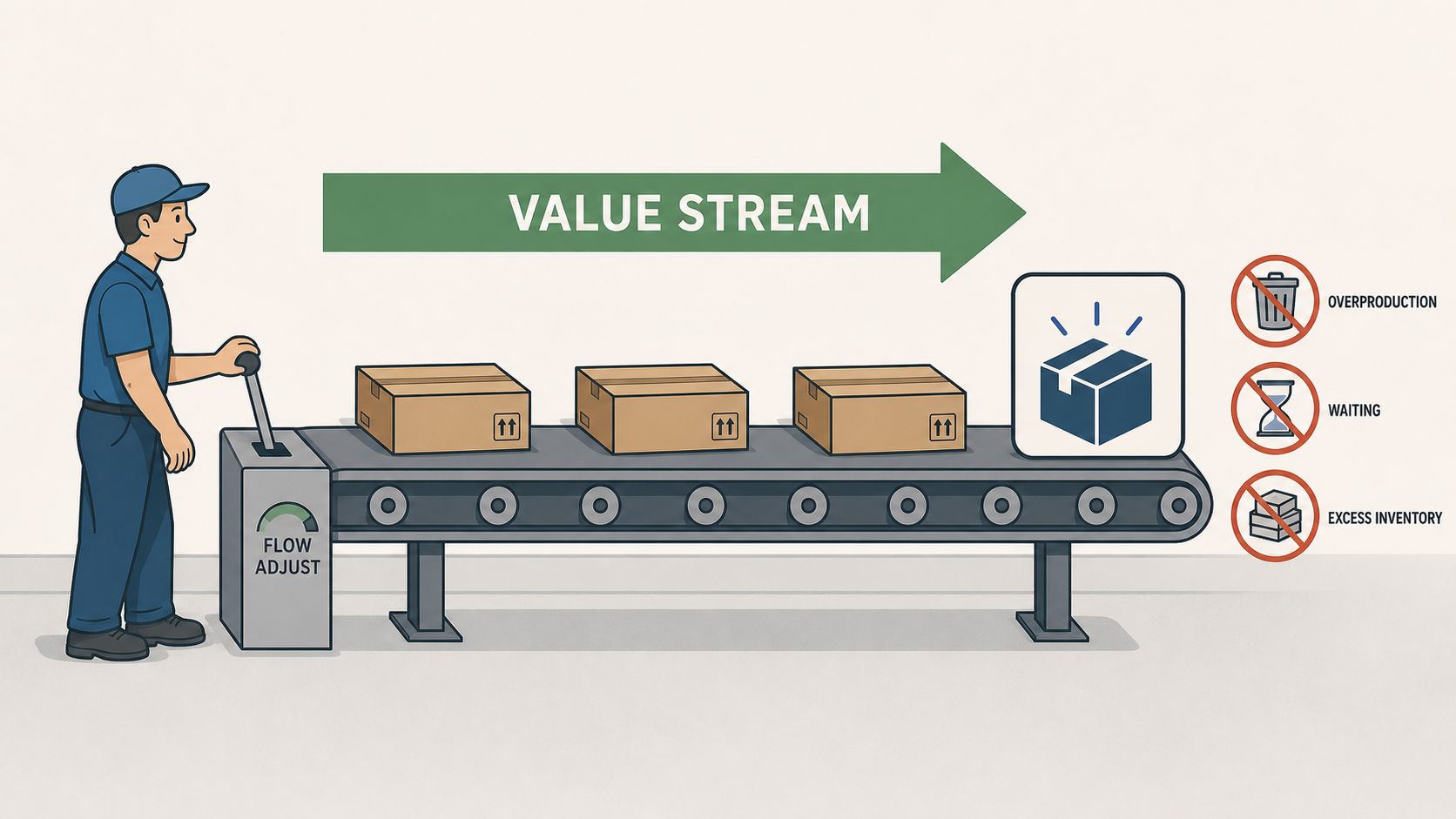
Lean is the best fix for grow setups that feel busy all the time. You're mixing feed, moving tools around, checking the same plants three times, and still ending the day feeling behind. That's waste, and Lean helps you cut it out.
In cannabis cultivation, waste usually shows up as extra movement, overcomplicated routines, excess runoff, unnecessary defoliation, duplicate note taking, and gear stored in the wrong place. Lean says every step should either help the plant, protect quality, or make your workflow faster and cleaner. If it doesn't, trim it.
Where Lean helps most
A home grower can apply Lean by organizing the whole room around task order. Put your pH pen, spray bottle, ties, pruners, and notebook in one station. Mix feed once. Water in the same pattern every time. Prune with a clear purpose, not because the plant looks crowded. If you want a cleaner canopy workflow, this guide on pruning cannabis plants helps keep that task intentional instead of random.
- Cut motion waste: Keep all daily tools in one portable tray or wall rack.
- Cut waiting: Mix irrigation water before lights on, not after plants are already asking for it.
- Cut overprocessing: Stop making constant tiny adjustments unless your notes show a real issue.
- Cut clutter: Remove unused bottles, old tags, and backup gear from the grow area.
Lean works well in small tents because every wasted step is obvious fast.
A medical-style home grow might use Lean to simplify a repeat cycle around dependable feminized cultivars. A craft cultivator might use it to tighten harvest day flow so plants move from chop to hang with less handling. Lean isn't flashy. It's just the fastest way to make your room easier to run.
3. Total Quality Management (TQM)
TQM is for growers who want quality to show up everywhere, not just at harvest. It's not enough to grow nice looking flowers if your labels are messy, your notes are inconsistent, your dry room drifts, and your jars all cure a little differently. TQM treats the whole process like one connected system.
That mindset fits cannabis really well because every stage affects the next one. A rough start in germination can echo through veg. Sloppy transplant timing can change structure. Poor record keeping can make a great cultivar impossible to repeat. TQM fixes that by making quality part of every task.
Make quality everyone's job
If you're growing solo, "everyone" still means every role you play. You're the propagator, irrigator, trainer, trimmer, and cure manager. Each role needs a standard.
Try this:
- Write your standards: Decide how you germinate, transplant, feed, support, dry, and cure, then document it.
- Review after every run: Note what worked, what slipped, and what you'll keep for the next cycle.
- Build around the grower's experience: Include packaging, seed storage, labeling, and how easy your notes are to use.
- Use feedback quickly: If a cultivar consistently runs taller, drinks faster, or stacks denser, update your process.
A caregiver or small production team can use TQM to assign clear quality checks at handoff points. One person checks irrigation logs. Another checks trellis timing. Another checks drying conditions and jar labels. That keeps quality from depending on memory.
Standout point: The plant doesn't care which stage you ignored. Quality loss compounds across the whole run.
TQM also helps when you're comparing cultivars. If one line consistently gives you the growth pattern, aroma, and finish you want, keep the process around it stable. Then use the Botanist Seeds comparison tool to find similar cultivars that fit your room instead of starting from scratch every cycle.
4. Kaizen
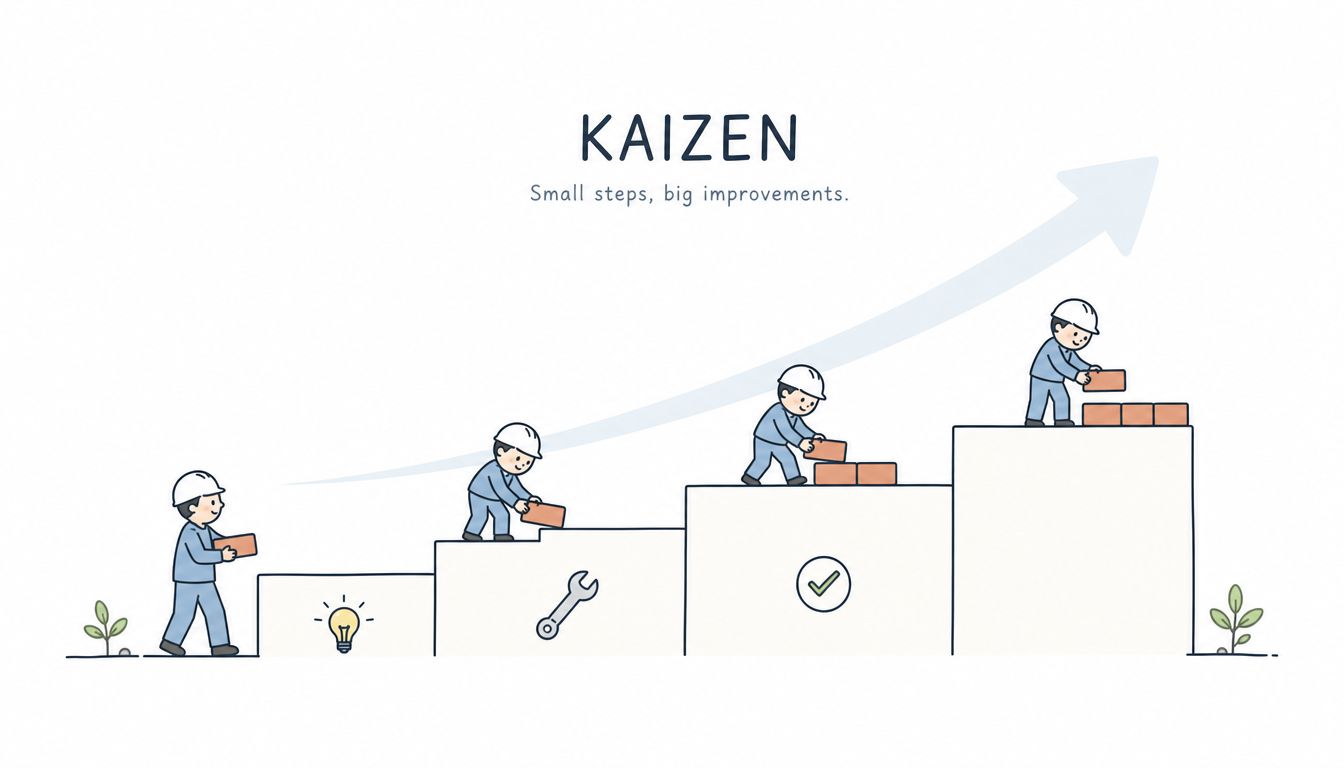
You finish harvest, look back through your notes, and realize the run did not fail because of one big mistake. It slipped from a dozen small ones. The veg room got a little crowded. Irrigation timing drifted. Trellis cleanup happened late. Dry room humidity bounced more than it should have. Kaizen is how you fix that kind of grow.
Kaizen means continuous improvement through small, repeatable changes. For cannabis cultivation, that is the smarter move. Seed to harvest work is full of little decisions, and those decisions stack fast in a home tent, a medical room, or a craft facility.
Small changes that matter
Use Kaizen when the process mostly works but keeps producing annoying, repeat problems. Do not rebuild the whole room because one cultivar stretched too hard or one batch dried unevenly. Tighten one part of the process, measure it, and keep the change only if it makes the next run easier to repeat.
A few strong Kaizen moves for cannabis growers:
- Pick one stage each week: Germination, transplant, veg, flower, harvest, dry, or cure.
- Change one thing only: Adjust irrigation timing, plant spacing, pruning timing, label placement, or your trimming workflow.
- Track one simple metric: Germination rate, days to root, runoff EC drift, canopy evenness, pest sightings, dry time, or jar moisture stability.
- Write the result down: If you cannot explain what changed and what happened, you are guessing.
- Keep changes that reduce effort and variation: If a fix only works when you babysit it, it is not a good fix.
Here is what that looks like in real grows.
A home grower notices seedlings are slow and uneven. Instead of changing lights, nutrients, and genetics all at once, they improve one step: more consistent moisture during germination. The metric is simple. Count how many seeds emerge within the same window.
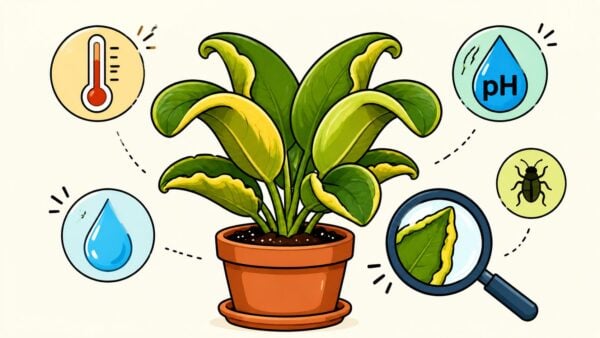
A medical grow sees recurring lower-leaf yellowing in mid-veg. Before adding more feed, the team standardizes irrigation checks and compares runoff patterns against a guide to cannabis nutrient deficiencies. The metric is fewer recurring deficiency symptoms across the same cultivar.
A craft grow keeps losing time during harvest because tagged plants get mixed up between phenos. The fix is boring and effective. Color-coded tags by row and a required check before cutdown. The metric is zero misidentified plants in trim and cure.
Kaizen works best when the improvement is small enough to test and clear enough to keep.
The biggest mistake is changing five things at once. Then you have no idea what helped. Another common mistake is chasing flashy upgrades while ignoring boring friction. Better scissors sanitation, a cleaner watering order, or a tighter dry-room checklist will often improve quality faster than new gear.
Kaizen wins because growers can stick with it. One better step per cycle is enough to improve consistency, protect plant health, and make strong results easier to repeat.
5. Root Cause Analysis (RCA)
When a grow goes sideways, growers often treat the visible symptom. Leaves fade, so they add feed. Growth stalls, so they crank the light. Aroma drops in cure, so they blame the cultivar. RCA stops that reflex and makes you ask why the problem happened in the first place.
This is one of the most useful quality improvement techniques for cannabis because cultivation problems rarely start where they show up. A weak finish can come from root stress weeks earlier. A nutrient issue might be a watering issue, a pH issue, or a media issue.
Ask why until the pattern shows up
Use the five whys. Keep going until the answer points to a process, not a symptom.
A simple grow example:
- Problem: Lower leaves are yellowing.
- Why: The plant isn't taking up enough nutrients.
- Why: Root zone conditions are off.
- Why: The medium stays wet too long.
- Why: Irrigation volume and dry-back timing aren't matched to container size.
- Why: You copied a schedule from a different cultivar and environment.
If you're sorting out leaf issues, this guide to cannabis nutrient deficiencies is useful, but use it as a starting point, not a final diagnosis.
Stop replacing symptoms with supplements. Fix the process that's creating the symptom.
RCA also works well after harvest. If buds feel airy, ask whether the issue came from genetics, light intensity, canopy management, root restriction, or flower room environment. A home grower can do this with a notebook. A craft team can do it in a short post-run review with photos, logs, and observations from each room lead.
The big benefit is simple. Once you find the root cause, future runs get easier.
6. Statistical Process Control (SPC)
SPC is old school in the best way. The field of statistical quality control was formally established on May 16, 1924, when Walter A. Shewhart of Bell Telephone Laboratories issued the memo that included the first sketch of a modern control chart, according to the NIST history of Shewhart and control charts. He built the method to separate common-cause variation from special-cause variation, which is exactly what growers need when a room starts drifting.
In plain English, SPC helps you tell the difference between normal plant-to-plant variation and a real process problem. That matters in cannabis because no two plants are perfectly identical, even within the same cultivar. But if your room temperature, VPD, dry-back, or irrigation EC starts shifting beyond the normal pattern, you want to catch it before quality slips.
What to chart in a grow
A control chart doesn't need to be fancy. A clipboard, spreadsheet, or dashboard works fine if the same metric gets logged consistently.
Track signals like:
- Environment: Canopy temperature, humidity, and VPD by room or tent.
- Irrigation: Feed EC, pH, runoff behavior, and dry-back timing.
- Plant performance: Height gain, leaf posture, stretch during transition, and finish timing.
- Post-harvest: Dry room temperature, humidity, and daily moisture loss trend.
For VPD tracking, keep a reference like this weed VPD chart close to your daily log so adjustments stay grounded in actual targets instead of guesswork.
A quick visual helps if you're new to the concept:
SPC is especially useful in medical and craft contexts where consistency matters run after run. If one room repeatedly dries too fast, chart it. If one cultivar always stretches harder after a feed change, chart it. The chart won't fix the issue by itself, but it will show you when the process moved out of bounds.
7. Plan-Do-Check-Act (PDCA)
PDCA is the best method for growers who like testing ideas without betting the whole crop on them. You plan a change, try it on a small scale, check the result, and act on what you learned, making it clean, practical, and low drama.
This is a strong fit for home growing because every run teaches you something. Maybe you want to test a different germination setup for feminized seeds, a new trellis timing, a slower dry, or a revised cure routine for a louder aroma. PDCA lets you test that in a disciplined way instead of relying on memory and vibes.
Use PDCA for one controlled experiment
Say you want tighter internodes in early veg on an autoflower cultivar. Plan a small change to light distance or airflow. Do it on the next run. Check your notes and photos at the same plant age. Then act by keeping the change, dropping it, or refining it.
Use this structure:
- Plan: Write one change and one expected result.
- Do: Apply it to one run, one tent, or one section of the room.
- Check: Compare what happened against your notes, photos, and harvest quality.
- Act: Turn the result into a standard or set up the next test.
Mayo Clinic adopted the Plan-Do-Study-Act, or PDSA, cycle as its fundamental quality improvement tool for finding and scaling solutions to system problems, as noted earlier in the Six Sigma source. You don't need a huge institution to use the same basic logic. A two-plant tent can run PDCA just fine.
A caregiver might test one new drying rack layout. A craft cultivator might test one cultivar intake form for better note consistency. The point is controlled learning. One change, one test, one decision.
8. Quality Function Deployment (QFD)
QFD is what you use when your grow is solid, but you're not fully aligned with your desired outcome. Maybe you're chasing dense structure when what you really care about is aroma. Maybe you're buying seeds based on hype instead of whether the cultivar fits your room, your cycle length, and your preferred end result.
QFD starts with the grower's voice, then translates that into real process choices. In cannabis, that means connecting preferences like fast finish, compact growth, strong branching, loud terpene expression, easy trim, or a specific vibe to the way you select seeds and run the environment.
Turn preferences into process rules
A home grower might say, "I want a low-hassle cultivar for a small tent that still brings a rich aroma and a chill evening vibe." QFD turns that into selection and process criteria: feminized or autoflower format, manageable growth pattern, simple support needs, and a dry and cure workflow that protects aroma.
It also works at team level.
- List what matters most: Growth pattern, aroma profile, finish speed, ease of training, trim quality, and consistency.
- Match each need to a process choice: Pot size, training style, irrigation frequency, support method, and harvest timing.
- Spot tradeoffs early: A stretchier cultivar may need more training and more vertical room.
- Use the same scorecard every run: That makes cultivar comparisons much more useful.
There's also a data lesson here. Seventy eight percent of companies that fail to improve quality adoption cite data silos and poor metric definitions as the root cause, while teams that run data literacy office hours and share metric logic see 3.2 times higher user satisfaction scores, according to this analysis of data adoption and metric alignment. In a grow, the equivalent is simple: if your notes are messy and your definitions change every run, your decisions will be messy too.
QFD helps you avoid that. It makes your seed choices and grow choices line up with the desired result.
8-Method Quality Improvement Comparison
| Method | 🔄 Implementation complexity | ⚡ Resource requirements | ⭐ Expected outcomes / 📊 Impact | 💡 Ideal use cases | Key advantages |
|---|---|---|---|---|---|
| Six Sigma | High, formal DMAIC structure and certification | High, statistical tools, trained belts, dedicated projects | Very high defect reduction and measurable ROI (⭐⭐⭐⭐) | Complex, variable-rich processes (batch quality, labeling, testing) | Data-driven, measurable, strong waste reduction |
| Lean Manufacturing | Moderate, requires value-stream mapping and cultural change | Moderate, training, process redesign, JIT systems | Improved throughput, lower inventory, faster delivery (⭐⭐⭐) | High-volume packaging, fulfillment, inventory management | Eliminates waste, speeds delivery, increases flexibility |
| Total Quality Management (TQM) | High, organization-wide adoption and leadership buy-in | High, sustained training, cross-functional teams, measurement | Strong customer satisfaction and cultural quality gains (⭐⭐⭐) | Companies seeking long-term, company-wide quality culture | Company-wide ownership of quality; customer-centered |
| Kaizen | Low, incremental, frontline-driven changes | Low, minimal capital, staff time and suggestion systems | Slow but steady cumulative improvements (⭐⭐) | Continuous small improvements, staff engagement, low-cost fixes | Low risk, builds engagement, sustainable small wins |
| Root Cause Analysis (RCA) | Moderate, structured investigation methods required | Low–Moderate, investigation time, cross-functional input | Prevents recurrence; reduces long-term failure rates (⭐⭐⭐) | Post-incident analysis, recurring defects, quality surprises | Targets root causes, creates organizational learning |
| Statistical Process Control (SPC) | Moderate, control charts and monitoring processes | Moderate–High, sensors, data collection, statistical training | Early detection of drift; improved consistency (⭐⭐⭐) | Processes with measurable metrics and high-volume output | Real-time alerts, objective control limits, waste reduction |
| Plan-Do-Check-Act (PDCA) | Low, simple four-step iterative cycle | Low, small tests, basic data collection | Rapid learning and low-risk validation (⭐⭐) | Pilot tests, gradual rollouts, iterative improvements | Easy to use, low-cost experiments before full rollout |
| Quality Function Deployment (QFD) | High, extensive customer research and mapping | High, surveys, workshops, House of Quality analysis | Better alignment with customer needs and higher satisfaction (⭐⭐⭐) | New product/process design; aligning features to grower priorities | Translates voice of customer into specific specs; prevents wasted features |
Cultivate Success Every Harvest
You finish a run, crack open the jars, and already know what happened. The veg window ran too long, one corner of the room stayed cooler than the rest, dry-back got inconsistent in week five, and the cure lost some of the nose. Good growers don't call that bad luck. They treat it like a process problem and fix it before the next seed pops.
That's the fundamental value of quality improvement in cannabis cultivation. It gives you a practical way to tighten each stage, from germination and transplanting to irrigation, harvest timing, drying, and cure. The point is simple. Get more consistent plants, better flower, and fewer preventable mistakes.
Use the method that fits the problem in front of you. Six Sigma works for recurring defects like uneven germination or repeated nutrient issues in the same cultivar. Lean helps home and craft growers clean up wasted motion, extra inputs, and sloppy room flow. TQM is the right call when clones, veg, flower, dry, and cure keep getting handled like separate jobs instead of one connected system. Kaizen works well for small medical grows that need steady progress without adding complexity. RCA and SPC are strong when a room keeps drifting off target and you need to find the cause fast. PDCA is the easiest way to test a change before you roll it across the whole run. QFD helps when you're choosing genetics based on your actual setup, yield goals, cannabinoid profile, labor tolerance, and harvest style.
Keep the metrics basic.
Track the handful of numbers and notes that change your decisions. Germination rate. Days to transplant. VPD and root-zone trends. Stretch by cultivar. Irrigation timing. Dry room temperature and humidity. Cure behavior after jarred flower settles. If you grow at home, that can live in a notebook. If you run a medical or craft operation, use a shared log and review it every week. The format matters less than consistency.
One clear example. A home grower running autoflowers in a small tent kept getting airy lower buds and blamed genetics. After tracking light distance, canopy spread, defoliation timing, and PPFD by plant position, the underlying issue was obvious. The canopy was uneven from week three onward, so the fix was training earlier and simplifying plant count. A craft grower dealing with batch-to-batch terpene inconsistency found the problem in dry room swings, not flower room nutrition. Different scale, same lesson. Measure the step that fails, then fix that step.
Don't try to install all eight methods at once. Pick one problem, one method, and one round of changes. Review every harvest the same way, keep what works, and cut what doesn't. That's how a grow goes from decent to dialed in.
If you're ready to tighten up your process and choose cultivars that fit your space, schedule, and style, check out Botanist Seeds. Their comparison tool makes it easier to sort feminized and autoflower options, compare growth traits, and pick genetics that support a more consistent, rewarding harvest.