





Zoap Strain: A Complete Grower’s Guide
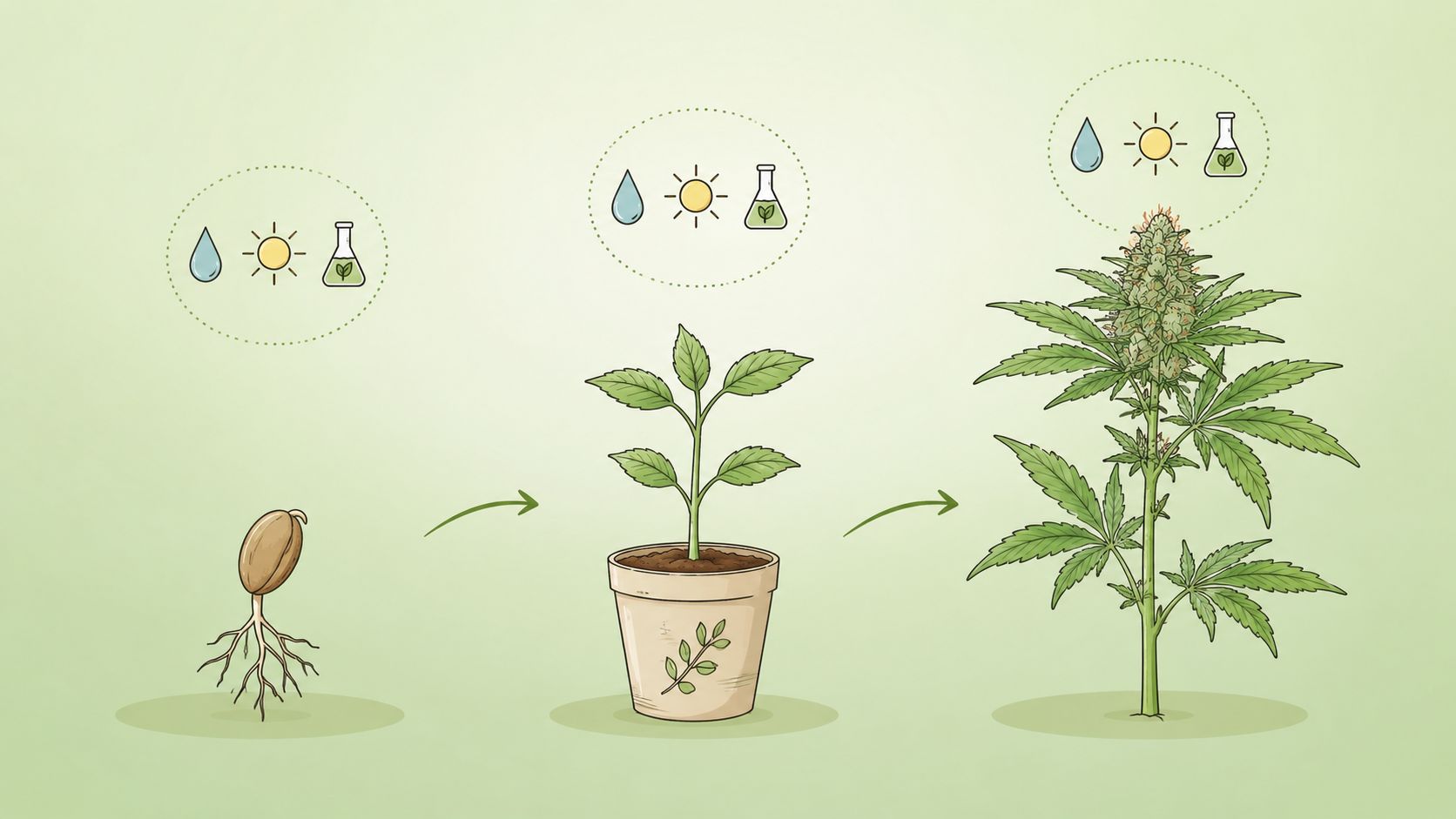
You’re probably in the same spot a lot of home growers hit after a couple runs. You want something new, but not something random. You want a cultivar that looks special in the jar, smells like it belongs on the top shelf, and still behaves well enough in a tent that you’re not fighting it every week.
That’s where Zoap Feminized Seeds make sense.
Zoap has built a name as one of those modern boutique cultivars that gives home growers a legit shot at dispensary-style flower without turning the grow into a headache. It’s known for fruit-forward lineage, strong resin production, and a balanced overall character that makes it appealing both in the garden and after harvest. For a small home setup, that mix matters. You only have so much canopy space, so every plant has to earn it.
Introducing Zoap The All-Around Winner
If you’re shopping for your next run, Zoap sits in a sweet spot. It’s modern enough to feel exciting, but not so finicky that it only makes sense for a full commercial room. Zoap Feminized Seeds are a practical pick for the home grower who wants quality first and drama second.
A lot of cultivars sound great on paper, then disappoint in one of three places: weak aroma, awkward structure, or underwhelming final flower. Zoap gets attention because it usually checks all three boxes in the right direction. It has the kind of flavor profile growers chase, the potency that stands out to experienced consumers, and a growth pattern that can work well in a tent when you manage it with some intention.
Why home growers keep looking at Zoap
What makes it appealing is the balance. This isn’t just a “big yield” cultivar or just a “flavor” cultivar. It has a broad appeal that suits the person growing for their own jars, not just for bragging rights.
- Flavor-driven genetics: Zoap is commonly associated with sweet, sour, fruity, and clean aromatic notes.
- Strong finished flower: It’s consistently described as a high-potency cultivar, which gives homegrown buds real value.
- Feminized convenience: The feminized format simplifies a personal grow and keeps the process focused on productive plants rather than extra sorting work.
- Tent-friendly potential: With the right training, it suits small indoor setups far better than giant, unruly plants that outgrow your light footprint.
Practical rule: If you’ve got limited plant count and limited floor space, pick cultivars that can give you both quality and consistency. Zoap fits that job better than a lot of hype strains.
Zoap also works well for growers who care about the full experience of growing at home. You skip dispensary lines, you stop paying retail taxes on every jar, and you get the satisfaction of pulling down flower that you grew yourself. That part matters more than people admit.
The Genetics and Vibe of the Zoap Cultivar
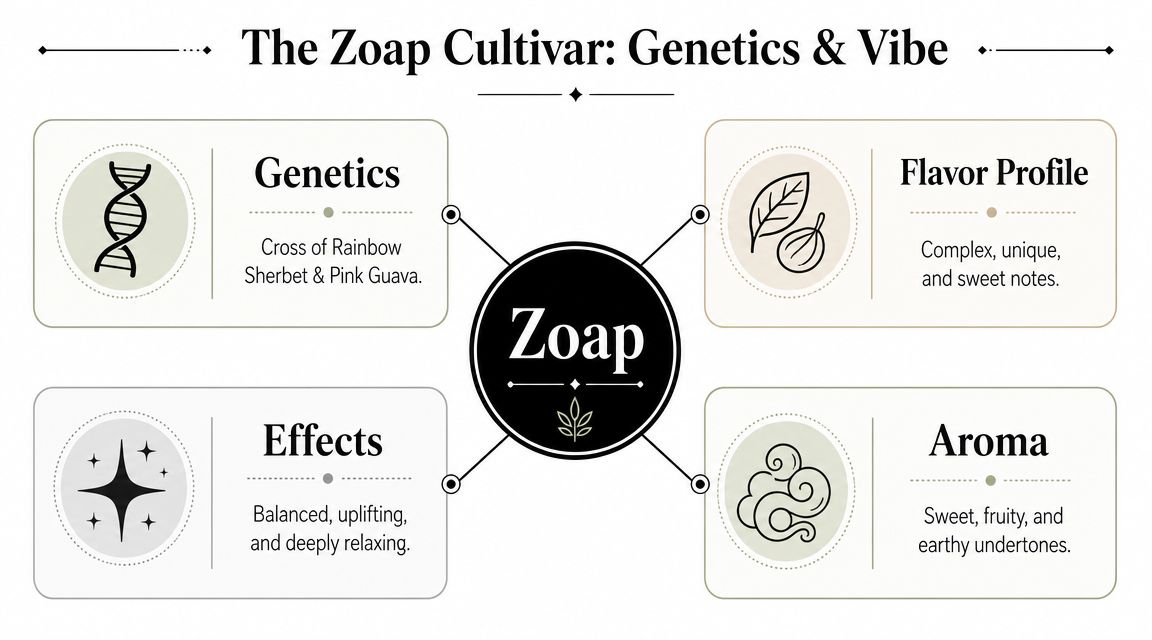
Zoap has a real breeding story behind it, and that matters more to a home grower than the hype usually does. The cultivar is widely described as a cross of Rainbow Sherbet and Pink Guava, and this Zoap lineage profile at SeedFinder traces it back to Deo Farms in Oakland, California, where the line was selected from a large Rainbow Sherbet hunt before the better-known Zoap expression was chosen.
For a tent grow, that tells you something useful right away. Zoap was worked and selected with intent, so you can expect a modern dessert-leaning cultivar with a stronger identity than random bag-seed style crosses. It still shows variation, because that is how seed-grown plants work, but the line did not appear by accident.
What the lineage suggests in the garden
Seed-bank listings often describe Zoap as a 50% indica and 50% sativa cultivar. I do not put much weight on that split by itself, but I do use it as a rough clue. In practice, Zoap usually gets talked about like a plant with enough vigor to branch and stretch, without turning into a total headache in a small room.
That is good news for home growers working with one light and limited headroom. The trade-off is that balanced hybrids can fool people. They look manageable in veg, then put on more height than expected once bloom starts. Zoap is the kind of cultivar that rewards early training instead of late correction.
Aroma and flavor expectations
The appeal here is mostly terpene-driven. Growers and seed sellers tend to describe Zoap with sweet, fruity, sour, and clean notes, often with a cherry-citrus angle and a polished, almost soap-like edge. That last part is the key. If you are chasing old-school fuel, skunk, or earth, Zoap may not scratch that itch.
If you do like brighter modern profiles, Zoap stands out. The jar aroma is part of the reason growers keep running it.
A few words fit it well:
- Sweet
- Fruity
- Sour
- Clean
- Resin-heavy
That profile also explains the cultivar’s place in a home setup. Zoap makes sense for the grower who wants flower that smells distinct after dry and cure, not just while the plant is standing in the tent. The practical side is simple. Good environmental control matters with terpene-forward cultivars, because too much heat or a rushed dry can flatten the exact qualities you picked this one for.
Potency and Harvest Expectations
At harvest, Zoap earns its reputation by bringing real strength to the jar. Multiple listings place its THC in the mid-to-high 20s, including 24% to 26%, 26%, up to 27%, and 29%, as summarized in this Zoap potency overview from a seed bank.
That matters because it puts Zoap in the upper tier of modern retail-style flower. For a home grower, that means your finished product can feel like a serious upgrade over average mids or forgettable dispensary pickups. You’re not just growing for volume. You’re growing for jars you’ll want to open.

What those potency numbers mean in real life
A cultivar in the 24% to 29% THC window isn’t one to treat casually. Zoap is generally better suited to experienced consumers who already know they enjoy stronger flower. For the home grower, that’s good news if your goal is quality over quantity. A small personal stash goes further when the flower hits with some weight.
That doesn’t mean every plant from every pack will feel identical. It means the cultivar’s ceiling is high enough that your environment, dry, and cure matter even more than usual.
What to watch before chop day
Strong genetics can still lose their edge if you rush harvest or fumble post-harvest handling. Zoap is the kind of cultivar where patience pays you back. If you cut too early, the aroma won’t feel finished. If you dry too hot or too fast, you can flatten the very thing that made you choose Zoap in the first place.
A few practical checkpoints help:
- Watch maturity closely: Don’t harvest by breeder description alone. Use plant signals and finish the run properly.
- Protect the resin: Keep bloom conditions stable late in flower and avoid unnecessary stress.
- Take harvest timing seriously: If you want a better read on ripeness, this guide on when to harvest cannabis is worth reviewing before chop day.
Here’s the trade-off with high-end cultivars like Zoap. They can produce flower that feels premium, but they also punish sloppy finishing. The upside is obvious though. When you nail the timing, trim, dry, and cure, you get the kind of stash that reminds you why growing at home beats standing in line and paying store prices.
Your Step-by-Step Zoap Grow Profile
You pop a Zoap seed in a small tent, give it decent light, and a couple weeks later the plant starts telling you what kind of run this is going to be. If the roots get established early and the canopy gets shaped on time, Zoap stays manageable and productive. If you let it drift, it can crowd a tent faster than expected.
For a home grower, that matters more than breeder sales copy. Zoap has the kind of structure that can do very well indoors, but only if you run it like a tent plant instead of treating it like it has endless room.
To keep the whole cycle easy to visualize, here’s the broad roadmap.
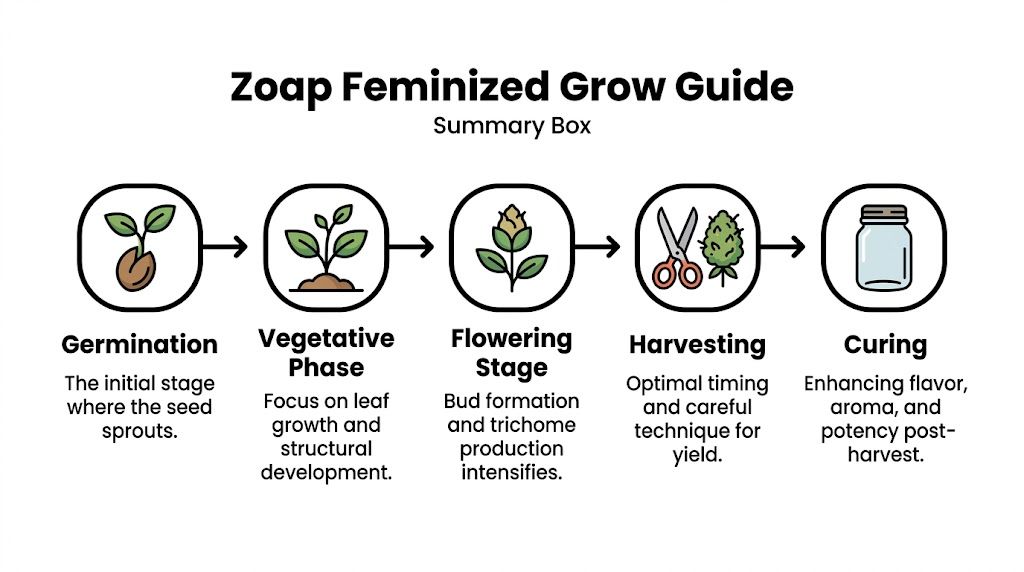
Start simple in germination
Zoap feminized seeds do best with a boring start. That is a good thing. Stable warmth, a lightly moist medium, and patience beat constant checking and overhandling every time.
Use the germination method you already trust. Once the taproot is down and the seedling is upright, focus on consistency. Keep the medium damp, not waterlogged, and give enough light to stop stretching without hammering a fresh sprout.
A few early mistakes cause more trouble than growers expect:
- Overwatering: Seedlings stall fast in soggy media.
- Hot feeding: Young plants need very little nutrition at first.
- Rough transplant timing: Move them after they have enough root mass to recover quickly.
Build the plant in veg
Veg is where Zoap earns or loses its place in a small garden. The goal is not maximum height. The goal is a plant with enough branching to fill your footprint without turning the center into a humid knot of leaves.
Start with roots. Train only after the plant is growing steadily and throwing healthy new growth. Once it has momentum, guide the shape early so you are not forcing a correction later in stretch.
A practical veg checklist looks like this:
- Get the container rooting well first: A stressed plant does not train cleanly.
- Open the middle of the plant: Better airflow now prevents headaches later.
- Spread the tops outward: Match the canopy to your light footprint.
- Watch leaf color: Medium green usually means you are closer to the mark than dark, glossy leaves.
If you are new to how seed lines can vary from plant to plant, this quick guide to cannabis phenotypes helps explain why one Zoap seedling may stay tighter while another stretches more in the same tent.
Here’s a useful visual if you want a quick grow refresher before your run gets going.
Flowering and finish time
Zoap usually lands in a bloom window that works well for home growers. It is not a marathon cultivar, but it still needs proper finish time if you want the flower to come out with its full character.
That balance is part of the appeal. You can fit Zoap into a normal tent rotation without tying up your space forever, but rushing the last part of flower is still a mistake. This cultivar shows the difference between “done enough” and fully finished.
During bloom, keep your attention on a few things:
- Stretch management: Make sure tops stay in the useful light zone.
- Air movement: Dense flower sites need space and steady airflow.
- Late-flower restraint: Big feed changes and stress late in bloom usually cost more than they help.
A tent-friendly way to run Zoap
In a real home setup, this approach is usually enough:
| Grow stage | Main focus | Practical approach |
|---|---|---|
| Seedling | Rooting and stability | Light watering, moderate light, no heavy feed |
| Veg | Shape and branch development | Top or bend early, spread the canopy evenly |
| Early flower | Stretch control | Support structure, clean up crowded lower growth |
| Mid flower | Bud building | Keep the environment steady, avoid big changes |
| Late flower | Resin and finish | Stay patient, reduce stress, watch ripeness closely |
| Cure | Flavor preservation | Dry slowly and jar carefully |
A level canopy is usually the difference between a plant that looks good and a plant that pays the tent back.
Yield expectations without the hype
Zoap clearly has solid production potential, as noted earlier, but home growers should read breeder numbers as proof of ceiling, not a prediction of outcome. Tent size, light intensity, root volume, and how well you manage the canopy decide far more than the label on the pack.
That trade-off is straightforward. Push the plant too hard, and quality slips. Keep it healthy, keep it even, and finish it properly, and Zoap tends to reward careful growers with a worthwhile harvest.
Feeding and Training for the Best Results
Zoap doesn't need to become a giant plant to become a productive one. In fact, most home growers get better results when they stop chasing size and start chasing shape. With this cultivar, training is usually worth more than vertical growth.
That's especially true in tents. If you let Zoap grow naturally without much guidance, you can still get a decent plant. But if you top it, spread it, and keep the canopy level, you usually get a more useful structure for indoor lighting.
Why simple training beats letting it ride
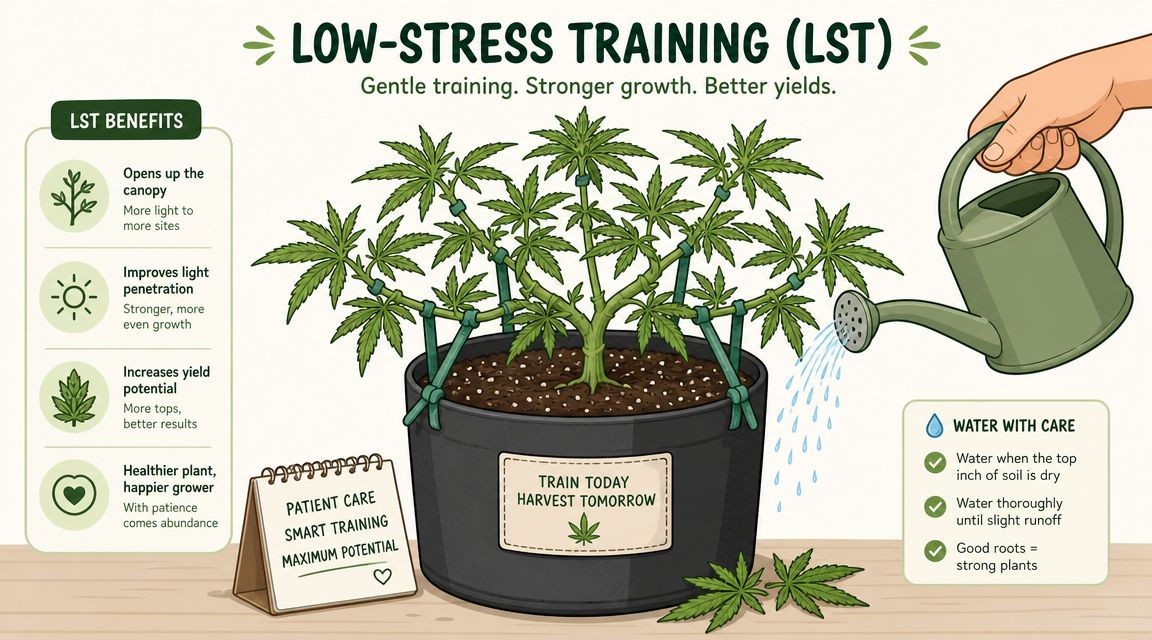
A home LED has a limited sweet spot. You want as many tops as possible sitting inside that zone. That's why topping and low stress training make so much sense with Zoap. They help turn one dominant top into a wider field of productive tops.
The practical benefits are straightforward:
- More even light distribution: Better canopy shape means fewer wasted corners.
- Improved airflow: Dense cultivars need breathing room.
- Better support later: Flower gets heavy faster when the structure is right from the start.
- More efficient tent use: You're filling square footage, not just growing height.
A basic training plan can be pretty modest. Top once after the plant is established, then use soft ties to guide branches outward. If you like a screen, Zoap is a good candidate for a simple SCROG because it responds well to canopy control.
Don't confuse “bigger plant” with “better harvest.” In a tent, the plant that fits the light wins.
Feeding without overdoing it
Zoap should be treated like a high-potency hybrid, which means stable conditions and sensible feeding matter more than aggressive bottle schedules. The usual mistake is trying to force growth with too much nutrient too soon. That often leads to leafy growth, tip burn, or stressed plants that never fully express their resin potential.
A better approach is boring, and boring works.
- Start lighter than the feed chart says: Most bottle schedules are more aggressive than a home grow needs.
- Increase only when the plant asks for it: Strong growth and healthy leaf color beat blind feeding.
- Back off if you see stress: Burned tips, clawing leaves, and overly dark foliage are signs to slow down.
- Use a complete nutrition plan: If you want a good primer, this guide on the best nutrition for a cannabis plant is a solid place to compare feeding basics.
What usually works best with Zoap
Instead of thinking in terms of “maximum feed,” think in terms of clean transitions:
| Phase | Feeding mindset | Training mindset |
|---|---|---|
| Early veg | Mild and steady | Begin shaping |
| Mid veg | Support active growth | Top, bend, widen |
| Transition | Keep it balanced | Finish major training |
| Mid bloom | Support flower set | Only light adjustments |
| Late bloom | Avoid excess | Hands off |
The reason this works is simple. Zoap already has the genetics for quality. Your job is to remove obstacles, not force miracles.
Understanding Zoap Phenotypes and Variability
You pop three Zoap feminized seeds in the same tent, under the same light, in the same medium, and one still wants to stretch a bit more, one stacks tighter, and one carries a sharper nose in late flower. That's normal. Feminized seeds cut out the male hunt. They do not give you three carbon copies.
Zoap is the kind of cultivar where those small differences are worth paying attention to, especially in a home setup where every plant takes up real space. One pheno may stay easier to manage in a short tent. Another may have the louder aroma you like. Another may finish in a way that makes trim day less annoying because the structure is cleaner and the buds are easier to work through.
What variation usually looks like in a small grow
The differences are often subtle at first, then obvious by mid to late flower:
- Plant shape: One may grow with wider side branching, while another stays more vertical.
- Stretch behavior: Plants from the same pack can respond differently after the flip.
- Bud formation: One may stack denser tops, while another puts more weight into side branches.
- Aroma profile: You may notice one plant reads sweeter and another comes off cleaner, sharper, or more soap-forward.
- Finish window: Harvest timing can drift a bit from plant to plant, even in the same run.
That matters more at home than breeder descriptions sometimes suggest. In a commercial room, slight variation gets averaged out across a larger crop. In a 2×4 tent, one awkward stretcher can change your whole canopy plan.
How to handle Zoap variation without turning it into a science project
Start by labeling each plant early. Keep it simple. Plant A, B, and C is enough. Take a few notes each week on height, branch spacing, smell in bloom, and how each one handles feed. That record becomes useful fast if you plan to keep cuts from a standout plant.
If you want a clearer framework for judging what you're seeing, this guide to cannabis phenotypes and how growers identify them is a good reference.
The practical goal is not finding the "best" plant in some abstract way. The goal is finding the plant that fits your setup and your preferences. In a short tent, the winner might be the one that stays manageable and still puts out good flower. In a smell-sensitive house, the winner might be the plant that keeps quality high without getting too loud too early.
Steady conditions help you accurately discern those differences. If temperature, watering, or light intensity keeps swinging, stress can blur the line between true genetic variation and a plant that just had a rough week. Keep the environment consistent, and Zoap will show you what each seed has to offer.
How to Buy Quality Zoap Feminized Seeds
Buying seeds online gets easier when you stop treating every product page like a promise. With Zoap Feminized Seeds, the smart move is to look past flashy descriptions and focus on signals that the genetics are being presented clearly.
Start with the breeder information. You want a listing that tells you the cultivar lineage, expected structure, and whether the seller is transparent about how the plant tends to perform. Vague descriptions are usually a bad sign. If a seller can't explain what they're offering in plain language, keep moving.
A simple buying checklist
- Check the lineage details: Zoap should be described around the Rainbow Sherbet and Pink Guava background.
- Look for feminized labeling: That keeps the run focused and efficient for home growing.
- Read the grow description carefully: You want useful cultivation info, not empty hype.
- Compare multiple listings: If several reputable sellers describe the cultivar in similar ways, that's a good sign.
- Buy for your setup, not your ego: A cultivar that suits your tent, climate, and skill level beats a trendy pick that fights you the whole run.
Another good filter is whether the seed listing helps you understand trade-offs. No cultivar does everything perfectly. A reliable seller won't make it sound like every seed is magic. They'll give you enough detail to judge whether the cultivar matches your goals.
If you want to compare options without bouncing between random seed-bank pages, Botanist Seeds makes that process a lot easier. Use the comparison tool to sort through genetics, find a Zoap option that fits your space, and choose a cultivar you'll enjoy growing, not just scrolling past.