Super Sour Diesel: A Home Grower’s Guide to This Cultivar
You know the feeling. You catch a whiff of that sharp, greasy, citrus-heavy flower and immediately think, yep, that’s the one. Not sleepy, not soft, not subtle. The kind of cultivar that smells like a fuel can sitting next to a bowl of lemon peels.
Ready to grow it yourself? Shop Super Sour Diesel seeds at Botanist Seeds.
For a lot of home growers, Super Sour Diesel sits in that classic category. It has the name recognition, the loud terp profile, and the kind of daytime vibe people usually chase at the dispensary. The difference is that growing it yourself means no lines, no tax shock, and no guessing how the flower was handled after harvest.
It’s also just a satisfying project. If you like cultivars with personality, this one has plenty of it. Super Sour Diesel rewards growers who pay attention to light, airflow, training, and post-harvest handling. Treat it casually and it can get wild. Treat it properly and you end up with flower that carries that unmistakable gas-and-citrus character all the way into the jar.
Introducing a True Classic Super Sour Diesel
A lot of growers first come to Super Sour Diesel the same way. They’ve heard about it for years, maybe tried something in the broader diesel family, and want that unmistakable lively, loud, nose-forward experience in their own stash. That’s a solid reason to grow it at home.
Super Sour Diesel isn’t some random modern mash-up with a catchy label. It’s commonly identified as a cross of Super Silver Haze and Sour Diesel, which gives it a serious pedigree rooted in aroma-heavy, cerebral sativa lines. That background is a big part of why people still talk about it like a keeper instead of a passing trend.
Its place in cannabis history matters too. Super Sour Diesel emerged in the U.S. around the late 1990s or early 2000s, during the broader wave of diesel genetics that shaped modern cannabis culture, as noted in this history of Super Sour Diesel and diesel lineage. It ties back to a family tree that includes landmark genetics like Chemdawg and Super Skunk, which helps explain why the cultivar still feels familiar even to growers who haven’t run it before.
Why home growers keep coming back to it
This cultivar makes sense for hobbyists who want flower with a distinct point of view.
- You can grow for flavor, not just bag appeal: Super Sour Diesel is one of those cultivars where handling matters. Good drying and curing can make the difference between flat flower and a jar that opens with real bite.
- It scratches the self-sufficient itch: If you already know what kind of vibe you like, growing your own means you stop hoping the shop has something close.
- It feels like a project worth the effort: Some cultivars are easy but forgettable. This one asks for more attention, and that’s part of the appeal.
Practical rule: If you enjoy shaping a plant and dialing in aroma, Super Sour Diesel is more fun than a cultivar that basically grows itself.
For the home hobbyist, that’s the main draw. You’re not just growing cannabis. You’re trying to bring out a classic expression that’s been part of American cannabis culture for years, and doing it well enough that the jar tells the story before anyone even lights it.
The Super Sour Diesel Profile and Vibe
Crack a jar after a careful cure and Super Sour Diesel usually announces itself before you even get your nose all the way in. The first hit is sharp and loud. Citrus peel, sour funk, and that unmistakable fuel note that makes diesel lovers grin.
This cultivar has a clear personality. Home growers usually run it because they want flower that feels bright, alert, and full of character, not soft or sleepy. For a hobby grower using feminized or autoflower seeds, that matters. If you are putting weeks into a plant, the payoff should be a jar you look forward to opening.
What the aroma actually smells like
A proper Super Sour Diesel expression smells like fuel soaked into lemon rind, with some earth and pepper underneath. It is not a sugary dessert profile, and that is the whole point. The appeal is the bite.
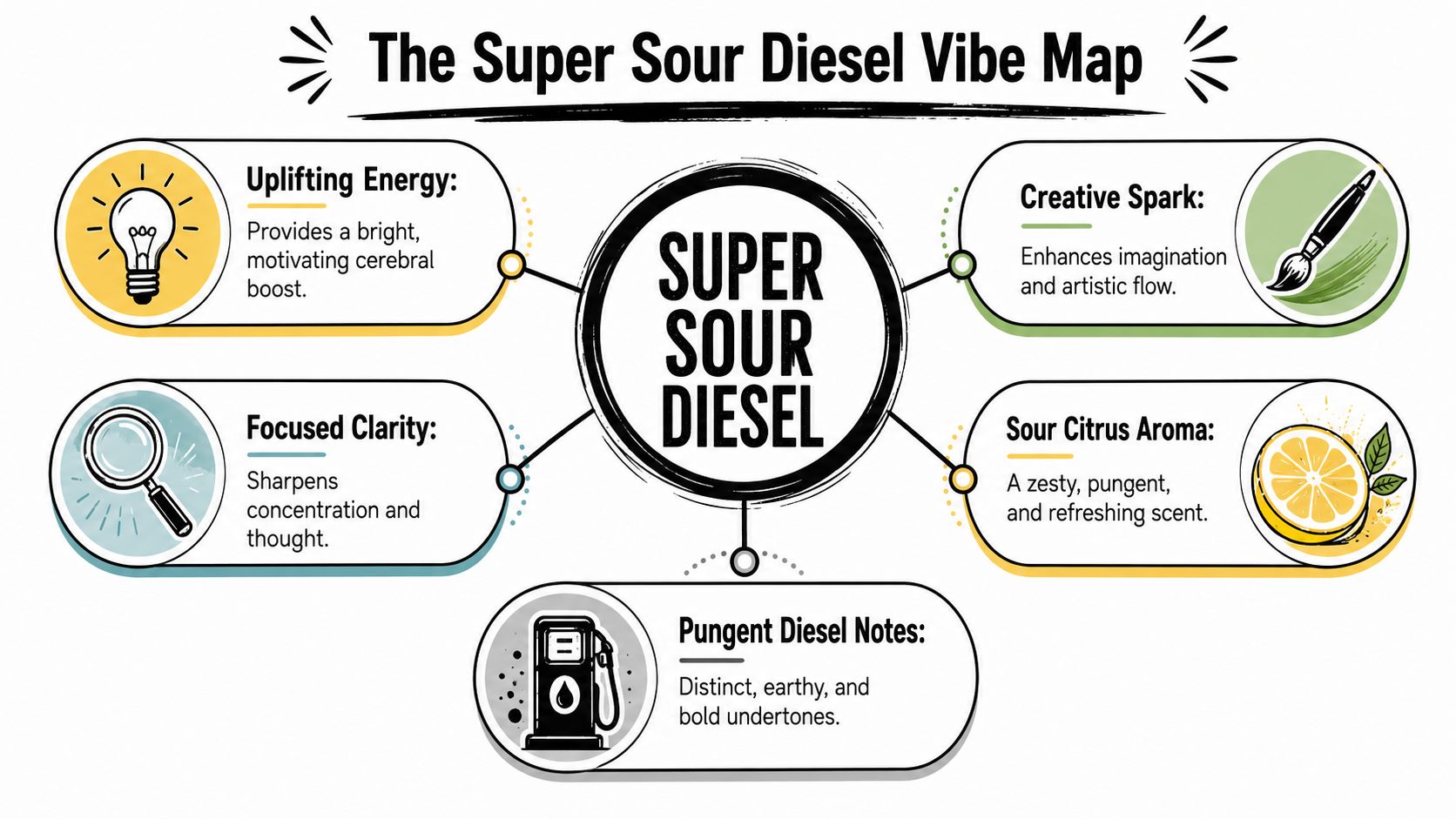
The terpene side usually centers on limonene, beta-caryophyllene, and myrcene, which lines up with the gas, citrus, pepper, and earthy notes described in this Super Sour Diesel terpene profile. Limonene gives it that bright top end. Beta-caryophyllene brings spice and a little snap. Myrcene rounds it out with a deeper, dirtier base. If you want a better read on how those compounds shape aroma from one cultivar to another, this guide to cannabis terpene profiles and their role in aroma is worth keeping handy.
How that shows up in the jar
A solid cure tends to reveal the profile in layers:
- On first open: sour citrus, fuel, sharp peel
- After a grind: pine, pepper, earth, heavier gas
- On the exhale and room note: less sweetness, more tang and bite
That last part is where a lot of home growers either nail it or miss it. Rush the dry and the whole thing can flatten out. Cure it well and the jar keeps changing a little every week, which is half the fun of growing your own in the first place.
The best Super Sour Diesel keeps the citrus and the fuel in balance. If one side disappears, the flower loses a lot of its charm.
The vibe most growers are chasing
The appeal is sensory first. You grow this one for the smell on your fingers after trimming, the way the jar stinks up a room, and the lively feel people usually associate with it.
Growers and regular consumers often describe the overall vibe as:
- Uplifting
- Creative
- Euphoric
- Mentally active
That profile is a big reason this cultivar still earns tent space. The flower feels distinct. For a home hobbyist, that is the reward. You are not just pulling weight off a plant. You are growing something with a point of view, and when it comes out right, you can smell it the second the lid comes off.
Choosing Your Seeds Feminized vs Autoflower
For a home grower, the first real decision isn’t whether Super Sour Diesel is worth running. It’s which version fits your setup.
If you’re choosing between feminized photoperiod seeds and autoflower seeds, think less about hype and more about how you grow. Your space, your schedule, and how much control you want matter more than anything else.
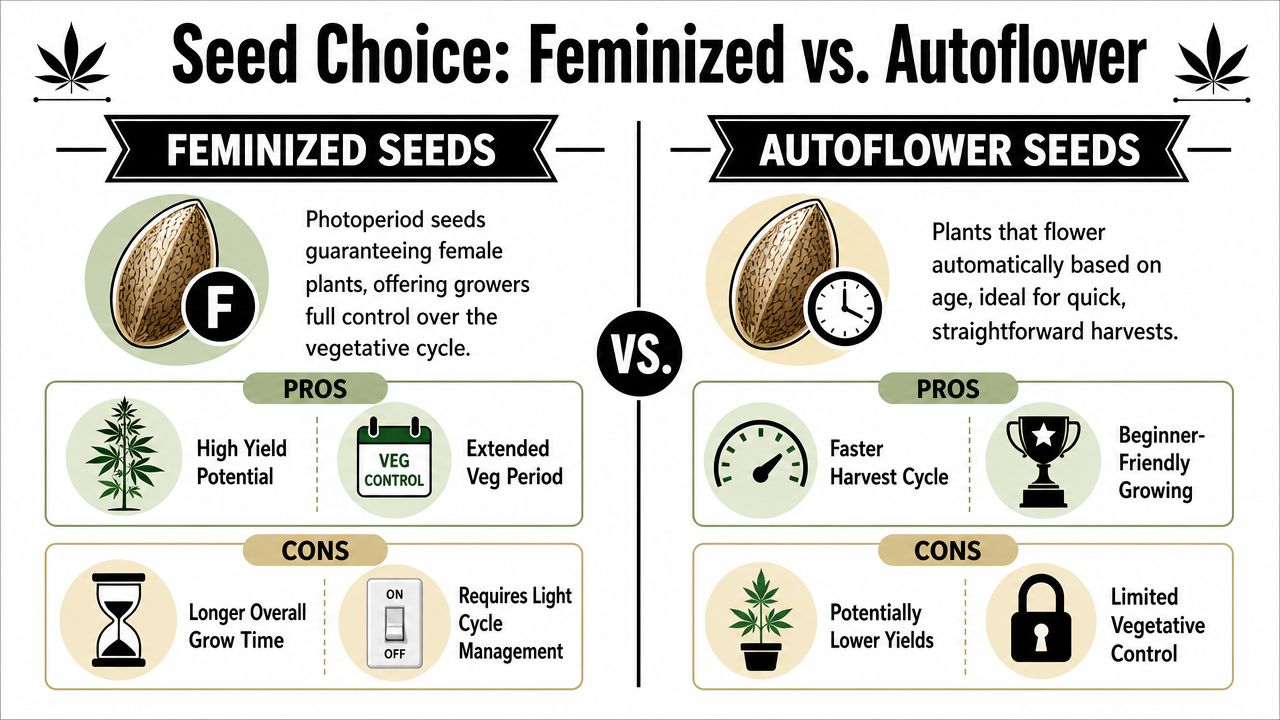
Feminized seeds
Feminized photoperiod seeds are the choice for growers who like to steer the plant instead of just keeping up with it. With a sativa-leaning cultivar like Super Sour Diesel, that extra control can be a big advantage.
You can keep the plant in veg longer, train it harder, fill out a canopy, and flip when the structure looks right. That’s useful when you’re dealing with a cultivar that tends to want vertical space and benefits from shaping.
Good fit for you if:
- You have decent ceiling room: Taller cultivars are easier to manage when you’re not fighting your tent from week one.
- You like training: Topping, low-stress training, and canopy work make more sense when the plant isn’t on an automatic clock.
- You want flexibility: If a plant needs more time to recover or fill out, feminized seeds give you that option.
Autoflower seeds
Autoflowers make more sense when simplicity is the priority. If you want a quicker, more compact, lower-fuss run, they’re often the easier path.
You don’t need to manage a flowering light schedule, and that removes one of the most common friction points for newer growers. They also suit hobbyists working in smaller spaces or trying to keep things discreet.
Better match if:
- You want a straightforward grow: Less timing pressure around the light flip.
- Your space is limited: Smaller plants are easier to tuck into a closet, small tent, or compact corner.
- You prefer speed over tinkering: Autoflowers reward steady care more than constant intervention.
Side by side trade-offs
| Seed type | What works well | What to watch |
|---|---|---|
| Feminized | More control over plant size and training | Requires light cycle management |
| Autoflower | Faster, simpler, more beginner-friendly | Less room to correct mistakes mid-grow |
If you're still split, this breakdown of autoflower vs feminized seeds helps clarify the trade-offs.
If you enjoy dialing in a canopy and making small adjustments over time, go feminized. If you want a cleaner, simpler path to harvest, go autoflower.
Neither choice is universally better. Super Sour Diesel just asks you to be honest about how you grow. Pick the seed type that matches your habits, not the one that sounds more advanced.
Setting Up Your Super Sour Diesel Grow
Super Sour Diesel usually performs best when the environment stays steady. Since it's a sativa-dominant cultivar with THC levels frequently hitting 18% to 24%, growers need to provide conditions that let the genetics fully express themselves, as noted in this overview of Super Sour Diesel aroma and cultivation potential.
That doesn't mean you need a fancy room full of pro gear. It means the basics need to be handled well. Strong light, clean airflow, a reasonable feeding plan, and enough room for the plant to stretch without turning your tent into a wrestling match.
Indoor or outdoor
Indoor growing gives you more control, and for this cultivar that control is useful. You can manage light intensity, airflow, and humidity without getting pushed around by the weather. If your goal is a cleaner, louder finished product, indoor usually makes the job easier.
Outdoor can absolutely work if your climate cooperates. The upside is obvious: free sunlight and room for roots to spread. The downside is that a lively, aroma-forward cultivar can become more of a moving target outdoors, especially if your conditions swing hard late in the season.
Indoor makes more sense if:
- You want consistency: Stable conditions usually mean fewer surprises.
- Odor matters: It's easier to plan for smell control inside.
- You're growing in limited space: A tent gives you boundaries and structure.
Outdoor makes more sense if:
- Your climate is friendly to long, vigorous plants
- You've got privacy
- You don't mind adapting to the season instead of controlling it
Soil or hydro
This one comes down to your style.
Soil is usually the friendlier route for a home hobbyist. It buffers mistakes, tends to be less twitchy day to day, and fits the slower, hands-on pace a lot of growers enjoy. You water, observe, adjust, repeat.
Hydro can push fast growth, but it asks for tighter attention. If your feeding or root-zone conditions drift, the plant tells you fast. Some growers love that level of responsiveness. Others just want a healthy plant without checking every variable like they're running a lab.
The basic setup checklist
Before you drop a seed, make sure these are covered:
- Lighting: Strong, even light matters. Weak light leads to weak structure and airy lower growth.
- Air movement: Moving air helps the plant build sturdier growth and keeps stale pockets from hanging around.
- Container choice: Don't cram a vigorous cultivar into a pot that limits root development too early.
- Headroom: Plan for stretch. This cultivar can surprise people who treat it like a squat bushy hybrid.
- Odor control: If smell matters where you live, set that up before late flower, not after.
Grow rooms fail in boring ways. Bad airflow, weak light, cramped space, and rushed setup cause more disappointment than genetics do.
What usually doesn't work
A few things tend to create headaches fast:
- Starting with a tiny space and hoping training fixes everything
- Overcomplicating nutrients early
- Letting humidity drift because the plant “looks fine”
- Using rough drying conditions after doing a careful grow
Good prep doesn't guarantee a perfect run, but it gives Super Sour Diesel a fair shot at acting like itself. That's the point.
Cultivation From Seedling to Flower
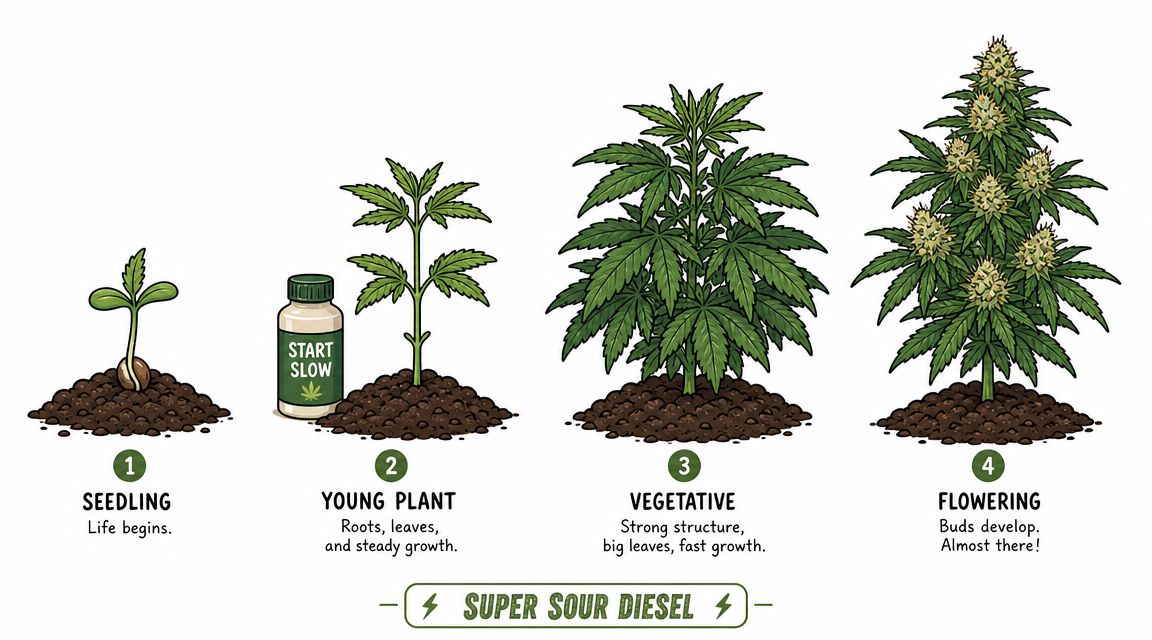
You can spot a rough Super Sour Diesel run early. The plant starts reaching, the internodes open up, and suddenly that “manageable little tent grow” turns into a height problem with weak lower bud sites. Home growers do best with this cultivar when they shape it early and stop trying to fix everything late.
Super Sour Diesel rewards steady hands. It grows with real energy, especially from feminized seed, and it usually responds well when you give it a clear plan instead of constant changes. For hobby growers, that means building a strong frame in veg, then protecting aroma and flower quality once the plant shifts into bloom.
Seedling and early veg
Seedlings need less attention than many growers think. Stable moisture, moderate light, and patience do more good here than a shelf full of bottles.
Keep the medium lightly moist instead of soaked. Let the roots search a bit. That wet-dry rhythm builds a stronger plant than hovering over it with a watering can every few hours. If the seedling looks upright, green, and calm, leave it alone.
Once it starts putting out confident new growth, begin feeding lightly. Super Sour Diesel can eat reasonably well, but young plants still punish heavy-handed feeding. Burnt tips in early veg often cost more time than slightly slower growth.
A few early checks matter:
- Stem strength: A sturdy stem now supports training later.
- Node spacing: Tight, healthy spacing usually means your light intensity is in a good range.
- Leaf posture: Leaves should look engaged, not limp from overwatering or stressed from too much heat.
Autoflowers need even more restraint. Skip topping unless you already have good auto timing. Gentle leaf tucking and light bending usually make more sense than recovery-heavy training.
Training before the stretch gets away from you
This cultivar can stretch hard after the flip. If you wait until flower is underway, you usually spend the next few weeks chasing height instead of building an even canopy.
For feminized seeds, topping in veg and following up with low-stress training works well in a home setup. The goal is simple. Spread the plant out, keep tops at a similar height, and get light into the middle of the canopy before the upper growth takes over. That gives you more usable bud sites and less scraggly lower fluff.
Useful moves for this stage:
- Top once or twice in veg if the plant is healthy and you have enough time to recover
- Bend and tie branches outward to widen the plant before flowering
- Clean up weak inner growth that will never catch proper light
- Rotate the pot regularly if one side is outrunning the rest under your fixture
One lesson a lot of home growers learn the hard way. Training is easier on a flexible branch than a woody one.
Mid flower and keeping quality intact
Once buds are forming, stop treating the plant like a project that needs constant improvement. At this point, consistency beats tinkering.
Keep feed changes small. Avoid heavy defoliation unless airflow is suffering. Support branches before they start folding over. If the room stays in range and the roots stay happy, Super Sour Diesel usually settles into flower with that sharp fuel-and-citrus character people grow it for in the first place.
Pay attention to the plant's pace, not your impatience. Buds should slowly swell, aromas should get louder and more defined, and the branches may need stakes or a net as weight builds. That is normal. Panic-pruning and last-minute nutrient experiments are not.
Humidity control matters a lot in this stretch, especially as flowers bulk up and the tent starts holding more moisture after lights-out. If you want a practical breakdown of drying and humidity management, this guide on using a dehumidifier when drying weed is worth reading before harvest day sneaks up on you.
What actually improves your final haul
Yield and quality come from momentum. Every stall in veg, every training delay, and every rough environmental swing shows up later in the jar.
The growers who get satisfying homegrown from Super Sour Diesel usually keep a few priorities straight:
- Build shape early so flower space is used well
- Feed enough to support growth, not enough to chase perfect leaf color
- Hold the canopy open so lower sites get useful light
- Keep late flower boring and stable
- Match your training style to the seed type, more assertive with feminized, gentler with autos
That last point matters more than it gets credit for. Feminized plants give you more room to recover from topping, shaping, and longer veg time. Autos ask for cleaner timing and fewer mistakes, but they can still produce a very satisfying personal stash if you keep the process simple.
A good Super Sour Diesel grow feels controlled without feeling fussy. Give it structure early, keep your hands off when it is cruising, and let the plant finish with its character intact.
Harvesting Curing and Storing Your Haul
Harvest is where a lot of good grows lose their edge. Not because the plant failed, but because the grower gets impatient right at the finish line. With a cultivar like Super Sour Diesel, that impatience usually shows up in the jar as dulled aroma and a flatter overall experience.
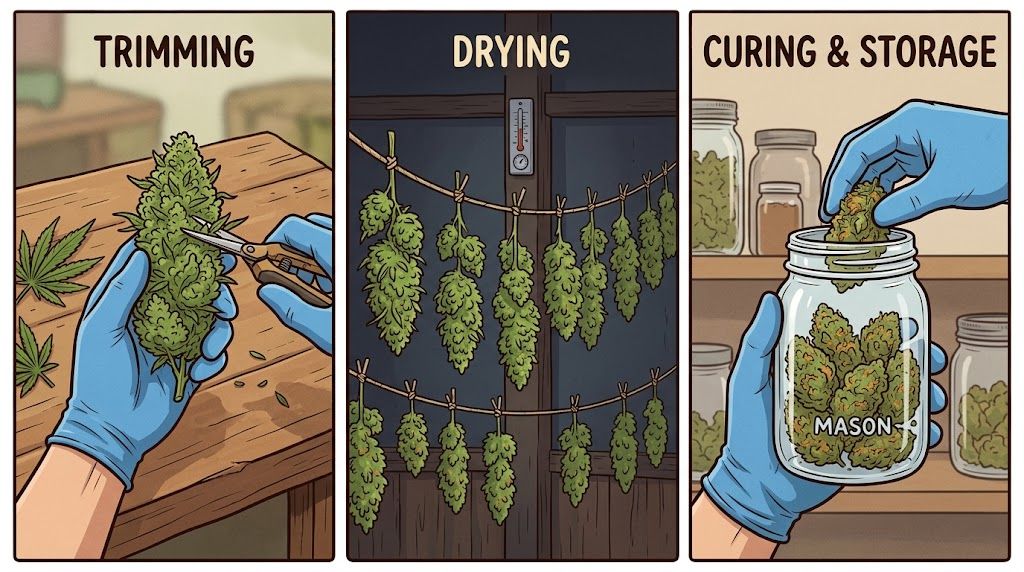
The whole point of running this cultivar is preserving that fuel-and-citrus identity. The terpene profile is part of the reason people choose it in the first place. Rough drying, too much heat, or a lazy cure can strip away the exact thing you spent months growing.
Picking the right harvest window
The best habit here is simple. Use your eyes, not your impatience.
Most home growers look at trichome development first because it gives a better read than leaf fade or pistil color alone. If the plant still looks pushy and unfinished under magnification, let it keep going. If the resin looks mature and the flower has reached that final swollen, sticky stage, you're getting close.
What doesn't work is harvesting just because the room smells loud and you're tired of waiting.
Drying is where aroma is protected
This is the stage where people accidentally cook off the good stuff. A slow, controlled dry gives the flower time to release moisture without dumping the louder volatile aroma compounds all at once.
Keep the trim and handling gentle. Don't manhandle branches, don't point harsh heat at fresh flower, and don't rush the process because jars are waiting.
If you want a deeper look at drying control, especially in humid conditions, this guide on using a dehumidifier when drying weed is worth reading.
Worth remembering: Great flower can be grown in a simple room. Great aroma usually requires patience after chop.
Curing makes the jar better
Curing is where the rough edges calm down and the profile gets more coherent. The sharpness doesn't disappear, but it usually becomes more layered. That's when Super Sour Diesel starts showing the kind of jar appeal people remember.
A simple jar cure works well for home growers:
- Use clean jars: Don't introduce funky smells into good flower.
- Fill them sensibly: Leave enough room for air exchange.
- Check them regularly early on: You're managing moisture, not sealing and forgetting.
- Store in a cool, dark place: Light and heat don't help cured flower.
For a visual walkthrough, this video covers practical post-harvest handling:
Long-term storage
Once the cure feels right, storage becomes pretty boring, and that's good. Boring storage preserves good work.
Keep jars sealed, keep them out of heat and direct light, and avoid opening them constantly just to admire the smell. Every unnecessary open is a small trade of aroma for curiosity. Super Sour Diesel is loud enough already. Let the jar hold onto it.
Frequently Asked Questions for Growers
How do I get more of that diesel smell?
Protect the finish.
Most growers blame genetics when the jar comes out flat, but the louder culprit is usually stress late in flower or rough handling after chop. If you want that sharp fuel note with a citrus edge, keep the plant comfortable in the final stretch, avoid excess heat, and trim with a light hand. Flower that smells grassy or bland usually lost some of its character on the way to the jar.
What's the biggest mistake with a sativa-leaning cultivar like this?
Waiting too long to control height.
Super Sour Diesel tends to reach upward fast, especially from feminized seed under strong indoor lighting. Autoflowers can stretch too, but they give you less time to correct mistakes. Start training early, keep the canopy even, and do not assume you can fix everything in week five. A plant that outgrows the space will force bad compromises with light distance, airflow, and yield.
Why do some plants lean more citrus while others smell more like straight fuel?
That comes down to phenotype variation. Seed-grown plants can share the same family traits and still express them a little differently. One may bring more lemon peel and brightness. Another may come off louder, dirtier, and more straight-gas in the jar.
For a home hobbyist, that is part of the payoff. You get to notice the small differences, keep notes, and decide which expression is worth growing again.
Is Super Sour Diesel a good pick for beginners?
Yes, if the beginner is reasonably organized.
This is a better fit for someone who checks the tent daily, trains on time, and keeps the environment steady. It is less forgiving for growers who wing it, especially with feminized plants that can stretch hard in flower. If you want a seed that rewards attention with a big smell, a lively grow, and real satisfaction at harvest, it can be a solid choice.
If you're deciding whether Super Sour Diesel fits your tent, schedule, or grow style, take a look at Botanist Seeds. Their site makes it easier to compare cultivars and seed types so you can choose a setup that matches how you grow.