Deep Water Culture: A Guide to Faster Cannabis Growth
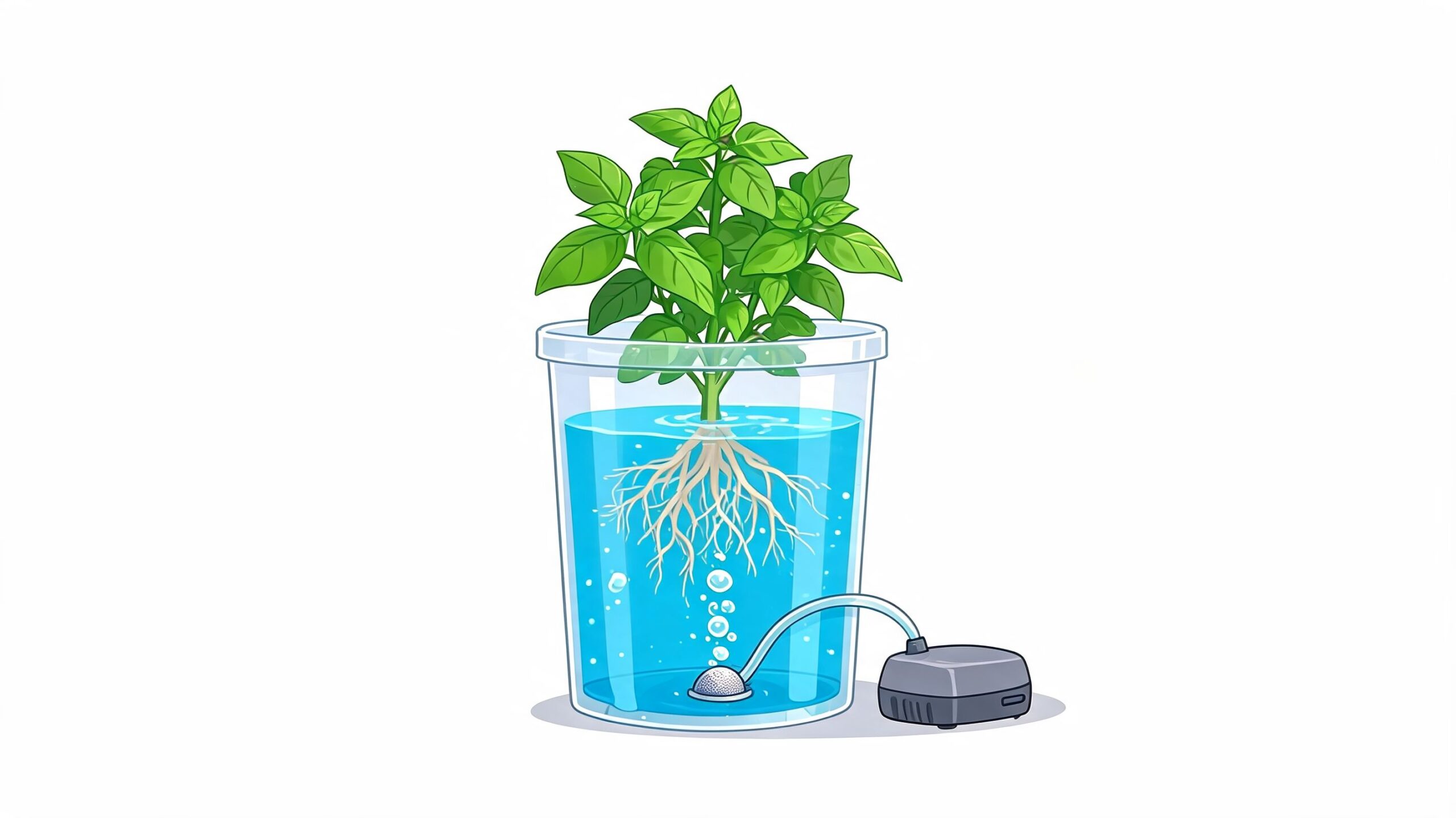
You’re probably here because soil has started to feel a little slow.
Maybe your last run was solid, but you kept thinking the same thing every time you watered: there has to be a faster way to grow bigger plants without turning the whole room into a full-time job. That’s usually the point where home growers start looking at hydroponics, then immediately bounce because the jargon sounds like a chemistry class.
Deep water culture is the version that makes the most sense for a smart hobbyist. It’s simple in layout, direct in how it feeds the plant, and very good at showing you what your cultivars can do when roots get nonstop access to water, oxygen, and nutrients. When a DWC setup is dialed in, cannabis cultivars have been documented growing up to 3.9 inches in a single day during veg, with significantly larger plants and higher bud production compared to soil, while using 60 to 70 percent less fertilizer according to a seed bank’s guide to DWC cannabis growth.
That kind of growth gets attention fast.
It also comes with a trade-off. Deep water culture is forgiving in some ways, but it won’t let you ignore basics. If your air pump quits, your water gets too warm, or your pH drifts hard, the plant reacts quickly. That’s the deal. More speed, more responsiveness.
Welcome to High-Speed Hydroponics
A lot of home growers end up at deep water culture for the same reason people switch from hand tools to power tools. They’re tired of doing things the slow way when a cleaner, more efficient option exists.
The classic version of this is the grower running a tent with decent light, decent airflow, and good genetics, but still feeling like the root zone is the bottleneck. Soil works. Coco works. But DWC changes the pace because the plant doesn’t have to search through a medium for water and nutrition. It’s right there, all the time.
That’s why deep water culture has such a strong reputation among hobby growers who want to level up without building a commercial room. The method came out of older water culture work dating back to John Woodward in the late 17th century, then moved toward modern commercial use when Dr. Merle Jensen advanced a shallow raceway system in the 1980s for leafy greens production, as outlined in the background and development of deep water culture. For cannabis growers, the appeal is practical, not historical. Faster veg, bigger plants, cleaner root access, less mess.
Why people stick with it: once a DWC bucket is running well, daily plant care often feels simpler than hand-watering containers.
There’s also a certain kind of satisfaction that comes with it. You build a bucket, drop in a rooted plant, hear the bubbles going, and suddenly hydroponics stops feeling like some advanced grower club. It starts feeling like something you can absolutely do in a spare room, garage, or tent.
The key is treating it like a high-performance setup, not a magic shortcut. DWC can make an easy cultivar look fantastic. It can also expose sloppy habits much faster than soil. That’s not a downside if you know it going in. It’s the reason a lot of growers end up learning more from one hydro run than from several average container grows.
What DWC Is and How It Really Works
In DWC, the plant’s roots sit directly in a nutrient solution that stays oxygenated around the clock. The crown stays above the waterline in a net pot, while the roots hang below and feed continuously. For a cannabis home grower, that changes the pace of the whole run. Veg can move fast, and small mistakes show up fast too.
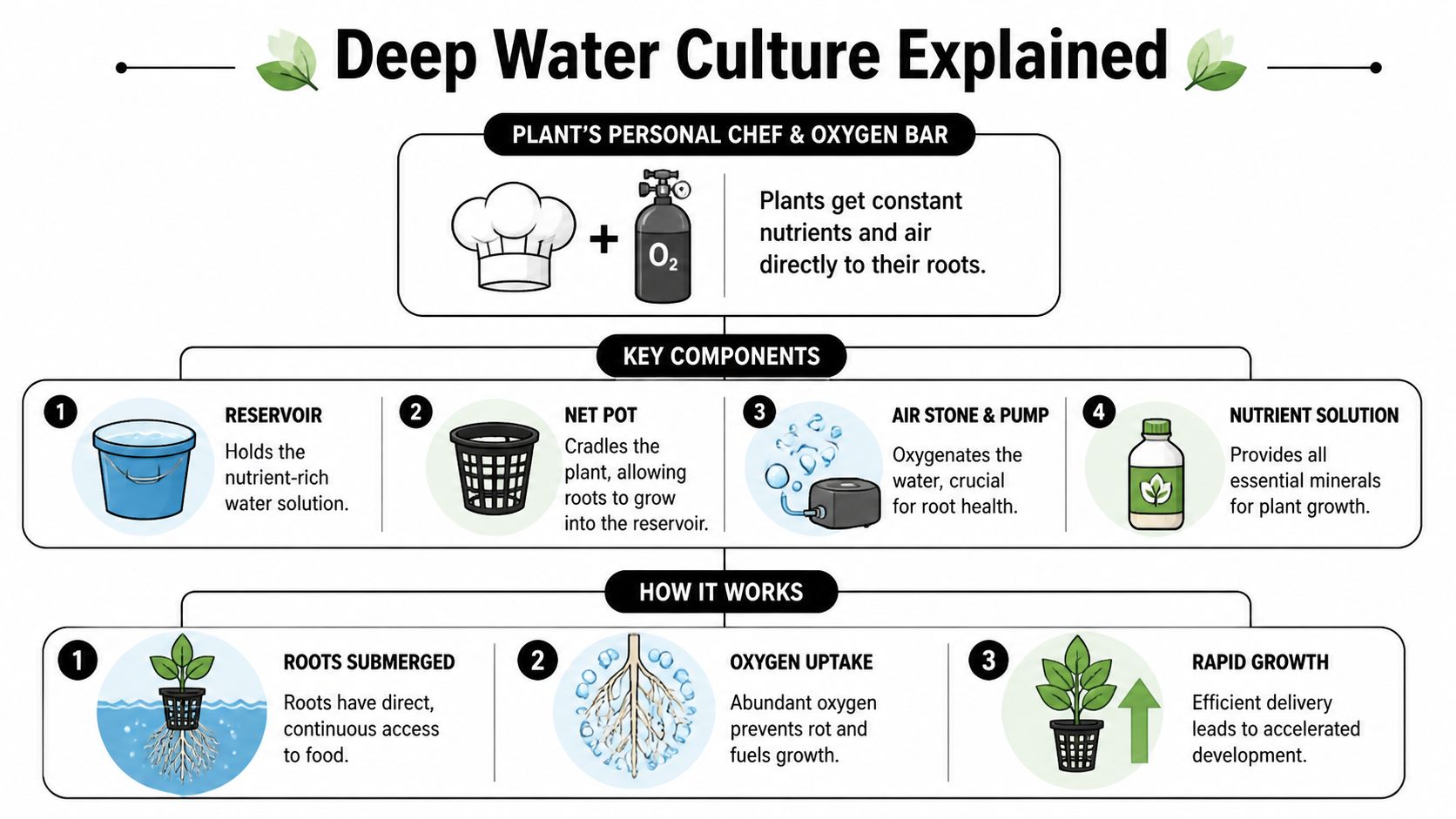
The core parts
A basic DWC system has only a few working parts, but each one pulls real weight.
- Reservoir: Usually a bucket or tote that holds the nutrient solution. This is the entire root environment.
- Lid and net pot: The lid supports the plant. The net pot lets roots grow down into the solution while keeping the stem base dry.
- Air pump: This stays outside the reservoir and pushes air through tubing.
- Air stone or diffuser: This turns that airflow into bubbles that keep the solution oxygen-rich.
- Growing medium: Usually clay pebbles in the net pot. They do not feed the plant. They just stabilize it while the root mass develops.
That simple layout is a big part of DWC’s appeal. Fewer parts means fewer things to troubleshoot, which is one reason many home growers use it as their first hydro system.
How the system actually works
The roots need two things at the same time. Constant access to nutrients and enough oxygen to respire. DWC supplies both in the same place, which is why healthy plants often build white, aggressive root mass and push top growth quickly.
Good aeration matters because roots can drown in still water. The air pump and stone keep the solution active, and the lid helps block light from hitting the reservoir. That cuts down on algae pressure and keeps the root zone cleaner.
Water temperature matters too. Warm solution holds less dissolved oxygen and gives pathogens better conditions. Cooler, well-aerated water usually keeps roots happier. In practice, growers get the best results when they treat the reservoir like live equipment instead of a passive bucket.
Here’s the practical view:
| Part | What it does | Why you care |
|---|---|---|
| Reservoir | Holds nutrient-rich water | Gives roots direct access to feed at all times |
| Net pot | Supports the plant | Keeps the crown above water while roots expand below |
| Air pump and stone | Oxygenates the solution | Supports root respiration and helps prevent stagnation |
| Lid | Blocks light | Reduces algae pressure in the reservoir |
Healthy DWC roots should look bright and firm, with no slime, sour smell, or brown mush.
For cannabis, this setup can translate into faster veg, heavier feeding capacity, and bigger plants in the same footprint, assuming the environment is dialed in. That last part matters. DWC rewards attention to detail. If pH drifts, the plant feels it quickly because the water is the feeding zone, not just a place the roots pass through. If you need a quick refresher, this guide on how to raise pH in water is a useful reference for reservoir adjustments.
That direct feedback is the core mechanism behind DWC’s reputation. When the root zone is clean, oxygenated, and balanced, cannabis responds with speed. When it is off, the plant lets you know early, which helps a home grower correct problems before yield suffers and choose cultivars that can make the most of a high-performance setup.
The Pros and Cons for Cannabis Growers
A lot of home growers get interested in DWC for one reason first. They want faster growth. Fair enough. In a well-run bucket, cannabis can veg hard, fill a canopy quickly, and turn a small tent into a very productive space. That upside is real. So are the trade-offs.
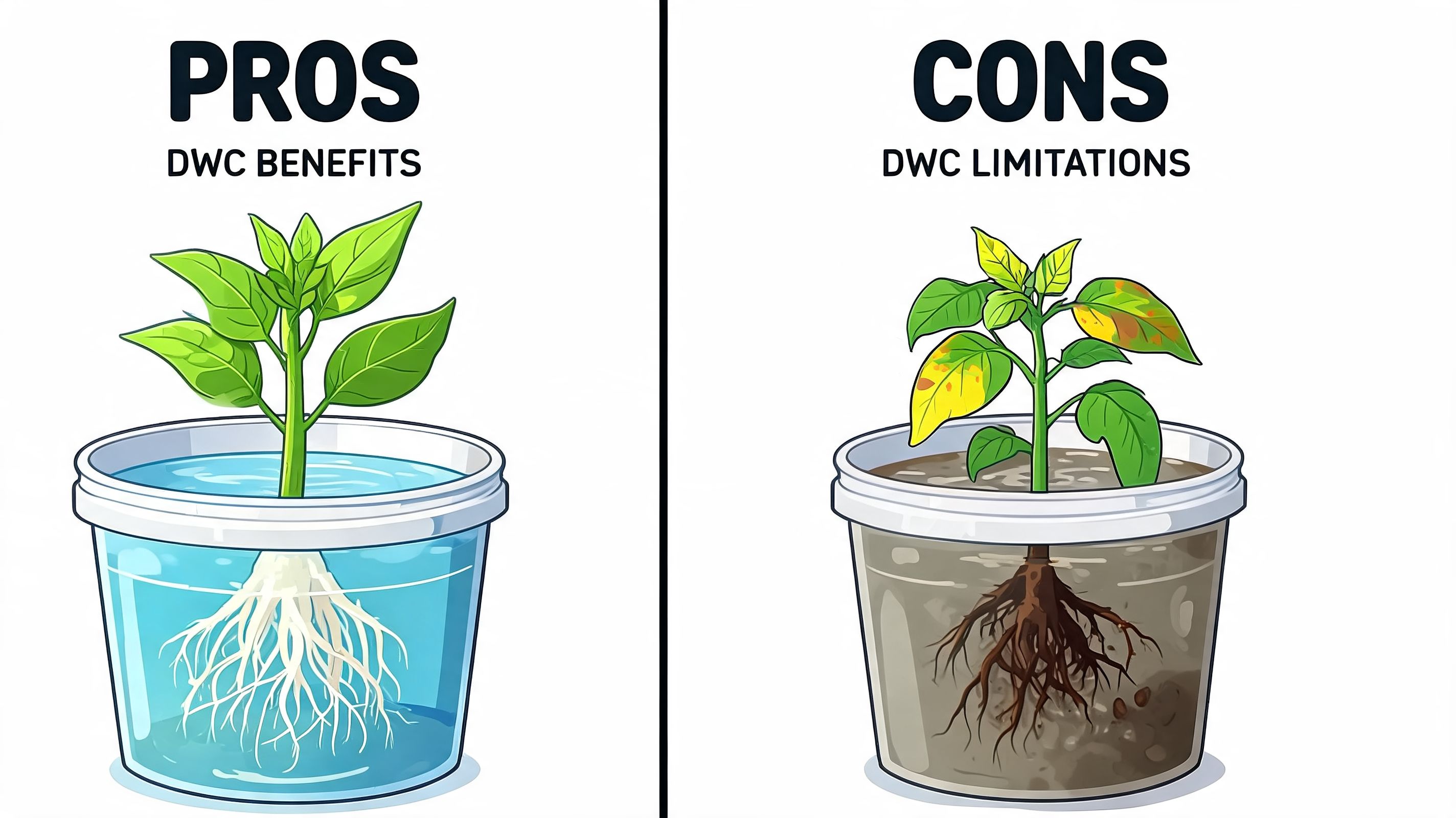
What works very well
DWC shines when a grower wants speed, clean root access, and tight control over feeding. For cannabis, those advantages often show up in ways that matter right away.
- Fast vegetative growth: Healthy roots sitting in an oxygen-rich nutrient solution can push aggressive top growth, which is exactly why many growers switch from soil or soilless media to DWC.
- Strong yield potential: If the environment, training, and reservoir are all in range, DWC can produce larger plants and heavier harvests in the same footprint.
- Clean, efficient workflow: There’s no bagged medium to store, no dusty transplant mess, and less runoff to manage around the tent.
- Quick plant feedback: Cannabis responds fast in DWC. If feeding is on point, growth rate and leaf posture usually tell you quickly.
- Less day-to-day hand watering: Once the system is built correctly, the bucket handles root-zone moisture on its own.
For growers comparing systems, growing with coco coir as a cannabis medium is a useful contrast. Coco gives you more buffer and a more familiar watering rhythm. DWC gives you more speed and more direct control, but it asks for better equipment and closer observation.
That trade matters when choosing genetics. A vigorous Botanist Seeds cultivar can make excellent use of DWC’s faster veg and heavier feeding potential, but only if the grower has enough vertical space, airflow, and training discipline to keep up.
What catches people off guard
The hard part with DWC is not complexity. It’s consequence.
A small mistake in soil might take days to show up. In DWC, the same mistake can show up by the next check. That can be a benefit for experienced growers because problems are easier to spot early. For newer growers, it can feel unforgiving.
- Power dependence: If the air pump stops, the root zone loses oxygen fast. Backup planning matters more here than it does in a container grow.
- Smaller margin for error: pH drift, high water temperature, or light leaks in the reservoir can become plant problems quickly.
- More frequent checks in small systems: A single 5-gallon bucket can change a lot over 24 hours once a plant gets large and starts drinking heavily.
- Equipment quality matters: Cheap pumps, weak air output, flimsy lids, and bad light-proofing create issues that a medium-based grow would tolerate longer.
- Plant size gets away from people: Fast growth sounds great until the cultivar stretches into the light and the tent turns crowded halfway through flower.
A key distinction: DWC feels low-maintenance only after the system is stable and sized correctly. Until then, it rewards consistency more than improvisation.
In practice, growers who dislike DWC usually ran into one of three problems. Poor aeration, warm reservoirs, or a cultivar that outpaced the space. Growers who stick with it tend to keep the build simple, monitor the bucket closely, and match the system to the plant. That’s where DWC starts making real sense for the modern home cannabis grower. Faster growth, bigger yield potential, and a clear path to choosing cultivars that can capitalize on a high-performance setup.
Your First DWC Setup A Parts and Assembly Guide
A first DWC build should be boring in the best way. One plant. One bucket. Solid parts. No fancy recirculation loop, no stacked reservoirs, no trying to copy a commercial room from a forum post.
Start with a single bucket and learn how the plant behaves.
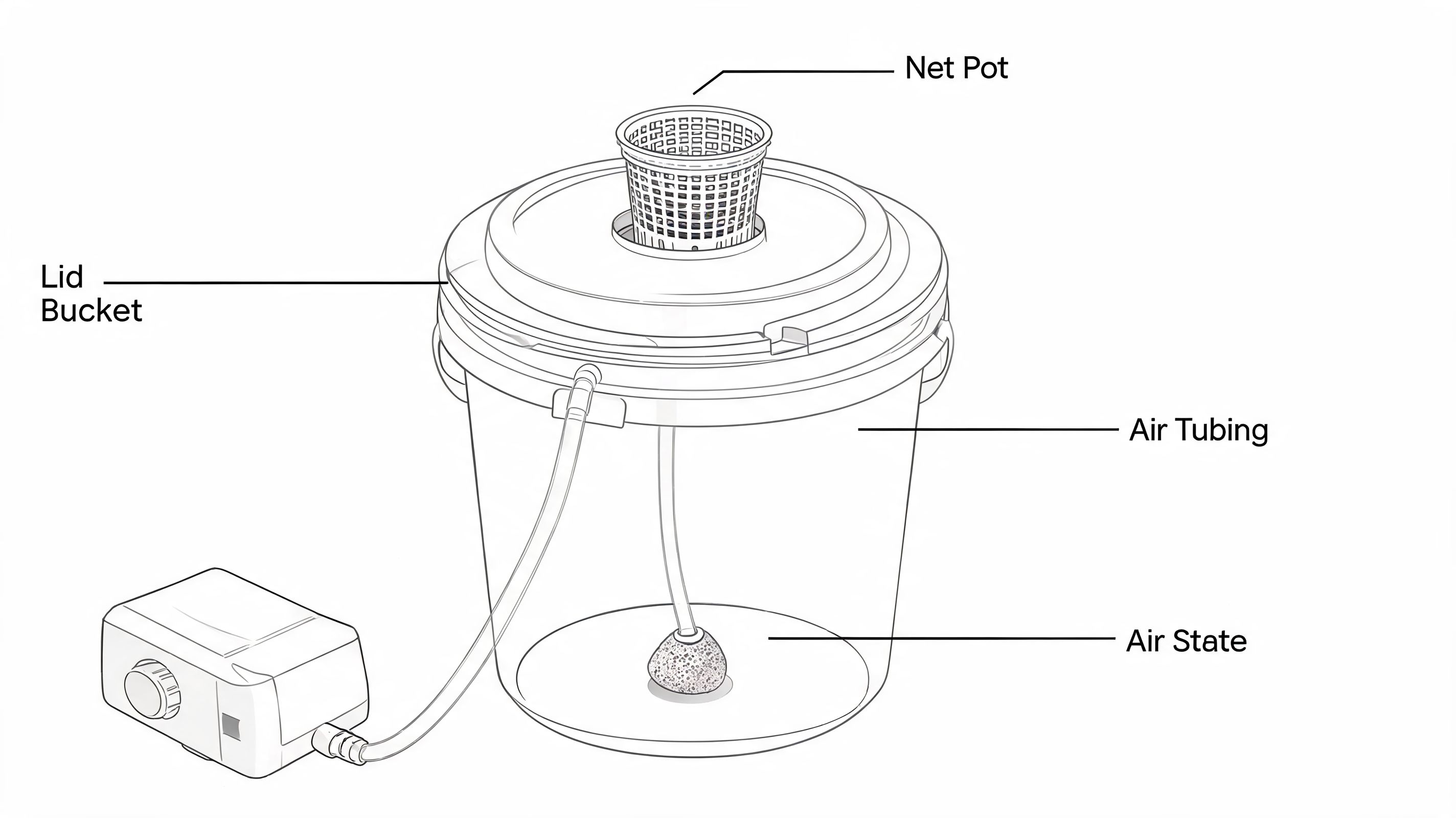
The shopping list
For a beginner build, gather these basics:
- Food-grade bucket with lid: A 5-gallon bucket is the standard beginner size for a single plant.
- Net pot: Match the size to the opening you’ll cut into the lid.
- Air pump: Go with a real hydro or aquarium pump, not the weakest option on the shelf.
- Airline tubing: Enough to run cleanly from pump to bucket.
- Air stone or diffuser: This is what puts bubbles into the reservoir.
- Clay pebbles: To support the plant in the net pot.
- Hydro nutrients: Use a formula intended for hydroponic systems.
- pH meter and EC meter: These are tools, not optional accessories.
- Thermometer or temperature probe: You need to know what the solution is doing.
- Light-proofing supplies if needed: If the bucket or lid lets in light, fix that before you fill it.
Putting it together
Assembly is straightforward if you keep the goal in mind. You’re building a light-blocked, oxygenated reservoir with the plant suspended above it.
Cut the lid for the net pot.
The fit should be snug. If the pot shifts around, the plant will too.Place the air stone at the bottom of the bucket.
Run airline tubing out to the pump. Keep the pump positioned so water can’t flow back into it.Fill with water and nutrients.
Mix thoroughly before the plant goes in. Check your readings before calling it done.Set the plant in the net pot with clay pebbles.
The stem base stays above the water line. Young roots should be able to reach moisture and then stretch down.Turn on the air pump and watch the bubble pattern.
You want active aeration, not a lazy trickle in one corner.
Small details that save headaches
A few build choices matter more than people think.
- Opaque containers win: Light leaks invite algae and make reservoir maintenance more annoying.
- Simple beats clever: A clean single-bucket build teaches you more than an overbuilt first system.
- Leave room to work: You’ll need to lift the lid, inspect roots, and change solution without wrestling the whole setup.
Here’s a simple visual walkthrough if you want to see the layout before building:
Build the bucket so routine maintenance feels easy. If checking roots or changing solution is awkward on day one, it will feel much worse when the plant is large.
The biggest beginner mistake is trying to optimize before learning. Don’t start with four buckets because you’re excited. Start with one clean system, one healthy plant, and a notebook. DWC rewards growers who build a repeatable routine more than growers who buy the most gear.
Keeping Your DWC System Happy and Healthy
After assembly, the job shifts to protecting a stable root zone. That is where DWC either delivers the fast growth cannabis growers chase, or starts slipping into preventable problems.
In a soil grow, the medium gives you some cushion. In deep water culture, the reservoir reflects your decisions almost in real time. Good habits show up as faster growth, hungry white roots, and strong daily uptake. Sloppy habits show up just as fast.

What to watch every day
A quick daily check prevents the kind of reservoir drift that costs yield later.
- pH: Penn State Extension notes that hydroponic nutrient availability is usually best in a slightly acidic range, and cannabis growers commonly keep DWC solution around 5.5 to 6.5 to maintain balanced uptake.
- EC: EC shows whether the feed is getting stronger or weaker as the plant drinks. That trend matters more than any single reading.
- Water temperature: The University of Massachusetts Amherst greenhouse crop management guide explains why root-zone temperature strongly affects oxygen levels and root function. In DWC, warm water reduces dissolved oxygen and raises stress fast.
- Air pump operation: Check for active bubbling across the bucket, not just noise from the pump.
- Root appearance: Healthy roots look bright and firm. Brown slime, sour smell, or a matted look means the reservoir needs attention now, not tomorrow.
If you want a solid feeding baseline before mixing nutrients, this guide to the best nutrition for cannabis plants gives useful context for what the roots are taking up.
Why reservoir size changes the experience
Reservoir volume sets your margin for error.
A 5 gallon bucket is a great way to learn DWC because it is cheap, easy to clean, and easy to isolate if one plant has trouble. It also swings faster. pH shifts hit harder, water temperature changes quicker, and nutrient concentration moves around more as the plant drinks.
A larger reservoir gives you more stability, but it adds weight, uses more nutrient solution, and takes more effort on change day. For a home cannabis grower, that trade-off is real. Bigger systems usually grow with less day-to-day volatility. They also ask for better planning when you need to drain, mix, and move water.
| Setup style | Main benefit | Main downside |
|---|---|---|
| 5-gallon single bucket | Easy to build, easy to isolate one plant | Faster pH and nutrient swings |
| Larger reservoir setup | More stable solution behavior | More water to manage and change |
Bigger water volume buys reaction time. It does not replace observation.
Full changes beat endless top-offs
Top-offs keep the water level usable, but they do not fully reset the reservoir. Over time, the nutrient profile drifts away from what you originally mixed because the plant does not consume every element at the same rate.
That matters in cannabis. DWC can push hard vegetative growth, and fast-growing plants can mask a reservoir imbalance until leaf symptoms show up above the lid. By then, yield potential has already taken a hit.
A practical maintenance rhythm looks like this:
- Daily: Check pH, water temperature, aeration, and how much the plant drank.
- Every few days: Review EC trends, inspect roots, and look for changes in smell or color.
- On change day: Dump the old solution, wipe down the bucket and lid, then refill with fresh water and nutrients.
In a small home setup, many growers find that regular full changes are easier than trying to correct a tired reservoir back into balance. It is less guesswork.
The pattern to watch is straightforward. Rising water temperature, erratic pH, slower drinking, and dull-looking roots usually show up before a cannabis plant really stalls. Catch those early, and DWC stays what you wanted in the first place: a fast, high-yield method that rewards attention with aggressive growth.
Choosing Great Cultivars for Your DWC Grow
Deep water culture changes how you should think about cultivar selection. In a slower medium, a plant’s structure unfolds at a pace that gives you time to react. In DWC, vigorous genetics can get ahead of you quickly.
That’s why first-time DWC growers usually do better with a cultivar that matches both the system and the space.
Good fits for a first bucket
A compact autoflower is often the easiest entry point. You get a manageable plant, a simpler training conversation, and less chance of waking up to a tent that suddenly feels too short. In a one-bucket setup, that matters.
Feminized photoperiod cultivars also work very well, but they ask more from the grower. Since deep water culture can push fast vegetative growth, a taller or more stretch-prone cultivar may need early training, better canopy planning, and stronger support later.
A simple way to put it:
- Compact autoflowers: Great when you want a cleaner learning curve and easier size control.
- Bushy feminized cultivars: Strong option if you want to shape the plant and keep a broad canopy.
- Tall, sativa-leaning feminized cultivars: Best when you have room, training experience, and stable environmental control.
Match the cultivar to your temperature control
This part matters more in DWC than a lot of growers expect. The root zone is exposed, direct, and sensitive.
According to The Growcer’s comparison of hydroponic systems, the ideal nutrient solution range is 18 to 22°C, and some indica-dominant cultivars are more forgiving of small fluctuations, while sensitive sativas may need a water chiller, which can add 20 to 30 percent to setup cost. For a home grower, that’s a real decision point.
A cultivar that tolerates slight environmental wobble is often the smarter first DWC pick than the most exotic option in the catalog.
Honest self-assessment is beneficial. If your room runs warm and you’re not adding a chiller, choose a cultivar with a reputation for steadier behavior. If your environment is tightly controlled and you enjoy training, then a larger, more expressive feminized cultivar can be a lot of fun in DWC. The aromatic payoff and plant structure can be impressive, but only if you’ve got the setup to support it.
Reliable genetics matter more in a fast system because DWC amplifies both strengths and weaknesses. When the plant has every opportunity to grow hard, poor stability gets exposed quickly too.
Considering Your Next Steps and Scaling Up
After one successful bucket, the temptation is obvious. Add more sites, connect them together, and turn the whole tent into a recirculating setup.
Sometimes that makes sense. Sometimes it’s how growers create a bigger maintenance problem for themselves.
When scaling helps, and when it doesn’t
Recirculating deep water culture can make multi-plant growing feel more unified because the connected water volume tends to behave more consistently than isolated buckets. But the jump from one bucket to an RDWC layout is not just a larger version of the same project.
As Ponics Life notes in its discussion of DWC scaling challenges, moving from a single bucket to a multi-bucket RDWC system adds cleaning, filtering, and extra failure points, and many basic guides gloss over the maintenance burden and initial cost. That lines up with what most practical growers eventually learn. More parts means more places for flow, air, and cleanliness issues to start.
A better next move for most hobby growers
Before you scale up, make sure you can do these consistently in a single bucket:
- Read the plant early: You can spot pH drift or root stress before it becomes a visible top-growth issue.
- Handle solution changes cleanly: No spills, no chaos, no putting it off.
- Keep temperature under control: Your water stays where you want it.
- Run safely: Water and electricity stay separated, cords are secure, and pumps are protected.
One great single-bucket run teaches more than a messy multi-site build.
Deep water culture is one of the most satisfying ways to grow at home because the feedback is so direct. When the roots are happy, the whole plant tells you. That speed, that cleanliness, and that sense of control are exactly why so many hobby growers stick with it once they get their first good harvest.
If you’re ready to pair your setup with dependable genetics, browse Botanist Seeds and use the comparison tool to match feminized or autoflower cultivars to your space, experience level, and grow style. A fast system like deep water culture rewards smart cultivar selection from the start, and that’s where a clear side-by-side comparison saves time.