




Chile Verde Strain: A Grower’s Complete Guide
You know the feeling. You open one more jar at the dispensary and it’s another sweet fruit profile, another dessert name, another cultivar that smells good but doesn’t really stand out. If you’re the kind of home grower who wants something with more personality, the chile verde strain is the sort of project that gets interesting fast.
Ready to grow it yourself? Shop Chile Verde seeds at Botanist Seeds.
This cultivar isn’t about chasing the loudest number on a label. It’s about flavor, texture, and that little bit of bragging rights that comes from growing something your friends don’t run into every week. Crack a well-cured jar and you’re in spicy, herbal, citrus territory with a fuel edge. It smells less like a candy shelf and more like a kitchen that knows what it’s doing.
That’s also why Chile Verde pulls in hobby growers. It has enough character to feel special, but it’s not a novelty plant that only looks good on paper. If you like cultivars with a clear identity and you enjoy dialing in your setup for top-shelf results, this one earns the tent space.
Meet the Chile Verde Strain
A lot of growers hit a point where they stop asking, “What’s the strongest thing I can run?” and start asking, “What’s memorable?”
Chile Verde lands right in that second category. It’s the cultivar for people who want their jars to smell savory, peppery, herbal, and a little gassy instead of flat-out sugary. That difference matters more than people think. Growing your own gives you access to profiles that often get crowded out in retail, where flashy names and easy-selling flavor trends usually take over.
Why growers keep coming back to it
Chile Verde has a reputation for being flavor-first. That doesn’t mean it lacks punch. It means the whole experience feels more complete.
What stands out most is the combination of:
- Savory aroma: More spice rack and fresh herbs than candy.
- Visual appeal: Dense flowers and colorful expressions can make the final harvest look premium.
- Balanced vibe: Relaxed, but not automatically a lights-out cultivar in every session.
- Grower satisfaction: It rewards people who pay attention to canopy shape, finish timing, and post-harvest handling.
Practical rule: If you’re bored with generic fruit-forward flower, Chile Verde is the kind of cultivar that reminds you why home growing is worth the effort.
For hobbyists, that’s a big deal. You skip the dispensary line, skip the taxes, and end up with something that feels like your own work instead of another purchase off a shelf. Chile Verde scratches that itch really well.
The Story and Genetics Behind Chile Verde
Chile Verde starts making more sense once you know what was put into it. The breeder work shows up in ways growers can use, especially if you're trying to sort through different expressions instead of treating every seedling like it should finish the same.
Chile Verde was bred by Eric Minor of HBK Genetics from Key Lime Pie and Lavender. It’s generally described as an indica-leaning hybrid, and the older family line runs back through Girl Scout Cookies, Afghani, and Skunk #1, as noted earlier in the article.
What the parentage tells you
Key Lime Pie usually brings the sharper side of the cultivar. That can show up as brighter top-end terps, more edge in the nose, and a little more attitude in the overall expression. If you pop a pack and one plant throws more citrus, spice, or gas early, that influence is usually easy to spot.
Lavender tends to pull things in the other direction. It often adds density, a calmer effect profile, and a more grounded plant structure. In the grow room, that can mean plants that feel a bit stockier or flowers that finish with more weight and body than flash.
Here’s the practical version:
| Parent influence | What it often suggests in Chile Verde |
|---|---|
| Key Lime Pie | Sharper terps, citrus peel, spice, more expressive top notes |
| Lavender | Denser flowers, calmer effect, more grounded structure |
| Older lineage behind them | Skunky depth, hashy undertones, sturdy hybrid traits |
That background matters because Chile Verde is not always a one-note cultivar. Home growers will see variation. One pheno may lean louder and brighter, while another finishes chunkier and more savory. That’s part of the appeal, but it also means selection matters if your goal is top-shelf flavor instead of just acceptable yield.
Why the indica-leaning profile matters
An indica-forward split usually points to a plant that carries more body in the final effect and a little more heft in the flower structure, but that doesn’t guarantee every cut will be sleepy or heavy-handed. Phenotype still decides a lot. I’ve found that with cultivars built like this, the best plants often hit the middle ground. They keep enough lift from the hybrid side to stay interesting, while still giving you the depth and resin production people want from an evening jar.
For growers, genetics are useful because they set expectations. If you know Chile Verde comes from parents with distinct terpene signatures and old-school backbone, you’re less likely to make lazy calls in veg, flower, or selection. You watch stem rubs more closely. You pay attention to structure sooner. You keep notes on which plant carries the profile you want, because this is one of those cultivars where the keeper cut can separate itself fast.
Its Unforgettable Aroma Flavor and Vibe
Open a jar of Chile Verde after a proper cure and you get why growers keep chasing better cuts of it. The first impression is green and savory, not candy-sweet. It smells like cracked pepper, fresh herbs, citrus peel, and a little gas riding underneath.
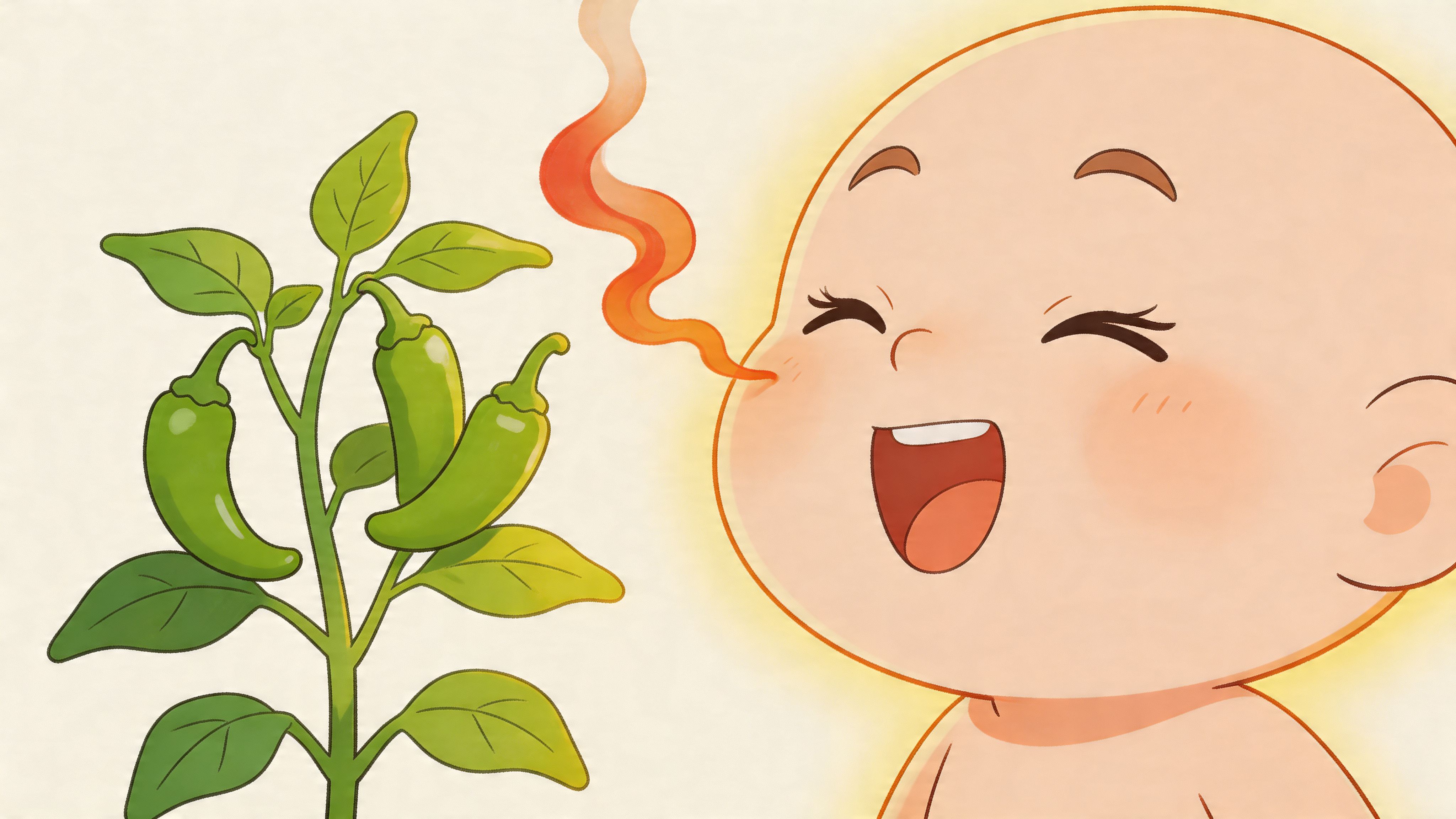
That profile matters more than people think in a home grow. A lot of plants can test decent and still end up forgettable in the jar. Chile Verde earns its place when the aroma stays sharp and separated instead of turning muddy after dry and cure.
What drives the smell
The terpene profile usually reads spicy, herbal, citrusy, and a little oily or fuel-heavy. Caryophyllene tends to lead the charge, with myrcene and limonene filling in the body and brightness. In plain grower terms, that gives you pepper up front, green herbal depth through the middle, and a fresh lime-like lift that keeps the whole thing from feeling too heavy.
That fuel note is the part I watch for. If it shows up clean, the plant has character. If it disappears completely, the expression can still be pleasant, but it often loses that top-shelf edge growers want from this cultivar.
Light intensity and canopy management affect that outcome more than many home growers expect. Good flower development under proper indoor cannabis lighting helps preserve the sharper citrus and spice notes instead of leaving you with a flatter herbal smell.
What it tastes like
Chile Verde usually tastes close to how it smells, which is not always true with modern hybrids.
A strong expression often goes like this:
- On the nose: pepper, green herbs, and a little lime zest
- On inhale: savory citrus, mild funk, and warm spice
- On exhale: fuel, pepper, and a lingering herbal finish
The best jars feel layered. You can pick out each note instead of getting one generic loud blast. That is where careful drying and curing pay off for home growers, especially if you are sorting through phenos and trying to find the one worth keeping.
The vibe
Chile Verde usually sits in a useful middle lane. The effect can settle the body without wiping out the rest of the evening, so it fits well with music, movies, low-key creative work, or just easing out of work mode.
Phenotype makes a real difference here too. Some cuts feel more grounded and body-forward. Others keep a little more mental lift, which is often the sweet spot if you want flavor and function in the same jar.
That balance is a big part of its appeal. You are not growing Chile Verde just to stack weight. You grow it because a good cut gives you a memorable terp profile, a satisfying smoke, and enough variation between plants to make selection worth the effort.
How to Grow the Chile Verde Cultivar at Home
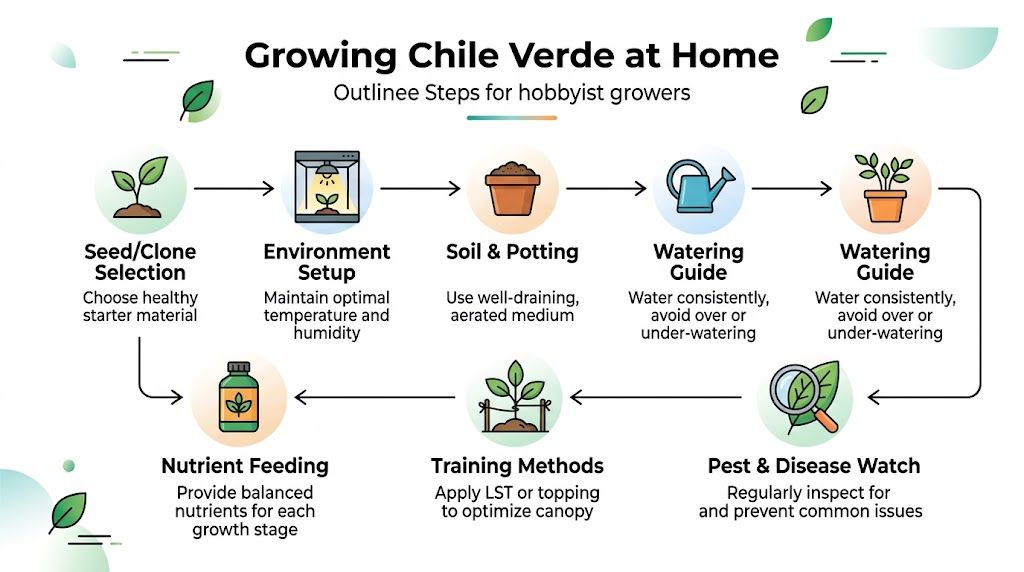
Chile Verde rewards growers who stay organized. It’s not the cultivar I’d treat like a set-it-and-forget-it houseplant. Keep the environment steady, shape the canopy early, and it gives back with better flower quality.
Start with structure, not speed
Chile Verde can show strong vigor, and that matters more than people realize in a small tent. If you let it run wild early, you’ll spend the rest of flower correcting spacing and airflow problems.
A better approach is simple:
- Top or FIM early: This helps manage height and pushes the plant toward a fuller canopy.
- Open the center: Remove weak inner growth that won’t get quality light.
- Support branch spacing: Soft ties help expose future bud sites without stressing the plant too hard.
- Keep airflow honest: Dense flower gets a lot easier to manage when the plant isn’t packed too tightly.
The point isn’t to torture the plant. It’s to build a canopy you can light evenly.
Dial in your indoor environment
Chile Verde responds well when the root zone and light intensity are both under control. For hydro growers, a pH range of 5.8 to 6.2 and an EC of 1.2 to 2.0 mS/cm in late flower are the cited indoor targets, and under a 12/12 photoperiod, PPFD in the 700 to 1000 µmol/m²/s range helps tighten internodes and increase trichome production (GrowDiaries Chile Verde strain page).
That gives you a few useful takeaways.
Light intensity matters more than people think
If your light is weak, Chile Verde can still grow, but it won’t show the same flower density or resin expression. If your light is too aggressive for the rest of the room conditions, you can create stress instead of quality.
Use your fixture with intention. If you want a refresher on setup and placement, this guide on lighting for growing cannabis indoors is worth keeping nearby while you dial in the tent.
Hydro gets very specific, but soil still works fine
The hydro numbers above are useful because they’re concrete. Soil growers can still apply the same principle without chasing every decimal. Keep the medium aerated, avoid swampy roots, and don’t overfeed early flower just because the plant looks hungry after stretch begins.
What works and what usually backfires
Chile Verde tends to reward restraint.
| Do this | Skip this |
|---|---|
| Train early so the canopy stays manageable | Waiting too long to top, then fighting height later |
| Water consistently and let the medium breathe | Overwatering dense plants in stagnant air |
| Increase light carefully as flower develops | Blasting intensity before the plant is ready |
| Watch leaves daily for pests or stress | Assuming a healthy veg plant will coast through flower |
Field note: The growers who get the best Chile Verde usually aren’t doing anything flashy. They’re just consistent.
A straightforward home-grow rhythm
For a hobby grower, the easiest rhythm looks like this:
- Veg phase: Build a wide, even frame instead of a tall one.
- Early flower: Watch stretch, keep training gentle, and clean up lower growth.
- Mid flower: Maintain airflow and avoid dramatic feed changes.
- Late flower: Focus on stability, not chasing last-minute fixes.
Chile Verde can produce strong results across different setups, but it doesn’t reward sloppy decision-making. If your room is stable and you stay ahead of canopy management, this cultivar has a good shot at finishing with the flavor people want from it.
Mastering Chile Verde Phenotypes and Challenges
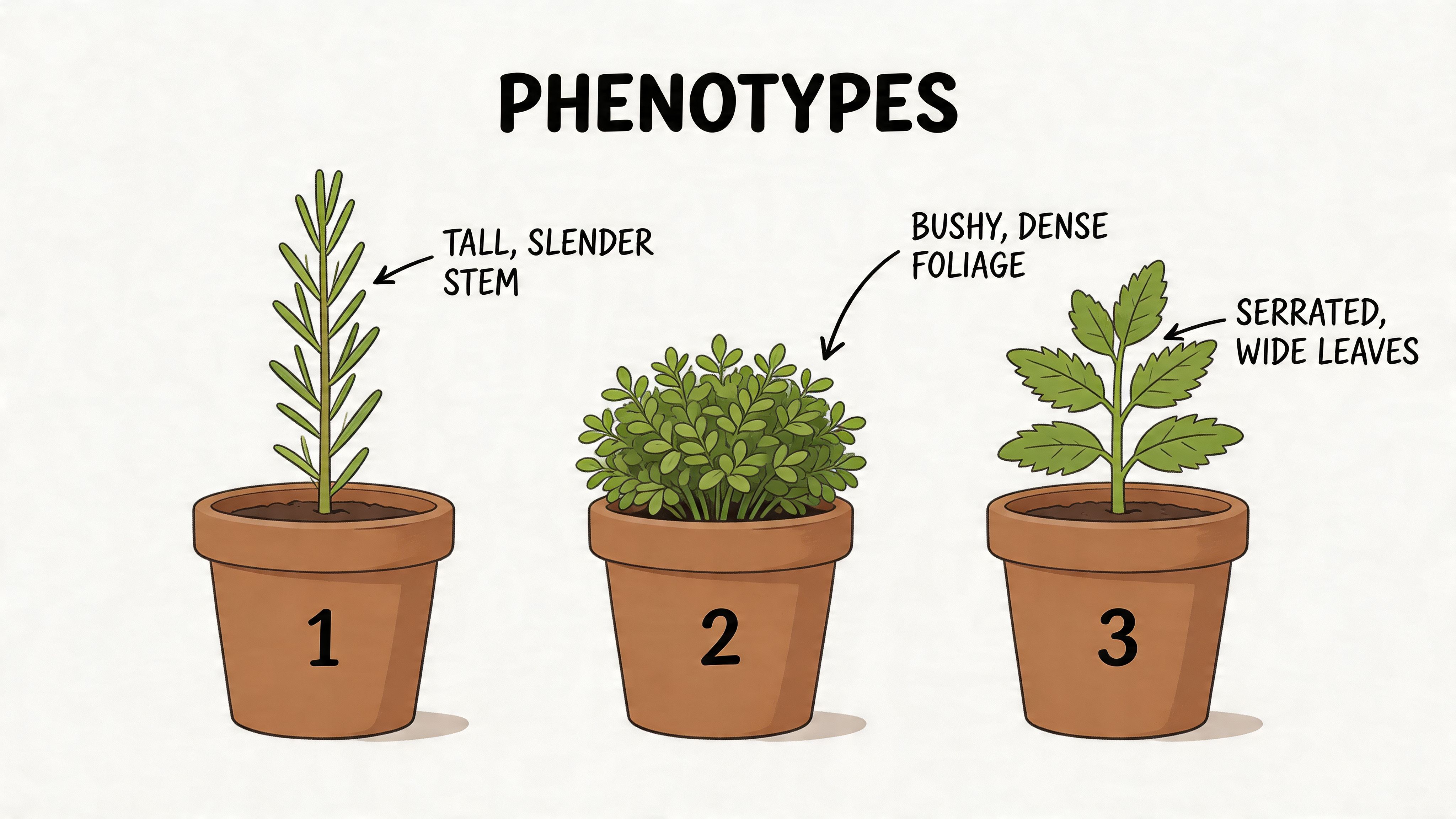
Chile Verde gets more interesting once you accept that not every plant will finish looking or smelling exactly the same. That’s not a flaw. It’s part of the appeal.
The two expressions most growers watch for
One side of Chile Verde tends to lean more purple and compact. The other leans greener, brighter, and a little sharper in presentation.
The strain is described as showing aubergine purple alongside fern, mint, kelly, and lime green coloration, with dense flowers and visible trichome coverage. In practice, growers usually notice two broad buckets:
- Purple-leaning plants: denser visual appeal, darker coloration, often prized for bag appeal
- Lime-leaning plants: brighter green expression, often read as a little louder or fresher on the nose
Cooler night conditions are often used by growers who want stronger purple expression, and the cited cultivation notes also connect cool nights with stronger anthocyanin expression and limonene preservation. That doesn’t mean you can force every plant to go purple. It means environment can help reveal what the genetics already want to show.
How to phenotype hunt without making it complicated
If you’re running feminized seeds, keep notes from the start. Don’t trust memory once the tent gets full.
Track:
- Branch structure: Which plant naturally builds the easiest canopy?
- Aroma in flower: Which one shifts from generic green to actual spice and lime?
- Resin feel: Which plant gets tacky fastest when you handle a sample leaf?
- Finish quality: Which one burns clean and holds its flavor after cure?
A simple notebook beats guessing. Most phenotype hunts fail because growers remember the loudest-smelling plant and forget the one that finished better.
The challenge side of Chile Verde
This cultivar can demand better plant care than a forgiving beginner plant. Pest and disease susceptibility are part of that conversation, and vigilant IPM is worth treating as routine, not optional.
A practical home-grow IPM routine looks like this:
- Inspect often: Check leaf tops, undersides, and interior growth.
- Keep the floor clean: Dead plant matter invites trouble.
- Manage moisture: Dense foliage plus stale air is asking for problems.
- React early: Minor leaf issues are easier to solve than full flower-room headaches.
If you start seeing color changes and want help sorting normal fade from actual problems, this guide on yellow leaves on cannabis plants can help you troubleshoot without overcorrecting.
Chile Verde gets a lot easier when you stop treating every issue as a feeding issue. Sometimes the real problem is structure, air, or pests.
That mindset saves a lot of harvests.
Harvesting for Peak Flavor and Potency
Chile Verde is one of those cultivars where harvest timing really shows in the final jar. Pull it too early and the profile feels thinner. Let it go too long without purpose and you can lose some of the sparkle that made you want to grow it in the first place.
Chile Verde typically flowers for about 68 days indoors, and growers describe it as a compact, sturdy plant with moderate to heavy yields, dense medium-small buds, and generous trichome coverage (ILGM’s Chile Verde strain page).
Read the plant, not just the calendar
That flowering window gives you a reference point, not a command. Start watching closely as the plant approaches finish, especially the trichomes on the actual buds rather than the sugar leaves.
A practical checklist:
- Look at bud trichomes: They tell the story better than leaf frost.
- Watch for full flower swell: Chile Verde tends to stack into dense, compact buds.
- Check aroma intensity: The spicy, herbal, fuel profile should feel settled and complete.
- Confirm overall plant posture: A finishing plant often looks done before a grower wants to admit it.
For a more complete harvest timing walkthrough, keep this guide on when to harvest cannabis handy.
Drying is where people lose the magic
Chile Verde’s best trait is flavor. Bad drying wrecks flavor first.
What works:
- Hang whole branches if space allows: Slower drying usually preserves more nuance.
- Keep the room stable: Avoid large swings in conditions.
- Don’t rush the trim: Let the plant dry evenly before getting too aggressive.
- Jar only when the flower is ready: Outside dry and inside wet is how people ruin a crop in a weekend.
A strong Chile Verde harvest should still smell layered after cure. If everything turns flat and grassy, the grow wasn’t the only problem.
Curing for the jar you actually want
Chile Verde benefits from patience. The spice, herbal body, and citrus edge tend to come together better after a steady cure than they do fresh off the dry line.
Think of curing as finishing the work, not storing it.
A good cure helps:
| During cure | What you’re trying to preserve |
|---|---|
| Slow stabilization | Distinct spice and herb notes |
| Regular jar checks | Even moisture across dense buds |
| Minimal rough handling | Trichome integrity |
| Clean storage habits | A bright, not muddy, final profile |
If your goal is top-shelf flower, harvesting on time is only half the job. The dry and cure decide whether your Chile Verde tastes premium or just looks premium.
Finding and Choosing Your Chile Verde Seeds
Chile Verde is the kind of cultivar where sourcing matters. If the genetics are shaky, you’ll spend the whole run wondering whether the issue is your grow or the seed stock.
For home growers, feminized seeds are the practical choice. They simplify the process and keep your effort focused on flower production instead of extra complications. That matters even more with a cultivar like this, where many growers are chasing a specific flavor profile or standout phenotype.
What to look for in seed quality
Don’t overthink the shopping process. Just stay picky about the right things:
- Genetic consistency: You want a cultivar that closely resembles the expected Chile Verde profile.
- Clear breeder or seller information: If everything feels vague, move on.
- Good hobby grow fit: Stable, reliable stock is worth more than flashy branding.
- Phenotype potential: A little variation is fine. Chaos is not.
If you’re comparing options, focus on whether the source seems serious about cultivation outcomes, not just packaging. A good seed purchase should make the grow more predictable, not turn it into detective work.
Grower FAQs for the Chile Verde Strain
Can I increase the odds of getting a purple plant
You can encourage purple expression, but you can’t manufacture genetics that aren’t there. Growers often use cooler night conditions to help bring out darker tones. Keep the plant healthy first. Stress isn’t a shortcut to pretty flower.
Is Chile Verde a good cultivar for resin and extracts
Yes, it has a strong reputation for resin production and dense trichome coverage. That makes it appealing for growers who want flower that also has extraction potential. The big catch is post-harvest handling. Rough drying and warm storage will cost you quality fast.
What’s the best training method for home growers
Topping or FIM are solid choices because they help manage structure and improve canopy shape. Gentle low-stress training also fits this cultivar well, especially if you want more even light distribution without overcomplicating the run.
Does Chile Verde suit newer growers
It can, but only if you’re willing to stay attentive. This isn’t the best choice for someone who wants to ignore the tent for days at a time. If you enjoy checking plants, adjusting the canopy, and learning how a cultivar responds, it’s a rewarding grow.
What mistake hurts quality most with this strain
Two things show up a lot: weak canopy management and rushed drying. Chile Verde’s appeal is tied closely to flavor and flower finish. If the plant grows into a crowded mess or the harvest dries too fast, you’ll miss a lot of what makes it special.
If you’re hunting a standout cultivar with real personality, Botanist Seeds makes it easier to compare genetics and choose seed options that match your space, your experience level, and the kind of harvest you want to smoke.