The Best Soil for Marajuana: A Grower’s Simple Guide
You're probably here because you walked into a garden center, saw a whole wall of soil bags, and realized every label claims it's perfect for tomatoes, herbs, flowers, houseplants, vegetables, or “all-purpose” anything. Then you started wondering which one is the best soil for marajuana, and the answers online got weird fast.
That confusion is normal. Soil gets talked about like some secret grower code, but it's really just the foundation your roots live in. If the foundation fits your setup, your watering habits, and the cultivars you want to grow, everything else gets easier.
A first-time indoor grower in a small tent needs something different from a backyard grower with big containers on a patio. Someone who checks plants twice a day can handle a more hands-on mix. Someone who travels for weekends probably wants a medium that forgives missed watering. That's why there isn't one magical bag that wins for everybody.
The good news is that soil is one of the most controllable parts of the whole process. Get this part right, and you give yourself a cleaner path to healthy roots, steadier growth, and that great feeling when your harvest came from your own work, not a dispensary shelf.
Let's Talk About Dirt
The funny thing about soil shopping is that beginners usually think they're making a tiny decision. In reality, they're choosing how hard the whole grow will feel.
I've seen new growers buy the heaviest, richest bag they can find because “more nutrients” sounds like a good thing. Then they put that mix in a small indoor pot, water too often, and spend the next few weeks trying to figure out why the plant looks tired. I've also seen growers go too far the other direction, using a super airy mix that dries out so fast they can't keep up.
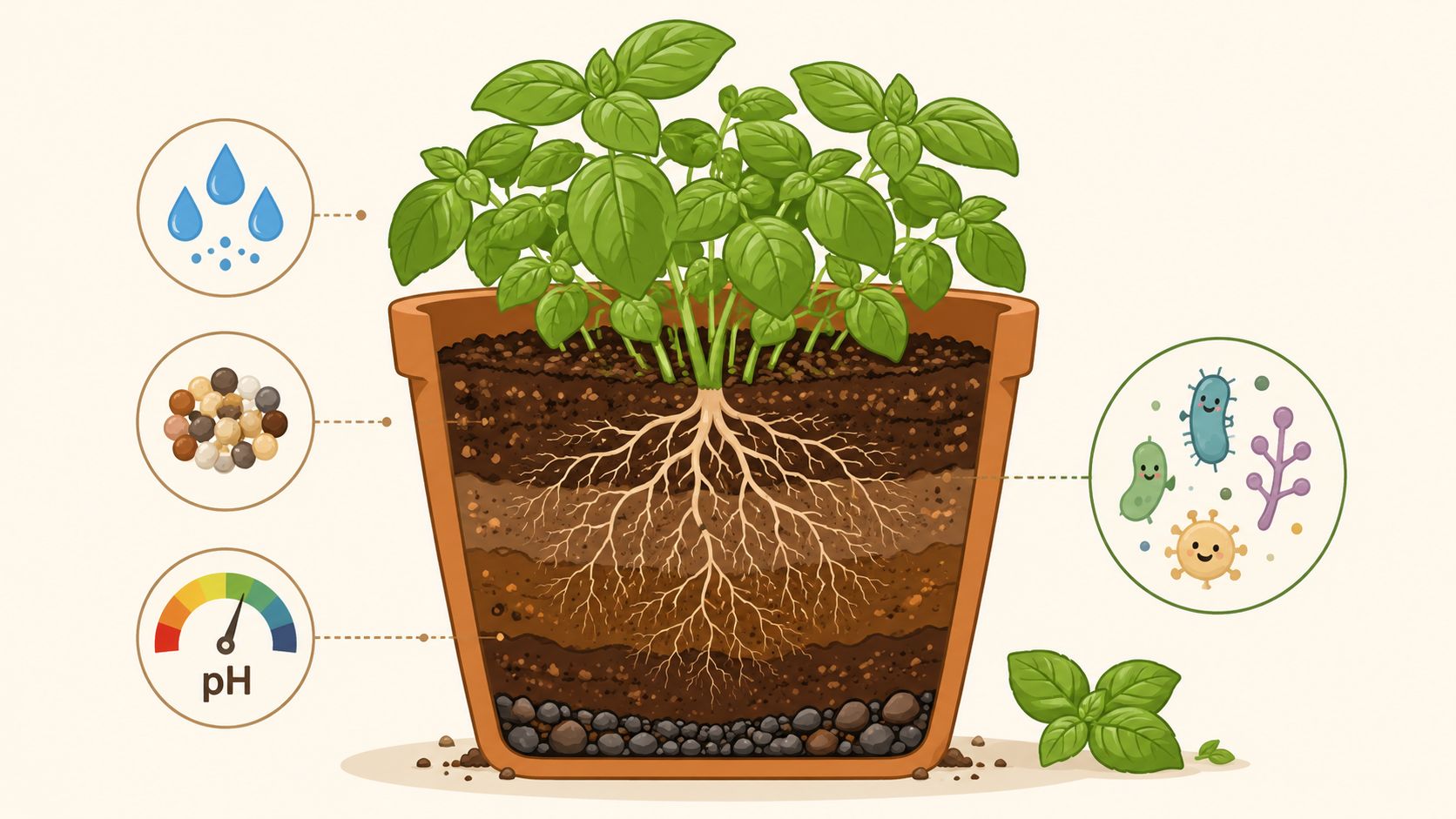
Soil isn't just dirt. It's your root environment. It controls how water moves, how much air reaches the roots, how nutrients stay available, and how much room you have for mistakes.
Here's the part that makes this simpler. The best soil for marajuana is usually not a brand name. It's the medium that matches these real-life factors:
- Your schedule, whether you're hands-on every day or more of a set-it-and-check-it grower
- Your grow space, indoor tent, spare room, balcony, greenhouse, or backyard
- Your container style, especially whether you use fabric pots or plastic containers
- Your water source, because local tap water and filtered water can behave very differently
- Your cultivar choice, since fast autoflower cultivars and longer vegging photoperiod cultivars don't always reward the same approach
A good soil choice feels boring in the best way. Your plant settles in, roots spread, watering becomes predictable, and you stop fighting the pot.
That's really the goal. Not chasing the fanciest recipe. Just building a root zone that works with your life instead of against it.
What Your Plants Really Want from Soil
A cannabis plant doesn't care what the bag says on the front. It cares about what the root zone feels like every day. If you understand that, picking soil gets a lot easier.
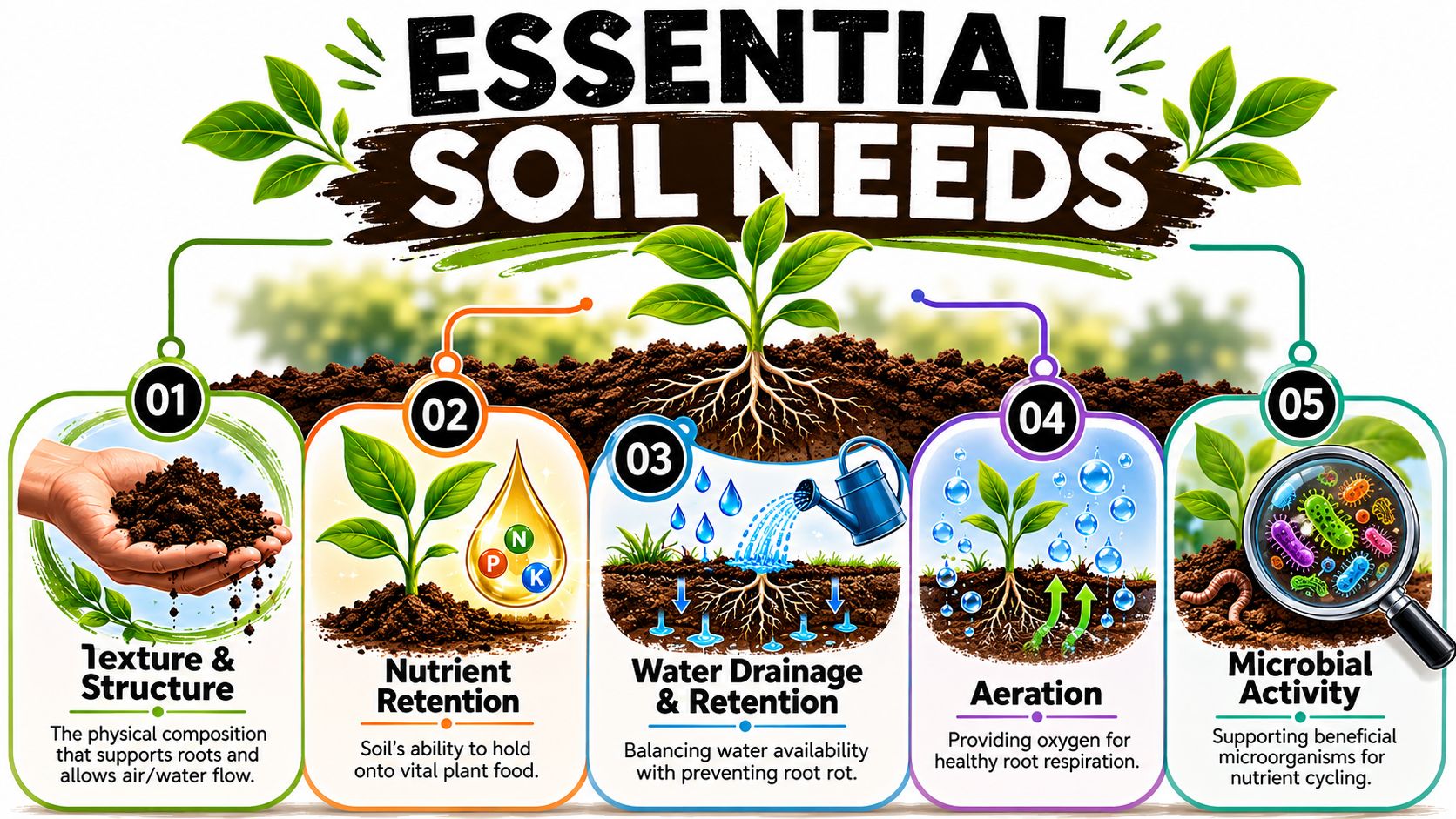
Texture and structure
Think of soil structure like the frame of a house. It needs enough body to support the plant, but it can't be packed so tightly that roots struggle to move through it.
Good structure gives roots spaces to explore. Bad structure turns into mud when wet and brick when dry. That's when plants stall out for reasons that seem mysterious above the soil line but make perfect sense below it.
A nice cannabis mix usually feels loose and crumbly in your hand, not sticky and not dusty.
Drainage and aeration
Roots need water, but they also need oxygen. That's where a lot of beginners get tripped up. They treat soil like a sponge that should stay wet all the time. It shouldn't.
A better mental model is this: good soil holds moisture while still leaving tiny air pockets behind. Those pockets matter. If your mix stays soaked and dense, roots can't breathe well.
Two common ingredients help with that:
- Perlite, which opens up the mix and improves drainage
- Coco coir or vermiculite, which can help balance moisture retention depending on the blend
Nutrient retention and pH
Soil also acts like a pantry. It stores plant food so roots can access it as needed. But having nutrients in the soil doesn't guarantee the plant can use them. That's where pH comes in.
Cannabis performs best in slightly acidic soil, with an optimal pH generally reported between 5.8 and 6.5, and several guides narrow the ideal target to around 6.0 to 6.3. Outside that range, nutrient uptake declines and yields can suffer, as explained in a seed bank’s soil pH guidance for cannabis. If you want a deeper look at how that works in real grows, this guide on pH for cannabis is worth bookmarking.
Practical rule: If a plant looks hungry but you've already fed it, check the root-zone pH before adding more nutrients.
Microbial life
This is the part that gets ignored until a grower has some experience. Soil can also be a living community. Bacteria, fungi, and other tiny organisms help break down organic matter and support nutrient cycling.
You don't need to become a soil biologist to grow good flower. You just need to know that some mixes are built as active ecosystems, while others are more like clean, controlled media. Neither is automatically better. They just ask different things from you.
Comparing Popular Soil Types for Home Growers
Most home growers end up choosing between three broad paths. You can buy a ready-to-use potting mix, run a more inert soilless blend, or go with living soil. Each one can work. The primary question is which one fits the way you grow.
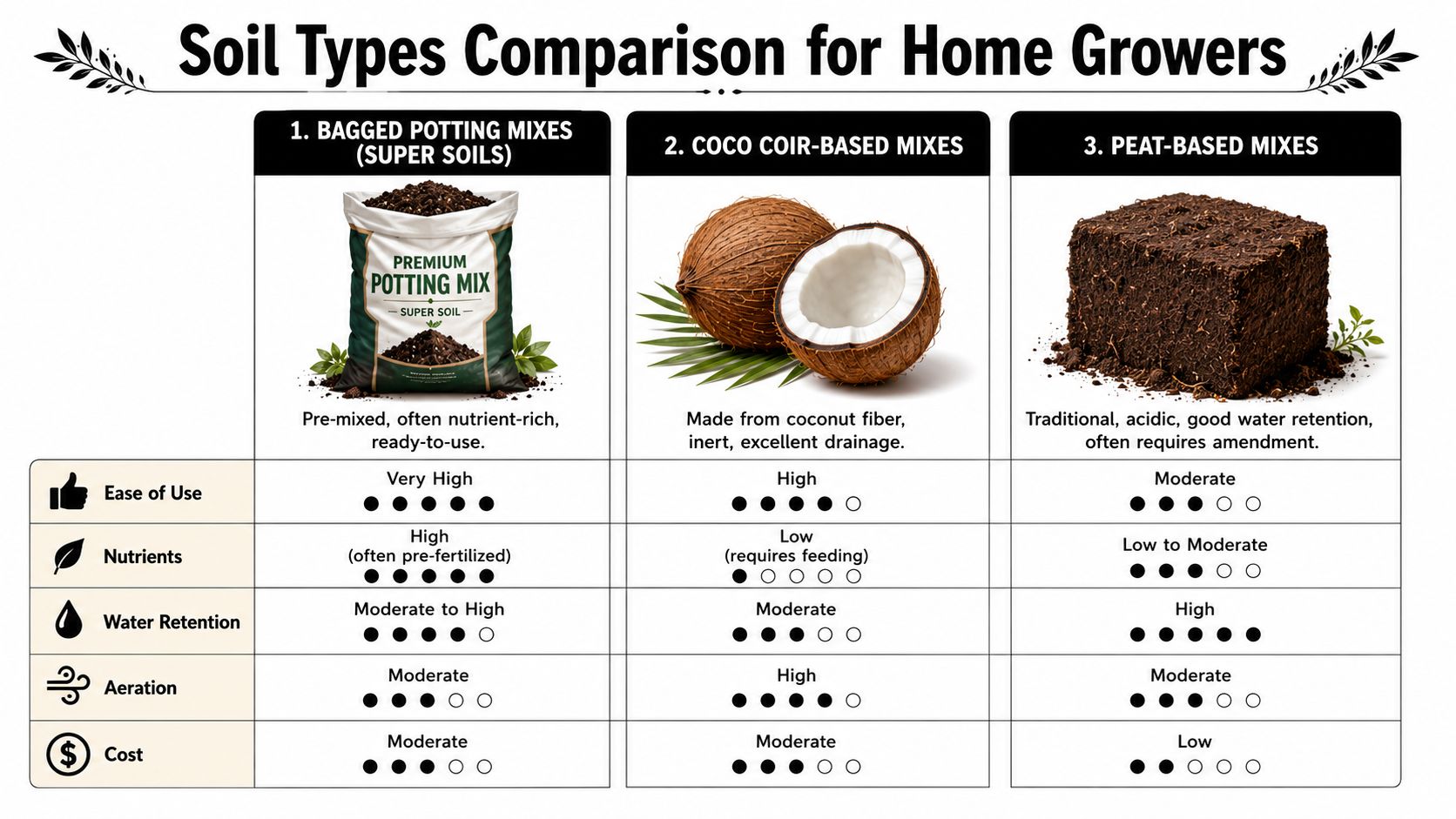
Bagged potting mixes
These are the easy on-ramp. Open the bag, fill the pot, plant your seedling, and you're moving. Many growers start here because it removes a lot of decision fatigue.
The tradeoff is control. Some bagged mixes run heavier than expected. Some hold more water than you want. Some come “hot,” meaning they carry enough nutrients that young plants can react poorly if the mix is too rich for that stage.
Best for: growers who want convenience, simple watering, and fewer moving parts.
Watch for: dense texture, slow drying, and unclear nutrient strength.
Coco coir and lightly amended soilless mixes
Coco-based blends feel different right away. They're lighter, airier, and more responsive. You get more control over what the plant receives because the medium itself starts closer to a blank slate.
That's great if you like precision. It's less great if you want to wing it. With coco or similar mixes, you usually need to stay on top of feeding and watering because the system is more active and less buffered than a rich organic bagged soil. If that route interests you, this guide to growing with coco coir growing medium gives a solid overview.
Best for: hands-on growers, indoor setups, and people who like control.
Watch for: needing a more consistent routine.
Living soil
Living soil is the most romantic option, and sometimes the most rewarding. Instead of seeing the pot as a container of media plus bottled nutrients, you treat it like an ecosystem. Compost, worm castings, and microbial life all play a role.
The upside is a more natural rhythm and, in many setups, less dependence on bottled feeding. The downside is that it can get complicated for a first grow if you don't enjoy tweaking and observing. As noted in this discussion of living soil tradeoffs, many guides mention ingredients like compost, worm castings, and mycorrhizae, but they often don't clearly explain when living soil is better than coco- or peat-based mixes, or when it becomes overcomplicated for beginners.
| Soil type | Feels like | Good match for | Main caution |
|---|---|---|---|
| Bagged potting mix | Plug-and-play | Busy growers | Less control |
| Coco or soilless blend | Clean blank slate | Detail-oriented growers | Needs consistency |
| Living soil | Ecosystem in a pot | Organic-minded hobbyists | More variables |
Living soil can be amazing, but “more natural” doesn't always mean “easier.”
How to Choose the Right Soil for Your Grow
The best soil choice usually shows up once you stop asking, “What do expert growers use?” and start asking, “How am I going to run this grow?”
Indoor or outdoor
Indoor growers usually benefit from a cleaner, more predictable medium. You want something that drains well, stays manageable in containers, and doesn't bring extra surprises into a tent or room.
Outdoor growers can often work with richer mixes, especially in larger containers or raised beds. But outdoor soil also has to handle weather swings. A mix that feels perfect during a dry week can stay wet for too long after repeated rain.
Container style matters more than people think
Fabric pots dry faster than plastic pots. That's often a good thing because they improve airflow around the root zone, but it also means your soil choice should account for that faster moisture loss.
If you're using fabric pots, a mix with a bit more moisture-holding ability can make life easier. If you're using plastic and tend to water generously, a lighter, airier blend may save you from soggy roots.
Here's a simple way to understand this:
- Fabric pots plus warm indoor air often pair well with soil that doesn't dry out too aggressively
- Plastic pots in cooler rooms often benefit from extra aeration so the root zone doesn't stay wet too long
- Large outdoor containers usually reward a balanced mix that won't compact after repeated watering
Your watering style
Be honest here. Some growers love checking moisture daily. Others remember to water when the plant starts looking annoyed.
That difference should guide your medium. A seed bank’s discussion of cannabis soil choices points out that most guides repeat the idea that loamy, well-draining soil is ideal, but rarely explain what changes when a grower uses hard tap water, reverse-osmosis water, fabric pots, or a high-frequency fertigation setup. That gap matters because your watering habits and water quality directly shape how forgiving your soil needs to be.
If you miss waterings now and then, don't choose a mix that demands perfect timing.
Water quality and cultivar pace
Hard tap water and reverse-osmosis water don't behave the same way in the pot. Neither does frequent fertigation versus occasional hand watering. A highly buffered, richer mix can feel steadier in one setup, while a lighter, more controlled medium can feel cleaner in another.
Cultivar choice matters too. Autoflower cultivars often appreciate a lighter, quicker-draining medium because they move fast and don't have much time to recover from a rough start. Longer-running photoperiod cultivars can give you more room to correct mistakes, shape the canopy, and adapt the root zone over time.
If you're choosing soil for your lifestyle, not your fantasy version of yourself, you usually end up with a better grow.
DIY Soil Mixes for the Hands-On Grower
If you like building your own setup, mixing soil can be one of the most satisfying parts of the whole grow. You save money, you learn what each ingredient does, and you stop relying on vague bag labels.
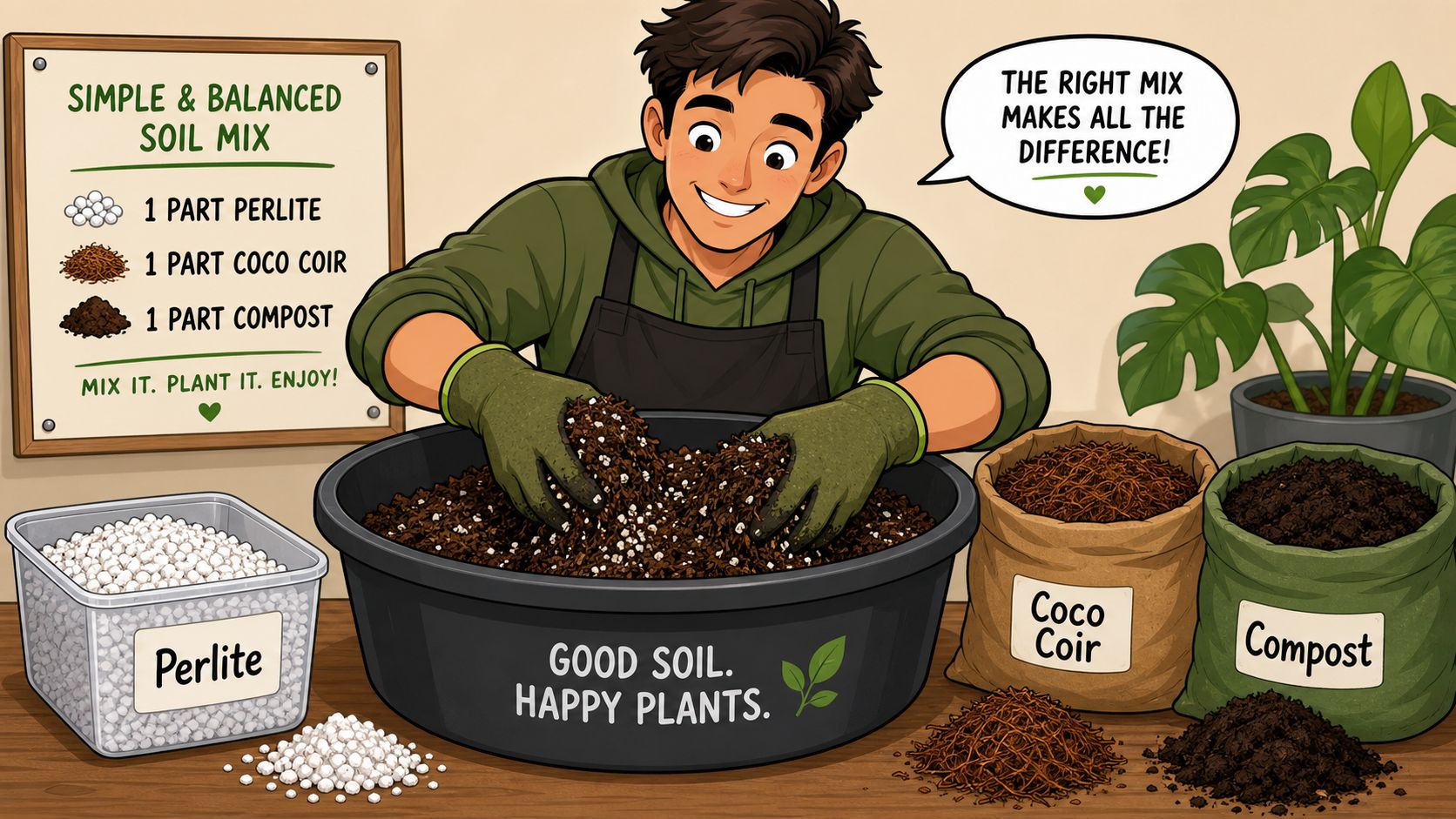
A solid starting point is a loose, well-aerated medium built from roughly 50% peat, 20 to 30% perlite, and 10 to 20% vermiculite or coco coir, a practical blend recommended by a seed bank’s guide to choosing cannabis soil. That recipe works because it balances moisture retention with drainage and root-zone oxygen.
A light mix for fast-moving cultivars
If you're growing autoflower cultivars or just want a forgiving base, keep it simple:
- Base: peat
- Airflow: perlite
- Moisture balance: coco coir or vermiculite
Why this works:
- Peat gives body: It helps hold moisture and creates a usable base.
- Perlite opens the mix: It improves drainage and keeps the medium from packing down.
- Coco coir or vermiculite smooths things out: These help the pot avoid swinging too fast from wet to bone dry.
This kind of mix is great for growers who want quick root development and easy watering reads.
A richer just-add-water style approach
If you enjoy organic growing, you can take that same base and make it richer with inputs like compost or worm castings. The idea is to build more food into the pot from the start so you're not reaching for bottled nutrients every time the plant asks for more.
A simple approach looks like this:
- Start with your airy base mix
- Blend in compost or worm castings
- Let the mix rest before use if you've amended it heavily
- Plant into it once the texture feels even and the moisture is moderate
This style can work really well for larger containers and growers who prefer fewer bottles on the shelf.
A quick visual can help if you've never mixed your own medium before.
Keep your first homemade mix boring
A lot of problems start when growers throw every amendment they've ever heard of into one tub. Resist that urge.
Build your base first. Then add complexity only when you can explain what each ingredient is supposed to do.
That one habit will teach you more than any flashy recipe ever will.
Common Soil Problems and How to Fix Them
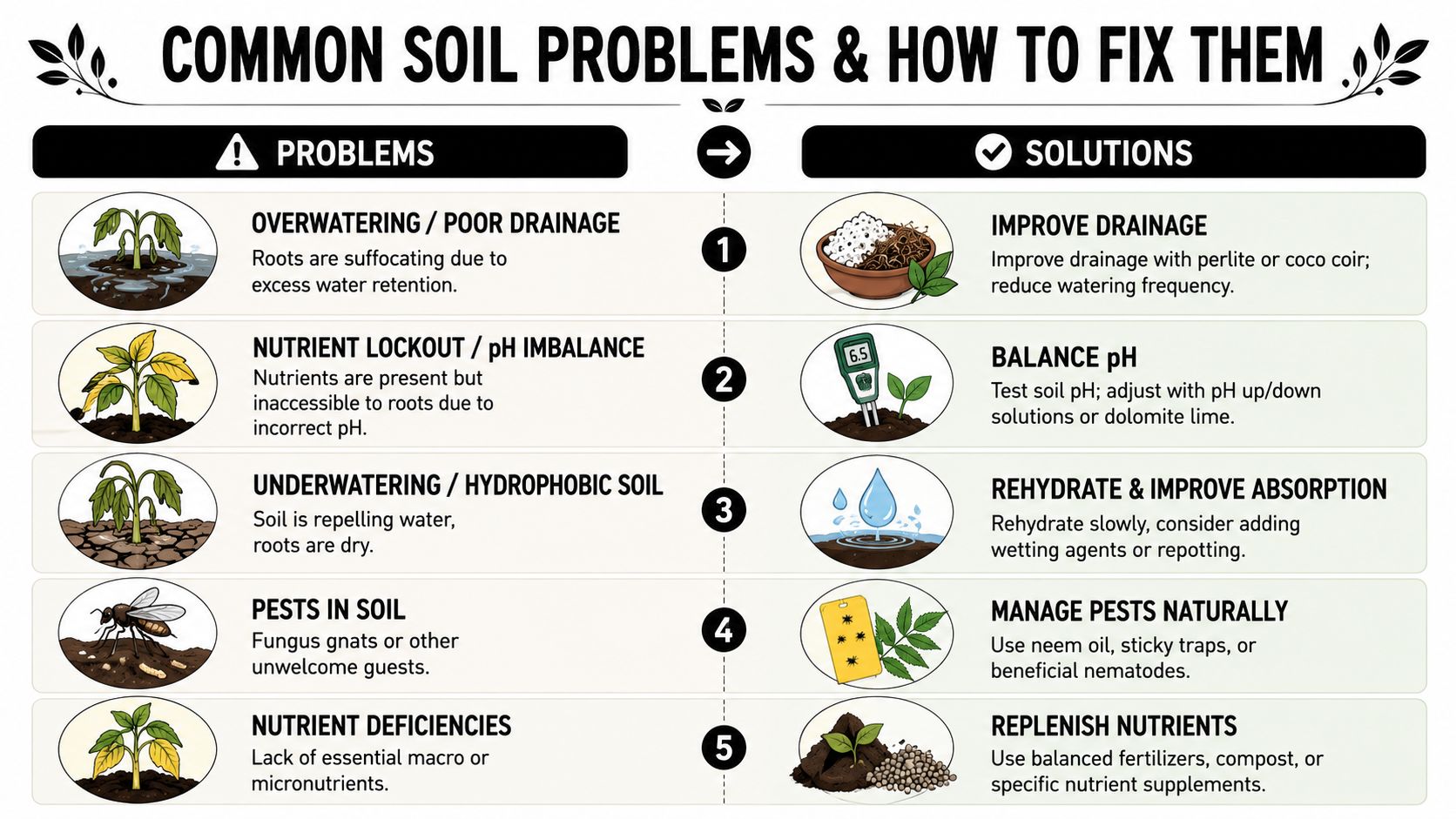
Even a good mix can go sideways if the watering rhythm, pH, or container setup is off. Most soil problems are easier to fix than they first appear.
When leaves droop
Drooping can mean opposite things. If the pot feels heavy and the soil stays wet for too long, roots may be sitting in a low-oxygen zone. If the pot feels very light and the soil has pulled away from the edges, the plant may be too dry.
Try this quick check:
- Heavy pot, damp soil: water less often, improve aeration next round
- Light pot, dry soil: rehydrate slowly and more evenly
- Same droop every watering day: your mix may be too dense or too fast-drying for your routine
When feeding doesn't seem to help
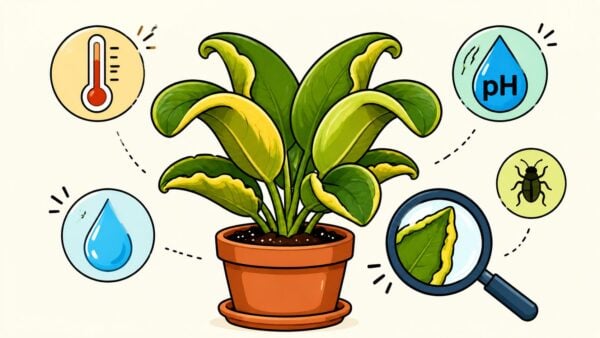
Such circumstances reveal pH problems. The soil may contain nutrients, but the plant still acts like it can't access them. That's often called nutrient lockout.
Check your root-zone pH before adding more inputs. If your plant also has tiny flies hovering around the soil surface, that's another common container issue. This guide on how to kill fungus gnats in soil can help you clean that up.
Quick fixes by symptom
| Symptom | Likely soil issue | First move |
|---|---|---|
| Plant stays droopy after watering | Poor drainage | Add more aeration next transplant, reduce watering frequency |
| Soil dries too fast | Mix is too airy for your setup | Water more evenly, add more moisture-holding material next run |
| Leaves look deficient but feedings don't fix it | pH imbalance | Test pH and correct before feeding more |
| Pot smells stale or swampy | Soil is staying too wet | Increase airflow, let the medium dry more between waterings |
Most root-zone issues aren't nutrient problems first. They're environment problems first.
That mindset saves a lot of frustration.
The Right Foundation for Your Best Harvest
The best soil for marajuana isn't the trendiest mix on a forum or the priciest bag at the shop. It's the one that fits your space, your container, your water, and the way you care for plants.
If you want the easiest path, a quality ready-to-use mix can be a great call. If you like control, a lighter soilless blend may suit you better. If you enjoy the craft side of growing, living soil or a homemade mix can be rewarding. None of those choices is automatically the “expert” one. The smart choice is the one you can manage well, consistently.
That's what turns soil from a source of confusion into a real advantage. You stop guessing. You start reading the pot better. And your cultivars respond with steadier growth, easier maintenance, and a harvest you're proud to call your own.
Once your soil plan makes sense, the next fun decision is pairing it with genetics that suit your setup.
If you're ready to match the right medium with the right cultivar, check out Botanist Seeds. Their catalog and comparison tools make it easier to find feminized and autoflower cultivars that fit your space, your experience level, and the kind of grow you want to run.