What Is Photoperiod? a Grower’s Guide to Light Cycles
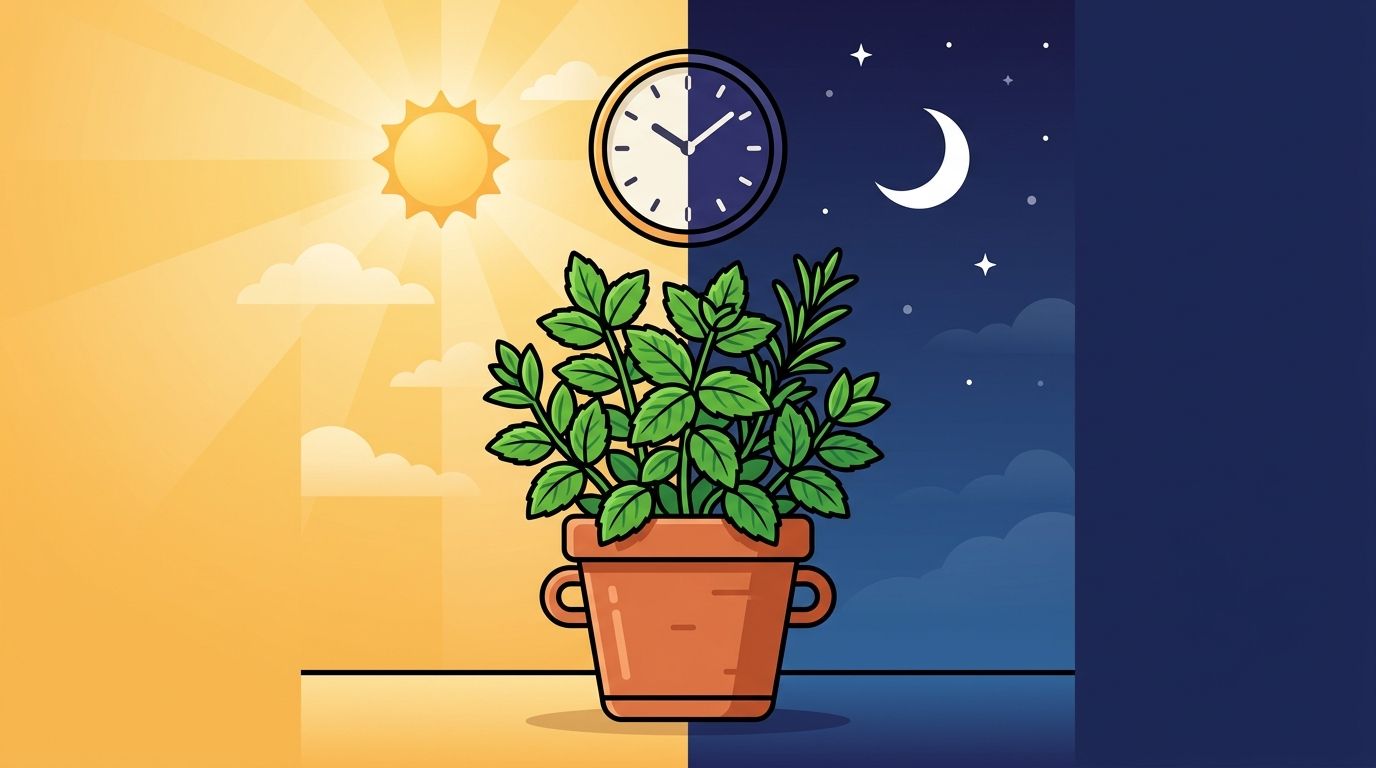
Photoperiod is the amount of time a plant gets light in a 24-hour period, and for cannabis cultivars that means the dark period matters just as much as the light period. In practical terms, many photoperiod cannabis cultivars begin flowering when they get 12 hours of uninterrupted darkness and 12 hours of light.
If you're growing at home, you've probably had this moment already. You're looking at timers, light schedules, and a plant that seems happy enough, but you're not fully sure what tells it to stay in veg or start flowering. That's where photoperiod comes in.
A lot of grow confusion starts because the word sounds more complicated than it is. It's really just your plant's calendar. Once you understand that, a bunch of other stuff gets easier, from choosing between feminized photoperiod cultivars and autoflowers to setting your lights in a way that fits your tent, your schedule, and the kind of harvest you want.
The Secret Light Switch for Your Plants
You set your timer, your plant looks healthy, and then you hear another grower say, “Just flip it when you're ready.” That moment throws a lot of home growers. The missing piece is simple. Photoperiod is the daily light schedule your plant uses to decide what phase of life it should be in.
For your grow, that matters more than the bulb itself. A photoperiod plant pays attention to the routine. Keep the routine in a vegetative range, and it keeps building roots, branches, and leaves. Change the routine to a flowering range, and it shifts toward bud production.
That's why growers care so much about it.
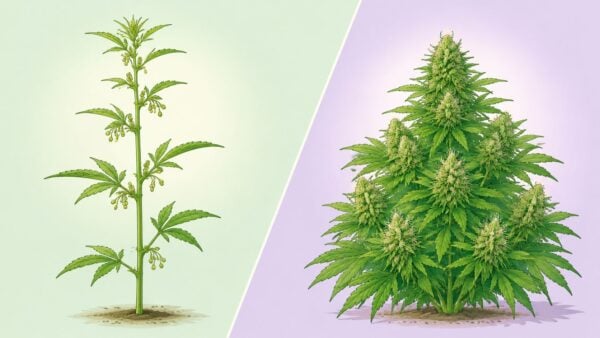
With feminized photoperiod cultivars, you get real control over the pace of the grow. You are not waiting for the plant to flower on its own timeline. You choose how long it has to grow wider, taller, and stronger before bloom begins.
Here's what that control changes in practice:
- Vegetative time: You choose how long the plant spends building structure before flowering.
- Flower timing: You choose when it starts focusing on buds.
- Plant size: More time in veg usually means a larger plant going into bloom.
- Training window: Topping, low stress training, and canopy shaping are easier when you control when flowering starts.
For a home grower, photoperiod moves beyond academic study to practical application. If your tent is small, you may want a shorter veg window. If you want to fill the space and train a wider canopy, you can give the plant more time before the flip. A good indoor cannabis lighting setup makes that timing much easier to manage.
Practical rule: If you control the schedule, you control a big part of the grow.
New growers often assume stronger light automatically means faster or better results. Schedule matters more than that. A plant can sit under a great fixture and still stay in the wrong phase if the light cycle is off.
Outdoors, the seasons handle the timing. Indoors, your timer does that job. It works a lot like setting the house rules for the plant. Long days tell a feminized photoperiod cultivar to keep growing. A flowering schedule tells it the season has changed.
That affects more than flowering alone:
| Grow decision | Why photoperiod matters |
|---|---|
| Tent size | It helps shape how large the plant gets before bloom |
| Training style | It affects how much time you have to shape the canopy |
| Harvest planning | It lets you choose when flowering starts |
| Cultivar choice | It helps you decide whether photoperiod or autoflower fits your setup |
This is also the fork in the road between feminized photoperiod and autoflower cultivars. With photoperiod plants, you call the timing. With autoflowers, the plant follows its own built-in timeline. For a home grower chasing a bigger, better harvest, that one difference changes how you plan almost everything.
How Your Plants Use Light to Tell Time
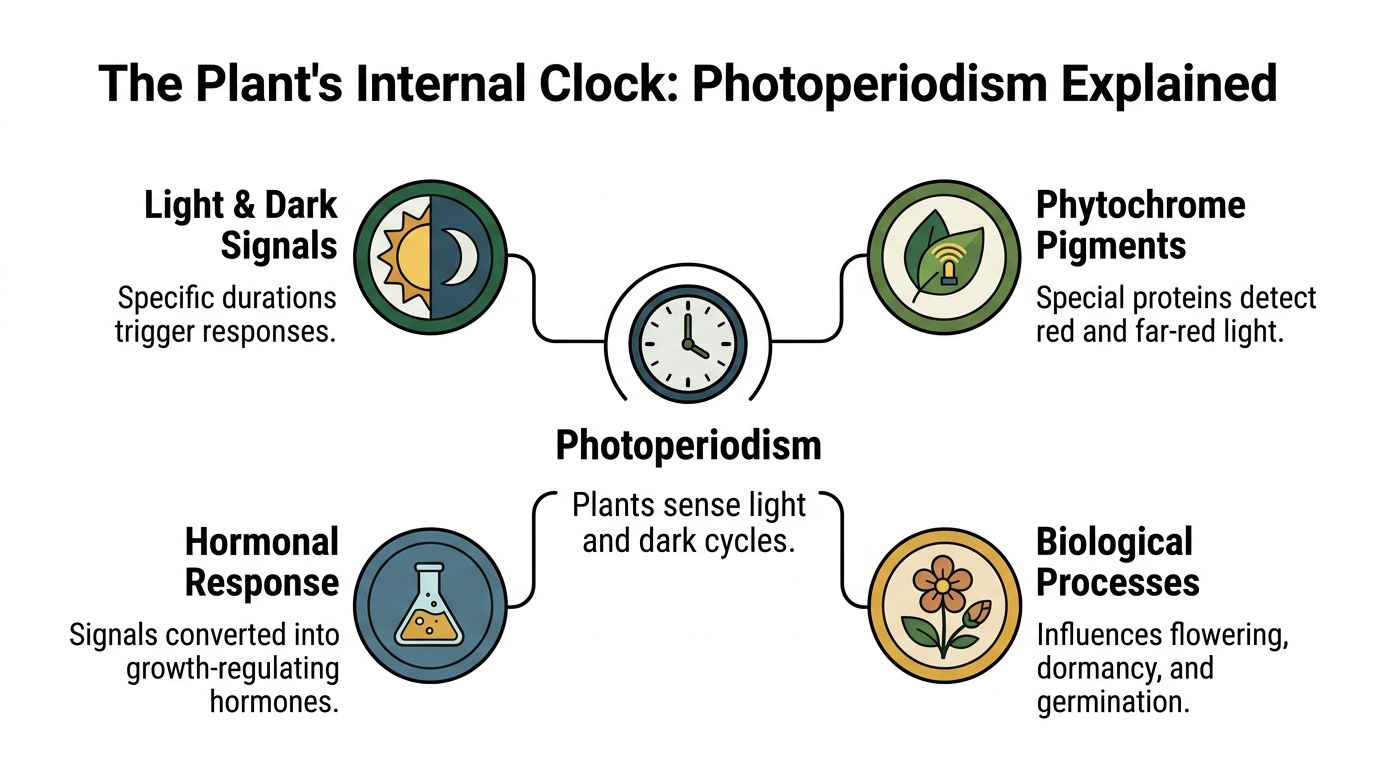
A plant doesn't own a clock, but it does track a daily pattern. Light comes on, light goes off, darkness lasts a certain amount of time, and the plant uses that rhythm as a cue.
That process is called photoperiodism, and for cannabis growers the useful part is straightforward: many cannabis cultivars are treated as short-day plants, which is a confusing name because flowering is instead triggered by the long, uninterrupted night. Khan Academy notes that short-day plants, including many cannabis cultivars, need a long period of uninterrupted darkness, often exceeding 12 hours, to flower, and they won't flower properly if that night is interrupted by light in its photoperiodism lesson.
The part that confuses most growers
“Short-day plant” makes it sound like the plant is counting daylight hours only. In real grow terms, it's smarter to think like this:
- Long days and short nights keep a photoperiod cultivar in vegetative growth.
- Shorter days and long nights tell it that flowering season has arrived.
- Broken darkness can confuse the plant because the night no longer feels complete.
That's why a tent that looks dark to you may still be too bright for your plants if stray light gets in during the off cycle.
Why darkness is the signal that matters
For home growers, this changes how you manage your room. You're not just hanging a light and picking a wattage. You're protecting a schedule.
A good timer, a lightproof tent, and disciplined habits matter more than people expect. Opening the tent during lights-off, leaving indicator lights exposed, or letting hallway light leak in can interfere with flowering.
If you're setting up your room from scratch, a guide on lighting for growing cannabis indoors can help you sort out fixture choice and placement, but the schedule itself is what tells a photoperiod cultivar what season it's in.
Your plant doesn't care why the dark cycle was interrupted. It only reads that it was interrupted.
That's the practical translation of the science. When growers say they “flipped to flower,” what they really mean is they changed the daily light and dark pattern enough to trigger the plant's flowering response.
Photoperiod vs Autoflower Cultivars
The choice becomes personal. Not better or worse, just different tools for different growers.
Photoperiod cultivars are for growers who want control. Autoflower cultivars are for growers who want simplicity and speed. If you know your own habits, your schedule, and your space, the right pick usually becomes obvious pretty fast.
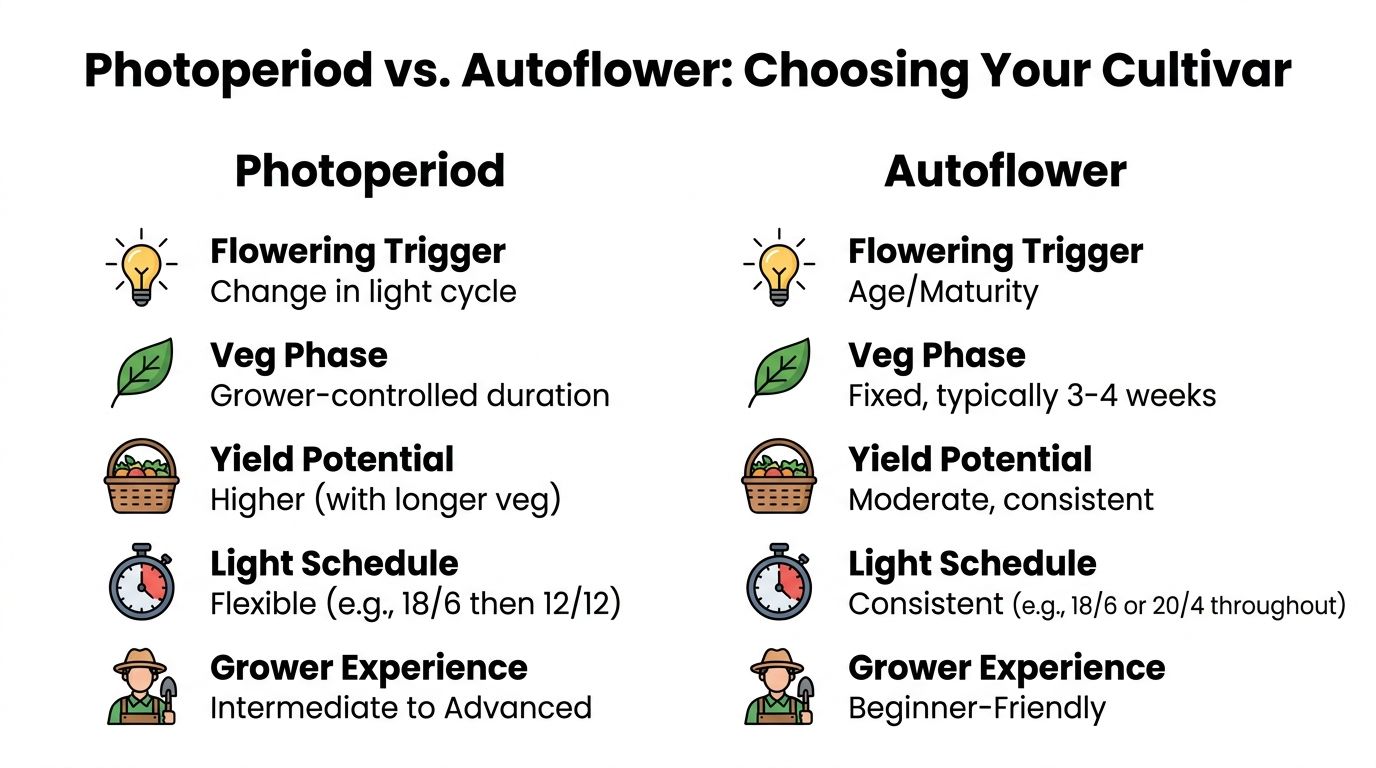
What makes photoperiod cultivars different
Photoperiod cannabis is often described loosely as a short-day plant, but the more useful detail is the critical photoperiod. High Mowing Seeds explains that cannabis is a quantitative short-day plant and that flowering speeds up as daylight decreases, but initiation happens when the plant gets a 12-hour uninterrupted dark threshold in a clear overview of photoperiodism.
For a home grower, that means you get to decide when bloom begins. You can keep the plant in veg longer, build a bigger frame, and shape it before you switch the schedule.
Photoperiod cultivars usually fit growers who want:
- More control over size: You can extend veg if your canopy needs filling.
- More flexibility with training: You've got time to top, bend, and spread the plant before flower.
- A custom pace: Your plant follows your light schedule, not a built-in countdown.
Why autoflowers feel easier
Autoflower cultivars don't wait for a light cycle change to start flowering. They flower based more on age and maturity, which makes them feel lower pressure for a lot of people.
That makes them a solid fit for:
- New growers: Less timing stress, fewer chances to mess up a flip.
- Small spaces: They often stay more compact and finish without a long veg decision.
- Busy people: You don't have to build your whole routine around changing schedules.
If you want to manage the plant closely, photoperiod fits. If you want the plant to keep moving without much intervention, autoflower usually fits better.
A side by side look
| Feature | Photoperiod cultivars | Autoflower cultivars |
|---|---|---|
| Flower trigger | Change in light cycle | Plant age and maturity |
| Veg length | Grower controlled | Not fully grower controlled |
| Training window | Longer | Shorter |
| Schedule sensitivity | High | Lower |
| Best for | Control and shaping | Simplicity and convenience |
If you want a deeper side by side breakdown, this guide on autoflowering vs photoperiod is useful when you're narrowing down what suits your room and routine.
Managing Light Schedules for Your Grow
You get home after work, peek in the tent, and your plants look great. Then a week later you realize the timer was off, the lights changed at random, and now the room feels less like a grow and more like guesswork.
That is the part photoperiod growers need to get right. The good news is it is simple once you treat light like your plant's daily clock.
For feminized photoperiod cultivars, you will usually run two schedules indoors:
- Vegetative growth: 18 hours on, 6 hours off
- Flowering: 12 hours on, 12 hours off
The first schedule gives your plant a long “summer day” to build roots, branches, and leaf mass. The second gives it the long night that tells it flowering season has arrived.
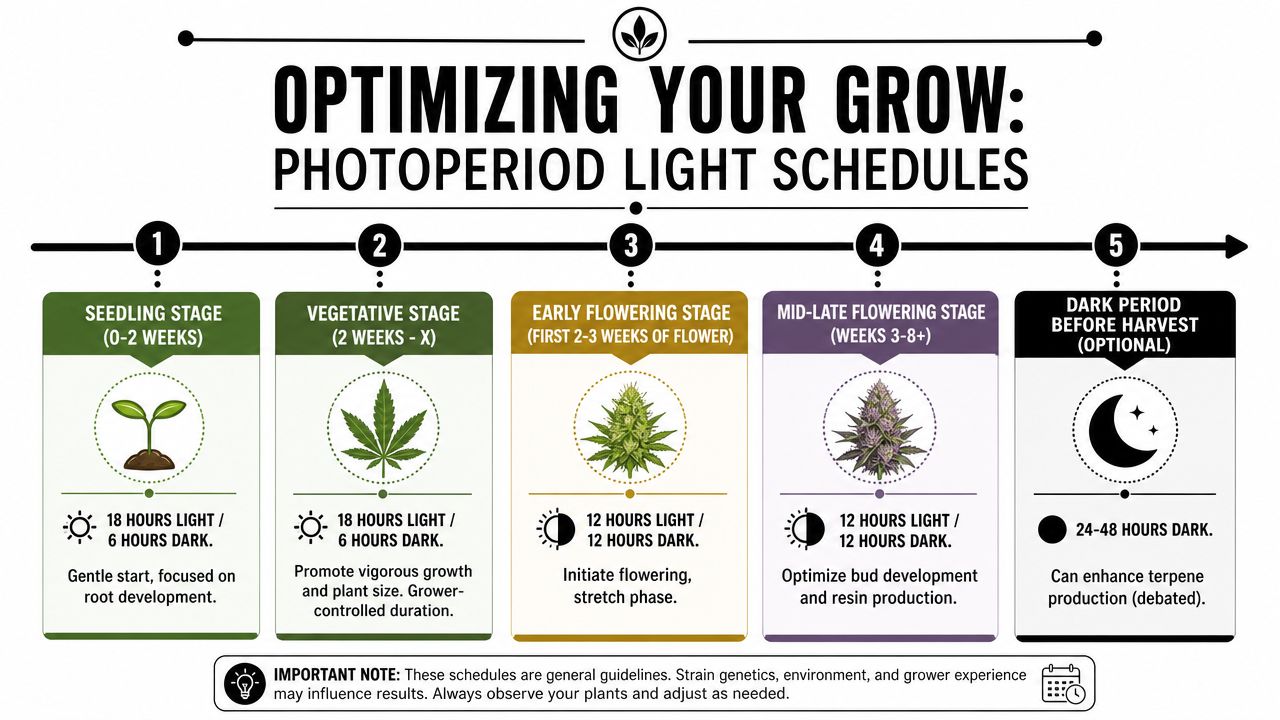
The basic indoor rhythm
A timer does a lot of the heavy lifting here. You are not trying to outsmart the plant. You are giving it a steady routine it can trust.
A practical setup looks like this:
- Run 18/6 in veg: This gives the plant plenty of light while it builds size and structure.
- Use that time to shape the canopy: Top, tie down, and spread the branches before flower starts.
- Flip to 12/12 when the plant fills the space you want: Indoors, this is your manual “season change.”
- Keep that schedule steady every day: Regular timing matters more than doing anything fancy.
Photoperiod gives you more control than autoflower. You decide when the plant keeps growing and when it starts making flowers. That control is great for home growers who want to fill a tent properly instead of rushing to bloom too soon.
Outdoor growers follow the sun. Indoor growers copy it.
Outside, the season handles the timing for you. Days are longer in the growing season and shorter as the season turns, and plants respond to that shift.
Indoors, you are recreating that cue with a timer and a lightproof space.
If you also grow autos, keep those schedules separate in your head. Photoperiod plants need a clear flip into flower, while autos are usually kept on a steadier routine from start to finish. This guide to an autoflowering light schedule is a helpful side-by-side reference if you grow both.
Here's a quick visual if you want to see how growers think about stage-by-stage lighting:
The one tool that saves a lot of headaches
Use an electrical timer.
A phone reminder still depends on you being home. Memory slips. Life gets busy. A timer keeps the room consistent even when your day is not.
A missed light change once in a while might not ruin a grow, but repeated schedule changes can slow progress and create flowering problems you did not need.
Plants like routine for the same reason people do. When the timing stays steady, the whole grow gets easier to read, and that usually means better decisions and a better harvest.
Common Photoperiod Mistakes and How to Fix Them
Most photoperiod problems come down to one issue. The schedule looks right on paper, but the plant experiences something different in the room.
That's why troubleshooting usually starts with the environment, not the genetics.
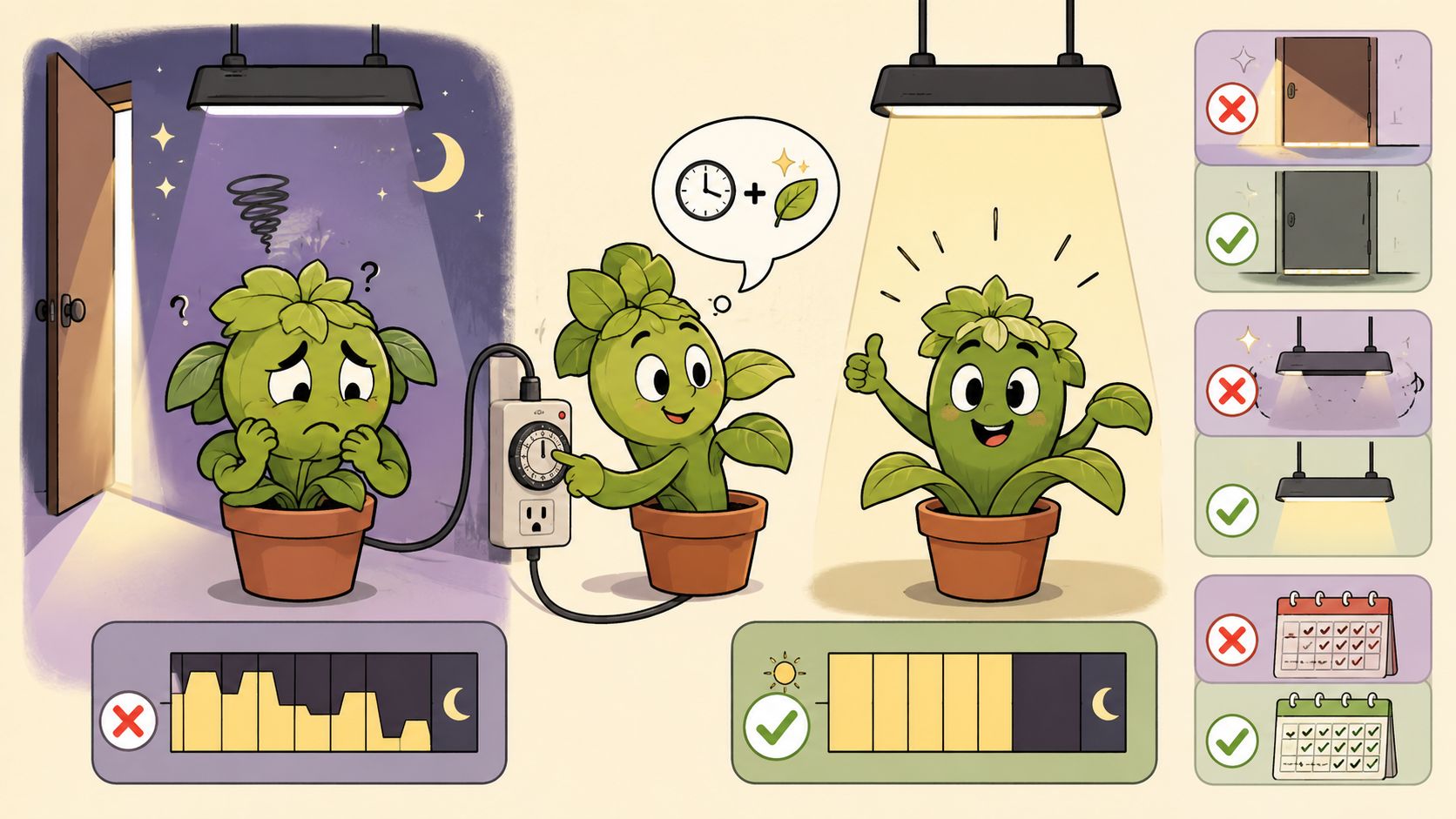
Light leaks during the dark cycle
This is the biggest one. Plants can respond to extremely low light levels, about 2 μmol m⁻² s⁻¹, and that can be enough to inhibit flowering in short-day plants, which is why even tiny leaks matter, as explained in Hort Americas on photoperiod and flowering.
What it looks like: flowering stalls, timing feels off, or the plant acts stressed.
What causes it: zipper gaps, indicator lights, a cracked tent flap, opening the door during lights-off.
How to fix it:
- Check the tent in darkness: Sit in the room with grow lights off and let your eyes adjust.
- Cover small LEDs: Power strips, humidifiers, and controllers are common offenders.
- Respect lights-off: Don't pop in for a quick peek.
Flipping too early
Sometimes growers switch to 12/12 because they're excited, impatient, or worried about time.
What it looks like: small plants, less canopy, less room for bud sites to develop.
What causes it: starting flower before the plant has enough size or branch structure.
How to fix it: let the next run veg longer before flipping. Use the extra time to shape a fuller canopy.
Flipping too late
The opposite problem happens when a grower keeps a plant in veg too long for the space.
What it looks like: crowded tents, lights too close to the canopy, airflow getting worse.
What causes it: underestimating how much the plant will stretch after the flowering switch.
How to fix it:
- Train earlier: Don't wait until the plant is already oversized.
- Flip based on space, not emotion: Your tent height matters more than your patience.
- Choose the right cultivar: Some stay tidier, some want to reach.
A photoperiod plant can forgive a lot. It's much less forgiving when the dark cycle gets sloppy.
Frequently Asked Grower Questions
A lot of home growers hit the same point. The timer is set, the plant looks healthy, and then the questions start.
Can a photoperiod plant go back to veg after flowering starts
Yes. If you return a photoperiod plant to a longer light schedule, it can shift back into vegetative growth.
That said, it usually turns into a rescue move, not a smart routine. Re-vegging can slow the plant down, confuse its growth pattern, and make your run messier than it needs to be. For most home growers using feminized photoperiod cultivars, it makes more sense to get the timing right the first time and avoid the detour.
Does light intensity matter for the photoperiod trigger
For the trigger itself, the schedule matters more than blasting the plant with brighter light. What really trips growers up is stray light during the dark period.
A tiny light leak can act like someone flicking the bedroom light on while you are trying to sleep. The plant may not fully switch gears, or it may respond unevenly. So if your goal is clean, reliable flowering, protect the dark period first. Then worry about dialing in light strength for growth and yield.
How long after switching to 12 12 will I see flowers
Usually, you will see the plant start acting like it has entered flower within about 1 to 2 weeks. You may notice stretch first, then early flower sites.
The exact pace depends on the cultivar and the overall setup. Treat 12/12 like pressing start on the flower cycle, not like a stopwatch that makes every plant move at the same speed.
What matters most if I want a smoother first run
Keep your setup boring in the best way. Plants like consistency more than clever tricks.
- Use a timer: A steady schedule beats trying to remember lights by hand.
- Guard the dark period: Small interruptions can cause bigger problems than new growers expect.
- Pick the right cultivar type: Feminized photoperiod cultivars give you more control over veg time. Autoflowers fit growers who want a simpler, fixed pace.
- Size the plant for the space: A bigger plant is only better if your tent can handle it.
Once photoperiod clicks, the whole grow feels less mysterious. You are not guessing what the plant wants. You are reading its clock and using that timing to get a better harvest.
If you're deciding between feminized photoperiod and autoflower cultivars, Botanist Seeds makes that process a lot easier. Use the comparison tool to match your space, experience level, and grow style with a cultivar that fits how you like to grow.