What Is Lollipopping? a Guide to Bigger Cannabis Buds
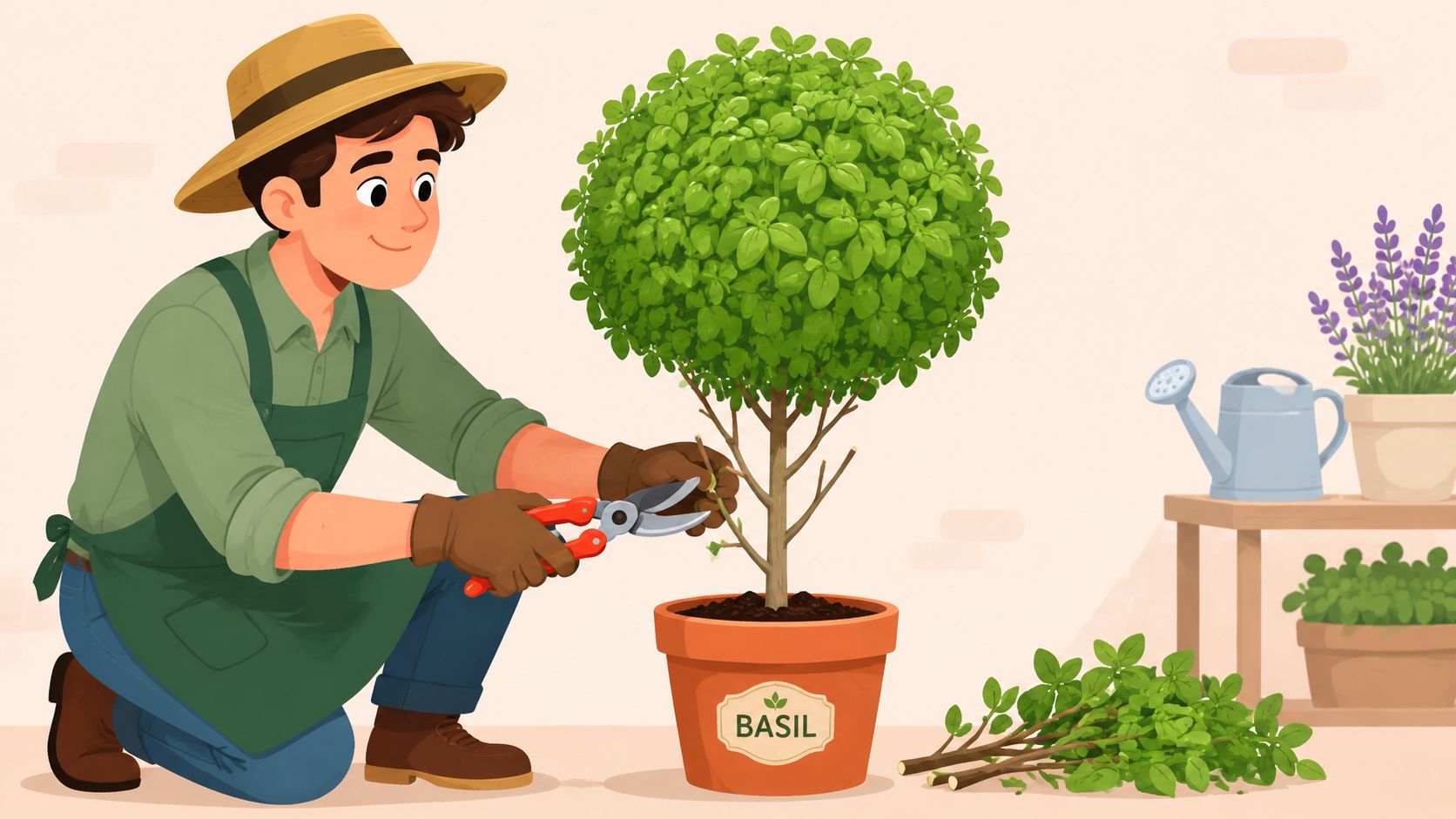
You're probably looking at a plant right now that seems full and healthy from the top, but the lower half tells a different story. Tiny branches. Small leaves. Bud sites hiding in shade. They're alive, sure, but they don't look like they're doing much.
That's the moment when a lot of growers start asking the same question: is all that lower growth helping, or is it just taking up space and energy?
That question is exactly where lollipopping comes in. It sounds more technical than it is. It's a cleanup job with a purpose. You're deciding which parts of the plant are worth keeping, and which parts are just along for the ride. For home growers, that matters. Less wasted effort, less post-harvest trimming, and a cleaner path to the kind of top buds you want to jar up and enjoy.
Let's Talk About Your Plant's Bottom Half
A common first grow mistake goes like this: you see a bushy plant and assume more growth means more bud. Makes sense on paper. Then flowering gets going, and the lower branches stay weak because they never got enough light in the first place.
You end up with a plant that looks impressive until you crouch down and check the underside. That's where the confusion starts. The top looks productive. The bottom looks like it's trying to catch up and failing.
Why the lower growth gets left behind
Indoor growers see this all the time. Your light is strongest at the canopy. The further down you go, the weaker that light gets. Lower branches can still grow, but if they're shaded by the upper canopy, they often stay thin and underdeveloped.
That's why experienced growers stop treating every branch equally. They look at the plant and ask a better question: which growth has a real shot at becoming quality flower?
If you've been learning basic plant training and cleanup, this broader guide to pruning cannabis plants helps put lollipopping into context.
The practical problem it solves
Lollipopping is really about stopping the plant from spending resources on growth that won't pay off. Instead of supporting a bunch of weak lower sites, the plant can put more effort into the stronger top canopy.
Imagine cleaning out the dead-end aisles in a small shop. You're not making the store smaller. You're making it run better.
A bushy plant isn't always an efficient plant.
That's the part newer growers often miss. More growth can mean more maintenance, more clutter, and more small lower buds that nobody is excited to trim later.
What Exactly Is Lollipopping
What is lollipopping? It's a pruning method where you remove the lower growth from a cannabis plant so it ends up looking a bit like a lollipop, bare stem below, fuller growth up top.
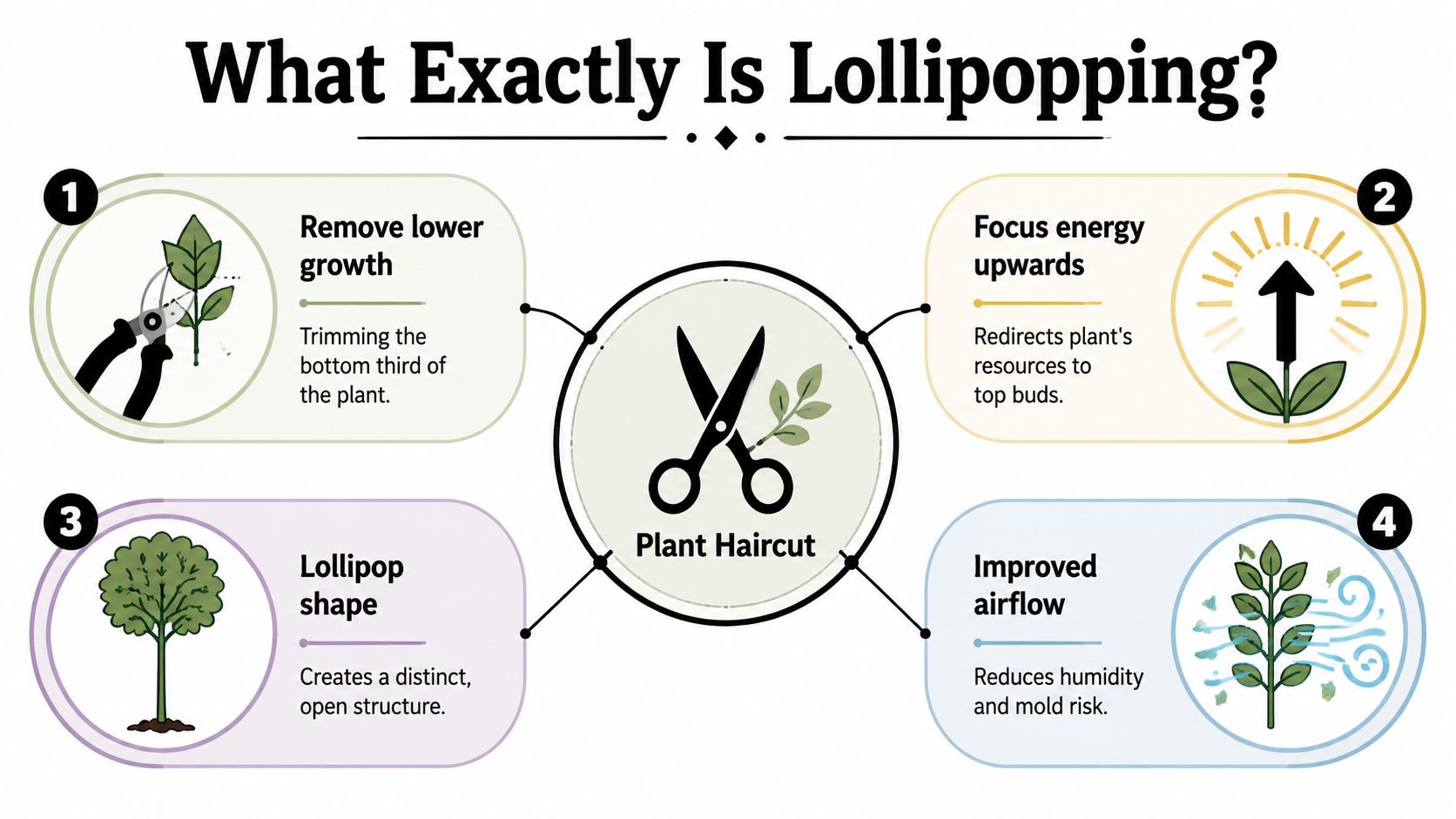
The goal isn't to make the plant look pretty. The goal is to remove leaves, weak branches, and low bud sites that sit in poor light, so the plant focuses on the upper canopy where light interception is strongest. Practical growing guides commonly describe the standard cut line as the bottom one-third of the plant, while some growers clear up to one-half of the lower branches on taller cultivars just before flowering begins, as explained in Emerald Harvest's guide to lollipopping or defoliation.
Think of it as a targeted haircut
This isn't random trimming. You're not snipping healthy growth just because the plant looks crowded. You're removing the parts that are unlikely to produce quality flower because they live in shade.
That's why the lollipop shape matters. It's a visual shortcut. If the plant has a cleaner lower stem and a more productive top, you've likely done the job right.
Main goal: Remove the low-value growth so the plant can focus on the best-lit bud sites at the top.
What growers usually remove
Most lollipopping sessions focus on a few obvious targets:
- Weak lower branches: Thin stems that never reach the canopy.
- Small under-light bud sites: The little sites buried low in the plant that rarely become dense flowers.
- Crowded leaves underneath: Foliage that blocks airflow and sits in deep shade.
The important thing is intention. You're not stripping the plant bare. You're cleaning up the bottom so the top can do the heavy lifting.
This is why lollipopping gets talked about alongside canopy management. It's less about pruning for the sake of pruning, and more about shaping the plant around how light works in your space.
The Payoff Why Lollipopping Is Worth It
You're putting in extra work, so it's fair to ask what you get back. For a home grower, the payoff is mostly about quality, efficiency, and a cleaner grow room.
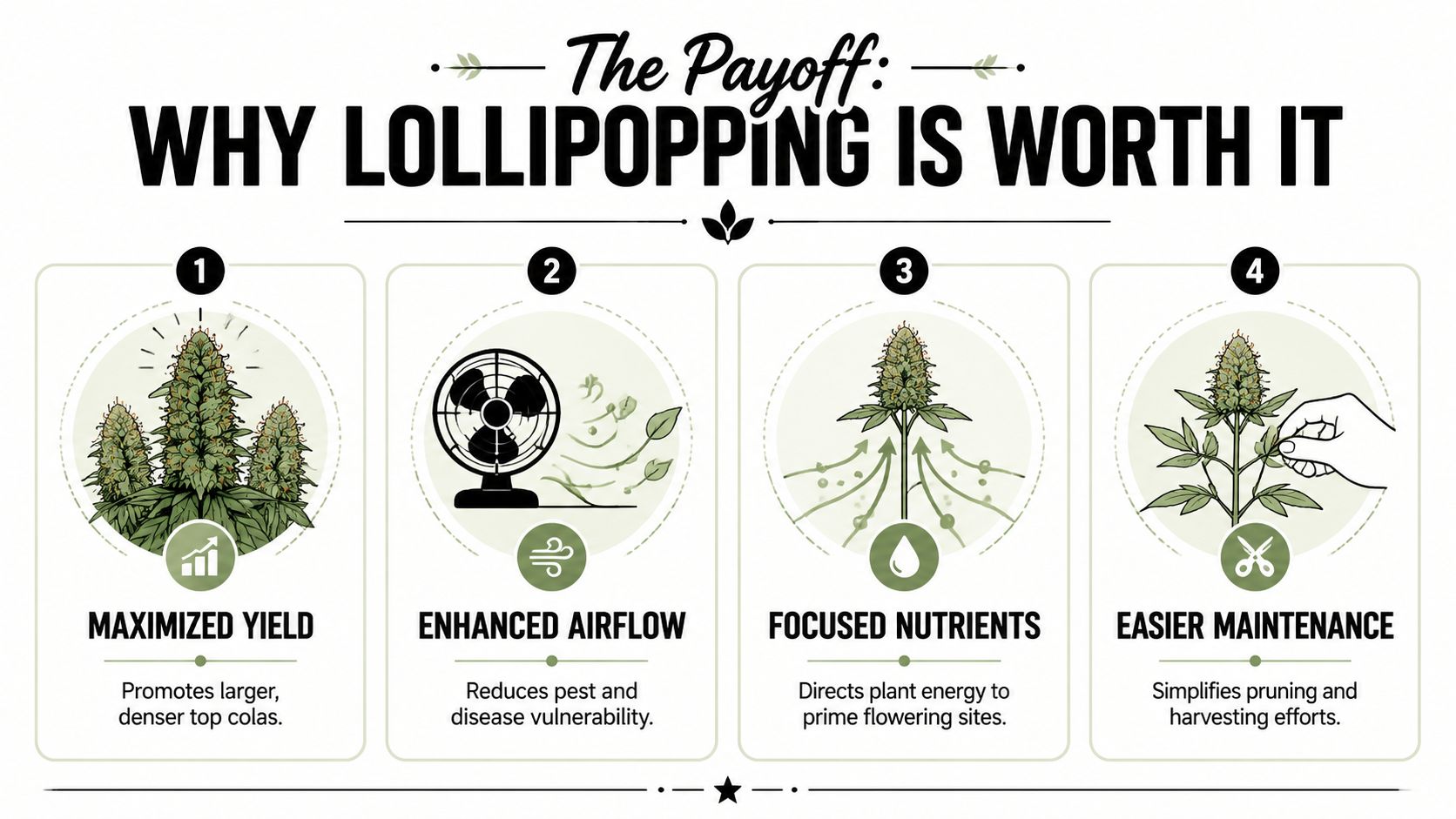
Grow guides note that when you remove poorly lit lower growth, the plant doesn't keep wasting water, nutrients, and energy on bud sites that contribute little to the final harvest, and can redirect those resources toward the upper colas instead, as described in GrowWeedEasy's lollipopping cannabis tutorial.
What you'll usually notice
- Better focus on top buds: The plant isn't splitting effort across a bunch of weak lower sites.
- Cleaner airflow under the canopy: A less crowded lower half gives air more room to move.
- More uniform development: The plant's strongest flowering sites tend to be easier to manage when the bottom isn't full of fluff.
- Less annoying trim work later: Fewer tiny popcorn buds means less time hunched over scissors after harvest.
Why that matters in a small home setup
Most hobby growers don't have unlimited room, unlimited time, or unlimited patience for tiny lower buds that never bulk up. If you grow in a tent, every square inch of healthy canopy matters.
A cleaner plant is also easier to inspect. You can check structure, spot trouble sooner, and keep your grow area from turning into a crowded jungle. That matters as flowers mature and you start paying closer attention to resin and finish timing. If you want a better read on ripeness, this guide to trichomes on weed helps connect canopy management with harvest decisions.
Lollipopping doesn't magically fix a weak grow. It helps a healthy plant use its light and space more intelligently.
The short version
Here's the trade most growers are making:
| Choice | Likely outcome |
|---|---|
| Leave all lower growth | More clutter, more small lower buds, more cleanup later |
| Remove weak lower growth | Cleaner structure, stronger focus on upper flower sites |
That's why many growers see lollipopping as a practical move, not a cosmetic one.
Timing Is Everything When and How to Lollipop
Good timing makes this technique useful. Bad timing can stress the plant for no good reason.
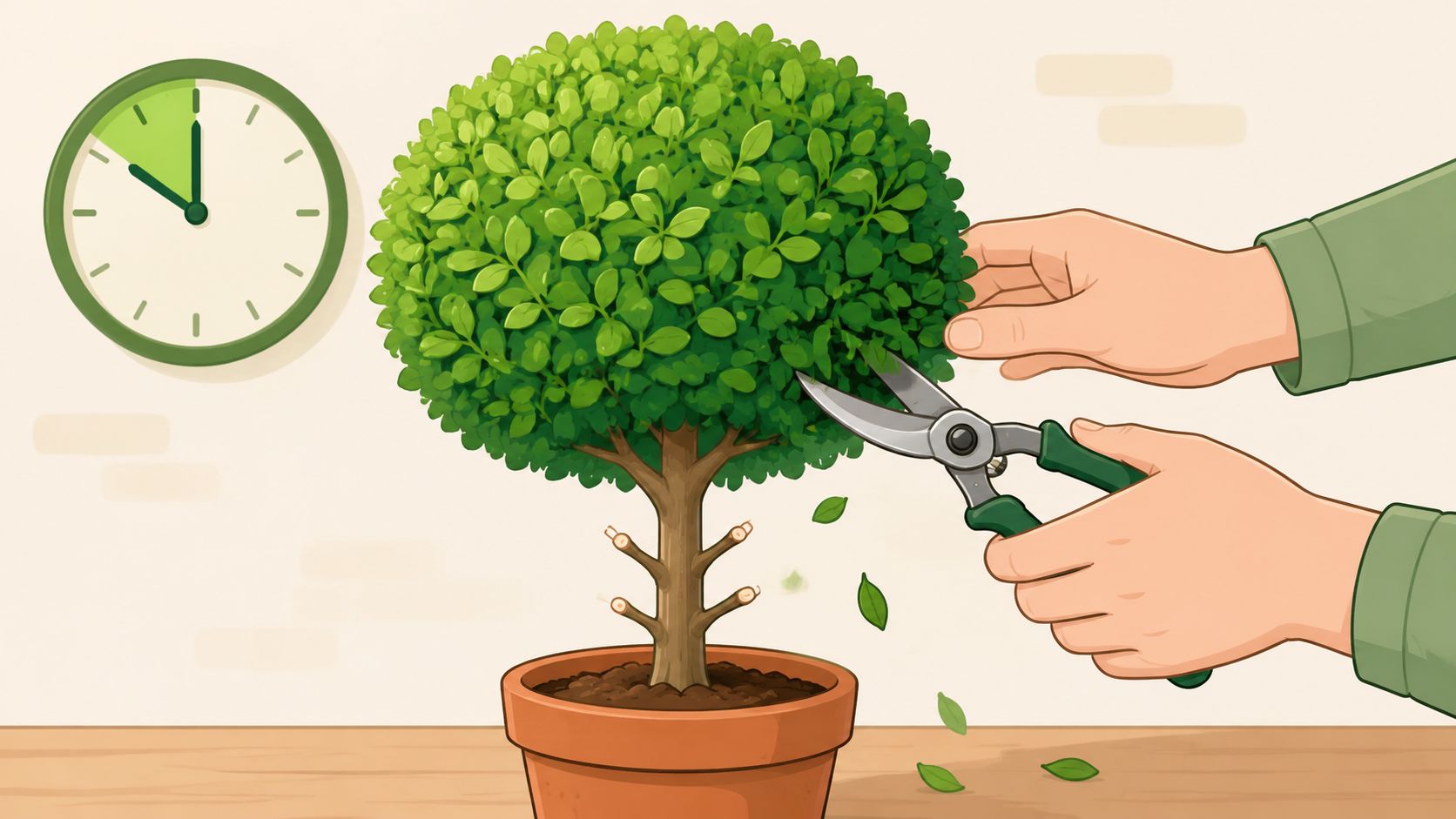
Cultivation guidance commonly recommends doing lollipopping at the end of vegetative growth or about 2–3 days before the flowering light cycle change, which gives the plant several days to recover before flower production ramps up, according to this guide on lollipopping techniques and timing.
For photoperiod cultivars
If you're growing feminized photoperiod cultivars, the safest window is usually near the end of veg, right before you flip into flower. That's when the plant is still flexible, still actively growing, and better able to bounce back from pruning.
You want enough structure to know what's worth keeping, but not so much late flower development that the plant has to recover while trying to stack buds. That's where growers get into trouble. They wait too long, then start hacking away once flowering is already demanding a lot from the plant.
If you need a refresher on that part of the cycle, this breakdown of the vegetative stage of weed is worth a read.
For autoflower cultivars
Autoflowers need a lighter touch. Their timeline moves fast, and they don't give you the same recovery cushion as photoperiod plants.
That doesn't mean you can't clean them up. It means you should be more selective. If an autoflower is healthy, growing strongly, and clearly throwing weak shaded lower growth, a careful cleanup can make sense. If it's already slow, pale, droopy, or recovering from another issue, leave it alone.
That's the big difference. With autos, every stress event matters more because the plant keeps moving forward whether it's ready or not.
A simple way to do it
You don't need fancy gear. You need clean tools, a calm hand, and a plan.
- Start with clean pruning scissors: Don't use grimy household snips from the garage.
- Look at the plant at canopy level: Figure out where productive growth begins.
- Choose a cut line: Many growers use the lower portion of the plant as the cleanup zone, but the determining factor is light. If it's heavily shaded and unlikely to reach the canopy, it's a candidate.
- Remove weak lower branches first: These are usually the easiest calls.
- Clean up under-light bud sites and excess leaves: Keep the structure open without stripping the plant too hard.
- Stop and reassess: If the plant already looks dramatically cleaner, you've probably done enough.
Practical rule: If you're debating a branch because it looks weak, shaded, and late to the party, it usually doesn't earn a spot.
A quick visual can help if you want to see the general idea in action:
What a good result looks like
After lollipopping, the lower plant should look cleaner and more open. The top should still look healthy and balanced. You're aiming for a plant that can move air below and put its strongest effort into the canopy above.
If it looks like you gave the plant a panic haircut, you probably went too far.
Lollipopping Mistakes and Cultivar Smarts
Good intentions can turn into sloppy pruning. Lollipopping works best when you make decisions based on plant health and structure, not habit.
A key tradeoff often gets skipped in beginner guides: lollipopping can help, but it also adds stress. Guidance on the technique warns that it should be used on healthy, vigorous plants, and handled conservatively if the crop is already showing stress, as noted by Trim Force's discussion of fimming and related pruning tradeoffs.
Mistakes that trip growers up
- Going too hard in one session: If you strip too much at once, the plant has to spend time recovering instead of growing.
- Pruning a stressed plant: If leaves are already unhappy, don't add another stressor.
- Waiting too late: Heavy cleanup after flowering is well underway usually creates more problems than benefits.
- Using dirty tools: Clean cuts matter. Dirty scissors invite avoidable trouble.
- Copying someone else's plant exactly: Your tent, light intensity, and cultivar structure may be completely different.
Which cultivars usually benefit most
Not every plant needs the same treatment.
Tall, stretchy cultivars often benefit more because they tend to produce more lower growth that falls behind the canopy. Those plants can get leggy fast, especially indoors, where lower light levels make the bottom half less productive.
Short, compact, bushier cultivars can be trickier. They may still need cleanup, but the answer is often lighter and more selective. Instead of clearing aggressively, you might just remove the obviously weak growth and preserve the rest.
When you should absolutely not do it
Use this short checklist before you pick up the scissors:
| Plant condition | Better move |
|---|---|
| Healthy and vigorous | Consider a measured lollipopping session |
| Recently stressed | Wait and let the plant recover |
| Showing deficiencies or droop | Fix the root problem first |
| Slow autoflower with little vigor | Skip it or keep it very light |
If the plant is asking for recovery, don't answer with more pruning.
That's the decision-making part most growers need. Lollipopping isn't mandatory. It's a tool. Good growers know when to use it, and when to leave the plant alone.
The Takeaway Grow Smarter Not Harder
Lollipopping is one of those techniques that sounds fancy until you see what it really is. You're cleaning up the lower part of the plant so the top canopy gets the attention, light, and resources that matter most.
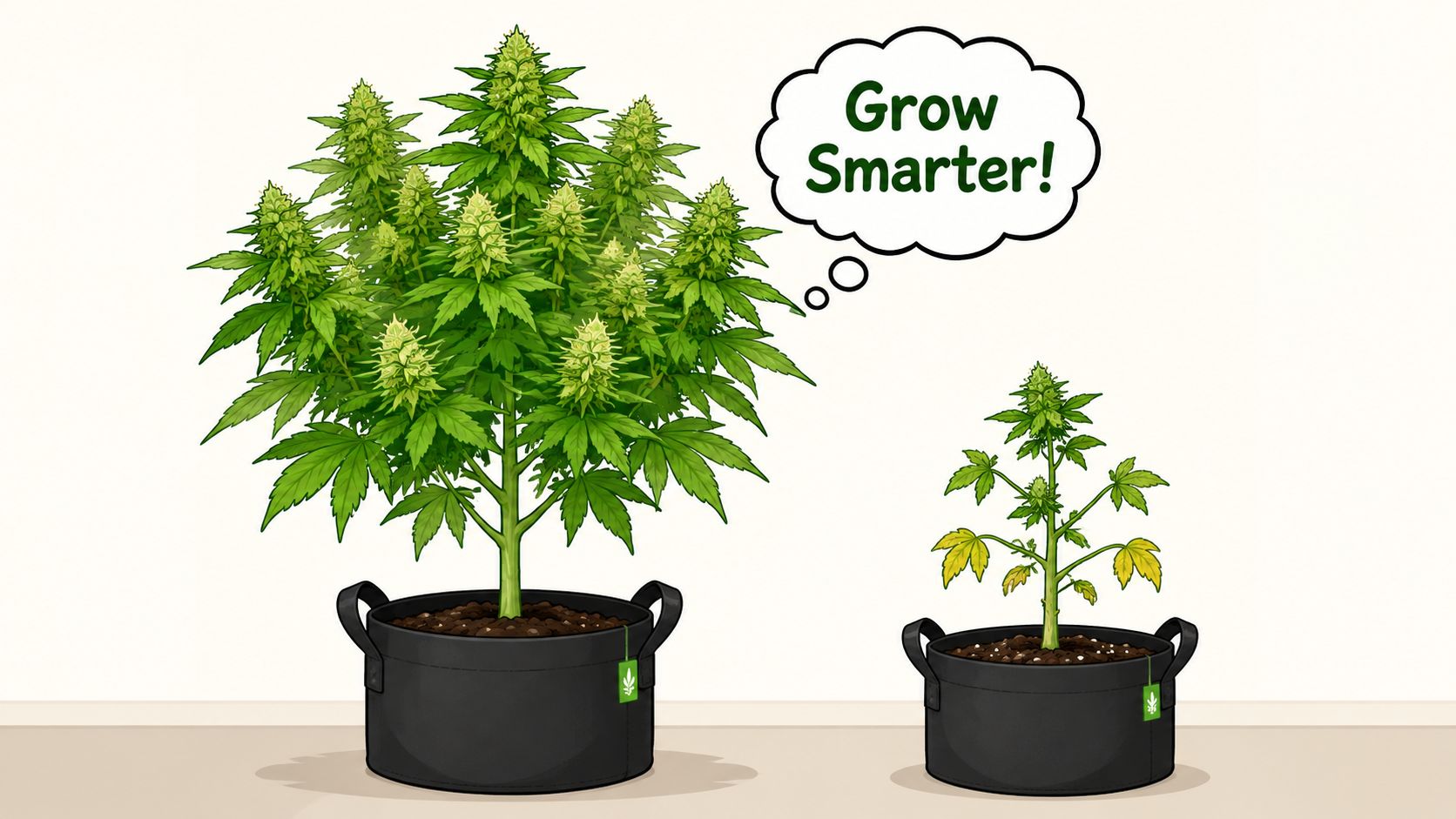
The actual value isn't just in the cuts themselves. It's in the judgment behind them. Knowing when to lollipop, when to go light, and when to skip it entirely is what separates random pruning from smart canopy management.
For home growers, that's the whole game. You want a plant that fits your space, responds well to your setup, and rewards your time with a cleaner, more satisfying harvest. A good lollipopping job helps with that, especially when the plant is healthy and the structure makes the decision obvious.
Keep it simple. Watch the plant. Don't prune just because someone on the internet did. Prune because your plant is telling you the lower growth isn't worth the energy.
If you're planning your next run, Botanist Seeds makes it easier to choose the right feminized or autoflower cultivar for your setup. Use the comparison tools, check growth patterns, and pick genetics that match your space, your schedule, and the kind of harvest you want to bring home.