




Find Your Perfect Weed Growing Book
You're probably doing what most home growers do at the start. You open a few tabs, search for the best weed growing book, skim a handful of reviews, then realize every option claims to be the ultimate guide. One book looks beginner-friendly but shallow. Another looks packed with information but reads like a lab manual. A third has great ratings, but the sample pages already feel dated.
That confusion makes sense. Growing at home is simple in some ways and unforgiving in others. A missed light change, a bad watering habit, or the wrong cultivar for your space can waste a whole run. Good information saves time, money, and frustration.
A solid grow book still matters because it gives you something the internet rarely does: a full path from setup to harvest, in order, without comment-section chaos. The trick is picking a book that matches how people grow now, especially if you're working with feminized or autoflower cultivars and modern indoor gear.
Why You Still Need a Grow Book in 2026
A lot of growers start with videos and forums. That's fine for quick fixes, but it's a rough way to learn the whole process. You get one person saying to water more, another saying to water less, and a third showing a setup that has nothing to do with your closet, tent, budget, or climate.
A good weed growing book solves that by giving you structure. You can follow the plant from seedling to cure without jumping between twenty opinions. You also get an offline reference you can keep near the tent, which matters more than people think when your hands are dirty and your phone screen is covered in potting mix.
Home growing also isn't some tiny fringe hobby. A peer-reviewed U.S. study found that 7.3% of respondents reported growing at home in 2020, with higher rates in states allowing adult-use home cultivation, which shows there's still strong demand for reliable cultivation knowledge (peer-reviewed home cultivation study).
Books give you a repeatable system
A book's true value isn't nostalgia. It's sequence.
When a book is good, it helps you answer practical questions in the right order:
- Space first: Are you growing in a tent, spare room, garage corner, or outdoors?
- Lighting next: What kind of schedule does your plant need, and how will you maintain it?
- Medium after that: Soil, coco, or another approach?
- Then care: Watering, feeding, airflow, pruning, harvest timing.
That order matters because beginners often reverse it. They buy seeds first, then figure out whether the cultivar fits the space.
Practical rule: If a resource makes you jump around to patch missing basics, it's not a strong foundation.
A book also slows down bad decisions
Most early mistakes come from reacting too fast. A leaf droops, so the grower changes three variables at once. Growth slows, so they add more nutrients when weak light or poor environment control is the issue.
Books tend to encourage patience and observation. That's one reason older cornerstone titles still matter historically. Cultivation references like Ed Rosenthal's Marijuana Grower's Handbook and Jorge Cervantes' Marijuana Horticulture helped move cannabis education from scattered advice into structured horticulture guidance with indoor and outdoor methods, making the category more practical for different kinds of growers (overview of foundational grow-book history).
If you're also trying to stay current on the broader legal environment around home growing, it helps to keep an eye on cannabis legalization news alongside your grow references.
What a Good Weed Growing Book Should Cover
A useful weed growing book should follow the plant's life, not just dump facts on the page. If the book jumps from nutrients to harvesting to random troubleshooting without a clear path, it usually leaves beginners with lots of terms and not much confidence.
The strongest books walk you through the full grow in a way that connects cause and effect. You should understand not just what to do, but why that step matters in your setup.
Here's the basic shape a good guide should cover:
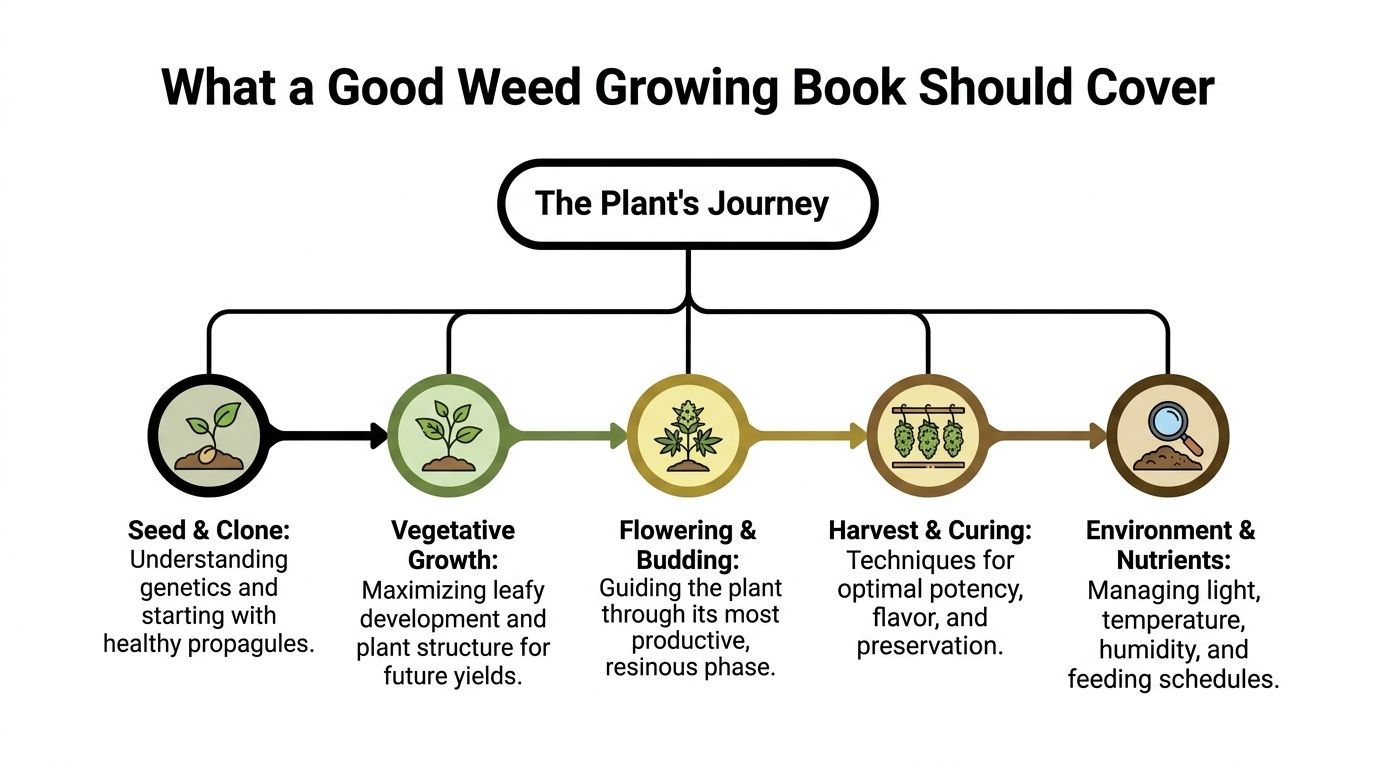
Start with setup, not hype
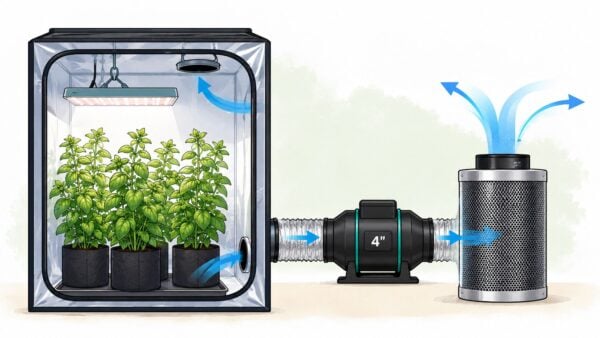
Before the plant does anything interesting, the book should help you build a workable environment. That includes space, containers, airflow, growing medium, and a realistic plan for keeping conditions stable.
A shallow book skips past this and heads straight to buds. That's backwards. Most grow problems start long before flowering.
Look for guidance that helps you think through:
- Room limits: Ceiling height, floor footprint, noise, smell control, and access to power
- Medium choice: Soil for simplicity, coco for more control, and how each changes watering habits
- Daily workload: Whether your setup needs constant adjustment or gives you some margin for error
It must explain light schedules clearly
This part can't be vague. A technically sound book should explain photoperiod control, including that vegetative growth generally needs about 18 hours of light per day, while flowering depends on a strict, uninterrupted dark period. It should also explain why light leaks and poor canopy coverage hurt flower development and ripening consistency (photoperiod guidance from Cannabis College).
A lot of beginners underestimate how practical this is. Light schedules are not trivia. They shape the whole run.
The best grow books don't treat lighting as a gear list. They treat it as the clock that controls the plant.
If you want a clean visual breakdown of the plant life cycle while reading, this guide on the stages of growing cannabis pairs well with that chapter structure.
Feeding, watering, and harvest should feel connected
A good book should also make it obvious that environment, irrigation, and nutrition work together. If the roots stay too wet, feeding charts won't save you. If the light is weak, extra nutrients won't create dense flowers.
The strongest guides usually cover:
- Watering habits: How to avoid the classic mistake of keeping the medium constantly soaked
- Nutrient use: How feeding changes as the plant matures, rather than staying fixed all run
- Harvest and curing basics: Drying and curing as part of quality, not as an afterthought
If a book treats harvest as “cut plant, hang plant, done,” it's missing one of the most important finish-line steps in home growing.
Choosing a Book for Your Experience Level
The wrong book can slow you down as much as bad advice. Beginners often buy books written for advanced cultivators, then get buried in jargon, training methods, and edge-case troubleshooting before they've even learned how to water properly. Experienced growers make the opposite mistake. They buy starter books that repeat basics they already know and never push into the details that improve results.
Your goal is simple: buy a book that solves your current problems, not the problems you might have two years from now.
What first-time growers actually need
If this is your first run, clarity beats depth. You want a book with a single, steady path through the process. It should show one workable way to start, not five competing methods per chapter.
The best beginner books usually have clean diagrams, photos that show healthy versus unhealthy growth, and checklists you can use without translating technical language. They should also stay grounded in the reality of home setups, not assume you have a dedicated grow room and a weekend to tinker with every variable.
A first book should help you answer questions like these:
- Can I match this method to my space?
- Does this advice fit feminized or autoflower cultivars, or does it drift into outdated seed discussions I don't need?
- Can I tell what to do this week, not just what the theory says?
What experienced growers should look for
Once you've already harvested a few runs, basic step-by-step content won't move the needle much. At that point, a stronger book gives you finer control over plant structure, feeding transitions, finishing quality, and troubleshooting.
One area advanced guides should cover well is the finish. A useful example is pre-harvest flushing, which often means stopping fertilizers about two weeks before harvest and watering with plain water during the final 7 to 10 days to improve final quality (pre-harvest flushing guidance). Whether a grower follows that exact approach every run or adjusts it by medium, a serious book should at least explain the reasoning and trade-offs.
Bench test: Read the harvest chapter before you buy. If it feels rushed, the rest of the book probably is too.
Beginner vs. advanced grow book focus
| Feature | What Beginners Need | What Experienced Growers Look For |
|---|---|---|
| Structure | One clear path from setup to harvest | Deeper sections on optimization and troubleshooting |
| Language | Plain English, fewer assumptions | Technical detail with practical application |
| Setup advice | Simple tents, lights, containers, airflow | Fine-tuning canopy management and environment control |
| Feeding guidance | Basic schedules and signs of overfeeding | Nuanced adjustment by growth stage and cultivar behavior |
| Plant training | Minimal, easy methods | More advanced shaping and recovery strategy |
| Harvest content | Straightforward drying and curing basics | Finishing quality, timing, and post-harvest refinement |
A useful way to judge your level is to think about where your last grow stalled. If you've never grown before, you need strong fundamentals. If your issue is uneven canopy, weak flower development, or rough finish quality, you need a book that goes deeper than “water, feed, harvest.”
For a practical baseline before comparing books, this step-by-step cannabis growing guide can help you identify whether you're still building fundamentals or ready for a more advanced reference.
Spotting Red Flags in a Grow Book
Some grow books are old but still useful. Others are just old. You can usually tell the difference within a few pages.
If the advice feels disconnected from how people grow today, skip it. A weed growing book should reduce confusion, not create more of it.
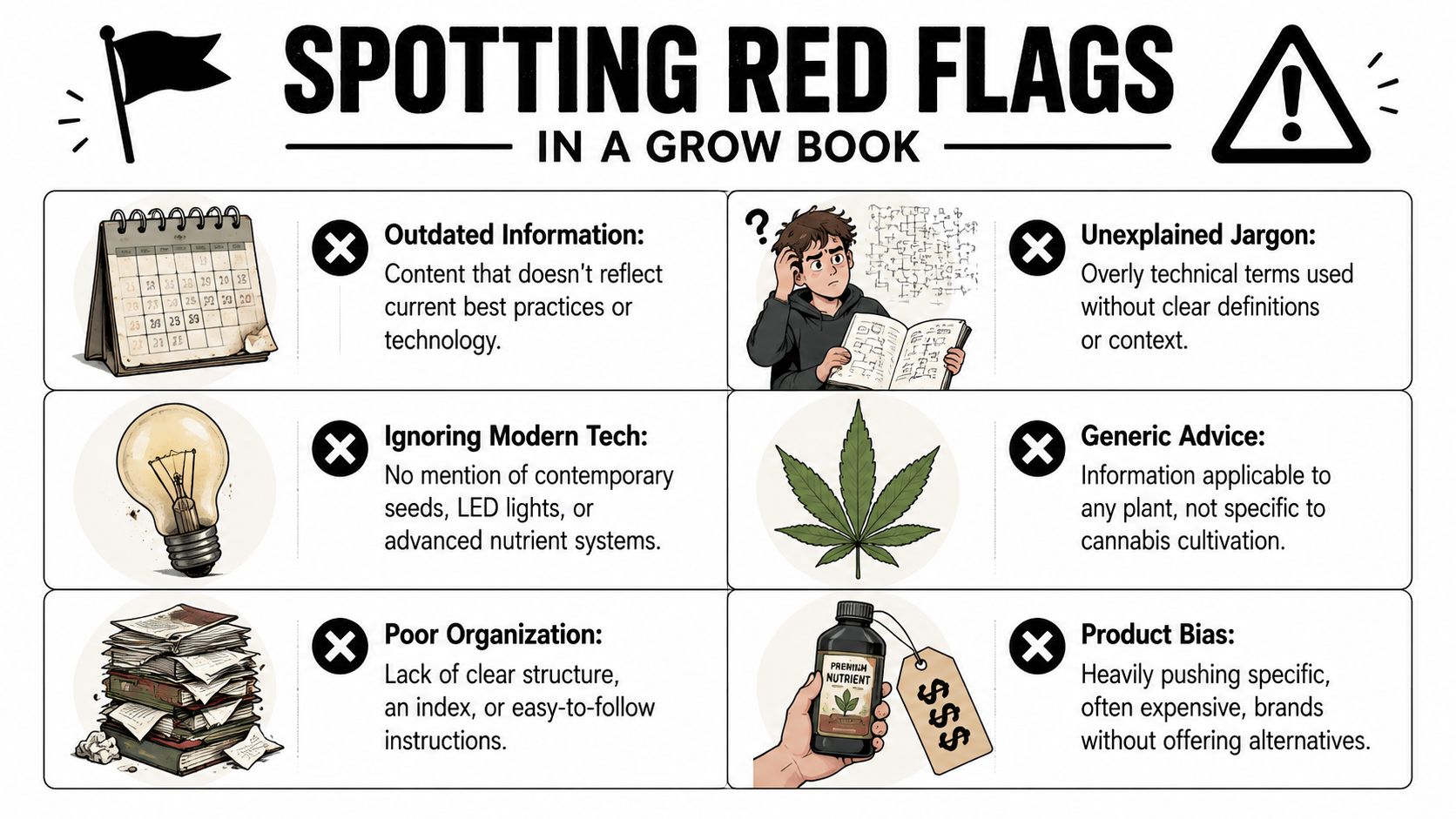
The big warning signs
A few red flags show up again and again:
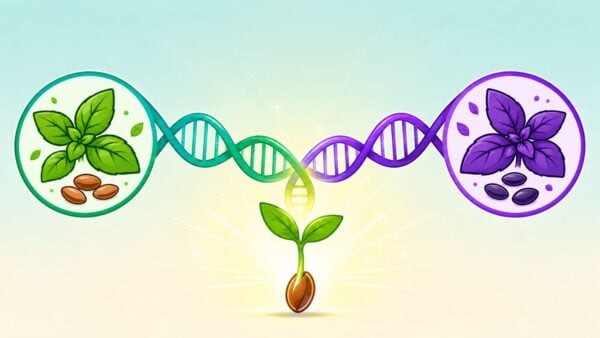
- Outdated seed focus: If large sections revolve around regular seeds and identifying male plants, the book isn't centered on the way many home growers shop now for feminized and autoflower cultivars.
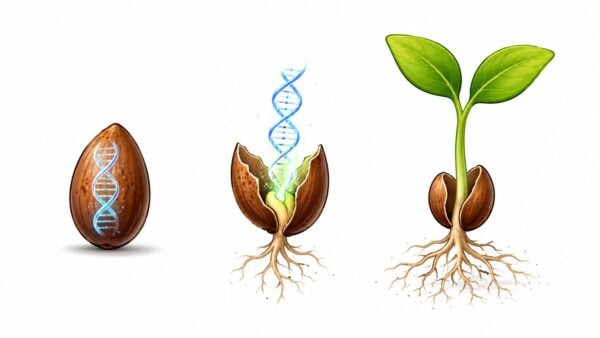
- No real discussion of genetics: If the book acts like every plant grows the same, it will leave you guessing when one cultivar stretches hard and another stays compact.
- Too much jargon, not enough application: Technical language is fine. Unexplained technical language is useless.
- Weak visuals: Good photos and diagrams matter. A strong book should help you recognize healthy structure, stress, and stage transitions.
- Unsafe DIY advice: Be cautious with books that normalize sketchy electrical setups, poor ventilation practices, or improvised fixes that belong in an old forum thread.
Watch for generic gardening content wearing cannabis branding
This one catches people. Some books are basically generic plant-care manuals with cannabis terms dropped in. They talk broadly about nutrients, leaves, roots, and watering, but they don't really deal with flowering behavior, canopy management, cultivar differences, or the indoor timing issues that define a cannabis grow.
If you can swap “cannabis” for “tomatoes” and most of the chapter still works, the book probably isn't specific enough.
Another red flag is bad organization. If there's no useful index, no quick-reference tables, and no way to find “light stress” or “watering frequency” fast, it's going to frustrate you mid-grow.
The best books feel like tools. The weak ones feel like clutter.
Using Your Book with Modern Seeds and Tools
A lot of older books fall short. They may teach solid growing principles, but they don't always help you connect that knowledge to the actual seed market you're buying from now.
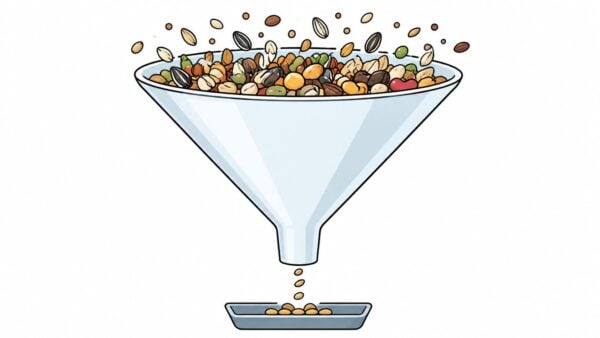
That gap matters because modern growers aren't choosing from a tiny menu. Public materials discussed in coverage of the current market note seed banks with more than 650 cultivars, which means the value of a grow book increasingly depends on whether it helps you narrow genetics by space, timing, and goals instead of only teaching generic grow steps (coverage of the shift toward genetics-focused cultivation guidance).
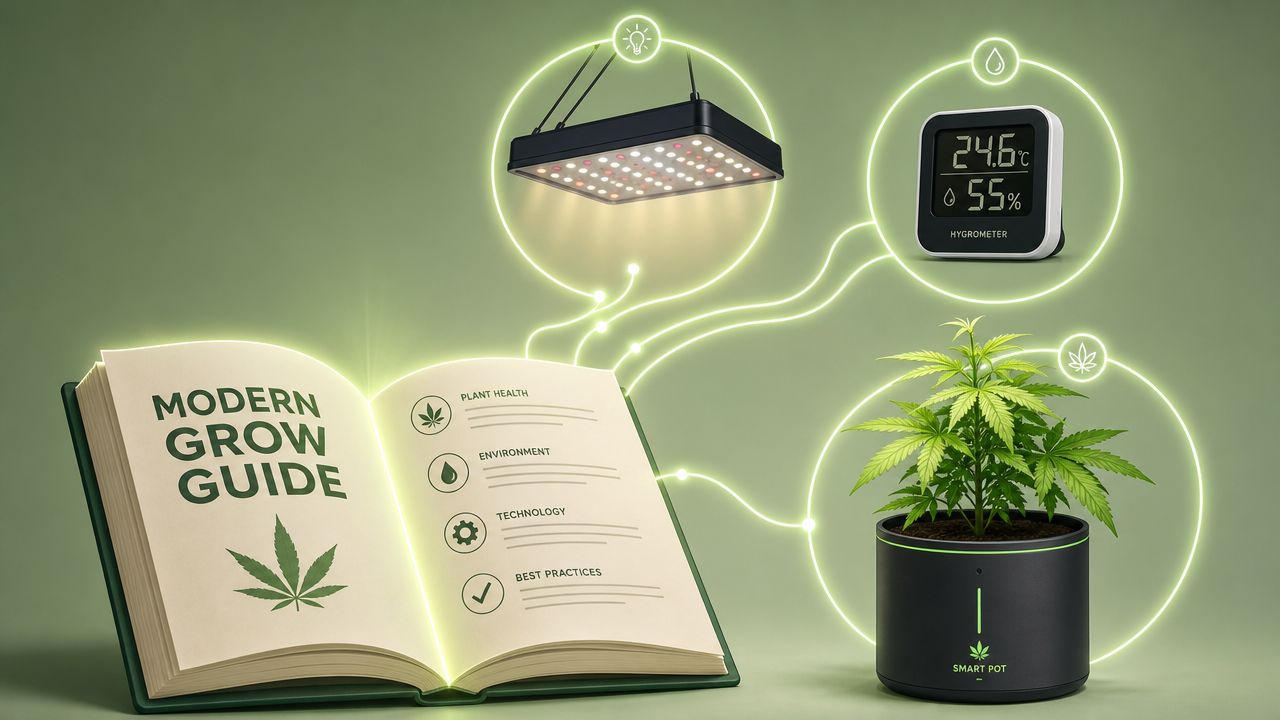
Use the book for principles, use tools for matching cultivars
Think of your book as the operating manual, not the final shopping list.
A book can teach you how to think about:
- Plant size: Whether your setup needs compact cultivars or can handle more stretch
- Timeline: Whether you want a quicker finish or don't mind a longer run
- Environment fit: Whether your space runs warm, cool, dry, or humid
- Grow style: Whether you want a simpler run or you enjoy more hands-on training and control
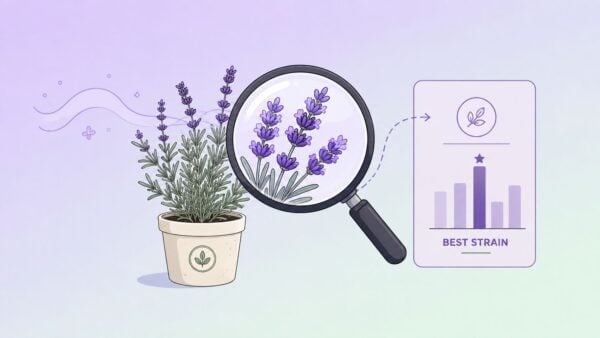
Then you take those criteria and compare actual feminized or autoflower options with a modern seed comparison tool. That's the missing link in a lot of older texts. They tell you how to grow, but not how to narrow choices in a catalog full of very different cultivars.
Match seed type to the way you actually grow
Being honest proves helpful here.
If you have a small tent, limited time, and want a simpler schedule, autoflower cultivars may fit your routine better. If you want more control over plant size and timing, feminized photoperiod cultivars often give you more room to shape the run around your environment and training style.
Your book should help you ask the right questions:
- How much vertical room do I really have?
- Can I manage light timing consistently?
- Do I want a quick, compact run or more control over vegetative growth?
- How much daily attention can I give this plant?
A book is strongest when it helps you eliminate bad cultivar fits before you germinate anything.
Pair the book with a simple real-world system
The growers who learn fastest usually combine three things: one trusted book, one seed-selection workflow, and one grow journal. The journal doesn't need to be fancy. Just track watering, feeding changes, light adjustments, and how each cultivar responds.
That's how book knowledge becomes your knowledge. You stop copying instructions blindly and start noticing patterns in your own space.
Forums and videos are still useful, especially for troubleshooting. But they work best when the book already gave you the framework. Without that framework, every new opinion feels urgent. With it, you can filter noise and make cleaner decisions.
Your First Grow Starts with Good Information
A good weed growing book won't grow the plant for you. It will do something just as important. It will keep you from making random decisions every time the plant changes.
That's what most first-time growers need. Not more hype, not more conflicting shortcuts, just a dependable reference that helps them build a clean setup, choose a suitable cultivar, and stay consistent from start to finish.
The smart move is to judge books by usefulness, not popularity. Look for structure, modern relevance, clear lighting guidance, practical harvest advice, and real attention to genetics. Skip anything that feels dated, vague, or disconnected from modern feminized and autoflower growing.
Home growing is rewarding for reasons that have nothing to do with trend chasing. You skip dispensary lines, avoid retail taxes, and get the satisfaction of producing your own stash at home. More than that, you learn how your favorite cultivars grow, smell, and finish in your own environment.
That's a better place to start than guessing.
If you're ready to put that knowledge to work, explore Botanist Seeds to compare feminized and autoflower cultivars by the traits that matter in a home grow, including plant size, growth style, and overall fit for your setup.