THCB Explained: New Cannabinoid for Home Growers
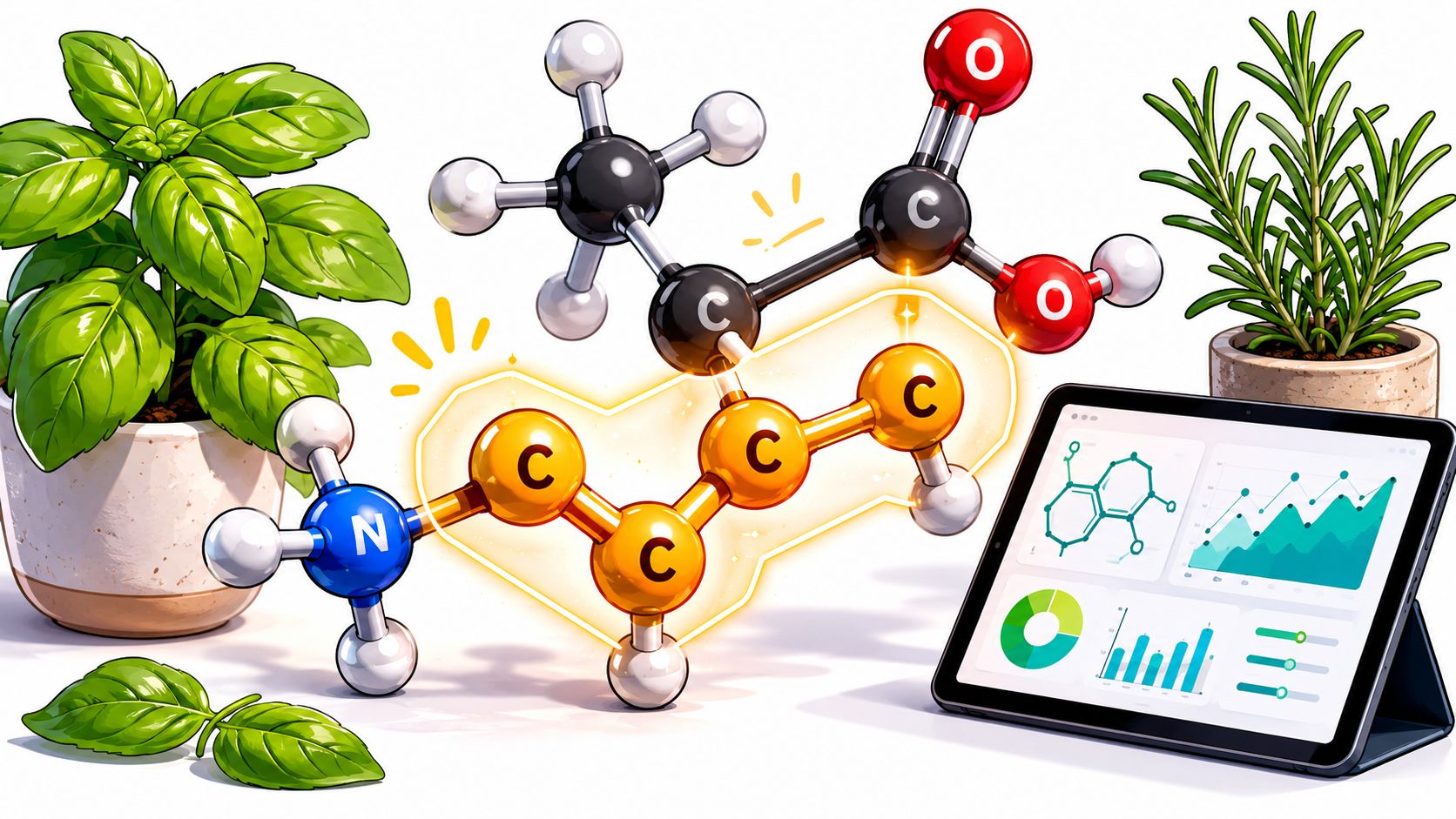
You're probably here because you saw THCB in a forum thread, on a lab panel, or buried in a product label and thought, “Alright, is this a real cannabinoid or just another three-letter distraction?”
That reaction makes sense. Home growers already juggle enough variables: light intensity, dry-back, canopy shape, finish time, cure. Then a new acronym shows up and suddenly people are talking like you need a chemistry degree to keep up.
You don't.
THCB is interesting, but it matters in a very different way than the hype usually suggests. For most home growers, it's not something you build your whole garden around. It's more like a clue that cannabis chemistry is broader than the usual THC and CBD conversation. If you like understanding what's in your jars, and why one cultivar feels a little different from another, THCB is worth knowing.
Welcome to the World of New Cannabinoids
A lot of growers hit the same moment. You're scrolling after lights out, reading a thread about resin, terpene retention, or exotic cultivars, and somebody drops a line like, “This one tested for THCB.” Then three more comments show up arguing about whether it's stronger than THC, whether it's natural, and whether any of it matters outside a lab.
That mix of curiosity and eye-roll is healthy.
Most of the newer cannabinoid talk gets messy fast because people lump together three different things: what exists naturally in the plant, what a lab can detect, and what marketers can turn into a product. Those aren't the same conversation. A home grower needs practical answers, not a cloud of buzzwords.
Practical rule: If a cannabinoid is rare in the plant, your first question shouldn't be “How strong is it?” It should be “Can anyone reliably verify it?”
That's the useful lens for THCB. It's real. It belongs in the cannabis conversation. But it's also a niche compound, and that changes how you should think about it in your own garden.
Why growers get tripped up
THCB sounds close enough to THC that people assume it's just branding. Then they hear claims about stronger receptor binding and assume every jar with THCB must hit way harder. That leap is where the confusion starts.
For a hobby grower, the better question is simpler:
- Is it something your plant might contain? Yes, in tiny amounts.
- Can you shop for a cultivar that's “high THCB”? Realistically, not in the way you'd shop for THC or CBD.
- Can testing tell you whether it's there? Sometimes, if the lab is set up to look for it.
- Should it change how you plan a grow? Usually not as a main priority.
What actually matters in the garden
The practical value of learning about THCB isn't that it gives you a magic target. It sharpens how you think about minor cannabinoids in general. Once you understand that some compounds show up only in trace amounts, you stop expecting every interesting trait to be visible from a seed listing alone.
That's a good mindset. It keeps you focused on what you can control: solid genetics, a stable environment, a clean dry and cure, and post-harvest testing if you want deeper answers.
What Exactly Is THCB
THCB stands for tetrahydrocannabutol. It's a minor phytocannabinoid and a close structural relative of delta-9 THC. The key difference is small on paper but important in chemistry: THCB has a four-carbon butyl side chain instead of THC's five-carbon pentyl chain, as described in this THCB reference overview.
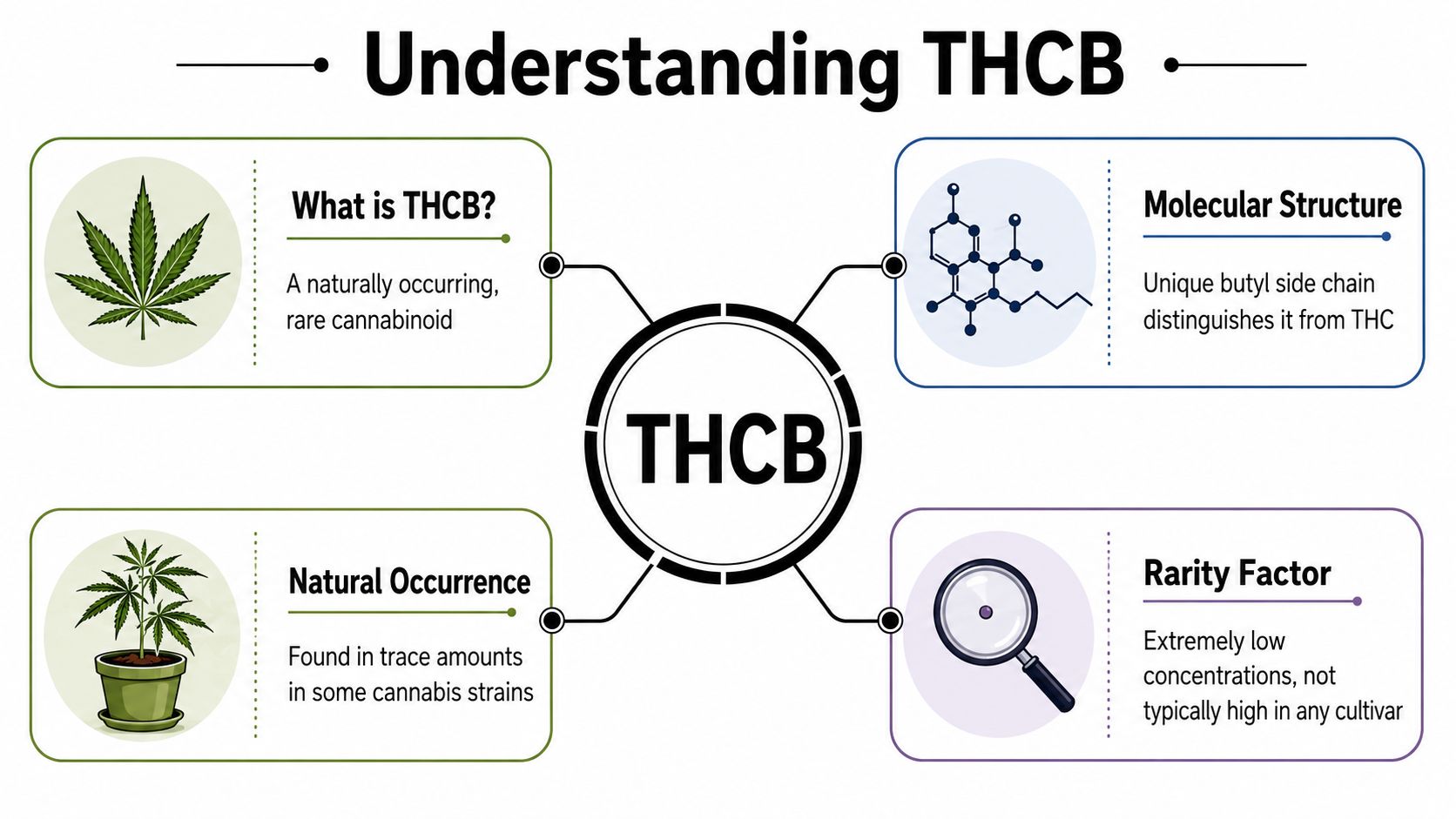
If that sounds too lab-coat, it's comparable to two nearly identical keys. They fit the same general lock design, but one key has a slightly different cut. That tiny change can affect how it interacts with the lock. In cannabinoid terms, that “key shape” helps explain why researchers look at THCB separately instead of treating it as just regular THC with a new label.
The small chemistry change that makes it its own thing
Cannabinoid names can sound intimidating, but the takeaway is straightforward. THCB isn't an unrelated mystery compound. It's part of the same family as THC, just with one structural tweak.
That matters because side-chain length influences how cannabinoids interact with receptors. You don't need to memorize the chemistry to get the big picture. The plant makes a wide range of related compounds, and even a small structural difference can change how a cannabinoid behaves in testing.
A quick visual can help if you like seeing concepts laid out:
Why most growers never hear about it
THCB was identified in 2019 and is usually found only in trace amounts, with references describing it as often less than 1% of total cannabinoids in raw cannabis, according to the same Wikipedia summary on tetrahydrocannabutol.
That recent identification date explains a lot. Older grow guides and older testing conversations barely mention it because it wasn't part of the standard mainstream discussion. And because it shows up at such low levels, it hasn't had the same spotlight as heavy hitters like THC or CBD.
THCB is less like a main feature of a cultivar and more like a fine-print detail in a full cannabinoid profile.
What this means in plain grower language
For your home garden, THCB is best understood as a rare background cannabinoid. It may be present, but it usually isn't the star of the show. You're not likely to open a seed pack and find a cultivar advertised in any credible way as a THCB powerhouse.
A few grounded points help keep expectations realistic:
- Natural, but rare: It does occur in cannabis, just not in big amounts.
- Newer in the research world: Since it was identified recently, the evidence base is still thin.
- Interesting for testing nerds: If you like reading detailed COAs, THCB is one of those compounds that can make a profile more interesting.
- Not a shortcut to better flower: Great flower still comes from good cultivation, not chasing obscure initials.
If you're a home grower, that last point matters most. THCB is worth understanding. It just isn't a reason to forget the basics.
THCB Compared to Other Popular Cannabinoids
The easiest way to place THCB is to compare it to cannabinoids growers already know by name. Not every comparison is equally solid, though. THCB has some early receptor-binding discussion behind it, but the practical experience side is still much fuzzier than what we know about classic THC.
One useful point from the current literature is that preliminary research suggests THCB may have stronger CB1 receptor binding than delta-9 THC, with some estimates putting it around 1.5 to 3 times greater, but those figures come from lab work rather than controlled human trials, as noted in this THCB potency discussion.
So if you see someone talking about THCB like it has a fixed, proven “strength rating,” take a step back. That's not where the evidence is yet.
The quick mental map
Here's a simple way to think about the family resemblance and the vibe people commonly associate with these compounds.
| Cannabinoid | Carbon Chain Length | Commonly Reported Vibe |
|---|---|---|
| THC | Five-carbon pentyl chain | The familiar classic cannabis experience, broad and well known |
| THCB | Four-carbon butyl chain | Often discussed as THC-like, with possible differences in intensity |
| THCV | Different THC-family variant | Commonly talked about as more sharp or brisk in character |
| THCP | Longer-chain THC homologue | Usually described as much heavier in the broader cannabinoid conversation |
That table is useful for orientation, not certainty. It helps you sort names without pretending every row comes with equally mature research.
Where THCB sits in the lineup
THCB seems to sit close to THC conceptually. That's the key point. It's not usually framed as a totally different kind of experience so much as a related one with a different structural profile.
THCV is where people often get sidetracked. It gets talked about as if every cannabinoid has its own dramatic personality, but the actual story is usually more subtle. THCV, THC, THCB, and THCP all live in the same larger family, yet they don't all carry the same level of evidence or consistency in user reports.
If you want a broader read on how labs summarize full cannabinoid makeup, this guide to what TAC means in weed helps put minor cannabinoids into context.
Don't treat forum language like lab language. “Hits harder” and “binds stronger” are not the same claim.
What growers should actually take from the comparison
For a home grower, this comparison matters less for shopping and more for expectations.
- THC is still the main anchor: It remains the practical baseline for how effects and cultivar selection are generally understood.
- THCB is a side-note, not a centerpiece: It may shape a profile at the margins, but it usually won't define the whole flower.
- THCV and THCP get more headline chatter: That doesn't mean they matter more in your garden. It often just means the internet likes dramatic labels.
- Minor cannabinoids are most useful after harvest: You usually learn about them through testing, not by staring at a seed description.
If you approach THCB as one piece of a broader cannabinoid profile, it makes sense. If you expect it to act like a magic upgrade, it usually won't.
The Legal Status and Safety of THCB Products
THCB products sit in one of those zones where a grower should slow down and read the fine print. The issue isn't just legality. It's also how the material got made in the first place.
Because THCB is present in cannabis at very low natural levels, most commercial THCB is produced synthetically or semi-synthetically, and that makes third-party analytical verification important for confirming identity and checking for residual solvents or impurities, according to this THCB guide on production and legal status.
Why product safety matters more than hype
For flower you grew yourself, the conversation is mostly about plant expression and lab testing. For packaged THCB products, the conversation changes. You need to care about conversion methods, cleanup, and whether the label matches the contents.
That's why a COA matters so much here. If a company can't show a current, readable lab report, you're basically being asked to trust branding over chemistry.
A careful buyer should check for:
- Identity testing: Does the report list THCB, not just a vague total?
- Impurity screening: If the product came from a conversion process, was it screened for unwanted leftovers?
- Batch match: Does the lot number on the package line up with the report?
- Recent paperwork: Old lab reports don't tell you much about what's in the current product.
The legal side is murky for a reason
The law around newer cannabinoids changes depending on where you live and how a product is sourced. That's why blanket statements like “it's federally legal” or “it's banned everywhere” usually aren't helpful.
If you want ongoing context for how cannabis rules shift across markets, keeping an eye on cannabis legalization news is smarter than relying on a random product page.
If a THCB product comes with loud claims and weak paperwork, skip it.
A grounded rule for hobbyists
If your interest is mostly gardening, not collecting novelty products, this whole category should stay in the “be cautious” bucket. THCB itself may be real, but the commercial path from rare plant compound to shelf product often involves enough processing that verification becomes critical.
The short version is simple. Rare cannabinoids are where sloppy manufacturing gets easier to hide. That doesn't mean every product is bad. It means you should expect proof before you expect quality.
Finding THCB in Your Home Garden
Here's the honest answer. You probably won't find a cultivar that's meaningfully marketed around THCB in the same way people talk about THC-rich or CBD-rich flower. THCB shows up in trace territory, so your best shot at learning whether your plant produced any is post-harvest testing.
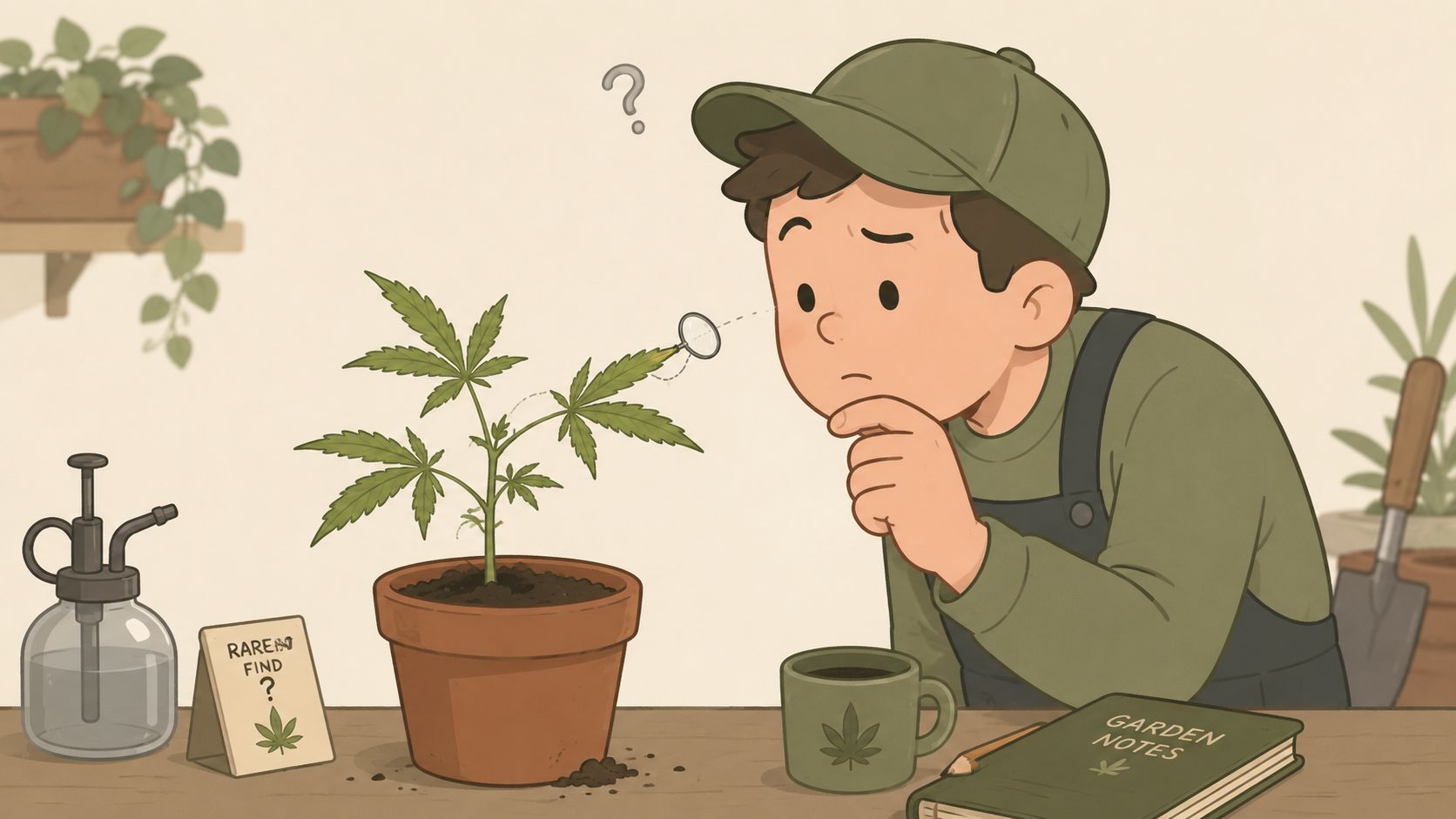
That's why growers and lab buyers are advised to focus on COA-backed identity testing and impurity profiling over marketing claims, especially because THCB's trace-level presence makes contamination or mislabeling more likely than with major cannabinoids like THC or CBD, as explained in this technical writeup for growers and buyers.
What a lab test can actually tell you
A Certificate of Analysis, or COA, is basically your flower's report card. It won't tell you everything about the smoke, but it can tell you whether a lab detected specific cannabinoids and in what measured amount.
If you're curious about hidden variation within a single cultivar, understanding phenotype differences is part of the picture. Two plants from the same cultivar can still express differently, and that includes minor compounds.
For THCB, a COA can help answer:
- Was THCB detected at all? Sometimes the answer is yes, sometimes it falls below the lab's reporting range.
- How broad was the panel? Not every lab looks for the same minor cannabinoids.
- Does the result fit the whole profile? A believable report should look coherent, not random.
- Were there any red flags? Strange numbers or missing context can make a report less useful.
How a home grower should approach testing
This doesn't need to be fancy. You grow the plant well, harvest cleanly, dry and cure properly, and then send a representative sample to a reputable cannabis testing lab that offers expanded cannabinoid panels.
A sensible process looks like this:
- Pick your best-finished flower. Don't test airy lowers if you want the most useful profile.
- Ask the lab what their panel includes. Some labs report a wider cannabinoid spread than others.
- Read the COA slowly. Look beyond THC. Minor cannabinoids can show up in the side columns.
- Keep notes with each sample. Plant structure, aroma, finish speed, resin quality, and final test results are more useful together than alone.
The grower who keeps good notes learns more from one harvest than the grower who chases ten trends.
What not to expect
Don't expect THCB hunting to work like shopping for a high-THC cultivar. And don't expect every test to reveal a treasure chest of rare cannabinoids. Sometimes the report just confirms what you already suspected: the flower is solid, the major cannabinoids are doing most of the talking, and the minor ones are subtle.
That's still useful. It teaches you which traits are consistent in your room, and it gives you a more grounded way to evaluate your own supply.
A Practical Growing Strategy for Cannabinoid Hunters
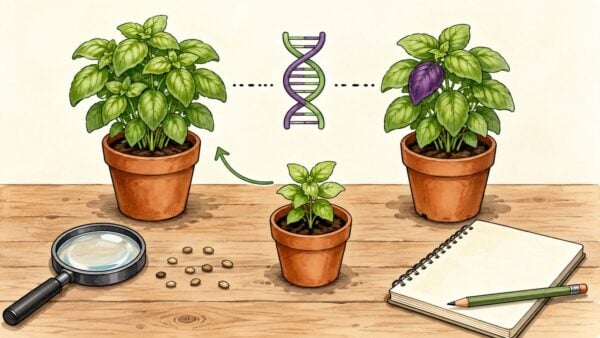
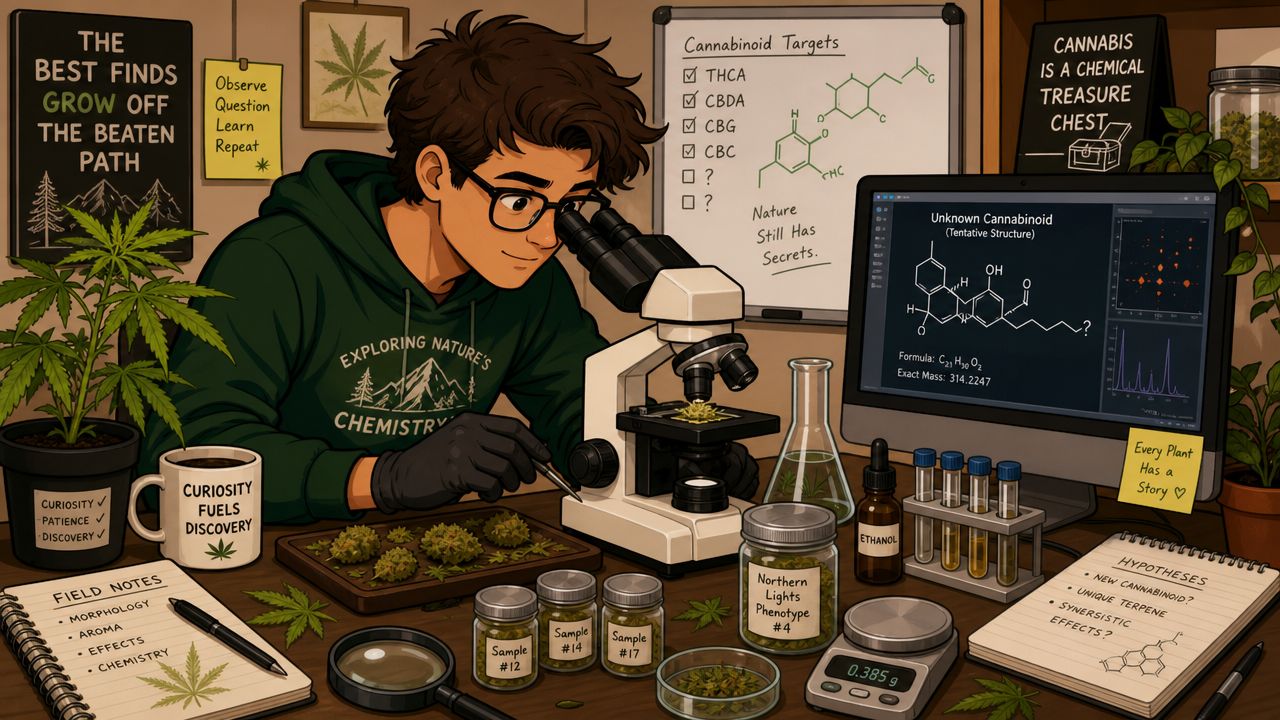
If you're the kind of grower who enjoys the detective side of cannabis, the smart move isn't trying to “breed for THCB” in your spare closet. The smarter move is to run a disciplined phenotype hunt and let testing show you which plants are chemically interesting.
That approach keeps your feet on the ground. THCB is too minor and too inconsistent a target for most home growers to chase directly. But a broader hunt for unusual, well-rounded expressions can absolutely be worth your time.
How to set up the hunt
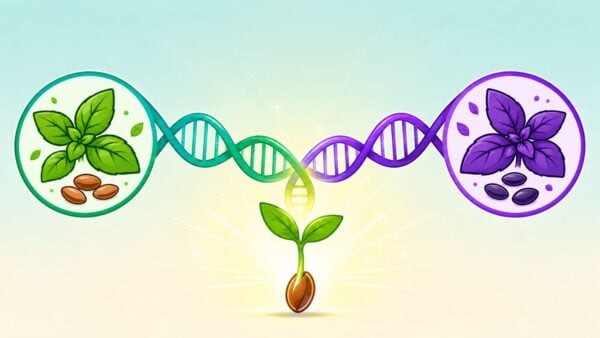
Start with quality feminized or autoflower seeds from the same cultivar. Grow several plants under the most even conditions you can manage. If one plant gets stronger light, better airflow, or an easier root zone, your comparison gets muddy fast.
You're looking for differences that show up plant to plant:
- Growth pattern: One may stay squat and branchy, another may stretch harder.
- Resin character: Some expressions frost early, others stack later.
- Aroma profile: Sharp gas, sweet fruit, herbal funk, spice, or something in between.
- Finished flower quality: Density, trim ease, and cure performance all matter.
What to track beyond cannabinoid numbers
A lot of growers make the mistake of treating the lab report like the only truth. It isn't. It's one layer.
Track the full picture in a notebook or spreadsheet:
- Plant ID: Keep every sample tied to a specific plant.
- Cultivation notes: Feed response, stress tolerance, and finish behavior.
- Post-harvest notes: Dry speed, cure stability, and jar aroma.
- Testing results: Use the COA to confirm what your senses can't.
That's where things get fun. One phenotype may not be the highest in headline potency, but it might offer the most interesting total profile and the best all-around flower.
Why this beats chasing a buzzword
A focused phenotype hunt gives you something real. You're not hoping a trendy label on a product page tells the truth. You're growing, observing, selecting, and verifying.
That method works whether THCB shows up clearly or not.
A practical cannabinoid hunter usually wins by following this order:
- Reliable genetics first
- Consistent environment second
- Careful observation third
- Testing last
Get those in the right order and your garden becomes its own small research project, in the best possible way.
Is Chasing THCB Worth It For You
For most home growers, probably not as the main mission.
THCB is real, interesting, and worth understanding if you like the deeper chemistry side of cannabis. But it's still a trace cannabinoid with a limited evidence base, and that means it belongs in the curiosity column more than the core grow-planning column.
If your goal is better jars at home, the basics still beat the novelty chase every time. Pick cultivars that fit your space. Match your light to your canopy. Dry slowly. Cure patiently. Learn what your room does well. That's where lasting gains live.
THCB becomes more relevant after you've already done those things. It's a detail you explore through testing, note-taking, and phenotype selection. For a hobbyist, that can be fun. It can even sharpen your eye as a grower. But it shouldn't distract you from proven traits like structure, finish time, resin production, and overall quality.
The most satisfying growers I know aren't the ones chasing every new acronym. They're the ones who can pull a dependable harvest, spot a standout phenotype, and build a personal stash that fits their own taste and routine.
If that sounds like your style, keep THCB in perspective. Learn it, respect it, test for it if you want, but don't let it run the room.
If you want a better starting point for your next run, Botanist Seeds makes it easy to compare feminized and autoflower cultivars by growth style, experience level, and setup. Use their comparison tool to find genetics that fit your tent, your schedule, and the kind of harvest you want to keep in the jar.