How Long Does It Take to Grow? a Realistic Timeline
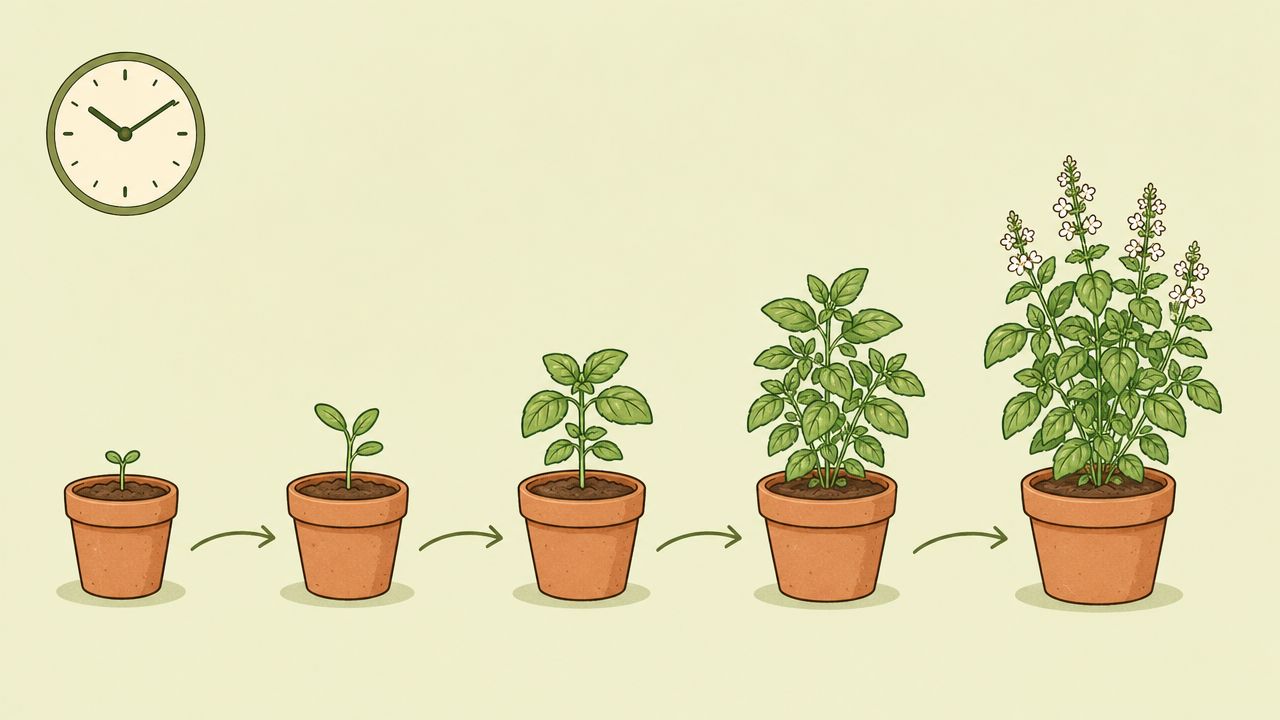
Growing from seed to a ready-to-use harvest typically takes 3 to 5 months, but it can range from a quick 8 to 12 weeks for fast autoflowers to over 6 months for certain photoperiod cultivars when you include the full process. That big spread is why so many new growers feel like every answer online is slippery, because the honest answer depends on your seed choice, your setup, and whether you're counting only harvest day or the point when the flower is ready to enjoy.
A lot of home growers ask this question because they're trying to time real life around it. Maybe you want jars ready before the holidays, maybe you want to skip dispensary lines for a while, or maybe you're just tired of paying taxes on every pickup and would rather build your own stash at home. Fair enough. The trick is understanding that seed packets give you a baseline, not a promise.
Most timeline confusion comes from three places. People mix up harvest time with ready time, they don't separate autoflower and photoperiod cultivars, and they underestimate how much a small grow space changes the pace. A closet with weak light doesn't move like a dialed-in tent under strong LEDs.
If you want a grounded starting point for the whole process, this step by step home growing guide is useful. From there, the main job is building a schedule that matches your room, your habits, and the cultivar you picked.
So You Want to Grow Your Own
The first-time grower usually starts with a simple plan. Drop a seed, grow a plant, cut it down a few months later, done. Then the questions start piling up. How long will it veg, when do you flip the lights, what if the cultivar runs long, and why does one person say ten weeks while another says half a year?
That mismatch isn't just internet noise. It's built into the process.
Some timelines refer only to the active grow. Others include drying. Some include curing. A few only describe the flowering stage and leave out the front half entirely. If you're trying to plan around a vacation, a move, or a season when you want your jars full, loose estimates don't help much.
What makes the range so wide
The biggest reason the range is so broad is that growers control some stages and don't control others.
- Seed choice matters first: Autoflower cultivars move on their own clock. Photoperiod cultivars wait for you to change the light schedule.
- Vegetative time is flexible: With photoperiods, you decide how long the plant stays in veg, which means you partly choose the total timeline.
- Flowering is less negotiable: Once flowering starts, the cultivar's genetics do most of the talking.
- Finishing work gets ignored: Drying and curing can turn a "done" grow into a few more weeks of waiting.
Practical rule: If you're asking how long does it take to grow, decide whether you mean "to harvest" or "to smoke." Those are not the same date.
What works is planning backward from the day you want finished flower in a jar, not the day you want to chop. That one shift clears up a lot of the confusion fast.
The Complete Grow Timeline From Seed to Cure
A realistic grow calendar starts to make sense once you split the run into separate phases instead of treating it like one blurry wait. For a typical indoor photoperiod grow, Triangle Hemp notes a total of 15 to 21 weeks from seed to cured flower, including about 1 week for germination, 4 to 6 weeks for vegetative growth, 8 to 10 weeks for flowering, and 2 to 4 weeks for drying and curing.
That last part matters. A lot of growers say "done" when they mean chopped, not dried, trimmed, and settled in the jar.
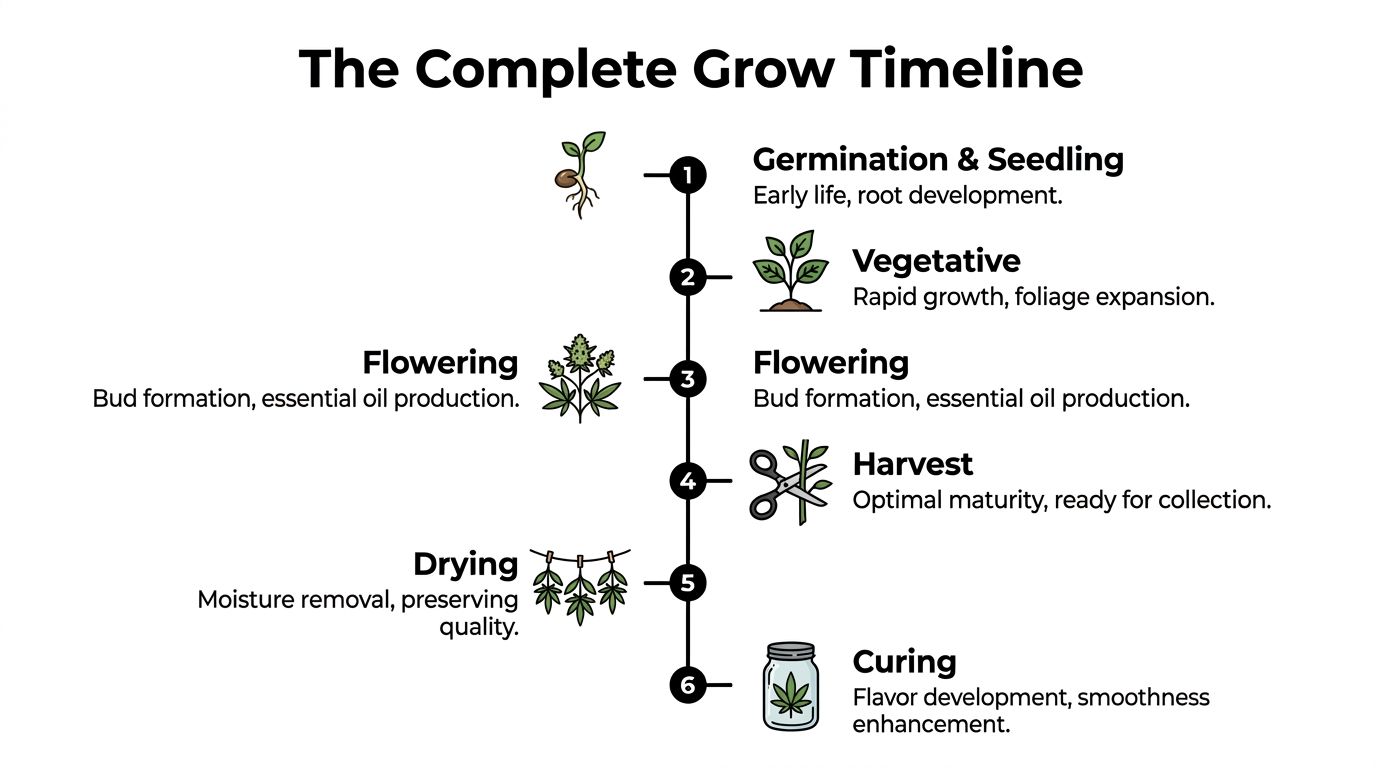
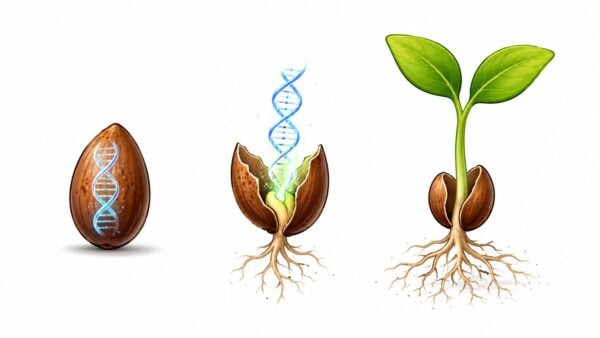
Germination and seedling
The first week sets the tone for everything after it. Healthy germination is less about shaving off a day and more about getting a strong taproot, upright growth, and a seedling that does not stall out under weak light or soggy media. For a practical walkthrough of that first step, see this guide on how long it takes to germinate weed seeds.
I treat this phase like setup work. If the seedling stretches, stays pale, or sits in cold, wet soil, you can lose time here that never shows up on the seed packet.
Vegetative growth
Vegetative growth usually takes 4 to 6 weeks in the timeline above, but this is the part of the schedule with the most give. The plant is building roots, branches, and enough leaf mass to support flower later.
This phase is where growers make a real trade-off. A short veg turns crops faster and keeps plant size manageable. A longer veg gives you a wider canopy and usually more sites to flower, but it also means more feeding, more training, and a later finish date.
| Stage | What you're deciding | What you get |
|---|---|---|
| Short veg | Faster turnover | Smaller plant, faster finish |
| Longer veg | More canopy buildout | More time invested before flower |
After the plant is established, a lot of growers like seeing the process in motion. This quick video helps if you want a visual reference for the full cycle.
Flowering, harvest, drying, and curing
Flowering usually runs 8 to 10 weeks in that general indoor photoperiod pattern. This is the least flexible part of the timeline for most cultivars. You can influence plant health and yield here, but you usually cannot force a cultivar that wants more time to finish early without paying for it in quality.
Harvest day gets all the attention, but the calendar does not stop there.
Drying and curing add 2 to 4 more weeks to the run, and that is where a lot of first-time timeline estimates fall apart. Cut too early from the drying room or jar too wet, and the flower may smoke harsh, smell flat, or cure unevenly. Give it the time, and the whole crop usually improves.
Harvest-ready and ready to enjoy are two different dates.
If you want a timeline you can use, count all the way to cured flower in the jar. That is the version that helps you plan space, supplies, and when you'll have something worth smoking.
Autoflower vs Photoperiod The Biggest Timeline Factor
If you only change one variable before starting a grow, make it this one. Your choice between autoflower and photoperiod feminized seeds does more to shape the calendar than almost anything else.
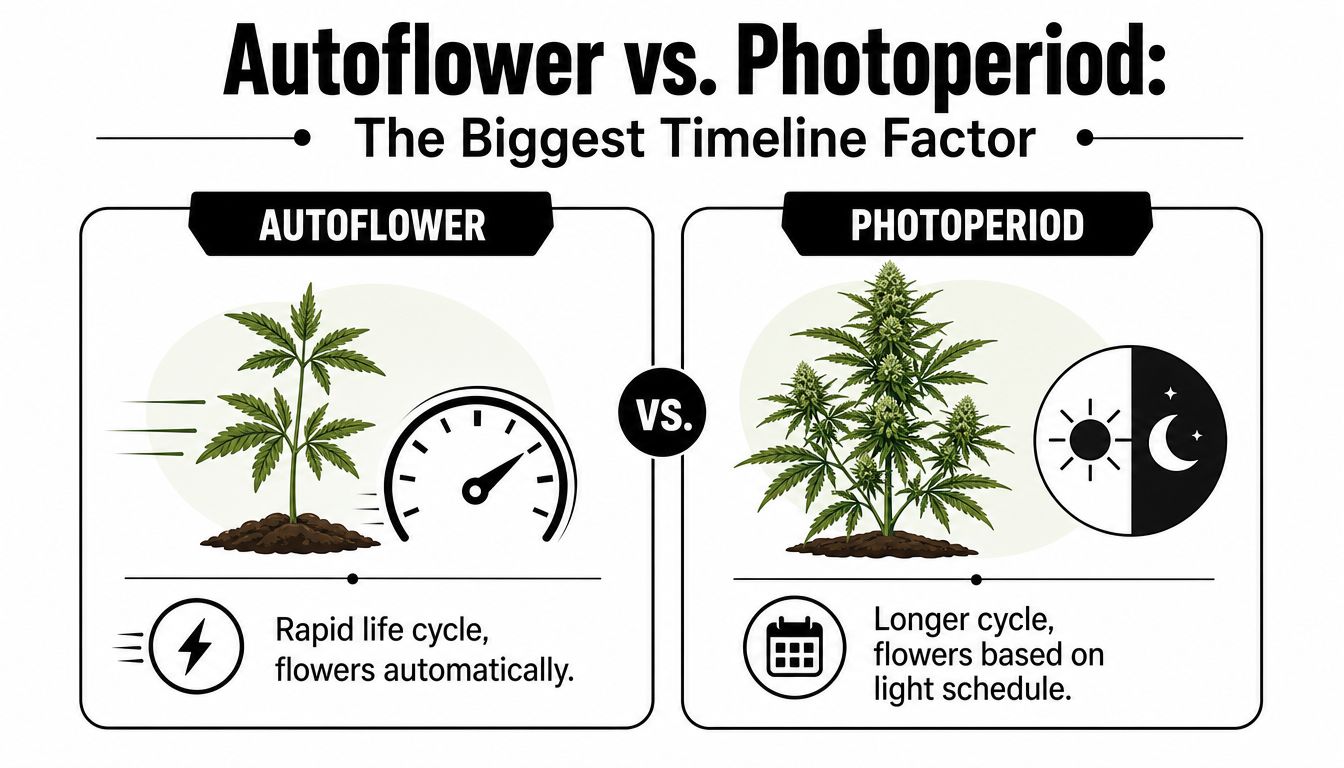
The fastest way to understand it is simple. Autoflowers run on age. Photoperiods run on your light schedule.
The side by side reality
According to this autoflower and feminized seed timing comparison, autoflower cultivars typically finish their seed-to-harvest cycle in 9 to 13 weeks. In contrast, photoperiod feminized seeds require a vegetative stage of 4 to 6 weeks before a light change initiates a flowering stage of 7 to 14 weeks, depending on the cultivar.
If you're new to this, that tells you something important right away. Autoflowers are built for speed. Photoperiods are built for control.
Here's the practical comparison:
- Autoflower cultivars: Best when you want the quickest route from seed to harvest and don't want to manage a flowering flip.
- Photoperiod cultivars: Best when you want more say over plant size, training time, and overall shape before bloom starts.
- Autoflowers in small spaces: Handy when your tent is modest and you want predictable speed.
- Photoperiods in flexible setups: Better when you're willing to trade time for control.
For a deeper look at the autoflower route, this explainer on what autoflower seeds are and how they work covers the basics cleanly.
Which one fits your goal
Autoflowers make sense when your top priority is getting to harvest quickly. They also suit growers who don't want to think much about light-triggered flowering. The downside is that a fast plant doesn't leave much room to recover from early mistakes. If you stunt it young, it won't politely wait for you to catch up.
Photoperiod cultivars are slower, but they're forgiving in a different way. You can keep them in veg longer, let them recover from training, and build a fuller plant before bloom. That flexibility is why many growers still prefer them when they want more control over the final shape and rhythm of the run.
Decision shortcut: If your main question is speed, autoflower usually wins. If your main question is control, photoperiod usually wins.
Neither is universally better. They just solve different problems.
Factors That Can Speed Up or Slow Down Your Grow
The timeline on a breeder page or seed listing is a baseline. Your room decides whether you hit it.
The biggest gap I see in beginner grows is simple. People buy a cultivar labeled with a certain flowering time, then assume the room will magically deliver it. It won't. Weak light, sloppy watering, cramped roots, and constant stress all drag the process out.
Environment changes the clock
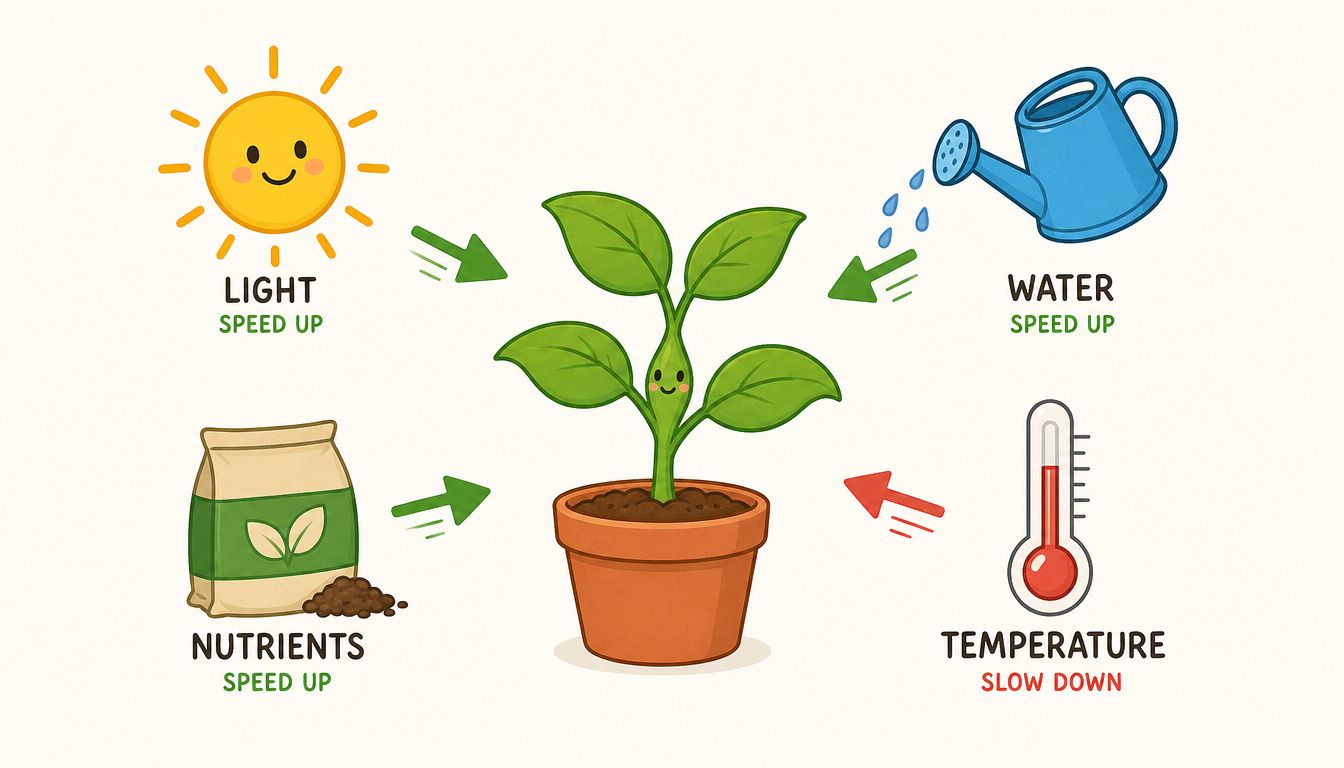
As GrowWeedEasy explains in its flowering timeline discussion, your grow environment can alter flowering duration by 2 to 4 weeks beyond genetic estimates. It also gives a practical example: a cultivar listed as flowering in 9 weeks might take 12 weeks in a low-light setup but only 7 weeks under optimized, high-output LEDs.
That lines up with what experienced home growers learn fast. Healthy plants don't just look better. They move better.
The variables that usually matter most
A few factors consistently affect pace:
- Light quality and intensity: This is the big one. Underpowered lighting slows growth and often stretches flowering beyond expectations.
- Root space: Small pots can keep plants compact and push a faster finish, but they also limit the room for larger structure.
- Training style: Heavy training can pay off in canopy shape, but it also asks the plant to spend time recovering.
- Feeding consistency: A simple, steady nutrient routine usually beats erratic overcorrection.
- Climate control: Stable temperature and airflow help plants keep moving instead of stalling.
Good equipment doesn't guarantee a great grow. Bad conditions almost guarantee a slower one.
The shortcut here isn't fancy gear for the sake of gear. It's matching your timeline expectations to your actual setup. A dialed-in tent with strong LED coverage can finish on the fast end of a cultivar's range. A dim closet grow usually won't.
How to Plan Your Grow and Estimate Your Harvest Date
A lot of home growers make the same planning mistake. They circle harvest week on the calendar, then act surprised when the flower still needs drying, curing, and a little patience before it smokes the way they wanted.
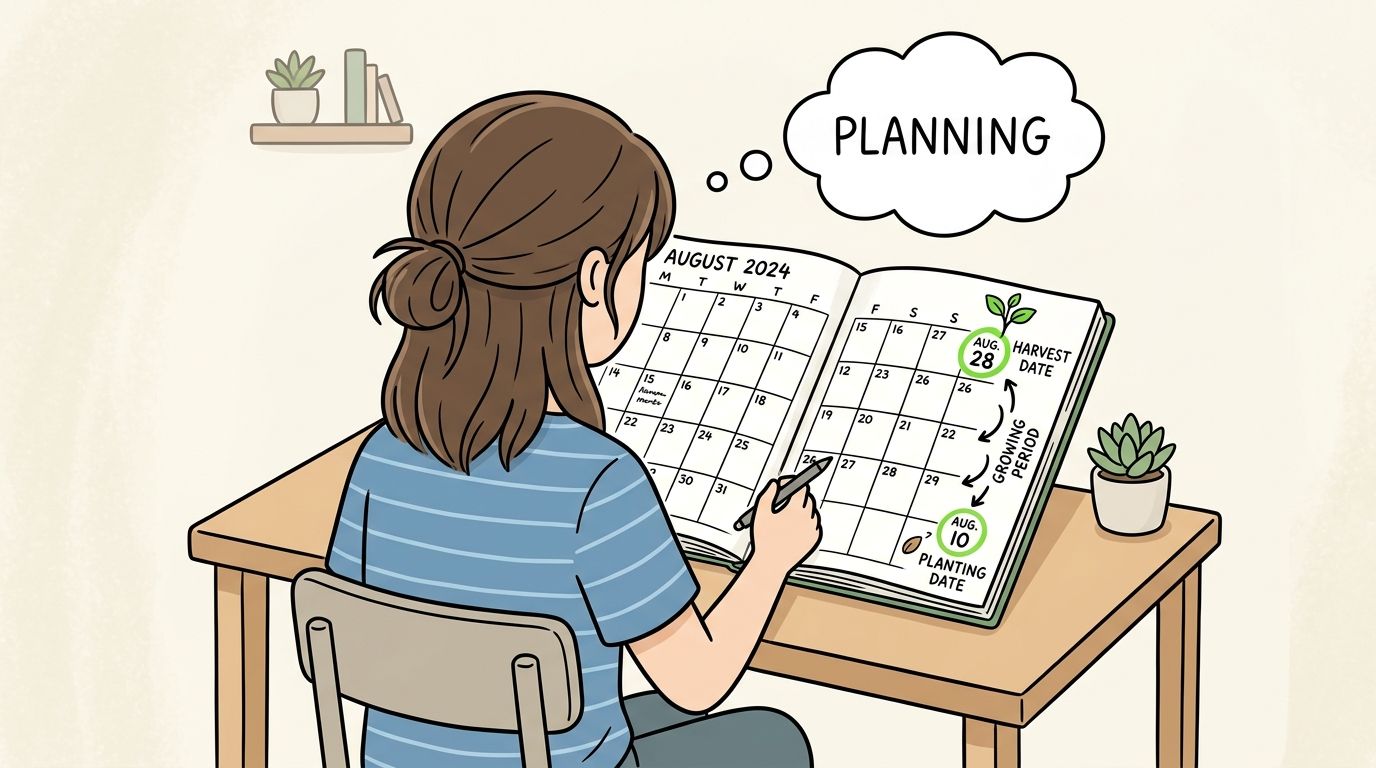
Start with the day you want usable flower in the jar. Then work backward.
Start with the end date, not the seed date
Weedmaps points out in its plant stage guide that many grow timelines stop at harvest, even though curing can add weeks before the flower is ready to enjoy. That gap is a big reason the usual "3 to 5 months" advice falls apart in real grows.
That range gets even wider once you factor in your setup, your cultivar, and how picky you are about the final smoke.
If you want flower ready by a certain month, build the plan around four parts:
- Cultivar type: Autoflower and photoperiod plants run on very different clocks.
- Actual grow speed in your space: Fast, average, or slow is usually more honest than whatever the seed listing implies.
- Drying time: The plant may be done growing, but the work is not done.
- Curing time: Better flavor, smoother smoke, and more stable jars all take time.
A practical way to build your timeline
Here's the method I recommend.
Pick your target date first. Use the date you want finished flower, not the day you plan to chop. Subtract your drying and curing window. Then subtract the active grow time based on the cultivar and the way your room performs. If your environment is still inconsistent, add extra buffer instead of pretending this run will be the perfect one.
That last step saves a lot of frustration.
A tight schedule pushes growers into bad decisions. They harvest early because the calendar says they should. They skip cure time because they planned for smokeable flower and only budgeted time for harvest. They start a run before a vacation and end up asking a friend to water plants that should have been timed better from the start.
A simple planning worksheet looks like this:
- Goal: Flower ready in jars by your target date
- Minus drying: Set aside time after harvest
- Minus curing: Add the weeks needed for the flower to settle and improve
- Minus full grow cycle: Seedling, veg, and flower based on your cultivar
- Plus buffer: Extra time for slower growth, training recovery, or minor problems
This is how you turn a vague estimate into a realistic calendar for your grow, not someone else's.
If the calendar says done but the plant is still immature, wait. Good timing follows the plant first and the planner second.
Your Grow Your Timeline
The honest answer to how long it takes to grow is that the seed gives you a range, and your choices decide where inside that range you land. Pick an autoflower and you can move fast. Pick a photoperiod and you get more control. Build a good environment and the plant can finish on schedule. Cut corners and the calendar slips.
That's why two growers can buy similar cultivars and still end up with very different finish dates. One plans for the whole cycle, including curing. The other plans only for harvest and wonders why the jars still aren't where they want them to be.
Home growing is worth the effort for practical reasons and personal ones. You can avoid dispensary lines, cut some of the recurring cost that comes with retail taxes, and build a stash with your own preferences in mind, from aroma to plant structure to the whole vibe of the cultivar. More than that, there's real satisfaction in opening a jar of flower you raised yourself.
Start with a realistic timeline, and the rest gets easier.
If you're ready to turn that timeline into a real grow, Botanist Seeds makes it easy to compare feminized and autoflower cultivars for your setup. Use the site to narrow by growth style, pace, and preferences, then choose a cultivar that fits your space and your schedule instead of forcing your schedule to fit the wrong plant.