Banana Runtz Strain: A Complete Grower’s Guide
You’re probably here because you’ve seen Banana Runtz pop up in menus, seed catalogs, or grow chats, and every version seems to tell a slightly different story. One listing makes it sound like pure banana candy. Another leans hard into the Runtz side. Then you look a little closer and realize the name is popular, but the expression can shift a lot depending on the breeder and the cut.
That’s exactly why Banana Runtz is fun to grow, and why it can also frustrate growers who buy on name alone. If you want that sweet banana candy profile with strong bag appeal, you need to understand what’s behind the label and how to shop for the right cultivar instead of just the right name.
The Story Behind the Banana Runtz Cultivar
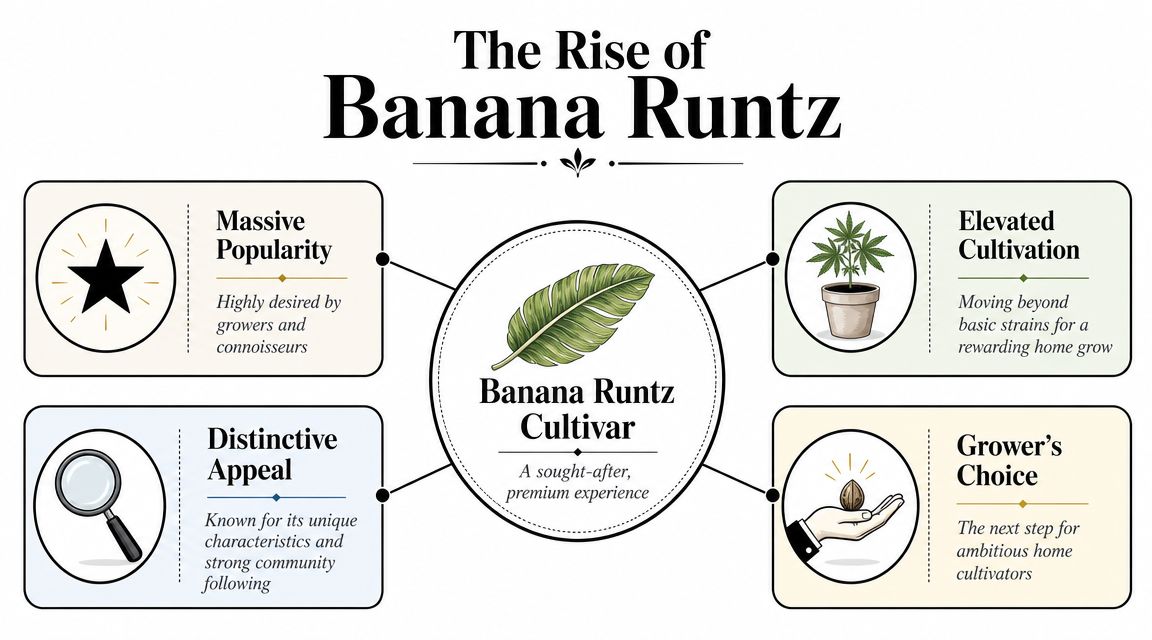
A lot of growers hit a point where they want more than a dependable jar filler. They want something that feels current, smells loud, and gives them a harvest they’re excited to show off. Banana Runtz fits that lane really well.
It comes from the modern Runtz family, a lineage widely described as Gelato × Zkittlez, then paired with Banana OG or selected toward a banana-forward expression on that same backbone. That matters because it explains why Banana Runtz tends to pull together candy sweetness, dessert-style aroma, dense flowers, and the kind of potency people now expect from boutique flower. Seed and strain references commonly place Banana Runtz in the 21% to 29% THC range, with several listings specifically noting 29% THC, which puts it in the upper potency tier of current flower rather than the middle of the pack, as noted by SeedFinder’s Banana Runtz strain information.
Why the lineage actually matters
If you’ve grown older fruit cultivars before, you already know the gap between a nice aroma and a memorable aroma can be huge. The Runtz side usually brings the candy, cream, and flashy bag appeal. The banana side is what gives this cultivar its softer tropical sweetness and that “dessert jar” personality people chase.
That combination is also why Banana Runtz gets talked about like a modern classic instead of just another fruity hybrid. It sits in a breeding wave that favored flavor-forward flower, visual appeal, and strong effects all at once.
Practical rule: If you like the broader Runtz family but want something warmer and more banana-leaning, Banana Runtz makes sense. If you want straight gas or old-school funk, it probably won’t scratch that itch.
What growers usually notice first
The appeal starts before harvest. Banana Runtz has the kind of profile that makes home growers feel like they’ve stepped up from generic menu names into something more curated. It’s a cultivar people choose when they want their tent to produce flower with personality.
If you already enjoy the candy-heavy side of the family, it also helps to compare it with related expressions like White Runtz. That gives you a cleaner way to decide whether you want your next run to lean creamy candy or banana candy.
Aroma Flavor and Terpene Profile
Banana Runtz earns its spot. People don’t chase this cultivar just because of the name. They chase it because when it’s grown well, the jar opens with a sweet, fruity, candy-forward hit that feels more like dessert than old-school herb.
Banana is the headline, but not always in the same way. Sometimes it reads like ripe banana candy. Sometimes it lands more like creamy tropical fruit with a sugary edge. Good batches usually carry enough depth to avoid smelling one-note.
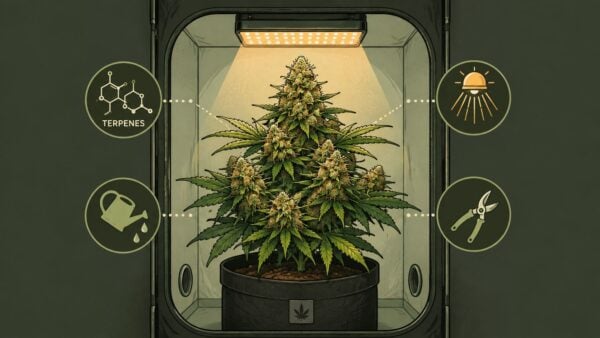
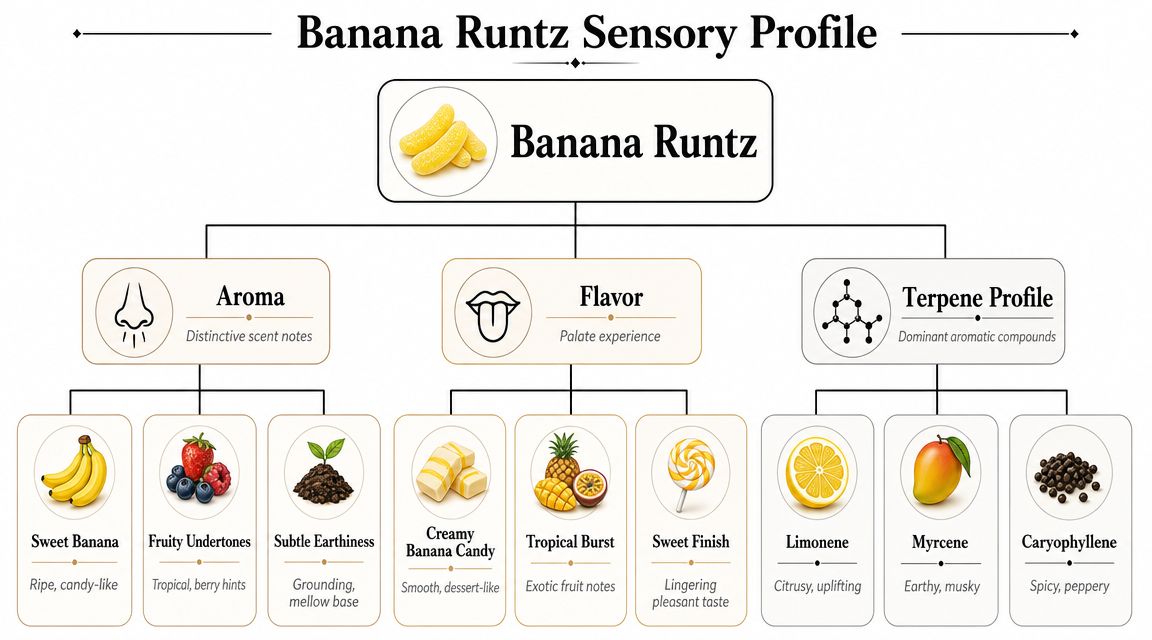
A quick visual helps frame what people are noticing in the jar.
What creates the smell
Banana Runtz is often reported with total terpene content between 1.5% and 3.5%, with standout batches approaching 4%, and the profile is commonly described as rich in limonene, caryophyllene, and myrcene, according to this Banana Runtz terpene guide.
Here’s the simple version of what that means in practice:
- Limonene: Helps lift the profile and keeps it bright. This is part of what makes the sweetness feel lively instead of flat.
- Caryophyllene: Adds a little spice and structure underneath the candy notes. Without it, the aroma can feel too soft.
- Myrcene: Often supports the fruitier, fuller side of the cultivar and gives the nose some weight.
If you want a better handle on how those compounds shape aroma across different cultivars, this guide to cannabis terpenes is worth keeping handy while you compare seed descriptions.
Loud Banana Runtz usually isn’t just “high THC flower.” It’s flower that kept its aromatic detail through the full grow, dry, and cure.
What to expect from the flavor
When the cultivar is on point, the flavor tends to track the nose pretty closely. That’s a good sign. You want a creamy banana candy front, some tropical fruit in the middle, and a sweeter finish that hangs around instead of disappearing right away.
What doesn’t work is treating this cultivar like a generic heavy feeder and then rushing the finish. Growers lose a lot of the charm that way. Banana Runtz rewards patience, especially late in flower and during cure, because that’s where the top notes stay intact or fall apart.
This quick video gives a little extra context around the profile and why growers keep coming back to this type of cultivar.
How to protect that candy profile
A few practical habits make a difference:
- Go easy on late stress: If plants are unhappy near the end, aroma can flatten out.
- Keep the dry controlled: Too fast, and the sweeter notes fade.
- Cure with patience: Banana-heavy cultivars often reveal more after they settle a bit.
If your main goal is flavor, treat Banana Runtz like an aroma-first cultivar, not just a yield target.
Understanding the Banana Runtz Vibe
Banana Runtz usually gets described in a balanced lane, and that lines up with how many growers talk about it casually. It’s the kind of cultivar people reach for when they want something that feels easygoing, flavorful, and a little indulgent.

A good way to think about it is this: Banana Runtz often fits the late afternoon into evening window, but not always in a heavy, knock-you-flat way. For a lot of people, it suits a movie night, hanging out with friends, putting on music, or just enjoying the fact that you grew something with real character.
Where it tends to fit best
Some cultivars feel all business. Banana Runtz usually feels more social, more sensory, more about the overall experience. The sweet aroma sets the tone before anything else does.
I’d put it in the category of flower you grow because you want the whole package:
- A jar that smells interesting
- A vibe that feels relaxed without being boring
- Something fun to share with people who notice flavor
If you enjoy cultivars that make a room smell like candy and fruit as soon as the jar opens, Banana Runtz usually lands well.
Why the vibe can vary
This is where the phenotype issue matters. One Banana Runtz may come across smoother and more mellow. Another might feel brighter, louder, or heavier. That doesn’t automatically mean one is better. It just means the market uses the same name for a few different expressions.
That’s useful to remember before you buy seeds or judge the cultivar from one sample. If someone says Banana Runtz was super banana-forward and someone else says it felt more like straight candy cream, both can be telling the truth.
How to Grow Banana Runtz From Seed
Banana Runtz is a nice fit for home growers because it tends to stay in a manageable size range and doesn’t ask for an endless flowering window. Published cultivation data generally places it as a compact to medium plant, with indoor height around 100 to 120 cm, a 55 to 65 day flowering period, and yields that can reach about 550 to 600 g/m², based on breeder cultivation notes for Banana Runtz.
That combination is friendly for tents, spare rooms, and growers who want a productive run without dealing with a giant, unruly canopy.
Banana Runtz grow profile
| Attribute | Specification |
|---|---|
| Indoor height | 100 to 120 cm |
| Flowering time | 55 to 65 days |
| Yield | Up to about 550 to 600 g/m² |
| Growth habit | Compact to medium |
| Outdoor timing | Commonly listed for early October or after about 8 to 9 weeks of bloom |
What the structure means in practice
Banana Runtz usually makes the most sense in a setup where canopy control matters. It's not the cultivar I'd ignore for weeks and expect to sort itself out. The shape and flowering pace make it better suited to growers who like to guide the plant a little.
The short to medium stature is useful because you can do more with limited height:
- Top it early: This helps create more even growth instead of one dominant top.
- Use a SCROG net if your tent is tight: The cultivar's moderate stretch works well with canopy training.
- Keep light penetration in mind: Dense growth looks great, but shaded lower sites won't reward neglect.
A simple home-grow approach
If I were setting up Banana Runtz for a hobby grow, I'd keep it straightforward.
- Start with healthy feminized or autoflower seeds. Keep the first stage boring and stable. No need to overcomplicate your medium or feeding plan.
- Train for width, not height. A topped plant with an opened canopy usually makes better use of this cultivar's structure.
- Flip before the space gets crowded. Banana Runtz can stay compact, but dense canopies still need room to breathe.
- Watch the buds late in flower. At this point, airflow starts to matter more than ambition.
- Dry it like flavor matters, because it does. This cultivar loses some of its magic if the post-harvest work is rushed.
Grower shortcut: If your tent is height-limited, Banana Runtz is often easier to manage than taller, stretchier cultivars, especially when you top once and keep the canopy level.
Indoor or outdoor
Indoors is the easier call for most home growers because you can control environment and preserve the aroma better. Outdoors can still work well if your local finish lines up with an early October harvest window, but you'll want to stay alert as the flowers bulk up.
This is one of those cultivars where a modest, dialed-in setup often beats a larger, sloppier one.
Choosing the Right Banana Runtz Seeds
The biggest mistake people make with Banana Runtz is assuming the name guarantees the experience. It doesn't. The public record around this cultivar is messy enough that two packs sold under the same name can lead to pretty different gardens.
That's not a niche concern. Public strain references show inconsistent lineage and THC claims, with reported THC ranging from 18% to 29%, which is exactly why breeder reputation and phenotype stability matter so much, as discussed in this Banana Runtz strain review.
Don't buy the label, buy the breeder's work
If you want a real banana candy result, stop asking only “Is this Banana Runtz?” and start asking better questions:
- What lineage does the breeder claim?
- Do the descriptions stay consistent from listing to listing?
- Does the breeder sound like they selected for a banana-forward trait, or are they mostly selling a catchy name?
A stable cultivar usually comes with cleaner expectations. Maybe not identical plants every time, but enough consistency that you know what lane you're in.
What to look for before checkout
Use a short checklist. It saves a lot of disappointment.
- Clear parent information: If the breeder can't explain what their Banana Runtz is built from, that's a warning sign.
- Specific trait language: “Sweet,” “fire,” and “top shelf” don't tell you much. Look for actual notes about aroma direction, structure, and finish.
- Phenotype expectations: Good breeders often admit there's variation while still describing the general range you can expect.
- Seed format that fits your setup: If you're deciding between seed types for space, timing, and training style, this comparison of autoflower vs feminized seeds helps narrow the choice.
Matching the seed to the experience you want
Not every grower wants the same version of Banana Runtz.
Some want the sweetest banana candy expression possible. Others want more of the Runtz backbone with banana layered over it. For a small home garden, that difference matters because you may only have room for a few plants, not a huge phenotype hunt.
If you're comparing catalogs, Botanist Seeds offers a comparison tool that can help sort cultivars by traits and setup fit, which is useful when you're trying to decide whether a Banana Runtz type belongs in your tent or if another candy-forward cultivar is the cleaner match.
The smarter question isn't “Is Banana Runtz good?” It's “Which Banana Runtz am I actually buying?”
That shift alone makes you a better seed buyer.
Common Issues and Care Advice
Banana Runtz is very doable at home, but it responds better to attention than brute force. Growers usually run into trouble when they treat it like a generic high-yield cultivar and push everything too hard.
Where things usually go sideways
Dense, resinous flower looks great, but it also means you need decent airflow in late flower. If the canopy gets crowded and humid air sits inside the buds, quality drops fast. You don't need a fancy fix. A clean layout, sensible defoliation, and steady air movement do a lot.
Feeding is another place where growers overplay their hand. Runtz-family cultivars often look better when you build up gradually instead of trying to impress them with a heavy schedule from the jump.
- Start lighter than your ego wants to: If leaf tips complain early, back off.
- Thin what the light can't reach: Not aggressively, just enough to keep the middle of the plant open.
- Use support if needed: Dense flowers can lean branches over before you expect it.
- Stay boring near harvest: Big last-minute changes usually don't improve anything.
What actually works
A small fan under the canopy helps more than most beginners think. So does resisting the urge to turn every plant into a jungle. Banana Runtz tends to reward growers who keep things balanced.
Good Banana Runtz care is mostly about restraint. Don't overfeed it, don't overcrowd it, and don't rush the finish.
If you hit a rough patch, don't panic and start changing five things at once. Fix the obvious issue, give the plant a little time, and read the new growth before making the next move.
Frequently Asked Questions
Some of the most useful Banana Runtz questions are the simple ones. They're also the ones that save growers from buying the wrong pack or forcing the cultivar into the wrong space.
Banana Runtz FAQ
| Question | Answer |
|---|---|
| Is Banana Runtz better indoors or outdoors? | Indoors is the easier path for most home growers because you can manage canopy shape, airflow, and post-flip consistency more closely. Outdoors can work if your local season lines up with its typical finishing window. |
| Is Banana Runtz good for beginners? | It can be a solid pick for an ambitious beginner, especially if you already understand watering discipline and basic canopy control. It isn't the hardest cultivar out there, but it does better when the grower pays attention. |
| Does Banana Runtz grow tall? | Usually no. It's generally described as a compact to medium plant, which is why it fits tents and other limited indoor spaces well. |
| Is Banana Runtz more indica or sativa? | Public descriptions vary. Some sources describe it as balanced, while others frame it as more indica-leaning in structure or general character. That's one more reason breeder selection matters. |
| Why does one Banana Runtz smell different from another? | Because the market includes different breeders, different selections, and different phenotype expressions under the same name. One may lean harder into banana candy, another into the Runtz side. |
| What training works well for Banana Runtz? | Topping and SCROG are both practical fits because the cultivar's structure responds well to canopy management in limited spaces. |
| Should I choose feminized or autoflower seeds? | Choose based on your setup and how much control you want over veg time and training. Feminized seeds usually give more control over plant size and shaping. Autoflowers suit growers who want a simpler timeline. |
| What's the main reason to grow Banana Runtz at home? | Flavor. If you want to skip dispensary lines, avoid retail taxes, and grow a candy-forward cultivar with real personality, Banana Runtz is an appealing home project. |
Banana Runtz is worth growing if you approach it with the right expectation. Don't expect every version on the market to be identical. Do expect a cultivar family that can produce memorable aroma, satisfying structure, and a harvest that feels personal in the best way. If your goal is that banana candy experience, the smart move is choosing seeds with clear provenance and growing them with enough patience to let the profile come through.
If you're comparing Banana Runtz against other candy-forward cultivars, Botanist Seeds makes that process easier with a clean catalog and comparison tools that help match genetics to your space, experience level, and grow style.