Temperature for Seed Germination: Cannabis & Home Growers
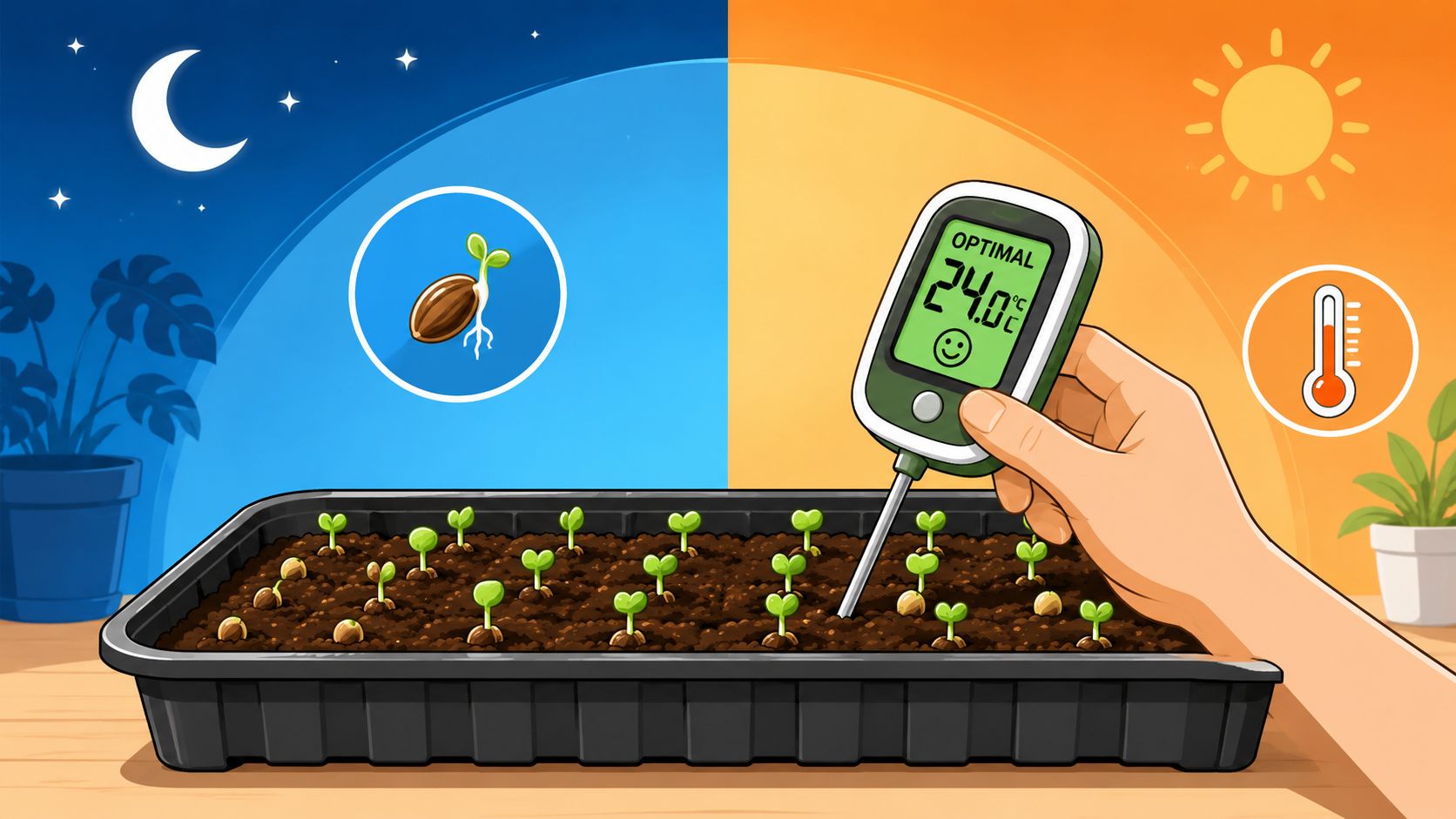
You've got your tray ready, your paper towels or starter plugs lined up, and a pack of seeds that wasn't cheap. Then nothing happens. A day passes, then another, and you start wondering if the seeds are bad, if you watered too much, or if you somehow blew it before the grow even began.
Most of the time, the problem is simpler than people think. It's temperature.
If your seeds won't pop, or they sprout slowly and unevenly, the temperature for seed germination is usually the first thing to check. That's good news, because it's one of the easiest parts of the setup to fix. You don't need a lab. You need a stable, warm environment and a basic understanding of what the seed is waiting for.
Home growers get tripped up here because room temperature and root-zone temperature are not the same thing. A closet can feel warm while the tray itself stays cool. A windowsill can look bright and cozy while the growing medium swings up and down all day. Seeds notice those swings.
Once you get this one variable under control, germination starts feeling a lot less random. That matters whether you're starting a few feminized seeds for a tidy indoor run or popping autoflower cultivars because you want a simpler, faster path from seed to stash jar.
Starting Strong with Your Seeds
A lot of growers blame themselves too early.
They see a stalled tray and think they watered wrong, handled the seed wrong, or bought the wrong gear. Sometimes those things matter, but temperature is often the hidden issue because it doesn't look dramatic. The tray just sits there. No obvious disaster, just silence.
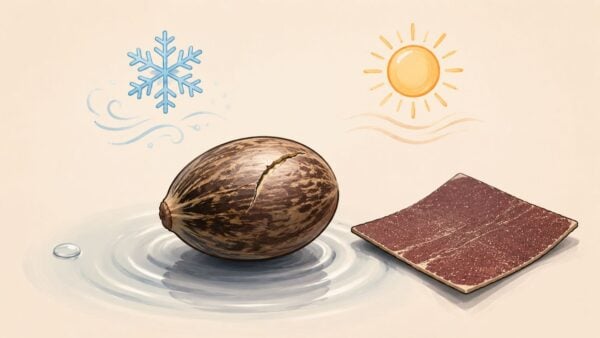
Seeds don't care how nice your tent looks. They care whether the conditions say, “It's safe to start.” If the medium is too cold, the seed stays sluggish. If it's too hot, you can stress it before it ever gets moving. That's why dialing in the temperature for seed germination gives you such a big return for such a small effort.
Practical rule: If your setup feels “probably warm enough,” check the actual growing medium before you trust that guess.
This is especially useful for hobby growers who want reliable starts without turning the spare room into a science project. Feminized and autoflower cultivars both benefit from the same basic approach: stable warmth, gentle moisture, and less messing around. You're trying to create a calm little nursery, not force the seed to hurry.
A straightforward way to consider this is:
- Cold medium slows everything down: Seeds may take longer to wake up, or they may stall.
- Overheated medium creates stress: Warm is good, hot is not.
- Stable beats perfect-but-swingy: A consistent range works better than a setup that runs warm in the day and chilly at night.
Growers also get confused because the first stage feels invisible. You can't see what's happening inside the shell, so it's easy to overreact. People dig seeds up, re-wet them constantly, or move the tray from room to room. That usually makes things worse.
The better move is to set the environment correctly, then leave the seed alone to do its job.
Why Temperature Is the Magic Switch for Seeds
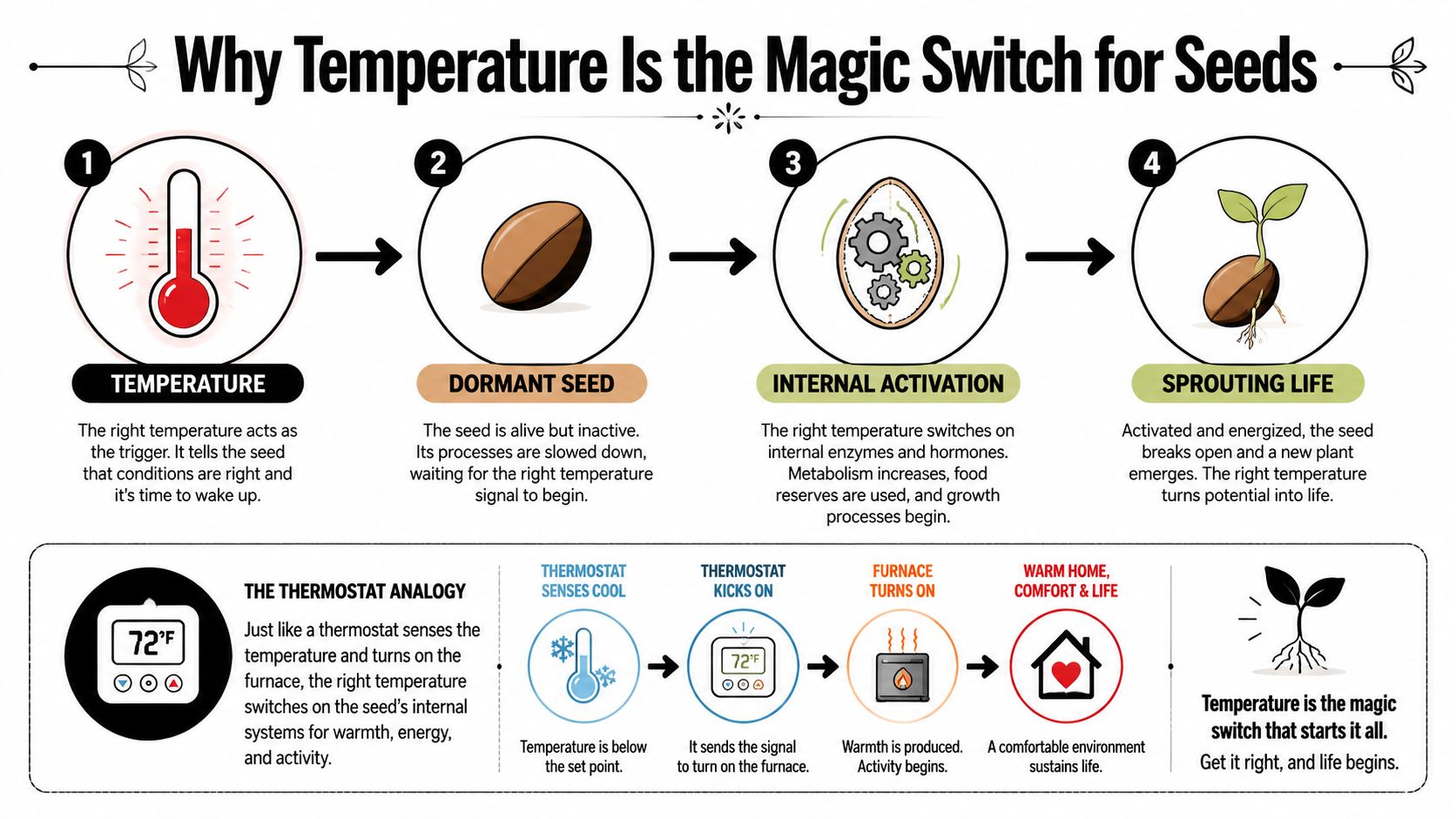
You tuck a seed into a starter plug, give it water, and two days later nothing happens. The natural reaction is to add more water, move the tray, or start wondering if the seed was a dud. A lot of the time, the issue is simpler. The seed is waiting on warmth in the root zone.
Temperature works like the starter signal in a car. The battery is there. The fuel is there. But until the key turns, nothing moves. In a seed, the right warmth tells it conditions are safe enough to begin.
When that signal shows up, the seed starts pulling in water and using the energy stored inside the shell. The first root can begin pushing downward. When the medium stays too cool or swings up and down too much, that process slows to a crawl.
What warmth changes
Warmth affects speed, consistency, and the odds of getting a clean sprout.
That matters a lot for home growers running feminized or autoflower seeds, because you usually are not germinating dozens and sorting out the winners later. You want the seeds you paid for to pop with as little drama as possible. Good temperature control helps you get there without turning germination into a science fair project.
There is also a trap cold-climate growers run into. I call it the Cool-Soil Paradox. The room feels fine, the tray looks fine, and your thermometer on the wall says everything is fine. But the seed is sitting in a plug, cup, or tray that is still colder than the room. Basements, windowsills, garage grows, and tent floors do this all the time.
So the grower says, “My room is warm.” The seed says, “My bed is cold.”
Why growers mix up air temperature and seed temperature
This mix-up causes a lot of bad troubleshooting. Air temperature tells you how the room feels. Medium temperature tells you what the seed feels.
The seed cares most about the medium.
That one distinction clears up a lot of confusion. It also sets up good habits for later, when you start paying attention to leaf temperature, humidity, and a weed VPD chart for your grow environment. Germination is simpler, but the same rule applies. Measure the part that matters.
Here's the practical version:
- Warm room, cool tray: common in basements, on concrete, or near drafty walls
- Warm surface, overheated cells: common when trays sit too close to heaters or hot equipment
- Steady medium: usually gives the smoothest, least stressful start
Why steady wins
Seeds do not need aggressive heat. They need a dependable signal.
That is why putting a tray in direct sun behind glass, on top of electronics, or beside a space heater often backfires. One corner gets warmer than the rest. The top of the medium heats up fast, then cools off again. Instead of giving the seed a calm start, you create little bursts of stress.
A boring setup usually works best. Stable warmth. Even moisture. Minimal handling.
Give the seed that, and it can get on with the job.
The Sweet Spot for Cannabis Seed Germination
Cannabis likes warmth, but not wild heat.
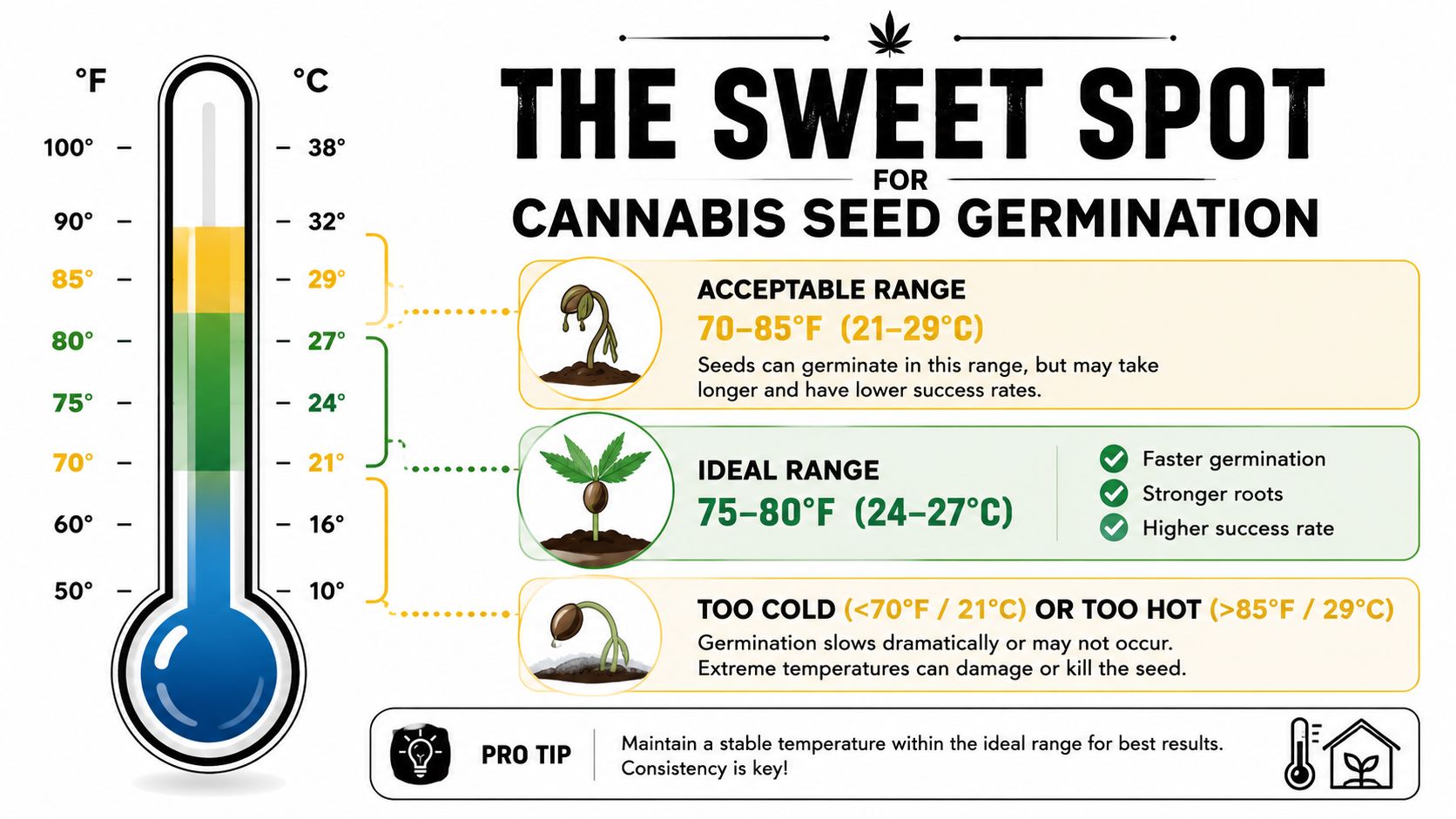
The optimal temperature range for germinating cannabis seeds is 21°C to 29°C, or 70°F to 85°F, with a peak benchmark at 26°C, or 78°F, where internal activity moves most efficiently and sprouts typically appear within 3 to 7 days, according to this cannabis germination temperature guide.
That's the target worth remembering. If you want one number in your head, keep 78°F there.
The range that makes life easier
For home growers, this is less about chasing perfection and more about staying inside a dependable zone. Feminized and autoflower cultivars both respond well when the growing medium stays comfortably warm and steady.
A quick reference helps:
| Condition | Temperature |
|---|---|
| Acceptable cannabis germination range | 70°F to 85°F, 21°C to 29°C |
| Peak benchmark | 78°F, 26°C |
| Typical sprout window under that range | 3 to 7 days |
That's why a seed can struggle in a cool basement even when the rest of your setup looks fine. The room may not feel cold to you, but the seed isn't judging comfort the way you are. It's responding to the temperature around the shell.
Medium temperature beats room temperature
This part trips people up all the time.
If your thermostat says the room is warm enough, that still doesn't guarantee your starter plug, paper towel, or tray cells are in the right range. A seed sitting in a damp plug on a cold shelf can lag badly, even in a decent room. For germination, the root zone is the truth.
That's especially relevant if you're starting autoflower cultivars and want a smooth launch with minimal stalling. Autos don't give you much room to waste early momentum. Feminized photoperiod cultivars are more forgiving later on, but they still benefit from a clean, steady start.
If you want better consistency, measure where the seed is, not where you're standing.
Don't confuse warm with hot
Some growers hear that cannabis likes warmth and then push too far. A tray placed too close to a heater, sunny window, or overly aggressive heat source can overshoot the range fast. That doesn't make the seed work harder. It raises stress.
The practical takeaway is simple:
- Aim for the medium, not the room
- Keep it steady, not extreme
- Treat 78°F as a strong target
If you're wondering how long your setup should take when things are dialed in, this guide on how long weed seeds take to germinate fits nicely with the temperature range above.
How to Control Your Germination Environment
You don't need fancy equipment to get this right. You need a few basics that work together.
The most useful tool for cold homes, basements, garages, and spare rooms is a seedling heat mat. It gives the growing medium a gentle boost instead of forcing you to heat the whole room.
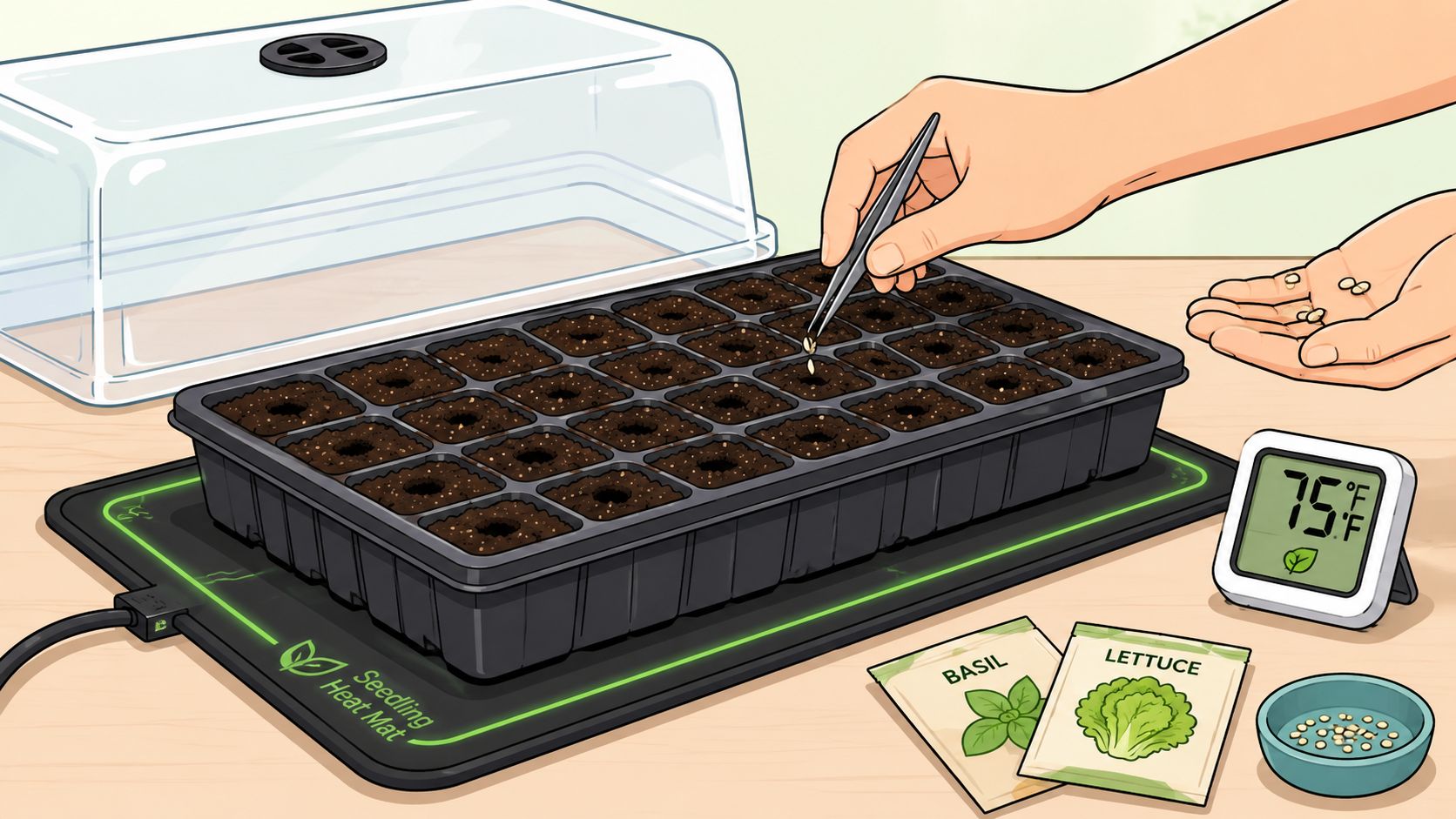
A heat mat can warm soil or growing media by 10 to 15°F, or 5 to 8°C, which is especially helpful in cold rooms, and maintaining soil temperatures at 75 to 80°F, or 24 to 27°C, is essential for germinating a wide range of species, based on this overview of optimum temperatures for germination.
The simple setup that works
You can build a reliable germination station with just a few pieces:
- Heat mat: Raises the medium temperature without blasting the whole space.
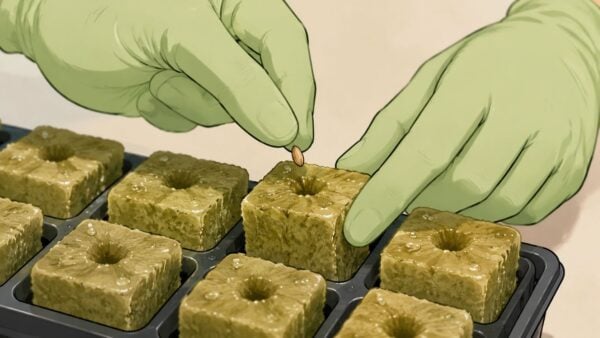
- Seed tray or starter plugs: Keeps your process tidy and repeatable.
- Humidity dome: Helps hold moisture and buffers quick changes in the tray.
- Small thermometer: Lets you check the actual zone where your seeds sit.
If you're using a dome, it helps to understand when it's useful and when it becomes too much. This guide on humidity domes for seedlings covers the basics well.
A practical way to set it up
Keep this process simple:
- Pick a stable location: Skip drafty windows, cold concrete floors, and surfaces that swing in temperature.
- Set the tray on the heat mat: Let the mat do the warming at the root zone.
- Moisten the medium, don't soak it: Wet enough to support the seed, not swamp it.
- Cover with a dome if your space is dry: That helps hold a steadier microclimate.
- Check the tray, not just the room: A cheap digital thermometer is worth it.
A lot of growers make the same mistake here. They keep adjusting things every few hours. Resist that urge. Once the setup is stable, leave it alone unless the readings tell you something's off.
One solid setup beats constant tinkering. Seeds like calm conditions more than heroic effort.
Match the method to your space
Different spaces need slightly different moves.
| Growing space | What usually helps |
|---|---|
| Cold basement | Heat mat, tray lifted off cold surfaces, dome if air is dry |
| Warm closet | Monitor so it doesn't creep too hot, crack the dome if needed |
| Garage or utility room | Heat mat is usually the main fix, avoid direct drafts |
| Bright windowsill | Watch for temperature swings, especially day to night |
That last one matters. Windowsills fool people. Sun warms the tray in the day, then the glass cools hard at night. Seeds don't love that roller coaster.
A quick walkthrough can make the setup easier to picture:
What not to do
A few shortcuts cause more problems than they solve:
- Don't place trays on radiators or hot electronics: The heat is uneven.
- Don't let mats run blind if your space is already warm: Check the medium so you don't overshoot.
- Don't keep adding water because nothing has sprouted yet: Cool, soaked media can stall seeds.
- Don't move trays all over the house: Pick the best spot and keep it consistent.
If you remember one thing from this section, let it be this: the best germination setup is stable, warm, and boring.
Troubleshooting Common Temperature Problems
You check the tray on day three. One seed has popped, two are doing nothing, and the medium still looks moist. At that point, a lot of home growers blame the seed. More often, the tray temperature is the main problem.
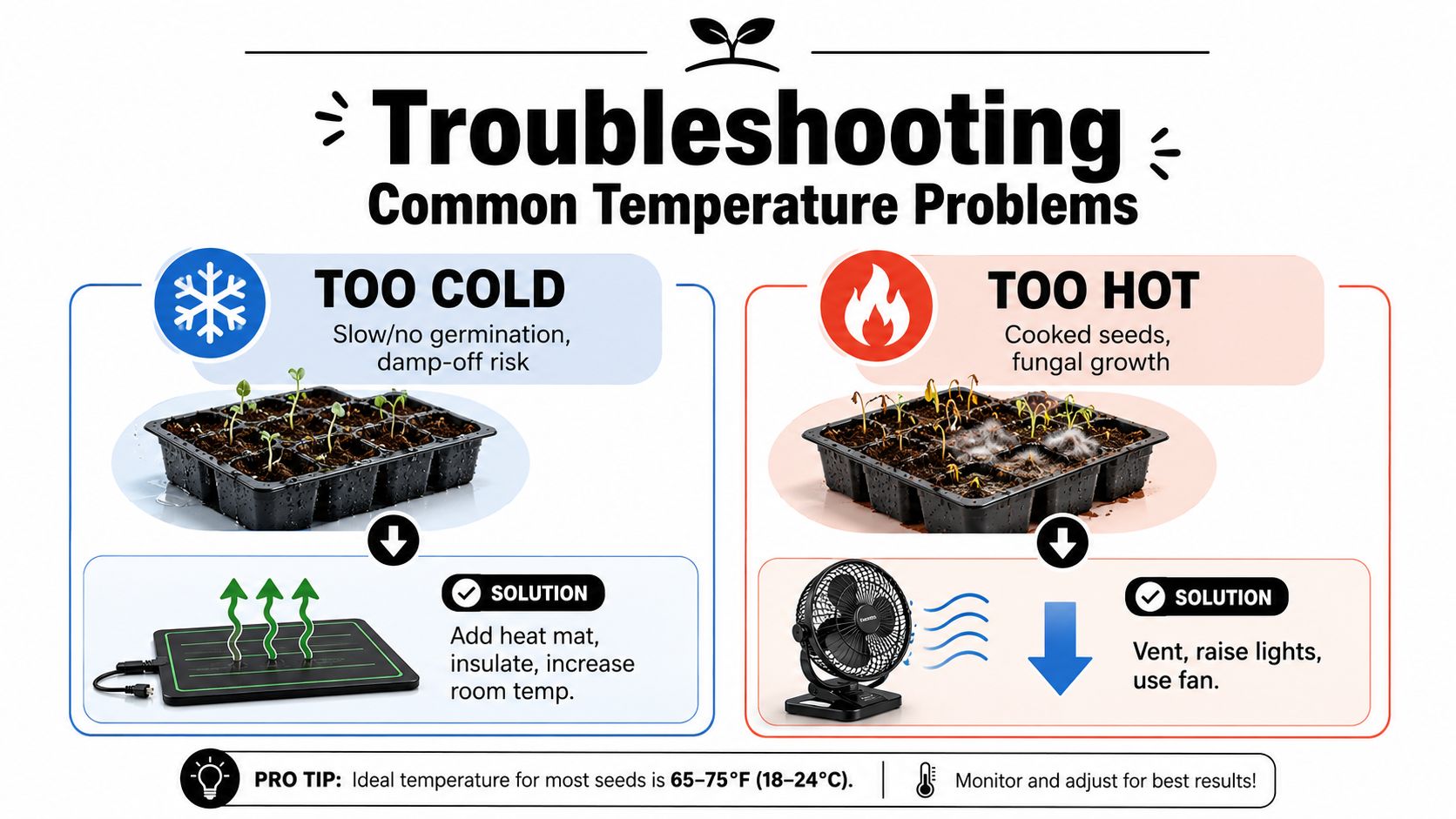
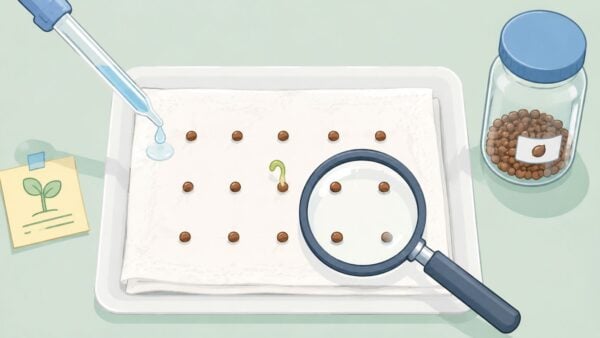
Temperature issues usually show up in patterns. Slow starts, uneven sprouting, seeds that seem to pause halfway. Those clues matter because they point you toward the fix before you start digging seeds up or adding more water.
When the tray is too cold
Cold media slows the seed's internal process. Everything takes longer, and the starts are usually less even. This is common in basements, garages, spare rooms, and anywhere the tray is sitting on a surface that feels cool to your hand.
Try these fixes:
- Get the tray off cold surfaces: Concrete, tile, and stone pull heat away fast.
- Add gentle bottom heat: A heat mat helps in chilly rooms.
- Block drafts: Air leaks and vents can cool the tray more than you think.
- Hold back on extra watering: Cool and soggy medium is where a lot of growers get stuck.
Here is the sneaky part. Cold trays often do not look dramatic. Nothing looks burned. Nothing looks obviously wrong. The medium just stays wet longer, the shell stays shut, and patience starts to run out.
That is where people get into trouble. They poke around, re-soak the plug, move the tray to a new spot, then wonder why the timing gets even messier.
When the tray is too hot
Too much heat causes a different kind of stall. The room can feel fine, but the seed zone can still be warmer than you want, especially under a dome or in direct sun.
Check for setups like these:
- Direct sun hitting a windowsill tray
- A heat mat running in an already warm space
- A closed dome holding extra heat
- A tray parked beside a heater or appliance
If the medium feels warmer than it should, reduce the heat source, crack the dome, or move the tray somewhere steadier. Seeds want a warm pocket, not a little steam room.
Extra heat does not rescue slow germination. It often adds stress and dries the seed zone unevenly.
The cool-soil paradox
Cold-climate growers run into a frustrating situation. The room is cool, the medium stays damp, and the seed might still germinate eventually. That makes it easy to think, "Maybe cool soil is fine after all."
That is the cool-soil paradox.
Cool soil can keep a seed alive long enough to sprout, but it often gives you a slower, less reliable start. So yes, a cannabis seed can sometimes crack in cooler conditions. For feminized and autoflower hobby growers, that does not make cool conditions a smart target. It usually means the seed is working harder than it needs to.
This matters even more with autos. Autoflowers have less time to recover from a sluggish start, so losing days at germination can show up later as a smaller plant. Feminized photoperiod seeds give you more room to recover, but a weak start still puts you behind for no good reason.
For a home grower in a colder climate, the practical question is simple. Are you trying to prove the seed can sprout in cool soil, or are you trying to get a fast, even start? Those are not the same goal.
A fast check when something feels off
Use this table like a quick diagnosis, not a reason to panic.
| Problem | Likely temperature issue | First fix |
|---|---|---|
| No sprouts after several days | Tray is likely running cool | Check the medium temperature and add gentle bottom heat |
| Uneven popping | Temperature changes across the tray | Move to a steadier spot and stop shifting the tray around |
| Seeds seem stalled | Cool, wet medium is slowing them down | Warm the tray slightly and let the medium breathe |
| Medium feels hot under the dome | Heat is getting trapped | Vent the dome and reduce direct heat |
Make one change at a time. Then wait.
That last part is hard, especially when you are excited to get a feminized run going or you want your autos above ground fast. But calm corrections beat constant tinkering every time.
From Germination to Your First Set of Leaves
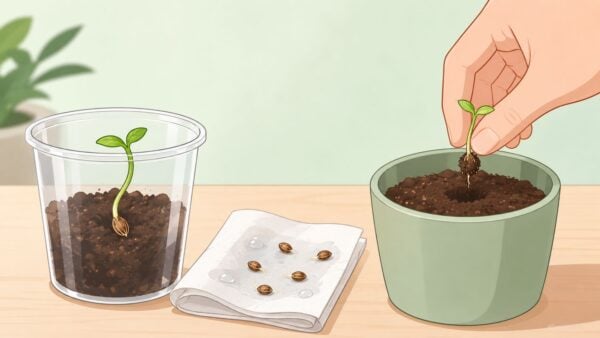
Once your seeds crack and push up, you've already done one of the hardest parts of the grow. You created the conditions for a living thing to start strong. That's not luck. That's skill.
Temperature for seed germination matters because it turns guesswork into repeatable results. You stop hoping the tray works out and start knowing what your seeds need. That kind of confidence pays off whether you're starting a couple of autoflower cultivars in a compact setup or planning a full feminized run with more room to train and shape later.
From here, the game changes a bit. Germination gives way to early seedling care, where light, airflow, and moisture management matter more than the little shell that just opened. The goal stays the same though: keep things stable, avoid overreacting, and let the plant build momentum.
A smooth germination stage makes every step after it easier.
If you're at the point where your setup is dialed in and you want cultivars that match your space, your timeline, and your style of growing, use that knowledge to choose smarter from the start.
If you're ready to pair a solid germination setup with the right feminized or autoflower cultivar, check out Botanist Seeds. Their comparison tool makes it easier to sort through options and find a cultivar that fits your grow space, your schedule, and the kind of home harvest you want.