Panama Red Strain: A Classic Landrace Sativa Guide
You searched for Panama Red because you want a classic tropical sativa, not a marketing story. Fair. The catch is that Panama Red seed today can mean two very different things, a rare heirloom-style line, or a modern remake wearing an old name. If you're growing in a tent or small garden, that difference matters more than nostalgia ever will, because the wrong version can turn a fun project into a space problem with a long finish.
Ready to grow it yourself? Shop Panama Red seeds at Botanist Seeds.
The legend is memorable, but the practical part is often overlooked. That's backwards. The core question is simple: can your setup handle a tall, long-flowering, pure sativa cultivar, and can the seller prove what they are offering? If the answer is fuzzy, your grow plan should stay fuzzy too. If the answer is clear, Panama Red can be a great pick for growers who like to train a plant, wait for the full finish, and end up with something that feels old school.
What Most Growers Get Wrong About Panama Red
The common mistake is thinking every listing that says Panama Red is the same thing. It isn't. Some buyers are chasing the old landrace story, while others are getting a modern hybrid that only carries Panama Red influence, and the market doesn't always make that distinction obvious. That matters because a long-flowering tropical sativa behaves very differently from a compact modern cultivar.
A lot of growers also underestimate the plant before they buy. They see the name, think “classic,” and don't stop to ask whether their tent has enough vertical room, or whether they're okay with a bloom window that asks for patience. That's how people end up trying to squeeze a tall, stretchy sativa into a setup built for quicker, shorter plants.
Practical rule: If your first reaction is, “I can fit it if I keep it small,” you probably picked the wrong cultivar for your space.
The other mistake is ignoring provenance. One independent strain guide says authentic Panama Red seeds are increasingly rare and that buyers are often pushed toward hybrids instead of the original expression, which is exactly why you should treat the listing description like a contract, not a vibe. If the seller can't explain what line you're getting, you're not buying confidence, you're buying a label. A seed bank’s Panama Red seeds overview makes that provenance issue pretty plain.
A good first move is to match the plant to the room before you get emotionally attached to the name. If you want the old tropical stretch, the long finish, and the collector appeal, Panama Red can absolutely be worth the trouble. If you want something quick and tidy, look elsewhere and save yourself the headache.
Where Panama Red Comes From and Why It Still Matters
Panama Red carries real history, and that history is the point. The older accounts place it as a 1960s to 1970s-era landrace sativa tied to Panama, with some telling it from the Pearl Islands, and the archived cultivar story says the cut came from seeds first popped in the 1970s. That's why people still talk about it like a reference point in cannabis, not just another legacy label. The story of Panama Red lays out the background cleanly, and this background on how Panama Red got its name ties the name to Panama and the 1960s.
The origin matters because the plant was shaped near the equator, where long, warm seasons reward a different kind of growth. A line like that does not behave like a compact modern indoor cross. It stretches, it takes its time, and it asks you to plan around that instead of hoping it will behave.
Why the origin story still matters in a tent
A pure sativa landrace-type cultivar from Central American genetics behaves like one. If you look at the old-line seed listings, Panama Red is described that way, with flowering around 70 to 85 days, or roughly 10 to 12 weeks. Those same listings put plant height around 180 to 220 cm, which tells you everything you need to know about what happens if you drop it into a tight room and expect it to stay polite. A seed bank’s Panama Red listing makes that tall, high-stretch profile clear, and a good landrace reference like Botanist Seeds' landrace page helps frame why those traits still show up in older regional lines.
That heritage is why old-school growers respected it and why home growers still chase it now. The appeal is not nostalgia for its own sake. It is a specific growth pattern, a long finish, and a plant that still makes sense if your space can handle the stretch.
The clean read on Panama Red is simple, you are buying character, and you need to be ready for the trade-offs that come with it.
The Plant You're Actually Growing
Panama Red is a long-flowering sativa with a bloom window that usually lands around 10 to 14 weeks. One cultivation guide puts it at 15% to 18% THC with CBD below 1%, while another grow-focused analysis gives indoor flowering at 11 to 14 weeks, outdoor height up to 3 meters, and yields around 300 to 400 g/m². Those numbers line up with the plant's reputation as a vigorous tropical heirloom, not a tidy commercial hybrid. JointCommerce's Panama Red strain guide covers those figures well.
What that means in real grow space
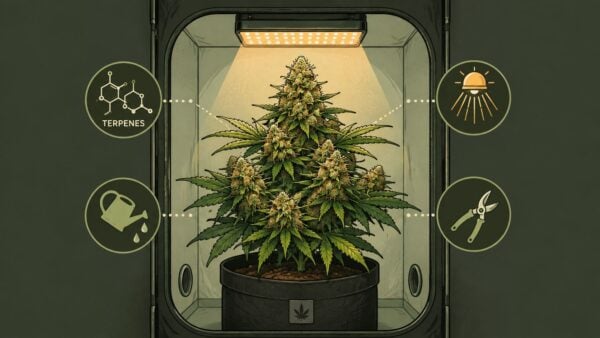
If you're running a tent, the first thing to notice is the stretch. Panama Red doesn't politely stop growing when you flip to flower. It keeps reaching, which means you need to think about canopy control before the plant gets ahead of you. A broad, flat canopy is the goal, not a wild jungle of spears.
The aroma and overall vibe fit the classic sativa lane too, with an earthy, spicy character that reads more old-world than candy-shop. That sensory profile is part of the appeal for growers who want something that feels traditional, not ultra-bred and dessert-like. It's a cultivar with personality, and that personality shows up early in the grow.
Panama Red at a Glance
| Trait | Typical Range |
|---|---|
| Flowering time | 10 to 14 weeks |
| Indoor flowering window | 11 to 14 weeks |
| THC | 15% to 18% |
| CBD | Below 1% |
| Outdoor height | Up to 3 meters |
| Yield | 300 to 400 g/m² |
| Type | Pure sativa, landrace-type |
Bottom line: If you want a short finish, this isn't your cultivar. If you want a classic tall sativa with real presence, it's exactly the kind of plant people remember.
The honest fit test is simple. If your room has vertical space, strong airflow, and the patience to let flower run long, Panama Red can reward you. If you're squeezed for time or height, don't force it. You'll spend the whole run fighting the plant instead of growing it.
Seed Types and What They Mean for Your Grow
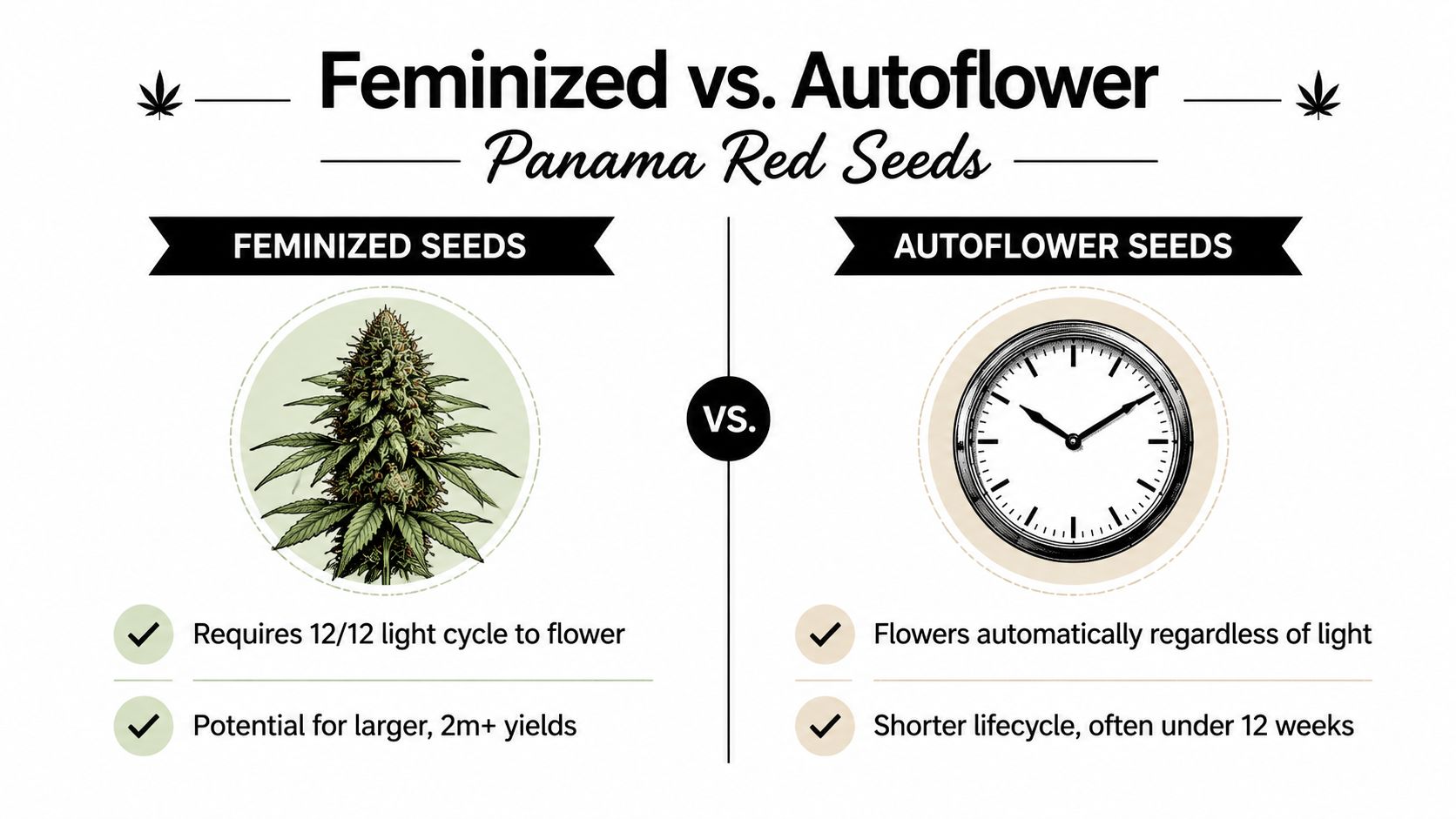
The seed type matters because Panama Red is already a demanding cultivar. A feminized photo gives you the classic long-season expression and the best shot at the full tropical character. An autoflower version may get you to harvest faster, but if it's true to the name at all, it's usually a modern hybrid interpretation rather than the full landrace-style experience.
That's the trade-off. Photos give you control and the old-school stretch. Autoflowers give you speed and convenience. You don't get both in full measure, and anybody selling you that story is smoothing over the compromise.
Feminized photo or autoflower
The feminized route makes sense if you care about authenticity, canopy training, and full expression. You'll need to manage the flip timing, and you'll need to think about room height the whole way through, but that's the point. Panama Red is supposed to feel like a real sativa project.
Autoflowers fit a different grower. If your calendar is tight and you want a quicker run, they're the more forgiving option. Just don't expect them to behave like an heirloom tropical line. Shorter cycles usually come with a different structure and a different finish.
What I'd choose
- Pick feminized photos if you want the classic stretch, longer flower, and the closest thing to the original experience.
- Pick autoflower hybrids if your setup is small, your patience is limited, and you care more about finishing cleanly than preserving the old character.
- Avoid vague listings that don't say which direction the line goes, because “Panama Red” on the package tells you almost nothing by itself.
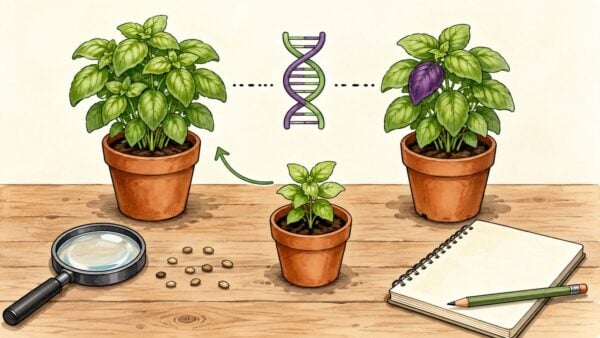
The other useful clue is the breeder's wording. If the listing talks clearly about landrace preservation, that's one thing. If it reads like a remix with a nostalgic name, treat it that way. One breeder's write-up that discusses phenotype variation is worth more than a page of vague copy, and a clean internal reference like Botanist Seeds' phenotype guide is exactly the kind of thing serious buyers should look for when they compare cultivars.
Germination and the First Eight Weeks
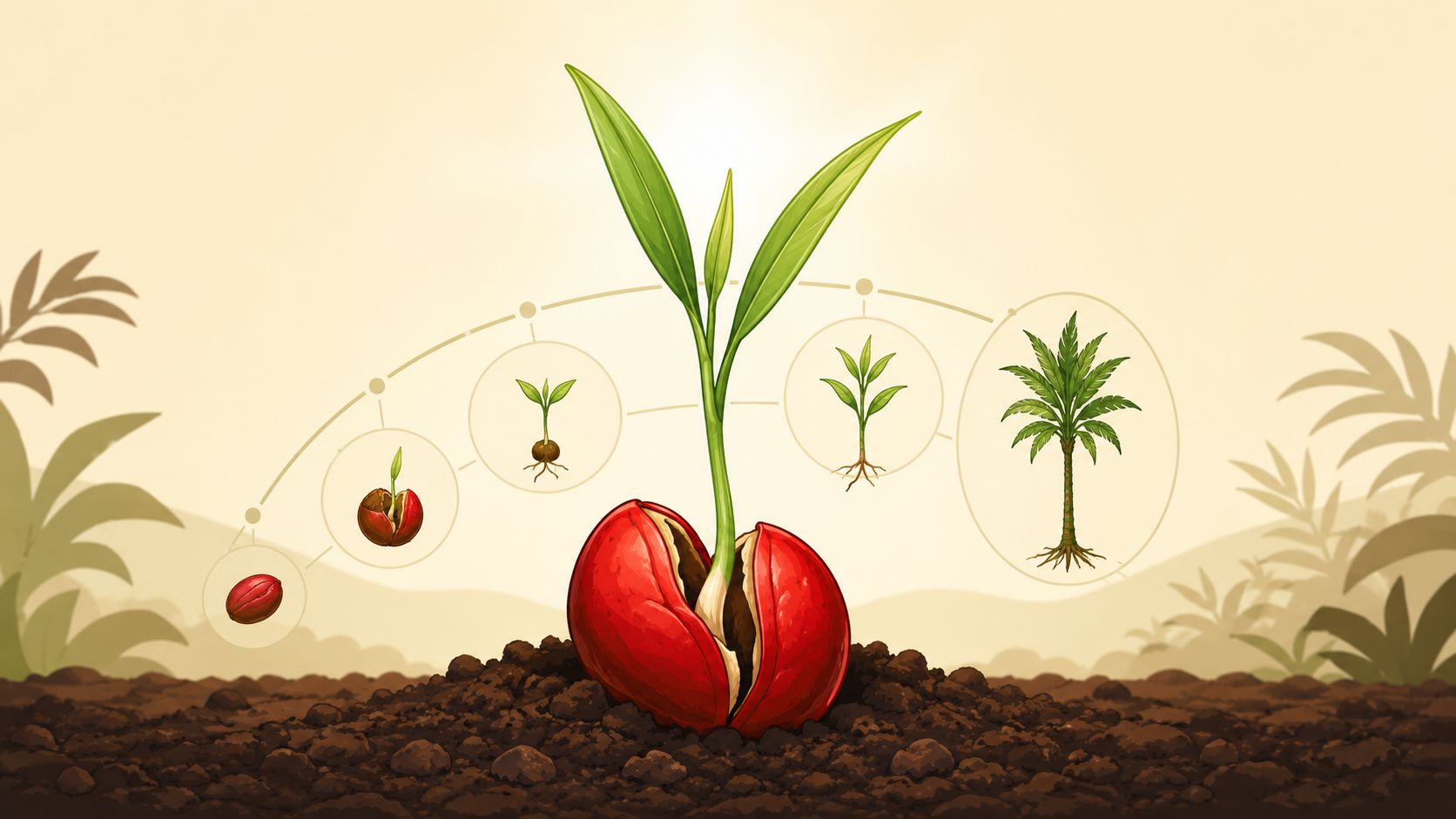
Panama Red is easiest to handle when you stay boring and consistent. Start with a simple paper towel method or put the seed straight into your medium, then keep conditions steady instead of fussing over them every hour. For a stretchy sativa, a calm start matters more than clever tricks.
A seedling wants stable moisture, gentle light, and no drama. Don't drown the medium, and don't let the root zone swing wildly between wet and dry. Keep the plant small, healthy, and upright, because the whole game here is building a framework that can take on height later.
Early schedule that actually works
For the first weeks, think in terms of structure, not yield. Give the plant enough time to establish roots, then build a low, open shape that lets light get down through the canopy. A pure sativa-type cultivar like this rewards early guidance, because once it starts stretching, you're reacting to the plant instead of steering it.
Practical rule: If you wait too long to train a tall sativa, you end up fixing the plant every day instead of growing it.
When you're ready to flip, do it before the plant owns the tent. That's the key with Panama Red. It keeps stretching after the switch, so your flip point should leave room for that extra push. Low-stress training makes sense here, especially if you want a flatter canopy and better light spread without stressing the plant into a bad mood.
A clean starter plan looks like this:
- Germinate effectively: Paper towel or straight into medium, then keep it consistent.
- Treat seedlings gently: Stable moisture and soft light beat overhandling every time.
- Build early shape: Train before the plant gets tall enough to become awkward.
- Flip with headroom left: Don't run out of space and hope the plant forgives you.
- Stay patient in stretch: Panama Red's stretch is part of the cultivar's personality.
For a first run, the biggest mistake is rushing the calendar. If the plant looks a little slow early, that's not a reason to panic. The payoff comes from keeping the structure under control so flower can do its work later. Botanist Seeds' germination timing guide is worth a look if you want to sanity-check your early timing.
How to Tell If You're Getting the Real Thing
The hardest part of buying Panama Red in 2026 isn't choosing a grow method, it's figuring out whether the listing is genuine. A lot of sellers use the name loosely. Some are honest about a modern hybrid, others are not, and the package won't always tell you which one you're holding.
Look for listings that explain genetic background in plain language. If the breeder only says “Panama Red” and leaves it there, that's weak. If they explain whether it's a landrace preservation line, a remake, or a cross carrying Panama Red influence, you're dealing with someone who respects the buyer more than the branding.
Red flags that should make you pause
- Vague lineage: If the breeder dodges ancestry details, assume the line is blurred.
- Suspiciously short flowering time: A long tropical sativa shouldn't suddenly act like a fast compact hybrid.
- No breeder background: If there's no accountability, there's no reason to trust the label.
- Generic grow advice: Real Panama Red guidance should mention stretch, patience, and vertical room.
A good seller earns trust with specifics, not hype. Third-party lab data helps when it's available, transparent genetic notes help even more, and clear statements about whether the line is a preservation project or a modern remake are the best sign that you're looking at an honest listing. The more precise the seller is, the less likely you are to waste a run on the wrong plant.
Straight answer: If the listing sounds like a nostalgia ad, treat it like one until the breeder proves otherwise.
That kind of skepticism saves money and frustration. It also helps you set expectations before the seed ever hits the medium. If you care about the old line, provenance comes first. Flavor, yield, and flower time only matter after that.
Common Problems and How to Fix Them
Panama Red's problems are predictable, which is good news. Tall sativas don't fail in mysterious ways, they usually fail because the grower underestimated stretch, airflow, or time. Once you know the pattern, the fixes are pretty straightforward.
Stretch that gets out of hand
When the plant keeps shooting upward after the flip, the canopy turns uneven and the top sites steal all the light. The cause is usually late training or flipping too late. The fix is to train earlier and flip with room still available, then keep bending and supporting as needed.
Light not reaching the lower canopy
If the bottom sites stay thin and weak, the plant is probably too tall and too dense for the light setup. That usually means the structure needs more opening up. Use a flatter training style, keep branches spread, and stop letting one top dominate the whole plant.
Humidity creeping up in flower
Long bloom windows can invite moisture trouble if airflow is lazy. A leafy canopy with stale air is asking for trouble. The fix is simple, keep air moving through the plant, and don't let the room sit damp just because the cultivar takes its time.
The temptation to chop early
This one gets people every time. Week nine arrives, the plant still looks airy, and the grower starts getting impatient. But a long-flowering sativa needs the full calendar, so the fix is mental as much as technical, track your progress, watch the plant mature, and don't rush a cultivar that's built to finish slowly.
The best habit is to check the plant like a grown-up, not a gambler. If you're dealing with a classic tall cultivar, you need to expect some late-season awkwardness and treat it as normal. That attitude keeps the whole grow calmer and usually leads to a better finish.
Your Panama Red Buying Checklist
Buy Panama Red seed only if your setup and expectations match the plant. You need enough vertical headroom for a 2 meter plus sativa, a calendar that can absorb a 12 to 14 week flower, and enough patience to let a classic tropical cultivar finish properly. If any of that sounds annoying, it probably isn't the right pick.
The seller matters just as much as the plant. I'd only buy from a source that can explain whether the line is a preservation effort or a modern hybrid carrying the name, because provenance is the whole game here. If they can't tell you what you're getting, they're asking you to gamble on a label.
Here's the simple go or no-go test:
- Go if you want a true long-season sativa project.
- Go if your tent or garden has real vertical room.
- Go if you enjoy training and shaping the plant instead of rushing it.
- No-go if you need quick turnover or short plants.
- No-go if the seller can't explain the genetics in plain English.
Panama Red still makes sense for the self-sufficient hobbyist who likes the grow as much as the harvest. It's the kind of cultivar that rewards patience, good planning, and a little pride in doing things the old way. You'll skip dispensary lines, keep more of your own budget in your pocket, and end up with a plant that feels like it earned its place in your garden.
Take your time, compare the line, and use the Botanist Seeds comparison tool to match the cultivar to your space before you buy. A smart choice now saves you weeks of frustration later.
A CTA for Botanist Seeds.