




OG Kush Strain: A Complete Grower’s Guide
You’re probably here because OG Kush keeps showing up everywhere, dispensary menus, grow journals, seed catalogs, and now you’re wondering if it’s worth the space in your tent or yard. That’s a fair question. A lot of famous cultivars get talked up like they grow themselves, then punish you the second your room gets too humid or you push nutrients too hard.
OG Kush feminized seeds sit right in that interesting middle ground. They’re popular for good reasons, but they’re not a lazy grow. If you like the idea of raising a cultivar with real history, a loud fuel-and-citrus profile, and a finished jar you’ll be proud to say you grew yourself, this one makes sense. If you want something that shrugs off sloppy conditions, there are easier choices.
The good news is that OG Kush is manageable when you treat it like a project instead of a lottery ticket. Give it stable conditions, stay ahead of humidity, keep your feeding moderate, and it can reward you with a seriously satisfying harvest.
Is OG Kush the Right Cultivar For Your Garden
A friend usually asks the same thing before popping OG Kush. “Is this a legend because it’s good, or because people won’t shut up about it?” The honest answer is both.
OG Kush has the kind of name recognition that makes home growing feel a little more special. You’re not just filling jars. You’re working with a cultivar that shaped what a lot of people think of when they hear “Kush.” That matters if you enjoy the craft side of growing and want your effort to end in something iconic, not just productive.
Still, this isn’t the cultivar I’d hand to somebody who refuses to check their environment. OG Kush can be rewarding, but it tends to do best when the grower pays attention. Small tents, humid rooms, and heavy-handed feeding can turn a promising run into a frustrating one pretty quickly.
It fits growers who like control
OG Kush feminized seeds make sense if you:
- Want a known classic: You’re after a cultivar with strong market recognition and a reputation built over years, not a random novelty pack.
- Can manage your room: You’ve got decent airflow, can keep humidity in check, and won’t ignore signs of stress.
- Prefer shorter bloom cycles: You want a photoperiod cultivar that doesn’t drag on forever in flower.
- Care about the final jar: Aroma, resin, and that classic OG character matter to you as much as raw weight.
It may not fit growers who want zero fuss
Skip it, or at least wait a run or two, if this sounds like you:
- You overfeed by habit: OG Kush usually responds better to restraint than enthusiasm.
- Your space runs damp: Dense flowers and late flower humidity aren’t a fun combo.
- You want a “set it and forget it” plant: This cultivar rewards attention, not neglect.
Practical rule: OG Kush is a good home grow when your setup is at least a little better than your instincts.
That’s really the call. If you want a cultivar that feels worth the effort and you’re willing to manage the details, OG Kush can absolutely earn its place in your garden.
The Story and Genetics Behind the OG Legend
OG Kush didn’t become famous by accident. It became one of the most influential cannabis cultivars because it helped define the modern West Coast Kush standard. A seed bank’s OG Kush background describes it as one of the “ultimate Kush varieties,” with parentage often thought to be Chemdawg x Hindu Kush, a flowering window around 56 to 63 days, and a profile known for fuel-and-lemon aroma and strong resin production.

The genetics story is part of the appeal because it’s never been completely neat. Most growers have heard the common family tree, but OG Kush also carries that long-running mystery factor. Different breeders and old-school heads have argued over the exact lineage for years. Normally that would be a drawback, but with OG Kush it’s part of the identity. The plant built its name in rooms, jars, and conversations before modern seed catalog language cleaned everything up.
Why the lineage matters in the grow room
Chemdawg and Hindu Kush are useful reference points because they explain a lot of the plant’s personality. You can see it in the way OG Kush often combines a sharp, gassy edge with a sturdier Kush backbone. It tends to show resin well, develops a distinct nose, and has the kind of growth pattern that responds strongly to training and environment.
That heritage also explains why growers sometimes see variation from one expression to another. Some plants lean a bit tighter and stockier. Others stretch more and throw a slightly airier frame before filling in. That doesn’t mean the genetics are bad. It means you’re working with a cultivar that became famous partly because its best expressions were memorable enough to become a benchmark.
If you want to compare current offerings before choosing your pack, Botanist Seeds’ OG Kush listing is one place to check how the cultivar is presented in a modern feminized format.
Why OG Kush became a benchmark
A lot of cultivars are popular for a season. OG Kush stuck because growers, breeders, and buyers kept coming back to the same core traits.
- Recognition: People know the name, and that matters when you want a cultivar with a proven identity.
- Aromatic character: That fuel, lemon, and earthy Kush mix stands out in a jar.
- Breeding influence: Once a cultivar becomes a standard, breeders use it as a reference point for what “good” should smell, look, and feel like.
- Resin appeal: OG Kush built a reputation as a plant that looks the part when grown well.
OG Kush matters because it wasn’t just another cultivar from the West Coast scene. It became part of the language growers use to judge other cultivars.
That’s why growing it at home feels different from growing some anonymous hype strain. You’re working with a cultivar that helped set the bar.
Why Feminized Seeds Are a Grower’s Best Friend
For a home grower, feminized seeds are one of the easiest quality-of-life upgrades you can make. They simplify the whole project. You use your space, time, medium, and electricity on plants intended to carry the run through to harvest, which makes planning cleaner and less wasteful.
That matters even more with OG Kush. This cultivar already asks for attention in the room. It doesn’t make sense to add extra uncertainty on top of that when your real goal is a healthy, productive canopy and jars worth keeping.
Why feminized OG Kush makes practical sense
When you’re growing at home, every plant slot matters. So does every gallon of water, every bag of medium, and every week the tent is occupied. Feminized seeds help you commit your setup to one purpose, finishing flowering plants.
Here’s what that changes in real life:
- Better use of limited space: A small tent gets crowded fast. Feminized seeds let you dedicate that footprint to your actual harvest plan.
- Cleaner feeding routine: You can build your nutrient and training schedule around a full run instead of treating the early stage like a waiting room.
- Less mental clutter: You’re already watching light, airflow, watering, and canopy shape. Fewer variables is always better.
- More confidence for newer growers: If this is one of your first serious photoperiod runs, predictability helps.
A lot of growers underestimate how much smoother a run feels when every plant in the room belongs there. That doesn’t make the grow effortless. It just means your effort goes toward the right outcome.
Where to learn the basics
If you want a quick plain-English breakdown of how feminized genetics fit into a home grow, this guide to feminized seeds is a useful place to start.
The bigger payoff
The best thing about feminized seeds isn’t convenience by itself. It’s what convenience allows. You can focus on dialing in the room, shaping the canopy, and finishing strong instead of dealing with avoidable complications.
For OG Kush, that’s huge. This cultivar is at its best when the grower pays attention to the details that affect flower quality:
- Canopy management
- Airflow through the plant
- Humidity discipline
- Moderate, steady feeding
- A calm, repeatable routine
Good home growing gets a lot more fun when the setup stops fighting you.
That’s why feminized OG Kush is such a practical choice. It lets the challenge be the craft of growing well, not the chaos of avoidable guesswork.
The Signature Vibe and Aromatic Profile of OG Kush
OG Kush has one of those profiles that people recognize before they can fully describe it. Open a jar after a proper cure and you usually get that classic mix people associate with the name: fuel, citrus, earth, and a sharp Kush funk that hangs in the air longer than you expect.

The easiest way to describe it is layered. The first impression is often gassy, like cracked fuel vapors and damp earth. Then the brighter side shows up, lemon peel, a little pine, sometimes a peppery edge. When the cure is done right, those notes stop smelling rough and start smelling deep.
What the aroma usually feels like
Not every plant will land exactly the same, but OG Kush tends to sit in a recognizable lane.
- Fuel first: That sharp, almost chemical note is part of the signature.
- Lemon on top: Not sweet candy lemon. More like citrus peel squeezed over something earthy.
- Kush depth: A grounded, slightly musky, slightly spicy base that gives the whole thing weight.
- Pine and dirt in the background: The kind of note that makes it feel old-school instead of sugary.
If you’ve only smelled modern dessert-heavy cultivars, OG Kush can feel more serious. Less candy, more grit. That’s a big reason longtime growers still keep coming back to it.
The vibe after a successful grow
The appeal isn’t only the smell. It’s the satisfaction of ending up with jars that feel classic. OG Kush has a reputation for potency, with multiple seed sources commonly placing it around 20 percent to 24 percent THC, and breeder material has also tied it to wins at Spannabis 2010 and 2011, which speaks to its long-running popularity in cultivation circles, as noted in a seed bank’s OG Kush profile.
In day-to-day terms, the vibe is why people still chase it. It often lands as balanced and weighty without feeling one-dimensional. It’s the kind of cultivar people reach for when they want something familiar, pungent, and grown with intention.
A well-finished OG Kush doesn’t feel trendy. It feels correct.
That’s part of the pride of growing it at home. You skip the dispensary line, keep more money in your pocket, and end up with a supply you know was dried, trimmed, and cured the way you wanted.
How to get the nose you’re actually hoping for
A lot of growers blame genetics when the final aroma comes out flat. Sometimes the issue is the finish.
Keep these points in mind:
- Don’t rush the dry: Fast drying can mute the deeper fuel and citrus notes.
- Cure in glass, not in hope: A sealed jar with regular burping does more for expression than wishful thinking.
- Avoid late flower humidity problems: Once flowers get compromised, the nose usually pays for it.
- Handle buds gently: Rough trimming and constant grabbing strip away what you worked to keep.
With OG Kush, the final smell is part genetics and part discipline. Grow it clean, finish it slowly, and the cultivar usually tells you why it earned the name.
Your Complete OG Kush Feminized Grow Guide
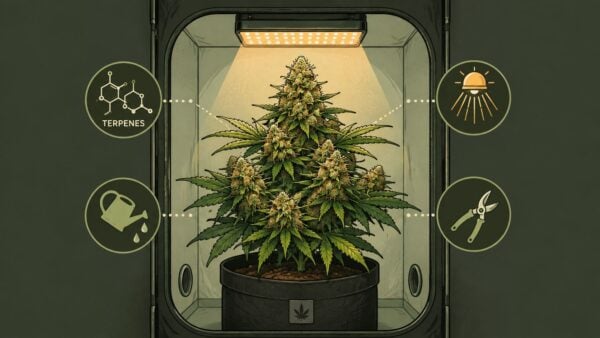
OG Kush works best when the run feels organized. You don’t need a lab coat. You need a repeatable routine, a stable room, and enough patience not to overreact every time a leaf tilts funny.
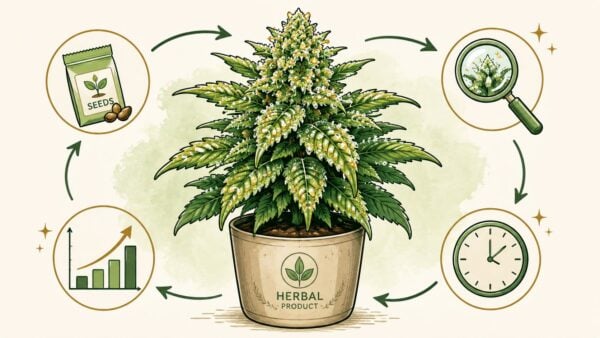
This quick visual lays out the full flow before you start:
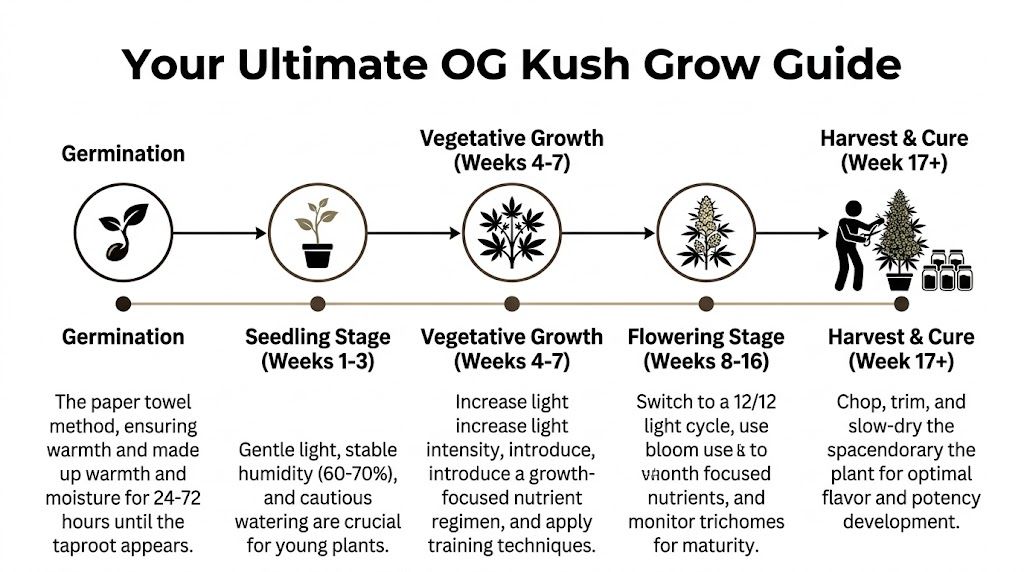
OG Kush feminized is generally treated as a fast-finishing photoperiod cultivar, with 8 to 10 weeks of indoor flowering, an early-to-mid October outdoor harvest window, and reported indoor yields around 450 to 550 g/m² according to MN Kush Co’s OG Kush feminized grow details. That shorter bloom window is one reason growers like it for indoor turnover and for outdoor runs that need to beat ugly late-season weather.
OG Kush at-a-glance grow specs
| Attribute | Indoor Details | Outdoor Details |
|---|---|---|
| Flowering and finish | 8 to 10 weeks in flower | Early-to-mid October harvest window |
| Yield potential | About 450 to 550 g/m² | Environment dependent |
| Best use case | Controlled rooms with good airflow and canopy management | Favorable climates with decent late-season dryness |
| Main grow focus | Keep stretch, humidity, and bud density in balance | Protect from wet weather and maintain airflow through the plant |
Germination and early seedling stage
Start simple. The paper towel method works fine if you keep it warm, moist, and not soaked. Once the taproot shows, plant it gently into your medium and avoid the classic new-grower mistake of drowning the seedling out of excitement.
During the seedling stage, keep things boring in the best way. Gentle watering, mild light, and no hero moves. OG Kush doesn't need intensity on day one. It needs consistency.
- Use a light hand with water: Wet roots without turning the pot into mud.
- Keep the environment steady: Big swings in conditions can slow it down early.
- Hold off on heavy feeding: Young plants usually don't need much pushed at them.
Vegetative growth and training
Once OG Kush starts building structure, that's when grower decisions matter. This cultivar usually benefits from canopy control. If you let it do whatever it wants in a tight space, you can end up with uneven tops and poor airflow through the middle.
A lot of home growers get better results when they train early and keep the plant open. If you want a fuller understanding of timing from sprout to finish, this breakdown of cannabis growing stages can help you map your routine.
Here's a practical veg approach:
- Top or train with purpose: Open the plant up instead of building one crowded center.
- Watch node spacing: If it starts stretching too hard, check light intensity and plant distance.
- Defoliate lightly, not aggressively: Remove what blocks airflow and useful light. Don't scalp the plant.
- Transplant before it stalls: Rootbound plants rarely reward procrastination.
Keep the center of the plant breathable. OG Kush flowers can get dense enough that airflow becomes part of quality control.
A simple ScrOG setup often makes sense here because it helps distribute tops and keeps the canopy even. It also makes later flower management easier.
Here's a useful grow video if you like seeing a cultivar in action before committing to your own routine.
Flowering through harvest prep
When you flip to flower indoors, the game changes. Your main jobs are controlling stretch, keeping the canopy dry and moving, and not overfeeding because the buds are stacking nicely.
Think in phases rather than exact calendar dates.
- Early flower: The plant stretches and sets bud sites. Stay ahead of height and keep airflow moving.
- Mid flower: Buds start building mass. Room discipline now matters more than optimism.
- Late flower: Back off the urge to keep “improving” things. Stable conditions beat constant tinkering.
A few rules work well:
- Don't chase every leaf issue with more nutrients
- Support branches if flowers start leaning
- Keep the undercarriage clean enough for airflow
- Inspect often, especially in denser sections
If you're growing outdoors, that early-to-mid October finish can be a real advantage. A cultivar that wraps before late autumn gets nasty gives you a better shot at bringing in clean flowers.
Troubleshooting Your OG Kush Grow
A lot of growers hear “classic cultivar” and assume that means easy. OG Kush doesn't always cooperate with that idea. It's popular, but some breeders still describe it as “tricky to grow” because it's sensitive to changes in light and nutrients and can be susceptible to pests, according to a seed bank’s OG Kush feminized page. Guidance associated with breeder info also points to about 40 percent relative humidity in late flower and the use of ScrOG indoors for better results.
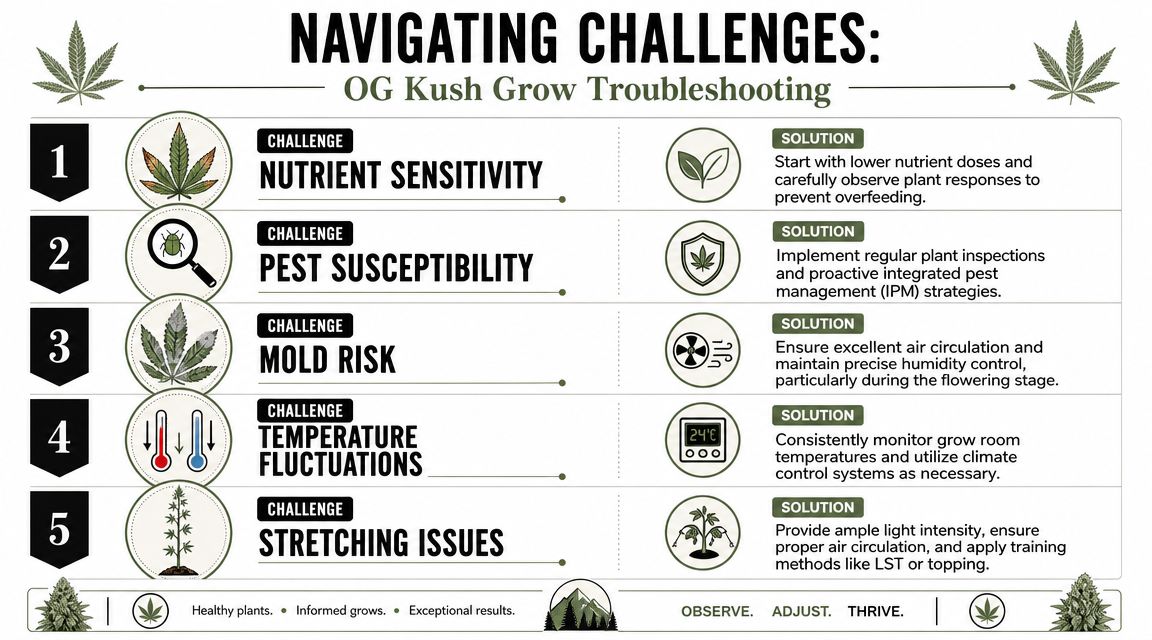
That sounds more intimidating than it really is. Most OG Kush problems come from growers doing too much, too late, or too inconsistently.
The common issues that show up first
OG Kush usually tells you when it's unhappy. The key is catching the signal before it becomes a full correction job.
- Burnt tips after feeding: Usually a sign you pushed nutrients harder than the plant wanted.
- Stretching more than expected: Light intensity, canopy spacing, or weak airflow often need attention.
- Leaf stress after environmental swings: This cultivar tends to notice room instability.
- Bug pressure getting established: Pests love a plant you forgot to inspect.
- Dense flower zones holding moisture: That's where mold pressure starts to become a real concern.
What works and what usually backfires
The fastest way to mess up OG Kush is to react emotionally. A pale leaf appears, so the feed gets stronger. A branch stretches, so the light gets slammed down. Humidity climbs, and instead of improving airflow, people just hope for the best.
Try this instead:
Start lower on nutrients than your ego wants
OG Kush often responds better to a conservative feeding plan. If a bottle schedule looks aggressive, treat it like a ceiling, not a command.
What works:
- Increase feed slowly
- Watch new growth, not just old damage
- Change one variable at a time
What doesn't:
- Stacking supplements because the plant “looks hungry”
- Correcting every symptom with more food
- Ignoring runoff and root zone health
Treat humidity like part of the grow, not an afterthought
This cultivar can form flowers that punish lazy airflow. Late flower is not the time to discover your tent has dead zones.
Do this:
- Keep air moving through and under the canopy
- Thin crowded interior growth when needed
- Stay disciplined in late flower
Don't do this:
- Let leaves pile on each other in the middle
- Water right before lights out if your room already runs damp
- Assume a strong fan alone solves trapped moisture
OG Kush usually isn't hard because it's fragile. It's hard because it notices sloppy habits faster than some other cultivars.
Pest control is mostly routine, not drama
If you wait until you “see a problem,” you're already behind. OG Kush is a good reminder that pest management starts with regular inspection.
A few habits go a long way:
- Check leaf undersides often
- Look at the lower canopy, not just the pretty top growth
- Keep the room clean
- Don't bring outdoor plant material into the grow space casually
The upside of all this attention
Here's the good news. The same traits that make OG Kush a little demanding also make it satisfying. When you keep the room steady and respond calmly, the cultivar usually rewards that discipline. It's less about fighting the plant and more about not setting traps for yourself.
If your setup is modest, focus on the basics:
- Stable environment
- Moderate feeding
- Open canopy
- Regular inspection
- Late flower humidity control
That's enough to solve most of what people call an “OG Kush problem.”
Harvesting, Curing, and the Botanist Seeds Promise
A lot of growers do the hard part well, then rush the finish and wonder why the final jar feels flatter than expected. With OG Kush, the harvest and cure shape a huge part of the experience. This cultivar can carry that classic fuel, citrus, and Kush depth, but only if you let the finish develop properly.
The first rule is simple. Don't harvest by impatience. Harvest by plant maturity. Look closely at the trichomes and the overall finish of the flowers, not just the calendar or a random guess from the breeder page. The plant should look like it has completed its run, not like it's almost there.
Drying without ruining the work
Drying is where people lose aroma. Too fast, and the flower can end up smelling thin or harsh. Too rough, and the resin heads you spent weeks protecting get knocked around before they ever hit a jar.
A practical approach looks like this:
- Cut and hang with care: Give branches enough room so air can move around them.
- Keep the room controlled: You want a slow, even dry, not a crispy outer shell with moisture trapped inside.
- Handle flowers gently: Every extra squeeze and bump costs something.
- Wait before jarring: If stems and smaller material still feel too wet, give it more time.
Slow finishing usually beats clever finishing.
Curing for the real OG Kush payoff
The cure is where OG Kush starts showing why people still chase it. In the first days after jarring, the profile can feel muted or rough around the edges. Then it starts to settle. The fuel gets deeper. The lemon becomes more distinct. The whole jar smells less green and more finished.
Keep the cure simple and repeatable:
- Use clean glass jars
- Fill them sensibly, not tight to the top
- Burp them regularly at the start
- Watch moisture and smell every time you open them
- Be patient enough to let the profile come together
If anything smells off, stale, or damp, don't ignore it. Cure time rewards attention just like flower time does.
Why starting genetics still matter
Even the best dry and cure can't fix unstable beginnings. A lot of growers talk about harvest technique as if it exists separately from genetics, but it doesn't. Good finishing only shows what was already there in the cultivar and how well you guided it.
That's the practical promise behind a solid seed source. You want a cultivar that gives you a fair shot from day one, then lets your room management and patience do the rest. For growers comparing options for a future run, Botanist Seeds offers a comparison-based shopping experience that helps you sort cultivars by setup and preferences instead of picking blindly.
The payoff is bigger than the jar
A successful OG Kush harvest feels good for reasons that go beyond weight. You saved yourself dispensary trips. You skipped the taxes and the lines. You learned your room better. And if you did it right, you ended up with a stash that feels personal in a way store-bought flower never does.
That's the main appeal of home growing this cultivar. It's not just that OG Kush is famous. It's that when you finish it well, you can smell exactly why it became famous in the first place.
If you're ready to start your own run, Botanist Seeds makes it easier to compare cultivars, match genetics to your setup, and choose feminized options that fit the way you grow at home.