


How to Get Rid of a High Fast: A Practical Guide
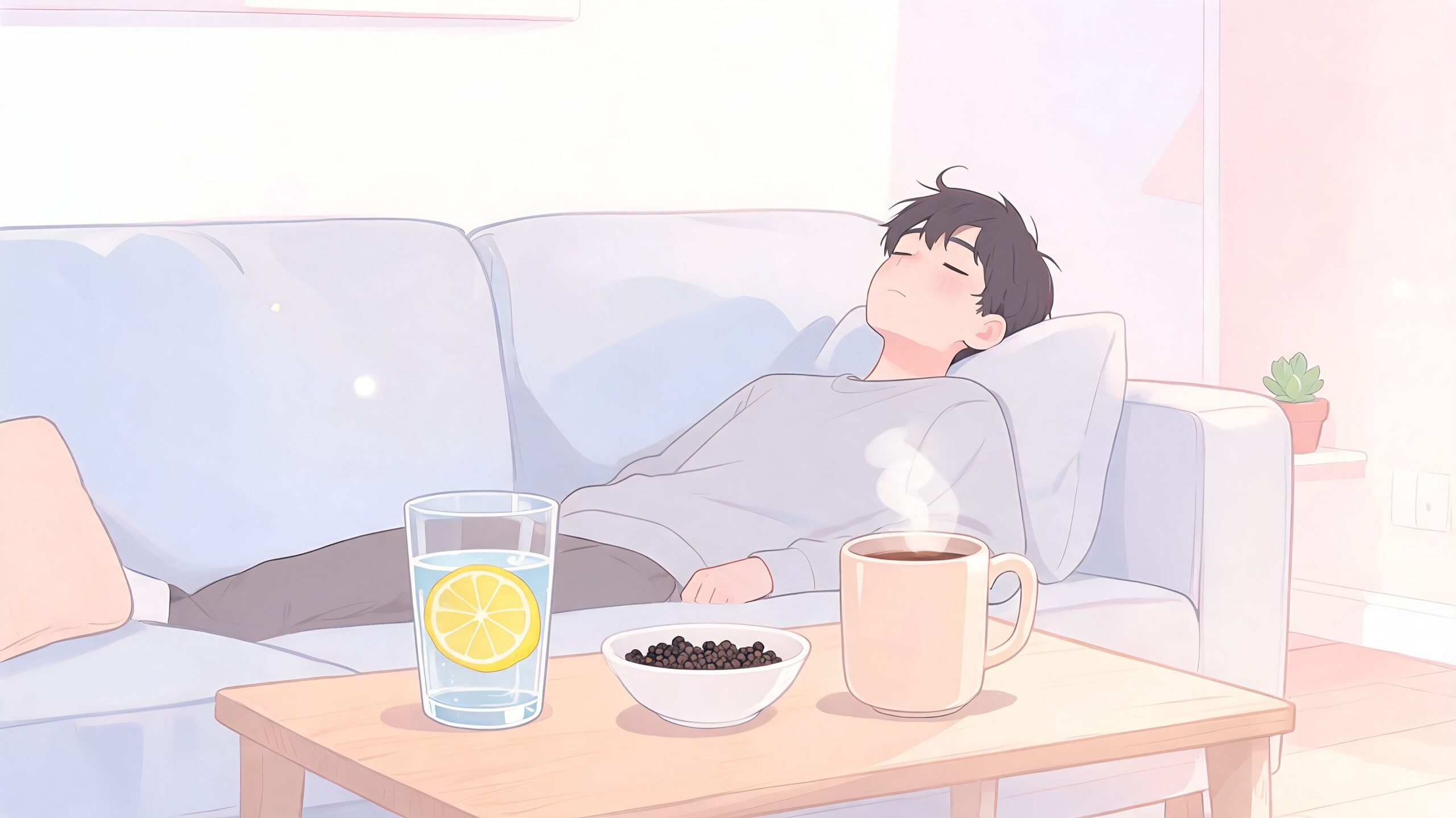
That phone call usually sounds the same. “I think I got way too high. How do I make this stop?”
This article is general information about cannabis and home growing. It is not medical advice, and cannabis isn't a treatment for any medical condition. If you have a health concern, talk to a qualified healthcare professional. If someone has chest pain, trouble breathing, or can't stay awake, call emergency services.
If that's you right now, take a breath. This happens to new smokers, edible rookies, and people who've been around cannabis for years. A stronger cultivar than expected, one extra hit, an edible that took forever to kick in, any of those can turn a relaxed night into an uncomfortable one.
The good news is simple. A bad high feels intense, but it passes. You are not stuck like this. If you're looking for how to get rid of a high, the fastest path is usually not one magic trick. It's a few calm, boring basics done in the right order.
First Things First Dont Panic
A lot of people make the same mistake at the exact wrong moment. They feel their heart racing, their thoughts start looping, and then they decide something must be seriously wrong. That panic can snowball fast.
Most of the time, what's happening is simpler than it feels. You're very high, you don't like the sensation, and your brain is paying way too much attention to every little signal. The fix starts by lowering the noise.

Reset the room first
If a friend called me saying they were too high, I'd tell them to do three things before anything else:
- Sit down somewhere familiar: Couch, bed, recliner, floor with pillows, anywhere you feel steady and safe.
- Lower stimulation: Dim lights, turn off chaotic music, stop scrolling, and get away from loud people.
- Remind yourself out loud: “I'm too high, not in danger. This will wear off.”
That last one matters more than people think. Saying it out loud gives your brain something clear to hold onto.
Practical rule: Don't try to “win” against the high. Make yourself comfortable and let the wave get smaller.
Give your mind one job
When people get too high, they often keep checking whether they still feel too high. That usually makes it worse. Pick one simple thing and stay with it for a few minutes.
Try this:
- Inhale slowly through your nose
- Exhale longer than you inhaled
- Keep your eyes on one object in the room
- Repeat until your thoughts stop sprinting
You don't need perfect breathing technique. You just need a rhythm that tells your body to settle down.
A bad high can make ten minutes feel like an hour. That's normal too. Don't judge the clock too hard right now. The goal is not to feel amazing right away. The goal is to stop making the experience sharper than it already is.
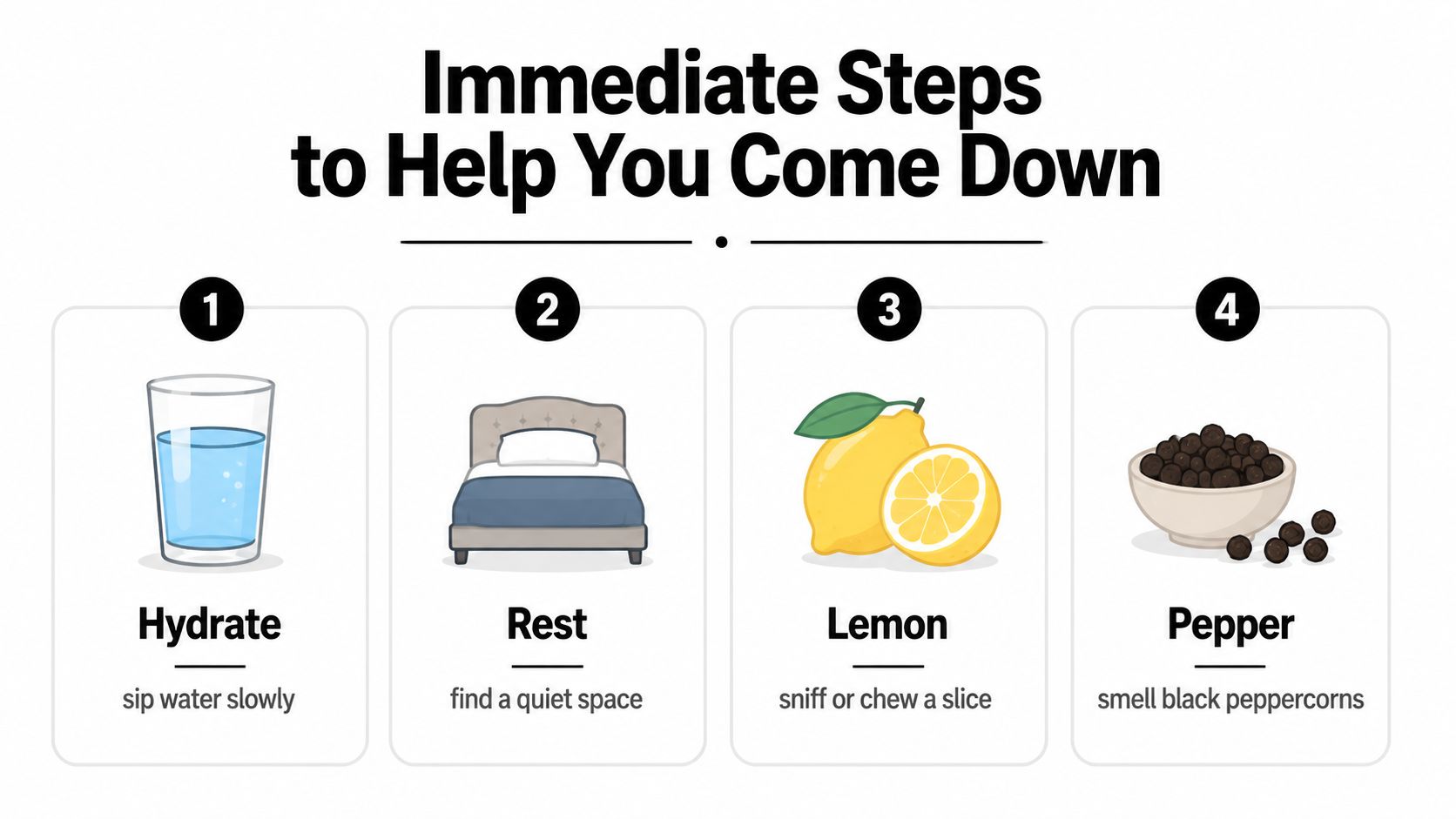
Immediate Steps to Help You Come Down
Once you've got yourself sitting still and breathing normally, give your body a few easy tasks. Simple actions help because they pull attention away from spiraling thoughts and back into the physical world.
Here's a quick visual version first.
Start with the obvious basics
These are the first things I'd reach for:
- Sip water slowly: Not chugging, just steady sips. Dry mouth and cotton-brain can make the whole experience feel rougher.
- Eat a light snack: Crackers, toast, fruit, something plain. Heavy greasy food usually doesn't help.
- Change the setting: A fan, an open window, or a quieter room can make a bigger difference than people expect.
None of this is glamorous. That's kind of the point. Basic comfort works better than dramatic fixes.
Use smell and taste to ground yourself
Two old-school tricks come up over and over because people keep finding them useful: black pepper and pine nuts.
A Medical News Today overview of how to get unhigh notes that a 2011 study in the British Journal of Pharmacology found that pinene, a terpene abundant in pine nuts, could counteract some of THC's effects. The same piece also says anecdotal reports line up with that idea, with many users reporting reduced paranoia and improved focus within 15 to 30 minutes after eating a handful of raw pine nuts.
If you want the simple version, try one of these:
- Smell black peppercorns: Don't overthink it. Crack a few in your fingers and inhale gently.
- Eat raw pine nuts if you have them: A small handful is enough to try the effect.
- Use citrus as a grounding cue: Smelling a lemon slice or orange peel can help some people settle into the moment.
If you want to understand why aroma can matter so much, it helps to read a plain-English breakdown of cannabis terpenes. That part of the plant profile often shapes the vibe more than people realize.
Some people look for one silver bullet. Usually it's more like stacking small calming moves that take the edge off.
A short explainer can help if you need something to focus on for a few minutes:
Give your senses something easy
The worst thing you can do while too high is feed your brain more chaos. Give it something familiar and low stakes instead.
Try one of these:
- A familiar show: Not a new thriller, not anything emotionally intense. Rewatch something you already know.
- Soft music: Low-tempo tracks, mellow playlists, anything without sharp shifts.
- A cool shower: Cool, not freezing. You want refreshing, not shocking.
- A short walk around your place: Just enough movement to get out of your head.
What works best depends on the kind of high. If you feel foggy and heavy, a cool shower and a snack can help. If you feel wired and twitchy, lights down and soft music usually play better.
If it was an edible, be patient
This point is frequently a source of trouble. Users often feel overwhelmed by an edible's effects and attempt to find a solution every five minutes. Edibles are slower, longer, and often more unpredictable than smoking or vaping.
So keep your plan boring:
- water
- light snack
- calm room
- no redosing
- no alcohol
- wait it out
That's not flashy advice, but it's the stuff that usually works.
Common Mistakes That Can Make Things Worse
When someone is too high, bad decisions usually come from impatience. They want the feeling gone immediately, so they start throwing random stuff at it. That can turn a rough hour into a much longer night.
The quick guide
| Do This | Not That |
|---|---|
| Sit somewhere stable and quiet | Keep bouncing from room to room |
| Sip water | Down alcohol or energy drinks |
| Put on something familiar | Watch intense videos or doomscroll |
| Take a cool shower if it helps | Shock yourself with freezing water |
| Ask a calm friend to stay nearby | Start calling or texting people who stress you out |
| Wait before judging how you feel | Take more cannabis because the first round “felt weird” |
A few traps to avoid
Alcohol is a big one. A lot of people think a drink will “smooth it out.” Sometimes it does the exact opposite and makes the whole experience sloppier, heavier, and less predictable.
Caffeine can also backfire. If you're already jittery, coffee or an energy drink can make your body feel even more off.
Don't mix panic with stimulants or booze. That combo rarely improves the night.
Another mistake is trying to power through normal life while you're uncomfortable. Don't drive. Don't cook on the stove. Don't start a hard conversation with your partner. Don't decide tonight is the night to reorganize your grow tent.
Sleep is not always the instant answer
People love saying “just sleep it off,” but that's not always how it works. If your mind is racing, lying in a dark room trying to force sleep can make you feel trapped with your thoughts.
Better move: rest without demanding sleep.
- Lie down if you want, but keep low music or a familiar show on.
- Use a blanket if you feel chilly, because being physically uncomfortable can amplify the mental side.
- Let your body settle first, then sleep if it comes naturally.
That's a different mindset. You're not trying to knock yourself out. You're creating conditions where your system can calm down on its own.
Prevention Is Key Choosing Your Ideal Cultivar
The fastest way to fix being too high is not getting that high in the first place. That sounds obvious, but it's where home growing changes the game. When you pick your own cultivar and control what you keep in the jar, you stop gambling so much with the final experience.
A lot of people run into trouble because today's market skews strong. According to GoodRx on how to get unhigh, citing MJBizDaily, the average THC potency in the US adult-use market reached 22% in 2023. The same source says products with less than 10mg of THC per serving reduce incidents of getting too high by 70%. That's a dosage lesson, but it's also a cultivar lesson.
Stronger is not always better
A lot of growers, especially early on, chase the biggest THC number they can find. That's understandable. But a cultivar that hits hard isn't always the one you'll enjoy using day to day.
If you've had a few “too high” moments, pay attention to patterns:
- Fast head rush you don't enjoy: You may prefer a gentler, steadier vibe.
- Edibles knock you sideways: Your smoking tolerance may not translate.
- One cultivar feels clean, another feels chaotic: The full profile matters, not just the headline potency.
That's why broad categories alone don't tell the whole story. A practical guide to indica vs sativa vs hybrid can help you narrow the kind of experience you're after, but your real sweet spot usually comes from matching cultivar choice to your own tolerance and habits.
What to grow if you want more control
If you're growing at home, prevention gets much easier because you can be selective from the start. Look for cultivars described as balanced, manageable, clear, or beginner-friendly rather than automatically chasing the loudest option.
A few solid habits help:
- Keep notes after each harvest: Write down how each cultivar felt, not how it was marketed.
- Label jars clearly: Night jar, social jar, one-hit-only jar, weekend jar. Make it idiot-proof for your future self.
- Start low with every new batch: Even a familiar cultivar can surprise you after a good cure.
- Choose feminized and autoflower options that fit your use case: Consistency is worth a lot when you're trying to dial in your own stash.
Keep in mind: The best homegrown flower is the flower you actually enjoy using, not the one with the scariest reputation.
Growing your own also means fewer dispensary lines, fewer impulse buys, and more control over what ends up in rotation. That's useful if you know you prefer a mellow evening smoke over a rocket-launch session.
Think in terms of vibe, not hype
This part gets overlooked. People often ask for the “best” cultivar when they should be asking for the right cultivar. The right one fits your space, your tolerance, and the kind of session you want.
If your goal is not getting overwhelmed, choose with intention:
- Pick for the setting you use cannabis in most
- Be honest about your tolerance
- Avoid assuming every popular cultivar fits everybody
- Treat each new harvest like it deserves respect
That mindset will save you a lot more trouble than any emergency trick after the fact.
When You Might Need to Call for Backup
Most bad highs are uncomfortable, not dangerous. Still, there are moments when it makes sense to stop trying home fixes and get help from a trusted person or a professional.
Signs it's time to get support
Reach out right away if you or your friend has:
- serious trouble breathing
- chest pain
- extreme confusion that doesn't ease up
- panic that keeps escalating instead of settling
- behavior that makes self-harm or accidental injury a real concern
If someone can't stay oriented, can't be calmed, or seems physically unsafe, don't try to act cool about it. Get backup.
A Healthline overview on stopping a high notes that a high usually peaks within 30 to 90 minutes and then tapers off, and it points to research suggesting CBD may help with some forms of anxiety, which is a good reminder that sensitive users often need a different starting point, not just better rescue tactics.
If you know you're sensitive, plan differently
Some people just don't have much margin for error with THC-heavy flower or edibles. That doesn't mean cannabis is automatically a bad fit. It may mean your ideal lane is lower intensity, smaller doses, and more balanced cultivars.
If you're trying to tell the difference between feeling too high in the moment and other rough after-effects around stopping or changing habits, this guide to cannabis withdrawal symptoms can help with context.
If your gut says, “This is more than just being too high,” listen to that and get another person involved.
If you want more control over the kind of high you get in the first place, start with better cultivar selection. Botanist Seeds makes it easier to compare feminized and autoflower options so you can match your grow to your tolerance, your setup, and the vibe you want from your jar.