




Ease Cannabis Withdrawal Symptoms Effectively
You finish a run, jars are curing nicely, and you decide it is time for a short tolerance break. On paper, that sounds easy. You grew it yourself, you know your cultivars, and you are not dealing with dispensary lines or random product quality.
This article is general information about cannabis and home growing. It is not medical advice, and cannabis isn't a treatment for any medical condition. If you have a health concern, talk to a qualified healthcare professional. If cutting back feels hard, a healthcare provider or local support service can help.
Then day two hits.
You feel snappy for no clear reason. Sleep gets weird. Food is less appealing. You are not falling apart, but you are definitely not feeling like yourself either. That can be unsettling, especially if cannabis has felt familiar and manageable for a long time.
A lot of home growers run into this and do not talk about it much. Part of that is pride. Part of it is confusion. People often assume cannabis withdrawal symptoms are either made up or guaranteed for everyone, and neither view is very useful.
The more grounded take is this: some regular users do notice a real adjustment period when they cut back or stop, and knowing what that looks like makes the whole thing less frustrating. If you grow your own, you also have more control than many individuals. You can plan your break, shape your stash around it, and choose cultivars with more intention.
That 'Off' Feeling When You Take a Break
A common grower scenario goes like this. You have been enjoying your own flower most evenings for a while, maybe a bit more during harvest season or after trimming sessions. Nothing dramatic. Just a habit that slips into your routine.
Then you stop for a few days.
The first night is annoying but manageable. The second night is rougher. By the third day, you are pacing a bit more, getting irritated at dumb stuff, and wondering why your brain feels louder than usual.
Why this catches people off guard
Home growers tend to know a lot about plants. Light schedules, dry backs, terpene profiles, stretch patterns, harvest windows. But many people spend less time thinking about what repeated use does to routine and expectations.
Cannabis can become part of the rhythm of the day:
- End of work signal: You use it to mark the shift from busy mode to down time.
- Evening habit: You pair it with gaming, music, a movie, or watering the tent.
- Sleep ritual: You associate it with shutting your mind off.
- Mood shortcut: It becomes your usual way to smooth out stress.
Take that away suddenly, and your body and your habits both have to adjust. That can create an odd mix of mental friction and physical restlessness.
It does not mean something is wrong with you
A lot of people react to cannabis withdrawal symptoms with self-judgment. They think, “It is just weed, why am I so irritable?” That line of thinking usually makes the break harder.
A better frame is simpler. Your system got used to a pattern, and now it is readjusting.
Key takeaway: Feeling off during a break is not automatic proof of a big problem. Often, it is a sign that your routine was more established than you realized.
For growers, this matters because you are close to your supply. You know exactly what is in the jar, how often you reach for it, and which cultivars tend to become your default. That self-knowledge is useful. It lets you make smarter calls before your next break instead of trying to white-knuckle your way through one.
Understanding What Cannabis Withdrawal Is
The easiest way to think about withdrawal is to compare it to caffeine. If someone drinks coffee every morning, their body starts to expect it. Skip it suddenly, and the day can feel off while the body catches up.
Cannabis can work the same way. Regular use creates a pattern. When that pattern stops, some people notice a temporary adjustment period. That is what people mean by Cannabis Withdrawal Syndrome, often shortened to CWS.
A 2020 meta-analysis involving over 23,000 people found that about 47% of regular or dependent cannabis users experience Cannabis Withdrawal Syndrome, defined by at least three symptoms like irritability, anxiety, or sleep issues after reducing use.
What it usually feels like
Typically, the experience is not some dramatic movie scene. It is more like your normal settings feel a bit scrambled.
Common cannabis withdrawal symptoms can include:
- Mood changes: irritability, feeling on edge, impatience
- Sleep trouble: difficulty falling asleep, waking up more, vivid dreams
- Appetite shifts: less interest in food for a while
- Restlessness: that uncomfortable “I cannot settle” feeling
- Low mood: feeling flat or less motivated
- Body discomfort: headaches, sweating, nausea, stomach upset, shakiness
The “syndrome” label can sound intense, but the plain-English version is straightforward. If a regular user cuts back and several of these symptoms show up close together, that pattern is recognized and documented.
Where readers often get confused
One common misunderstanding is thinking withdrawal only counts if it is extreme. That is not true. It can be mild and still be real.
Another confusion point is whether it is “physical” or “mental.” In practice, it is often both. Sleep can get weird, appetite can change, and your mood can feel uneven at the same time.
This is also why people sometimes miss what is happening. They blame stress, a bad week, or a random streak of poor sleep. Sometimes that is true. Sometimes it is the adjustment after regular cannabis use gets interrupted.
Why growers should care
If you grow at home, this is not just a personal-use topic. It connects to stash planning and cultivar choice.
A grower who keeps only very punchy, high-THC flower around may have a different break experience than someone who also keeps more balanced options in rotation. The point is not fear. The point is awareness.
Consider it building flexibility into your garden. If every jar you cure pushes the same heavy vibe, your routine can get narrow fast. If your lineup includes different cultivars for different moments, it is easier to step down gradually when you want a reset.
Practical tip: Your best tolerance break starts before the break. It starts with what you choose to grow, dry, and keep in the jar.
The Typical Timeline of Symptoms
The most helpful thing about cannabis withdrawal symptoms is that they usually follow a pattern. That matters because uncertainty often makes the experience feel worse than it is.
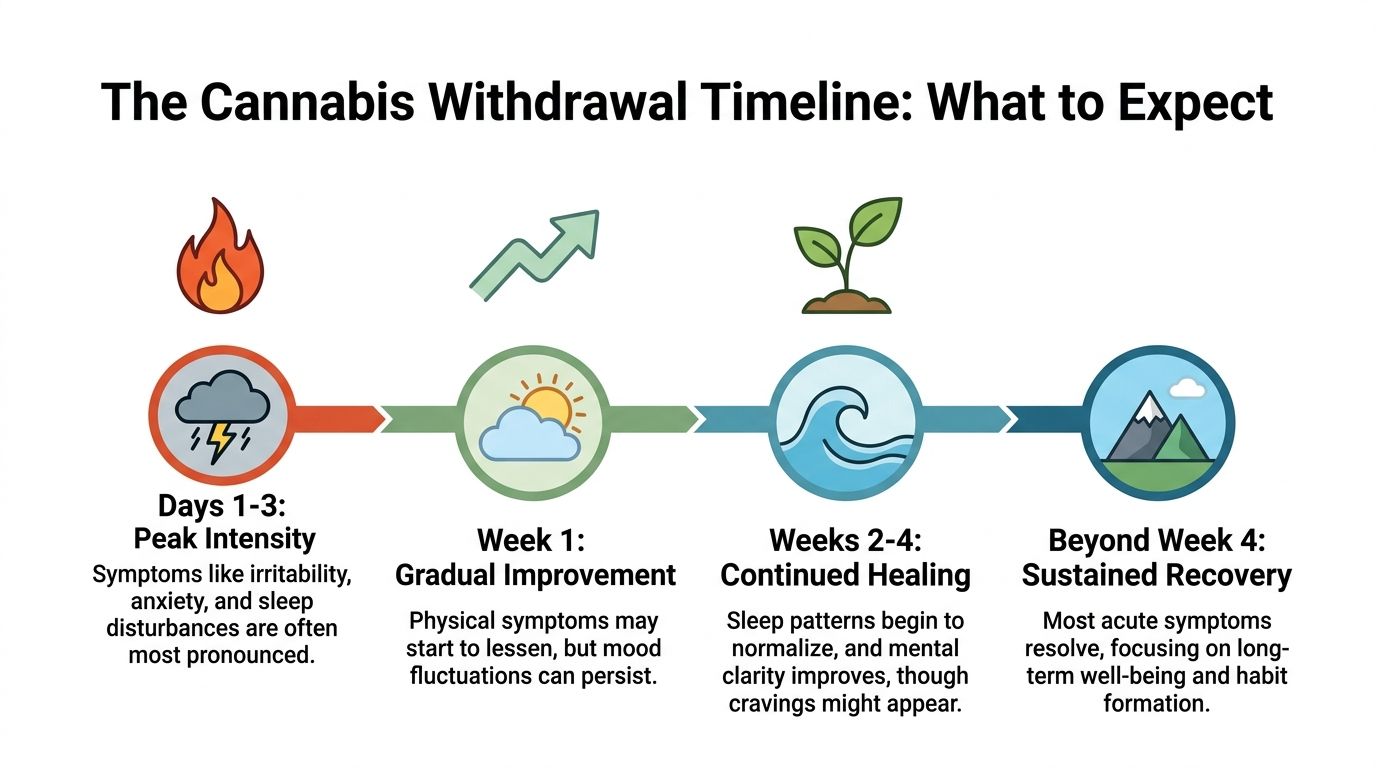
A marijuana withdrawal timeline review notes that symptoms typically begin 1 to 2 days after stopping, peak between days 2 and 6, and usually resolve within 3 weeks, though some psychological symptoms can last up to 5 weeks. In the same source, the most reported symptoms among heavy users were nervousness or anxiety at 76%, hostility at 72%, and sleep difficulty at 68%.
What the first days often look like
The first day can be deceptive. Some people feel mostly fine and assume they are in the clear.
Then the next couple of days get louder. Sleep is often the biggest complaint. Mood can get rough around the edges too, especially if cannabis had become part of your evening wind-down.
- Days 1 to 2: early changes show up, often in sleep, mood, or appetite
- Days 2 to 6: symptoms are commonly at their strongest
- End of week 1: many people start to notice some easing, even if sleep is still messy
What happens after the peak
Once the sharpest part passes, the experience usually becomes less intense and more uneven. You may have one decent day, then one cranky day, then a better night of sleep, then another restless one.
That up-and-down part is normal. It does not mean you are starting over.
A lot of growers get tripped up here because they expect a clean, steady climb back to normal. In reality, the slope is often bumpy for a bit.
A simple timeline to keep in mind
| Phase | What you may notice |
|---|---|
| First 48 hours | You start feeling “off,” especially at night |
| Days 3 to 6 | Irritability, sleep trouble, and restlessness tend to stand out most |
| Week 2 | The edge often softens, but cravings or disrupted sleep can still pop up |
| Weeks 3 to 5 | Most acute symptoms are gone, though anxiety or sleep issues may linger for some people |
Helpful mindset: If day three feels worse than day one, that does not mean the break is failing. It often means you are right in the most uncomfortable part of a common timeline.
For a home grower, this timeline is useful because you can plan around it. Do not start a break the night before a packed work week, a move, or a family event if you can avoid it. If you know your first few days may be the noisiest, set yourself up accordingly.
Why It Feels Different for Everyone
Two people can use cannabis regularly, stop at the same time, and have very different experiences. One feels mildly annoyed for a few nights. The other feels thrown off for weeks.
That difference is real. It is not just attitude or willpower.
Research from Columbia’s public health reporting on frequent users found that about 12% experienced Cannabis Withdrawal Syndrome, while 88% did not. The same reporting notes that withdrawal risk and severity are higher for people with mood or anxiety disorders and for people with a family history of depression.
Your use pattern matters
The simplest factor is repetition. The more often cannabis becomes part of your baseline, the more noticeable the adjustment can be when it is gone.
That does not only mean “how much in one sitting.” It also includes:
- How often you use across the week
- Whether you use mostly at the same times each day
- How long that pattern has been going on
- Whether your usual products feel stronger than they used to
A nightly habit can shape expectations differently than a once-in-a-while session, even if both people think of themselves as casual.
Cultivar choice can shape the experience
From a grower’s perspective, things get interesting here. Not all jars encourage the same relationship.
Some cultivars invite occasional use. Others become the one you reach for every evening because they fit your routine a little too well. Dense, high-impact flower can be especially easy to build around if it consistently gives you the exact vibe you want after work.
That is one reason it helps to understand your own preferences, not just the old labels. If you want a refresher on category basics, this guide on indica vs sativa vs hybrid is useful as a starting point, but your actual response to a cultivar matters more than the label on the menu.
Personal wiring plays a role too
This is the part a lot of surface-level articles skip. Not everybody starts from the same emotional baseline.
Some people are already more sensitive to shifts in sleep, routine, and mood. Others can change habits quickly and barely notice. That does not make one person stronger than another. It just means cannabis fits into each person’s system differently.
A few examples make this clearer:
- One grower may use regularly, take a break, and mostly miss the ritual.
- Another may notice that poor sleep quickly snowballs into irritability.
- Someone else may be fine physically but struggle with the empty space left behind in their evening routine.
The home grower angle
If you cultivate your own supply, you get a clearer look at what your habits are. You know which jars empty fastest. You know which cultivar became the every-night favorite. You know whether you have variety or just different versions of the same intensity.
That makes self-review easier.
Ask yourself:
- Do I rotate, or do I lean on one cultivar constantly?
- Do I have any lower-key options in the stash?
- Am I using for a specific vibe, or just out of habit?
- When I take a night off, what changes first, sleep, mood, appetite, or just routine?
Those answers tell you more than any broad internet label can.
Key takeaway: Cannabis withdrawal symptoms are not one-size-fits-all because cannabis use is not one-size-fits-all. Your pattern, your preferred cultivars, and your own baseline all shape the experience.
Practical Strategies for Managing a Tolerance Break
If you grow your own, you have one major advantage during a break. You control the runway.
You are not stuck buying whatever is available that week. You can look at your jars, decide how you want to step down, and make the break less abrupt.
A Cleveland Clinic overview notes that THC’s long half-life in chronic users helps explain why symptoms often peak a few days in. The same source says tapering over 2 weeks, such as a 50% reduction each week, can help minimize that peak, and it also notes that cultivars with CBD:THC ratios greater than 1:1 may help buffer withdrawal symptoms.
Taper instead of slamming the brakes
For many growers, this is the smartest move.
If you usually consume every day, going straight from full routine to zero can feel rougher than it needs to. A taper gives your body and your habits time to adjust together.
A practical version looks like this:
- Week one: cut your usual intake in half
- Week two: cut that amount in half again
- After that: stop fully, or keep a very limited schedule if your goal is gradual reset rather than total abstinence
The exact details can vary. What matters is reducing on purpose instead of drifting and hoping for the best.
Use your stash strategically
A home grower can do something a casual buyer often cannot. You can plan a “break shelf.”
That might include:
- A lower-intensity flower for the taper period
- A more balanced cultivar instead of your strongest jar
- Smaller pre-measured amounts so “just a little more” does not turn into your normal dose
- Separate storage, so your strongest flower is not your easy grab during a rough evening
If sleep is the sticking point for you, it may help to keep calmer evening options in your lineup rather than only highly stimulating ones. Readers who want cultivar ideas in that lane can browse this roundup of best indica strains for sleep, then use those profiles as a planning reference for future grows.
Build a break routine before you need it
A tolerance break gets harder when cannabis is doing two jobs at once. One job is the effect itself. The other is the ritual.
If your nightly sequence is always “eat, smoke, chill, sleep,” removing one part can make the whole evening feel unstable. Replace the routine, not just the product.
Try building a simple substitute flow:
- Same shut-down time each night
- One consistent low-stimulation activity, like stretching, reading, or light music
- A snack and water ready ahead of time
- No “maybe I will just have a little” bargaining session at midnight
That last one matters more than people think. Decision fatigue can wreck a break faster than cravings alone.
Tip: Breaks go better when you reduce friction. Set out tea, a book, a notebook, or whatever helps you settle before the hard evening arrives.
A visual guide can also help if you want a simple overview of mindset and prep during a break:
Make the first week easier on yourself
You do not need a heroic wellness routine. You need fewer unnecessary stress points.
A few practical moves help:
- Protect sleep: keep your bedtime regular, even if you do not fall asleep fast
- Eat light meals: if appetite is low, choose easy-to-prepare options instead of waiting until you are starving
- Move your body: a walk, light bike ride, or basic yard work can take the edge off restlessness
- Stay hydrated: not glamorous, but useful
- Avoid stacking challenges: this is not the ideal week to also attempt five other lifestyle changes
Think like a grower, not just a consumer
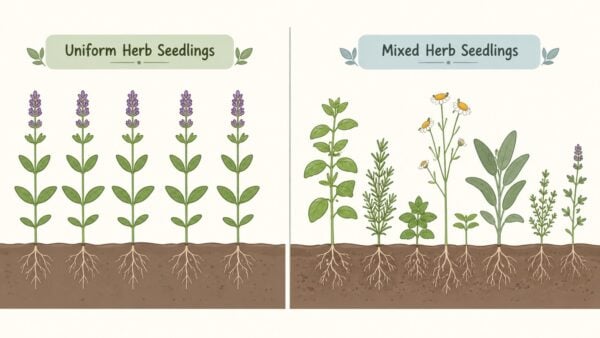
One of the best long-term strategies happens before your next harvest. Grow with range.
If every cultivar you keep is your strongest, loudest option, your future breaks will always start from the same steep drop. A more flexible stash gives you more off-ramps.
That can mean keeping:
- one cultivar for heavy end-of-day use
- one more balanced option
- one lighter, daytime-friendly flower
- one jar specifically reserved for taper periods, not regular rotation
That kind of stash planning is not overthinking. It is the same logic growers already use with nutrients, environment, and timing. Good results usually come from planning before the issue shows up.
Knowing When to Talk to a Professional
Many people can manage a break with time, structure, and a bit of patience. Still, there are moments when self-management stops being the best tool.
The clearest sign is impact. If cannabis withdrawal symptoms are dragging down your work, your relationships, or your ability to function day to day, it is sensible to talk to a professional.
Signs it may be time
You do not need to wait until things feel extreme.
Consider reaching out if:
- Sleep disruption keeps going and is wearing you down
- Your mood feels hard to manage, not just annoying
- You keep trying to cut back and feel stuck in the same loop
- The break is affecting your job, home life, or ability to stay steady
- You feel overwhelmed by the process rather than just uncomfortable
Why outside help can be useful
Sometimes the biggest benefit is not “treatment” in a dramatic sense. It is having a neutral person help you sort out what is happening and what to do next.
That could mean support with sleep habits, routine changes, or a plan for reducing use in a more structured way. It can also help if cannabis has become tied up with stress, mood, or other habits that make stopping harder than expected.
Strong move, not weak move: Asking for help is just another form of taking control. Growers already troubleshoot problems all the time. This is no different.
No shame, no big speech
A lot of adults avoid support because they think they should be able to handle it alone. That mindset helps no one.
If your own plan is not working, getting a second set of eyes on it is practical. That is the whole point. The goal is not to prove toughness. The goal is to feel steady again.
Common Questions from Home Growers
Some questions come up again and again when growers talk openly about breaks. Many of them are less about theory and more about how this fits into real life with jars on the shelf.

Quick answers that save a lot of guesswork
| Question | Answer |
|---|---|
| Will every regular user get cannabis withdrawal symptoms? | No. Some people notice a clear adjustment period and others do not. Your use pattern and personal baseline matter a lot. |
| Is it better to taper or stop all at once? | Many people find tapering easier, especially if cannabis is part of a daily routine. Home growers often have the best setup for this because they can manage their own stash. |
| Does cultivar choice really matter? | It can. If you mostly keep very strong flower around, a break may feel sharper than if you have a more varied lineup. |
| Should I keep my strongest jars during a tolerance break? | Keep them out of easy reach if possible. Breaks usually go better when the low-friction option is not your highest-intensity flower. |
| What if I only use at night? | Night-only use can still build a strong habit because it gets tied to sleep and evening routine. |
| Do autoflowers and feminized seeds help with break planning? | They can help indirectly by making it easier to plan a steady personal supply with more variety across cultivars, which supports smarter rotation. |
Questions worth asking yourself
A good tolerance break is not just about stopping. It is also about noticing patterns.
Ask yourself:
- Which cultivar becomes my autopilot pick?
- Do I enjoy the flower, or am I mostly repeating a routine?
- When I run low, do I become annoyed because I want the vibe or because I dislike the break in habit?
- Have I built enough variety into my grow to step down gradually next time?
Those questions are often more useful than broad labels like “lightweight” or “heavy user.”
One practical myth to drop
A lot of growers assume that because they produce their own flower, they automatically have a healthier relationship with it. Sometimes that is true. Sometimes home growing makes frequent use easier and cheaper.
That is not a moral issue. It is just worth being honest about.
Growing your own gives you control. What matters is how you use that control:
- You can rotate cultivars instead of hammering one profile nonstop
- You can set aside a taper jar
- You can build your next run around more variety
- You can schedule breaks between harvest cycles instead of after overdoing it
Where to look if you are still figuring things out
If you are newer to growing or still sorting out your preferences, the broader Botanist Seeds FAQ page can help answer common cultivation and seed-selection questions that affect how your stash comes together over time.
Simple rule: The easier you make smart choices before a break, the less you have to rely on discipline during the break.
Growing at home can make tolerance management easier, not harder, if you use your harvest with intention. A well-planned stash is not just about flavor, aroma, or bag appeal. It is also about flexibility when you want to slow down.
If you want more control over your stash, your rotation, and the cultivars you keep on hand for both everyday use and planned breaks, explore Botanist Seeds. Their seed selection tools make it easier to compare cultivars for your setup, your goals, and the kind of supply you want to grow.