Early Signs of Hermie Plant: Spot and Stop Them
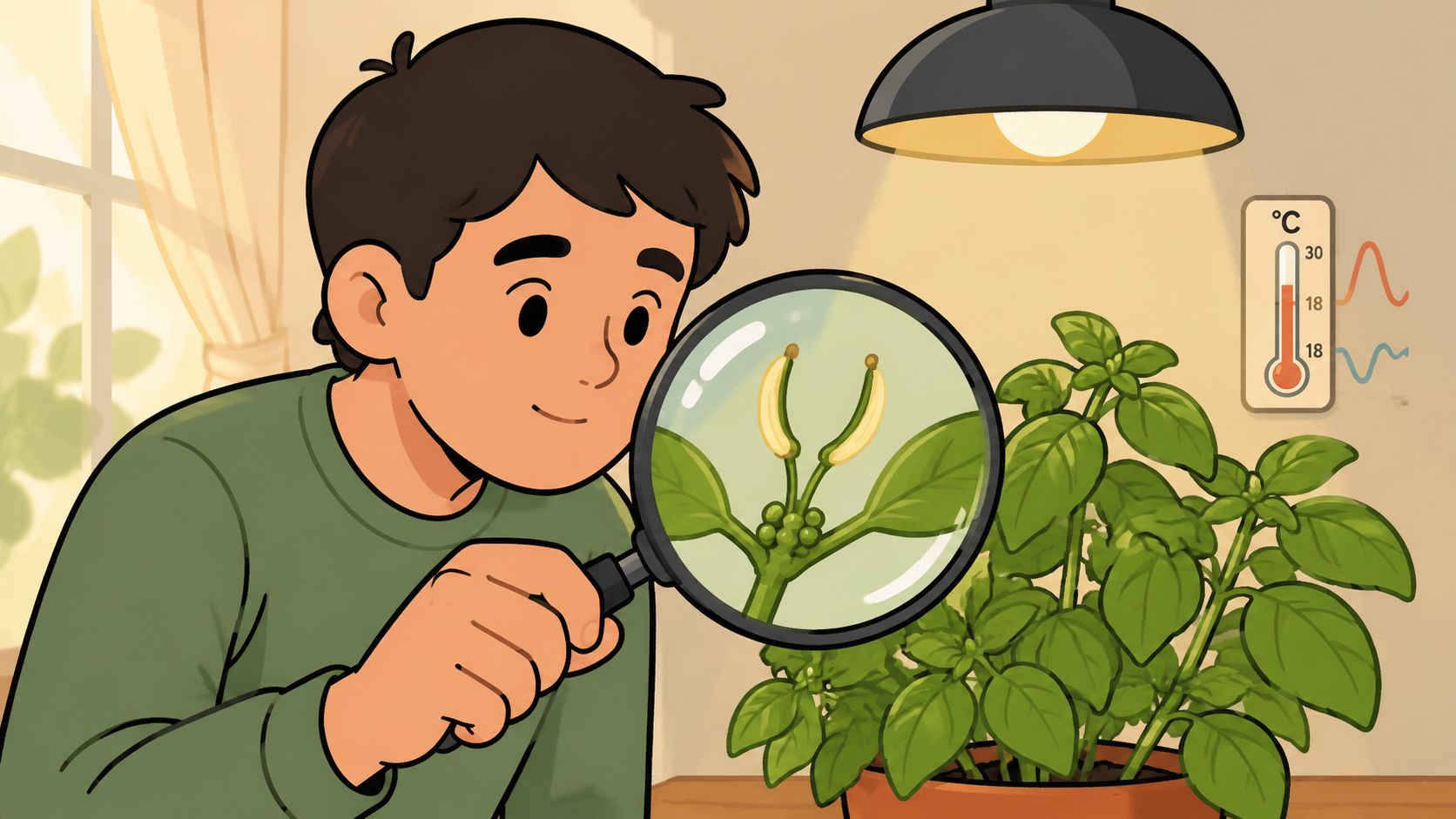
A lot of growers meet this problem the same way. You're in flower, things finally look good, the tent smells right, the buds are stacking, and then you spot one weird little growth that doesn't match the rest of the plant. Your stomach drops fast.
That reaction is normal. It's also fixable, or at least manageable, if you stay calm and act quickly.
Queries for the early signs of hermie plant issues often yield a pile of close-up photos and not much help with the next move. What you need in that moment is triage. Is it a problem, how urgent is it, and what do you do in the next few minutes without making things worse?
The good news is that this isn't automatically a disaster. A feminized grow can still finish well if you catch the issue early enough and make smart calls. The bad news is that hesitation is what gets growers in trouble. If you're here because you found something suspicious, check the signs, decide fast, and protect the rest of the crop first.
That Moment Every Grower Dreads
You open the tent for a normal check. Maybe you're adjusting ties, watering, or just admiring how your flowering cultivars are filling out. Then one branch catches your eye. There's a tiny round growth at a node, or something yellow tucked inside a bud that definitely wasn't there yesterday.
That's usually when the panic starts. People assume they ruined the whole run, bought the wrong seeds, or missed some giant warning sign. Most of the time, none of that is true. Hermie problems often show up after stress, and sometimes they appear on a plant that looked perfectly fine right up until flower was underway.
Practical rule: Don't make your first decision emotionally. Make it based on what you actually see on the plant.
What matters now is simple. Confirm whether you're looking at a real male structure, figure out how widespread it is, and choose the lowest-risk move for your setup. A single suspicious spot on one lower branch is not the same situation as multiple banana-shaped stamens buried across several buds.
Home growers usually have a few real constraints. Limited tent space. Shared air in one room. Not much time for round-the-clock monitoring. Those trade-offs matter. A commercial room might isolate and babysit a questionable plant. A hobby grower with one tent often needs to be more ruthless.
What helps right away
- Slow down: Take a close look before touching anything.
- Check more than one site: Look at nodes, lower growth, and inside developing buds.
- Turn off the hero instinct: Saving one plant is never worth risking the entire harvest.
- Decide based on effort: If you can't inspect daily, choose the safer option.
A calm response beats a dramatic one. You don't need perfect plant biology knowledge right now. You need a clean inspection, a clear choice, and a plan for the next day or two.
What Is a Hermie Plant Anyway
A hermie plant is a female plant that starts showing male reproductive parts. In plain language, it's a plant that was expected to flower like a normal female but begins producing pollen sacs or banana-like stamens.
For hobby growers using feminized seeds, that can feel confusing. You did the obvious thing. You chose seeds meant to keep the run simple and focused on flower production. Then one plant starts acting outside the script. That doesn't automatically mean you failed.
A useful way to think about it is this: the plant is reacting, not misbehaving. Sometimes that reaction comes from stress. Sometimes it comes from a cultivar being more prone to intersex expression. Either way, the result is the same for the grower. A plant that should only be building flowers may also produce pollen.
Why it happens in real grow rooms
Plants don't read your plan. They respond to their environment. If a flowering plant gets pushed too hard, some will throw male parts as a survival response. Others may do it with less obvious stress because their genetics are less stable.
That's why blame usually isn't helpful here. The better question is, what changed, or what is this cultivar sensitive to?
A hermie is best treated as a risk event, not a moral judgment on your grow skills.
What it does and doesn't mean
| Situation | What it means |
|---|---|
| One female plant shows pollen sacs or nanners | That plant needs immediate attention |
| You used feminized seeds | You still need to inspect during flower |
| The plant looked healthy before | Hermie signs can still appear later |
| You found one suspicious structure | You need confirmation, not panic |
For the home grower, the practical takeaway is easy. Don't assume feminized means hands-off forever. It means you started with a simpler path, but flowering still requires observation. Especially once pre-flowers and early bud development begin.
The Telltale Signs to Look For
The earliest reliable field sign is usually the appearance of pollen sacs or nanners at the nodes or inside developing buds during the flowering stage, not the vegetative stage. Cultivation guidance also recommends daily inspections once flowering begins because a single missed sign can seed an entire room, as noted by a seed bank in its guide to spotting early hermie signs.
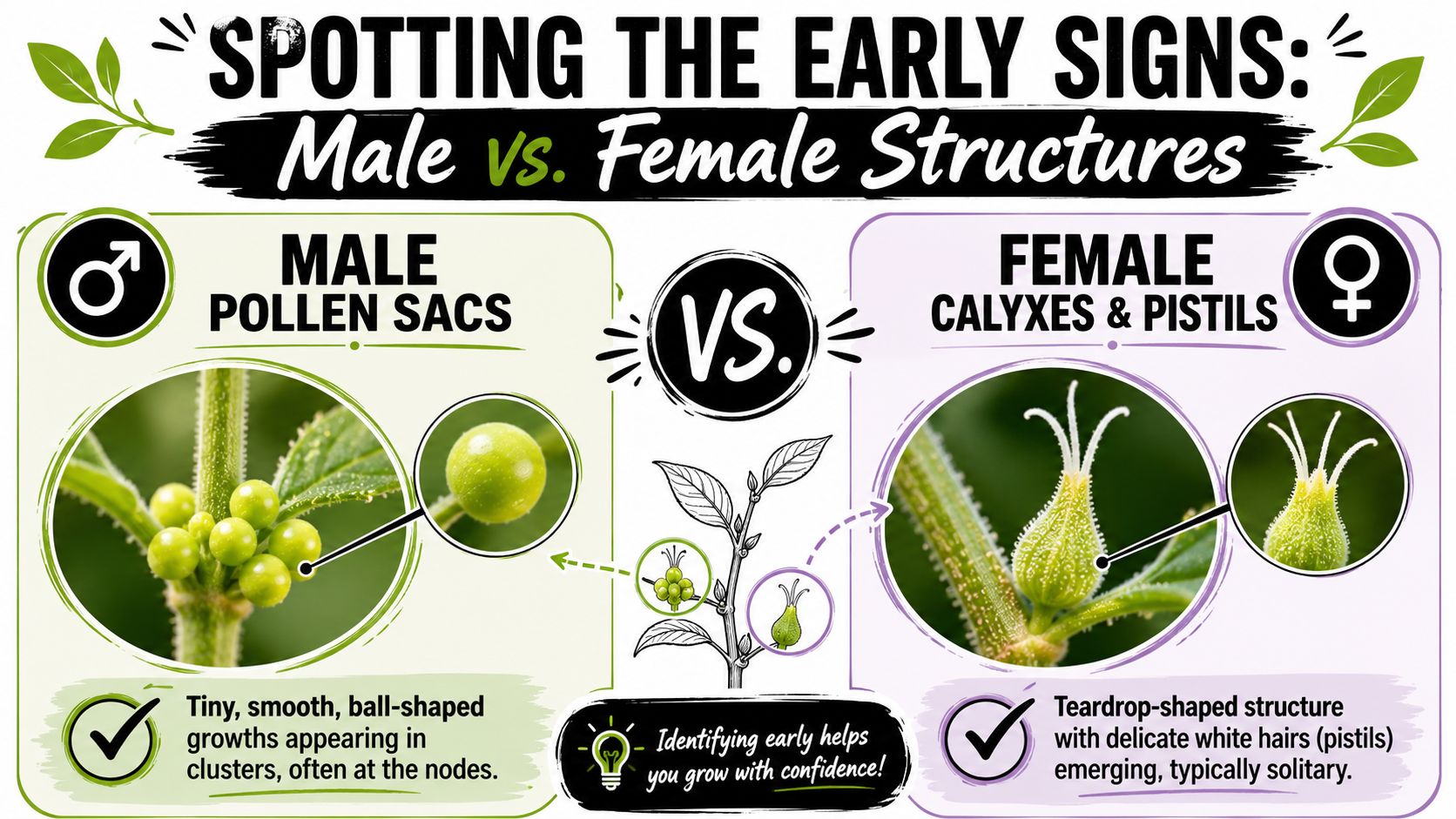
A side-by-side visual helps a lot when you're trying not to second-guess yourself.
Check the nodes first
The first place to inspect is the node, the little “V” where a branch meets the main stem. That area often shows the earliest reliable structures once flowering starts.
Look for these differences:
- Pollen sacs: Round or oval. Smooth-looking. They sit differently from normal female growth and may appear in small groupings.
- Female calyxes: More teardrop-shaped, usually with white pistils emerging.
- Mixed signals on the same plant: If you see normal pistils in one spot and round sacs nearby, treat that as a serious warning.
If you want a clearer visual reference for normal female flower development, this guide to pistils and what they tell you is useful for comparing healthy female structures against suspicious growth.
Watch for nanners inside buds
This is the sneaky one. Nanners are banana-like stamens that can show up directly inside female buds. They don't always hang neatly where you expect them. Sometimes they poke out from deep in the flower, which makes them easy to miss during a quick tent check.
That's why a plant can look mostly fine from a distance and still be a problem up close.
If you spot a yellow, banana-shaped structure inside a bud, don't talk yourself out of it. Inspect the whole plant immediately.
A quick video can also help if you're trying to compare shapes in real time.
A fast inspection routine that actually works
Don't overcomplicate this. Use the same pattern every day during flower.
- Start low: Lower branches and shaded growth get missed most often.
- Check every node: Pause long enough to confirm shape, not just color.
- Look into the buds: Especially on thicker tops and crowded inner sites.
- Use good light: Bad lighting causes bad decisions.
- Take photos if unsure: A zoomed photo helps you compare without rushing.
The biggest mistake isn't usually poor knowledge. It's a lazy inspection. Growers glance at the canopy, see white hairs, and assume everything's fine. Hermie signs often hide exactly where nobody wants to crouch down and look.
Common Causes Behind Hermaphroditism
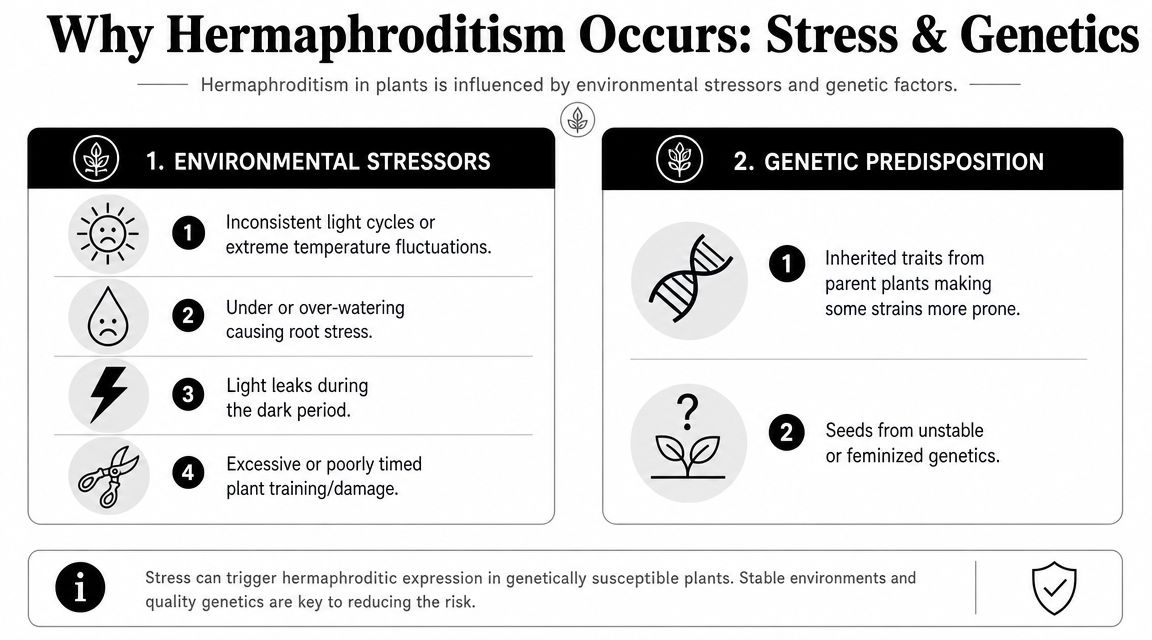
Most of the time, growers want one clean answer. There usually isn't one. Hermaphroditism tends to come from stress, genetic sensitivity, or both working together.
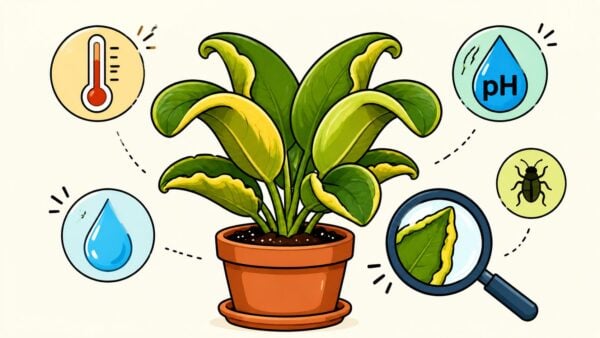
The most actionable part is the environment. According to a seed bank and its grow guide on hermie triggers, a stable environment of 65 to 82°F and 45% to 55% humidity helps minimize stress, and growers are warned to watch for light leaks, large temperature swings, heat stress, over or under watering, and nutrient burn.
The stress checklist to run tonight
If you found the early signs of hermie plant development, review your setup carefully.
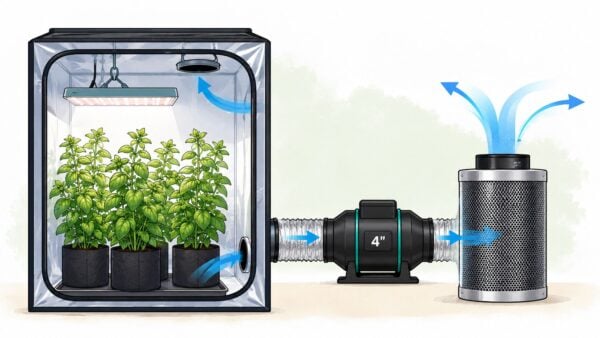
- Light leaks: Check tent zippers, ports, and room LEDs. Flowering plants hate interrupted dark periods.
- Temperature swings: A room that runs comfortable by day but swings hard at lights-off can stress sensitive cultivars.
- Watering inconsistency: Repeated dry-back extremes or constantly soaked media can both create root stress.
- Nutrient problems: Burned tips, lockout symptoms, and sloppy feeding changes often show up before plant behavior gets weird.
- Harsh handling: Rough training, late heavy defoliation, or accidental branch damage can stack stress when the plant is already focused on flowering.
Genetics still matter
Some cultivars are less forgiving. That doesn't mean they're bad. It means they may demand tighter control and cleaner execution. If one cultivar in the same tent reacts badly while another stays steady, that tells you something useful.
A lot of growers miss this part because they only think in terms of environment. Genetics set the baseline. Environment decides whether that baseline gets tested.
For growers interested in how traits can show up differently even within the same line, this overview of phenotype variation helps frame why one plant may be more touchy than another.
What doesn't work
A vague promise to “keep things dialed in” isn't a plan. Real prevention means identifying the exact stress source, then removing it. If your timer is inconsistent, replace it. If your tent leaks light, patch it. If your room swings too hard at night, correct the room instead of hoping the plants tough it out.
You Found a Hermie Now What
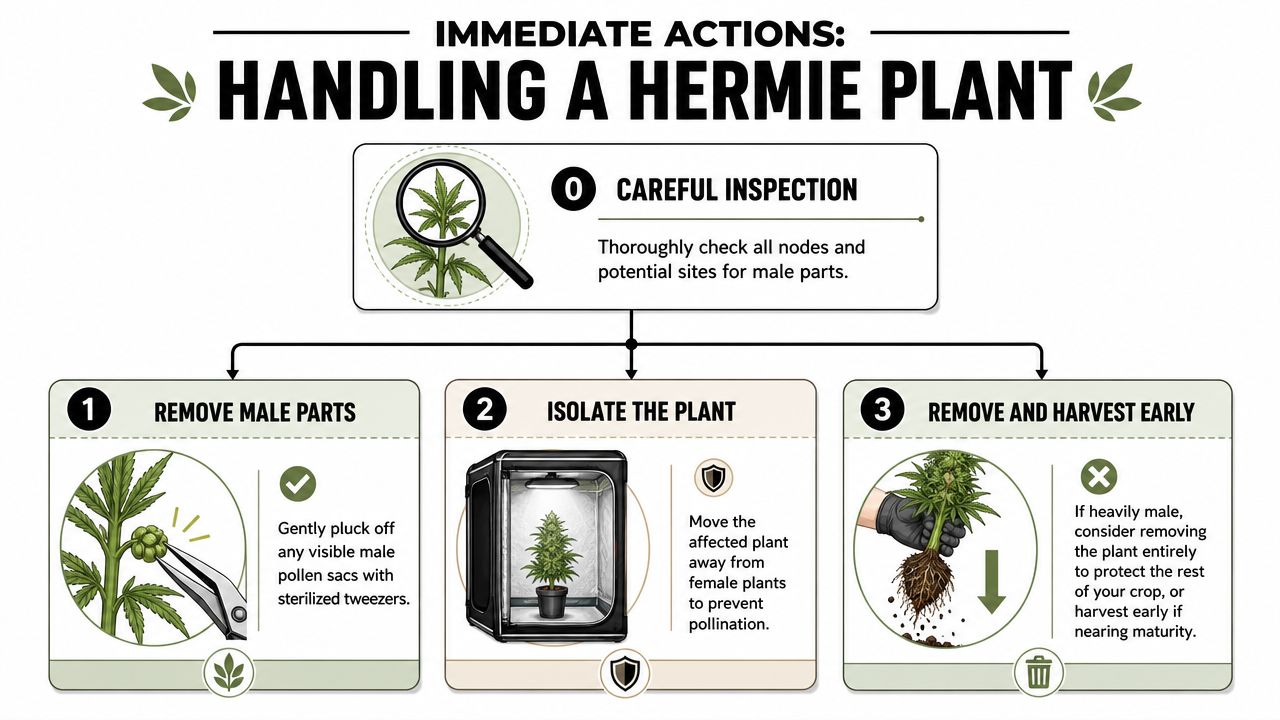
Once you confirm it, speed matters. The emergence of bananas inside female buds is a high-alert signal because these stamens can shed pollen without fully opening, and expert guidance recommends immediate isolation or removal with daily follow-up inspections, as explained by a seed bank in its hermie plant guide.
Option one, pluck and monitor
This is the most tempting option, and sometimes it's reasonable. If you found a very limited issue, like one or two suspicious structures, you can carefully remove them and inspect the plant again the next day.
The trade-off is time and risk. This option only makes sense if you can monitor closely and the problem appears isolated.
- Best for: Very limited signs on a plant you can check daily
- Upside: You may finish the plant without losing it
- Downside: One missed structure can still pollinate nearby buds
Some growers lightly mist the area before removal to reduce loose pollen movement. Then they use clean tweezers and remove the suspect part carefully. The important part is not the tool. It's the follow-up.
Option two, isolate the plant
If the plant has more than a tiny issue but you're not ready to remove it, move it away from the main flowering area if your setup allows that. Isolation buys you observation time.
This only works if the separate space is separate enough to reduce risk. In a hobby setup, “other side of the same room” usually isn't real isolation.
The question isn't whether you can save the plant. The question is whether saving it is worth the risk to everything around it.
Option three, cull it
This is often the smartest move in a shared tent. If you're seeing multiple pollen sacs, repeated nanners, or signs across several sites, removing the plant protects the rest of the crop.
A lot of home growers avoid this because it feels harsh after weeks of care. But one plant should not get veto power over the whole room.
| What you found | Lowest-risk response |
|---|---|
| One isolated suspicious site | Remove and recheck daily |
| More than a few sites | Isolate if you truly can |
| Repeated nanners or widespread sacs | Remove the plant |
The first hour matters most
Do these steps in order:
- Stop handling other plants first: Don't carry risk across the tent.
- Inspect the full plant: Nodes, lowers, and buds.
- Choose one path: Pluck, isolate, or cull.
- Reinspect nearby plants: Especially the ones closest to the suspect plant.
- Fix the likely stress trigger: Otherwise you're just waiting for a repeat.
Preventing Hermies in Your Next Grow
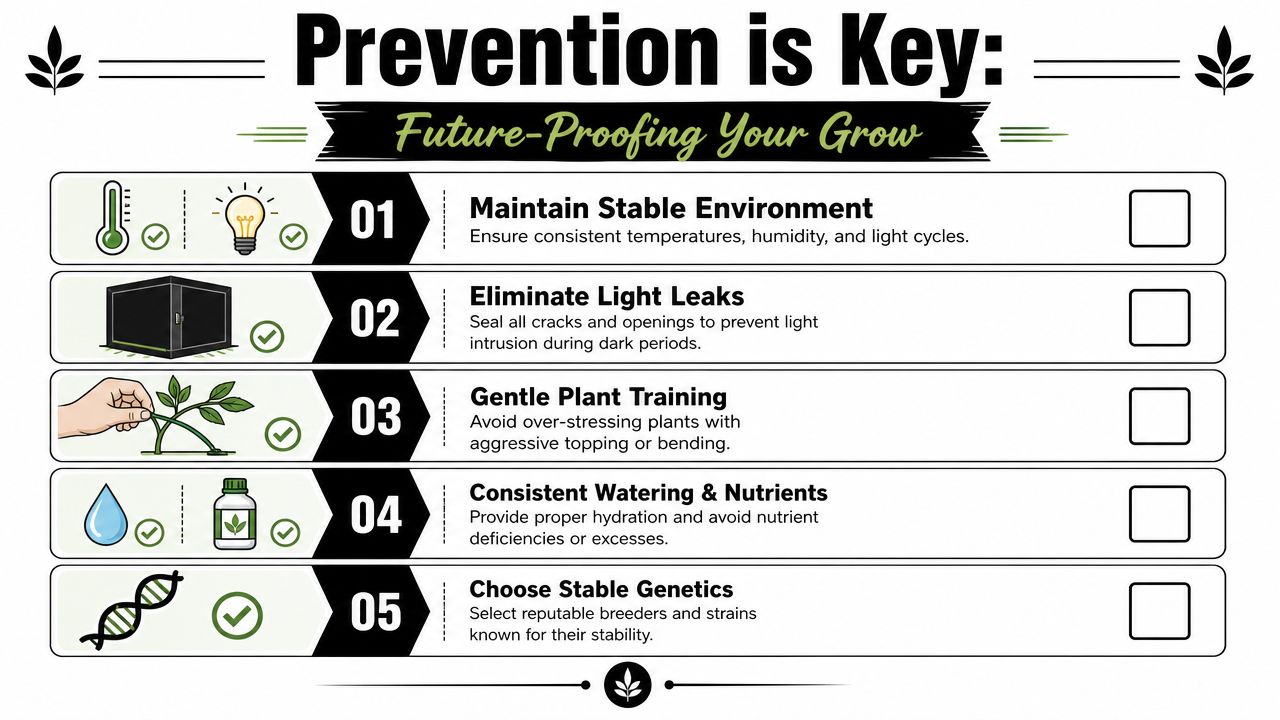
Prevention is a mix of cleaner grow-room habits and smarter cultivar selection. Sources consistently suggest that some cultivars are more prone to intersex expression, so environmental control helps, but choosing genetically stable cultivars is also part of risk forecasting, as discussed by Ecofreek in its review of hermie plant development factors.
Build a boring flowering environment
This is one of those cases where boring is good. Plants in flower do best when the room is predictable. Stable light schedule, stable climate, stable watering rhythm, stable feeding.
Use timers you trust. Seal light leaks before flower starts, not after you spot a problem. Keep training and pruning measured once buds begin forming. The grow that feels almost uneventful is often the one that finishes best.
Pick cultivars with stability in mind
A lot of hobby growers shop for flavor, color, or yield potential first. Fair enough. But if your setup has limitations, like a small tent, variable room temps, or inconsistent seasons, stability should move way up the list.
That's especially true if you want feminized plants that stay focused on flower production with fewer surprises. If you need a refresher on what growers mean by that starting point, this guide on what a feminized seed is gives the simple version.
The habits that pay off every run
- Inspect early in flower: Not obsessively, just consistently.
- Keep a grow log: Note stress events so you can connect cause and effect.
- Avoid big late changes: Flower is not the time for experiments.
- Respect cultivar differences: One plant's tolerance is not another's.
- Treat small warning signs seriously: Early action is easier than cleanup.
The best prevention mindset is simple. Don't grow on hope. Grow on consistency. The more predictable your environment and cultivar choice are, the less likely you are to get blindsided halfway through a promising run.
If you want a smoother next grow, start with genetics that match your space and your experience level. Botanist Seeds makes that easier with a curated catalog and a comparison tool that helps you sort cultivars for your setup, whether you want a compact indoor plant, a faster autoflower, or a dependable feminized option for a cleaner home grow.