Blue Magoo Strain: A Complete Grower’s Guide for 2026

You're probably in the same spot a lot of home growers hit between runs. Jar stock is getting low, the last cultivar was fine but not memorable, and now you want something that feels worth the tent space, the trimming time, and the electric bill.
That's where Blue Magoo tends to catch attention. It has that classic, evening-leaning reputation people still ask about, but it also comes with a real-world wrinkle that many strain pages gloss over. The market has mixed it up with Blue Goo for a long time, and that matters if you care about growing something true to the name instead of just buying whatever got the right label slapped on it.
For the home grower, that's the whole game. You're not just chasing a cool cultivar name. You're trying to fill jars with flower you enjoy, skip the dispensary line, avoid the extra tax hit, and get that quiet satisfaction that comes from smoking something you grew yourself. Blue Magoo can absolutely fit that role, if you understand what it is, what it isn't, and how to shop smarter for genetics.
Is Blue Magoo Your Next Favorite Cultivar
Blue Magoo makes sense for a grower who wants a project with personality, not just raw potency on a menu. This is the kind of cultivar people usually choose when they want a flavorful, laid-back stash for the end of the day and a plant that feels a little more personal than whatever's trending that month.
A lot of growers don't need another hype cultivar. They need something they'll look forward to harvesting.
I like Blue Magoo for that reason. It has the kind of name that gets repeated in grow circles, but it doesn't come off like empty branding. It has an old-school pull to it, and when a cultivar sticks around that long in conversation, there's usually something real underneath it.
Why growers keep coming back to it
For the home setup, Blue Magoo checks a few boxes that matter:
- It feels rewarding to grow: Some cultivars are productive but forgettable. Blue Magoo has more identity, which makes the work feel worthwhile.
- It suits a personal stash: If you like evening flower with a softer, heavier vibe, it fits that lane well.
- It gives you a better reason to grow at home: This is exactly the kind of cultivar that reminds you why filling your own jars beats buying prepacked flower.
Practical rule: If you only have room for a few plants, pick cultivars you'll be excited to trim, cure, and revisit. Blue Magoo belongs in that conversation.
Who tends to enjoy this one
Blue Magoo isn't the best pick for every grower. If your priority is a highly standardized, easy-to-source cultivar with zero naming confusion, there are simpler options. If you enjoy a little detective work and you care about aroma, feel, and character, Blue Magoo gets a lot more interesting.
That trade-off is worth stating clearly. The reward is a cultivar with a distinctive reputation and a cozy, mellow vibe. The downside is that you need to buy carefully, because the name alone doesn't guarantee you're getting the genuine article.
The Blue Magoo Strain Profile
Blue Magoo sits in that sweet spot where the profile is straightforward on paper but messy in the marketplace. Typically, it's usually described as an indica-dominant hybrid with a berry-forward identity and a heavier, evening-style personality.
The potency picture is one of the cleaner parts of the profile. Blue Magoo is an indica-dominant hybrid strain with reported average THC potency clustering around 19 to 21 percent. Lab-tested averages place its typical THC content near 19.5 percent, situating it as a modern, high-THC indica-leaning hybrid well above the average cannabis strain, according to AllBud's Blue Magoo strain listing.
Blue Magoo at a Glance
| Attribute | Details |
|---|---|
| Cultivar type | Indica-dominant hybrid |
| Typical THC range | Around 19 to 21 percent |
| Notable average THC result | Near 19.5 percent |
| General market position | Modern high-THC indica-leaning hybrid |
| CBD presence | Generally low |
| Common vibe | Relaxing, evening-friendly, euphoric |
| Common flavor impressions | Berry, sweet fruit, earth |
What the profile means in practice
That THC range tells you Blue Magoo isn't mild, and it also isn't built around balance. With CBD generally low in common descriptions, the experience tends to lean more toward a full, noticeable head-and-body shift than a subtle background buzz.
That doesn't mean every jar will feel identical. It won't. But if you grow or buy Blue Magoo expecting a light, daytime social cultivar, you're probably aiming at the wrong lane.
Aroma, flavor, and overall character
Blue Magoo's appeal is tied closely to its sensory side. The descriptions that keep showing up around this cultivar usually point back to sweet berry notes, a deeper earthy base, and that familiar “blue” family kind of fruit character that many growers chase on purpose.
That's part of why this cultivar keeps a loyal following. Even before the cure is finished, the plant usually gives you enough aromatic personality to feel like you're growing something specific, not generic.
Blue Magoo works best when you judge it like a stash cultivar, not a novelty pick. The value is in how often you'll want to come back to it.
The profile snapshot that matters
If I had to reduce Blue Magoo to the details that matter for a home grower, it would be this:
- Potency: Strong enough to earn respect, not something to underestimate
- Flavor direction: Berry first, with darker earthy support
- Best fit: A personal evening jar, not an all-day default
- Grower appeal: High, especially if you enjoy classic cultivar names with recognizable character
That profile is why people still search for the Blue Magoo strain even with all the naming confusion around it. The cultivar identity is strong enough that growers keep trying to track down something authentic.
What to Expect from Blue Magoo's Effects
Blue Magoo usually fits best at the point in the day when you're done making decisions. Work is over, chores are handled, phone is on silent, and you want flower that helps the night settle into a slower gear.

The vibe is often described in a way that makes sense the moment you try a good cut. It starts upbeat enough to keep things pleasant, then it eases into a looser, heavier kind of relaxation. Not chaotic, not racy. More like music sounds better, the couch gets more convincing, and your plans shrink in the best way.
Where it fits best
This is the kind of cultivar I'd put next to activities like these:
- Movie night: Blue Magoo makes a simple night in feel more intentional.
- Headphones and a playlist: Berry-heavy cultivars often pair well with slow evenings and low stakes.
- Post-grow-room wind-down: After mixing feed, checking runoff, and cleaning scissors, this feels like a fair reward.
What it usually doesn't feel like
Blue Magoo generally isn't the cultivar I'd reach for before a packed afternoon or anything that needs quick, sharp focus. Its reputation leans toward easing off the throttle, not pressing harder.
That's part of its charm. Some flower is built for doing more. Blue Magoo is better when you're finally ready to do less.
A good Blue Magoo jar feels like the point where the day stops asking things from you.
The best homegrown versions tend to shine after a patient cure. When the aroma settles and the smoke smooths out, the overall experience feels more rounded. That's one more reason this cultivar rewards growers who like the full process, not just the harvest photo.
Finding Authentic Blue Magoo Genetics
Many growers find this aspect challenging. The name Blue Magoo sounds specific, but in commercial cultivation, it often isn't. Blue Magoo is widely described as a clone-only cultivar, meaning its genetics are generally maintained through vegetative propagation rather than stable seed lines, and it has often been confused in the market with the similar-looking Blue Goo strain, as noted by SeedFinder's Blue Magoo entry.
That single detail changes how you should shop.
What clone-only actually means for a home grower
A clone-only origin tells you the cultivar built its reputation through preserved plant cuts, not through a widely standardized seed line. So when you see “Blue Magoo” sold as seed, the right question isn't “Is this fake.” The better question is “How close is this to the original expression, and how transparent is the seller about that?”
That's a big difference.
If a seller acts like the name alone proves authenticity, I'd move on. A reliable source should be clear about whether the offering is a feminized interpretation, a worked line based on the original, or a true-to-type attempt that captures the key traits growers expect.
How to judge a Blue Magoo listing
Use simple criteria. Fancy branding won't help you much here.
- Look for lineage transparency: If the seller won't explain where their Blue Magoo comes from, that's a weak start.
- Check whether Blue Goo is being mixed into the description: If the listing blurs the names, that's a sign the seller may not understand the distinction.
- Prioritize reputation over hype: A trusted seed source with a clear track record beats a flashy listing every time.
- Read the cultivar description closely: You want berry-forward, indica-leaning expectations that line up with Blue Magoo's established identity.
Buyer mindset: With clone-only-origin cultivars, honesty matters more than polish.
What works better than chasing a perfect label
For most home growers, the practical move is to look for reliable feminized seeds from a seller that treats cultivar history seriously and explains the selection process clearly. That gives you a much better shot at a true-to-type grow than grabbing the first Blue Magoo listing you see on a random marketplace.
If you're comparing vendors, a broader premium seed market overview can help you spot the difference between transparent genetics sellers and shops that mostly rely on strain-name recognition.
The trade-off is simple. A clone-only-origin cultivar can offer substantial rewards, but only if you accept that authenticity takes a little homework.
How to Grow the Blue Magoo Cultivar
Blue Magoo is a satisfying home grow when you keep the environment steady and don't let a bushy canopy turn into a humidity trap. It's not the cultivar I'd call fussy, but it does reward growers who stay organized.
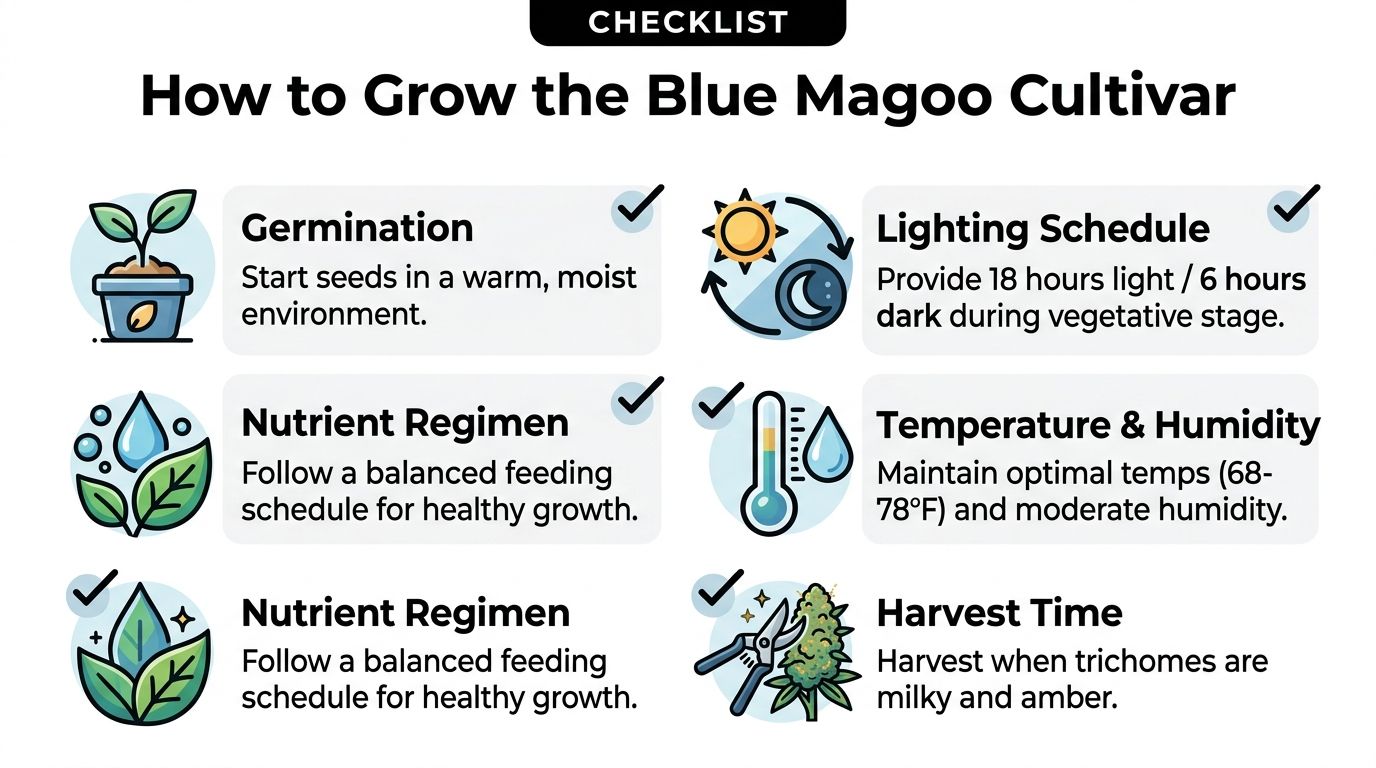
The biggest win for most hobbyists is starting with feminized seeds from a dependable source, then building a simple routine around canopy control, airflow, and patient finishing. Blue Magoo has the kind of structure that can get dense enough to demand attention, especially in a small tent.
Start clean and keep the root zone boring
A lot of problems come from growers trying to do too much too early. Blue Magoo usually responds better when the early stage is simple and stable.
- Use a light hand at the start: Warm, moist germination conditions and a gentle transplant rhythm beat constant fiddling.
- Choose an airy medium: Roots do better when oxygen stays available and the pot doesn't stay soggy.
- Don't chase explosive growth: Healthy, even veg matters more than forcing size fast.
If you're working indoors, the checklist basics still matter. Keep the vegetative schedule consistent, feed in a balanced way, and avoid swingy conditions that make the plant stall.
Build the canopy before it builds itself
Blue Magoo can get thick. That's great for flower sites, but not great if you ignore the center of the plant and let moisture linger where air should be moving.
What works:
- Topping or light training early: This helps open the plant and spread growth more evenly.
- Selective leaf removal: Enough to improve airflow, not enough to stress the plant into sulking.
- Regular branch spacing: Stakes, soft ties, and simple garden wire are usually enough.
What doesn't work:
- Letting the lower interior stay crowded: That invites weak growth and makes cleanup harder later.
- Heavy pruning all at once: Blue Magoo tends to do better with measured adjustments.
- Overfeeding because the leaves look “hungry” after a dry-back: Check your watering rhythm before you blame nutrients.
Keep the center of the plant breathable. Dense flower is great. Stale air isn't.
Environment, feeding, and finish timing
The general indoor target range shown in the grow checklist is 68 to 78°F for temperature, along with moderate humidity in the room. Those are practical conditions for many home setups, and Blue Magoo tends to appreciate that kind of steady environment.
For feeding, I'd stay balanced and avoid turning every leaf issue into a bottle problem. Most home growers get further by watching leaf posture, pot weight, and runoff behavior than by adding more supplements. A basic feeding line can do the job if the rest of the environment is in order.
Harvest discipline matters with this cultivar. If you cut too early, you can leave some of that deeper, settled character on the table. If you want a closer read on ripeness, this guide to reading trichomes on weed is useful for dialing in the finish.
A practical home-grow routine
Here's a simple Blue Magoo workflow that tends to keep things on track:
- Start with stable feminized genetics: Good inputs save time later.
- Veg for shape, not just size: Create an open, manageable frame.
- Watch humidity around dense growth: Especially after watering and late in flower.
- Support branches before they need it: Dense tops can sneak up on you.
- Dry and cure with patience: Blue Magoo's payoff shows up clearly after the flower settles.
If you like cultivars that feel hands-on without becoming a chore, Blue Magoo lands in a nice middle ground.
Phenotype Variation and What to Look For
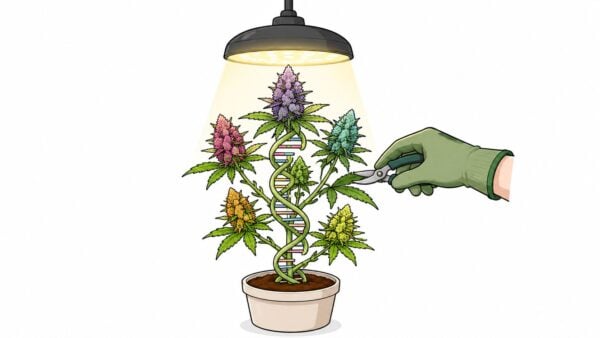
Blue Magoo is a good reminder that a cultivar name doesn't always describe one perfectly fixed plant. With this one, phenotype variation matters because the underlying identity has been described inconsistently. The strain's lineage is presented inconsistently across databases. Some describe Blue Magoo as a DJ Short Blueberry × William's Wonder F2 cross, while others mention Blueberry, Major League Bud, and Afgoo, signaling real-world naming drift and likely phenotype and marketplace confusion, according to Dynasty Seeds' Blue Magoo notes.
That inconsistency isn't just trivia. It affects what you may see in the grow room.
What variation can look like
When growers talk about “finding a pheno,” they usually mean selecting for the expression they like most from a seed run. With a cultivar tied to Blueberry-adjacent descriptions and older-school indica influence, the variation often shows up in a few practical ways:
- Aroma shifts: One plant may lean sweeter and more berry-forward, while another lands deeper and earthier.
- Structure differences: Some plants stack tighter and bushier, others grow with a little more spacing.
- Finish and bag appeal: Color, resin feel, and density can all move around from one plant to the next.
That's why a Blue Magoo grow can feel especially rewarding for a curious hobbyist. You're not only trying to get good flower. You're also learning which version of the cultivar you prefer.
How to evaluate your plants
A simple notebook beats guesswork. Label each plant clearly and track what stands out during veg, flower, dry, and cure.
The best pheno isn't always the flashiest plant in week six. Sometimes it's the one you keep reaching for after the cure.
A few smart observations to keep:
- Branching habit during veg
- How quickly the aroma shows up
- How well the plant handles training
- Which jar has the most complete flavor after cure
If you want a cleaner framework for evaluating plant expressions, this overview of cannabis phenotypes gives you a useful reference point.
The best way to approach Blue Magoo variation is with curiosity, not rigid expectations. That mindset usually leads to better selections and fewer disappointments.
Similar Strains to Explore Next
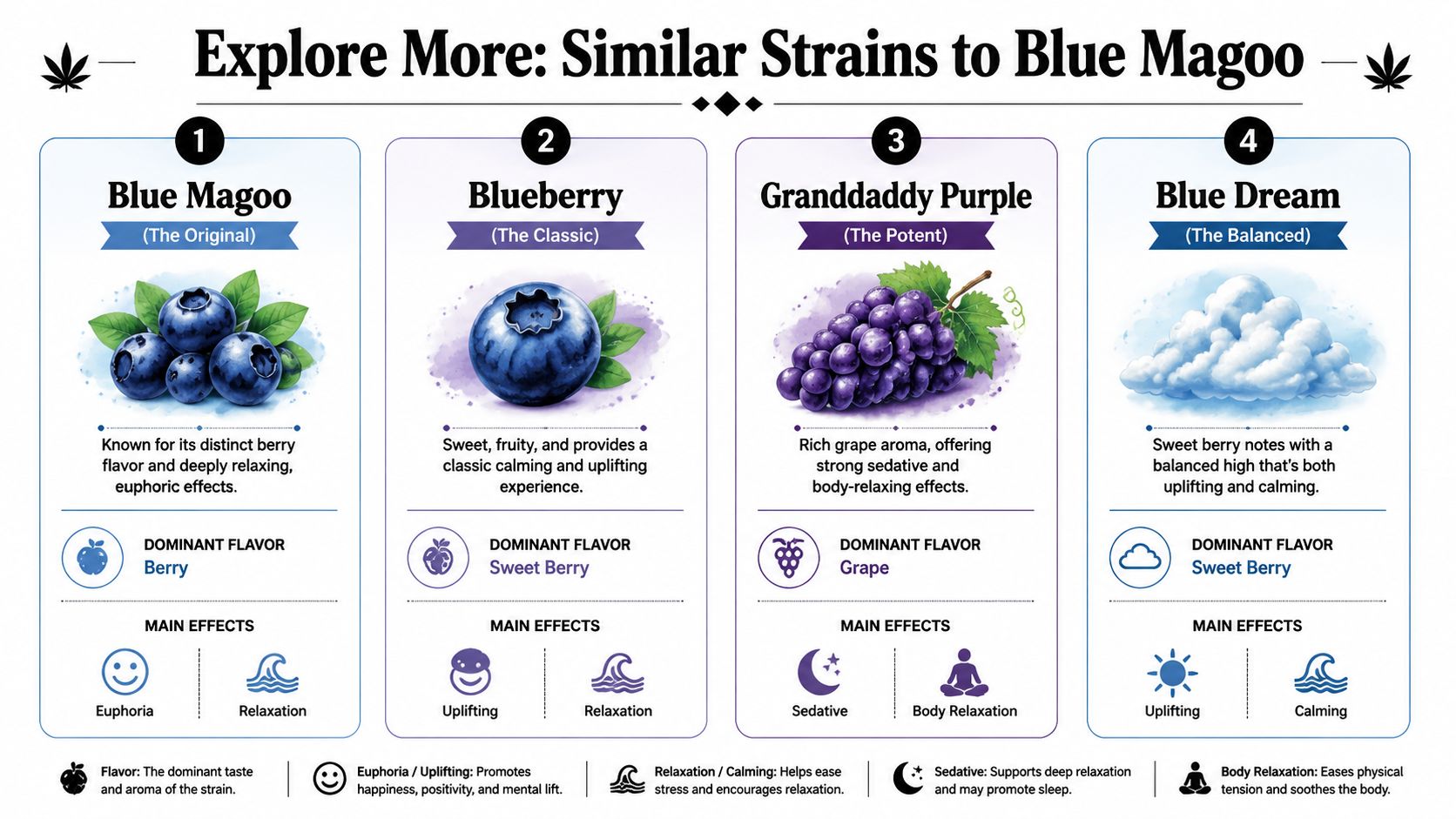
If Blue Magoo appeals to you, it's probably because you like cultivars with recognizable fruit character, a relaxed vibe, and enough presence to make the grow feel memorable. That usually points you toward other familiar names in the same general neighborhood.
Good follow-ups after Blue Magoo
- Blueberry: A natural next stop if the berry side is what hooked you. This is the classic reference point many growers still use when judging fruit-forward cultivars.
- Granddaddy Purple: A solid option if you want a darker, heavier evening personality and richer, deeper aroma.
- Blue Dream: Better if you like the blue-family flavor direction but want something that often feels more balanced in overall mood.
How to choose your next one
Don't choose only by strain fame. Pick based on what you liked most about Blue Magoo.
If the draw was the cozy, slower evening feel, lean toward cultivars with a similar end-of-day personality. If the berry note was the main event, stay close to the Blueberry side of the family. If you enjoyed the name but want a less complicated shopping experience next time, go for a cultivar with clearer market identity and more standardized seed offerings.
That's where a comparison tool becomes useful. Once you know whether you're really chasing flavor, growth style, or overall vibe, picking the next cultivar gets much easier.
If you're narrowing down your next run, Botanist Seeds makes it easier to compare cultivars, sort through reliable feminized seed options, and choose genetics that match your setup instead of just sounding good on a strain menu.