




Rainbow Belts Strain Growing Guide for Home Cultivators

You finally have the tray cleaned, the fans humming, and a fresh pack of Rainbow Belts seeds on the bench. That's usually the moment the key questions show up, because this cultivar isn't just about loud candy aroma. It's also about picking the right phenotype, keeping the canopy tidy, and protecting the terpene profile after harvest so the flower still smells like fruit candy instead of generic green.
Rainbow Belts has earned its place as a modern candy-leaning cultivar because the sensory side comes through first. Independent strain listings describe it with sweet fruit candy aromas and a balanced, euphoric-relaxed effect profile Weedmaps rainbow belts listings. For home growers, that usually means a plant you can manage without drama, but it still rewards careful observation if you want the best jar appeal.
Rainbow Belts Strain Overview
A grower opening a fresh pack of Rainbow Belts usually gets the same first reaction, this smells like it should taste good. That's the draw. The rainbow belts strain sits in the candy-forward corner of the market, with its appeal built around aroma, resin, and bag appeal more than any old-school background story. For home growers, that matters because the plant earns attention from the moment it starts stacking, and it keeps that attention all the way to the jar.
What makes it stand out
This cultivar is usually described as indica-dominant, with flowers that finish in a familiar indoor window and develop the kind of resin that makes trimming feel worth the time. Independent strain references place flowering at about 65 days, or roughly 8 to 10 weeks. That keeps it in a rhythm most growers already understand, whether they are running a tent, a closet, or a small spare room.
The first thing people notice is the nose. It tends to show sweet fruit candy aromas, and the reported effect profile is balanced, euphoric, and relaxed. In plain terms, it is the kind of cultivar people reach for when they want a flavorful jar and a calm, easy vibe without needing a huge plant or a tricky setup. If a plant is bred for flavor, the grower has to treat the last stretch of the cycle like part of the terpene job, because the final dry and cure decide whether those candy notes stay bright or fade into something flatter.
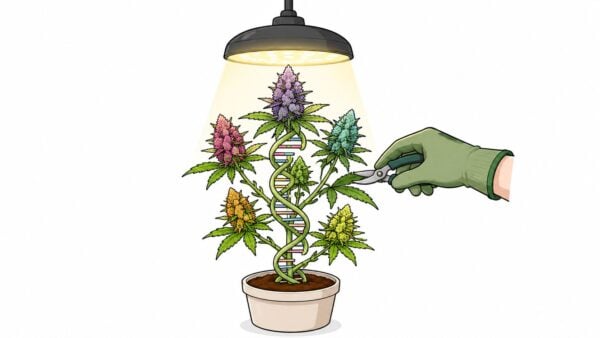
Phenotype selection matters here, because Rainbow Belts can show different expressions from one pack to the next. A grower who wants the most candy-like result should sort plants by smell, resin, and structure before deciding which ones deserve the final space. A phenotype that finishes with tighter bud structure, strong trichome coverage, and a loud fruity nose often gives better jar appeal than a taller, looser plant that looks impressive but loses some of that sweet character after harvest. For a close look at how to judge those differences, this phenotype guide is useful.
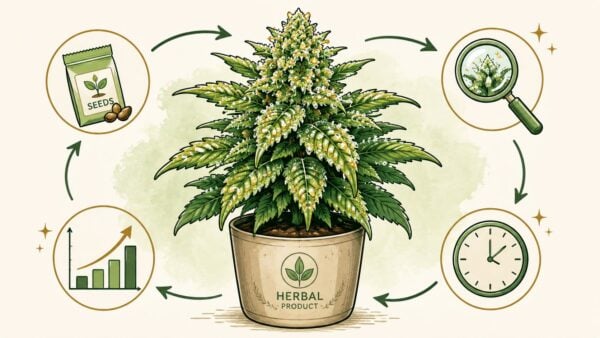
Practical rule: if flavor is the selling point, the job is not done at harvest. Slow drying, careful trimming, and a clean cure are what keep the candy profile from turning dull.
For home cultivators, that trade-off is the main upside. You get a plant that can look sharp, smell loud, and stay manageable in a home setup, while still giving you room to pick a cut that fits your goal. That is why Rainbow Belts keeps showing up in conversations about candy-terp cultivars, especially among growers who care about the final jar as much as the plant itself.
Exploring Genetics Lineage and Phenotypes
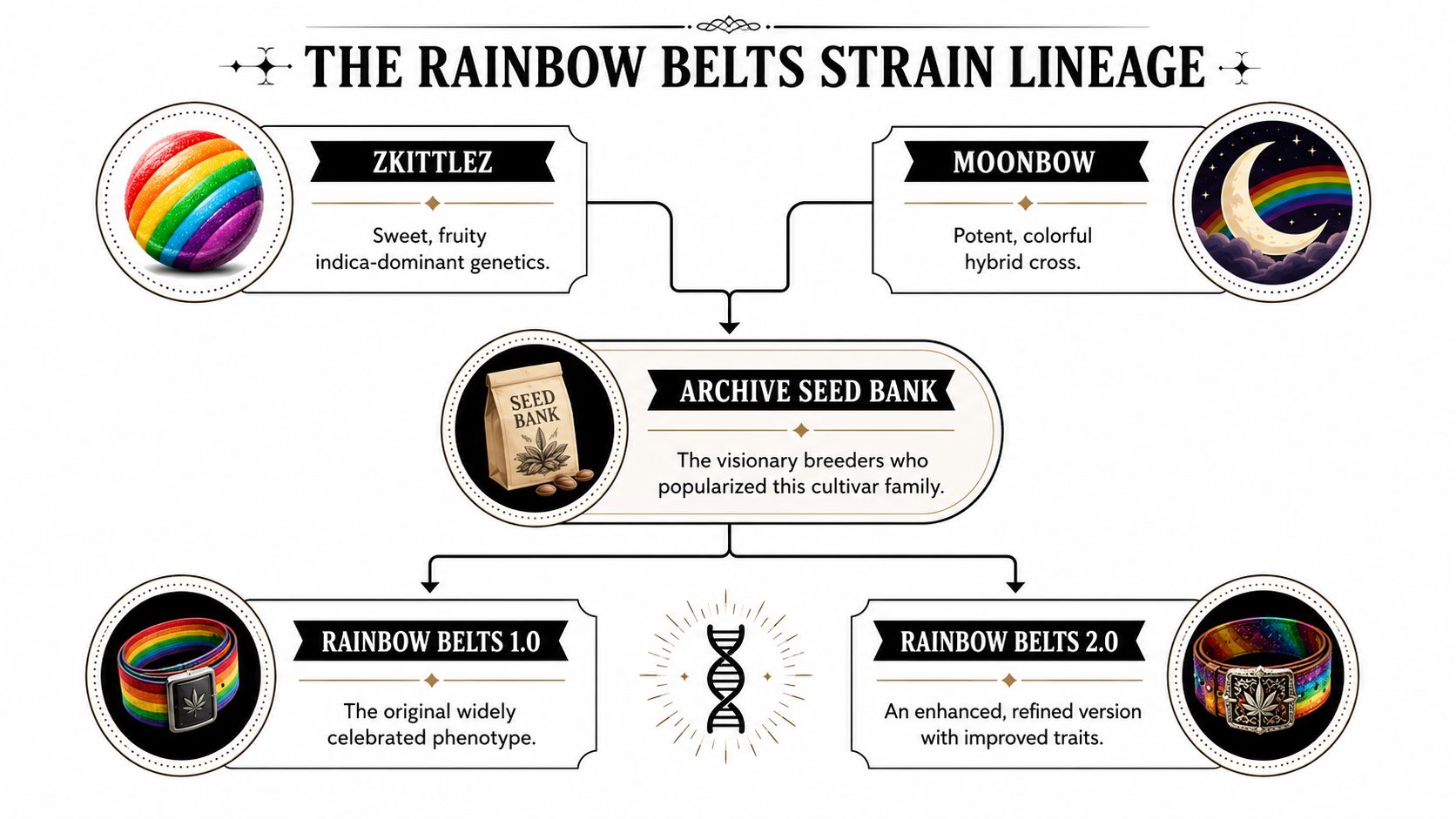
A Rainbow Belts run often starts as a conversation about lineage, then turns into a lesson in picking the right plant out of a mixed pack. The family traces back to Zkittlez × Moonbow, a background tied to the line's candy-forward character and resin-heavy finish, as noted by Joint Commerce. That genetic base helps explain why the strain can feel so dessert-like in the jar, yet still carry enough structure and frost to interest home growers who care about both flavor and bag appeal.
Why the family has multiple named versions
Rainbow Belts has not stayed locked into one single expression. Descriptions commonly reference Rainbow Belts 1.0, 2.0, and 3.0, which usually signals a line that has been worked and selected over time for different strengths in structure, resin output, or terpene expression Joint Commerce. In plain terms, the name tells you the family, but the cut tells you the personality.
For a home grower, that difference matters a lot. A seed line marked Rainbow Belts can still throw plants that look and finish a little differently from one pack to the next, so breeder notes are worth reading closely before you fill a tent. Look for details about plant height, flowering pace, and how well the aroma carries through the cure, because those traits shape how the run fits your space and how the finished flower feels in jars.
A phenotype hunt starts before germination. Read the breeder description like you are choosing a tool for a job, not picking a trophy.
What to look for when choosing a cut
The easiest way to judge phenotypes is to sort them by the traits that matter in a home setup. You want a plant that stays manageable, builds resin well, and keeps its candy character after harvest. That last part gets overlooked a lot. A plant can look strong in flower and still lose some of its bright terpene lift if the cut was not stable to begin with, or if post-harvest handling was rough.
Use the breeder notes and your own growing space to narrow the field:
- Canopy shape: Pick a cut that fits your horizontal room, especially if you prefer light training instead of a full trellis.
- Resin behavior: Favor descriptions that point to heavy frost or flowers that suit hash work if visual appeal matters to you.
- Aroma stability: Look for language that suggests the sweet nose holds through drying and cure, not just right after chop.
- Consistency: More even phenos usually make the dry and trim stages easier, especially in a small home grow.
This part of selection works a lot like sorting fruit at a market. Some pieces look flashy, but the best ones keep their flavor after they sit for a bit. For a clearer method to compare those traits, the phenotype selection guide gives a practical way to weigh structure, aroma, and finish before you commit space to a run.
The post-harvest side matters just as much. If your goal is candy-like terpenes, slow drying, careful trimming, and a clean cure help the profile stay bright instead of collapsing into something flatter. That is why phenotype choice and jar quality go together. A good cut gives you the raw material, and careful handling keeps the sweet notes from fading before the first proper jar check.
Analyzing Aroma Flavor and Cannabinoid Profile
You can usually tell whether a Rainbow Belts pheno is worth keeping by smelling the dried sample, then checking whether that candy note still holds after a few days in the jar. The cultivar is built around sweetness, but the better cuts keep a little structure underneath, so the jar can open with fruit and still finish with spice, flowers, or a grounded edge. That is the difference between a loud first impression and a profile that stays interesting through cure.
The terpene profile explains the nose
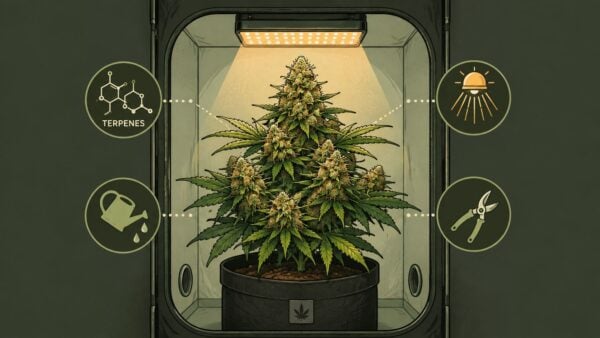
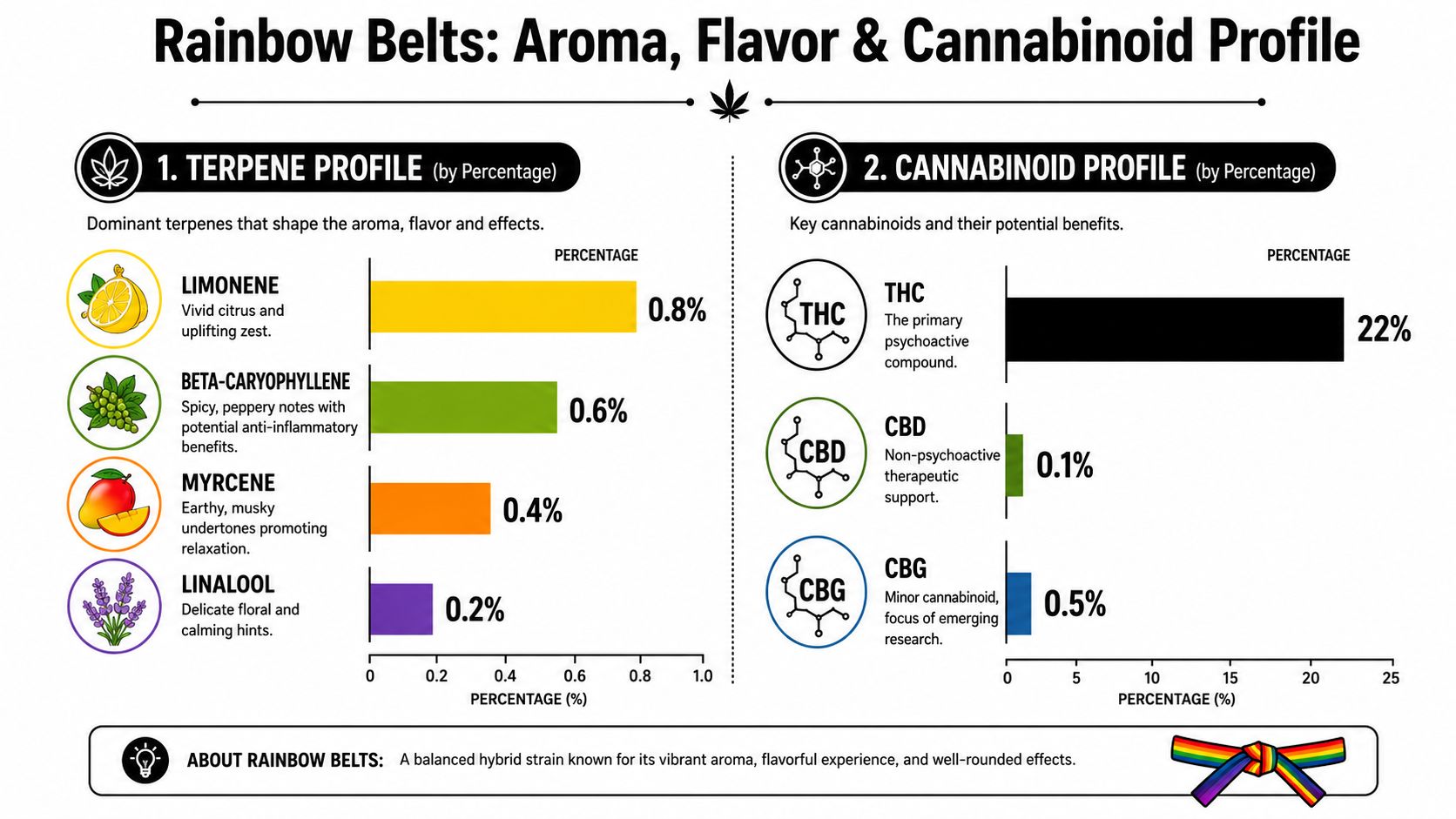
The candy nose starts with limonene and beta-caryophyllene, with supporting linalool, myrcene, ocimene, and humulene MMJ. For a closer look at how these aromatic compounds shape flavor, cannabis terpenes and their role in aroma is a useful place to start. In lab-oriented summaries, typical ranges are limonene 0.6 to 1.5%, beta-caryophyllene 0.4 to 1.2%, and total terpenes 2.0 to 4.0% in top batches. Those figures line up with why this cultivar reads as citrusy, spicy, and candy-like all at once MMJ.
Limonene brings the bright citrus hit. Beta-caryophyllene pushes the profile toward pepper and warmth. Together, they keep the sweetness from going flat, which is a big reason Rainbow Belts stands out in the candy-cultivar crowd. The supporting terpenes soften the edges, so the smell stays layered instead of turning into one-note fruit.
Grower takeaway: when a cultivar is terpene-rich, the last stretch of flower is about protecting aroma, not chasing drama.
Potency is high, but the more critical issue is handling
Independent lab summaries place Rainbow Belts around 24 to 29% THC, with total cannabinoids near 26 to 33% by weight in top-tier batches Strainpedia. That tells you two things. First, it is a high-THC cultivar. Second, the plant is carrying enough resin density that harvest timing and drying discipline matter.
The practical part is straightforward. Dense, high-resin flowers need tight control in late flower so the terpene profile does not get stripped by sloppy conditions. Late-flower humidity control is part of that, and the cultivar is commonly tied to a reduced-humidity finishing window to help protect resin integrity MMJ. If you have ever opened a jar that smelled flat after cure, you already know why this matters.
Rainbow Belts is one of those cultivars where the jar tells on the grower. If the candy nose is loud, the handling was probably clean. If it faded, something in flower or dry got rushed.
Setting Up Cultivation Indoors and Outdoors
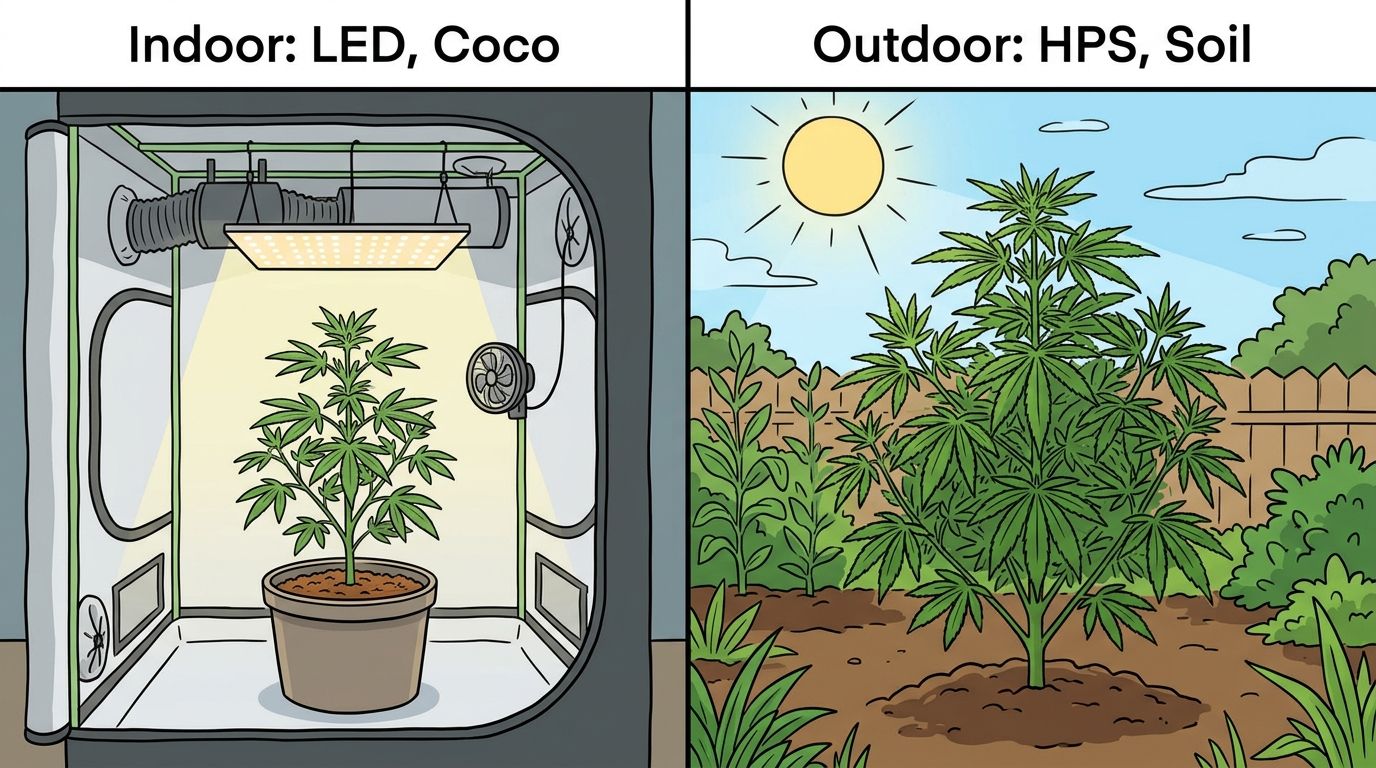
A solid Rainbow Belts run starts with the room, not the feed chart. This cultivar doesn't need a weird setup, but it does benefit from a stable one. Whether you're growing under LEDs in a tent or putting plants outdoors in beds, the goal is the same, keep the plant comfortable enough that it can keep making resin instead of reacting to stress.
Indoor grows reward consistency
Indoors, the biggest choice is usually LED vs HPS. LED setups tend to run cooler and give you more control over canopy heat, while HPS can throw more radiant warmth and may require extra ventilation. For a resin-forward cultivar like Rainbow Belts, steadiness usually beats brute force, because the flowers are doing their best work when the environment stays even.
Medium choice matters too. Coco gives you tighter control over feeding and watering, while soil is more forgiving if you prefer a slower rhythm. Coco can be a great fit if you like dialing in every input, but soil often feels easier for a first run because it buffers mistakes better. Either one can work well if your watering habits match the medium.
When you build the room, think in layers:
- Airflow first: Put circulation where dense buds will sit later, not just at the edges of the tent.
- Light second: Keep the canopy flat enough that the plant can use the whole footprint.
- Humidity control third: Late flower is where mold risk starts to matter most.
- Access last: Leave enough room to inspect the back side of each plant without crushing branches.
For room planning, a grow room setup guide can help you compare layout choices before you lock in the space.
Outdoors needs better site selection than people think
Outdoors, Rainbow Belts does best where airflow is steady and rain pressure is manageable. Dense flowers can trap moisture, so a crowded corner of the yard usually isn't the move. Raised beds or open plots with good sun exposure make it easier to keep the plant dry and balanced.
Greenhouses can be a nice middle ground if your weather is a little too unpredictable. They let you keep more control over late flower than a fully exposed outdoor bed, while still giving the plant natural light and room to stretch. The trade-off is simple, more structure means more planning, but it also means fewer ugly surprises when the buds start filling in.
Mastering Training Nutrients and Flowering
Rainbow Belts responds well to a hands-on but not overbuilt approach. You don't need to bully it into shape, but a little structure goes a long way. The plant's bushier habits make it a good candidate for training that opens the canopy and keeps the light where it counts.
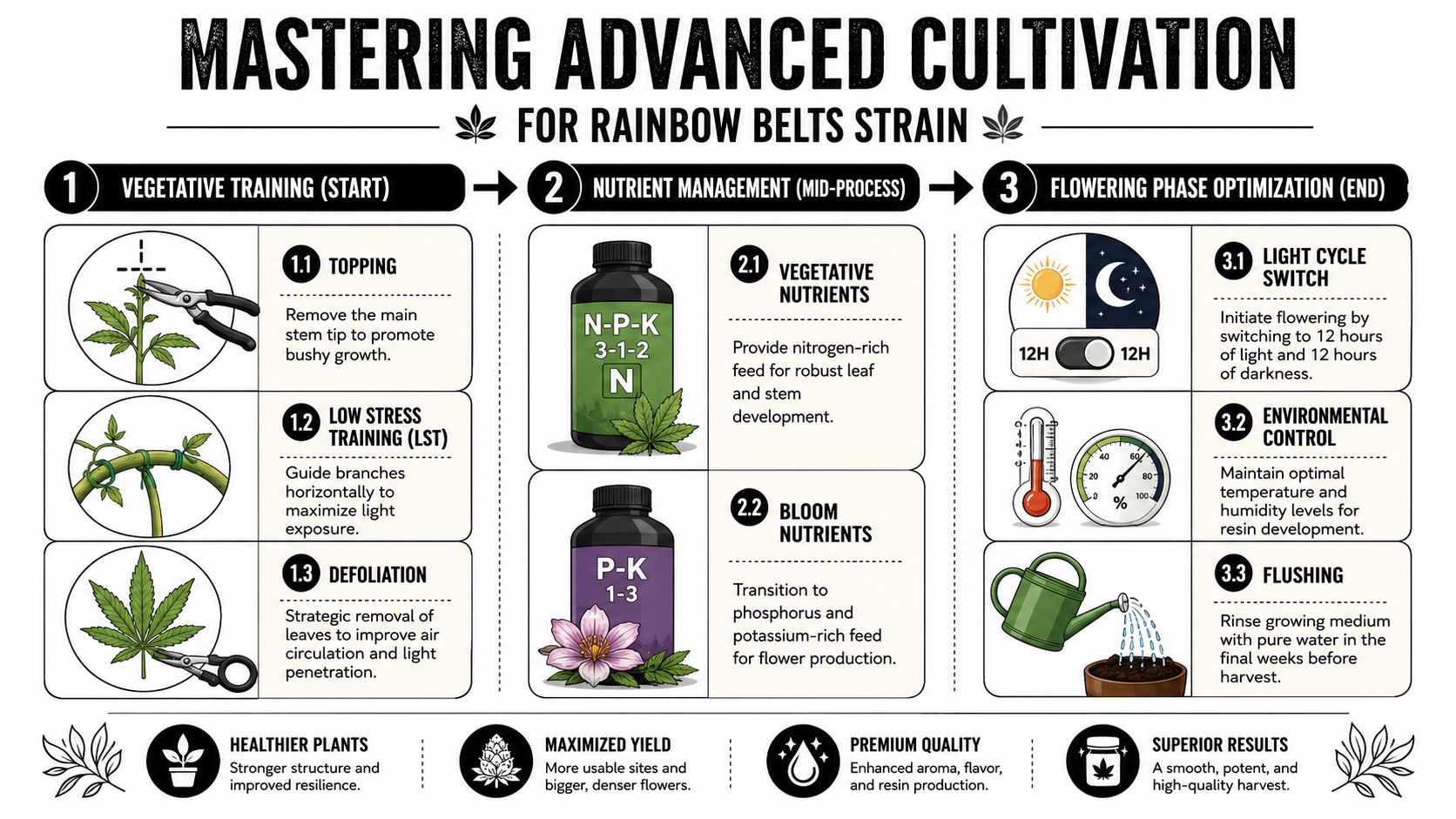
Training that fits a bushy cultivar
Topping works well when you want more tops instead of one dominant spear. Low stress training helps spread the branches so lower growth gets useful light. Defoliation should stay selective, because you're aiming to open airflow, not strip the plant bare.
A simple approach looks like this:
- Top early enough to shape the frame. You want the plant to branch before flower, not after it has already locked into one crowded form.
- Tie branches outward with low stress training. This makes the canopy flatter and easier to light evenly.
- Remove only the leaves that block airflow or trap moisture. Big fan leaves are useful, but too much shade in flower can create a humid pocket around dense sites.
- Keep the shape even. Uneven tops make harvest timing messy, because the plant won't mature at the same rate from edge to center.
Practical rule: if you're unsure whether to remove a leaf, wait a day. Bad defoliation is easier to make than to fix.
Feeding should match growth stage
In veg, the plant wants enough nutrition to build stems, leaves, and roots. In bloom, the emphasis shifts toward flower production, so the feed gets adjusted instead of pushed harder forever. That's the part many home growers get wrong, they keep feeding like it's still veg and wonder why the plant looks tired or the finish feels messy.
Keep pH in the proper range for your medium, and check your water quality before you blame the cultivar. Hard water, erratic runoff, and sloppy mixing can all make a good plant look confused. A steady input schedule usually beats a complicated one, especially in a home tent where conditions change fast.
A few useful checkpoints:
- Vegetative growth: favor a feed that supports structure and leaf mass.
- Flower transition: reduce the “greenness” of the feed and let the plant focus on buds.
- Mid to late flower: keep the environment stable so the plant finishes cleanly.
- Final weeks: don't overdo inputs, because late stress can show up in aroma and trim quality.
The broader lesson is simple. Rainbow Belts rewards balance. If you keep the canopy open, the feeding steady, and the room calm, the plant usually pays you back with cleaner flower and better resin.
Optimizing Harvest and Yields
Harvest is the part where Rainbow Belts either keeps its candy-like edge or slides into ordinary dried flower. The goal is not to cut the plant the moment the buds look finished. The better approach is to let it finish cleanly, so resin stays intact and the aroma survives trim, dry, and cure.
Timing the chop
Indoor flowering often runs about 65 days, and late-flower humidity works best around 45 to 55% to help protect resin and lower mold pressure. That gives you a useful finishing frame. Once the room stays steady, trichome checking becomes much easier, because the plant is not also fighting swings in its environment.
Use a loupe or microscope and check resin heads across several sites, not just one cola. A canopy that finished unevenly can fool you, since one top may look ready while another still needs time. That is especially true with candy-leaning plants, where a little patience usually pays off, but stretching the run too long can muddy the finish instead of improving it.
Phenotype selection matters here too. Some Rainbow Belts plants lean louder on sweet, candy-like terpenes, while others carry denser structure or a heavier finish, so the keeper plant in your room is not always the one that looks flashiest in veg. If you are running more than one phenotype, compare vigor, trichome coverage, aroma on the stem rub, and how evenly each plant matures under your setup. The best one is usually the plant that finishes on time, smells the way you want after a careful dry, and trims without losing its character.
Drying and curing are where the flavor survives
After the cut, handle branches gently. That sounds simple until sticky scissors, frosty trim, and a stack of flowers make every rough move cost you resin. Gentle handling matters because the buds are carrying the aroma you spent the whole grow trying to keep.
Drying should move slowly enough to hold onto the terpene profile, and curing should stay controlled so the jars do not swing wildly from day to day. A steady dry and a patient cure usually beat rushing the harvest just to get it done. If you have ever opened a jar that smelled better on day one than it did a week later, you already know what too-fast drying can do to candy-forward flower.
Post-harvest handling is where a lot of growers lose the point of a strain like this. Keep the room calm, trim in a way that does not crush the buds, and cure with enough attention that the sweet notes stay recognizable instead of flattening out. The jar should smell like the strain you grew, not like it got hurried through the last stretch.
Yield-wise, the better benchmark is consistency, not a fantasy number. A healthy Rainbow Belts harvest should look clean, smell loud, and trim without falling apart into dust. That is the kind of flower people remember when they open the jar later.
Troubleshooting Common Problems and FAQs
The usual problems with Rainbow Belts are the same ones that show up in most dense, resin-heavy cultivars, just with more pressure on the finish. If the room gets too hot or too wet, you'll see it in the flowers fast. If the feed is too aggressive, the plant usually tells you before the buds are fully set.
Nutrient burn shows up when the tips get unhappy and the plant looks darker or stressed. The fix is to back off the feed, check your runoff or soil behavior, and let the plant recover before adding anything else.
Bud rot risk is the bigger concern in dense flowers. Keep airflow moving through the canopy, don't let humidity hang in late flower, and inspect the inner flowers often, because rot usually starts where the eye doesn't check first.
Hermaphrodite spotting is less about panic and more about routine. If a plant shows odd traits under stress, check environmental stability first, then decide whether it belongs in your room. Good genetics still need a stable setup to finish cleanly.
A few quick buyer questions come up a lot too:
- Seed storage: keep unused seeds cool, dark, and dry so they don't age faster than they should.
- Seedling pot size: start small enough that the roots can fill the space without drowning in wet medium.
- Germination claims: breeder numbers are usually a reference point, not a promise, so compare them with your own process and environment.
If you're ready to choose a Rainbow Belts cultivar for your setup, use the Botanist Seeds comparison tool, match the phenotype to your space, and start with a pack that fits the way you grow. A little planning up front makes the harvest a lot more rewarding later.