Black African Magic Strain: Your 2026 Cultivation Guide
Most advice about the Black African Magic strain starts with the same lazy line: rare, pure sativa, legendary African genetics. That's not wrong, exactly. It's just incomplete in the one way that matters most to a grower.
If you're buying seeds or choosing a cultivar for a home run, Black African Magic is better understood as a loose genetic bucket than a single locked-in strain profile. That changes how you should shop, how you should plan your space, and how patient you need to be when the plants start showing their own personalities.
That's also why this name keeps pulling people in. There's real appeal here. African landrace-derived cultivars can carry structure, aroma, and vibe that feel very different from the modern dessert-heavy hybrid lane. But if you go in expecting a uniform, branded product, you'll probably be frustrated. If you go in expecting a genetic lottery with real upside, you'll have a much better time.
The Myth of Black African Magic
The biggest myth is that Black African Magic is one stable thing.
It usually isn't. It's a name wrapped around a story, and stories travel faster than verified lineage. Sellers use the name to signal a certain type of plant, African, tall, sativa-leaning, long flowering, intense, but that still leaves a lot of room for variation.
For growers, that distinction matters more than the mythology. A stable commercial cultivar gives you a narrower range of outcomes. Black African Magic often doesn't promise that. It promises possibility, and those are not the same thing.
Why the hype can mislead growers
A lot of strain writeups are written for shoppers, not cultivators. Shoppers want a quick identity. Growers need to know what can go wrong.
With Black African Magic, the practical trade-offs are obvious once you stop treating the name like a trademarked formula:
- Height can get away from you: This kind of plant usually doesn't stay compact unless you make it.
- Finish time asks for patience: It won't behave like a fast modern hybrid.
- Expression can swing: One plant may lean more manageable, another may stretch harder or finish later.
- The payoff is selective: If you find the right expression, you can end up with something memorable. If you don't, you still learned what that seed line carries.
Practical rule: Buy Black African Magic for the hunt, not for guaranteed uniformity.
That might sound like a warning, but it's also the fun of it. Some growers love dialing in predictable feminized cultivars and filling jars on schedule. Others want a project. Black African Magic is a project.
What the name really signals
In practical terms, the Black African Magic strain name usually signals a landrace-derived African sativa type, not a universally standardized product. Think narrow leaves, longer bloom, taller frame, and a sensory profile that often lands more earthy, woody, spicy, or herbal than candy-sweet.
That's why experienced hobby growers still chase it. Not because it's easy, and not because every version is authentic, but because a good expression can feel old-school in the best way. It has character. You just have to earn it.
Unpacking the Black African Magic Legend
The Black African Magic story gets messy as soon as you compare listings. One seller presents it as a 100% sativa land-race from the Ituri Forest in the Democratic Republic of Congo with 28% to 30% THC and 0% to 1% CBD in one seed bank's listing for Black African Magic. Another source places it in a different lane entirely.
That conflict isn't a side note. It's the core issue.
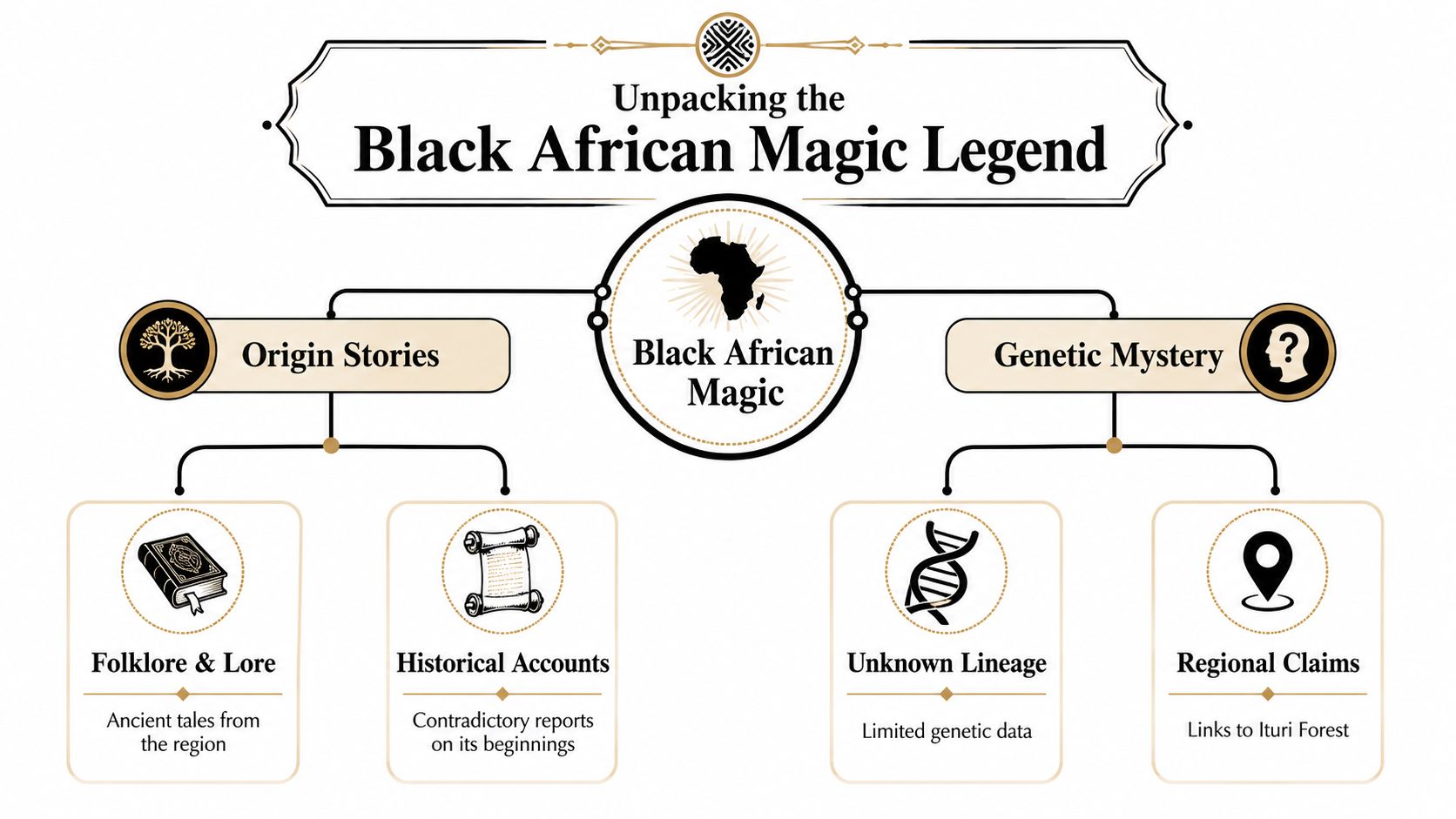
Two origin stories, one strain name
One account ties the cultivar tightly to central Africa and the Ituri Forest. Another strain guide describes Black African Magic as a southern and eastern African landrace-derived sativa linked to Malawi, Mozambique, Eswatini, and parts of South Africa, with 18% to 24% THC, 0.5% to 1.2% THCV, CBD below 0.2%, and total cannabinoids often between 20% and 26% at this Black African Magic strain guide.
Those are not minor differences. They point to different regional stories, different potency expectations, and possibly different selections being sold under the same name.
A grower should read that and immediately think: this isn't one clean commercial line.
What landrace-derived actually means
When people say landrace-derived, they usually mean the cultivar traces back to regionally adapted cannabis populations rather than a neat modern breeding chart. That sounds romantic, but from a cultivation standpoint it means something simple: expect wider variation.
If you want a deeper primer on that category, this overview of landrace cannabis genetics is useful context.
Here's the practical version:
| Question | What it means in the grow room |
|---|---|
| Is it likely to be uniform? | Usually less uniform than a tightly worked commercial cultivar |
| Will all plants finish alike? | Often no |
| Can the best plants be special? | Yes, that's a big part of the appeal |
| Is the name enough to guarantee identity? | No |
The name tells you the direction of the genetics. It doesn't guarantee the exact destination.
Why growers keep chasing it anyway
Because “inconsistent” doesn't mean “bad.” It means you need the right mindset.
Black African Magic appeals to growers who enjoy selection, observation, and the occasional surprise. If your favorite part of growing is filling a tent with near-identical plants on an exact schedule, this may not be your lane. If you like watching a cultivar reveal itself over time, it can be highly rewarding.
That is the true legend. Not that it's a perfectly preserved single strain, but that it represents a category of African sativa expressions that still feel less processed by modern breeding trends.
What to Expect Aroma Flavor and Vibe
Black African Magic usually gets attention for the mystery first, but the sensory side is why people stick with it. This isn't the sort of cultivar people reach for because it smells like candy and frosting. The appeal is darker, drier, and more layered.
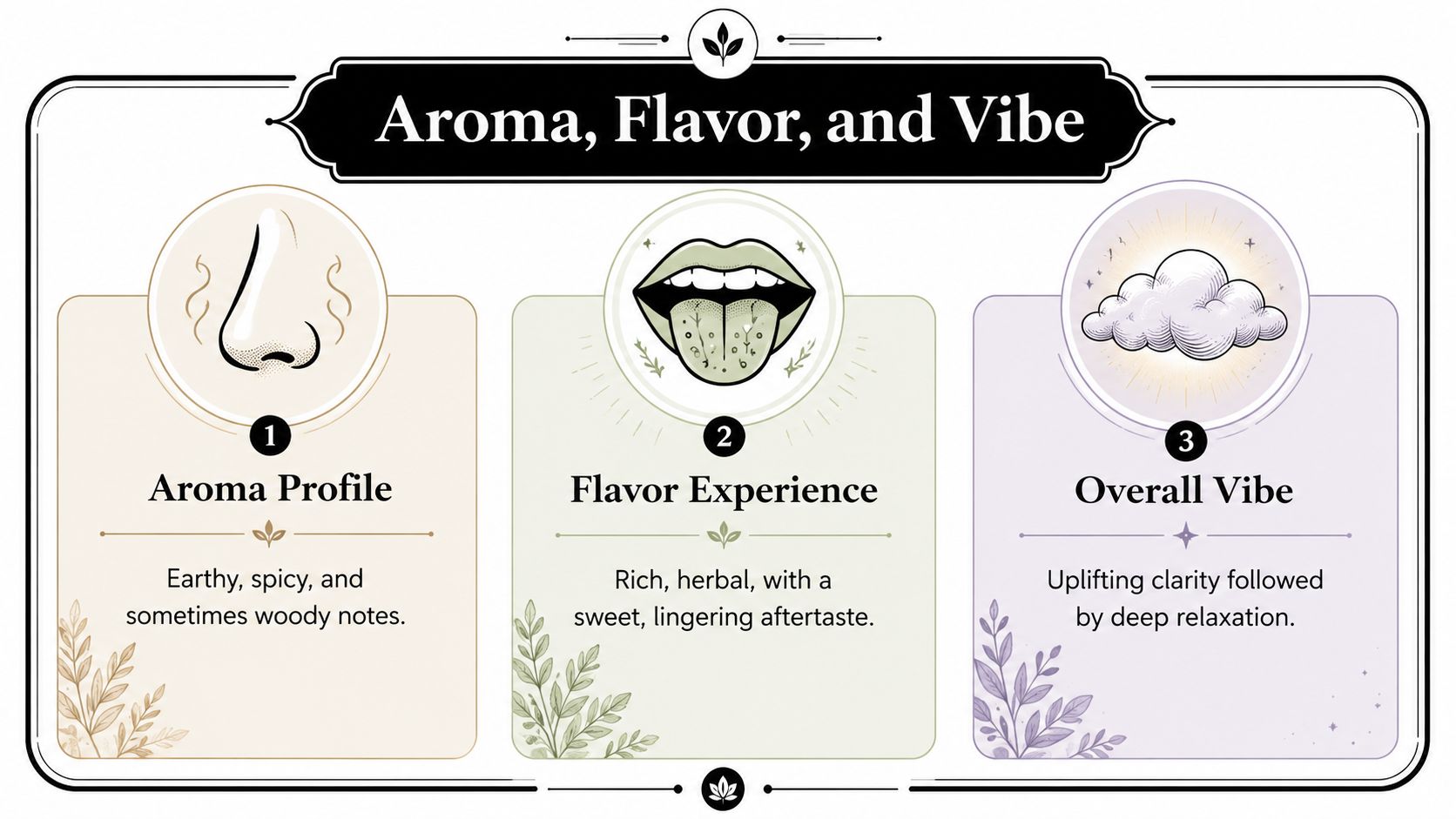
How to read the aroma
If you're trying to judge whether a Black African Magic expression is in the lane you want, smell it in stages.
- Jar aroma: Look for earthy, spicy, woody, or herbal notes first.
- Broken flower: The broken flower sometimes reveals hidden sweetness.
- After grind: The sharper side usually comes forward, often peppery, resinous, or tea-like.
Those traits line up with the broader sensory profile often associated with African sativa cultivars. If you want a better framework for reading aromatic compounds without overcomplicating it, this guide to cannabis terpenes helps put the scent profile into plain English.
Flavor and finish
The flavor usually follows the nose. Expect something more herbal and woody than syrupy. Some expressions carry a spicy edge. Others soften into a faint sweet finish that rounds things out after the first inhale.
A simple way to understand it:
| Stage | Common impression |
|---|---|
| Front end | Earth, dry herbs, wood |
| Mid palate | Spice, pepper, resin |
| Finish | Sometimes a gentle sweet or tea-like note |
That old-school profile is a big reason some home growers get attached to these cultivars. You're not just growing for strength. You're growing for character.
The general vibe
The vibe is usually described in the same broad family as classic energetic sativas: alert, engaged, mentally active, and better suited to daytime than couch duty. But because this name covers a loose set of genetics, the exact tone can shift from one expression to another.
Some phenotypes feel clean and motivating. Some feel more intense and demanding. That's why it helps to approach Black African Magic with a little respect instead of treating it like just another generic “sativa.”
A good expression feels less like a soft background smoke and more like a cultivar you plan around.
For hobby growers, that's part of the reward. You're not just producing flower. You're curating a vibe that doesn't show up in every modern lineup.
A Growers Guide to Black African Magic
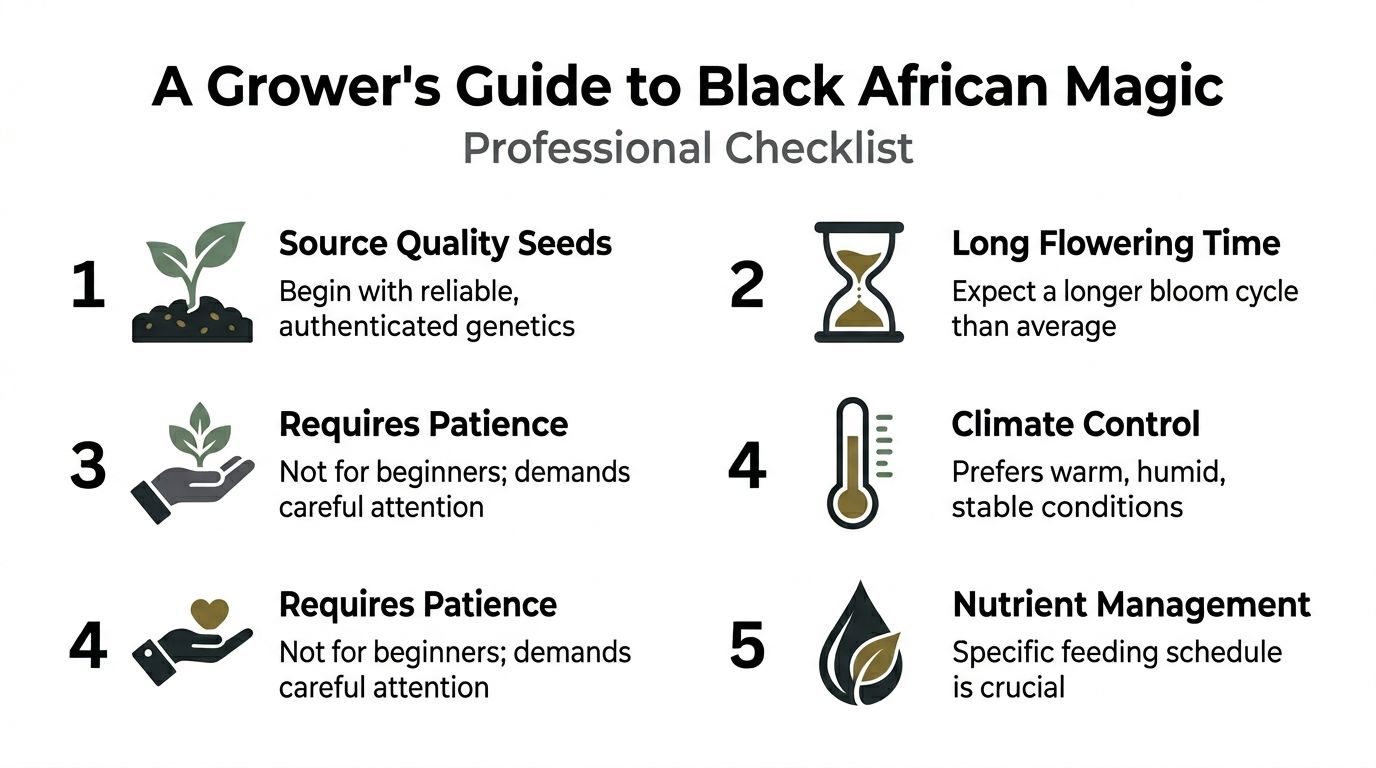
Black African Magic is not the cultivar I'd hand to someone who wants a quick, forgiving first run. It's better for the grower who already knows how to read stretch, manage a canopy, and stay patient when the finish line keeps moving.
That doesn't make it hard in a dramatic sense. It just means the plant asks more from you than a fast, compact hybrid.
Start with realistic expectations
Reports consistently put Black African Magic in a longer flowering window, with indoor bloom commonly at 12 to 14 weeks and outdoor harvest often landing in late October to early November according to North Coast Genetics on Black African Magic. If your whole setup is built around quick turnovers, that alone may be enough to push you toward another cultivar.
The other consistent expectation is structure. Growers should plan for a plant that wants to go up, not out. Tall frame, narrow leaves, and more vertical ambition than many modern tents naturally allow.
Indoor setup that actually works
Indoor growers usually run into the same issue first: stretch.
If you want to keep Black African Magic manageable indoors, don't wait until the plant is already crowding the lights. Shape it early and keep the canopy even from the start.
- Train early: Gentle low-stress training helps more when it starts before the plant commits to vertical growth.
- Top with intention: One clean topping can help break the upward push and create a more workable structure.
- Use your trellis as a steering wheel: Don't treat netting as decoration. Guide branches outward while they're still flexible.
- Keep light distance honest: Tall sativa-leaning plants will test your fixture clearance fast.
If your grow space is short, your training plan matters as much as your nutrient plan.
A moderate hand usually works better than trying to force the plant into a squat hybrid shape it doesn't want. You're managing the expression, not rewriting its personality.
This video gives a useful visual reference for grower expectations and plant behavior in longer-flowering sativa lines:
Outdoor considerations
Outdoors, Black African Magic makes more sense if your season is long enough and your fall conditions stay reasonably cooperative. The upside is obvious. A tall African sativa type can look incredible in open space and has room to express itself naturally.
The downside is timing. A cultivar that finishes later asks you to stay ahead of weather, moisture pressure, and basic garden hygiene. If your area gets cold, wet, or sloppy late in the season, this is not the plant to leave to chance.
A few practical outdoor notes matter:
- Give it room: Crowding defeats the whole point of running a vigorous sativa-leaning cultivar.
- Support branches early: Tall plants with longer bloom can need structure before they look like they do.
- Stay on cleanup: Late finishers reward growers who keep airflow and sanitation tight.
- Choose the spot carefully: The best place is where the plant can stretch without becoming a privacy or access problem.
Feeding, harvest, and cure
This kind of cultivar usually rewards restraint more than constant correction. Don't chase every minor variation with a new bottle or a new schedule. Watch the plant, keep the environment stable, and avoid overfeeding just because the bloom window is long.
At harvest, patience matters again. Rushing a long-flowering cultivar is a great way to lose the very expression you waited for. After that, the cure does a lot of the final work. A slow, careful cure helps the woody, spicy, and herbal side come together in a cleaner way.
The best runs are rarely the ones where the grower fought the plant nonstop. They're the runs where the grower gave the plant structure, space, and time.
Phenotype Hunting Finding Your Perfect Plant
Once you accept that Black African Magic isn't a tightly standardized product, phenotype hunting stops sounding advanced and starts sounding practical. You're not being obsessive. You're responding to the reality of the cultivar.
That matters a lot here because the published profile swings hard. One source notes that the genetic makeup is often a mystery and that potency claims range from 18% to 24% THC with 0.5% to 1.2% THCV up to 29% to 30% THC, which is a strong sign that buyers may get meaningfully different expressions depending on the seller and seed stock at Try Cannavine's Black African Magic overview.
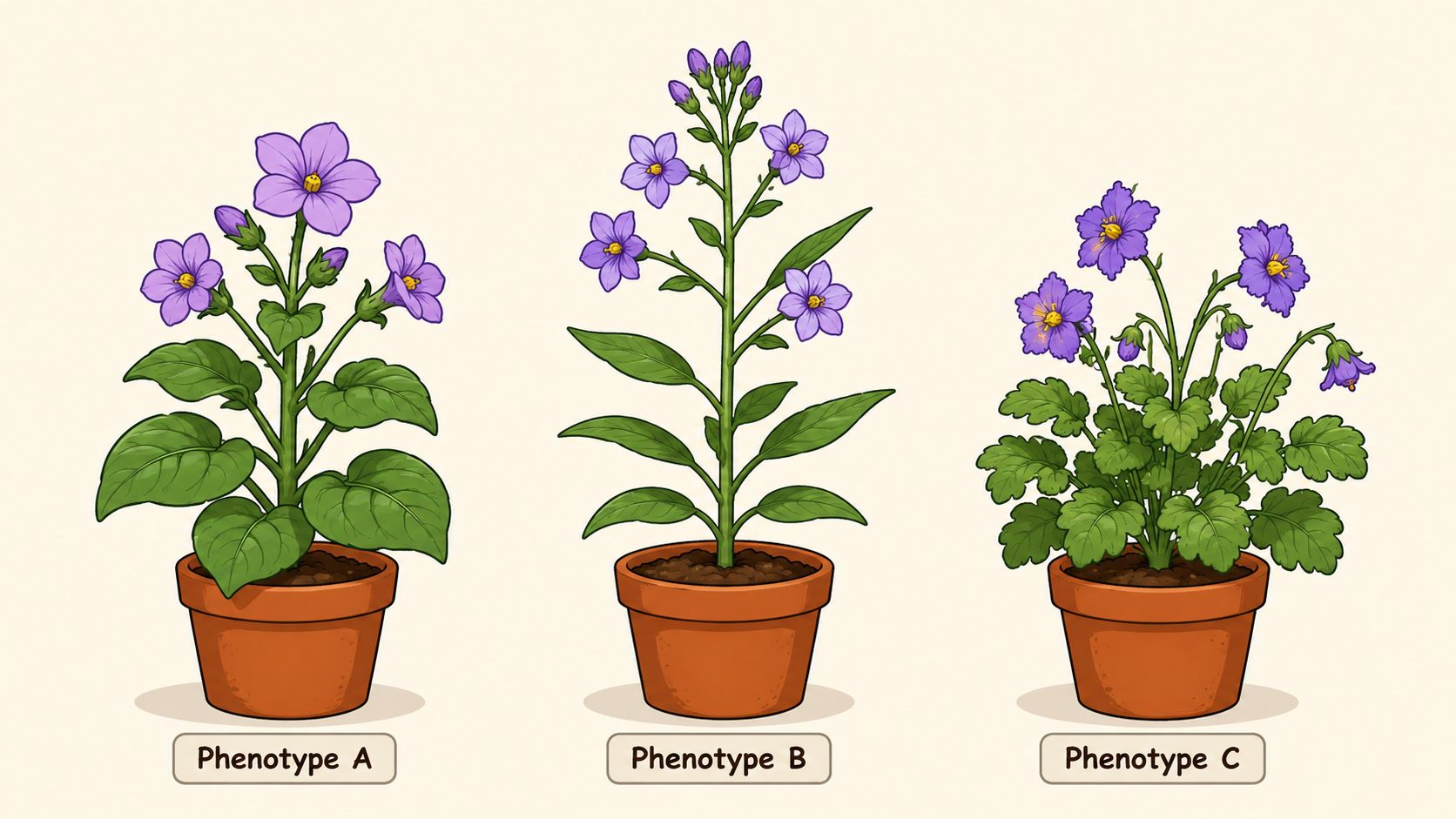
What phenotype variation looks like
Think of phenotypes like siblings. Same family, different expressions.
With Black African Magic, that can show up as differences in:
- Structure: One plant may be more upright, another more branchy.
- Stretch behavior: Some will reach hard after flip, some less so.
- Aroma direction: You may find one leaning wood and spice, another leaning sweeter or more herbal.
- Finish pace: Even in the same room, some expressions may look ready sooner than others.
That's why experienced growers keep notes. If you're serious about finding your ideal plant, memory isn't enough.
How to hunt with a goal
Phenotype hunting goes better when you know what you want before the plants start showing off.
If your goal is easier indoor handling, favor the plants that stack more neatly and don't try to outrun the room. If your goal is a louder old-school aroma, pay closer attention to stem rubs and early flower scent. If your goal is shorter turnaround, watch which plants mature with less drama.
A simple scorecard helps:
| Trait to watch | Why it matters |
|---|---|
| Internode spacing | Tells you a lot about manageability |
| Branch flexibility | Helps with training potential |
| Early aroma | Gives clues about final jar appeal |
| Flower development pace | Helps identify the most practical keeper |
For growers who want a broader framework, this page on cannabis phenotypes is worth reading.
Don't hunt for the “best” plant in the abstract. Hunt for the plant that fits your room, your schedule, and the vibe you actually enjoy.
When to choose a more stable alternative
Not everyone wants a project. That's fine.
If the appeal of Black African Magic is the African sativa feel, but you don't want broad variation, then a more worked feminized cultivar with similar structure or sensory character may be the smarter buy. There's no prize for forcing yourself into a genetic gamble when what you really want is reliable performance.
Black African Magic makes the most sense for growers who enjoy selection as part of the process. If that sounds fun, the inconsistency is part of the charm. If that sounds exhausting, trust that instinct.
Black African Magic Strain FAQ
Is Black African Magic a good choice for a first-time grower
Usually not as a first pick.
A first-time grower normally does better with a cultivar that finishes faster, stays more predictable, and doesn't demand as much canopy management. Black African Magic can absolutely reward patience, but it asks for patience in several different ways at once. You're managing height, reading variation, and waiting longer than you would with many modern options.
If you're new but stubborn and excited, keep the run small and keep your expectations realistic.
Why do the THC numbers vary so much
Because the name doesn't point to one tightly fixed line across the market.
Different sellers attach Black African Magic to different origin stories and different selections. That alone can create a wide spread in expected potency and overall expression. When a cultivar name sits on top of uncertain lineage, the label tells you less than you might think.
What does landrace-derived mean for my grow
It means you should expect more individuality from plant to plant.
That can be a positive if you enjoy selection and observation. It can be frustrating if you want every plant to move in lockstep. Landrace-derived cultivars often carry interesting structure and sensory traits, but they also tend to ask the grower to make more decisions instead of just following a script.
Is Black African Magic worth growing if it's inconsistent
Yes, if inconsistency is part of what you're signing up for.
This cultivar makes sense for hobby growers who like discovering standout expressions. It makes less sense for anyone who wants a guaranteed repeat of a menu description. Breeder reports also suggest meaningful cannabinoid variation, with some plants showing increased CBC, which adds to the appeal for phenotype hunters but also adds one more layer of unpredictability in The Bohemian Chemist breeder notes.
What should I look for before buying seeds sold under this name
Look past the name first.
Check whether the seller describes provenance clearly, whether the flowering expectation matches a long sativa-type run, and whether the writeup sounds like a real cultivation description instead of pure fantasy. A good listing should help you understand the plant's likely behavior. A weak listing usually leans on mystique and leaves out the trade-offs.
If the description sounds too perfect, too absolute, or too dramatic, assume you need more homework before you buy.
If you want a cultivar that matches your space, schedule, and taste instead of gambling on a famous name alone, Botanist Seeds makes that process easier. Use the comparison tools, focus on feminized options that fit your setup, and choose genetics with the level of predictability you want from your next home grow.