





Connoisseur Genetics Explained for Home Growers

You're scrolling seed catalogs after a long day, trying to sort out which premium cultivars are worth the shelf space and which ones are just dressed-up hype. That's where Connoisseur Genetics gets interesting, because the name suggests flavor, resin, and pedigree, but the primary question for a home grower is simpler, what will finish cleanly in your room, under your lights, on your schedule?
The answer starts with a practical mindset. With connoisseur genetics, you're usually looking at cultivars selected for standout aroma, layered terpene expression, and a more refined end product, but the label alone doesn't guarantee a smooth run. The grow room still decides a lot, and that's why measuring flowering time, structure, and consistency matters more than chasing a glossy strain story. If you want a broader lens on how premium seed shopping works, the guide to navigating the premium seed market is a useful companion.
What Connoisseur Genetics Actually Means for Your Grow
A lot of growers hear connoisseur genetics and assume it just means “expensive” or “fancy.” In practice, it usually points to cultivars bred for a sharper sensory profile, better resin expression, and enough line consistency that the final jar feels intentional, not random. That matters at home because a cultivar can look elite on paper and still frustrate you if it sprawls too much, finishes too late, or throws uneven tops.
What you're really paying attention to
The term means more than pedigree. It usually signals that a breeder has leaned into flavor complexity, potency, and a more polished structure, while still trying to keep the plant workable for real growers who don't have a commercial room full of perfect environmental control.
A good way to judge the label is by asking three questions:
- Does the cultivar finish in a window that fits my space?
- Does the structure look manageable under my lights?
- Do the available traits sound measurable, or just poetic?
If a cultivar only comes with vague hype words, that's a weak signal. If it comes with documented flowering time, cannabinoid data, and a believable growth habit, that's a stronger sign you're looking at something earned, not just branded. The best connoisseur lines tend to feel like they were selected by someone who grew the plants, trimmed the plants, and smelled the cure, not someone just writing ad copy.
Practical rule: if the only thing a cultivar has going for it is a cool name, keep looking.
The Breeder Behind the Name and Scale of Production
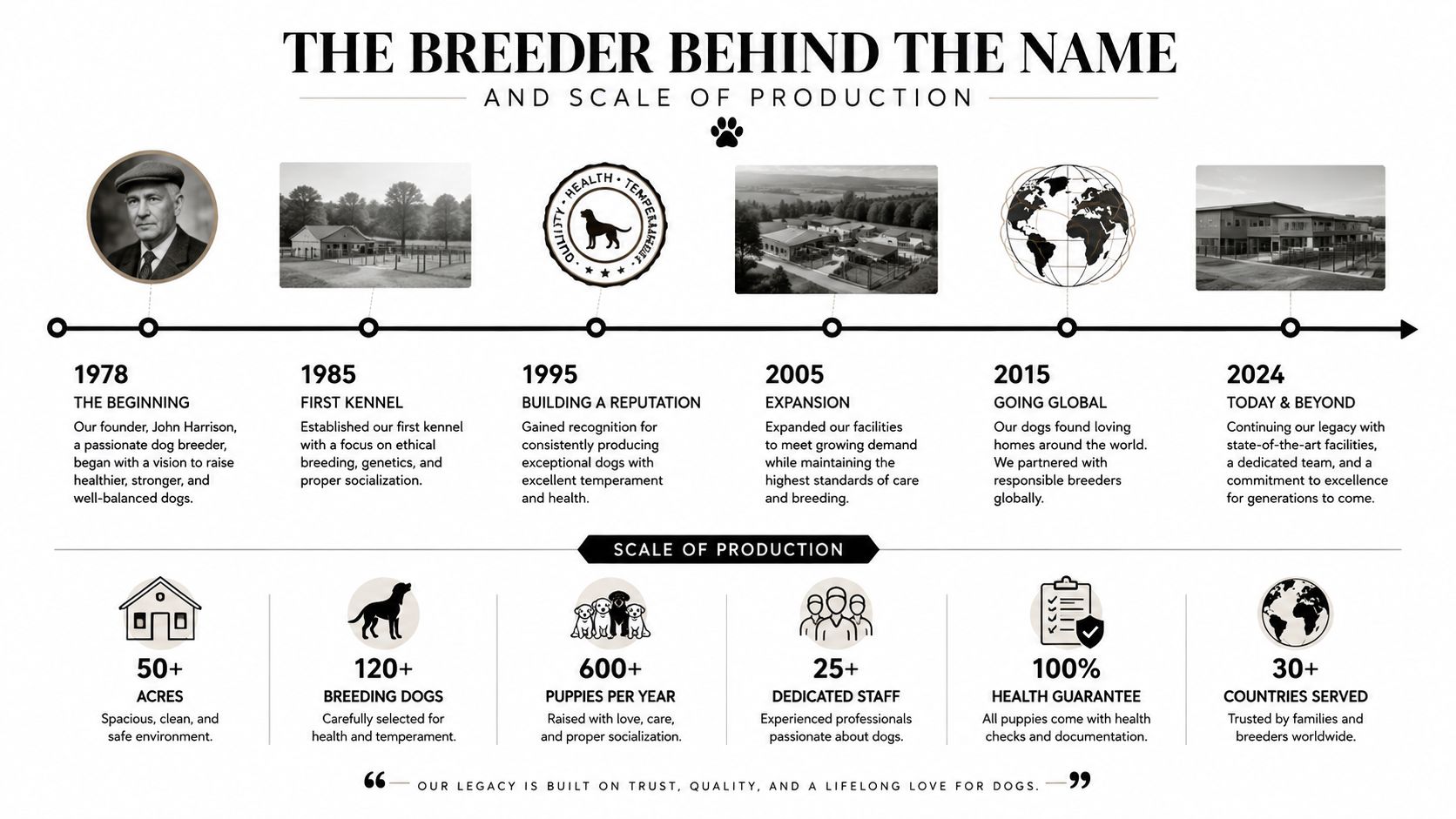
Connoisseur Genetics isn't a tiny garage label pretending to be a legacy house. High Times describes the breeder as producing “close to one million feminized seeds per year” in its breeder profile, and that scale says a lot about the operation. Feminized seed production at that volume is a quality-control job as much as a breeding job, because the breeder has to keep lots uniform while still preserving the traits growers expect from premium lines.
The same profile states that Connoisseur Genetics was established in 2013 in Oregon in the breeder profile. That gives the brand more than a decade of operating history, which matters when you're trying to separate an experimental release from a line that's been handled, selected, and reproduced over time. For a home grower, that usually translates into more confidence that the cultivar name means something repeatable.
Why scale matters in your tent or room
Big output doesn't automatically mean better flower, but it does hint at an operation that has to think hard about repeatability. When a breeder is pushing that kind of volume, sloppy selections tend to show up fast in the marketplace, because growers talk.
For a home grower, the upside is easier to understand than the marketing. A scaled breeder with a long enough track record is often better positioned to provide consistent feminized lines, which is exactly what you want when you're planning a run around limited space, limited time, and a harvest date you care about. You're not buying a vibe. You're buying the chance to run the same idea again with fewer surprises.
Hallmark Traits and Notable Cultivars Worth Knowing
A lot of growers get pulled in by the headline names first, but the practical question is simpler, what fills a tent well and finishes in a way you can plan around? Connoisseur Genetics has a clear lane for people who like Haze, Chem, and Sour profiles, and the breeder profile describes the catalog as built around rare crosses from around the globe. It also points to Haze and narrow-leaf cultivars for sativa-leaning buyers, alongside Indica-dominant offerings from California and the U.S. East Coast breeder profile. That mix says the line is aimed at growers who care about character, not bland hybrids made to please everyone and satisfy no one.
One concrete example is Oldschool Hazy Jones Feminised. The listing puts it at 80% sativa / 20% indica, with THC around 18.24%, CBD around 1.21%, and a flowering time of 9 to 10 weeks strain listing. The same entry reports indoor and outdoor yields of 145 to 255 g/m² and 145 to 255 g per plant, which is the kind of detail that matters more than polished strain copy when you are deciding whether a cultivar fits your room and your patience strain listing.
A quick look at a few named cultivars
| Cultivar Name | Genetic Ratio | THC % | Flowering Time |
|---|---|---|---|
| Oldschool Hazy Jones Feminised | 80% sativa / 20% indica | 18.24% | 9 to 10 weeks |
| Australian Dead Head | Feminized photoperiod line | Not listed in the verified data | 63 days |
| Connoisseur Cookies | Feminized photoperiod line | Not listed in the verified data | About 67 days |
SeedFinder lists Connoisseur Genetics with at least 67 strains and an average THC level of 20.0% across the catalog breeder database. That is useful if you want a breeder whose releases seem to be built around potency as well as profile, but it still does not replace watching how each cultivar behaves in your own setup.
Short flowering windows are another practical clue. Public strain databases list Australian Dead Head at 63 days and Connoisseur Cookies at about 67 days as feminized offerings breeder database. In a controlled indoor room, that kind of timing makes harvest planning easier and gives you a cleaner way to compare resin, aroma, stretch, and structure without waiting forever for the finish.
Why Elite Genetics Do Not Always Perform as Advertised
A seed pack can sound dead simple. Great lineage, rare parents, strong aroma, done. In the tent, it's messier than that, because genotype-by-environment effects can change how a cultivar behaves from one room to the next, even when the genetics are strong. That's the part breeder hype usually skips.
A recent genomics paper points out that genotype-to-trait links are useful but incomplete, and that transgenerational epigenetic effects remain uncertain genomics literature. That matters in cannabis because a cultivar can carry a gorgeous reputation and still express differently when you change light intensity, temperature, humidity, or even how hard you push the feed. A line that smells sharp in one environment can come off flatter in another.
The part most strain guides skip
The biggest mistake is assuming the pack tells the whole story. It doesn't. What you get is a starting point, then your room decides how much of that potential shows up.
A rare cross can still be a pain if your environment is sloppy.
That's why independent benchmarks matter so much. The public cannabis market still leans heavily on breeder reputation and inferred ranges, while formal datasets for cannabinoid variability, minor-cannabinoid profiles, and disease resistance are thin. The contrast is useful beyond cannabis too, because even in other scientific fields, sequence data alone often doesn't solve trait expression without stronger functional interpretation Nature report.
If you want to screen for real stability, look for repeated data, not one shiny description. The useful question isn't whether a cultivar is “elite,” it's whether it stays recognizable when a real grower runs it more than once under different conditions.
For a more practical lens on that, the breeder discussion around genetic stability testing is worth a look.
How to Choose the Right Cultivar for Your Setup
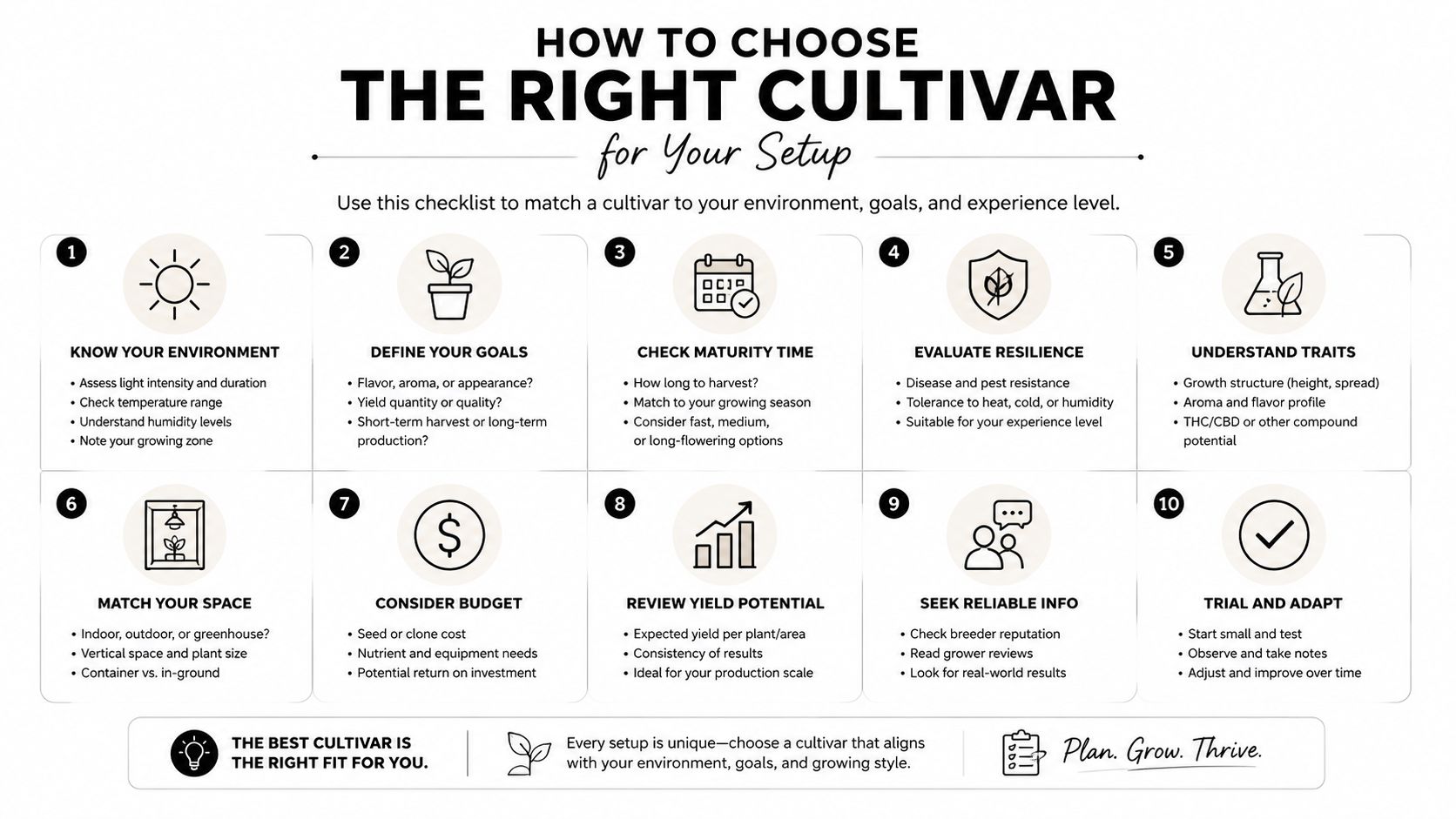
Start with the room, not the brag sheet. If your space is tight, a cultivar that naturally wants a shorter, cleaner finish is usually easier to manage than one that stretches hard and asks for constant correction. If you've got stronger climate control and better light coverage, you can take on more demanding cultivars with a higher payoff in aroma or structure.
Match traits to the grow you actually have
Use a simple filter when you're comparing cultivars:
- Flowering Window: Shorter finishes fit faster turnover and easier scheduling.
- Plant Shape: Taller, more sativa-leaning plants need more vertical planning.
- Aroma Goal: If you want complexity, look for documented terpene character, not just a flashy name.
- Yield Expectation: Check whether the reported range sounds realistic for your setup, then compare it to the way you train.
- Environment Tolerance: The less dialed your room is, the more you should favor forgiving plants.
The useful trick is to treat breeder reputation as one input, not the answer. A line with a cult following can still be a bad fit if it finishes too long for your schedule or wants more headroom than your tent can give. On the flip side, a quieter cultivar with clear data and a manageable frame can outperform a louder name in a real home setup.
For indoor grows, photoperiod lines with tighter timing are easier to integrate into a repeatable cycle. For outdoor runs, pick cultivars that match your season, not the fantasy version of your season. It's better to finish a slightly smaller plant that cured well than to chase size and lose control of the run.
Germination and Early Care for Premium Seeds
Premium genetics are only as good as the start you give them. The early stage is where a lot of home growers either build momentum or create avoidable stress, and the fix is usually simple, clean water, stable warmth, light touch, and no urge to overwork the plant before it's ready.
Keep the first moves boring
A paper towel setup can work fine if you stay patient and don't manhandle the seedling once it cracks. Direct planting also works well when the medium is light and airy, because the root can move without hitting a dense wall. The main job is consistency, not cleverness.
A few habits pay off fast:
- Use a light medium. Heavy, soggy media slow root movement and make the first days harder than they need to be.
- Avoid overwatering. Seedlings want moisture, not a flooded container.
- Introduce light gently. Don't blast a tiny plant with the same intensity you'd use later.
- Handle transplants carefully. Early root disturbance tends to cost more than it saves.
A helpful practical detail is that the seedling stage rewards patience more than feeding ambition. If the plant looks small, that doesn't mean it needs help in the form of extra nutrients right away. It usually needs steadiness and room to root.
If you want a tighter walkthrough of the early timeline, the guide on how long to germinate weed seeds is a solid reference point.
Practical rule: if the medium feels wet for too long, back off before you create a problem you can't see yet.
Finding Your Perfect Cultivar Match
The smartest way to buy premium seeds is to stop pretending one cultivar can be perfect for every room. Connoisseur Genetics makes sense for growers who care about measurable traits, not just the romance of a name. That means looking at flowering time, plant shape, and catalog evidence first, then deciding whether the line fits your environment and your patience.
A good comparison process keeps you honest. If you're chasing fast turnover, prioritize shorter flowering windows. If you want a louder aromatic profile, lean toward the cultivars with documented character and enough stability to reproduce it. If your space is limited, skip anything that sounds like it's going to stretch into the ceiling and make training miserable.
The point is to match the plant to your setup, not your ego. That's where premium genetics start to feel worth it, because the final result comes from a good fit, not just a famous label. When you compare cultivars side by side, the better choice usually becomes obvious pretty fast.
If you're ready to compare premium cultivars with a calmer, more practical lens, check out Botanist Seeds and use the comparison tools to narrow down the right feminized or autoflower match for your space. You'll get a cleaner way to sort by the traits that matter, so your next run feels less like guesswork and more like a plan.